How a Strong Marketing Plan Can Increase Music Event Revenue
Event planners know that taking the time to develop a strong marketing plan is one of the surest ways to boost ticket sales and revenue for live events. Following the steps to create a top-notch event marketing plan ensures your marketing team is better prepared and organized for a meticulous, effective campaign. In fact, roughly 50–61% of marketers report improved sales or ROI from events they’ve properly marketed, according to event marketing statistics compiled by Thunderbit. The live music industry has roared back post-pandemic – with Pollstar’s 2024 business analysis showing top tours grossed $9.5 billion – and with so many concerts and festivals vying for fans’ attention, a strategic plan is essential to stand out. Event organizers who invest in detailed marketing plans often see significant returns; for example, the new Lovin’ Life Music Festival in Charlotte sold out its inaugural 2024 event (drawing 87,000 attendees) by executing a robust promotional campaign, as noted in Axios’ report on the festival’s economic impact.
In music event marketing, you must not only think about how the news of your events, products, and tickets will reach your target audience, but also how that message will be received by them. Ask yourself and your marketing team:
– Is the campaign executed and presented in a way that accurately represents the event?
– Is the marketing campaign impactful in the way the team intended it to be?
When you and your marketing team build a well-designed and comprehensive event marketing plan strategy, it allows you to create effective campaigns that truly represent the events and products you’re promoting. A comprehensive plan aligns everyone on your team toward the same vision. And when your marketing plan accurately enhances the value and image of your events, ticket revenues can increase dramatically as a result.
Ultimately, the core objective for any promoter or venue operator is to maximise revenue through events. A well-executed marketing strategy does more than just sell general admission tickets; it opens the door to lucrative upsells, VIP package upgrades, and high-value sponsorship deals. By analyzing attendee data and segmenting your audience, you can identify which fans are most likely to purchase premium experiences or merchandise add-ons. When you strategically layer these revenue-generating opportunities into your promotional timeline, you transform a standard concert or festival into a highly profitable enterprise.
Free Tool: Model Promoter Payouts
Flat-percentage, flat-per-ticket, or tiered-bonus commission structures — get per-promoter payouts and total commission as % of gross. Free calculator.
What is a marketing plan?
A marketing plan is essentially a blueprint that outlines all the steps required to successfully market and launch a music event. It’s a detailed strategy covering every marketing activity, task, goal, and cost needed to take your event from idea to sold-out show. A strong marketing plan guides you meticulously through each phase – from building initial buzz, to the peak ticket sales push, to last-minute reminders – so your team stays prepared and confident at every turn.
Crucially, an effective marketing plan isn’t rigid. It’s detailed enough to trace every step taken for the event launch, yet flexible enough to adapt when surprises inevitably arise (and in live events, unexpected hurdles are common). For instance, if a headlining artist cancels or severe weather strikes, a good plan will have contingency promotions or messaging ready to keep the marketing on track. Having a plan to depend on keeps your campaign resilient and ensures you can adjust tactics without losing momentum. In the long run, your plan even becomes a template you can refine and reuse for future events, saving time and setting the stage for bigger opportunities down the line.
Ready to Sell Tickets?
Create professional event pages with built-in payment processing, marketing tools, and real-time analytics.
Key components of a music event marketing plan typically include:
– Target Audience Definition: Detailed demographics and profiles of who you’re trying to reach (age range, location, music preferences, spending habits, etc.). Knowing exactly who your ideal attendee is will inform all your other marketing decisions.
– Unique Value Proposition: What makes your event special – the themes, artists, or experiences that will attract attendees. Your plan should highlight the key selling points that set your concert or festival apart.
– Marketing Channels & Tactics: The mix of promotion channels you’ll use – e.g. social media ads, email campaigns, PR outreach, influencers, street teams – and how you’ll deploy each one to engage your audience. This section ensures you’re using the right tools to reach people effectively.
– Content and Creative Assets: Plans for the flyers, videos, photos, hashtags, and other creative content you’ll produce, along with a release schedule to build excitement (for example, teaser videos, lineup announcements, behind-the-scenes clips, etc.).
– Timeline and Milestones: A calendar for all marketing activities leading up to the event. This includes key dates like lineup drops, ticket launch and tier deadlines, early-bird cutoffs, and final promotional pushes, with goals (e.g. “50% of tickets sold by 3 months out”).
– Budget Allocation: A breakdown of your marketing budget across channels and tactics. By assigning specific dollar amounts to each initiative (advertising, design, commissions, etc.), you can ensure you spend efficiently and stay within budget.
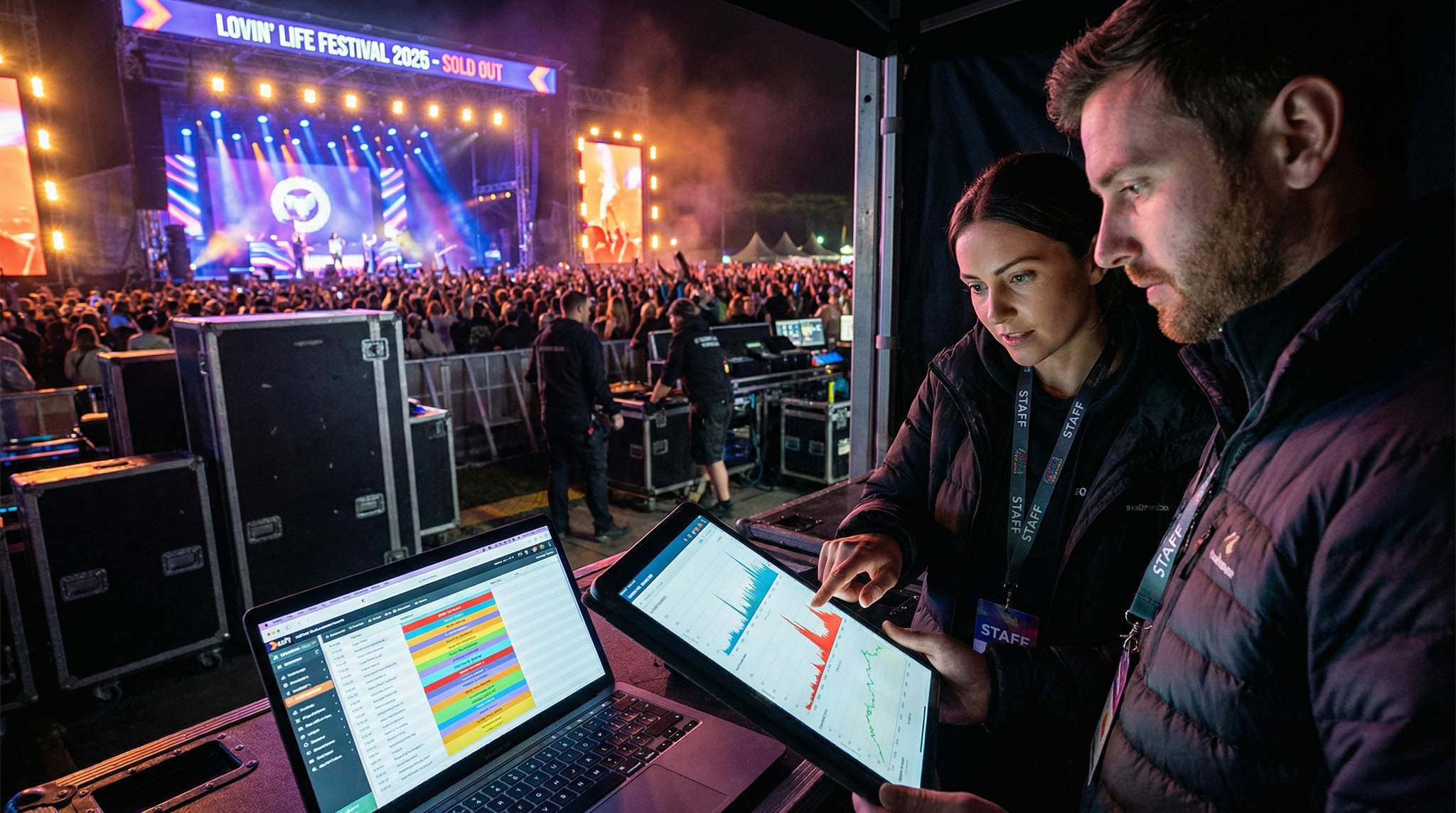
– Metrics and KPIs: The performance indicators you’ll track to gauge success – for example, ticket sales per week, social media engagement rates, email open/click rates, or promo code redemptions. Defining these in advance helps you measure what’s working and adjust as needed.
All these elements come together to form a road map for your team. By laying everything out, you turn big goals into actionable steps. For specific guidance on large-scale events, you can explore our guide on crafting a festival marketing plan drawing on decades of industry experience.
Concert Marketing Plan Examples and Structure
When looking for samples of marketing plans to model your own after, it helps to review how successful promoters structure their campaigns. Effective examples of marketing plans for live shows typically divide the timeline into distinct promotional phases. A standard concert marketing plan might start with a “Teaser Phase” (dropping hints on social media and capturing email sign-ups), followed by the “Announcement & Presale Phase” (leveraging artist networks and exclusive ticketing links), the “General On-Sale Phase” (broad digital advertising and PR), and finally the “Close-Out Phase” (retargeting ads and urgency-driven messaging as inventory runs low). Structuring your music event promotion around these specific lifecycle stages ensures that momentum never dips between the initial lineup drop and the day of the show.
Reviewing diverse samples of marketing plans from different genres and venue sizes can also reveal untapped promotional tactics. For instance, a strategy that worked brilliantly for an underground electronic gig might inspire a fresh approach for an indie rock showcase. The key to effective music event promotion is adaptability—taking proven frameworks and customizing the messaging to fit the unique culture of your target demographic.
Free Tool: Split Tickets for Max Gross
Given capacity and a target price, the optimizer proposes Early Bird / GA / VIP allocations and prices — with projected gross at 100%, 80% and 60% sell-through.
When reviewing examples of marketing plans, you will notice that the most effective templates scale according to the size of the room. For instance, a sample strategy for a 500-capacity indie club might prioritize grassroots street teaming and hyper-local social media engagement. Conversely, promotional blueprints for a 5,000-cap amphitheater will heavily feature regional radio buys, extensive PR outreach, and multi-tiered digital ad funnels. Regardless of the scale, studying these diverse campaign samples helps promoters identify which promotional levers drive the highest ROI for their specific event type.
When executing marketing for concerts specifically, your strategy should lean heavily into artist-driven data and localized outreach. Unlike multi-day destination festivals that sell an overarching experience, marketing concerts relies on capitalizing on the direct relationship between the performer and their core fanbase. A robust approach to concert marketing involves analyzing streaming metrics (like Spotify or Apple Music listener locations) to geo-target digital ads precisely where the artist’s fans live. Additionally, coordinating with the venue’s existing email database for exclusive presales can provide a massive initial boost to your campaign, ensuring your promotional efforts hit the ground running.
Grow Your Events
Leverage referral marketing, social sharing incentives, and audience insights to sell more tickets.
To maximize ticket sales, savvy promoters also coordinate their efforts with the performer’s own promotional cycles. When booking a tour stop, request an artist marketing plan template from their management team. This allows you to see exactly when they are dropping new singles or pushing PR. If the act is touring behind a new record, reviewing their album marketing plan template ensures your venue’s ad spend aligns perfectly with their peak media visibility, creating a compounding effect for your overall concert marketing strategy.
Marketing for Music Festivals: Scaling Your Strategy
When it comes to marketing for music festivals, the scope of your promotional efforts expands significantly compared to single-night gigs. A comprehensive music festival marketing plan must account for multi-day logistics, diverse lineup announcements, and destination travel appeals. Because large-scale events often require attendees to commit more time and money, your strategy should focus heavily on selling an overarching experience rather than just a headliner. This means highlighting immersive art installations, unique food and beverage vendors, and on-site camping amenities alongside the musical acts.
Successfully marketing a music festival also requires a longer, more phased promotional runway. Promoters typically launch “blind presales” months before the lineup drops, rewarding early adopters with discounted tiers. As the event approaches, the campaign shifts toward phase-one and phase-two artist announcements, leveraging the performers’ combined reach to amplify ticket sales. By studying successful multi-day event blueprints, organizers can build a robust framework that sustains momentum across a six- to nine-month campaign cycle.
A truly comprehensive music festival marketing plan also integrates cross-promotional partnerships with the artists on your lineup. By providing performers with custom promotional assets and tracking links, you turn their individual fanbases into a collective marketing engine for the entire multi-day event.
Free Tool: When Should You Announce?
Pick your event date and genre — the free planner outputs a recommended announce, presale, on-sale and reminder schedule anchored to how your audience actually buys.
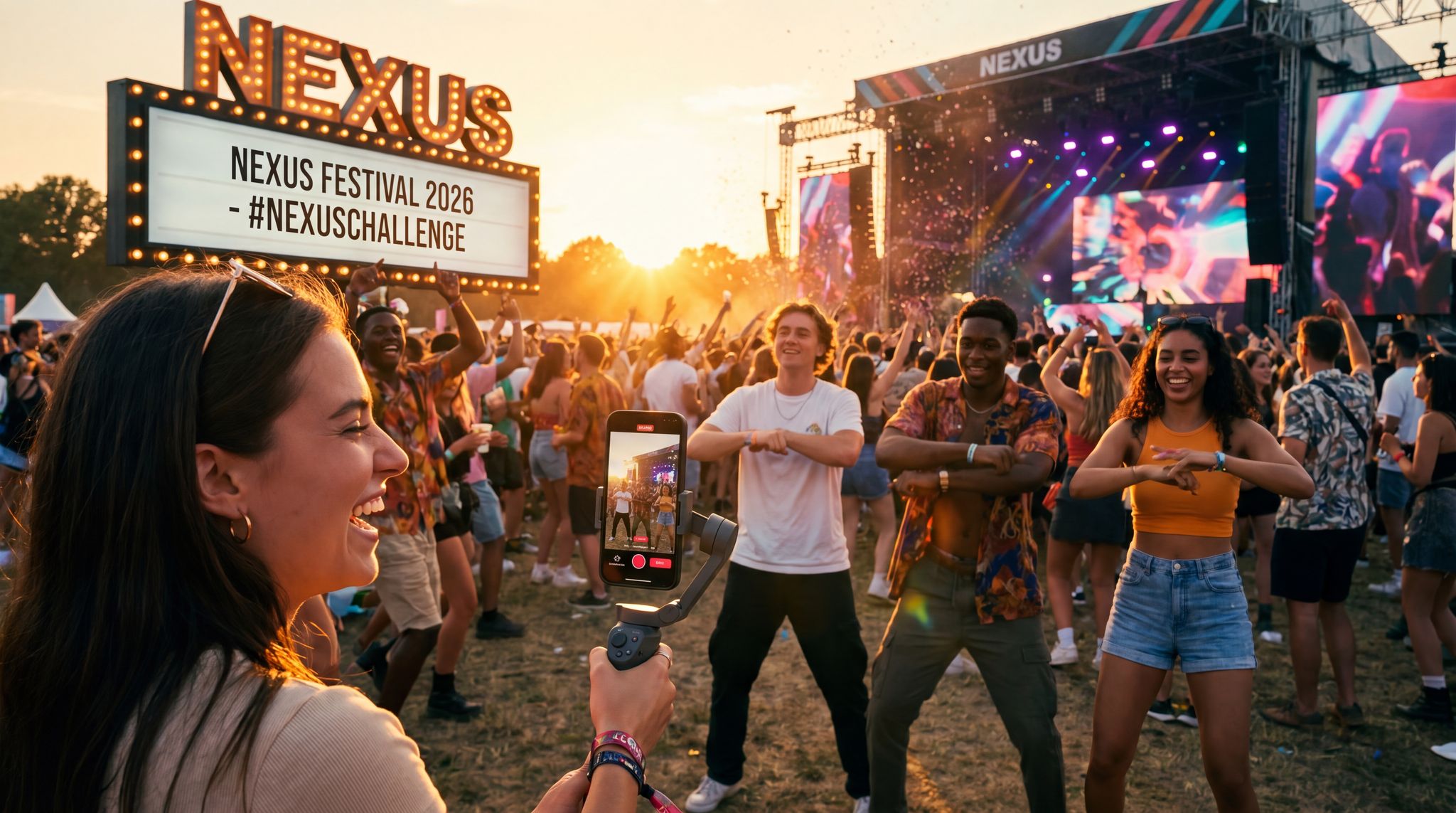
When developing specific marketing strategies for music festivals, organizers should prioritize experiential content and community-building. Because attendees are committing to a multi-day journey, your promotional campaigns must reflect the immersive nature of the event. Effective tactics include partnering with lifestyle influencers who align with your festival’s ethos, launching user-generated content contests to amplify word-of-mouth, and utilizing tiered ticketing structures that create natural urgency. By layering these diverse approaches, promoters can build a resilient marketing engine that drives consistent sales from the initial blind presale all the way to the final gate opening.
Tailoring Your Strategy: Music Venue Marketing
While one-off festivals rely on massive, months-long build-ups, music venue marketing requires a different rhythm. For permanent spaces, the goal is to build a trusted local brand that keeps patrons coming back week after week, regardless of who is headlining. Venue operators must balance promoting individual gigs with marketing the room itself as a premier nightlife destination. This means your overarching strategy should include loyalty programs, consistent weekly themed nights, and localized outreach to capture foot traffic. You aren’t just selling a single ticket; you are selling the atmosphere, the sound system, and the consistent quality of your calendar. Effective music event promotion for brick-and-mortar spaces often leverages subscription models, VIP memberships, and partnerships with local lifestyle brands to maintain steady revenue between major touring acts.
A comprehensive approach to music venue marketing also requires optimizing your digital footprint for local discovery. Venue operators should ensure their Google Business Profile is fully updated with upcoming gig schedules, high-quality interior photos, and accurate ticketing links. By integrating local SEO tactics into your broader marketing plan for music venues, you capture high-intent search traffic from fans looking for live entertainment in their city. Furthermore, capturing first-party data through Wi-Fi splash pages or coat-check QR codes allows you to build a robust retargeting audience, turning first-time walk-ins into lifelong patrons.
5 Reasons Why You Need to Start an Event Marketing Plan Now
So, we’ve established what a marketing plan is – now let’s explore what a strong marketing plan can actually do for you, your team, and your business. In today’s fast-moving event landscape, having a plan isn’t a luxury, it’s a necessity. If you haven’t been creating one for each music event, here are five big reasons why implementing a marketing plan will increase your revenue (and overall event success) starting now:
1. It’s a great motivator for your team during brainstorming
The brainstorming stage of an event marketing campaign is often one of the most challenging. Staring at a blank page or tossing around disconnected ideas can stall progress. That’s where a structured marketing plan becomes a powerful motivator and guide. Coming into a marketing meeting with an outline of key topics and goals focuses your team’s creativity. Instead of chaotic, free-for-all discussions, you have a clear framework to fill in – whether it’s brainstorming social media themes, crafting a catchy tagline, or mapping out advertising tactics. Experienced festival marketers often start brainstorming sessions by reviewing the plan’s outline so everyone is aligned before the creative ideas start flowing. At industry conferences like ILMC (International Live Music Conference), experts frequently note that brainstorming works best when the team has a defined direction to innovate within, rather than facing a blank canvas. Additionally, understanding how a multifaceted digital strategy enhances marketing can further refine your approach during these sessions.
In practice, having even a rough marketing plan visible during meetings can spur more and better ideas. The outline keeps everyone organized and on-task, which actually boosts creative output – people feel confident proposing tactics when they see where those ideas would fit into the plan. With an obvious end goal and structure to work toward, your team stays motivated because there’s a clear direction. It’s much easier for team members to speak up with suggestions (“How about a TikTok challenge in week 2 of promotions?”) when they can tie it to a slot in the plan. Plus, you don’t have to start from scratch – there are plenty of free event marketing plan templates available that you can download and adapt to your needs. You can utilize proven event marketing plan templates and checklists as a starting point. Leveraging a ready-made template as your base, then customizing it for your festival or concert, can jump-start the planning process and keep brainstorming sessions productive.
Smart Promo Codes & Presale Access
Create percentage or flat-rate discount codes with usage limits, date ranges, and ticket type restrictions. Plus unlock codes for private presales.
Overall, a marketing plan acts like a creative brief for your team. It drives focus, sparks ideas within a structure, and makes meetings far more effective. Instead of derailing into tangents or endless “what if” scenarios, your brainstorming stays laser-focused on strategies that will sell tickets and elevate your event’s brand.
2. A strong marketing plan clearly defines your target audience
One of the biggest advantages of developing a marketing plan is the clarity it brings to who exactly you’re marketing to. As you create the plan, you’re forced to explicitly outline your target audience’s demographics, interests, and behaviors. Perhaps you determine your core audience is “18–24-year-old EDM fans within 200 miles of the venue” or “affluent 30-something jazz enthusiasts willing to travel for a boutique festival.” By pinning this down in writing, you and your team can then craft messages and choose marketing channels that zero in on those people. This ensures your event promotion is reaching the right eyes and ears – the individuals most likely to buy tickets. When your campaigns are accurately aimed at a clearly defined crowd, conversion rates go up, and marketing spend isn’t wasted on audiences who have no interest. In short, you’ll see higher revenue because your efforts are bringing in the people who actually convert into attendees.
Having your target audience clearly identified also sparks better campaign ideas. Once you know who you want at your show, it’s much easier to brainstorm what would appeal to them. For example, if you’re targeting Gen Z pop fans, you might plan Instagram Reels, TikTok teasers, and campus street-team promotions. If you’re targeting older rock aficionados, perhaps you focus on classic-rock radio spots, local press, and Facebook event groups. The marketing plan’s audience section acts as a North Star for the campaign – every tactic can be checked against it (“Does this idea engage our target demo?”). It also helps synchronize all parts of your campaign because everyone on the team shares the same vision of the ideal attendee. Identifying your audience is so critical that experienced promoters devote entire strategy sessions to it – if you want to avoid common pitfalls, learning what most festivals get wrong about audience targeting is crucial. Knowing your audience inside and out lays the foundation for every other marketing decision you’ll make.
Pro Tip: Develop a detailed audience persona as part of your marketing plan. For example, outline a profile like “25-year-old indie music fan in Los Angeles who attends five concerts a year and follows festival pages on Instagram.” Give your persona a name and note their habits. Tailoring your campaign to one or two realistic personas helps ensure your messaging and channel choices resonate deeply with the people most likely to buy tickets.
With a concrete target profile in hand, you can also select marketing channels more strategically. For many events today, that means digital outreach – according to industry data, about 85% of festival organizers use social media as a primary marketing tool, as highlighted in our guide on audience targeting and experience strategies. But the specific platforms and content will depend on your audience. A solid plan will document whether your fans are more active on TikTok, YouTube, email newsletters, or local forums, and allocate resources accordingly. All of this leads to more efficient marketing and higher ROI. Major festivals exemplify the power of knowing your audience: Belgium’s Tomorrowland markets itself worldwide to EDM lovers with an immersive fantasy theme, and the results speak for themselves. In 2025, Tomorrowland sold over 500,000 tickets in just 20 minutes once general sales opened (on top of 200,000 presale tickets), a feat reported by Los40 regarding Tomorrowland’s record-breaking sales, a testament to how precisely targeted hype and a resonant message can drive explosive demand.
Even newer events have seen the payoff of a clear targeting strategy. The organizers of Lovin’ Life Fest noted that reaching the right mix of local and traveling music fans was key to selling out 87,000 tickets in year one, according to Axios’ coverage of the festival’s impact. Accurate marketing equals higher revenue – when your event reaches the right people with the right message, those people show up.
Grow Your Social Following With Every Sale
Require social media follows, shares, or playlist adds to unlock presale access or special pricing. Turn every ticket purchase into audience growth.
3. A marketing plan provides transparency and realistic goals
When your marketing team dives into a campaign without a plan, it can be difficult to gauge what’s possible and what success looks like. Vague ideas lead to vague results. By contrast, working from a structured marketing plan adds transparency to the whole process and forces you to set realistic goals. Because everything is organized in one document – from budget figures to timeline to expected outcomes – it becomes much clearer what will work and what won’t. Your team can literally see each step and objective laid out, making it easier to spot any overly optimistic assumptions or tactics that aren’t feasible. For example, if your plan shows a target of selling 5,000 tickets by a certain date with a $10,000 ad budget, you can immediately assess if that goal is reasonable given past performance and industry benchmarks. The plan essentially acts as a reality check that keeps everyone honest about what can be achieved.
Having this transparency early on is invaluable. It prevents scenarios where the team chases unrealistic targets or promises results that are out of reach. Instead, you set SMART goals (Specific, Measurable, Achievable, Relevant, Time-bound) within the plan. For instance, you might establish: “Achieve 1 million social media impressions and convert 5% into ticket buyers by 3 months out,” based on data from last year’s event. With these concrete benchmarks in place, your team isn’t guessing – they know exactly what they’re working toward, and they can monitor progress in real time (such as tracking weekly ticket sales against your timeline). If you see midway through the campaign that sales are lagging behind projections, the plan’s structure makes it easier to pivot strategies or boost efforts in a particular channel. In fact, an increasing number of fans now wait until the last minute to buy tickets. A savvy marketing plan anticipates this late-buying trend—similar to how Glastonbury 2025 tickets sold out in minutes despite high demand—by scheduling extra promo pushes closer to the event date and not overreacting if early sales are slow. By catching potential issues early and accounting for audience behavior, you can adjust course in time to still hit your targets.
Moreover, a thorough marketing plan brings everyone onto the same page – not just within the marketing team, but across the whole event organization. Sharing the plan with other stakeholders (management, sponsors, even the production crew) lets them see the why and how behind your marketing activities and spend. This openness builds trust and buy-in. For example, a sponsor can see you’ve scheduled six email blasts mentioning their brand, and your production lead knows when to expect a spike in promo code redemptions. If adjustments are needed, they’re discussed in the context of the plan, keeping changes realistic and grounded in data. Ultimately, the marketing plan becomes a single source of truth for the campaign. And it doesn’t end when the event starts – after the show, you can review the plan to measure what worked and what didn’t, which helps enormously in planning the next one. A post-event debrief is a must-do; following 10 post-event steps to boost next year’s success helps in analyzing your results and improving for next time. By learning from each campaign and refining your approach, your marketing plans will get sharper each year – leading to bigger and more reliable revenue gains over time.
4. It outlines your business strategy clearly and concisely
Designing a marketing plan doesn’t just map out your promotional tactics – it inherently forces you to outline your business strategy for the event in a clear, concise way. In essence, the marketing plan serves as a bridge between your event’s high-level business objectives and the day-to-day marketing tasks. Because your team is working with a structured outline, it becomes easier to articulate how the marketing campaign aligns with broader goals such as profitability, brand growth, community engagement, or attendee loyalty. For example, if one of your business objectives is to expand into a new regional market or music genre, that will be reflected in the marketing plan’s target audience and messaging. The plan ensures that every marketing activity (from a Facebook ad to a street-team promotion) ties back to a core business goal, keeping the campaign focused on supporting the event’s overall vision.
This clarity in strategy also makes it simpler to execute and adjust your plans. With a detailed blueprint on hand, your team can quickly understand why each step is being done – and that means if something changes, it’s easier to adapt without losing sight of the mission. Say a major competing event appears on the same weekend, or a logistical issue forces you to change venues; a well-documented plan lets you tweak your strategy (perhaps adjusting your messaging or ticket launch timeline) while staying aligned with the event’s business needs. All your notes, market research, data projections, and tactical steps are documented in the marketing plan, which transforms how your team operates. Instead of working ad hoc or reacting last-minute, they’re executing a clearly defined strategy from start to finish. It is also vital to consider financial constraints by creating and optimizing the production budget alongside your marketing efforts.
Another benefit of a written plan is consistency. When the marketing strategy is plainly outlined, it’s not just the marketing team that benefits – your ticketing staff, PR partners, sponsors, and even the on-site operations crew can all be kept in the loop about the event’s direction and story. This comprehensive perspective helps everyone pull in the same direction, reinforcing the event’s brand in every department. Additionally, a good marketing plan can be recycled and refined for future events. After executing an event, you’ll have a clear record of your strategy and its outcomes. You can analyze what worked, keep those elements, and tweak what didn’t for the next edition.
Turn Fans Into Your Marketing Team
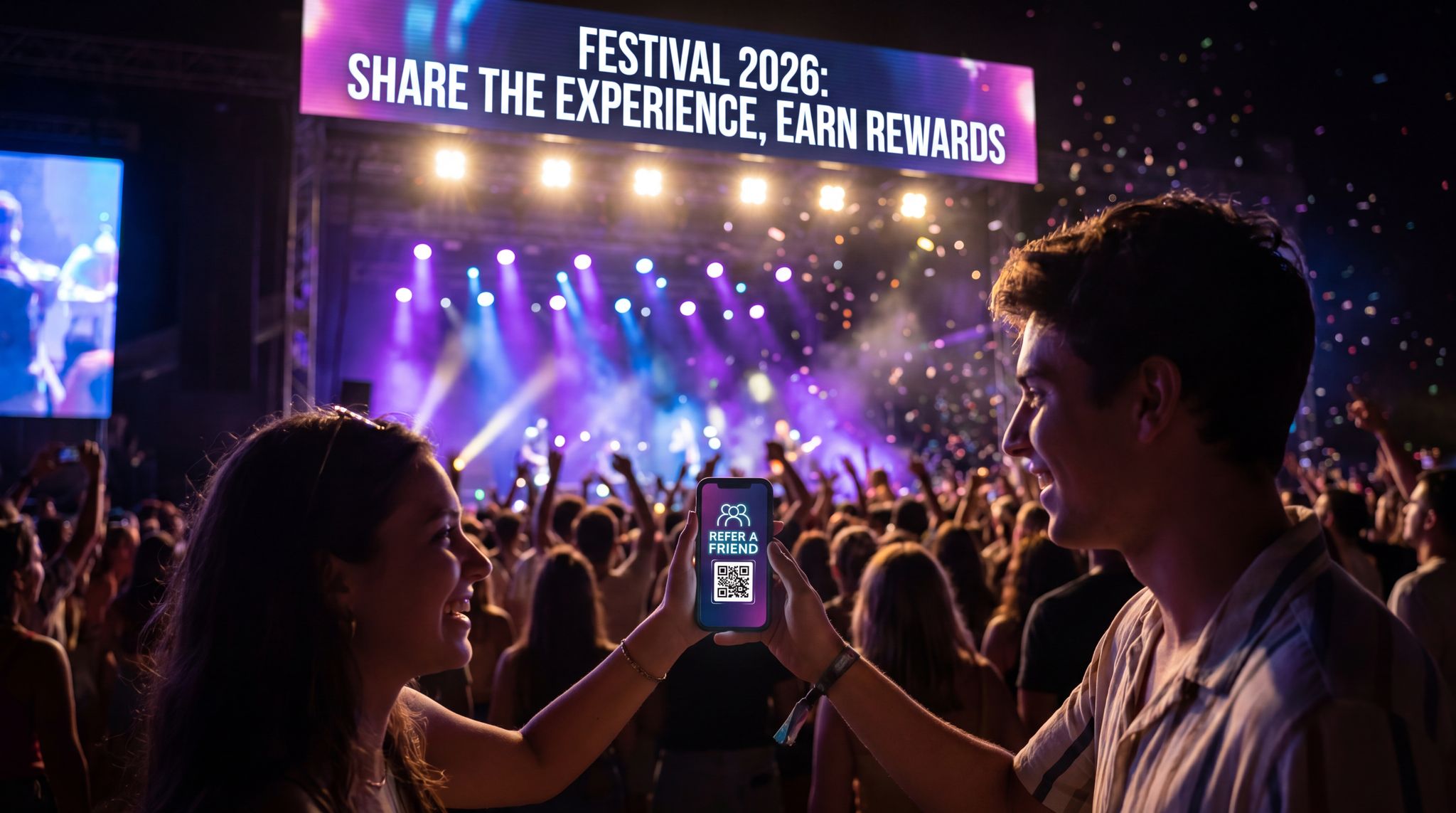
Ticket Fairy's built-in referral rewards system incentivizes attendees to share your event, delivering 15-25% sales boosts and 30x ROI vs paid ads.
This strategic alignment is especially crucial for emerging operators. If you are researching how to start a music venue business, developing a foundational marketing plan is just as important as securing your physical space or liquor license. A well-documented promotional strategy proves to investors and early booking agents that you know how to drive foot traffic and consistently sell out shows in a competitive market.
Beyond just securing initial funding, understanding how to effectively market your new space ensures you can weather the unpredictable first year of operations. Venue owners who prioritize audience acquisition strategies from day one are far better positioned to maximize their overall income and establish a permanent foothold in their local nightlife scene.
This approach is how small one-off shows evolve into annual festivals with coherent branding and loyal followings. Ensuring a great fan experience is key to building that loyalty, so reviewing how top festivals keep fans coming back year after year offers ideas on delighting attendees. With a strong foundation in place, you can also implement multi-year festival growth strategies to keep scaling your event sustainably. For a deeper dive into crafting win-win partnerships, read our insider playbook on festival sponsorship strategies.
5. Having a marketing plan helps you stick to your budget
Lastly, working with a marketing plan ensures that you stay safely within your budget. In the excitement of event promotion, it’s all too easy to go overboard on spending – a few extra boosted posts here, a last-minute billboard there – and suddenly your marketing costs are far above what you intended. In fact, one Ticket Fairy analysis suggests that 90% of festivals get budgeting wrong (often by not planning details), leading to cost overruns. A marketing plan puts real numbers to every idea, forcing you to break down the costs and see what is feasible and what is not. By plotting out your expenditures in advance and assigning a budget limit to each channel or tactic, you create a financial roadmap that’s hard to ignore.
For instance, if you’ve allocated $5,000 total for marketing, the plan might specify $2,000 for social media ads, $1,000 for influencer partnerships, $500 for local flyers, $500 for email marketing, and $1,000 for PR outreach. Having these figures laid out prevents the temptation to keep throwing money at something once you’ve hit the cap. You’ll be able to make savvy decisions like “We’ve spent our $2k on Facebook and Instagram ads, so let’s not impulsively add more there – if needed, we’ll reallocate from another channel.” This discipline keeps your campaign efficient and cost-effective.
For example, here’s a sample marketing budget allocation for a mid-sized concert event:
| Marketing Activity | Allocated Budget (USD) | % of Budget |
|---|---|---|
| Social Media Advertising | $2,000 | 40% |
| Influencer & Street Promotion | $1,000 | 20% |
| Print Media & Flyers | $500 | 10% |
| Email Marketing Campaigns | $500 | 10% |
| PR & Media Outreach | $1,000 | 20% |
| Total | $5,000 | 100% |
In the above breakdown, you can clearly see how the plan translates into numbers. By setting these limits before you start the campaign, you encourage creativity within constraints (“How can we maximize impact with just $500 for email?”) rather than spending blindly. Sticking to a budget is not just about saving money – it’s also about ensuring a decent return on investment. If you overspend by $5,000 but only gain an extra $2,000 in ticket sales, that’s a net loss and an inefficient campaign. A marketing plan helps you avoid those mistakes by keeping your spending aligned with expected revenue at each step.
Warning: Recent industry reports show that many events operate on thin margins. According to a 2024 study by France’s National Music Center, two-thirds of music festivals ran a deficit in 2024 – even ones with strong attendance – as detailed in Le Monde’s report on the fragile economics of festivals. Skyrocketing artist fees (up 30–40% since 2020) and higher production costs were major factors. This illustrates that without a careful budget and marketing plan, even sold-out events can lose money. Don’t fall into the trap of overspending on marketing (or any aspect) without a plan to justify it.
By planning your marketing spend wisely, you also leave room to actually profit from your event. The ultimate goal isn’t just selling tickets – it’s making sure the revenue from those ticket sales exceeds your costs. A good plan will project the expected revenue from each marketing effort and allow you to compute an approximate ROI for the campaign. If something doesn’t pencil out (e.g. a proposed $10,000 ad spend that might only bring in $5,000 in extra ticket sales), the plan will flag that before you commit the money. In addition, modern ticketing platforms have features to help stretch your marketing budget. For example, Ticket Fairy’s platform offers a referral program that turns your attendees into ambassadors – fans get unique referral links to share, and you can reward them for each friend who buys a ticket. This kind of word-of-mouth marketing can significantly boost sales at very low cost, effectively giving you more bang for your buck. By using tools like these and sticking to the budget outlined in your plan, you’ll avoid nasty surprises and keep your event finances healthy.
At the end of the day, a well-crafted marketing plan is one of the best investments you can make in your event’s success. It keeps your team motivated and creative, aims your messaging at the right people, lays out a smart strategy, and guards your bottom line. Now it’s time to put that plan into action and watch the results. Many promoters find that a strong plan, paired with the right ticketing partner, yields substantial gains in revenue. You can increase your ticketing income by nearly 20% using Ticket Fairy’s all-in-one platform with built-in marketing tools and analytics. Put your marketing plan into action and boost your event’s ticket sales – explore how Ticket Fairy’s event ticketing solution can help you maximize revenue.
To further enhance your planning, consider learning how to leverage event themes into a cohesive marketing strategy. You should also explore important strategies to bolster audience interest and review techniques on how to keep your event’s online presence front and center.
Frequently Asked Questions
What is a music event marketing plan?
A music event marketing plan is a comprehensive blueprint outlining every strategy, task, goal, and cost required to successfully launch a concert or festival. It guides teams through phases from initial buzz to final ticket sales and includes contingency measures for unexpected hurdles like artist cancellations or severe weather.
What are the key components of an event marketing plan?
Essential components include a detailed target audience definition, a unique value proposition, and a mix of marketing channels and tactics. A robust plan also features a content release schedule, a timeline with specific milestones, a strict budget allocation, and defined metrics or KPIs to measure campaign performance.
How does a marketing plan increase event revenue?
A strong marketing plan increases revenue by ensuring campaigns accurately target the right audience, which boosts conversion rates and ticket sales. Statistics indicate that 50–61% of marketers report improved ROI from properly marketed events, while organized planning prevents wasted ad spend and aligns the entire team toward financial goals.
Why is defining a target audience important for music festivals?
Defining a target audience allows organizers to craft specific messaging and choose channels that resonate with likely attendees, such as 18–24-year-old EDM fans. This precision prevents wasting budget on uninterested groups and drives high demand, similar to how Tomorrowland sold over 500,000 tickets in 20 minutes through targeted hype.
How does a marketing plan help manage event budgets?
A marketing plan enforces financial discipline by assigning specific dollar limits to activities like social media ads or PR outreach before the campaign begins. This prevents impulsive overspending—a common issue where 90% of festivals struggle with budgeting—and ensures that marketing costs remain aligned with projected ticket revenue.
How does a structured plan improve marketing brainstorming sessions?
A structured marketing plan acts as a creative brief that focuses brainstorming sessions, preventing chaotic or disconnected discussions. By providing a clear framework and defined goals, the plan motivates team members to propose specific, actionable tactics that fit into the overall strategy rather than starting from a blank canvas.
What are the key phases of music event promotion?
Effective music event promotion is typically broken down into distinct phases: the teaser phase to build initial hype, the announcement and presale phase to reward loyal fans, the general on-sale phase for broad audience acquisition, and the close-out phase to drive last-minute ticket purchases.
Where can I find examples of marketing plans for concerts?
You can find samples of marketing plans through industry resources, ticketing platforms like Ticket Fairy, and B2B event management templates. A standard concert marketing plan example will usually include an executive summary, target audience personas, a phased promotional timeline, and a detailed budget breakdown.
What are the most effective channels for marketing concerts?
Effective channels for marketing concerts include highly targeted social media advertising based on streaming data, artist cross-promotion, and venue-specific email blasts. Leveraging the performer’s existing audience through exclusive presale links and utilizing local PR in the venue’s immediate radius are also proven tactics in successful concert marketing.
How does music venue marketing differ from festival promotion?
Music venue marketing focuses on building a consistent, year-round local brand and retaining a regular patron base across a diverse calendar of events. In contrast, festival promotion is typically a high-stakes, months-long campaign driving toward a single weekend or multi-day experience. Venue operators must market the space’s atmosphere and reliability alongside individual concert lineups.
How can organizers maximise revenue through events?
To maximise revenue through events, organizers should implement a multi-tiered ticketing strategy, offer VIP upgrades, and leverage attendee data to secure targeted sponsorships. A strong marketing plan highlights these premium options to the right audience segments, ensuring that you aren’t just filling the room, but optimizing the lifetime value of every ticket buyer.
What should a marketing plan for music venues include?
A marketing plan for music venues should include strategies for building a consistent local brand, rather than just promoting individual shows. Key elements involve local SEO optimization, loyalty programs, weekly themed nights, and partnerships with neighborhood businesses to drive regular foot traffic and retain a loyal patron base.
How does marketing a music festival differ from a standard concert?
Marketing for music festivals requires a longer promotional timeline and focuses on selling a comprehensive, multi-day experience rather than just a single headlining performance. A dedicated music festival marketing plan typically incorporates phased lineup announcements, destination travel appeals, and experiential highlights like art and camping to justify the higher ticket price and time commitment.
How should promoters use an artist or album marketing plan template?
Promoters should request an artist or album marketing plan template from a performer’s management to align venue promotions with the act’s release schedule. Synchronizing your concert marketing plan with their peak media visibility maximizes ticket sales and ensures ad spend is highly efficient.
What are the most effective marketing strategies for music festivals?
The most effective marketing strategies for music festivals focus on selling a comprehensive, multi-day experience. Key tactics include launching tiered ticketing campaigns to drive early urgency, leveraging artist cross-promotion, partnering with lifestyle influencers, and utilizing experiential content that highlights on-site amenities like art installations and camping.