Getting people to your event is only half the battle – delivering a flawless show is the other half. Every great promoter must also be a great producer, especially when it comes to staging. In today’s booming live events market, production quality can make or break the experience. Major players are putting on more shows than ever; Live Nation alone staged over 50,000 concerts in 2023, entertaining 145 million attendees worldwide, a figure that EventVesta’s industry statistics report indicates is a 20% jump from the prior year. At the same time, fans’ expectations are higher: as noted when IQ Magazine analyzed the 2024 festival summer season, 71% of European festivals were over 80% sold-out (up from 64% in 2023) – crowds are back in force, and they demand an unforgettable stage experience.
Staging isn’t just about aesthetics – it’s a complex production with significant investment. Production (stage, sound, lighting) typically consumes 20–30% of a festival’s budget, a reality that highlights what many festivals get wrong about budgeting, and large events easily spend millions on staging alone, often requiring complex financial planning and allocation. Cutting corners here can be costly and even dangerous. Experienced stage managers often say that if you think preparation is expensive, try dealing with an on-stage accident. In fact, industry veterans emphasize preparation above all. As one festival playbook notes, inside the festival technical production playbook, “flawless festival production means spectacular stages, powerful sound, dazzling lights, and safe shows” – and none of that happens by accident.
This guide breaks down seven essential steps behind the perfect event stage. From assembling a crack technical team to double-checking every bolt and cable, these steps are drawn from real-world production experience and standards used by top festivals. By the end, you’ll know how to set up a stage with confidence, ensuring artists can shine and attendees go home raving about the show.
At its core, understanding what event staging entails is the first hurdle for any promoter. Staging an event goes far beyond simply renting a platform; it encompasses the structural engineering, power distribution, rigging, and safety compliance required to support a massive live production.
Free Tool: Model Promoter Payouts
Flat-percentage, flat-per-ticket, or tiered-bonus commission structures — get per-promoter payouts and total commission as % of gross. Free calculator.
Mastering event stage production requires a blend of creative vision and rigorous technical execution. For festival organizers and venue operators, treating this discipline as a holistic ecosystem—where audio, lighting, structural engineering, and crew logistics intersect—is the key to scaling from a local gig to a world-class mega-event.
Developing a comprehensive event staging strategy builds upon these core elements to create a unified roadmap for your production. Rather than treating the build as a series of isolated logistical tasks, top-tier promoters integrate their staging plans into the earliest phases of site design. A robust strategy aligns the physical infrastructure with the creative vision, ensuring that vendor timelines, crew coordination, and budget allocations are mapped out long before the first truss is flown.
Ready to Sell Tickets?
Create professional event pages with built-in payment processing, marketing tools, and real-time analytics.
When mapping out this strategy, organizers must account for all the physical staging elements for events. These core components go beyond the main performance deck to include load-bearing roof systems, modular drum risers, ADA-compliant ramps, and heavy-duty crowd barricades. Selecting the right combination of these structural pieces ensures that the setup can safely support both the technical rigging and the dynamic movements of the performers.
Ultimately, staging an event is about creating a secure, dynamic environment that elevates the performance while mitigating risk. Whether you are building a temporary structure in a greenfield site or augmenting an existing venue’s infrastructure, mastering the fundamentals of event staging ensures your production is both spectacular and structurally sound.
A crucial layer of this structural mastery involves the event fabrication process. While standard truss and decking form the skeleton, custom fabrication brings the creative vision to life. This specialized workflow encompasses the design, engineering, and off-site construction of bespoke scenic elements—such as branded DJ booths, intricate 3D stage facades, and custom VIP viewing decks. For festival producers, integrating this custom build phase early in the timeline is vital. It ensures that all fabricated pieces are shop-tested for weight-bearing safety and modularity before they ever reach the festival grounds, allowing for a seamless, rapid on-site assembly that perfectly aligns with the standard staging infrastructure.
When planning a dedicated stage setup for a concert, the technical demands often shift from general event requirements to highly specialized audio and lighting configurations. A professional concert stage setup must accommodate dynamic touring rigs, complex backline changes between support acts and headliners, and specific acoustic treatments. Whether you are sourcing stages for a concert series in a municipal park or upgrading an indoor venue’s infrastructure, tailoring the structural footprint to the specific genre and touring package is critical for operational success.
Automated Waiting Lists for Sold-Out Events
Capture demand when tickets sell out and automatically notify waitlisted buyers when tickets become available through cancellations or resale.
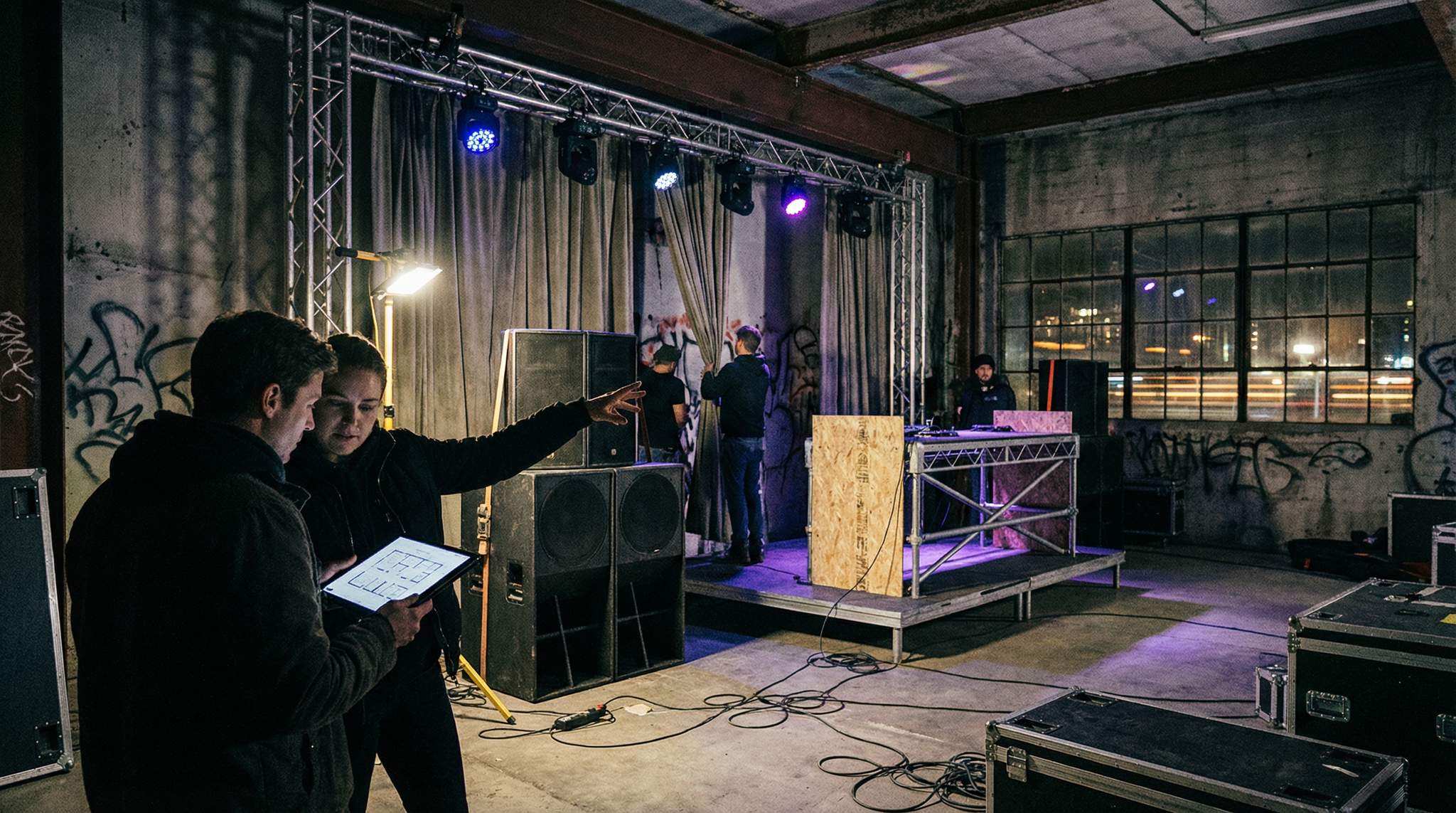
The physical process of setting up a stage for a concert demands a rigorous, phased approach. Before any audio arrays are flown or lighting trusses are raised, the foundational deck and load-bearing roof systems must be fully secured and inspected. Setting the stage correctly at this foundational level prevents costly delays later in the build schedule. For festival producers, this means coordinating heavy machinery, scaffolding vendors, and local union stagehands in a precise sequence so that the structural skeleton is ready for the technical production teams to take over.
1. Build and Prepare Your Stage and Tech Teams
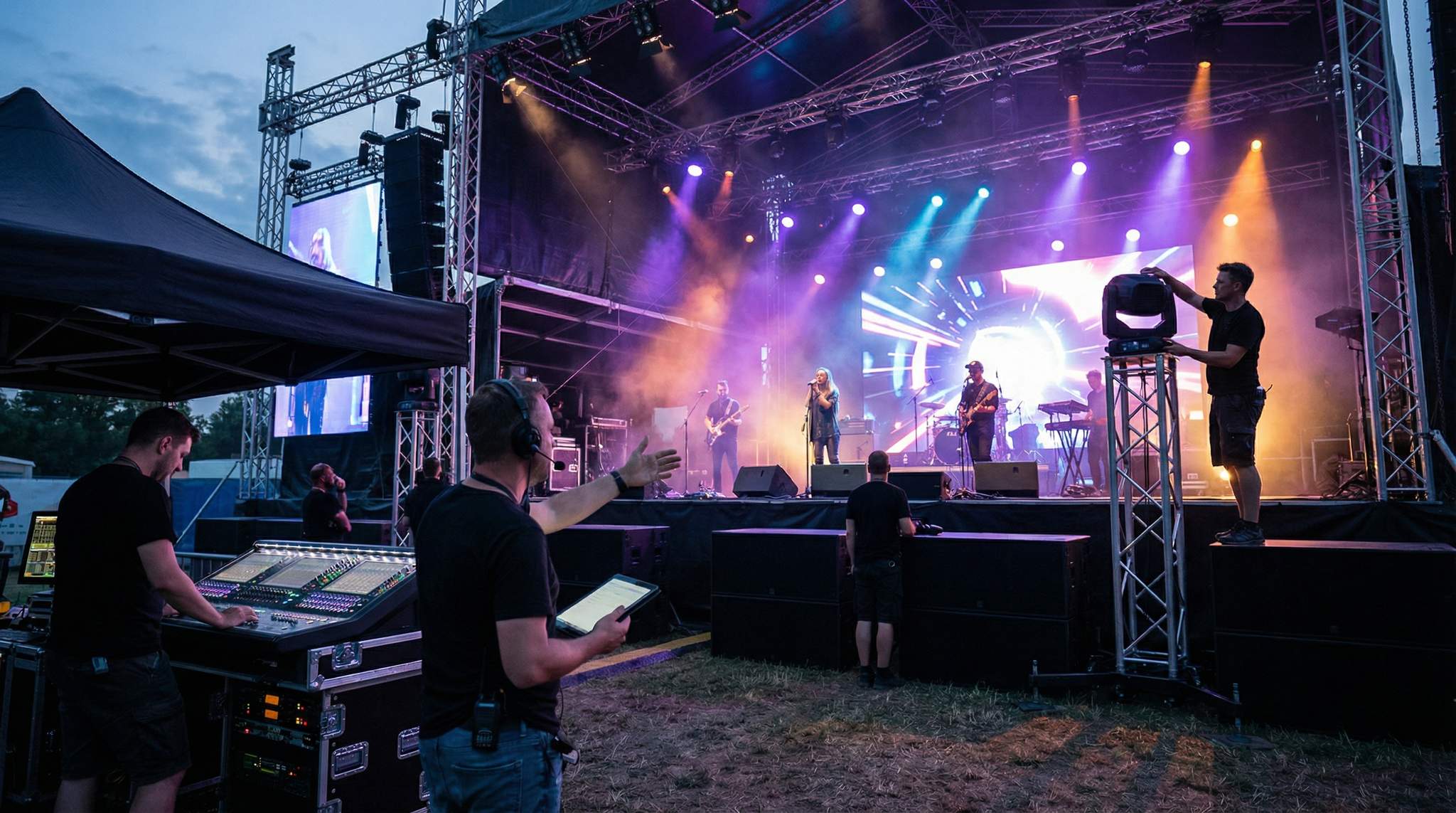
A perfect stage starts with the right team. Live events are too complex for one person to manage everything, so assign specialized crews to handle specific aspects of the stage. For example, create dedicated teams or point people for lighting, sound, video/AV, rigging, and backstage operations. This way, each team can focus on their domain and communicate needs or issues clearly, rather than tripping over one another. Seasoned festival producers recommend structuring crews into departments so things stay organized and nothing falls through the cracks. In practice, this approach keeps everyone accountable and reduces misinformation.
Grow Your Events
Leverage referral marketing, social sharing incentives, and audience insights to sell more tickets.
Key Stage Production Roles:
* Production Manager – Oversees the entire production, from scheduling load-in to budgeting and vendor coordination. They’re the general keeping all teams in sync.
* Stage Manager – Directs all on-stage activities. They cue performances, manage stage timings, and ensure lighting, sound, and special effects cues happen at the right moment.
* Technical Director – Heads the technical teams (sound, lighting, video). They troubleshoot technical issues and make sure all equipment is installed and working to spec.
* Lighting Designer/Operator – Designs the lighting show and operates the lighting console. They craft the mood for each performance with colors, movement, and effects that wow the crowd.
* Sound Engineer – Manages audio quality. A front-of-house engineer balances the mix the audience hears, while a monitor engineer ensures performers can hear themselves on stage.
* Video Director – Coordinates any video content or live streams. They control screens, projectors, and camera feeds so even the back of the crowd stays engaged via IMAG (live feed on big screens).
* Backline Technicians – Handle musical instruments and band gear. They set up drum kits, tune guitars, and swap broken strings or batteries on the fly to keep the concert going smoothly.
* Wardrobe/Makeup – Support the performers’ appearance. For concerts with costume changes or themed attire, a wardrobe team and makeup artists help artists look their best and stick to the show schedule.
* Riggers – Install and maintain the rigging systems that hold lights, speakers, and effects. They are trained in securing trusses, hoists, and safety cables so that heavy equipment hangs safely above the stage.
* Safety Officer – (Often overlooked) Monitors safety compliance. This person checks that all staging elements meet regulations and that emergency protocols (like fire extinguishers, exits) are in place. They’ll pause the build if something is unsafe.
* (Optional) Pyrotechnician/SFX Operator – If your show has fireworks, flame jets, confetti cannons, or other special effects, a licensed expert must handle them. They ensure these effects are set up according to codes and fire marshal rules, and they execute the cues safely during the show.
Each of these roles is critical. Splitting responsibilities like this might seem excessive for a smaller event, but even at a modest concert, you should have at least one person each “owning” sound, lights, stage management, and security.
Pro Tip: Establish a clear chain of command early. Decide who each team reports to (for example, tech crews report to the Technical Director, who reports to the Production Manager). This hierarchy keeps decision-making efficient – especially under show-time pressure – and avoids confusion when issues arise.
In building your team, start early. Top festivals book experienced crew members months in advance because skilled riggers, engineers, and managers are in high demand. In recent years, festivals worldwide have faced a staffing crunch as live events exploded in number, according to current event industry statistics and trends. To tackle this, many producers now use innovative recruitment and retention strategies – from tapping gig workers and local stagehand unions to offering better pay and career paths – to secure a reliable team, effectively solving the festival staffing crisis. Some events even turn to tech solutions: for instance, 2025 saw festivals using automation to fill labor gaps like self-serve lighting pre-programming and AI-assisted sound checks. Embracing smart tech can alleviate repetitive tasks, but it’s no substitute for human expertise. There’s no algorithm for manually securing a loose truss or for intuitively riding the live audio mix of a band – you need seasoned pros for that.
Collect Any Attendee Data at Checkout
Add custom registration fields to your checkout — dietary needs, t-shirt sizes, company names, and more. Conditional logic and per-ticket-type fields.
Finally, make sure every team member understands the overall game plan. Hold a kickoff meeting (or video call) well before the event to walk through the stage schedule, special requirements, and contingencies. Encourage questions and input – often a veteran crew member will foresee a challenge others missed. By assembling an experienced, well-briefed stage team, you lay the foundation for a smooth production. As festival organizers share in conferences like ILMC, a well-prepared crew is the backbone of any successful show. When show day arrives, you want a team that’s “on the same page,” ready to orchestrate expert on-site operations and keep the event running like clockwork.
2. Run Soundchecks and Identify Issues Early
Never skip a soundcheck – it’s your last, best chance to catch problems before the audience arrives. A proper soundcheck is more than just a quick mic test; it’s a full run-through of the technical elements of your show. Typically done a few hours before doors open (or the day prior for a festival), soundcheck involves the artists or their stand-ins playing a song or two on stage while the crew tests every piece of equipment:
- Audio: The sound engineer will verify every microphone, instrument feed, and speaker. They’ll walk the venue to ensure the mix is clear at front-of-house and that stage monitors (or in-ear monitors) give performers the sound they need. Any buzz, crackle, or feedback gets traced and fixed now. If the bass is overpowering in one corner of the venue, this is when to re-balance it.
- Lighting: The lighting team runs through the programmed light show or basic cues. They’ll check that each lighting fixture is responding, aimed correctly, and that moving lights hit their marks. Burnt-out lamps or malfunctioning LEDs can be replaced before showtime. They may also rehearse spotlight tracking for key moments.
- Video & Effects: If you have LED video walls, projectors, or live cameras, the video director will test all visuals on the big screens. Likewise, special effects like CO2 cannons or pyrotechnics might do a dry run (often just a brief burst) to ensure they’re working and properly timed. This is coordinated so it doesn’t surprise anyone on stage.
Think of soundcheck as a dress rehearsal for the stage. It’s a chance to experience how all the tech components work together. Encourage your performers to use this time to get comfortable on stage – to move around, check their sightlines, and request any adjustments. For example, a singer might realize they need the wedge monitor volume higher, or a DJ might ask for the lighting to be less blinding in their eyes. It’s far better to handle those requests now than during the show.
As the organizer or production manager, pay close attention during soundcheck and take notes. Walk the full audience area: how does the stage look and sound from various spots? Is there a weird echo at the back? Are the side LED screens visible to people on the far edges? Also, watch the crew and artists interact – are there any miscommunications or uncertainties? If, say, the artist expected a certain drum kit configuration or the guitarist needs a taller amp stand, note it and get it addressed. This is the time to spot safety issues too. Did a lighting truss cable start to sag? Is there gaffer tape peeling up where a dancer could trip? Fix it now.
Pro Tip: Always build in buffer time after soundcheck to resolve issues. If doors open at 7 PM, plan to finish soundcheck by 5 PM. That way, if you discover a blown speaker, you have an hour or two to swap it out or rewire things. For peace of mind, record a bit of the soundcheck from the audience perspective (many digital consoles allow you to record the output). You can play back a snippet in an empty venue to double-check that the mix is perfect even after everyone leaves the stage.
Most importantly, use soundcheck to foster communication. Encourage artists to voice any concerns – maybe they want a darker stage for one ballad, or they plan to do a crowd interaction that needs a spotlight. Likewise, have each team lead report “all clear” or flag remaining issues after the run-through. By the end of soundcheck, you should have a checklist of final tweaks and a confident feeling that the stage is show-ready.
Smooth Entry With Mobile Check-In
Scan tickets and manage entry with our mobile check-in app. Supports photo ID verification, real-time capacity tracking, and multi-gate coordination.
3. Ensure All Sound, Lighting, and Stage Equipment Runs Smoothly
After soundcheck, it’s time to fine-tune and troubleshoot based on what you learned. This step is all about making sure every system and piece of gear is running smoothly and will withstand the intensity of the live show. Essentially, you’re converting the notes from soundcheck into action items and double-checking every technical element. Think of it as quality control before the main event.
Start with a quick debrief: gather your sound, lighting, video, and stage teams and review any issues noted during the rehearsal. Prioritize critical fixes first – for example, if one speaker stack had intermittent sound, that’s a top priority repair. Assign team members to each task, and confirm once it’s done. This is where an effective communication system (like radios or a crew intercom) is invaluable: you can coordinate fixes in parallel and keep everyone updated.
It’s wise to run through a technical checklist at this stage. Here’s a sample of key items to verify:
| System | Pre-Show Checklist – Verify: |
|---|---|
| Sound (PA & Monitors) | All speakers and subs are working (no dead drivers). No hum or feedback at idle. Test backup microphones and DI boxes; have spares at the ready. Volume limiters set to avoid overshoot of local noise regulations. |
| Lighting | Every fixture is responding to the lighting console. Gels, gobos, or video content are in place. Aim and focus are correct for the first scene. Safety cables secure on overhead lights. Console cue sheets are updated with any last-minute changes from artists. |
| Power & Generators | Fuel levels are topped up for generators; primary and backup power tested. No overheating cables or overloaded circuits (check distro amperages). UPS (uninterruptible power supply) in place for critical systems like the mixing desk (so a power flicker doesn’t kill the show). |
| Stage Structure & Rigging | All trusses, chains, and supports have been inspected. Wind braces and weights (ballast) are set if outdoors. Stage barriers in front of the stage are locked in position (for crowd safety). No loose screws or components on stage ramps and platforms. |
| Backline & Instruments | Instruments are tuned and ready. Backup guitars or mics are on standby. Amp settings/tone were saved during soundcheck (take a photo or mark with tape). Stage hands know the plan for quick gear changes between acts if applicable. |
| Video & Special FX | All video content is queued in the media server. Test a few seconds of any intro or interlude video on the big screen. For live cameras, ensure each feed is reaching the switcher. Confirm special effects (like CO2 jets, confetti cannons) are loaded and armed only when needed, with safety zones clear. |
| Comms (Crew Communication) | Radio check on all channels – every key crew member should respond. Spare batteries charged for wireless intercom packs. Emergency stop signals or code words are known to all (e.g., how to cut music in a medical emergency). |
This may seem exhaustive, but top production teams swear by thorough checklists. According to festival risk management and safety planning secrets, a stage show must be treated like an airplane takeoff – every system is double-checked for functionality and security. It’s far better to spend 30 extra minutes now than to have a preventable failure during the show.
As you verify equipment, also synchronize your teams. The lighting and video operators might coordinate to adjust a scene if one projector is less bright. The sound engineer might work with the backline tech to swap a noisy guitar cable. This cross-talk between teams can catch issues that a siloed approach misses. Encourage a culture where crew members speak up if they notice something off – even if it’s outside their direct role. A rigger noticing a buzzing sound from a speaker can alert the audio team, for example.
By the time you finish these checks, every console should be preset and saved for showtime. Many modern lighting and sound consoles allow you to save settings – do that now, so you have a recall point if something gets accidentally changed. If possible, run a brief final rehearsal of one or two cues (with or without performers). For instance, you might cue the intro lighting and music for the first song to ensure it flows correctly, then immediately blackout. This reassures everyone that all systems are truly go.
No Hidden Fees, Just Honest Pricing
One all-inclusive fee covers the platform, payment processing, support, and every feature. Free events are always free. No setup costs, no surprises.
Incorporating technical redundancies is another hallmark of a smooth stage production. Where budget allows, have backups: a secondary mixer on standby, a spare projector lamp, an alternate power feed to the stage. These backups are insurance – you hope not to use them, but if a critical piece fails at showtime, you can recover in seconds. High-profile tours often carry entire duplicate systems for this reason.
Finally, confirm that communication channels are open. The stage manager should be able to reach every team (via radio or talkback mic) instantly during the show. If any crew member feels unsure about what to do if something goes wrong, clarify it now. When every amp is humming nicely, every light is shining bright, and every team member is confident, you can breathe easy knowing the stage is fully prepared for the audience.
Beyond the technical gear, a flawless event stage setup must strictly adhere to local and structural event staging requirements. Depending on your municipality, staging requirements for events often dictate specific wind-speed ratings for outdoor roof structures, maximum weight loads for flown PA systems, and mandatory fire-retardant materials for backdrops. Venue operators and promoters should always consult with structural engineers and local fire marshals during the initial design phase to ensure the physical build meets all safety codes before a single piece of equipment is hung.
Navigating formal event staging requirements also means securing the proper permits well in advance. Local authorities will typically request detailed schematics of your event stage setup, including weight load calculations for flown audio arrays and fire marshal approvals for any scenic elements. Failing to meet these strict compliance standards can result in last-minute show cancellations or hefty fines.
To successfully navigate these staging requirements for events, promoters should compile a comprehensive structural dossier. This documentation typically includes stamped engineering drawings, flame-resistance certificates for all soft goods (like drapes and scrims), and detailed ballast plans for outdoor roof systems. Proactively submitting these materials to the local building department and fire marshal not only expedites the permitting process but also establishes your reputation as a safety-first event operator.
Executing a safe event stage setup also requires a strict timeline. Load-in should be phased so that heavy structural elements—like the main deck and roof—are fully secured and inspected before lighting and audio crews begin flying their gear. This phased approach prevents bottlenecks and ensures that structural integrity is never compromised by rushed technical installations.
Let Fans Pay Over Time
Offer flexible payment plans that split ticket costs into manageable installments, making higher-priced events accessible and boosting conversions.
When setting up a stage, weather contingencies and site topography also play a massive role in structural decisions. If you are setting up stages on a greenfield site, ground leveling and ballast distribution become your first line of defense against high winds and uneven terrain. Setting the stage for a safe show means treating the ground support system with as much reverence as the high-end audio gear it holds.
4. Design the Stage from the Audience’s Perspective
When the audience walks in and the lights go down, the stage becomes the center of their universe. That’s why you must consider the stage from the audience perspective in all your planning. Put simply, design and set up your stage to maximize the audience’s enjoyment, sight, and sound.
Start with sightlines. Every attendee should have a clear view of the performers (or at least of a video screen showing the performers). If your venue is flat and there are no elevated seating areas, this usually means raising the stage high enough and possibly installing IMAG screens (giant LED screens or projection) so people in the back can see details. Avoid placing tall decor or gear in sightline pathways – e.g., don’t put a big lighting tower dead center in front of the stage where it blocks the view. Walk the audience area (or use a drone or scaffolding to mimic the highest spectator’s eye level) to check what the stage looks like from all angles. Make adjustments if any section has an obstructed view.
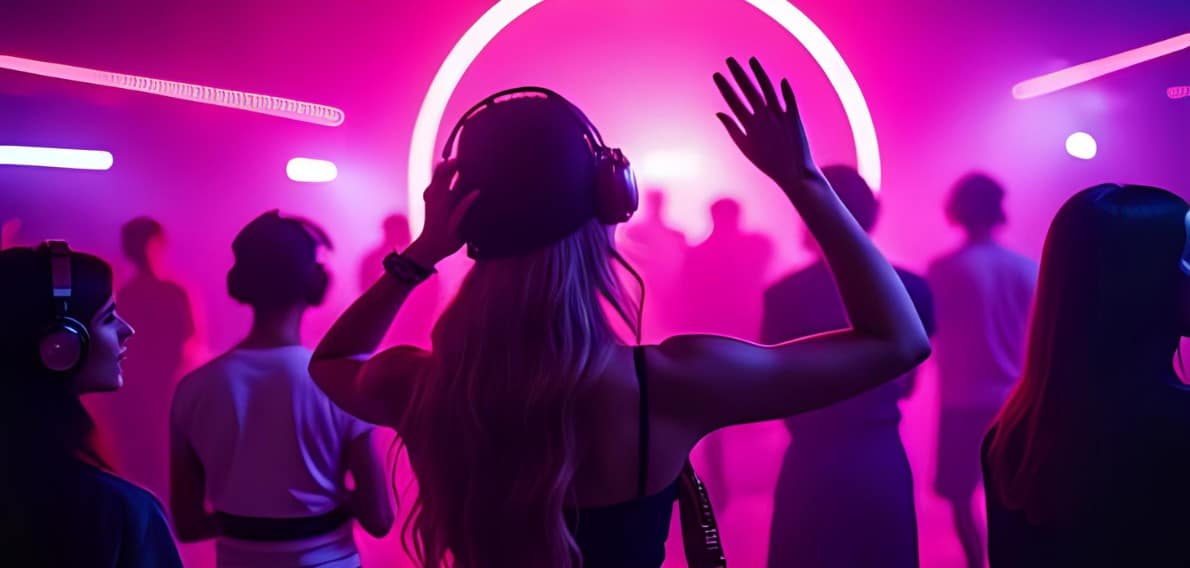
Don’t forget the visual impact of the stage. A well-designed stage captivates the audience from the moment they enter. Think about thematic elements, lighting color schemes, and set pieces that fit your event’s vibe. For example, a EDM festival stage might have towering LED panels and pyrotechnics to amp up the crowd, whereas a folk music stage might opt for a warm, intimate backdrop with decorative banners. Visuals should also be stimulating throughout the show – incorporate dynamic lighting that moves with the music, or interactive elements like CO2 jets or confetti at the climax of a performance (assuming you have the budget and it fits the artist’s style). These wow-moments give attendees something to gush about on social media and in post-event surveys.
While designing for spectacle, keep practicality and safety in mind. The audience’s perspective isn’t just what they see, but what they feel. For instance, if your event is outdoors in summer, consider their comfort: provide shade near open daytime stages, or misting fans to cool down the front rows if it’s very hot. Top producers even coordinate attendee experience services and safety protocols – for example, avoiding strobe lighting that could trigger epilepsy in vulnerable fans (or at least posting warning signs), and angling pyrotechnics or lasers so they won’t hit the crowd. If your show includes intense lights or fireworks, ensure the fallout zone is calculated so that hot debris can’t reach the audience.
Accessibility is another key factor: today’s audiences are diverse, including people with disabilities. Make sure there are accessible viewing areas with good sightlines to the stage (often slightly elevated platforms off to one side for wheelchair users) and that those areas have line-of-sight to interpreters or captioning for stage performances if you provide them, ensuring fans can still experience the show. Simple additions like a ramp for wheelchair access or an ASL interpreter visible on the side of the stage can make a huge difference – and 79% of attendees say customer service and inclusivity on-site are crucial to their overall experience.
Pro Tip: During rehearsals or down times, view your stage as a fan would. Go to various audience positions (front, middle, extreme sides, back) both in daylight and after dark if it’s an evening show. Check if any lighting is blinding at certain angles, or if video content is readable from far away. If you have the resources, bring in a focus group of a few people – perhaps volunteers or staff – to give feedback on the stage from the crowd perspective. They might notice things you overlooked, like a glare on the screen or muffled sound under a balcony overhang.
Furthermore, as part of your design for a summer music festival or multi-day concert, you need to showcase performers, set times, and emergency info clearly. With so many elements in play, how can you help your audience focus? The most effective strategy is utilizing dedicated digital signage and side-stage LED totems that rotate essential schedule updates between sets. By separating informational displays from the main performance screens, you keep the crowd informed without distracting from the artist’s visual production.
Integrating these informational displays into your overall event stage setup requires careful placement. Position schedule totems and ticketing or VIP upgrade kiosks at natural crowd choke points—such as near entrances or food and beverage zones—so attendees can easily digest the information without blocking the main viewing areas.
Ultimately, every decision – from the height of the drum riser to the color of the spotlight at encore – should answer the question: “Does this make the experience better for the audience?” Eventgoers bought tickets to be entertained and immersed in the performance. By designing your stage with their eyes and ears in mind, you ensure that they get the show they came for (and ideally, a whole lot more). A satisfied audience not only has a great time – they also become your best marketing asset for the next event.
5. Communicate With Artists and Performers
Your stage exists to showcase the talent, so it’s only logical to collaborate closely with your artists and performers on its setup. Open communication with performers (and their tour managers or production managers) is essential to avoid surprises and to enable the artists to deliver their best show. Remember, the band or DJ on stage knows their act intimately – they can offer insights into how to arrange the stage for optimal performance flow.
Start early with artist riders and stage plots. Well before the event, obtain the technical rider from each artist. This document typically lists their required gear, stage layout preferences, sound monitor needs, and any special requests. Don’t just file these away – study them and clarify any points of confusion. For example, if a band’s rider says “two guitar amp stacks and a drum riser 2ft high, 8ftx8ft” but your stage only has a 4ftx4ft riser, you need to resolve that discrepancy in advance. It could mean renting additional staging or negotiating a different setup with the artist. Artists also often provide a stage plot (a diagram of where each member and piece of equipment is positioned on stage) and an input list (detailing every audio input like mics and instruments). Use these to map out the stage physically. Mark with tape where the keyboard goes, where the lead singer’s mic stand will be, etc. This ensures on show day that setup matches what the artist expects when they walk on.
If you are new to production and wondering exactly what is a stage plot, it is essentially a top-down architectural map of the band’s physical footprint. A comprehensive plot illustrates the exact placement of drum risers, vocal mics, pedalboards, and power drops. Having this visual guide is a cornerstone of an efficient event stage setup, allowing your stagehands to pre-wire the deck and position backline gear accurately before the talent even arrives at the venue.
Ultimately, every decision – from the height of the drum riser to the color of the spotlight at encore – should answer the question: “Does this make the experience better for the audience?” Eventgoers bought tickets to be entertained and immersed in the performance. By designing your stage with their eyes and ears in mind, you ensure that they get the show they came for (and ideally, a whole lot more). A satisfied audience not only has a great time – they also become your best marketing asset for the next event.
5. Communicate With Artists and Performers
Your stage exists to showcase the talent, so it’s only logical to collaborate closely with your artists and performers on its setup. Open communication with performers (and their tour managers or production managers) is essential to avoid surprises and to enable the artists to deliver their best show. Remember, the band or DJ on stage knows their act intimately – they can offer insights into how to arrange the stage for optimal performance flow.
Start early with artist riders and stage plots. Well before the event, obtain the technical rider from each artist. This document typically lists their required gear, stage layout preferences, sound monitor needs, and any special requests. Don’t just file these away – study them and clarify any points of confusion. For example, if a band’s rider says “two guitar amp stacks and a drum riser 2ft high, 8ftx8ft” but your stage only has a 4ftx4ft riser, you need to resolve that discrepancy in advance. It could mean renting additional staging or negotiating a different setup with the artist. Artists also often provide a stage plot (a diagram of where each member and piece of equipment is positioned on stage) and an input list (detailing every audio input like mics and instruments). Use these to map out the stage physically. Mark with tape where the keyboard goes, where the lead singer’s mic stand will be, etc. This ensures on show day that setup matches what the artist expects when they walk on.
If you are new to production and wondering exactly what is a stage plot, it is essentially a top-down architectural map of the band’s physical footprint. A comprehensive plot illustrates the exact placement of drum risers, vocal mics, pedalboards, and power drops. Having this visual guide is a cornerstone of an efficient event stage setup, allowing your stagehands to pre-wire the deck and position backline gear accurately before the talent even arrives at the venue.
Invite artists (or their reps) into the planning process. A quick conversation can reveal details that a generic rider might not include. For instance, perhaps the singer plans to do a song while walking through the crowd – if you know that ahead of time, you can have a wireless mic and security ready. Or a DJ might mention they have a surprise guest coming on for one track, which means you should prepare an extra mic on standby. If the event will be live-streamed, coordinate with artists about camera angles or any stage movements they plan, so your video team doesn’t miss a moment. In 2024 and 2025, many performers incorporate multimedia elements (like dancers, on-screen visuals, or interactive moments) into their set – be aware of these. For example, if a pop star plans to bring 20 dancers on stage for the finale, you must ensure the stage size (and structural support) can handle that, and that those dancers know their spacing relative to speakers or edges.
Communication is a two-way street. Share your stage plans with the artists as well – provide them a simplified stage design or plot of your own, especially if you have a unique stage setup (like a runway, B-stage, or an uncommon shape). Artists appreciate knowing the terrain: where the edge drops off, which areas might have pyrotechnic pods, or how far the crowd barriers are (some singers love to interact at the barricade, so they’ll want to know if it’s 5 feet from stage or 20 feet). By giving them this info, you enable them to adjust their show if needed. For example, if the stage is extra tall, a performer might ask for stairs down to the crowd or plan fewer crowd interactions.
During soundcheck (as covered in Step 2), encourage artists to treat it as their rehearsal too. This is when many performers will let you know any last wishes: “Can I get a blue spotlight on me during the acoustic song?” or “I’ll need a chair on stage for one segment.” It’s far easier to accommodate these requests with a few hours’ notice than on the fly. Make sure your stage manager or artist liaison is present and attentive during these run-throughs to capture all feedback.
One of the most critical conversations to have is about safety and show stops. Let artists know you have their safety in mind. If there are any ‘no-go’ situations (like “Don’t go past this mark because there’s a gap” or “This prop will shoot flames, stand clear until it’s done”), communicate that clearly. At the same time, inform them of your emergency protocols – for instance, if an artist sees something concerning in the crowd and wants to pause the show, they should know how to signal your crew (many events establish that the performer can simply stop and speak into the mic, and the crew will fade the music and bring up house lights). The tragic crowd incidents in recent years have underlined how vital artist communication is in emergencies.
Lastly, respect the artist’s creative input but also be honest about constraints. If a band asks for something outside your budget or timeline (“We want a 40-foot LED wall behind us” and you don’t have one), discuss alternatives: perhaps a smaller screen or special lighting pattern instead. Artists usually understand if you can’t fulfill every wish, as long as you’re upfront and try to meet them halfway. Many veteran performers have played hundreds of stages – they can often adapt if you give them information and work together. By building a cooperative relationship, you not only ensure a better show but also position yourself as a trusted, artist-friendly organizer (which gets around in industry circles!). When artists feel taken care of, they tend to deliver high-energy, positive performances that electrify your audience. It’s a win-win that starts with good communication.
6. Set Up Your Backstage Area for Success
A perfect event stage isn’t just what the audience sees – it also relies on a well-run backstage area. Backstage is the engine room of your event: it’s where artists prepare, crew coordinate, and any number of behind-the-scenes tasks happen to support the on-stage action. Taking time to set up your backstage properly will pay dividends in how smoothly your show runs and how happy your performers and staff are throughout the event.
Plan out dedicated spaces. Even at a small venue, try to carve out areas for key functions: a green room for artists to relax, a production office or table for your staff to handle admin, a catering station for food and drinks, and storage space for equipment cases. If it’s a larger festival or concert, you may need multiple dressing rooms or trailers – one per headliner or per several smaller acts. Also consider a quick-change area directly side-stage if artists have fast costume changes during the show (a simple pop-up tent with a mirror and light can work). Each space should be clearly labeled and ideally have a schedule posted (e.g., set times, or catering meal times) so everyone knows what’s happening.
Security is paramount backstage. Limit access to backstage areas using wristbands, laminates, or badges. Station trained security personnel at entry points to check credentials. The last thing you need is an overzealous fan – or an intoxicated individual – wandering into the backline area or an artist dressing room. In 2025, many events use digital credential systems (QR codes or RFID badges) to control access, but even a paper pass system must be enforced by people. Make sure your security team also knows the etiquette – artists and crew need a calm environment, so security should be firm but polite, and know when to give performers some space (for example, not hassling a headliner’s VIP guest who has the right pass). It’s a delicate balance between keeping backstage secure and keeping it artist-friendly.
Provide for basic comforts and needs. Live performances are physically and mentally demanding, so give your artists and crew the amenities to recharge. At minimum, have water, sports drinks, and snacks readily available. Many artists have hospitality riders – within reason, try to fulfill popular items (like a fruit platter, tea/honey for singers, or some beers for after the set). A comfortable seating area goes a long way; even if it’s just a few couches or clean folding chairs with a rug, it gives performers a spot to chill. Check that restrooms are accessible (for outdoor festivals, usually nice portable trailers for artists). If your event runs all day or into late hours, arrange for at least one hot meal for artists and crew. Nothing boosts morale like warm food after soundcheck or a late-night slice of pizza post-show.
It’s also wise to have some key services on standby backstage. For instance, have a medic or first aid kit accessible – performers are not immune to sprained ankles or heat exhaustion. If an artist has an issue like a wardrobe malfunction or tech problem, who will assist? Ensure the wardrobe person (if you have one) has a sewing kit and steamer ready, and that techs have toolkits for emergency instrument or gear repairs. Many festivals create a “quiet room” or wellness area backstage now – a small tent with minimal noise where performers can warm up vocals, do stretches, or just collect themselves. In an era of increasing awareness of mental health, providing a low-stress zone can be very appreciated by talent.
Assign backstage management. Just as you have a stage manager out front, appoint a backstage manager or coordinator to run the behind-scenes area. This person (or team) will ensure artists are in the right place at the right time – for example, giving a ten-minute warning to the next band to be ready, escorting them to side stage, and communicating any delays. The backstage manager also handles last-minute requests from artists. If a performer decides they need a different microphone or asks “Can we delay 5 minutes?”, that request goes to the backstage manager who then communicates with the production manager and other teams. This role is crucial to avoid confusion. Without a clear backstage point person, things can devolve into chaos with nobody sure who is handling what. As one guide on how expert on-site operations orchestrate success puts it, backstage should operate like a choreographed dance – every move planned and everyone knowing their part to keep the show on schedule.
Effective backstage management in events also involves establishing clear communication protocols between the artist liaison, stage manager, and security teams. By treating the backstage area as a highly controlled operational zone rather than a VIP hangout, promoters can drastically reduce changeover times and prevent unauthorized personnel from disrupting the technical crew’s workflow.
Maintaining a calm, organized backstage has direct effects on your show’s success. Artists who feel taken care of and safe will go on stage in a better mindset, likely giving a better performance. A crew that has a base of operations (with shade or heat, as needed, and a place to sit when off duty) will stay sharper through the long hours. Conversely, a chaotic backstage can cause delays or even accidents – imagine an uncredentialed person messing with equipment, or an artist missing their stage call because they weren’t informed. Prevent these issues with solid planning.
Warning: Avoid turning backstage into an afterthought or a free-for-all. A common mistake is letting too many people crowd the backstage area – friends of friends, extra personnel, etc. Not only can this distract performers, it also increases the risk of something going wrong (theft of gear, safety incidents, or even an unauthorized person running on stage). Keep it tight: if someone doesn’t need to be backstage, kindly ask them to watch the show from out front. You can always do the after-party or meet-and-greet after the show, once the stage is wrapped.
When you set up backstage effectively, you create a support system for the onstage spectacle. Performers can focus on their music or act, crews can coordinate in real-time, and any surprises can be managed swiftly. A well-run backstage is the unseen hero of event production – it keeps the show on track from the shadows, so the spotlight can shine where it belongs: on the stage.
Anticipating a common problem behind the stage—such as bottlenecked pathways during quick changeovers or blown circuits from unauthorized gear—is just as critical as front-of-house management. By keeping the backstage footprint strictly organized and limiting access to essential personnel only, you eliminate the chaotic problems behind the stage that often derail tight festival schedules.
7. Double-Check Everything (Then Check Again)
In the final hours before your event goes live, it’s time for the mantra: “Check your list twice.” This step is all about verification, redundancy, and ensuring everyone is absolutely ready. By now, you’ve covered hiring, testing, fixing, and designing – the finishing touch is a thorough final review that leaves nothing to chance. World-class producers often liken this to an airline pilot’s pre-flight checklist: even though the crew has flown hundreds of times, they still methodically confirm every instrument before takeoff. Your event stage deserves the same diligence.
Run through your master checklist item by item. Ideally, you have a written checklist (or digital app) that covers all critical components: stage structure secured, audio line check complete, lights programmed, artist kits (water, towels, setlists) in place, crew in position, communications tested, safety measures verified. Go through this list with your team leads. For each line, get a clear “yes, done” confirmation. If anything is “not done yet,” address it immediately or have a runner assigned to fix it. Don’t assume someone else has verified a task – explicitly check. Even small details matter, like ensuring gaffer tape is covering all cables on stage to prevent trips, or that the drum kit has fresh sticks and the guitars have been tuned again (instruments can drift out of tune as venue temperature changes, so many backline techs tune once more right before showtime).
Have a brief all-hands meeting (often called a “production meeting” or final crew brief). This is usually done about 30 minutes to an hour before doors open. In this meeting, the production manager or stage manager should quickly recap the plan: introduce key staff (in case some haven’t met), confirm the timing (e.g., “Opening act at 8:00 PM, Headliner at 9:30 PM, curfew 11:00 PM”), and go over any new updates (like “Weather is clear, no jacket required for crew” or “Artist will do a 2-song encore, be prepared for that”). Remind everyone of emergency procedures one more time – for instance, how to handle a medical incident in the crowd, or what code word will be used if there’s an onstage technical issue requiring a pause. This might seem like overkill, but in the heat of the moment people can forget, so a quick refresh helps. Many top festivals keep this briefing upbeat but focused – it boosts team confidence when they see all departments on the same page. The mantra is “no surprises.”
Now is also when you make final go/no-go calls on external factors like weather. If you’re outdoors and the forecast is iffy, actively monitor conditions. Use a weather radar app or have a weather professional service if you can (some large events hire meteorologists on show days). Set clear criteria for delays or evacuations (e.g., “If lightning is within 8 miles, we hold the show and announce for fans to seek shelter”). It’s tough, but safety comes first – for example, at Slovakia’s Pohoda Festival in 2024, organizers wisely suspended and then cancelled the final day when a severe storm hit, after a large tent collapsed and 29 people were injured at Pohoda Festival. Their quick action likely prevented worse outcomes. You never want to think about worst-case scenarios, but having a plan is part of being a trusted producer. Ensure your crew knows what to do if, say, high winds suddenly kick up – who will lower the sound towers or secure loose stage elements? Being meticulous about contingency plans protects your audience, artists, and staff. (Pro tip within a pro tip: if you can, walk through a brief “what if” drill – e.g., “What if power goes out?” – and have the responsible team give a quick answer. It’s like a fire drill for event pros.)
Before opening the doors, do one last walkthrough of the stage and backstage yourself (or delegate to a detail-oriented team member). Look for anything out of place: a prop left in the wrong spot, an amp that’s powered off, a pyro device that hasn’t been armed, a piece of trash on stage – yes, even cleanliness counts for presentation! Test all the little things: Do the stage curtains open smoothly? Is the setlist taped where the artist can see it? Are the camera operators in position and fed? This final sweep is your peace of mind moment. It’s normal to feel butterflies as showtime nears – that’s the adrenaline that live events give us. Channel it into focus. By the end of your double-check, every bolt has been tightened, every script reviewed, every person queued up.
When the moment finally comes and the lights go down, trust the preparation you’ve done. At this point, you’ve executed all seven steps with care: you have a solid team, all technical aspects tested, an audience-centric design, artists who are confident in the setup, a humming backstage, and a rigorously checked plan. Now let the show unfold. You and your crew will still stay vigilant throughout – adjusting sound levels as the venue fills, keeping an eye on weather, communicating constantly – but these will be fine tweaks on top of a rock-solid foundation.
And if something small does go awry (which can happen even to the best), you’re ready to handle it. Perhaps a light goes out mid-show; you’ve got a spare fixture or the lighting operator can reassign a different light to cover the spot. Maybe an artist extends their set by one surprise song; your stage manager will signal the crew and adjust accordingly. When you’ve checked everything twice, these surprises won’t faze you – in fact, the audience may never realize anything unexpected happened at all.
Conclusion
Your event stage is the focal point of the entire experience – it’s where the magic happens. By following these seven steps, you can approach stage production with confidence and competence. You’ve learned to assemble specialized teams and plan roles like a pro; to run thorough soundchecks and technical rehearsals; to iron out equipment issues in advance; to design the stage through the audience’s eyes; to collaborate with artists for a performer-friendly setup; to organize backstage as a safe, efficient haven; and to double-check every detail for a smooth show.
In the fast-paced world of live events, preparation and professionalism are your best insurance against mishaps. Veteran producers will tell you that when a stage show goes perfectly, it looks effortless – but that effortlessness is the result of meticulous effort behind the scenes. The true measure of success is a crowd that goes home thrilled, not even aware of the dozens of people and hundreds of tasks that came together to create that seamless concert or festival set.
By beefing up your stage production E.Q. (Experience and Quality), you’re not only avoiding disasters – you’re building a reputation. Artists talk to each other, and if your event consistently has a well-run stage, you’ll become known as an organizer they love to work with. Attendees will buy tickets to your future events knowing they’ll get a top-notch show. In an industry where trust and word-of-mouth are gold, delivering an excellent stage experience yields loyal fans and partners.
So next time you’re gearing up for an event, use this guide as your checklist. Tailor the details to your specific show, and don’t be afraid to go the extra mile in planning. Whether it’s a 500-person club gig or a 50,000-person festival, the perfect stage is within reach when you apply know-how and diligence. Now, get out there and make some magic!
Maximize the number of people attending your events and sell 20% more tickets than normal by setting your event up with Ticket Fairy.
Frequently Asked Questions
What are the essential roles in a stage production team?
A complete stage production team includes a Production Manager for oversight, a Stage Manager for cues, and a Technical Director for equipment. Specialized roles are also crucial, such as Lighting Designers, Sound Engineers for audio balance, Video Directors for screens, and Riggers to ensure all overhead equipment is installed safely.
Why is running a soundcheck critical for event success?
Soundchecks act as a technical dress rehearsal to catch problems before the audience arrives. This time allows the crew to balance audio levels, test lighting fixtures, and verify video content. It also lets performers adjust their monitor mixes and get comfortable on stage, ensuring the actual show runs without technical interruptions.
How do you design a stage for the best audience experience?
Design the stage from the crowd’s perspective by verifying sightlines and using IMAG screens so distant attendees can see details. Ensure even sound coverage across the venue, potentially using delay towers for large festivals. Additionally, consider accessibility by providing elevated viewing platforms and clear paths for attendees with disabilities.
What information is included in an artist’s technical rider?
A technical rider details an artist’s specific requirements, including necessary equipment, stage layout preferences, and sound monitor needs. It often accompanies a stage plot and input list, which map out instrument positions and audio channels. Producers use this document to prepare the stage and resolve equipment discrepancies before the event begins.
What are the requirements for a functional backstage area?
A functional backstage requires dedicated spaces like green rooms for artists, production offices, and catering stations. Security must enforce access control using credentials to keep the area safe. Essential amenities include restrooms, power, and a designated backstage manager to coordinate artist movements and handle last-minute requests efficiently.
What should be verified during a final pre-show stage check?
Final checks involve verifying that all audio, lighting, and video systems are operational and that backup power is ready. The crew must inspect rigging and stage structures for safety, ensure instruments are tuned, and test communication radios. This is also the time to review emergency protocols and monitor weather conditions.
What are the standard event staging requirements?
Standard event staging requirements encompass structural safety codes, weight load limits for rigging, wind-speed ratings for outdoor roofs, and fire safety regulations. Promoters must ensure the physical stage build complies with local municipal permits and engineering guidelines to guarantee a safe environment for both performers and attendees.
What is a stage plot?
A stage plot is a detailed, top-down diagram showing exactly where artists, instruments, microphones, and monitors will be positioned during a performance. It is a critical tool for the production crew, enabling a faster and more accurate event stage setup by mapping out power and audio needs in advance.
What is event staging?
Event staging is the comprehensive process of designing, engineering, and constructing the physical performance area for a live show. It includes the deployment of the main platform, roof structures, rigging points, power distribution, and safety barriers necessary to support artists and technical equipment.
What is an event staging strategy?
An event staging strategy is a comprehensive plan that aligns the technical, structural, and creative elements of a live production. It encompasses site design, equipment logistics, safety compliance, and crew coordination to ensure the stage build supports the overall vision and runs flawlessly from load-in to load-out.
What are the core staging elements for events?
The primary staging elements for events include the main performance deck, load-bearing roof structures, modular risers for drum kits or keyboards, truss systems for lighting and audio, and safety barriers. Additional components like ADA-compliant ramps, weather-resistant backdrops, and scenic branding panels are also essential for a complete, professional setup.
What are the typical phases of an event stage setup?
A professional event stage setup follows a strict phased timeline to ensure safety and efficiency. It begins with marking the site and building the load-bearing sub-structure and roof. Once the main deck is secure and inspected, rigging teams fly the audio and lighting trusses, followed by the installation of video walls, backline gear, and safety barricades.
What does event stage production encompass?
Event stage production encompasses the end-to-end management of all technical and structural elements required for a live performance. This includes structural engineering, rigging, audio-visual integration, power distribution, and crew coordination, ensuring the physical build safely supports the creative vision of the festival or concert.
How can you help your audience focus on performers, times, and ticket info at a summer music festival?
To help your audience focus when there are many elements in play, utilize dedicated digital signage and side-stage LED totems. By separating informational displays—such as set times, ticketing upgrades, and emergency protocols—from the main performance screens, you keep the crowd informed without distracting from the artist’s visual production.
Why is backstage management in events so important?
Effective backstage management in events is crucial for maintaining tight production schedules and ensuring artist safety. By controlling access, coordinating quick changeovers, and providing a secure, organized environment for technical crews and performers, organizers prevent logistical bottlenecks that could otherwise derail the live show.
What are the key differences in a stage setup for a concert compared to a general event?
A stage setup for a concert prioritizes specialized audio-visual rigging, dynamic backline changeovers, and acoustic optimization tailored to live music. Unlike general corporate or speaking events, concert stages require reinforced load-bearing roofs to support heavy touring lighting rigs and expanded wing space to manage instrument swaps between opening acts and headliners.
What are the key considerations when setting up a stage for a concert?
Setting up a stage for a concert requires a phased load-in strategy, beginning with ground leveling and structural roof assembly before moving to technical rigging. Promoters must coordinate heavy machinery, ensure strict adherence to local engineering codes, and manage vendor timelines to build a safe, load-bearing environment for touring audio and lighting rigs.
What is the event fabrication process?
The event fabrication process is the end-to-end workflow of designing, engineering, and building custom scenic and structural elements for a live production. It typically involves off-site construction of bespoke pieces—like branded facades, custom risers, or immersive set designs—followed by shop-testing for safety and modularity before final on-site assembly.