Introduction
Imagine arriving at a vibrant cultural festival only to find unexpected obstacles – a steep ramp with no warning, a gravel path that your wheelchair struggles with, or no clear sign for the accessible viewing platform. Such scenarios leave attendees with disabilities feeling frustrated or excluded. In today’s world, clarity in accessibility communications is not just courtesy, it’s crucial. Many Deaf and disabled fans won’t even risk attending an event if they’re unsure about its access facilities, as noted by Attitude is Everything’s guide on welcoming disabled audiences. Providing detailed, honest information upfront – often with real photos and live updates – ensures everyone can plan ahead and enjoy the event. It also protects a festival’s reputation, as word travels fast when accessibility falls short. In short, clarity prevents disappointment.
Modern festival producers around the globe – from the Edinburgh International Festival in Scotland to Glastonbury in England, from Coachella in the US to Sydney Festival in Australia – are elevating their accessibility game. They’re sharing granular details like ramp gradients, terrain surfaces, door widths, and platform locations, often illustrated with actual photographs. They’re offering audio-described guides and captioned videos, running hotlines for bespoke needs, and updating information in real-time if layouts change. This guide draws on decades of festival production experience and real case studies to show how to communicate accessibility effectively for any festival, large or small, anywhere in the world. By communicating access features clearly and empathetically, festival organizers build trust with their audience, avoid negative surprises, and open their gates to a wider community of festival-goers.
Show, Don’t Just Tell: Using Real Photos for Accessibility Info
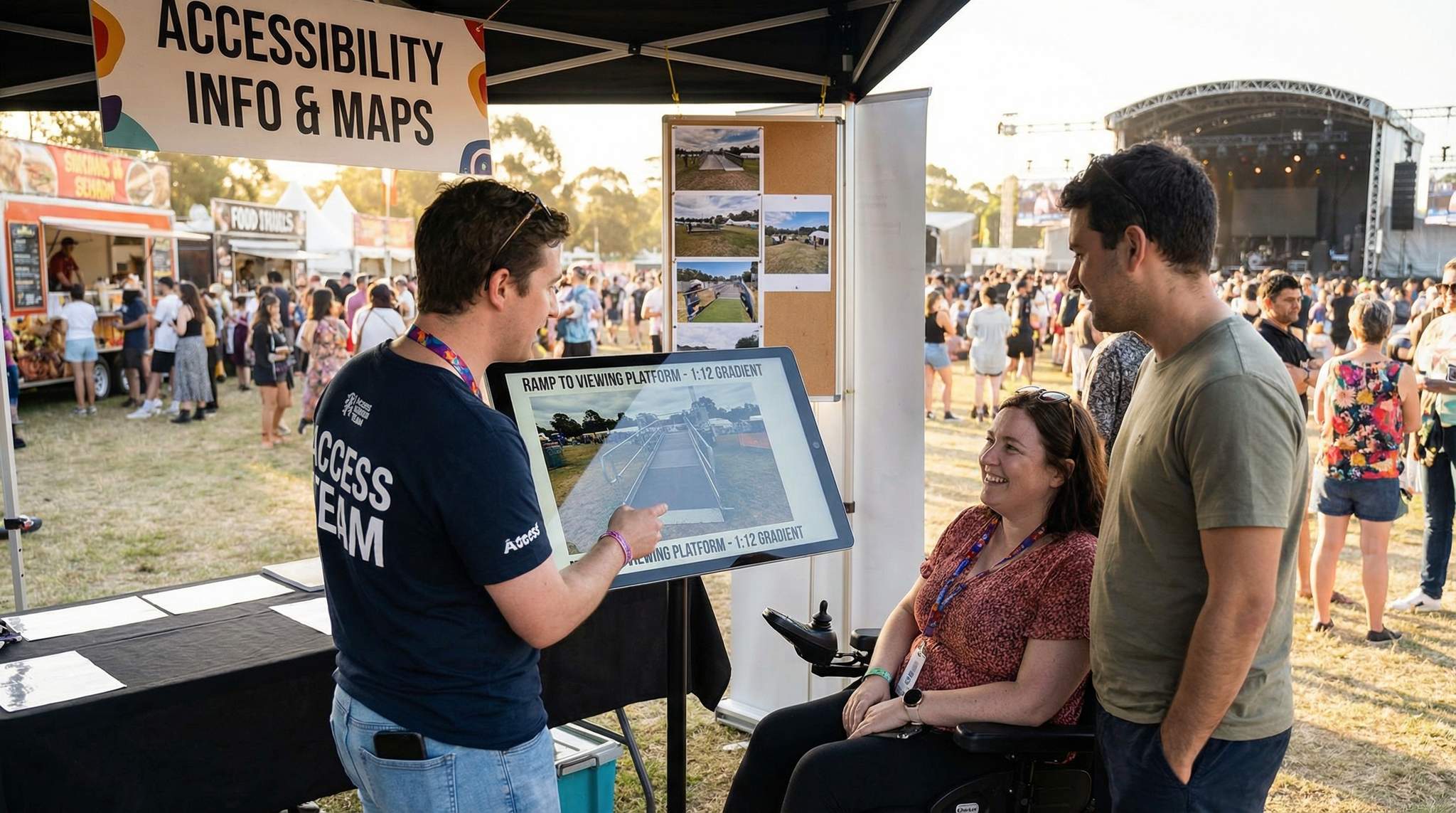
One picture can be worth a thousand words when it comes to accessibility. Describing an entry as “wheelchair-friendly” is good, but showing a real photo of that entrance (with a clearly marked 1.2m-wide gate and gentle ramp) is far better. Photos provide immediate visual context – they let attendees gauge for themselves if a ramp’s slope is manageable or if a doorway is wide enough for their powerchair. Many festivals have started to include images of key access features on their websites and guides. For example, accessible viewing platforms, disabled parking areas, and toilet facilities might be showcased in photos or short video clips. This transparency helps attendees plan: they can see the kind of terrain (grass, gravel, asphalt), the presence of handrails or ramps, and how close accessible platforms are to the stage.
Using real photos isn’t just about bragging – it’s about setting accurate expectations. If a path has a steep incline, a photo can convey the gradient more effectively than a phrase like “slight hill.” Similarly, a snapshot of an accessible campground or entrance queues can reassure ticket-holders that accommodations truly exist (and show how they work). Glastonbury Festival’s extensive 30-page accessibility guide, for instance, has been praised for “offering facts upon facts and, with them, something even money can’t buy: reassurance,” according to Condé Nast Traveller’s analysis of Glastonbury’s accessibility. It reads like a step-by-step visual tour – covering everything from maps of routes to photos of viewing platforms – so that attendees know exactly what to expect when they arrive, creating an emblem of accessibility for music lovers. This level of detail, crafted by a dedicated Access Team, preempts questions and anxieties, allowing festival-goers with access needs to roll in with confidence.
Free Tool: Size Your Festival Site
Zoned capacity planning for arena, campsite, parking and entry lanes — against UK Purple Guide and NFPA density standards. Finds your bottleneck zone.
Tips for using photos effectively:
* Highlight critical areas: Include images of ramps (with context of steepness), ground surface close-ups (dry grass vs. mud), doorway measurements, and any raised viewing areas. If there’s an accessible shuttle or golf cart service, show it in action.
* Provide descriptions: Always add concise captions or alt text explaining what the photo shows (“Main Stage viewing platform with ramp access, holds 20 wheelchairs”). This ensures visually impaired users get the same info via screen readers, and it reinforces the message in text form.
* Keep it real: Use actual on-site images (from previous years or venue visits) rather than idealized stock photos. Authenticity builds trust – if a wheelchair user sees a photo of last year’s festival showing someone like them enjoying from the accessible platform, they’ll feel more confident.
* Update visuals over time: If you make improvements (new pathways, better lighting, etc.), update your photos in the guide each year. Conversely, if certain infrastructure will look different (perhaps construction causing temporary routes), include new images to reflect those changes.
By visually showcasing accessibility features, festival organizers send a clear message: we see you, and we’ve got you covered. It turns an unknown into a known, which is incredibly empowering for attendees with disabilities who often have to meticulously pre-plan every outing. And it’s not just beneficial for them – detailed info with images can reduce last-minute access-related inquiries, and help your staff anticipate areas that might need extra assistance (for example, if a photo reveals a narrow path, staff can be stationed there to help).
Planning a Festival?
Ticket Fairy's festival ticketing platform handles multi-day passes, RFID wristbands, and complex festival operations.
Be Specific: Gradients, Surfaces, and Door Widths Matter
Accuracy in details can make or break an accessible experience. When communicating about festival venues or sites, include specific measurements and conditions that could affect attendees with mobility challenges. Don’t shy away from technical details – list them clearly so people can self-assess their comfort. What slope is that hill on the way to Stage Two? If it’s a 1:10 incline over 50 meters, say so. What are the ground conditions? If paths are mix of pavement and grass, note where the grass might become soft if it rains. For instance, Shambala Festival in the UK is refreshingly candid about its terrain: it warns that the event is in “a grassy field” with potential mud in wet weather, and even provides trackway details for power wheelchairs. By openly stating that, Shambala allows guests to prepare (bring appropriate wheelchair tires or boots) and manages expectations – no one arrives thinking it’s all smooth tarmac.
Here are key physical details to communicate for any cultural festival:
- Slopes and Gradients: If there are ramps or hilly sections, describe their steepness. e.g., “The main entrance ramp has a 5° incline (1:12 grade) over 3 metres” or “Path from parking lot to venue rises about 20 metres over a 100-metre distance (moderate uphill)”. This helps wheelchair users or those with stamina concerns gauge if they’ll need assistance.
- Surface Types: Clearly indicate whether paths are asphalt, concrete, packed dirt, grass, loose gravel, sand, etc. Each surface can pose different challenges (gravel can bog down wheels, wet grass can be slippery). If your festival includes areas of rough ground (like a wooded section or beach stage), mention it. Shambala’s guide, for example, explicitly notes that one wooded area has rougher ground and a gravel path that can be difficult for wheelchairs – exactly the kind of detail that allows attendees to choose alternate routes or request help.
- Doorway & Gate Widths: If your festival uses structures or buildings (museums, halls, or even portable toilets and trailers), list the clear width of doors and gates. Standard wheelchairs need about 32 inches (81 cm) minimum clearance (wider for power chairs). If your main gate has a narrower historic archway, flag it but also provide an alternate entry for wheelchairs (“Side gate on 5th Street is 1m wide and step-free”). For indoor cultural festivals or film festivals, include hallway widths, elevator sizes, or any tight spots in older venues – better to disclose upfront than to have someone stuck at an entrance.
- Step-Free Routes & Elevation Changes: Indicate where there are steps and where ramps or lifts are available. If certain attractions or stages are only reachable via stairs (perhaps an old building venue), be upfront and explain what arrangements exist (temporary ramps, platform lifts, or alternative programming). Mark on your site map all the step-free paths. If there’s a viewing platform, describe how to reach it (e.g., via a ramp next to the grandstand, or ask a steward for access). If an area isn’t accessible, make that clear so attendees can plan around it, rather than discover it on the day.
- Facilities Measurements: Provide heights or sizes for things like accessible toilet dimensions (especially if they’re larger “Changing Places” toilets with adult changing benches), or the height of service counters lowered for wheelchair users. These finer details show that you’ve thoroughly considered access.
Being specific demonstrates respect for your audience – it shows you understand the nuances of accessibility. It also reduces unpleasant surprises. A person using a mobility scooter will appreciate knowing in advance if, say, the “Artisan Market” area is on a grassy incline (so they might approach from a different direction or allocate more battery power). Similarly, noting that “all our food court tables are wheelchair-friendly height” or “the main hall has 5 cm thresholds at some doorways” helps someone bring a small ramp or ask staff for assistance at the right spot. The goal is no guesswork. When festival producers supply these nitty-gritty details, they empower guests to make informed choices – whether that means coming equipped with an all-terrain wheelchair, or simply feeling confident that they can navigate the event without issues.
Multi-Format Communication: Audio Descriptions and Captions
Detailed information should be accessible to all, which means providing it in multiple formats. Not everyone can read a PDF or see a map – some may rely on screen readers or audio, while others need visual content with captions. To truly welcome all attendees, festival communications must accommodate people who are blind, have low vision, are Deaf or hard-of-hearing, or have cognitive disabilities. Here’s how to ensure your accessibility info itself is accessible:
Grow Your Social Following With Every Sale
Require social media follows, shares, or playlist adds to unlock presale access or special pricing. Turn every ticket purchase into audience growth.
- Audio Descriptions for Guides: If you publish a written accessibility guide or map, also offer an audio version of it. This could be a narrated recording or an accessible audio file that people can listen to. For example, the Edinburgh International Festival provides its access guide not only as text but also in audio form via SoundCloud, ensuring better access for disabled audiences. An audio guide can describe key routes (“starting from Gate A, the path to the main stage goes straight for 100m on concrete, then there’s a slight right onto grass…”) and list facilities, effectively acting as a personalized walkthrough for someone who cannot see the printed map. Make sure to announce where fans can find this audio (on your website, festival app, etc.) and keep it updated if changes occur.
- Captioned and Signed Video Content: If you create videos (perhaps a “What to Expect” festival prep video or artist announcements), caption them and consider producing sign language interpreted versions. Captions benefit not only Deaf attendees but also anyone watching in a non-native language or noisy environment. The Edinburgh International Festival clearly labels which performances are British Sign Language-interpreted, Audio Described, or Captioned in its program, making it easy for Deaf or hard-of-hearing culture lovers to plan their visit. If you host pre-festival webinars or live Q&As for attendees, ensure there’s a sign interpreter or live captioning enabled.
- Alt Text and Transcripts: On your website and social media, every image of a map, festival layout, or venue feature should have alternative text describing it for screen reader users. Similarly, any audio-only content (like a podcast or announcement) should have a text transcript available. This way, people with hearing loss or those who prefer reading can get the same information. For instance, if you post a site map image showing accessible routes, the alt text might say: “Map of festival grounds highlighting accessible routes in blue, accessible toilets (15 total) with wheelchair icons, and three viewing platforms marked near Main, Second, and Acoustic stages.” It’s a bit of extra work but pays off in inclusivity.
- Adapt for Cognitive Accessibility: Consider providing “easy read” summaries or using icons and plain language for key info. Long paragraphs and complex terms can be daunting for some festival-goers with learning disabilities or who speak English as a second language. Break information into bullet points, use straightforward language (“Parking Lot C has 10 wheelchair spaces and is 100 meters from Entrance B”), and perhaps include pictograms (e.g., the International Symbol of Access ? on maps where facilities are).
By embracing multiple formats, you ensure no attendee is left in the dark. It’s also worth noting that accessible communication features often benefit everyone: many people without disabilities might still appreciate captions on a video if they’re scrolling in a quiet library, or find audio guides convenient when driving to the event. Plus, when you demonstrate through your communications that you value accessibility, you enhance your festival’s image. As one accessibility advocacy group aptly states, accessibility information online is a gateway – it shows your commitment to a truly inclusive and welcoming event, as highlighted by Attitude is Everything’s access guide. In practical terms, that commitment can translate to larger audiences and a loyal fan base, since attendees feel respected and will spread the word that “Festival X really cares about including everyone.”
Dedicated Hotlines and Personal Assistance: Be There for Bespoke Needs
Even with exhaustive online information, some attendees will have unique situations or questions that aren’t fully answered in a general guide. That’s why it’s essential to offer a direct communication channel – a human touchpoint like a hotline or dedicated email for accessibility inquiries. Many successful festivals set up an Accessibility Hotline and a monitored email inbox weeks or months before the event. The key is to make it easy for disabled attendees (or their family members/caregivers) to reach someone knowledgeable who can assist with specific needs.
Need Festival Funding?
Get the capital you need to book headliners, secure venues, and scale your festival production.
What a hotline or dedicated contact can do:
* Answer case-by-case queries (e.g., “Can I bring my own mobility scooter and charge it on site?”, “Is there a quiet room for a child with autism to take breaks?”, “Do you allow service dogs in all areas, and where can they relieve themselves?”). These are the kinds of detailed questions that a general FAQ might not cover, but are important for the individual asking.
* Facilitate advanced arrangements. For instance, if a festival-goer is on a ventilator and needs access to power in the camping area, your team can allocate a suitable spot or make arrangements once aware. Or if an attendee uses a sign language interpreter, they might coordinate meeting points or schedules for interpreted performances through the hotline.
* Provide reassurance and build trust. Just speaking to a real person who acknowledges their concerns can put an attendee’s mind at ease. It shows that your festival will treat them as a valued guest, not an afterthought.
When setting up such channels, ensure staff are trained in disability awareness and have the latest info on festival setups. It’s frustrating for a caller if the person on the other end is clueless or dismissive. Instead, empower your accessibility customer service reps (even if it’s just one or two people on your team) to be empathetic problem-solvers. They should have access to the festival layout, know the locations of all relevant facilities, and have authority to log special requests. Some festivals integrate this with ticketing: when someone buys a ticket and indicates they have access requirements, the ticketing system (like Ticket Fairy’s platform) can automatically send them info on how to contact the access team, or even allow them to submit requests right then and there. For example, a check box for “I will be bringing an essential companion” or “I need reserved wheelchair viewing” can trigger your team to reach out proactively.
Real-world example: The Reading Festival (UK) and Download Festival in England both require standard ticket purchase first, but then have an Accessibility Application process for booking specific services (like viewing platform access, campground accommodations). They advertise a dedicated email and phone line to guide attendees through those steps. Similarly, Coachella (USA) has an ADA information line and clearly states that accessibility is a priority, inviting attendees to call a specific number for assistance with any website or on-site access issues. By prominently providing these contacts on all channels (website, emails, social media), you signal that help is just a call or click away.
During the festival itself, continue this personal touch. If possible, keep the hotline staffed (perhaps during main entrance hours or show times) for any last-minute needs. Also, set up an Accessibility Info Point on-site – a booth or tent where people can drop in for help or loaner equipment (hearing assist devices, wheelchair charging, etc.). Shambala’s accessibility team, for instance, is based at an info point and encourages attendees to visit them for any issues, saying “the more we know about any problems encountered, the more we can help everyone to enjoy the festival,” a philosophy central to Shambala’s accessibility approach. Having that physical presence and an open invitation solves problems in real time – whether it’s a volunteer calling for a sign language interpreter, or dispatching a buggy to assist someone across the grounds.
Turn Fans Into Your Marketing Team
Ticket Fairy's built-in referral rewards system incentivizes attendees to share your event, delivering 15-25% sales boosts and 30x ROI vs paid ads.
In summary, be reachable. Whether it’s through a phone call, email, or in-person, make sure disabled attendees feel they have a direct line to the festival organizers for support. It’s a powerful confidence booster and can turn a potential deal-breaker situation into a manageable one. Plus, the feedback you get via these conversations is invaluable – it can highlight areas to improve in your accessibility plans for next year.
Live Updates: Adaptability When Layouts or Conditions Change
The only constant in live events is that things change. Weather can turn a field into mud, an elevator might break in a venue, or a last-minute site re-route could alter the accessible path. When such changes occur, real-time communication with attendees is paramount – especially for those with disabilities who rely on certain routes or facilities. Providing live updates about accessibility ensures that no one is left stranded or uninformed if the situation on the ground shifts.
Strategies for live accessibility updates:
* Event Apps and SMS Alerts: If your festival has a mobile app, include an opt-in alert category for “Accessibility Updates.” This way, if, say, heavy rain forces you to close a flooded walkway, you can push a notification: “Access update: The path between Stage 2 and parking lot B is waterlogged. Please use the West Gate route for a step-free alternative. Staff are on hand for assistance.” For attendees who might not use a smartphone app, consider an SMS broadcast system for those who register their phone number with the access team.
* Social Media & Website Banners: Use your official Twitter (X) account, Facebook page, and festival website to announce significant changes affecting accessibility. Keep the language clear and specific. Example tweet: “Update for our attendees with access needs: the accessible toilet by Arena 3 is temporarily closed for maintenance – nearest alternative is behind the main bar, 50m away. We’ll update when it’s fixed. #FestivalAccess”. Pin these updates or use Instagram stories for quick reach. The key is to use the same channels your attendees already follow for festival news.
* On-Site Signage and Announcements: Digital communication is great, but don’t forget on-site methods. If an accessibility feature moves or changes, put visible signs at the location. For instance, if the accessible viewing platform had to be relocated, post a sign at the old spot with directions to the new spot, and have staff there to redirect people. You can also utilize the festival PA system or MC announcements for critical updates (“Heads up: Due to a technical issue, the lift in the museum venue is out of service. Our team is working on it, and we have volunteers ready to assist anyone who needs help reaching the second floor.”). Ensure such announcements are also communicated in text form (like on screens or boards) for those who can’t hear them.
* Info Points and Staff Briefings: Keep your accessibility info point personnel and all security/stewards in the loop about changes. Often attendees will ask the nearest staff member when they notice something’s amiss (“The accessible restroom is locked, what do I do?”). All staff should either have the answer or know immediately whom to call. A quick daily briefing sheet for staff – even via WhatsApp – can include notes like “Accessible toilet #4 moved to south side of tent” or “Alternate wheelchair route marked in green signs due to construction by Stage 2.” This internal comms ensures the right information flows to attendees on the ground.
A great example of adaptability was seen at a UK festival that encountered a sudden downpour: Shambala Festival updated a bulletin board in the accessible camping area with information on which field paths had become especially muddy. They had already placed temporary metal trackways on some routes, but by alerting people to the worst spots, attendees could avoid those or ask for assistive transport. It’s this kind of proactive update that prevents a situation from turning into a disaster for someone with limited mobility. Another cautionary tale comes from an event where the lack of timely updates became a PR nightmare: at Wireless Festival in London, disabled fans discovered upon arrival that their viewing platform was far off to the side with a poor view, and the surrounding path was thick gravel, as reported in coverage of the Wireless Festival disability access issues. Many felt blindsided and voiced their anger online, saying it was nearly impossible to move around and that staff were unprepared for the access challenges. The lesson? If there are any shortcomings or last-minute location changes for access features, inform ticket-holders well in advance or as soon as you know, and offer remedies (e.g. shuttles, refunds, or improvements on the spot). Transparency, even about bad news, is better than silence.
In essence, treat accessibility updates with the same urgency and importance as you would a major schedule change or safety alert. Your audience is counting on certain accommodations – so if those shift, communicate swiftly and clearly. This agility not only averts individual disappointments but also shows the entire community that you’re actively looking out for everyone’s well-being.
Inclusive Marketing and Representation
Accessibility communication isn’t just a box to tick in the info section – it can be woven into your festival’s marketing and community engagement. Showing that your event is inclusive can actually boost interest and attendance. The key is to represent people with disabilities positively and make accessibility part of the conversation from the get-go.
Free Tool: When Should You Announce?
Pick your event date and genre — the free planner outputs a recommended announce, presale, on-sale and reminder schedule anchored to how your audience actually buys.
Consider featuring diverse festival-goers in your promotional materials. If you have photos or footage from past events, include some where disabled attendees are enjoying themselves – for example, a wheelchair user dancing in the crowd or a Deaf guest interacting with a sign-language interpreter near the stage. This isn’t about tokenism; it’s about normalizing the presence of disabled people at festivals. For a prospective attendee with a disability, seeing someone like them in the marketing can be incredibly encouraging (“Oh, they’ve had people like me there – and it looks like fun!”). Big festivals like Glastonbury and Roskilde often get media attention for their accessibility services, and featuring those stories or testimonials can enhance your festival’s image. In fact, some festivals invite disability advocates or bloggers to review their access and share experiences publicly – a great way to get an independent endorsement if you’ve done well.
When crafting marketing copy, mention accessibility highlights proudly. For instance, when announcing your lineup on your website or press release, you might add a line: “This year we’re expanding our accessible viewing areas and will have live captioning at the film screenings,” or “Tickets go on sale May 1, with free companion tickets for qualifying attendees – our Accessibility Team is here to help with any accommodations.” This signals that you value all fans. It’s also smart SEO and outreach: people do search for “[Festival Name] accessibility” – having that info upfront in your marketing means media and search engines will pick it up.
Community engagement is another facet: work with local disability organizations or influencers to spread the word. Perhaps host a pre-festival site tour for wheelchair users to come and see the grounds (or do a virtual tour livestream). Some festivals run accessibility awareness campaigns on social media – for instance, posting tips during Autism Acceptance Month about their upcoming sensory-friendly provisions, or celebrating the contributions of their accessibility volunteers. This not only educates your audience but also feeds into a positive narrative that your festival is welcoming and inclusive.
Lastly, ensure your ticketing process doesn’t alienate disabled customers. Complicated or unfair ticket policies have been called a “Wild West” for disabled customers in some places, according to BBC reports on theatre ticket policies. Avoid requiring excessive proof or hoops for basic accommodations. If your ticketing partner (e.g., Ticket Fairy) supports it, implement a simple check for anyone needing a free companion pass or accessible seating, with clear instructions rather than case-by-case negotiation. The easier and friendlier the purchase experience, the more likely people will follow through and attend. And once they attend and have a great time, you gain advocates who will praise your event to others.
In summary, incorporate accessibility into your festival’s story. Make it part of what defines your brand (“CulturalFest 2025 isn’t just the most fun weekend of the year – it’s also proudly accessible to everyone”). By doing so, you not only do the right thing morally and legally, but you also tap into the considerable “purple pound” (the spending power of disabled people) which in many countries is worth billions, a market potential highlighted by Purple Goat Agency’s insights on festival accessibility. Inclusivity is a win-win: it expands your audience and enriches the festival atmosphere with diversity.
Learning from Successes and Failures
Experience is the best teacher – and fortunately, the festival world has plenty of lessons, both from success stories and cautionary tales, to guide new producers in accessibility communications.
Free Tool: Project Your Bar Revenue
Per-head spend benchmarks by event type turned into projected bar and food revenue, with a stock-mix estimate and gross-margin line. Free calculator.
On the success side, we’ve seen how Glastonbury Festival became an emblem of accessibility. It wasn’t always perfect, but over years they invested in an Access Team, listened to feedback, and now issue one of the most comprehensive festival access guides around. They cover not just the basics but thoughtful extras (like detailed shuttle schedules for accessible transport, and even the lock codes for disabled toilets in the guide so attendees don’t have to chase staff for a key, a detail noted in reviews of Glastonbury’s access improvements). Glastonbury’s approach teaches us that anticipating needs – essentially answering questions before they’re asked – goes a long way. They also continuously improve; each year’s guide builds on last year’s feedback. Other festivals like Burning Man (USA) have an Accessibility Camp and guide, Primavera Sound (Spain) offers an Access Pass program, and the Edinburgh Fringe in Scotland pioneered searchable show listings by access type (captioned, signed, relaxed, etc.), making it easier for disabled arts lovers to find suitable performances. These examples succeeded because they treated accessibility communication as an integral part of planning, not a last-minute addendum.
We’ve also seen what happens when festivals get it wrong or ignore the importance of communication. The earlier example of Wireless Festival’s bad viewing platform is one; it sparked viral criticism because disabled fans felt like second-class citizens. In another case, a major European festival once advertised itself as accessible but failed to mention that a crucial pedestrian bridge had steps – many wheelchair users only discovered the long detour route after arriving, leading to angry reviews. The lesson: never oversell or sugar-coat your accessibility. If something is limited or still in progress, be honest. It’s better to say “we currently do not have an elevator to the gallery, but staff can assist with a portable ramp” than to say nothing and face outrage or heartbreak when someone can’t access a part of the event. Transparency can even earn you patience and goodwill; attendees appreciate honesty and will often work with you if they know you’re not hiding issues.
Another common pitfall is treating accessibility as static. A festival might do a decent job one year, then copy-paste the same info the next year without checking for changes – meanwhile the site layout changed or a construction project altered something. Always review and update your communications for each edition of the festival. What was true in 2022 might not hold in 2023. Doing a thorough walk-through (preferably with disabled advisors or consultants) each year before finalizing the guide is a great practice. Also, keep channels open for feedback during and after the festival. Some festivals send post-event surveys to attendees with disabilities specifically, asking what worked and what didn’t. This feedback loop can illuminate blind spots. For instance, you might learn that a sign was unclear or that people needed more info about medical services – and you can improve your communications accordingly.
In essence, the difference between success and failure in festival accessibility often comes down to empathy and information. The best producers step into the shoes of attendees with different needs and ask, “What would I want to know? What would make me feel safe and welcome?” They celebrate successes (like that one year with zero complaints about access, or when a grateful parent of a child with autism writes to thank you for the sensory room). And they treat the missteps not as disasters to cover up, but as lessons to be learned. By sharing both the triumphs and the failures openly (even within your team and industry forums), you contribute to a culture where accessibility is constantly improving across all festivals.
Frequently Asked Questions
Why is detailed accessibility information important for festivals?
Detailed accessibility information allows attendees with disabilities to plan ahead, reducing anxiety and preventing exclusion. Providing honest details about terrain, ramps, and facilities ensures safety and protects the event’s reputation. Clarity prevents disappointment and builds trust with the Deaf and disabled community, ensuring everyone can enjoy the experience.
What photos should festivals include in an accessibility guide?
Festivals should use real, on-site photos rather than stock images to show critical areas like ramp gradients, ground surfaces, and doorway widths. Visuals of accessible viewing platforms, toilets, and parking areas provide immediate context, helping attendees self-assess whether the environment suits their specific mobility needs.
Which specific accessibility measurements do festival-goers need?
Key measurements include ramp gradients, door and gate widths (minimum 32 inches), and specific distances between venues. Organizers must also describe surface types like gravel or grass and note elevation changes. Providing technical data allows wheelchair users to determine if their equipment can navigate the terrain safely.
How can festival organizers make accessibility information inclusive?
Organizers should offer information in multiple formats, including audio descriptions for maps, captioned videos, and plain language summaries. Using alt text for images and providing sign language interpretation ensures content is reachable for people who are blind, Deaf, hard-of-hearing, or have cognitive disabilities.
How does a dedicated accessibility hotline benefit festival attendees?
A dedicated accessibility hotline or email allows staff to answer bespoke queries not covered in general guides, such as specific medical needs or service dog policies. This direct line of communication facilitates advanced arrangements for equipment charging or camping and provides essential reassurance to attendees before they arrive.
How should festivals communicate last-minute accessibility changes?
Festivals must use mobile apps, SMS alerts, and social media to broadcast real-time updates about site changes like flooded paths or broken elevators. On-site signage and staff briefings ensure attendees are immediately redirected to safe alternatives, preventing attendees from being stranded by unexpected obstacles.
How can festivals improve inclusive marketing for disabled audiences?
Inclusive marketing features diverse festival-goers in promotional materials, such as wheelchair users or sign language interpreters. Highlighting accessibility features in press releases and collaborating with disability advocates normalizes the presence of disabled fans. This approach signals a welcoming environment and taps into the significant spending power of the disabled community.
How can festival ticketing systems support accessibility needs?
Ticketing systems support accessibility by allowing users to request companion tickets or accessible seating directly during purchase. Platforms can trigger automatic emails with contact info for the access team or allow attendees to submit specific requirements upfront, streamlining the process and avoiding discriminatory hurdles.