Introduction: Why Artist Care Matters
At cultural festivals around the world, the spotlight often shines on stage production, lineup curation, and fan experience. Yet one critical behind-the-scenes element can make or break a performance: artist care and hospitality. When performers feel comfortable, well-fed, and respected off-stage, they tend to deliver electrifying shows on-stage. A festival act that arrives relaxed, hydrated, and supported will almost always outshine one that’s stressed, hungry, or unsettled. Seasoned festival organisers understand that taking care of artists is not an indulgence but a performance investment – happy artists lead to happy audiences. From clearly communicating hospitality riders to providing real, nourishing meals and adequate rest, proactive artist care is the unsung hero of many successful cultural festivals.
Developing a comprehensive artist hospitality program goes far beyond simply stocking a backstage fridge. For festival producers, it encompasses the entire end-to-end experience of the touring party—from seamless ground transportation and streamlined accreditation to high-quality catering and comfortable dressing rooms. Treating this operational pillar as a core budget line item rather than an afterthought ensures that performers arrive on stage focused and energized, ultimately elevating the overall production value of your event.
Implementing a structured artist care strategy requires organizers to look beyond basic contractual obligations. A dedicated artist care coordinator or team ensures that every touchpoint—from the initial booking email to the final airport transfer—is handled with empathy and professionalism. By centralizing these responsibilities, festival producers can proactively address travel fatigue, dietary nuances, and mental well-being, transforming standard hospitality into a competitive advantage for future talent acquisition.
Confirm Hospitality Early and Clarify Riders
Clear communication up front is the cornerstone of artist hospitality. Festival producers should confirm each artist’s hospitality rider well in advance, ensuring there are no surprises on show day. An artist’s rider – covering backstage needs like food, drinks, and comfort items – is essentially a blueprint for making them feel at home. The best organisers treat it with the same importance as the technical stage specs. Before the festival, reach out to artists or their tour managers to go over every detail: Is anything on the list unavailable locally? Are there dietary restrictions or allergies to accommodate? If a request is unusual or costly, is there an acceptable substitute? Sorting these questions early helps avoid last-minute scrambles and builds trust with performers.
Effectively managing rider requirements for artists requires a systematic approach, especially when dealing with multi-stage lineups. Experienced promoters use dedicated advancing software or shared spreadsheets to track every line item—from dietary needs to specific backline gear. When training your team on what is a rider for a celebrity headliner versus a mid-tier touring band, emphasize that high-profile acts often have extensive documents detailing strict security protocols, private transport, and premium catering, whereas emerging artists might only request basic hydration and a hot meal.
Beyond backstage comforts, organizers must also seamlessly integrate these hospitality demands with the technical show rider. A show rider dictates the specific audio, lighting, and staging requirements necessary to execute the performance itself. While the hospitality team focuses on catering and green room ambiance, the production crew uses the performance rider to map out backline gear, stage plots, and power drops. Aligning both documents during the advancing process ensures that an artist is not only well-fed but also fully supported technically the moment they step under the stage lights.
Planning a Festival?
Ticket Fairy's festival ticketing platform handles multi-day passes, RFID wristbands, and complex festival operations.
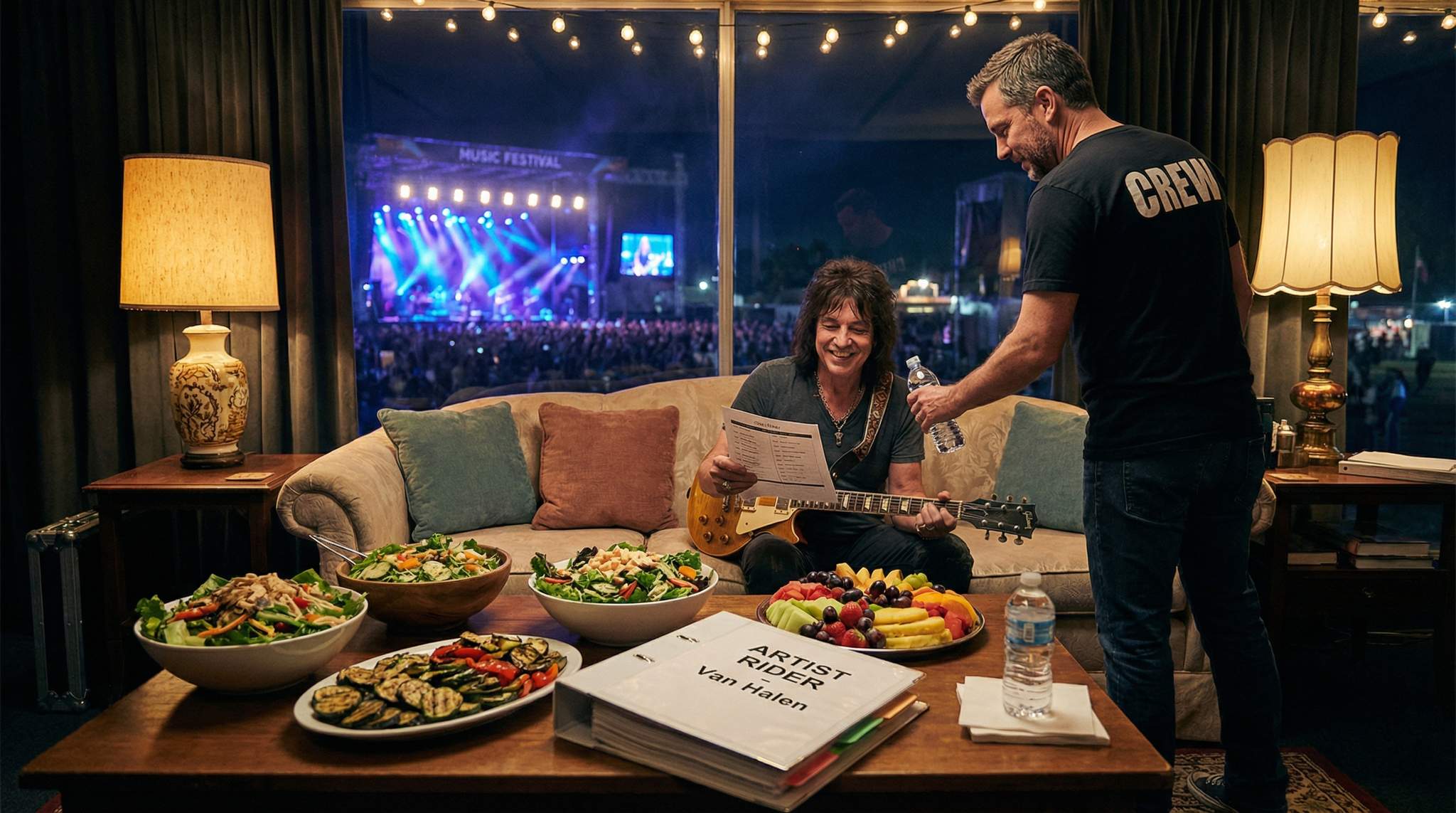
One legendary example underlines why reading the rider closely is vital. Rock band Van Halen famously included a “no brown M&M’s” clause in their contract – a demand for a bowl of M&M candies with all the brown ones removed. Far from rock-star vanity, this oddly specific demand was actually a shrewd test to ensure promoters read the entire contract – including all the critical safety and technical requirements. If the band arrived and spotted even a single brown M&M in the bowl, it was a red flag that other, more important details might have been missed. In fact, Van Halen’s rider explicitly warned that finding any brown M&M’s would mean the promoter forfeited the show at full pay – a dramatic clause born from real issues on earlier tours. That famous story has become legend in the live music industry, but its lesson is simple: never overlook the details in an artist’s instructions. Confirming hospitality needs early – down to the candy colour – shows professionalism and prevents problems.
This level of detail becomes even more critical depending on the festival’s format. For instance, venue operators hosting hundreds of rotating shows—such as those facilitating independent acts figuring out how to perform at Edinburgh Fringe or other massive decentralized arts festivals—face unique logistical hurdles. In these high-turnover environments, handling backstage needs often means standardizing the hospitality offering. Instead of fulfilling bespoke luxury requests, organizers provide a reliable, universal baseline of care: accessible water stations, secure storage, and clean shared green rooms that keep the rapid-fire schedule moving smoothly.
When drafting or reviewing a hospitality rider for artists, seasoned producers break the document down into actionable categories. A comprehensive rider typically covers nutritional needs (specific meals, allergies, and hydration), green room ambiance (lighting, temperature control, and furniture), and wellness requests (towels, local gym access, or privacy screens). By categorizing these requests, your artist liaison team can delegate tasks efficiently—sending the dietary list to catering while the site ops team handles furniture and climate control.
For talent buyers and production managers, fulfilling an artist hospitality rider is a critical milestone within the broader checklist for planning a concert tour stop. When a touring act routes through your festival, their tour manager is juggling logistics for multiple cities. By proactively advancing the hospitality requirements—confirming hotel buyouts, ground transport capacities, and green room catering—you alleviate a major stress point on their tour checklist. This seamless integration between the festival’s operations team and the artist’s touring crew ensures that the local stop is executed flawlessly, reinforcing your event’s reputation as a top-tier destination for touring professionals.
Free Tool: Size Your Festival Site
Zoned capacity planning for arena, campsite, parking and entry lanes — against UK Purple Guide and NFPA density standards. Finds your bottleneck zone.
Reviewing real-world artist rider examples can help new promoters understand the baseline expectations across different tiers of talent. A standard mid-level touring band’s rider might simply list a case of local craft beer, a deli tray with vegetarian options, and six clean stage towels. In contrast, electronic music headliners often submit highly specific technical and hospitality documents, requesting everything from specific brands of premium vodka and fresh-pressed ginger juice to high-speed hardwired internet connections in the green room for last-minute track downloads. Analyzing these sample documents during pre-production allows your procurement team to build accurate budgets and source specialized items well before the festival gates open.
Deliver on promises predictably. Once an artist’s requests are agreed upon, the festival team must follow through consistently. If the contract says a vegan meal for 10 people at 6 PM, make sure it’s ready at 6 PM sharp – not 8 PM, and not forgotten. Reliability earns the artists’ confidence. Conversely, failing to have an item (or offering a poor substitute without warning) can sour an artist’s mood. For instance, if a band arrives expecting a hot gluten-free dinner and instead finds only cold pizza, it can be a blow to morale. To avoid this, top festivals like Coachella and Glastonbury employ dedicated artist hospitality managers whose sole job is to double-check every rider item and timing. In smaller boutique festivals, it might be the festival director personally handling these details – whatever it takes to uphold the agreement. By confirming all hospitality elements well ahead of time and executing them reliably, organisers create a predictable, low-stress environment where artists feel respected.
Need Festival Funding?
Get the capital you need to book headliners, secure venues, and scale your festival production.
Real Food and Hydration: Fueling Peak Performance
Food is fuel, and providing real, nutritious meals (not just junk or a few snacks) is a key part of caring for artists. Performing at a festival can be physically and mentally demanding – long travel, late nights, and high-energy sets burn a lot of calories. Savvy festival organisers make sure their artists have ample healthy food and drinks to keep energy levels up. This means stocking the green room and catering tables with more than soda and candy. At minimum, always have plenty of bottled water, hot tea with lemon or honey (for vocalists), and a selection of fruits, nuts, or protein bars available. These little touches ensure performers stay hydrated and can grab quick nourishment throughout the day.
Scheduling proper meals is just as important. If an artist is flying in and heading straight to the venue, plan to serve them a wholesome meal upon arrival. If their set is around dinner time, arrange for food either well before or immediately after their performance so they’re not going on stage hungry. Many experienced organisers share that artists play better when they’ve had balanced meals – nobody gives their best show running on an empty stomach or only on greasy fast food. For example, the Byron Bay Bluesfest in Australia famously offers a variety of fresh, locally sourced meals backstage – from hearty salads to grilled fish – which artists praise as delicious and energising. Similarly, the Woodford Folk Festival in Australia hosts nightly communal dinners for performers, serving farm-fresh local fare that gives touring musicians a comforting taste of home and community. And at mega-events like Tomorrowland in Belgium or Electric Daisy Carnival (EDC) in the U.S., organisers create dedicated artist dining areas with healthy buffet-style choices. These efforts ensure well-fed DJs and bands have the stamina to thrill massive crowds late into the night.
Culturally appropriate meals are another consideration, especially at cultural festivals featuring international performers. What’s “comfort food” for a hometown headliner might not suit a touring artist from across the globe. Great festival hosts do a bit of homework on their artists’ backgrounds and preferences. If a South Asian classical ensemble is on the bill, offering a vegetarian curry or some familiar spices can make them feel cared for. When Anoushka Shankar toured festivals, organisers often provided Indian vegetarian dishes knowing her cultural dietary preferences. Likewise, a Mexican mariachi band might appreciate seeing some salsa and hot té de canela (cinnamon tea) alongside the usual sandwiches. In countries where cuisine and ingredients differ from the artist’s home, clear communication is key: a festival in Indonesia might explain to a visiting UK band that certain berries from their rider will be substituted with local tropical fruits, ensuring no one is caught off guard by unexpected mangoes instead of the requested strawberries. Similarly, a folk festival in Rajasthan, India could delight a vegan DJ by arranging a spread of flavourful local vegetable curries to meet their dietary needs. By respecting dietary requirements and offering a taste of local flavour when appropriate, festivals build goodwill. The artists not only stay well-nourished but also feel a connection to the host culture.
One cautionary tale underscores how crucial food and logistics are: the infamous Fyre Festival of 2017 promised celebrity-chef catering to its performers and guests, but ended up delivering little more than limp cheese sandwiches due to chaotic mismanagement. That disaster became a byword for how not to treat artists (or attendees) and damaged its organisers’ reputations irreparably. In contrast, most successful events, from large festivals to those focused on charity gala ticketing, put robust catering logistics in place. They hire competent catering teams, plan for refrigeration or heating as needed, and always have backup options for special diets. It’s not about extravagance; it’s about reliability and care. Serving real, satisfying food – whether it’s a warm vegetarian tagine at a world music festival in Morocco or a hearty barbecue at a country festival in Texas – keeps artists happy, grounded, and ready to perform at their peak.
Free Tool: Project Your Bar Revenue
Per-head spend benchmarks by event type turned into projected bar and food revenue, with a stock-mix estimate and gross-margin line. Free calculator.
Rest and Comfort: Quiet Green Rooms and Personal Space
A festival performance might only last an hour, but the hours leading up to it are when artist nerves and fatigue can peak. Providing a calm, comfortable space for performers to rest and prepare is therefore essential. The backstage green room (or artist lounge) should be a sanctuary away from the festival chaos. This means locating artist areas away from blaring stages, or using soundproofing and white noise machines if proximity is unavoidable. For instance, a major festival in the UK created a backstage oasis with thick curtains and acoustic panels so artists could nap or meditate, undisturbed by the distant thump of the main stage. On the other hand, a poorly planned layout at a city festival in Mexico once had the green room directly behind the speakers – artists were forced to shout over noise and couldn’t properly relax. Such mistakes demonstrate that quiet space isn’t a luxury, it’s a necessity for peak performance.
Furnish and equip the green room for relaxation. A few thoughtful provisions go a long way. Where possible, include comfortable seating like couches or plush chairs (nobody can unwind on a stiff plastic chair between sets). Keep the area at a pleasant temperature – if it’s an outdoor festival in summer, fans or portable AC units can be lifesavers; if it’s a cold mountain folk festival, heaters and blankets might be needed. Low lighting or adjustable lamps are helpful, since harsh fluorescent lights can be tiring. Some festivals even add simple amenities like a yoga mat, a few books, or a speaker for soft background music by request, so artists can personalize their downtime. Importantly, access to private, clean restrooms near the green room is part of comfort too – artists shouldn’t have to trek through crowds to use the facilities.
Respecting artists’ personal and spiritual needs is another aspect of backstage comfort. If an artist or crew member requests a prayer space or meditation corner, accommodating this is a mark of true hospitality. It can be as simple as setting up a quiet tent or cordoning off a small area with a comfortable mat or chair, away from any interruptions. At some multicultural events, organisers place signage to designate a prayer/meditation area backstage, complete with a privacy screen. This was effectively done at a global music festival in Malaysia, where Muslim, Christian, and other artists all had a discreet place to observe their practices between shows. Providing this kind of respect for cultural and spiritual routines, even if only a few artists use it, sends a powerful message that the festival cares about the whole person, not just the performer.
Security and privacy also play into rest. Artists perform best when they feel safe. That means the backstage area should be off-limits to anyone except artists, their guests, and accredited staff – no random visitors or surprise meet-and-greets while they are trying to unwind. Many festivals employ an artist relations team or at least one dedicated liaison who ensures the green room remains a peaceful zone, free of uninvited interruptions. Simple measures like wristbands or badges for authorized personnel and a friendly security guard at the door can maintain that boundary. When artists know they won’t be disturbed or intruded upon, they can truly rest, whether that’s catching a 20-minute nap, doing vocal warm-ups, or just sitting quietly to recharge. All these efforts to create a quiet, comfortable haven backstage contribute directly to better performances on stage.
Manage Schedules and Build in Buffers
Even when hospitality on site is excellent, a poorly planned schedule can undo an artist’s sense of well-being. Festival producers must share clear schedules with performers and crucially, include buffer time to absorb the unexpected. Communicate the artist’s itinerary well ahead of the festival: this should list when and where they will be picked up, their soundcheck (if any), performance time, and any press or meet-and-greet commitments. A detailed day-of schedule (often called a day sheet) helps artists mentally prepare and manage their time. It’s greatly reassuring for a touring band to know, for example, that they’ll be picked up from the hotel at 4:00 PM in a van, arrive at the venue by 4:30, have an hour to settle in the green room, then play from 6:00 to 7:00 PM. When artists have this clarity, they can plan their own warm-ups or rituals without anxiety.
Build buffers into the timeline. Travel delays, traffic jams, equipment issues – live events are full of variables. Experienced festival organisers account for these by adding cushion time around critical moments. If an artist’s journey from the airport usually takes 30 minutes, schedule it 60 minutes before soundcheck, allowing slack if a flight is late or traffic is heavy. If a singer likes to do a 30-minute vocal warm-up before stage, don’t book a fan meet-and-greet 15 minutes before their set – give them a solid window to get ready. Many large festivals strategically stagger artist arrival times and use opening acts or flexible scheduling to cover potential gaps. For instance, at a multi-stage festival in Singapore, organisers kept a local DJ on standby to extend their set when a foreign headliner’s flight was delayed by an hour; the buffer ensured the show stayed on track and the headliner didn’t have to run straight from the car to the stage. Similarly, a boutique cultural festival in Canada invites certain international performers to arrive a day early, letting them rest from jet lag and even explore the local area, which results in a more relaxed and appreciative performance the next day.
Collect Any Attendee Data at Checkout
Add custom registration fields to your checkout — dietary needs, t-shirt sizes, company names, and more. Conditional logic and per-ticket-type fields.
Importantly, communicate any changes promptly. If timings shift – perhaps the main stage is running 20 minutes late – have the artist liaison inform the artists immediately and adjust their logistics (like delaying a pickup or meal) accordingly. Artists are flexible when kept in the loop, but last-minute surprises can cause frustration. Sharing updated schedules via text or a festival app can help everyone stay on the same page. By managing the schedule thoughtfully and buffering for unpredictability, festivals demonstrate professionalism. It shows artists that the organisers value their time and comfort. The result is performers who aren’t hurried or stressed – they can walk on stage focused and energised, which the audience will surely notice.
Effective artist handling goes beyond just handing out a schedule; it requires a dedicated team to manage the physical movement and immediate needs of the talent from the moment they land to the moment they leave. At major mega-festivals, an artist handler or liaison acts as the single point of contact, shielding the performer from backstage chaos and logistical friction. This role involves coordinating ground transportation, advancing arrival times with the stage manager, and ensuring the green room is prepped before the talent walks in. By professionalizing your artist handling protocols, you minimize the risk of miscommunication between the production crew and the touring party, keeping the entire event, from major festivals to those requiring specialized charity gala ticketing solutions, running like clockwork.
The Payoff: Cared-for Artists, Stellar Performances
Organisers who invest effort into artist care often find it pays back in multiple ways. First and foremost, artists give better performances when they feel looked after. A well-rested singer with a happy stomach and no distractions is far more likely to captivate the crowd with a passionate, on-pitch performance, compared to one who is tired or irritated. Audiences might not see the backstage hospitality, but they absolutely feel its effects in the quality of the show. Secondly, treating artists well builds a positive reputation in the industry. Artists talk to one another – if a festival becomes known as one that greets everyone with a smile, a hot meal, and a hassle-free environment, more top talent will be eager to play there. Organisers may even find artists returning year after year or mentioning the festival fondly in interviews, which is priceless marketing through genuine endorsement.
There are countless success stories: the director of Roskilde Festival in Denmark once noted that many headliners sign on because they heard about the festival’s excellent backstage care and vibe. Similarly, regional events like a folk festival in New Zealand saw its artist lineup quality improve over time simply through word of mouth that “they treat you like family.” On the flip side, festivals that neglect artist hospitality can struggle to book big names a second time. Musicians remember when they were left waiting at airports or given no water on a 100°F (38°C) day. Those mistakes become cautionary tales shared among booking agents. In the end, festival production is a people business – and artists are people first, performers second. By taking a thoughtful, caring approach to hospitality, festival organisers not only get better shows, they lay the groundwork for long-term relationships and cultural exchanges that benefit everyone.
Frequently Asked Questions About Artist Riders
What is a hospitality rider for artists?
A hospitality rider for artists is a contractual addendum outlining the specific backstage, travel, and comfort requirements a performer needs to deliver an optimal show. For festival organizers, it serves as a logistical blueprint covering catering, green room furnishings, hydration, and security protocols.
How should promoters approach managing rider requirements for artists at large festivals?
Managing rider requirements for artists across a multi-stage festival requires centralized tracking, usually via advancing software or master spreadsheets. Best practices include standardizing baseline hospitality (like water and basic catering) while assigning dedicated artist liaisons to handle bespoke requests, ensuring nothing is missed during high-turnover stage changes.
What is a rider for a celebrity headliner compared to an emerging act?
While an emerging act’s rider typically focuses on basic sustenance and a clean space to change, a celebrity headliner’s rider is often a comprehensive document detailing strict security perimeters, private transportation logistics, premium catering for a large touring crew, and highly specific green room aesthetics. Organizers must allocate significantly more budget and dedicated personnel to fulfill a headliner’s contractual demands.
What are some common artist rider examples that promoters should prepare for?
Common artist rider examples typically fall into two categories: technical and hospitality. Technical riders detail backline equipment, stage plots, and lighting needs. Hospitality riders focus on backstage comfort, often requesting specific dietary accommodations (like vegan or gluten-free meals), preferred beverage brands, clean towels, and private transportation. Reviewing sample riders helps festival organizers accurately budget for backstage expenses and streamline their procurement process.
What does artist handling entail at a music festival?
Artist handling encompasses the end-to-end logistical management of performers on-site. For festival organizers, this includes coordinating airport transfers, managing green room hospitality, advancing stage times, and providing a dedicated liaison to escort the talent safely through the venue. Proper handling ensures the artist remains focused on their performance rather than navigating operational hurdles.
What does an artist hospitality budget typically include?
For festival organizers, an artist hospitality budget covers all expenses related to the comfort and care of performers off-stage. This typically includes catering and rider fulfillment, green room furniture and climate control, ground transportation, dedicated liaison staff, and backstage security. Allocating sufficient funds to these areas ensures a smooth, professional experience for the touring party.
What is the difference between a hospitality rider and a show rider?
While a hospitality rider focuses on the personal comfort, catering, and backstage needs of the touring party, a show rider (often called a technical rider) outlines the specific production requirements for the performance. For festival producers, the show rider dictates stage plots, lighting cues, backline equipment, and audio inputs. Successfully advancing a festival requires coordinating both documents so the artist is fully supported both off-stage and on-stage.
What are the core components of a festival artist care program?
A robust artist care program encompasses all logistical and hospitality elements designed to support a performer’s physical and mental well-being on-site. For festival producers, this means coordinating seamless ground transportation, providing nutritious catering tailored to dietary needs, ensuring secure and quiet green rooms, and assigning dedicated liaisons to manage schedules. Effective artist care minimizes backstage friction, allowing talent to focus entirely on delivering a high-quality performance.
How does an artist hospitality rider fit into a checklist for planning a concert tour?
For tour managers and festival promoters, the artist hospitality rider is a pivotal component of the overall checklist for planning a concert tour. While the broader tour checklist covers routing, ticketing, and global logistics, the hospitality document dictates the specific on-the-ground requirements for each individual stop. Festival organizers must advance these details weeks before the event, ensuring that local catering, ground transportation, and green room accommodations align perfectly with the touring party’s overarching logistical plan.