Why Experiential Stunts Matter in 2026
Breaking Through Digital Noise
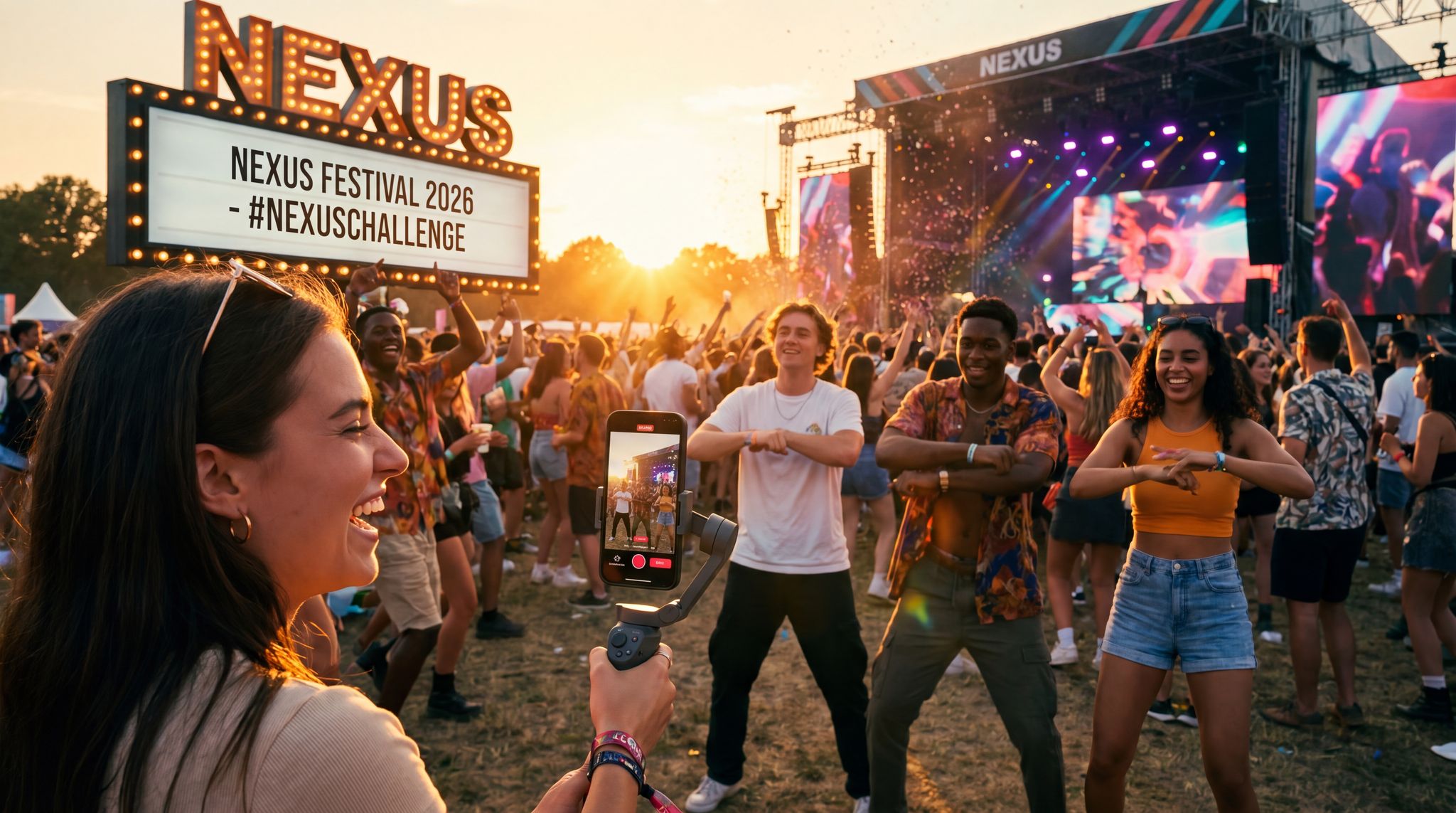
Today’s audiences are inundated with online ads, constant notifications, and endless content feeds. In this landscape, a real-world surprise can cut through the clutter and demand attention. It’s no wonder 80% of companies have increased their experiential marketing budgets, now allocating 10–30% of spend to live experiences, as noted in recent experiential marketing statistics. An on-the-ground activation doesn’t just reach people in the moment – it also fuels word-of-mouth when those present share the excitement online. In fact, live events inspire nearly all attendees to create content; 98% of consumers capture media at events and 100% share it, according to event marketing software data. This organic amplification means one stunt can reach millions on social media, far beyond the physical crowd.
As the landscape of experiential events in 2026 continues to evolve, the shift is clear: attendees are demanding more tactile, interactive touchpoints before they even commit to purchasing a ticket. Promoters who recognize this trend are treating their marketing activations not just as advertisements, but as standalone mini-events that deliver immediate value and set the tone for the main festival or conference.
Emotional Connection & Surprise Power
Experiential stunts leverage the psychology of surprise and delight. A cleverly executed stunt sparks genuine emotions – amazement, joy, curiosity – that static digital ads often can’t match. This emotional impact forms a stronger memory and association with your event. People are more likely to remember and talk about that time a pop-up marching band took over their lunch plaza than the 50th sponsored post they scrolled past that day. The novelty of an in-person experience triggers the brain’s reward centers, creating positive feelings towards your event brand. According to industry research, 85% of consumers are more likely to purchase after attending a branded experience, a finding supported by experiential marketing effectiveness research. In other words, when you win hearts in the real world, you also win business. Experiential stunts tap into the human desire for stories and “you had to be there” moments, which attendees eagerly share with friends – spreading your message in a far more authentic way than traditional ads.
From Real-World Buzz to Ticket Sales
One of the biggest advantages of offline activations is how they translate excitement into tangible demand. A great stunt not only grabs attention; it creates urgency and FOMO about the main event. When passersby witness something extraordinary – like a surprise performance in the street or a mysterious art installation – they naturally want to learn more. That curiosity drives them to search for your event, visit your website, and ultimately buy tickets. And it’s not just speculation – experiential marketing has a direct impact on revenue. For example, when tech company Anthropic opened a themed pop-up café in NYC to promote an AI event, over 5,000 people visited in a weekend and social posts about the activation earned 10 million impressions, as reported in coverage of Anthropic’s marketing strategy. The buzz from that real-world experience translated into massive online awareness for their brand. Experienced event promoters know that a well-timed stunt can kick off a viral chain reaction: local excitement -> social media trending -> press coverage -> and a surge in ticket sales. In a crowded market, creating memorable moments is often the key to standing out and defining a unique event identity that compels audiences to take action.
Turn Fans Into Your Marketing Team
Ticket Fairy's built-in referral rewards system incentivizes attendees to share your event, delivering 15-25% sales boosts and 30x ROI vs paid ads.
Planning Experiential Stunts for Maximum Impact
Setting Clear Objectives & Audience Targets
Every successful stunt starts with a clear objective. Before brainstorming crazy ideas, define what you want to achieve. Is it pure buzz and brand awareness, a spike in ticket sales, more social media followers, or perhaps impressing a sponsor? Pinpointing the goal will inform the type of stunt and how you measure success. Equally important is identifying who you want to engage. Are you trying to get college students talking, attract VIP business clients, or re-engage past attendees? Understanding your target audience helps tailor the activation for maximum relevance. For example, an edgy street art stunt might thrill a music festival’s young fanbase but puzzle an older theater crowd. Experienced event marketers segment their strategy – crafting different tactics for different demographics – just as they would in a digital campaign. The stunt’s concept, tone, location, and timing should all align with the interests and schedules of your ideal attendees. By defining SMART goals (Specific, Measurable, Achievable, Relevant, Time-bound) and audience personas upfront, you create a focused blueprint for your experiential campaign. This strategic foundation ensures your stunt isn’t just flashy, but also tightly aligned with your event’s marketing objectives.
When developing these concepts, organizers frequently need to secure buy-in from diverse stakeholders. Whether you are a media agency pitching an auditorium-style event to platform owners, or marketers trying to engage university students, tailoring the stunt’s objective to the specific audience is critical. A well-defined strategy proves to partners that your activation will deliver measurable engagement rather than just fleeting attention.
Ready to Sell Tickets?
Create professional event pages with built-in payment processing, marketing tools, and real-time analytics.
Aligning Concepts with Brand & Theme
Not every wild idea will be on-brand for your event – the best stunts feel like a natural extension of the event’s identity. Before you fall in love with an outlandish concept, pressure-test it against your event’s theme, values, and audience expectations. As veteran promoters advise: a guerrilla stunt should reflect your event’s vibe, a sentiment echoed in guides on guerrilla marketing stunts. For instance, a comic-con might send costumed superheroes roaming downtown, while an eco-festival could do a surprise tree-planting flash mob. The stunt is essentially a preview of your event’s experience, so it must send the right message. Ask yourself: Will our audience find this cool and shareable? Does it communicate what makes our event special? If the idea could be confusing or off-putting to your core fans, refine it. Brainstorm with your team to ensure creative ideas stay on-target. Often, the most effective concept ties directly into your event content – like a live teaser of a performance, or an interactive taste of the activities attendees can expect. Consistency is key: a stunt that matches your brand’s tone (whether that’s whimsical, avant-garde, family-friendly, etc.) will resonate more deeply. You want people to experience the stunt and instantly connect it to your event in a positive way. (If you execute a mysterious teaser, be sure the “reveal” clearly links back to your event for that satisfying aha! moment.) In short, dare to be creative but keep it authentic. A well-aligned stunt not only grabs attention – it also builds your event brand’s credibility. (For more guidance on ensuring marketing tactics fit your brand, check out festival promotion strategies that preserve authenticity).
Logistics, Risk Management & Permissions
Transforming a stunt from concept to reality requires meticulous logistical planning. First, scout locations that are both high-traffic and aligned with your audience – a busy downtown plaza, a popular campus, or outside a partner venue. Determine if you need a permit for your activity: many cities require permission for public performances, street closures, or installing structures. It’s far better to coordinate with local authorities than to have your stunt shut down mid-act. Also consider timing: schedule the stunt when your target attendees are likely to be around (e.g. lunchtime for office workers, weekend evenings for nightlife crowds). Next, conduct a thorough risk assessment. Ask “what could go wrong?” and have contingencies. If a huge crowd shows up, do you have extra staff for crowd control? If barely anyone stops by, can your team dynamically engage passersby? Plan for weather issues – have an alternate date or indoor fallback if your stunt is outdoors. Safety is paramount: ensure any physical structures are secure and that performances won’t cause panic or injury. Communicate with all participants (performers, street team, etc.) about emergency protocols. High-impact stunts also run the risk of misunderstanding – for example, a “fake protest” stunt could be taken seriously by onlookers or law enforcement. To avoid backfires, keep stunts playful and positive in tone, and avoid imagery that could be misinterpreted as a real crisis. Seasoned organizers emphasize having a crisis communication plan just in case, as discussed in articles on managing guerrilla marketing risks. If something does spark controversy or complaints, respond swiftly and transparently. (For deeper advice on handling PR hiccups, read about crisis communication strategies for event marketers so you’re prepared to protect your event’s reputation.) By sweating the logistical details and thinking through risks, you’ll execute a stunt that grabs headlines for the right reasons.
Budgeting and Partner Collaboration
Experiential stunts can be surprisingly cost-effective – but you still need to set a realistic budget and allocate resources wisely. Start by listing all potential costs: permits, equipment rental (e.g. sound system, lighting, staging), materials for any installations or costumes, staff/performer fees, videographer/photographer, insurance, and promotional handouts or signage. Determine which elements are must-have vs. nice-to-have, so you can adjust if needed to fit your budget cap. If funds are tight, creativity matters more than cash. Smaller events on a shoestring budget often punch above their weight with clever guerrilla ideas rather than expensive production. For example, chalk art on sidewalks or a volunteer flash mob can spark huge buzz with minimal spend. Many low-budget event promoters find success through high-impact, unconventional tactics instead of big ad buys. You can also seek sponsorships or partnerships to support your stunt. A local brand might co-sponsor a pop-up activation in exchange for logo placement or sampling opportunity – offsetting your costs. Just ensure any partner aligns with your event image and doesn’t overshadow the stunt’s messaging. Another tip: leverage existing resources. Can you use your venue’s parking lot or a sponsor’s retail space for a pop-up, saving venue fees? Do you have a street team or volunteers who can staff the stunt instead of hired staff? Being resourceful will stretch your budget. Finally, always track expenses and results. Calculate the approximate ROI of the stunt by comparing costs to the value of the exposure or ticket sales generated. This data will help justify the spend (or refine budgets) for future campaigns. Experiential marketing done right can deliver enormous buzz on a lean budget – as long as you plan ahead and spend smartly.
Below is a comparison of common experiential stunt types, including their advantages, challenges, and ideal use cases.
Grow Your Social Following With Every Sale
Require social media follows, shares, or playlist adds to unlock presale access or special pricing. Turn every ticket purchase into audience growth.
| Stunt Type | Description & Example | Estimated Cost | Key Benefit | Potential Risk |
|---|---|---|---|---|
| Flash Mob | A surprise choreographed performance in a public place. Example: Dancers suddenly burst into a themed routine at a train station for a jazz festival. |
Low (if using volunteers or local performers) | High surprise factor grabs attention; very shareable. | May require permits; unpredictable public reaction (could be crowded or ignored). |
| Pop-up Installation | Temporary themed structure or interactive exhibit. Example: A mini haunted house pop-up to promote a horror film festival. |
Medium to High (materials, venue, staff) | Immersive engagement; attendees spend more time, creating deeper connection. | Higher cost and planning; need to promote it so people actually visit; permits for space. |
| Teaser Campaign | Cryptic messages or visuals spread in the city. Example: Mysterious posters and street art with just a date and hint for an upcoming event. |
Low to Medium (printing, artist fees) | Sparks curiosity and conversation; can gain media intrigue before reveal. | If too obscure, people might not connect it to your event; risk of confusion. |
| High-Tech Spectacle | Using technology like drones, AR, or projections for wow-factor. Example: A drone light show forming your festival logo in the sky. |
High (tech equipment, specialists) | Huge “wow” factor; likely to get press coverage and viral social videos. | Expensive; technical failures could derail the stunt; may need special permits (airspace, etc.). |
Surprise Pop-up Performances and Flash Mobs
Crafting the Perfect Flash Mob
One of the most iconic guerrilla marketing tactics is the flash mob – a seemingly spontaneous performance that explodes out of nowhere, delights everyone around, and then vanishes, leaving people buzzing. To craft the perfect flash mob for your event, start with a concept that ties into your event’s theme or genre. This makes the stunt feel like a sneak peek of the fun to come. For instance, a swing dance flash mob with a live brass band fits a jazz festival perfectly (imagine commuters stunned as 1920s-clad dancers and musicians turn a subway station into a Cotton Club for five minutes). The performance itself should be tightly choreographed and rehearsed, even if it’s meant to look impromptu. Simplicity and energy are key – it’s better to execute a straightforward, high-impact routine than a complicated one that participants might flub in public. Choose a high-visibility location where your target audience will be present in force. Also consider the acoustics and space: will everyone be able to hear the music? Is there enough room for both performers and a gathering crowd? Plan the start cue and finale clearly. Many flash mobs start with one or two “plants” who begin performing, then more people join in, building to a climax. At the end, decide how you’ll punctuate the stunt – often the performers will scatter into the crowd as if nothing happened, leaving a moment of “Did we really just see that?!” magic. However, since our goal is to promote your event, it’s effective to include a brief reveal: for example, dancers might unfurl a banner with your event name and dates at the end, or the lead performer can shout out a quick invite (“Join us at XYZ Festival next week!”) before disappearing. That little call-to-action ensures the amazed onlookers know who to thank for their delightful surprise.
When brainstorming talent show act ideas to adapt for a promotional stunt, organizers should look beyond traditional singers or dancers. Consider sourcing niche performers—like acrobats, illusionists, or specialized stunt crews—who can deliver a high-impact visual spectacle. These unique acts often translate perfectly to a street-level activation, instantly stopping traffic and encouraging bystanders to pull out their phones to record the moment.
Grow Your Events
Leverage referral marketing, social sharing incentives, and audience insights to sell more tickets.
Coordinating Performers and Street Teams
Behind every “spontaneous” live stunt is careful coordination. Recruit and train your performers or participants well in advance. These might be professional dancers, actors, musicians, or even enthusiastic volunteers – whoever fits the stunt. Provide them with the choreography or script and hold a few rehearsals in a private space (or even at the chosen location during off-peak hours) so everyone knows their cues. Assign a stunt director to cue the start and ensure everyone hits their marks. On the day of the flash mob, have performers blend into the crowd casually before the start – their ability to stay incognito adds to the surprise. Meanwhile, consider deploying your event street team to support the performance. For instance, right after the flash mob concludes and people are applauding or scratching their heads, your street team members can step forward to hand out flyers or discount cards for the event. They could say “If you liked this, come see more at the festival!” and provide a QR code to buy tickets on the spot. This seamlessly turns the stunt’s energy into an actionable invitation. Using boots-on-the-ground promotion tactics in tandem with stunts is a proven way to immediately capitalize on the attention you’ve earned. Also, ensure you document the performance. Station a few team members discreetly in the area with cameras (even smartphones can capture HD video now) to film the stunt from multiple angles. Candid footage of bystanders’ reactions is gold for later editing. High-quality photos and videos of the flash mob will be invaluable for press releases, social media posts, and recap videos that continue the stunt’s buzz online. Lastly, take care of your cast and crew: brief them on safety (e.g. avoid physical contact with the public without consent, etc.), and have someone watch personal belongings if performers had to set them aside. With coordination, a supportive street team, and the right prep, your pop-up performance will look effortless and feel unforgettable.
When sourcing talent and managing these logistics, organizers often weigh the benefits of hiring a specialized pop-up mob creator versus other experiential agencies. A niche agency might excel at choreographing a massive, high-energy dance routine, while a full-service firm could be better suited for complex, multi-city rollouts. The right choice depends entirely on the nature of your activation. For instance, a literary or arts festival might organize a subtle “pop-up poetry” reading, where a specific signal or cue transforms a standard classroom, library, or public transit car into an impromptu spoken-word stage, requiring a very different directorial approach than a massive street rave.
Maximizing the Surprise & Delight Factor
The whole appeal of a stunt like a flash mob is the surprise – so you want to maximize the “wow” factor and ensure the moment truly delights the crowd. One tip is to incorporate audience interaction if possible. For example, during a flash mob dance, maybe the performers briefly pull a willing audience member into the fun (hand them a prop or have them echo a simple dance move). That person’s thrill will radiate to the people around them. Another tactic is to escalate the surprise. Start with something small and innocent – like a single violinist playing in a public square – then layer on more elements (two dancers begin waltzing to the music, then a whole ensemble appears). This progression keeps people hooked as they realize something special is unfolding. Quality over quantity matters too: a tight, impressive 3-minute stunt is better than a drawn-out 10 minutes where energy could dip. Leave them wanting more. Also, consider the visuals: costumes or props can enhance the spectacle. If it’s an EDM rave you’re promoting, maybe your flash mobbers don neon outfits and LED accessories that catch the eye. For a film festival, perhaps actors recreate an iconic movie scene live. Visually striking elements ensure the stunt photographs well and sticks in memory. And remember the fundamentals: great music (if applicable) and good sound amplification if the environment is noisy – you want people to hear the song or surprise announcement clearly. Finally, end on a high note. Whether it’s a final drumbeat, a freeze-frame pose, confetti burst, or simply a well-timed disappearance, give closure to the stunt so people know it’s done and can clap. That’s your cue to have the performers vanish and your promo team swoop in with smiles, info, and swag. By thoughtfully crafting each moment – from the lead-up to the climax and exit – you turn a brief public stunt into a powerful emotional experience. Those positive vibes transfer directly to how attendees anticipate your event.
Interactive Installations and Immersive Pop-ups
Immersive Installations That Attract Crowds
Beyond fast-paced stunts, creating a temporary interactive installation can generate sustained buzz. Think of these as pop-up attractions that embody your event’s spirit. The goal is to design something so intriguing or Instagrammable that people can’t resist checking it out – and sharing their experience. Start with visual impact: bold colors, large-scale props, or unique structures will catch eyes from afar. For example, a sci-fi convention might park a life-sized spaceship model in a downtown plaza for a day, while a food festival could set up a giant art sculpture made of food cans that form their logo. The installation itself should invite participation: can people walk inside it, climb on it, write on it, or otherwise engage? The more senses and interaction, the better. For instance, at an EDM festival pop-up you might have a small silent disco dome where passersby put on headphones and dance – giving onlookers a fun show and participants a taste of the festival vibe. Always include clear branding and info as part of the installation, but do it creatively. A large freestanding sign with the event name, dates, and a QR code for tickets is one way – or integrate the info into the art (like the cans sculpture spelling out the festival name). Importantly, staff your installation with friendly ambassadors who can welcome people and answer “What is this about?” with an enthusiastic 15-second pitch about the event. They can also encourage visitors to take photos or give out a small branded freebie (sticker, sample, etc.) as a souvenir. An immersive installation tends to keep people around longer than a quick stunt, which deepens their connection. The key is making it share-worthy: ask, Would I take a picture or tell friends about this? If yes, you’re on the right track. Many modern consumers crave unique experiences they can post on social media. By delivering one, you earn not just their goodwill but also free promotion as they broadcast it.
When conceptualizing these spaces, innovative event decoration ideas play a pivotal role in transforming a standard public square into a captivating brand world. The decor shouldn’t just serve as background dressing; it needs to be an immersive, tactile extension of your festival’s universe that encourages attendees to interact, take photos, and linger in the space.
Bringing Event Themes to Life in Pop-ups
A pop-up experience should act as a microcosm of your actual event – essentially a trailer you can step into. When planning, focus on how to convey your event’s core theme or content in a condensed, attention-grabbing way. Brainstorm key elements that define your event: is it the music genre, the artistic style, the community vibe, the educational content? Then design the pop-up around showcasing those elements. For example, a film festival might create a mini outdoor theater on a busy street corner, projecting classic movie clips at night with a red carpet and a “coming soon” marquee for their festival – giving the public a cinematic moment. A technology conference could deploy a branded demo truck that lets people try cutting-edge gadgets or VR experiences that will be featured at the conference. Consider sensory details: what will people see, hear, touch, taste, or even smell? A culinary event’s pop-up might literally give people a taste, offering small samples from a featured chef in a stylish food cart. By engaging multiple senses, you create a memorable impression. It’s also effective to incorporate surprise guest appearances or activities in your pop-up. If you’re promoting a music concert, maybe one of the local opening band members does an acoustic set at your pop-up record store. Or for a sports event roadshow, have a retired star athlete show up to sign autographs unexpectedly at the pop-up fan zone. These surprise elements can cause a surge in buzz (“I can’t believe I met them at the street pop-up yesterday!”). Keep the scheduling of these mini-events semi-secret to reward those who happen upon them, but you can drop hints on social media to drive foot traffic (“Something special at our pop-up at 5pm today – you won’t want to miss it!”). By truly bringing your theme to life, you aren’t just advertising your event – you’re previewing the experience and building anticipation for the full thing.
Sponsor Activations as Win-Win Experiences
Interactive event stunts also present a great opportunity to involve sponsors or partners in a meaningful way. Brands are eager to connect with audiences through experiences, not just logos – and your pop-up can provide that platform, while offsetting costs for you. The key is to design sponsor activations that add value to attendees instead of feeling like ads. For instance, if your event is a music festival and a beverage company is a sponsor, they might fund a “refresh station” at your city pop-up where people grab a free drink in a lounge area. The brand gets goodwill and sampling, the visitors enjoy a perk – and you get the stunt partially paid for. When integrating sponsors, align with those that make sense for your audience and concept. A fitness event could partner with an athletic gear brand to run a pop-up rock climbing wall downtown – fun for participants and perfectly themed. Many savvy promoters collaborate with sponsors to create memorable on-site activations that also serve as pre-event marketing. Just ensure both your event and the sponsor get visibility. Co-brand the installation and any handouts or signage (e.g. “XYZ Festival + Brand X present…”). It’s also wise to set measurable goals with the sponsor – such as how many samples distributed or leads captured – to demonstrate ROI for them. You can even make the activation a direct ticket driver: for example, “Visit the pop-up sponsored by Brand X and get an exclusive 10% ticket discount code.” This not only rewards attendees, but also lets you track how many sales the stunt generated by monitoring code redemptions. When done right, sponsor-backed stunts are a triple win: the audience gets a cooler experience, the sponsor gains positive exposure, and your event gets a bigger, better stunt than your budget alone might allow. Collaboration truly can amplify the buzz to new levels.
Let’s visualize how a hypothetical event might plan and execute an experiential stunt. The table below outlines a sample timeline of key steps and milestones for a pop-up activation campaign.
| Timeline (Weeks Out) | Planning Milestone |
|---|---|
| 8+ weeks out | Set stunt objectives and KPIs; brainstorm concepts with team. Shortlist best ideas that align with event theme and budget. Conduct risk assessment for each idea. |
| 6-8 weeks out | Secure any needed permits or location permissions. Begin outreach to potential partners or sponsors to fund/participate in stunt. Draft a detailed project plan and budget. |
| 4-6 weeks out | Finalize stunt concept and location. Recruit performers, street team, or collaborators. Book any rentals (equipment, props) and order materials/branding signage. |
| 3-4 weeks out | Choreograph and script the stunt if needed. Start rehearsals with performers or run tests of installation setup. Coordinate with city officials (e.g. police if crowd expected) on safety plans. |
| 2 weeks out | Tease the stunt subtly on social media or via insiders (only if appropriate – some stunts rely on total surprise). Train staff/volunteers on their roles during the activation. |
| 1 week out | Confirm all logistics: re-check permit, reconfirm deliveries and equipment, walk through the location at the planned time of day. Prepare any press release or media advisory if you’ll alert press. |
| 1 day out | Load in any installation materials during off-hours if possible. Final rehearsal or briefing with all participants. Double-check weather, prepare contingency (e.g. tents or alternate date) if outdoor. |
| Stunt Day! | Execute the stunt: assemble team early, set up quietly. Perform/activate according to plan. Engage with the public during and after. Record plenty of video/photo content. Give out promo materials or promo codes to attendees. |
| 1-2 days after | Amplify on digital: share official recap video and photos on social media and email. Follow up with press (send them footage and quotes). Monitor social channels for UGC (user content) to repost. |
| 1-2 weeks after | Evaluate results: gather metrics (attendance, social reach, ticket sales lift, media mentions). Debrief internally – what worked, lessons learned – and document insights for future stunts. |
Mystery Teaser Campaigns and Citywide Surprises
Building Hype with Cryptic Teasers
Sometimes, the best way to engage the public is to present a puzzle they can’t wait to solve. Mystery teaser campaigns leverage curiosity by feeding the audience intriguing clues over time. The city itself becomes your canvas for these hints. One classic method is putting up cryptic posters or street art around town. Instead of a standard event poster, you print enigmatic designs: maybe just a symbol or a catchy phrase, a date, and a URL or QR code with no further explanation. For example, a sci-fi convention might plaster posters of a futuristic emblem with the text “The Future Lands 07.14” – no event name, just enough to get sci-fi fans speculating what’s happening on that date. The key here is consistency across placements so people notice a pattern (“I keep seeing this UFO symbol everywhere this week – what is this?”). Similarly, you can commission street artists to paint murals or sidewalk art related to your theme, signed only with a subtle hashtag or logo. The mystery builds as photos of these visuals circulate on local social media and Reddit threads, with people asking “Have you seen this?” and trying to decipher the meaning. This approach was effective, for instance, when Netflix promoted a new season of a show by placing eerie symbols in public spaces, fueling fan theories. Just be sure your clues aren’t too obscure – you want a satisfying payoff when you finally announce the event. Time your campaign so that the reveal (via official channels or a final stunt) isn’t too far off; a couple of weeks of build-up is usually enough. When you do unveil the event details, those who caught on will have an “aha!” moment that feels rewarding, and they’ll likely share the full story with others (“Remember those posters? They were for this festival!”). Teasers are a powerful pre-launch tactic and can dovetail nicely with a ticket on-sale. You might coordinate your teaser campaign with your overall on-sale strategy – building intrigue first, then dropping the ticket announcement to an already buzzing audience.
Turning Landmarks into Promotional Canvases
If you want massive visibility and a dash of drama, look no further than your city’s landmarks. With creative use of lighting or projections, you can transform a building or skyline into a giant billboard for your event – one that people will talk about. For example, a festival could arrange for the city’s iconic bridge to be lit up in a rainbow of colors that match the festival branding each night for a week. Or on a single night, project your event logo or a cryptic message onto a prominent building. These large-scale displays create a “what is that?!” moment for anyone who sees them. A famous case was when a TV series projected glowing rift portals on skyscrapers like the Empire State Building as a publicity stunt – it had fans excited and everyone else very curious, illustrating the power of creative city surprise stories. For your event, imagine illuminating the city hall with giant moving graphics related to your theme, or spelling out “CONCERT THIS SAT” in lights across a skyline. Such feats usually require working with lighting designers or projection mapping specialists, and definitely clearing permissions with building owners and city authorities. But the payoff can be huge: local news loves covering these kinds of visual spectacles (“City X lit up for mysterious promotion!”), which brings press coverage in addition to the organic buzz. It essentially turns your marketing into a public art event that citizens can experience together – which in itself generates positive sentiment. Always ensure the stunt is done safely and respectfully; if using lasers or drones, follow all regulations. And give the public a way to find out more: for instance, accompany the light show with a hashtag displayed or a prominent URL in the projection design. Landmark takeovers are bold and a bit extravagant, but they scream that your event is a big deal. For an international arts festival, for example, nothing says “we have arrived” like painting the town (literally) with your colours. Just be prepared for the logistics and possibly some city bureaucracy – early planning and the right partnerships (perhaps an arts council or tourism board) can smooth the path to making a wild idea a reality.
Smart Promo Codes & Presale Access
Create percentage or flat-rate discount codes with usage limits, date ranges, and ticket type restrictions. Plus unlock codes for private presales.
Another highly effective out-of-home tactic is the use of experiential event billboards. Moving beyond traditional flat print, modern OOH advertising incorporates 3D digital displays, physical extensions that break the frame, or interactive screens that respond to passersby. These dynamic billboards act as standalone mini-activations, stopping traffic and generating the same level of social sharing as a live performance, making them a powerful tool for promoters looking to dominate city centers.
Interactive Citywide Scavenger Hunts
To really engage potential attendees in a fun way, consider turning your promotion into a game. Scavenger hunt-style stunts get people actively participating in your marketing, which hugely increases their investment and excitement. How might this work? You could hide clues or Easter eggs around town that lead superfans on an adventure, with your event as the final answer. For example, a tech festival could place QR code stickers in tech-centric cafes, bookstores, and bus stops. When scanned, each QR code might show an AR (augmented reality) animation on the user’s phone – perhaps a 3D robot popping up with a riddle or a piece of a puzzle. Participants who follow all the clues ultimately decode the headliner lineup or unlock a secret website to buy discounted tickets. You can make the hunt competitive by offering a prize for the first X people who complete it (like free VIP upgrades or meet-and-greets at the event). Even those who don’t go end-to-end will be talking about the weird QR codes or clues they noticed, generating chatter. Another approach is a geocache or hidden token hunt: hide a few items around the city (maybe branded golden tickets or hidden objects related to your theme) and drop hints on social media for people to find them. Each found item could be redeemed for event tickets or merch. This kind of campaign turns fans into brand ambassadors as they share their progress on social and invite friends to help. It’s essentially gamified marketing. A real-world example comes from music festivals that have teased their lineups by sending fans on scavenger hunts to collect puzzle pieces revealing artist names – those who participate go on to become passionate advocates, since they feel part of the event story from the start. If you try this, ensure the difficulty level is balanced: too easy and it’s over quick; too hard and people give up. You might start with simple clues and gradually increase the challenge to keep it interesting. Always have a clear tie-in to your event (each clue should hint at the theme, artists, or experience) so it’s not a random game but rather immersing players in your event’s world. By the time the hunt is done, those participants will be dying to attend, and thousands more will have heard the buzz about it.
Tech-Infused Activations and Innovations
Augmented Reality & Virtual Previews
In 2026, augmented reality (AR) and virtual reality (VR) technologies are more accessible than ever – and they can add a cutting-edge twist to your experiential marketing. AR in particular lets you layer digital surprises onto the real world via people’s smartphones, turning a simple poster or location into an interactive experience. For instance, you could create a custom AR lens or filter (think Snapchat or Instagram filters) for your event. Imagine a poster in a shopping mall: when someone scans it with their phone, it triggers an AR animation of a performer jumping out and personally “inviting” them to the event. Or a life-size 3D model of the festival stage could appear on their screen, making for a cool selfie backdrop. Another idea is an AR treasure hunt as touched on earlier – rather than physical clues, you have GPS-located AR markers around the city that people can find and scan, each revealing a clue or a piece of a secret message. This merges the scavenger hunt concept with tech in a way that tech-savvy audiences (looking at you, Gen Z) find irresistible. VR can be used if you have the resources to set up a station at a public spot: for example, a convention could park a van outfitted with VR headsets that let people “step inside” a past event or preview a 360° fly-through of this year’s event layout. While VR requires more hardware, it’s incredibly immersive – someone might forget they’re standing in a parking lot as they virtually explore your Halloween haunted house or stand on the virtual mainstage of your music festival with crowds roaring. One successful use of AR was during Paris Fashion Week 2025, where organizers launched an app that let any user view the runway in AR from home, effectively giving everyone a front-row seat. Such experiments show that blending digital and physical can dramatically extend reach, as seen in examples of hybrid event marketing. When using AR/VR, ensure it’s user-friendly. Provide simple instructions (“Scan this code to see something cool”) and maybe have staff on hand to help less techy folks. Also, brand your AR experience clearly so screenshots or videos people take include your event name or hashtag. A high-tech stunt positions your event as innovative and future-forward – just make sure it’s stable (test those AR filters across devices!) and aligns with your audience’s interests. A Comic-Con crowd might love AR monsters on their phones; a history conference might opt for AR that shows historical scenes at city landmarks – tailor the tech to the story you want to tell.
Drones, Projections, and High-Tech Spectacles
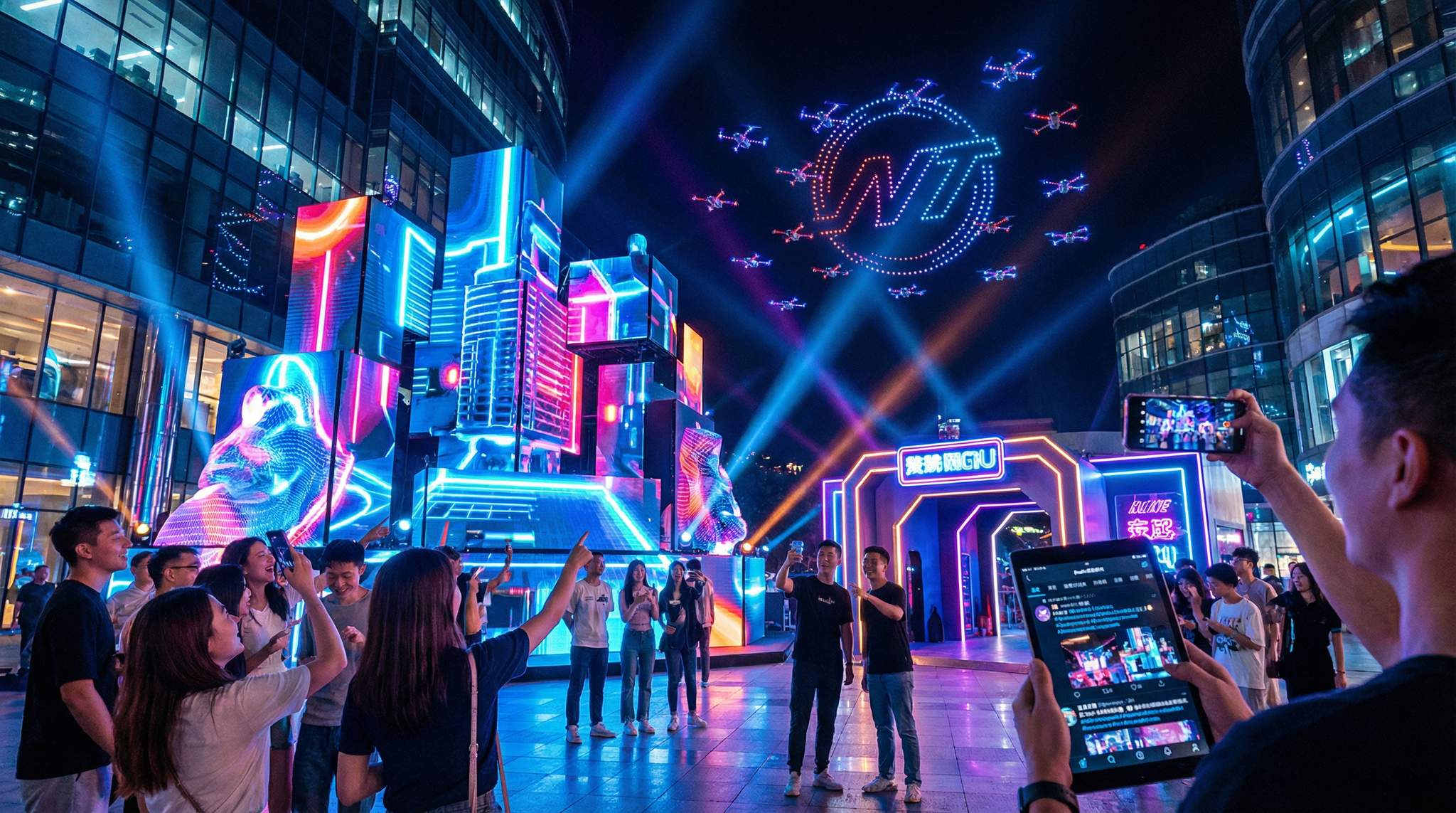
Some of the most jaw-dropping stunts in recent years have been powered by drone shows and projection mapping. These technologies, once novel, are fast becoming mainstream tools for event promotion. Drone light shows, for instance, involve swarms of LED-equipped drones flying in coordinated patterns to form images or messages in the sky. They make for unforgettable visuals – imagine looking up to see your festival’s logo or a QR code hovering above the city skyline at night. (This isn’t fantasy; brands in China have done drone QR codes in the sky to astonishing effect.) For an event marketer, a drone show could serve as the ultimate “night before the event” spectacle to remind the whole city that tomorrow is the big day. Of course, these require hiring a professional drone show team, securing flight permissions, and a healthy budget, but the PR value can be immense. Similarly, projection mapping can turn any large surface (a building, a stadium exterior, a cliff face) into a dynamic advertising canvas. Unlike a static projection, mapping warps the visuals to the 3D surface, often creating 3D illusions like objects floating or architecture seemingly moving. You could project a countdown to your event premiere on a downtown building each night, or animate scenes related to the event’s theme in an artistic display. Tech conferences have projected code rain (like The Matrix) on buildings, concerts have projected giant performers on landmark walls – the possibilities are vast. Another high-tech route is interactive installations using sensors or AI. For example, an “AI graffiti wall” where passing people can speak their favorite song lyric and an algorithm paints it on a digital wall in real-time, promoting a music event’s theme of fan expression. These kinds of stunts naturally attract media attention for their novelty. When planning a tech-powered stunt, work with experienced vendors – e.g., drone specialists or AV companies – to ensure safety and quality. Always do a test run if possible (perhaps the night before at 2am when nobody’s around, to calibrate projections or drone GPS). And have a backup plan: what if high winds cancel the drone show? Could you have a secondary date or a backup laser light show from the building instead? The cutting-edge wow factor is worth the extra preparation. High-tech stunts signal that your event is not just keeping up with trends but setting them, which can be a huge draw especially for audiences that chase the next big thing.
Matching the Tech to Your Audience
While these innovative stunts are exciting, it’s crucial to match your approach to what will resonate with your attendees. Tech for tech’s sake can fall flat if it doesn’t align with audience interests or if it overshadows your event’s core message. Consider the demographics and psychographics: a crowd of gamers and early adopters will love AR games and drone shows. But if your event targets a less tech-oriented community – say a literary festival or a folk music gathering – they might respond better to analog surprises (like a pop-up poetry reading or a roaming folk band) than to flying robots. Use technology as an enhancement, not a distraction. Ask, does this tech amplify the story I want to tell? If you run an innovation conference, a stunt using AI or holograms is on-brand and will have attendees nodding “of course they did that.” On the other hand, if you manage a wellness retreat, perhaps the “stunt” is a calm pop-up meditation space in the city center – a stark contrast to the usual hustle (which in itself is surprising) – rather than a flashy digital display. Also, gauge the locations where you deploy tech. For instance, an AR activation might not work well in an area with poor cellular data or lots of glare on phones. Or a projection at 7pm won’t show up if it’s still daylight – you may need to wait until 9pm darkness, when fewer people are out. These practicalities matter. Keep in mind accessibility too: ensure any interactive tech is usable for people of varying abilities (provide captions or alternative experiences if, say, a hearing-impaired person can’t hear the AR audio or a visually impaired person can’t see the projection – maybe they can still enjoy music or tactile elements). Finally, if your audience spans multiple regions or countries, note that tech adoption can differ globally. What’s big on WeChat AR in China might not click in a smaller US city and vice versa. It circles back to knowing your audience deeply, a principle that applies to all marketing. Use the right tools for the right crowd. When you nail that fit, tech-infused stunts can produce off-the-charts engagement. They’ll say “did you see that?!” with genuine amazement – and that energy will carry straight into ticket demand.
Ultimately, the most talked-about experiential events of 2026 will be those that seamlessly integrate these technological enhancements without losing the human element. Venue operators and festival producers must ensure that every digital layer—whether an AR filter or a drone display—serves to deepen the attendee’s connection to the core brand, rather than acting as a fleeting gimmick.
Data-Driven Event Marketing
Track ticket sales, demographics, marketing ROI, and social reach in real time. Exportable reports give you the insights to make smarter decisions.
Amplifying Offline Stunts Online
Encouraging Real-Time Social Sharing
To fully capitalize on an experiential stunt, you should plan from the start how it will live on social media. The goal is to turn onlookers into an army of content creators broadcasting your stunt to those who weren’t there. One of the simplest ways is to make your stunt inherently shareable: visually striking, surprising, and brief enough that someone can capture a great 15-30 second clip on their phone. During the stunt, your team can subtly encourage sharing. For instance, have a hashtag ready and visibly present. If you set up an installation or do a performance, put a sign nearby or a message at the end: “Share your pics & vids with #MyEvent2026”. Often, people just need that little nudge. You can even gamify the sharing – perhaps announce that the best photo or TikTok of the stunt (using your hashtag) will win free VIP upgrades. That ties into running contests as part of event promotion, and it can drastically multiply how many posts you get. Another tactic is to utilize live features: encourage attendees to go live on Instagram or start a TikTok livestream during the stunt (“Tag us if you’re live at the pop-up!”). Some brands even provide a designated photo spot at installations – a cleverly branded backdrop where people naturally gravitate to take selfies. If you build one into your pop-up (say, a large prop or art piece with your event name), you’ll see tons of organic photos. Also consider immediate follow-ups: right after the stunt, post something on your own channels acknowledging it (“That was us! Hope you enjoyed – and there’s more coming at the festival ? #MyEvent2026”). This encourages those who were there to engage and those who missed it to see what happened. You might even do a rapid edit if you have a content team – taking the footage you just shot and posting a quick highlights reel within a few hours (“ICYMI: We had a little fun downtown today…”). In a world where 72% of consumers say seeing friends’ posts about experiences makes them more likely to buy, according to consumer behavior statistics for events, these shared moments directly feed ticket sales. So, bake sharing opportunities into the stunt’s design and have your digital team ready to amplify the buzz as it happens.
Engaging Influencers and Press for Wider Reach
While organic attendee sharing is wonderful, you can significantly extend your stunt’s reach by proactively involving influencers and media. Well before the activation, identify a handful of local content creators or community influencers who align with your event’s target audience – maybe a popular local Instagrammer, a TikTok comedian who loves events, or a respected blogger in your event’s genre. Invite them to experience the stunt (you can be discreet, e.g. “we have something fun popping up at noon by Central Park – thought you might want to check it out!”). If they’re in on a bit of the secret, they can be ready to capture the best angles and perhaps go live to their followers during it. Authenticity is key: work with influencers who genuinely get excited about what you’re doing, so their coverage comes off as enthusiastic rather than a forced promo. Many event promoters in 2026 succeed through authentic influencer partnerships that generate real hype. A local foodie influencer at your food fest pop-up, for example, might vlog about tasting the preview samples and hype the full event’s food lineup. Parallel to this, consider giving a heads-up to press outlets – especially if your stunt has a general public appeal. Local news stations, city event blogs, or even radio hosts might love a tip about a “surprise happening” that they can send a camera crew or reporter to. The PR angle works well if the stunt is visually interesting and safe-for-work so to speak. Sometimes, you might coordinate something like “Exclusive: we’ll let one news crew know exactly what’s coming, so they can capture it and have a story ready”. Press coverage can turn a one-off stunt into a headline, multiplying the audience. Craft a short press release after the stunt with a catchy angle (“Flash Mob of 50 Zombies Takes Over Mall to Promote Horror Expo – Shoppers Thrilled”) and send it out along with your best photos/video clips to media immediately. The easier you make it for journalists (high-quality assets, quotes from organizers, etc.), the more likely you’ll get pickup. By blending influencer buzz and traditional media, your offline activation gains a life of its own online. Folks who never witnessed it firsthand will see the viral posts or evening news segment and feel the excitement – ideally prompting them to snag tickets to join the fun in person at the main event.
Repurposing Stunt Content Across Channels
The content generated from your experiential stunt is marketing gold – don’t use it just once and forget about it. Repurpose and redistribute it across all your channels to extend the stunt’s lifespan and impact. Start with your own social media: post an official video recap on Facebook, Instagram, TikTok, YouTube – wherever your audience follows you. A snappy 30-60 second edit with energetic music can serve as a mini promo for the upcoming event (“This is just a taste of what’s coming!”). Tag any partners or influencers in the posts to encourage them to share or respond. Also create a photo album or carousel of the best images on platforms like Facebook or Instagram, and encourage fans to tag themselves if they were there. Next, consider your email marketing: include a section in your next newsletter about the stunt. A short blurb like “Did you catch our surprise pop-up?” with a couple of photos and a link to the video can excite your mailing list (especially those who weren’t aware it happened). It signals that your event is generating buzz and they should get on board. If you have a blog or website news section, write a short post-event recap article about the stunt. This can aid your SEO (“fans in City X got a shock this weekend when…”) and provides a linkable piece of content for others. You might even turn the stunt’s success into a PR story about your event grabbing headlines – meta, but effective! Additionally, incorporate the user-generated content (UGC) you collected. Did someone capture an amazing reaction shot or funny angle? Re-share UGC (with credit) on your official story feeds or retweet those fan posts with a thank you. This not only fills your content calendar but builds community goodwill by highlighting fans. Another pro tip: use the stunt footage in your paid ads. A Facebook/Instagram ad or TikTok ad that shows real people reacting with astonishment to your flash mob, coupled with a “Don’t miss the real show – tickets selling fast!” message, can be incredibly persuasive. It’s social proof in action. By repackaging the content for different mediums – short clips, images, blog narratives, ads – you ensure the stunt continues to work for you long after the last confetti hit the ground. Each channel might reach a new segment of your audience and reinforce the message that your event is the hot ticket, generating momentum that carries straight through to event day.
Measuring Experiential Stunt Success
Defining Key Metrics: From Impressions to Conversions
After the excitement of pulling off an experiential stunt, it’s crucial to step back and evaluate: Did it work? Measuring the impact of offline activations can be challenging, but with the right key performance indicators (KPIs) in place, you can get a solid read on success. Start by identifying which metrics align with your original goals. If your goal was awareness, metrics like foot traffic, social media impressions, and press reach will be primary. If it was driving ticket sales, look at sales lift, web traffic, and conversion rates. Here are some core metrics to consider:
– On-site Engagement: Approximate how many people actively engaged with the stunt (took a flyer, walked through the installation, watched the performance). You might count this manually or use tools – e.g. a clicker counter, QR code scans, or an estimate from video footage.
– Social Media Reach & Engagement: Track the performance of your official stunt posts (views, likes, shares) and also the broader conversation. Use a social listening tool or even manual hashtag search to see how many posts and what estimated impressions the user-generated content got. If you created a hashtag, how many times was it used within a week of the stunt?
– Press and Media Mentions: Note any media coverage – TV segments, online articles, radio mentions. For each, record the outlet’s audience size (many PR folks use advertising value equivalent to quantify coverage’s worth). Even a 30-second local TV spot might reach tens of thousands of viewers.
– Web Traffic & Search Volume: Check your analytics for spikes in website visits, especially to your ticket or info pages, on the day of and days following the stunt. Tools like Google Trends can show if searches for your event name increased regionally after the stunt. This indicates people sought more info after seeing it.
– Ticket Sales & Conversions: Ultimately, did you sell tickets attributable to the stunt? This can be tricky to pinpoint unless you set up tracking, but there are ways. For one, you could use a unique discount code or URL that you only promoted at the stunt (e.g. on those flyers or banners). Then count how many sales came through that channel. Or look at overall sales velocity – did daily ticket sales jump immediately after the stunt compared to the prior average? Even a correlation can suggest impact, though be cautious about other variables.
– Community Response: Qualitative but useful – gauge the sentiment of comments and feedback. Did you get an influx of positive messages like “this looks awesome, can’t wait!”? Any negative reactions or misunderstandings to learn from?
Define these metrics early and have measurement methods ready. As an example, an event marketer might say: success = at least 500 in-person engagements, 200 social posts by users, coverage in 2 media outlets, a 25% web traffic bump, and 100 extra tickets sold in the week after. Those targets give you something concrete to compare against. In an era where cookies and traditional digital tracking are less effective, creative approaches like unique codes and first-party data collection (like a sign-up at the stunt) help attribute offline efforts to sales, supported by event marketing statistics for 2026 and data on sponsor engagement. The more you plan measurement into the stunt (e.g., “we’ll give a QR code that leads to a special landing page so we can track visits”), the better your data will be.
Tools and Tactics for Tracking ROI
Measuring the return on investment (ROI) of an experiential stunt is part art, part science. Thankfully, event marketers have developed some handy tools and tactics to connect the dots between an offline stunt and eventual ticket revenue. Unique redemption codes are a favorite: as mentioned, distribute a promo code at the stunt (or embed it in scavenger hunt clues, etc.) for a ticket discount or perk. Later, you can count exactly how many tickets sold with that code to quantify direct conversions. Similarly, use trackable URLs or landing pages. For instance, create a short URL like myevent.com/pop up and only advertise it at the stunt – analytics will show how much traffic and sales that page generated. Another tactic is simply asking people “How did you hear about us?” in your ticket purchase flow or a post-purchase survey. Include the stunt as an option (“Saw the flash mob downtown on Oct 5”). It may not be 100% scientific, but it adds to your attribution picture. Also leverage general analytics trends: if you see a 3x spike in Google searches for your event the day after the stunt, that’s a strong indicator of impact. Some more advanced tools: QR codes can be unique per poster or location if you’re doing a citywide campaign, which lets you map which spots got the most scans. NFC tags (the kind people tap with phones) could even instantly log interest. For social listening, there are platforms that can estimate reach of a hashtag and pull in all mentions (Hootsuite, Sprout Social, etc.), which saves manual work. When it comes to calculating ROI, you’ll be comparing the cost of the stunt (all in, say £5,000 on materials and staff) to the value generated. Value isn’t just immediate ticket sales (though that’s the easiest to monetize). Include the media value of press coverage (what would those impressions cost if you bought ads?), the content value (you produced marketing assets in the process), and long-term brand value (harder to quantify, but a bump in social followers or email sign-ups from the stunt is future gold). Many event marketers now use multi-touch attribution models, a trend highlighted in hybrid event marketing statistics and event industry resource guides, giving partial credit to an offline touchpoint if a customer who saw the stunt later converts online. Even if exact numbers are fuzzy, you can gauge if the stunt was a worthwhile investment. For example, if you spent £5k and can directly attribute £15k in ticket sales and estimate another £20k worth of media exposure, that’s a clear win. On the other hand, if it cost a lot and you hear crickets after, that’s a signal to tweak your strategy next time. ROI tracking for experiential marketing is evolving, but by combining old-school methods (surveys, promo codes) with modern analytics, you can confidently measure success in this “cookieless” part of your campaign and report it to your team and stakeholders, aligning with modern event marketing trends.
Free Tool: When Should You Announce?
Pick your event date and genre — the free planner outputs a recommended announce, presale, on-sale and reminder schedule anchored to how your audience actually buys.
Learning and Optimizing for Next Time
The campaign isn’t truly over when the stunt ends – it ends when you’ve learned everything you can from it. After you’ve gathered the metrics and outcomes, hold a debrief with your team to dissect the stunt from planning to execution to aftermath. What went well? Did the timeline run smoothly, were there any close calls or unexpected hurdles? Identify the elements that were most successful, whether it’s a particular location that got huge traction or a message phrasing that resonated. For example, you might discover that the teaser posters on the university campus were a huge hit (lots of social posts from students), whereas the ones in the business district got ignored – crucial insight for next time on where to focus. Also discuss any anecdotal feedback: Did the street team report common questions people asked? (Maybe you learn that many passersby were interested but confused about what was being promoted until the very end – which suggests next time you might reveal branding a bit sooner.) If you had any oops moments – say, a certain permit was overlooked or the sound system had issues – treat them as lessons, not failures. Document them so you can prevent repeats. Experiential marketing often involves trial and error, and even the pros sometimes hit a dud idea that doesn’t quite fly. The key is to fail forward: pivot and improve based on evidence. As a continuous improvement step, feed your findings back into your overall event marketing strategy. Perhaps you learned that doing stunts two months before the event didn’t translate to sales – people got excited but then forgot – so next time you’ll do it closer to the event date to better convert that energy into immediate action. Or maybe you found that one type of content (e.g. a certain 10-sec video clip of the stunt) performed insanely well online, hinting that you should produce more of that content style for your main event marketing. Where possible, compare to benchmarks: did this stunt give a better ROI than an equivalent spend on digital ads or not? It might not be apples-to-apples, but it informs budget allocation going forward. Lastly, celebrate the wins with your team and give credit – these things are not easy to pull off! Recognizing a successful stunt builds morale and creativity for the next challenge. Experiential marketing thrives on innovation; by analyzing outcomes rigorously and embracing lessons, you’ll only get bolder and smarter with each campaign. As a seasoned promoter might say, “No stunt is ever wasted – it’s either a smash hit or a learning experience.”
The following table summarizes some key metrics for a hypothetical stunt and how those results can be interpreted.
| Metric | Result Achieved | How to Interpret |
|---|---|---|
| In-Person Reach | ~800 people engaged on-site (watched or interacted) | Strong foot traffic – indicates the location and timing were effective in attracting attention. |
| Hashtag Mentions (24h) | 500+ posts using #MyEvent2026 Estimated 1.2 million impressions |
Excellent social buzz – the stunt went viral locally. High impressions suggest many saw the content second-hand, expanding awareness. |
| Press Coverage | 3 local news articles + 1 TV segment (reach ~100k audience combined) | Great earned media value. The event is now on the radar of a wider community. Leverage these press mentions in your marketing. |
| Website Traffic | 3x spike on stunt day (2,000 daily visitors vs 700 average) | Clear sign of curiosity translation – people actively sought more info due to the stunt. Need to ensure the landing page converted that traffic. |
| Ticket Sales Uplift | 150 extra tickets sold in week after stunt vs previous week (450 vs 300) | Positive conversion impact. The stunt likely accelerated sales (50% week-over-week increase). This can justify the stunt spend by direct revenue gained. |
| Conversion Rate | Ticket purchase conversion on site up from 2.5% to 3.5% post-stunt | Suggests that visitors coming due to the stunt were high-intent (more of them bought tickets than usual web traffic). The stunt attracted a motivated audience. |
| Cost of Stunt | £6,000 (all-inclusive) | Reference point to evaluate ROI. Considering the media exposure and ticket sales (~£7.5k revenue from 150 tickets at £50 each), plus ongoing buzz, ROI is strong. |
| ROI Reflection | ~125% immediate ROI on sales; intangible brand buzz value high | A profitable stunt – it paid for itself in sales, and the awareness lift likely means more long-term gains (not fully captured in immediate ROI). |
Frequently Asked Questions About Experiential Event Marketing
Hype and buzz are most directly related to which component of an event?
Hype and buzz are most directly related to the pre-event marketing and promotional rollout—specifically, the experiential stunts, teaser campaigns, and the element of surprise. By disrupting the everyday routines of potential attendees with memorable, real-world activations, organizers create an emotional connection and urgency that traditional digital advertising cannot match.
What defines the most successful experiential events in 2026?
The most successful experiential events in 2026 seamlessly blend physical and digital realms. They utilize interactive out-of-home marketing, augmented reality, and highly shareable pop-up moments to turn passive onlookers into active brand ambassadors, ultimately driving measurable ticket sales and long-term loyalty.