Introduction
Imagine a festival where every staff member, volunteer, and attendee is prepared to step in when they spot harassment. In such an event, a woman fending off an unwanted advance in the crowd isn’t left to handle it alone – a nearby festivalgoer distracts the harasser, a crew member swiftly checks if she’s okay, and security quietly escorts the offender out. This vision is the goal of robust bystander intervention programs at festivals. By training staff and empowering attendees to intervene against harassment, festival organisers can dramatically improve safety and create a more inclusive, trust-filled atmosphere. This article explores how festival producers can implement a practical bystander intervention programme – covering staff training, attendee engagement, and community-wide allyship – to prevent harassment and ensure everyone feels safe.
Why Bystander Intervention Matters
Harassment at festivals is a pervasive problem that demands proactive solutions. Research in the UK found that 30% of women attendees have experienced sexual harassment at music festivals and about 10% have been sexually assaulted, according to a Guardian report on festival safety. Equally troubling, most incidents go unreported – a YouGov poll showed only 2% of festival harassment or assault incidents were reported to police, based on data from a YouGov survey. This means a vast majority of victims suffer in silence, often because they feel nothing will be done or fear retaliation. A culture of bystander intervention directly tackles this issue by making it clear that everyone has a role in speaking up and stopping unacceptable behavior.
Encouraging active bystanders is not just ethically right – it’s a practical safety measure. Harassment thrives in environments where onlookers stay passive. Festivals, with their dense crowds and high energy, can unfortunately enable anonymity for perpetrators. But if even a fraction of attendees and staff are prepared to intervene or report issues, the dynamic shifts. Potential harassers are put on notice that their behaviour won’t be ignored, and victims know those around them have their back. This community vigilance can deter incidents before they escalate and dramatically reduce harm. For festival producers, investing in bystander intervention is a critical part of risk management, attendee well-being, and maintaining an inclusive reputation. It transforms safety from solely a security team’s job into a shared responsibility – and that leads to safer festivals for all.
Furthermore, a bystander’s silence in response to harassment can inadvertently signal to perpetrators that their actions are acceptable within the festival grounds. When attendees or staff witness misconduct but do nothing, it normalizes the behavior and isolates the victim. Implementing comprehensive bystander training breaks this cycle of silence, equipping your team with the tools to disrupt predatory patterns before they escalate into severe safety liabilities.
Free Tool: Size Your Festival Site
Zoned capacity planning for arena, campsite, parking and entry lanes — against UK Purple Guide and NFPA density standards. Finds your bottleneck zone.
Establishing a Safe and Inclusive Festival Culture
A successful bystander intervention programme starts with the festival’s overall culture and policies. Festival organisers must set a tone from the top that harassment of any kind will not be tolerated. This means developing a clear, public Code of Conduct that explicitly forbids harassment, discrimination, and any form of unwanted touching or intimidation. The code should state in plain language what behaviours are unacceptable and what consequences offenders will face (such as ejection without refund). For example, New Zealand’s Splore Festival explicitly states “Harassment of any kind will not be tolerated. Inappropriate sexual behaviour of any kind is not welcome,” warning that violators may be removed on the spot. Implementing a comprehensive festival code of conduct is essential, as seen in Splore Festival’s guidelines. This unambiguous stance sets expectations before ticket buyers even step foot on festival grounds.
Communicate these values widely and often. Publish the anti-harassment policy on the festival website, ticket purchase pages, social media, and event apps. Include it in attendee newsletters and prominently on signage around the venue. Many festivals introduce the code of conduct in pre-event emails or welcome packets, making it clear that a safe, respectful environment is a core part of the event’s identity. It helps to frame it positively as well – emphasise that the festival is meant to be a space of joy, inclusion, and respect for everyone. For instance, Coachella’s Every One campaign messaging states that the festival is “safe and inclusive for everyone” regardless of gender, orientation, or background, as highlighted in Teen Vogue’s coverage.
Planning a Festival?
Ticket Fairy's festival ticketing platform handles multi-day passes, RFID wristbands, and complex festival operations.
Festival leadership should visibly support this culture. Organisers can set the tone by talking about safety and respect in press releases or on stage. Some events ask artists to remind the crowd to look out for one another, or to pause performances to address misbehavior. When attendees see that the festival’s creators and headliners take the issue seriously, it reinforces that this is a community effort, not just lip service. Ultimately, building a culture of consent and respect makes attendees more receptive to bystander intervention training – it’s understood as part of enjoying the festival responsibly, not an afterthought.
Training Staff and Volunteers in Intervention Techniques
Employees and volunteers are the frontline defenders of a festival’s safe atmosphere. It is critical to train all festival staff, security, and volunteers in bystander intervention techniques and proper response to harassment. Every staff member – from gate crews and bartenders to stage managers and campsite hosts – should receive training before the event on how to recognize harassment and how to safely intervene or get help. Industry experts now recommend making such anti-harassment training mandatory across the board, a standard advocated by industry safety experts, treating it as essential as first aid or fire safety training.
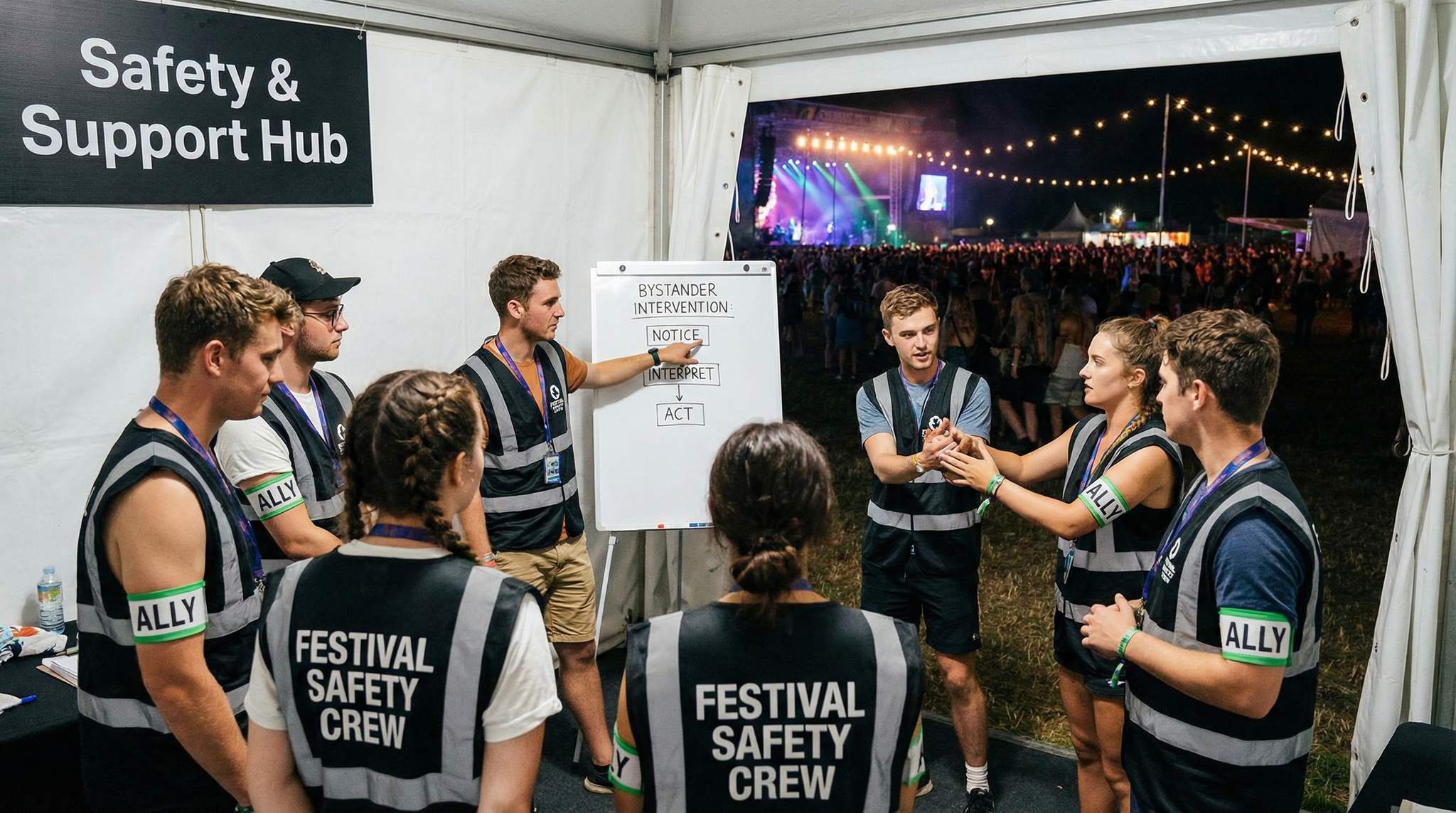
What should staff training cover? Start by defining what constitutes harassment and unacceptable behavior, including subtle forms like unwanted comments, catcalling, groping in crowds, stalking, or bias-motivated harassment. Use real-world scenarios to illustrate each – for example, an overly persistent fan in front of the stage, or inappropriate touching during a crowded DJ set. Training should then teach concrete intervention tactics. Staff and volunteers can be taught the same core methods as any active bystander: if they witness harassment, they can choose to directly intervene (firmly but calmly telling the perpetrator to stop), distract (interrupt and separate the parties with an excuse or diversion), delegate (call security or a manager for backup), or support the victim afterward (checking if they’re OK, offering to help report the incident). Role-playing exercises during training can be extremely effective – practicing scenarios of intervening gives staff confidence to do the right thing under pressure.
During these sessions, instructors often address common misconceptions—such as the myth that distraction can’t help to deal with confrontation. True or false? It is entirely false. In fact, distraction is one of the most effective de-escalation tools taught in bystander intervention training. By teaching staff to “accidentally” spill water, ask for directions, or check wristbands, organizers provide their team with low-risk methods to diffuse tension without triggering an aggressive response from the instigator.
Turn Fans Into Your Marketing Team
Ticket Fairy's built-in referral rewards system incentivizes attendees to share your event, delivering 15-25% sales boosts and 30x ROI vs paid ads.
In addition, instruct staff on the proper protocol for handling reports from attendees. Often, someone may approach a staffer to report “that person in the red shirt is groping people” or “my friend is being harassed by a guy near the bar.” Staff need to know how to respond empathetically and decisively. This includes believing the reporter, escorting or locating the victim to a safe space if needed, and quickly alerting security control or law enforcement on-site per the festival’s procedure. Emphasise a victim-centered approach: staff should never blame the person reporting, and should keep information as confidential as possible.
It’s wise to designate specific harassment response teams or liaisons on staff. Some festivals appoint Harassment Officers or Safety Ambassadors who receive advanced training in handling sensitive situations. They might wear a special identifier – for example, some events give these team members badges or shirts that say “Safe to Talk” or “Here to Help,” indicating they’re an approachable point of contact for anyone in distress, similar to safe space initiatives and dedicated safety team protocols. By making these trained helpers highly visible (brightly colored vests, wristbands, or marked info booths), attendees will know exactly who to turn to if they experience or witness harassment. At Coachella, for instance, the Every One initiative deployed roaming “Trained Safety Ambassadors” throughout the grounds and stationed Every One tents with counselors for anyone needing support, detailed in reports on Coachella’s safety measures. Similarly, Primavera Sound in Spain implemented a “Nobody Is Normal” protocol that included training all staff – from security guards to bartenders and volunteers – on how to properly handle harassment incidents, ensuring the first person an attendee turns to for help will respond correctly, exemplified by safer festival culture case studies.
Need Festival Funding?
Get the capital you need to book headliners, secure venues, and scale your festival production.
Logistically, building training into staff preparation is an investment, but a manageable one. Festival producers can partner with advocacy groups or professional trainers to run workshops. In the UK, organisations like Safe Gigs for Women and Girls Against have worked with venues and festivals to train staff in recognizing and preventing harassment, efforts documented by The Independent. In the U.S., the nonprofit Calling All Crows offers a “Here for the Music” campaign that has been helping festivals write internal policies and facilitate staff/artist training since 2017, according to the National Independent Venue Foundation. Don’t hesitate to tap into these expert resources – they often provide structured training modules and even on-site support. For smaller festivals on a tight budget, look for local community organizations (e.g. a local sexual violence crisis center or university program) who might volunteer to conduct a training session in exchange for recognition or a free booth at your event.
Finally, ensure everyone on the team is empowered to act. Make it clear in staff briefings that preventing harassment is a collective responsibility – crew members should feel confident intervening when they see something, not assume “someone else will handle it.” Build a communication protocol (for example, a discreet radio code for harassment in progress) so staff can swiftly call in backup if needed. And establish that any staffer can and should immediately stop an incident or get help, even if it’s outside their regular job role. When festival workers feel prepared and authorized to step in, they become active guardians of the event’s culture.
Empowering Attendees to Act as Allies
Staff alone cannot have eyes everywhere – an entire festival community that looks out for each other is the ultimate goal. Empowering attendees to be active bystanders and allies is a powerful way to prevent harassment and create a supportive atmosphere. Many festival-goers already informally take care of friends (and even strangers) who might be in trouble; organisers can amplify this instinct through encouragement, education, and easy reporting channels.
The dynamic shifts significantly when a stranger interferes to support a targeted individual. While friends naturally protect one another, a festival environment truly becomes secure when unrelated attendees feel empowered to step in. Fostering this level of community care requires organizers to provide clear, accessible guidance on how to intervene safely, ensuring that well-meaning fans do not accidentally escalate a volatile situation.
Smooth Entry With Mobile Check-In
Scan tickets and manage entry with our mobile check-in app. Supports photo ID verification, real-time capacity tracking, and multi-gate coordination.
Start by encouraging a general attitude of allyship in all pre-event communications. In ticket confirmation emails, social media posts, and festival apps, include a friendly message to attendees about helping keep the event safe. For example: “We’re all in this together – if you see someone behaving inappropriately or anyone who seems uncomfortable, please speak up or inform festival staff. Let’s take care of each other so everyone can enjoy the music.” This kind of messaging, repeated across platforms, normalises the idea that attendees should not be passive bystanders. Some festivals even have attendees sign a short “respect pledge” during online check-out or wristband registration via your event ticketing platform, agreeing to uphold the event’s code of conduct and look out for fellow festival-goers.
On site, reminders and resources should be visible. Posting signs or banners about consent and harassment can reinforce the culture (e.g. “No means no – be an ally, not a bystander. If you see something, say something.”). Creative approaches help too: display the festival’s safety team contact info on video screens between acts, include a page in the festival guide about how to get help, and have MCs or DJs make the occasional announcement. Some events distribute information cards or buttons at the entrance with guidance on reporting harassment. Others partner with campaigns like Our Music My Body or Safe Gigs to host booths on-site, where attendees can learn how to intervene and even pick up stickers or merch that promote a harassment-free scene.
Crucially, give attendees concrete tools and tips for safe intervention. Most people are willing to help but may not know what to do in the moment. Festival organisers can borrow from well-established bystander intervention models used in campuses and public spaces worldwide – often summarised as the “5 D’s”. These five strategies give anyone options to intervene without necessarily confronting a harasser directly:
Bystander Intervention Strategies: The 5 D’s
- Direct – Confront the behaviour head-on. If you feel safe and the situation isn’t volatile, you can calmly call out the harasser. For example, saying “Hey, leave them alone. That’s not cool,” sends a clear message. A direct approach can stop the incident immediately, but it requires confidence and should be done without escalating aggression.
- Distract – Diffuse or interrupt the situation creatively. Sometimes a subtle distraction can halt the harassment without any confrontation at all. You might pretend to be lost and ask the target for directions, or accidentally “spill” a drink near the harasser – anything that interrupts the harasser’s focus and gives the person being harassed a chance to move away or have the dynamic broken. Distracting is a great technique when direct confrontation feels unsafe.
- Delegate – Get help from a third party. Find someone who can assist – this could be a security guard, a festival staff member, or even other nearby attendees. Explain the situation (briefly, in a safe area) and ask them to step in. For instance, you might alert a staff member, “That person in the green shirt by the bar is harassing that woman; can you help intervene?” Delegating ensures the intervention is handled by someone with authority or in a group, which can be safer and more effective.
- Document – Record the incident if appropriate. If no immediate action is possible, an attendee can film or note details as long as it’s safe to do so. This is especially useful if a situation is ongoing or could require evidence later (for security or police). For example, recording a video of someone repeatedly harassing others in the crowd can help staff identify and remove the person. Important: Always focus first on safety – document only from a distance, and once the situation is under control, ask the victim if they want the footage turned over or deleted.
- Delay – Check in after the fact. Not every intervention can happen in the moment – maybe the harasser slips away, or you only realize what happened after it’s over. Checking on the person who was harassed after an incident can still make a big difference. Ask if they’re okay, express empathy (“I saw what happened. That wasn’t right – are you alright?”), and assist them in reporting it if they choose. This support helps the person feel less alone and can reduce the trauma of the experience.
Festival organisers can share these tips in newsletters or on-site posters (for example, a poster listing “See Harassment? Here’s What You Can Do: Direct, Distract, Delegate…” etc.). By educating attendees on multiple intervention options, you empower those who witness bad behaviour to choose a method they’re comfortable with. Not everyone will feel bold enough to directly confront a harasser – but maybe they’ll feel okay asking the victim “Hey, are you okay?” or quietly telling a crew member. Even small actions, like a brief distraction or a timely report to staff, can prevent harassment from escalating further.
It’s also important to address the festival community’s mindset. Emphasise looking out not just for friends, but anyone in need. For example, if someone sees a lone individual (perhaps intoxicated or being bothered) in a corner, encourage them to do a quick check-in or alert a staff member. Cultivate a “we’re all friends here” atmosphere. Some music scenes already have strong norms of picking each other up – literally, in the case of mosh pits where it’s standard for fans to help someone who falls. Extending that ethic to preventing harassment is a natural next step: if you see someone messing with another person’s safety or dignity, don’t ignore it. As one safety campaign put it, “It takes a crowd to protect the crowd.”
Finally, remove barriers to reporting. Many victims and bystanders do not report incidents because they don’t know how or assume it won’t be taken seriously. Make it easy and reassuring for attendees to reach out for help. Clearly advertise a harassment reporting hotline or text number if you have one (for example, “Text 3131 for Security – No issue is too small”). If your festival app supports live help requests, enable that feature and publicise it. Let people know they can also flag any staff or go to any info point to report an incident. The key is to normalize asking for help: attendees should feel that the festival wants them to speak up. When they do, ensure staff respond promptly and gratefully – even if it’s a minor concern, it’s better to address it early than let a potential offender continue unchecked.
Go Cashless With RFID Technology
Enable contactless payments, faster entry, and real-time spending analytics with RFID wristbands and NFC-enabled ticketing for your events.
Reporting and Support Systems On Site
Even with all the training and awareness in the world, incidents may still occur – but if they do, a festival must be ready to respond with care and efficiency. Setting up robust reporting and support systems is a core part of bystander intervention planning. Essentially, when a bystander (whether staff or attendee) intervenes or a victim comes forward, what happens next? Having clear answers to that question will ensure harassment is dealt with swiftly and doesn’t slip through the cracks.
Begin with multiple reporting channels. Not everyone will feel comfortable reporting a problem in person, so offer a variety of ways to reach festival authorities. Many large festivals establish a dedicated safety hotline or SMS number that goes straight to the command center. For example, an attendee could text “HELP” and their location to a number posted on the back of their wristband or on signage, and festival security will dispatch assistance. If your event has a mobile app or chatbot, consider adding a “report an issue” feature where users can quickly send an alert (possibly even anonymously). At a minimum, clearly mark the locations of security tents, first aid areas, or “Safe Space” booths on the festival map so people know where they can find human help at any time.
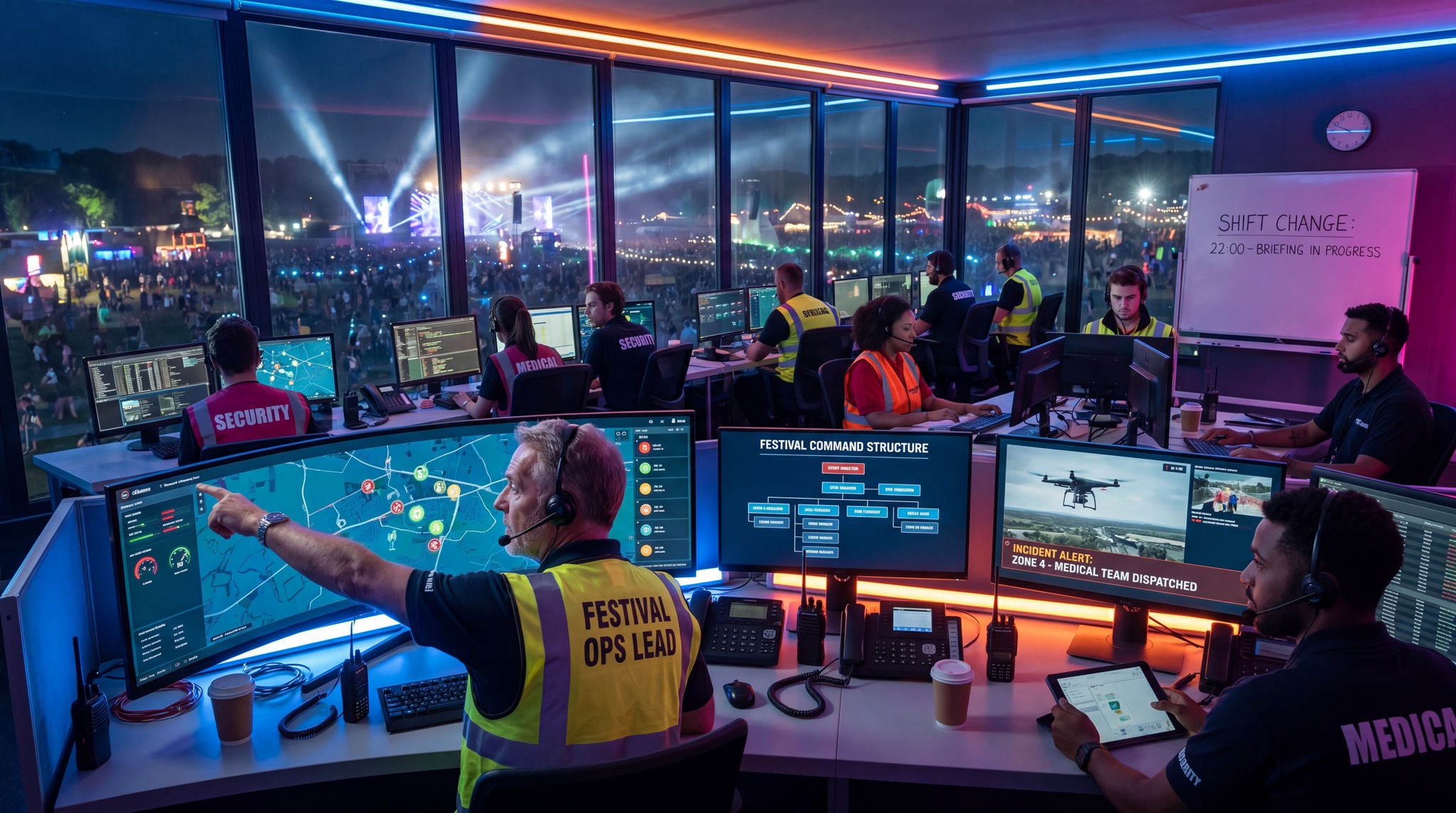
Make sure that those manning the reports are trained and equipped to act. Whether it’s an operator on the text hotline or a volunteer at a welfare tent, the first point of contact should respond calmly and assure the reporter that the issue will be addressed. They should gather essential information (Who, What, Where, When) and mobilise the appropriate response. For instance, if a report comes in about a specific individual harassing people by the main stage, the operations center can immediately radio nearby security teams with the description. Many festivals now keep a live incident log during the event – whenever a report comes in, it’s logged with time/location and tracked until there’s resolution. This helps ensure no report is forgotten in the festival rush.
An effective support system also provides care for victims. Harassment and sexual misconduct are traumatic, and a victim may be distraught, in shock, or even injured. It’s important to have a private, quiet area where staff can bring an affected person to decompress and speak freely. Some festivals designate a quiet “sanctuary” tent or welfare area staffed with trained counselors or volunteers for exactly this purpose. For example, Coachella’s Every One tents were staffed with professional counselors to give attendees a safe space and emotional support if they had an incident, as reported by Refinery29. UK events like Glastonbury have worked with local organizations to host sexual assault referral centres on-site, providing expert care for victims of serious assaults, a model discussed in Guardian articles. While not every festival can afford on-site therapists, at least ensure your medical team or welfare staff have basic training in handling trauma. Even a few team members doing double-duty as “care volunteers” who can comfort someone, provide water, and explain their options can make a world of difference.
When an incident is reported, swift action and zero tolerance should be the policy. Festival producers must back up their anti-harassment stance with real consequences for offenders. This means security or staff should promptly investigate and, if credible, remove the harasser from the event (with coordination of law enforcement if a crime occurred). Coachella famously announced it would revoke wristbands and eject anyone found violating the harassment policy, “with no refund,” and involve police as needed, reinforcing their zero-tolerance stance and commitment to attendee safety. Following through on such promises shows attendees – and would-be offenders – that you mean business. It’s equally important to communicate these outcomes appropriately: while you don’t need to broadcast every removal, you can let reporting parties know that action was taken if possible (“We found the individual and they have been removed from the festival”). This closure helps victims feel heard and safer after speaking up.
Throughout all these processes, maintain a respectful, confidential approach. Victims should never be made to feel they’re a burden to the festival or causing trouble by coming forward. Train staff to avoid judgmental questions and to get consent from the victim for next steps whenever possible (for instance, ask “Are you comfortable with us calling the police or would you prefer another solution?” if the situation allows). Keep any personal data or incident details tightly controlled on a need-to-know basis. The goal is that attendees trust the festival’s system enough that they will use it – trust is earned by handling each case with care and discretion.
Free Tool: Project Your Bar Revenue
Per-head spend benchmarks by event type turned into projected bar and food revenue, with a stock-mix estimate and gross-margin line. Free calculator.
Finally, consider a post-event review of all reported incidents. Gather your team and go over what happened: Were there any patterns (e.g. one location where multiple issues arose)? How well did the interventions and reporting system work? What could be improved next time? Some festivals have even shared general findings with their community for transparency – for example, noting in a post-event report how many harassment incidents were reported and resolved. If appropriate, thank your attendees publicly for watching out for each other. This not only reinforces the positive behavior but also holds your festival accountable to keep improving safety year after year.
Integrating Bystander Intervention into Emergency Planning
It’s important to treat harassment prevention and response as a formal part of your Safety & Emergency Planning for the event. Just as a festival prepares for medical emergencies, bad weather, or missing persons, you should prepare for the possibility of harassment or assault incidents. In your risk assessment, identify scenarios – e.g. “Attendee sexually assaulted in crowd” or “Volunteer witnesses harassment backstage” – and plan out the response step by step. Having a written plan ensures everyone knows their role and incidents are handled consistently and lawfully.
Coordinate with local authorities and stakeholders. Contact local police ahead of the festival and discuss your harassment policy and response plans. Many police departments will be glad to know the event is taking the issue seriously, and you can establish a protocol for serious cases (e.g. a direct liaison officer you can call if needed). Similarly, make connections with local support services – for example, a nearby rape crisis center or women’s refuge – and have their hotline numbers handy to give to victims. Some festivals arrange to have advocates on standby or on-site; even if that’s not feasible, knowing who to call for expert advice in the moment is valuable.
Venue design and logistics also play a part in preventing harassment. Incorporate safety into your site planning by addressing “hot spots” that could enable predatory behavior. For instance, ensure adequate lighting in parking lots, pathways, and remote corners of the venue so no area provides easy cover for misconduct. If your festival has camping, consider a patrol or security post near the far ends of the campground, as isolated tents can unfortunately be sites of assault if unmonitored. Identify crowd-dense, low-visibility areas (perhaps a packed pit that security has trouble reaching, or a forested art installation zone) and find ways to increase oversight – whether through more frequent roving staff patrols, CCTV cameras if appropriate, or volunteer “spotters” mixed in with the crowd. In research from Finland, unsafe spatial design and alcohol-heavy environments were found to normalize abuse and reduce the chance of bystander action, findings supported by festival safety research, so festival organisers should treat layout and programming as part of the prevention strategy.
Don’t forget to brief your security contractors thoroughly on the harassment policy and bystander programme. Security guards need just as much awareness training – if not more – since they are often the ones to intervene physically or make the call on ejecting someone. Emphasise to the security team that sexual harassment or assault is a real safety issue (not a “personal problem” for attendees to sort out themselves). All guards should be instructed to respond seriously to any such report, and to never dismiss someone who comes forward. It can help to integrate a couple of harassment scenarios into the security briefing or tabletop exercises: e.g. how to handle catching an attendee groping others in the crowd, or what to do if a sexual assault is reported hours after it happened. Walk through the steps, including preserving evidence if applicable, and how to treat both victim and alleged perpetrator professionally. Having these discussions in advance makes the team far more prepared to act decisively if something occurs.
Lastly, approach bystander intervention and safety as an ongoing improvement process. Each festival edition can learn from the last. Gather data: How many incidents were reported? Were there areas or times they tended to happen? Solicit attendee feedback through post-event surveys – ask whether people felt safe, and if not, why. You might be surprised by the insights (for example, attendees might point out they avoided a certain stage at night because it felt sketchy, which you can address next year with better lighting or patrols). Show that you’re listening: update your policies and training each year based on what you’ve learned. Safety planning isn’t one-and-done; it evolves with new challenges and creative solutions. By integrating the bystander program fully into your emergency planning cycle, you ensure it gets the same level of attention and resources as other critical operations.
Data-Driven Event Marketing
Track ticket sales, demographics, marketing ROI, and social reach in real time. Exportable reports give you the insights to make smarter decisions.
Community Engagement and Leading by Example
Festival producers have a unique opportunity to lead by example in the live events industry by championing anti-harassment initiatives. Engaging the broader community – from fans to artists to fellow organisers – creates a ripple effect that makes not just your event but all events safer. Consider launching or joining wider campaigns to spread awareness about bystander intervention and festival safety.
One powerful example comes from Australia, where in 2017 a coalition of festivals, venues, and artists launched the “Your Choice” campaign. This industry-supported initiative was built on the idea that everyone at a show has a role in creating a safe environment. It introduced the concept of shared “house rules” for gigs and festivals, and over 100 festivals and promoters signed on, committing to address bad behaviour and encourage personal accountability, as detailed by The Music Network. As Helen Marcou, one of the campaign’s founders, explained, Your Choice was about being preventive rather than reactive – getting the message out that calling out bad behaviour when seen is part of being a responsible participant in the music community, emphasizing a proactive safety culture. By aligning your festival with such movements or principles, you show that you’re not acting in isolation; you’re part of a larger effort to change the culture of live events.
Partnering with advocacy groups can greatly amplify your bystander intervention program. We’ve mentioned organisations like Safe Gigs for Women (UK), Calling All Crows (USA), Good Night Out (international nightlife campaign), Our Music My Body (USA), and others. These groups often provide training resources, posters, on-site volunteers, and guidance on best practices – essentially acting as consultants and allies in your mission. For example, some UK festivals have worked with Safe Gigs for Women to have the group’s volunteers present at the event, acting as additional eyes and ears in the crowd and a friendly point of contact for anyone (especially women) feeling unsafe. In one instance, an Irish festival invited volunteers from Safe Gigs Ireland to roam the venue and intervene when they saw issues, which both prevented incidents and showed attendees that the festival cared deeply about their safety, an initiative highlighted in safety features. Explore these partnerships; they can lend credibility and expertise, and you’ll be feeding the ego of those organisations by showcasing their work – a win-win for community goodwill.
Don’t underestimate the influence of artists and performers in promoting a safe atmosphere. Artists can send strong messages to fans about respecting each other. Consider briefing your lineup (or at least the headliners) on your festival’s harassment policy and encouraging them to say a few words during their set if the moment allows. Something as simple as a vocalist telling the crowd, “We want everyone to feel safe. If you see someone being a creep, call ’em out,” can resonate with thousands of fans at once. Some artists have taken it upon themselves to stop shows when they witness groping or fighting – these moments often make headlines and reinforce the idea that harassment is not “part of the festival experience” and won’t be brushed aside. Work this collaborative spirit into your planning: maybe provide artists with a suggested PSA or have your MCs ready with a short script about safety that can be announced at peak times.
Finally, be transparent and celebrate progress. If you implement a bystander intervention program and start seeing positive results, share that story. Festival-goers appreciate knowing that organisers are actively making improvements. You could publish a post-event summary highlighting safety efforts: e.g. “Thanks to our community, we had multiple instances of attendees helping each other and 100% of reported harassment incidents were addressed. We removed 5 individuals who violated our policy – a clear message that this behaviour has no place here.” By reporting such outcomes (in aggregate, without naming and shaming), you build trust with your audience. They’ll be more likely to report incidents in the future if they see that you take action. Moreover, sharing your success and even your challenges in tackling harassment can inspire other festival producers to follow suit. In an industry that often competes on lineups and production, cooperating on safety is in everyone’s best interest. By taking the lead on bystander intervention and openly promoting a harassment-free ethos, your festival can become known as an event where fans feel safe, respected, and truly part of a caring community.
Frequently Asked Questions About Bystander Training
Why is bystander intervention training essential for festival staff?
Bystander training equips event workers, security, and volunteers with the skills to identify and safely disrupt harassment. It shifts the burden of safety from solely the victim or security team to the entire festival workforce, reducing liability and fostering a genuinely inclusive environment.
Is it true or false that distraction can’t help to deal with confrontation?
False. Distraction is a highly effective, low-risk de-escalation tactic taught in modern intervention programs. It allows staff or attendees to interrupt harassment—such as by asking a random question or creating a minor diversion—without directly confronting the aggressor, thereby protecting the target while avoiding physical escalation.
What are the consequences of a bystander’s silence in response to harassment at an event?
Silence from onlookers implicitly validates the harasser’s behavior and leaves the victim feeling isolated and unsafe. For festival organizers, a culture of inaction increases the risk of repeat offenses, damages the event’s reputation, and can lead to severe safety and legal liabilities.