Introduction
Running a festival on a razor-thin margin is a high-wire act – one that demands meticulous cash flow planning and contingency strategies. Many Americana and indie festivals driven by passion and culture find themselves working with limited profits, meaning every dollar (or pound, euro, or rupee) counts. History shows that even beloved long-running festivals can face cancellation or collapse from financial strain, as evidenced by the Philadelphia Folk Festival’s hiatus. By managing cash flow wisely and preparing for the unexpected, festival organizers can avoid cash starvation and ensure their events survive and thrive for years to come. This guide distills decades of festival production experience into actionable advice on budgeting, scheduling payments, and building reserves – because in the festival world, solvency protects culture.
The Challenges of Small-Margin Festivals
Small-margin festivals – whether a local folk weekend or a boutique music gathering – operate in an environment where profit margins are slim and risks are high. These events often must nearly sell out to break even, leaving little room for error. Factors like rising production costs, unpredictable weather, and last-minute emergencies can quickly tip the balance from black to red. For example, the Philadelphia Folk Festival (a 60-year Americana staple) had to cancel its 2023 edition due to mounting debt and insufficient income, showing that even established festivals aren’t immune to cash flow crises. In this climate, festival producers must be both creative and disciplined in managing finances:
- Unpredictable Sales: Ticket sales often come in waves, not all at once. Depending on genre and audience, many fans purchase late, which can leave early planning under-funded.
- High Upfront Costs: Expenses like artist deposits, venue fees, and marketing campaigns often hit months before the festival, long before all tickets are sold.
- External Shocks: Weather events, economic downturns, or public health issues (like pandemics) can derail revenues suddenly. Without a cushion, a single thunderstorm or unexpected expense can put a festival into the red.
- Pressure to Deliver: Attendees expect a great experience regardless of budget constraints. Festival teams feel pressure to match the production quality of bigger events, sometimes stretching resources thin.
When examining why music festivals face financial difficulties on a broader scale, the root causes often extend beyond just low ticket sales. Industry-wide economic hurdles—such as supply chain inflation, skyrocketing talent guarantees, and an increasingly saturated event market—mean that even mid-sized and large-scale productions are feeling the fiscal strain. Organizers are forced to absorb these rising operational costs without pricing their core demographic out of the market, creating a precarious balancing act.
Understanding these challenges is the first step. The next is to map out a plan that aligns expense timing with revenue reality, builds safety nets, and enables quick adjustments.
Let Fans Pay Over Time
Offer flexible payment plans that split ticket costs into manageable installments, making higher-priced events accessible and boosting conversions.
Plan Around Realistic Ticket Sales Phases
One of the most common pitfalls in festival budgeting is assuming an ideal cash inflow rather than a realistic one. Every festival has sales phases – e.g. early-bird rush, slow middle months, last-minute surge – that affect cash flow:
- Study Historical Patterns: Look at similar festivals or past editions of your own event. When did 80% of tickets sell? Often, major sales spikes occur after lineup announcements, payday weekends, or as the event nears.
- Forecast Conservative Scenarios: Budget your spending assuming a slower sales curve than your “dream scenario.” For instance, if you hope to sell 5,000 tickets, build your plan around hitting 3,000 until late in the sales cycle, then adjust if the higher targets materialize.
- Use Tiers and Deadlines: Many festivals use tiered ticket pricing (early bird, advance, last-minute) not only to incentivize attendees, but also to inject cash early. For example, Burning Man (while not-for-profit) gets most ticket revenue months in advance through presales, helping fund its huge upfront build costs. Smaller Americana festivals might offer limited discounted tickets around the holidays or harvest season, aligning with when fans have disposable income.
- Account for Payment Plans: If you offer installment plans to attendees (a feature Ticket Fairy supports, allowing fans to pay in chunks), factor in the slower trickle of revenue. A chunk of your audience paying over 3-6 months means you won’t have all their money upfront. Adjust your cash flow projections accordingly so you don’t overspend expecting funds that haven’t arrived yet.
- Leverage Small Festival Ticketing Platforms: Choosing the right registration partner is critical for maintaining liquidity. Look for small festival ticketing solutions that offer rapid or rolling payouts rather than holding all funds until after the event. Platforms like Ticket Fairy provide organizers with early access to capital, which is essential for covering upfront deposits.
- Implement High-Ticket Cash Flow Strategies: While general admission sales might trickle in, offering premium options early can provide a massive cash injection. Review your VIP, glamping, or backstage pass offerings. These high-ticket items often sell out quickly to your most dedicated fans, securing substantial early revenue to fund site builds.
- Time Your On-Sales Strategically: When launching your early-bird tiers, clarity is key. If you are attracting a national audience, clearly communicate what local time means for ticket sales (e.g., specifying “10 AM PST” rather than just “10 AM local time”) to ensure a synchronized rush of buyers, maximizing that crucial first-day cash influx. Additionally, consider seasonal timing; for example, organizers in tourist hubs often study the best times of year to find discounted vacation packages for their region (like Nashville’s music festivals in late fall) and align their ticket-plus-hotel bundles with those off-peak travel windows to incentivize early purchases.
By mapping deposits and big bills against these sales phases, you ensure your festival isn’t spending money that hasn’t come in. Create a month-by-month cash flow spreadsheet aligned to your ticket sales timeline. This will highlight if, say, a large artist payment due in June far exceeds your expected ticket income by that point – a warning sign to rearrange payment timing or boost marketing before June.
Planning a Festival?
Ticket Fairy's festival ticketing platform handles multi-day passes, RFID wristbands, and complex festival operations.
Align Deposits and Payments with Revenue Milestones
Most festivals have to juggle paying out big costs in advance and getting most income later. A golden rule for tight-budget events is: align outflows with inflows whenever possible. Here’s how to map out deposits, builds, and payments to match your revenue milestones:
- Stagger Artist Payments: It’s common to pay a 50% deposit on booking and 50% before or at the show. Consider negotiating a smaller upfront deposit (especially with local or emerging artists) or phased payments. Some independent festival producers have split artist fees into thirds (e.g., 30% on signing, 30% a month before the event, 40% after performance) to ease cash strain. Make sure the final payment timing ties in with when the bulk of ticket money is in-hand (like a week of show settlement when walk-up sales are done).
- Phase Production Expenses: For infrastructure builds (stages, tents, sound, lights), see if you can schedule construction or rentals closer to the event date rather than paying far in advance. For example, ordering site fencing a couple of weeks out instead of months earlier delays the payment. Work with suppliers on payment timing – many vendors familiar with festivals understand cash flow timing and may accept, say, a 20% deposit to secure booking and the rest right before the festival opens.
- Payment Schedules with Venues & Contractors: If you’re renting a venue or hiring key contractors (security, medical, sanitation), negotiate payment terms that mirror your revenue flow. Align vendor payment schedules with ticket revenue by explaining your sales timeline. For instance, a venue might agree to 25% deposit, 50% a month out (when perhaps 70% of tickets are sold), and 25% after the event (covered by gate sales and on-site revenues). Always get such agreements in writing.
- Avoid Paying Everything at Once: Map all your major payouts on a calendar alongside projected income. If you see multiple large payments clustering in a slow sales month, try to shift some. For example, if artist deposits and a marketing agency bill both hit in March but your big sales come in June, try to push one of those payments into April or May or split into installments.
- Retain Some Post-Event Payments: While many costs must be prepaid, some can be settled after the festival when you have final sales (e.g., some catering or beverage providers might work on a revenue-share or net 15 days terms). Be cautious: too many post-event payables can backfire if revenue disappoints. But a balanced approach – paying some fees after the event – can significantly ease pre-event cash burn.
By aligning expenses with revenue, you reduce the chance of mid-season cash starvation – when bills come due but ticket money isn’t there yet. This requires proactive and honest communication with stakeholders, but many vendors prefer a slight delay over a default. Showing them a clear schedule of when funds will be available builds trust.
Negotiate Vendor and Artist Terms to Mirror Cash Flow
Strong negotiation is a festival producer’s friend, especially when margins are thin. Every agreement – with artists, production vendors, marketing services, etc. – is an opportunity to improve cash flow:
- Payment Terms: Don’t assume the first contract you’re handed is fixed. If a supplier’s standard terms are “50% on signing, 50% 30 days before event,” explain your situation and ask if they can do net 30 or net 60 terms that extend past the event. Many local vendors or smaller companies, especially those who believe in your festival’s mission, will accommodate net payment after the event, given a track record of trust.
- Early-Bird Discounts vs. Post-Event Premiums: Some vendors might offer a discount if you pay everything early – which might tempt you to save money, but be wary of draining cash too soon. It might be better to pay a slightly higher fee in exchange for a later payment date. For instance, a staging company could charge 5% more but accept payment a week after the festival when you’ve got all your gate revenue.
- In-Kind and Sponsorship Deals: Negotiate in-kind support to replace cash outlays. A local brewery might supply beer up front as a sponsor instead of you paying an alcohol order; a radio partner might give promo airtime in exchange for branding rather than cash purchase. These deals reduce immediate cash needs and often build community ties. The Maverick Festival (an Americana event in the UK) famously partners with local farms and artisans, trading festival exposure for goods and services – conserving cash while celebrating community.
- Artist Flexibility: While headliners and agents may stick to standard industry payment timelines, many artists on Americana and folk lineups value the festival’s success over rigid terms. Some up-and-coming bands might accept a smaller deposit (or even no deposit) if you have a relationship and communicate why it helps the event succeed. Always honor your payment promises, but it’s okay to propose structures like “We’ll pay you 25% on signing and the remainder right after your set, once we have the gate count.”
- Volume or Multi-Year Deals: If you run multiple events or plan to make the festival annual, leverage that for better terms. Bulk deals with suppliers (e.g., commit to using the same staging company for three years) might get you lower rates or friendlier payment schedules. It shows vendors you are in it for the long haul, and they might become partners in your festival’s growth rather than just contractors.
Negotiation isn’t about squeezing others unfairly – it’s about finding win-win arrangements that let your festival breathe financially while vendors/artists still get what they need. Be transparent: “Our ticket sales mostly come in late June, so we’d prefer to schedule your second payment then – is that workable?” Most vendors prefer a frank discussion upfront over a late surprise. By aligning their expectations with your revenue reality, you build a reliable network of partners.
Smart Promo Codes & Presale Access
Create percentage or flat-rate discount codes with usage limits, date ranges, and ticket type restrictions. Plus unlock codes for private presales.
Hold a Weather and Emergency Reserve
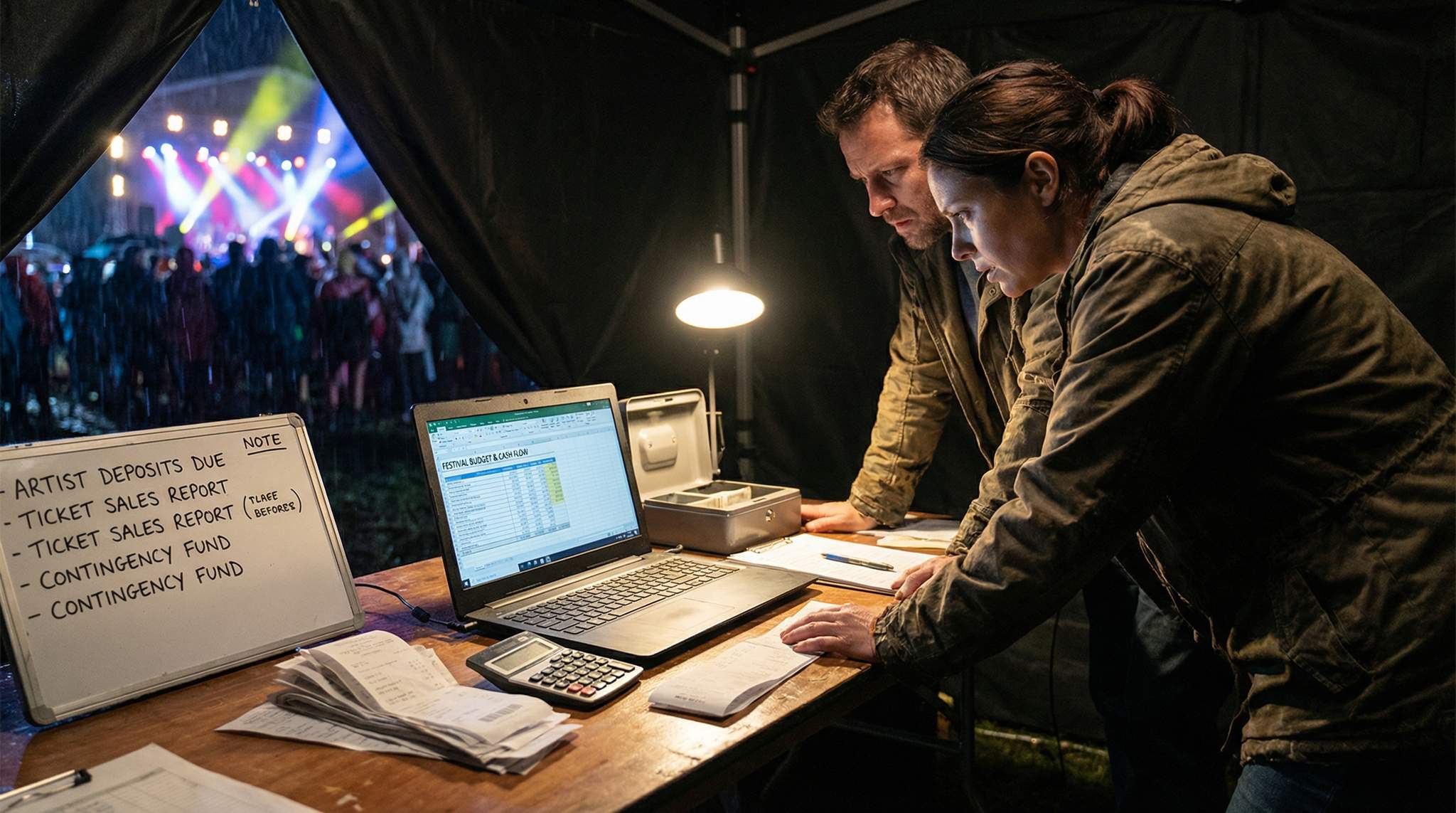
No matter how perfect your plan, unexpected trouble can strike – especially open-air festivals subject to Mother Nature. That’s why allocating a contingency fund or “weather reserve” is non-negotiable:
- Budget a Contingency Line (10-15%): Industry veterans recommend setting aside around 10% (or even more for weather-prone locations) of your total budget for contingencies. This money is not assigned to any specific expense; it’s a buffer for the unknown. Crucially, treat this reserve as untouchable except for true emergencies. It’s tempting to dip into it to cover a cost overrun or add a nice-to-have, but doing so undermines your safety net.
- Adjusting the Recommended Contingency Percentage for Arts Event Budgets: While a standard 10-15% is a solid baseline, multi-disciplinary arts events—which might include delicate installations, interactive exhibits, or specialized lighting—often require a higher safety net. Producers should evaluate the fragility of their physical assets and the complexity of their programming. If your event relies heavily on custom-built art pieces or non-traditional venues, pushing that reserve closer to 20% ensures you have the liquidity to repair or replace critical cultural elements on the fly without compromising the overall production.
- Aligning with Grant Requirements: When applying for public funding or foundation support, organizers must carefully consider the standard contingency percentage for arts grant budgets. Most grant-making bodies expect to see a dedicated buffer of 5% to 10% explicitly listed in your submitted financials. While the standard contingency percentage in arts event budgets might be higher internally (closer to 15% or 20% for complex outdoor productions), aligning your application with the funder’s specific guidelines demonstrates fiscal responsibility without appearing to over-inflate the request.
- Documenting Your Grant Contingency: To successfully secure the standard contingency percentage in arts grant budgets, you must provide historical data or risk-assessment documentation. Grant committees review hundreds of applications; if you simply drop a 10% buffer into the spreadsheet without a narrative, it may be flagged as padding. Instead, include a brief risk matrix in your proposal detailing potential cost overruns (e.g., specialized equipment rentals, union labor overtime, or sudden material price hikes) to justify the requested safety net.
- Weather-Proofing Costs: Festivals have been upended by storms, heatwaves, or floods. A weather reserve might fund things like extra matting and wood chips for muddy fields, emergency ponchos, or even partial refunds if a day is canceled. For example, Japan’s Fuji Rock Festival in 1997 was hit by a typhoon on day one – many attendees evacuated and the festival organizers faced huge losses. They learned and moved the festival to a more sheltered site, but also adopted more robust weather preparedness (from insurance to infrastructure) in future editions. Learning from such cases, wise festivals have funds ready to deploy for last-minute marquees, drainage pumps, or weather-related messaging and shelters.
- Insurance and Guarantees: Investigate event cancellation insurance and weather insurance. These can be pricey and may not cover every scenario (pandemics became an exclusion after 2020), but they can save your festival from bankruptcy if a headline disaster strikes. Some Americana events in hurricane-prone areas buy insurance that pays out if wind or rain exceeds a certain threshold forcing cancellation. Insurance doesn’t replace having reserve cash, but it can be part of a multi-layer contingency plan.
- Operational Emergencies: Beyond weather, many things can go wrong: a generator might fail and need immediate rental replacement, a main artist could cancel requiring a last-minute substitute (often at premium cost), or a section of fencing might get damaged by crowds and need repair overnight. A reserve covers these without derailing your whole budget.
- Community Support: If disaster strikes, lean on your community. Festivals with strong local and fan support can sometimes rally help—volunteers, local businesses, even crowdfunding—to get through a crisis. Case in point: when a severe storm hit Bluegrass in the Hills festival, the community stepped up with tractors to tow cars and donated tarps to keep stages dry, reducing what the festival organizers would have paid in emergency services. Building goodwill with attendees and locals isn’t just good ethics – it can literally save you money in a pinch.
Having a contingency fund (and plan) is like carrying insurance on the festival’s culture itself. It means that a stroke of bad luck won’t wipe out years of hard work or future dreams. It’s easier to protect the vibe and vision of your event when you have a financial safety net.
Need Festival Funding?
Get the capital you need to book headliners, secure venues, and scale your festival production.
Track Daily P&L During Festival Week
Once show week arrives, the work isn’t over for your finance team. In fact, daily financial tracking during the festival can make the difference between ending in the black or sliding into loss unnoticed:
- Daily Profit & Loss Updates: Set up a simple daily P&L report for festival week (or the two weeks leading up through tear-down). Track all incoming revenue (e.g., on-site ticket sales, merch sales, vendor fee collections) and all expenses going out each day (e.g., staff wages, fuel top-ups, emergency purchases). By reviewing this each evening, the festival team can spot trouble early. If, for example, on Day 1 your parking revenue is far below budget but you had to spend extra on overtime security, you’ll know to adjust on Day 2 (maybe redeploy staff or open more on-site promotion to boost parking sales).
- Swift Course Corrections: Treat your budget as a living document. If something’s off during the event, act immediately. Examples:
- Attendance is lower than expected? Cut back on discretionary spending like VIP perks or fireworks. It’s tough, but saving money now protects your ability to pay essentials.
- Concession sales booming? Great – maybe you can afford that extra hour of shuttle service to keep attendees happy (and spending) or at least know you have a revenue cushion if a cost pops up.
- Vendor no-show or change? If a food vendor drops out and you need to refund some vendor fee or quickly buy supplies to cover the gap, log it and figure out how to offset it (perhaps push merchandise sales or pause some non-essential rental).
- Team Communication: Have a daily briefing with your core festival management team that includes a finance update. This doesn’t need to be a full spreadsheet review with everyone, but key leaders should know the financial status. If the technical production manager knows money is tight by Day 2, they might find a way to trim some costs (like reducing generator usage overnight) to help out.
- Preventing Cost Creep: Festivals often see “cost creep” on-site – small unplanned expenses piling up (a few extra radio rentals, emergency printing, more gaffer tape, staff meals, etc.). Daily tracking highlights these. Perhaps your miscellaneous expenses were budgeted at $5,000 but you’ve spent $4,500 by mid-festival – time to tighten belts on those little extras for the remaining days.
- Post-Event Settlements: Use the daily data to prepare for final settlements. If you have to settle with artists or vendors the day after the festival, you’ll better understand exactly how much cash is available. This avoids accidentally promising money you don’t have on hand.
Real-world example: At Australia’s Byron Bay Bluesfest, the festival’s organizers track daily sales and costs meticulously; one year when rain affected walk-up sales, this practice helped them immediately slash some optional production expenses and renegotiate a few supplier fees on the fly, containing losses. The lesson is clear – don’t wait until the month after the festival to find out if you lost money. Monitoring in real time empowers you to take action while you still can.
Avoid Cash Starvation with Honest Pacing
Enthusiasm can sometimes overshoot reality. Many festival organizers have fallen into the trap of overextending on the assumption of future sales or funding – a dangerous game that can lead to cash starvation. To keep your festival solvent:
- Set “Go/No-Go” Checkpoints: Establish critical checkpoints in your timeline to evaluate finances honestly. For instance, “If by 3 months out we haven’t sold 50% of tickets or raised X in sponsorship, we must scale back our plans.” It’s much better to trim expenses or lower capacity proactively than to charge ahead and run out of money later. Legendary festival producer Kevin Lyman, who ran the punk-rock Vans Warped Tour for decades on thin margins, was known for closely watching weekly ticket counts and cancelling underperforming tour dates in advance to avoid deep losses – difficult decisions that ultimately kept the overall show on the road.
- Avoid Magical Thinking: Be realistic about revenue forecasts. If early-bird sales are slow, don’t assume “they’ll all buy last minute” without evidence. Many events have been burned by optimistic projections. The infamous Fyre Festival is an extreme example – the festival’s organizers spent massive sums on luxury promotion and bookings early on, blowing their budget months before the event. The result was a public disaster. While most festivals aren’t as reckless, the principle stands: don’t spend money you hope to have, only spend what you do have or are reasonably certain to get.
- Keep Stakeholders Informed: If you have investors, board members, or key partners (including major sponsors or government supporters), keep them apprised of ticket sales and budget status. It might feel uncomfortable to share that you’re behind target, but it’s better they know early and perhaps help find solutions (like increasing marketing, adjusting the event scope, or providing short-term funding) than be shocked by a cash crisis at the last minute. Honesty also builds your credibility; stakeholders are more likely to support a festival director who faces facts and deals with them head-on.
- Scale Production to Sales: Design a festival plan that can scale with your financial reality. For example, you might have a “dream” production scope (multiple stages, top-tier amenities) if full funding comes through, but also a pared-down version that still delivers a great experience if you only hit break-even sales. Many smaller festivals have used this approach: they book a second stage or additional attractions only when ticket sales benchmarks are met. If not, they run a leaner event. It’s disappointing to cut back, but far better than going bankrupt. Attendees will forgive a few less frills more than they’ll forgive a festival that doesn’t happen at all the next year.
- Maintain Operating Capital: Ideally, build your festival in such a way that you carry some cash surplus from year to year. This way, you’re not starting from zero every time. Even a modest carryover fund can help cover early expenses without waiting on ticket income. Think of it as priming the pump – a little reserve can get you through the lean early months. Over time, if you grow that reserve, you buffer the festival from shock. This is how long-running events create longevity; they slowly build a financial foundation. As one festival executive said, “Our culture and creativity flourish because we’re not panicking about paying the next bill.”
Pacing yourself financially requires discipline and occasionally tough calls. But it prevents the worst-case scenario of running out of cash when you need it most. Solvency – staying in the black – is what allows you to continue delivering the cultural experience year after year.
Free Tool: Split Tickets for Max Gross
Given capacity and a target price, the optimizer proposes Early Bird / GA / VIP allocations and prices — with projected gross at 100%, 80% and 60% sell-through.
Engage the Community and Stakeholders
An often under-appreciated aspect of festival finance is the power of community engagement. Building a strong relationship with fans, local communities, and sponsors can directly and indirectly improve your cash flow:
- Transparent Communication: Some independent festivals share aspects of their financial challenges openly with their community. For example, when Boomtown Fair (UK) faced a tough year due to unforeseen costs, they communicated about the challenges in general terms to their attendees and reinforced how buying tickets early helps secure the festival’s future. This kind of honesty (without begging) can motivate your most loyal fans to spread the word or purchase early, boosting sales when you need them.
- Volunteer Programs: Engaging volunteers can reduce staffing costs significantly. Many Americana and folk festivals – such as the Woodford Folk Festival in Australia and MerleFest in the USA – have robust volunteer programs where fans trade labor for tickets. This not only saves money on staff wages, it also builds a sense of community and ownership. Volunteers often become your best ambassadors, bringing friends (more ticket sales) and even helping fundraise during hard times.
- Local Business Support: By integrating local vendors and suppliers, you create goodwill that can translate into flexible payment terms or sponsorship. A local stage equipment rental might cut you a break or find low-cost solutions if they’re invested in the festival’s success for the town. Showcase local breweries, food trucks, or craftspeople – their participation can come with in-kind contributions or at least more negotiable fees, as they gain exposure and sales at the event.
- Sponsors and Grants: In genres with cultural significance (like Americana, blues, or folk), there may be grants or public funds available. Apply for arts grants, tourism board support, or cultural funds. Even if these cover a small piece of the budget, it’s essentially cash flow that doesn’t depend on ticket sales. Additionally, carefully chosen sponsors can underwrite certain costs (e.g., a guitar brand sponsoring the acoustic stage). Ticket Fairy’s platform, for instance, can facilitate sponsor integration and data sharing (for ROI metrics), making it easier to attract sponsors without compromising the attendee experience.
- Leveraging Fiscal Sponsorships: If your festival is not a registered non-profit, partnering with an established 501(c)(3) or equivalent organization can open doors to foundation money. When structuring these agreements, ensure your financial models align with institutional expectations, particularly regarding the recommended contingency percentage for arts event budgets, ensuring your fiscal sponsor can confidently advocate for your funding.
- Fan Fundraising and Memberships: Consider fan-driven financial support models. Some festivals create membership or patron programs where die-hard fans contribute a set amount annually (like a “supporter’s club”) in exchange for perks. This brings in early funds. The Newport Folk Festival in the USA, for example, leveraged its non-profit status to accept donations and create the Newport Festivals Foundation, which helps fund the event and music education programs. Fans donate because they love the festival’s mission, effectively bolstering the event’s cash reserves.
- Ego Boost and Credit: Don’t forget to publicly appreciate those who help your festival financially. Shout-outs from the stage to sponsors, a thank-you wall for volunteers, or community awards go a long way. People are more willing to accommodate and assist (whether by extending an invoice deadline or buying a pricier VIP pass) when they feel valued as part of the festival family.
In essence, a festival doesn’t have to manage cash flow alone – it can lean on its community. This web of support can provide not just moral backing but tangible financial flexibility, from deferred payments to advance revenue. And beyond the dollars, it reinforces why solvency matters: to keep the community’s cultural celebration alive.
Solvency Protects Culture: Sustaining Your Festival’s Mission
At the end of the day, careful cash flow management isn’t just a bean-counter exercise – it’s what empowers the festival’s culture and legacy to continue. When a festival stays solvent:
- It can honour its commitments – paying artists, crew, and vendors fairly and on time, which builds trust and a positive reputation. This means next year’s lineup and crew will be excited to come on board.
- It can remain independent and true to its vision. Financial desperation is a fast route to compromising ideals – whether it’s signing a misaligned sponsor, slashing artistic elements, or in the worst case, selling the festival off to a larger corporate entity. Many iconic festivals have had to sell or shut down because of money issues, ending eras of unique culture. Solvency gives you choices and control.
- It protects the fan experience. A well-managed budget ensures things like adequate facilities, safety measures, and quality production aren’t sacrificed. Fans might not see the careful budgeting behind the scenes, but they will feel it in the smooth execution of the event. Conversely, if you’ve ever been to a festival where corners were cut (long water lines, poor sound, insufficient lighting), you’re likely witnessing symptoms of budget trouble.
- It enables growth and innovation. When you’re not just scraping by, you can invest in improving the festival – new stages, better programming, community projects, greener practices. All the cultural richness stems from having the financial breathing room to plan long-term.
A powerful example is Glastonbury Festival in the UK. Despite being world-famous now, it’s still a family-run festival deeply rooted in counterculture values. Yet, even Glastonbury isn’t immune to financial realities – festival co-organizer Emily Eavis noted that after two canceled years (2020–2021), Glastonbury would have faced bankruptcy if they missed another. They’ve survived decades by balancing idealism with financial prudence – building reserves in good years and never risking the farm (literally, in their case) with unsustainable debt. This balance allowed Glastonbury to continue its cultural mission of music, art, and community, even through turbulent times.
In short, financial stewardship is cultural stewardship. By mapping deposits to sales, keeping honest pacing, holding contingency funds, and adjusting swiftly when needed, festival producers safeguard not just the bottom line but the heart and soul of their festivals. It’s a legacy of experiences and memories that can continue only if the numbers add up.
Frequently Asked Questions
Why do small music festivals often face financial failure?
Small-margin festivals operate with slim profits and high risks, often requiring near sell-outs to break even. Financial failure frequently results from rising production costs, unpredictable ticket sales patterns, and external shocks like severe weather or economic downturns that tip the balance from black to red.
How can festival organizers manage cash flow effectively?
Organizers manage cash flow by creating a month-by-month spreadsheet that aligns expense timing with realistic ticket sales phases. This involves forecasting conservative sales scenarios, utilizing tiered ticket pricing to inject cash early, and ensuring large payments do not exceed available revenue at any specific milestone.
How much contingency budget should a music festival set aside?
Industry veterans recommend allocating 10-15% of the total festival budget specifically for contingencies. This untouchable financial buffer covers unexpected emergencies, such as weather-related infrastructure needs, equipment failures, or last-minute artist substitutions, ensuring these costs do not derail the event’s overall solvency.
What are the best practices for scheduling artist payments for festivals?
Best practices involve staggering artist fees to align outflows with revenue inflows. Organizers should negotiate smaller upfront deposits or split fees into installments (e.g., 30% on signing, 30% pre-show, 40% post-show). Ideally, final payments should be scheduled after the event when gate receipts and walk-up sales are collected.
Why is tracking daily profit and loss important during a festival?
Tracking daily profit and loss allows organizers to spot financial discrepancies immediately and make swift course corrections. By monitoring real-time revenue against expenses, teams can cut discretionary spending, adjust staffing levels, or boost on-site promotions to prevent small cost overruns from becoming significant losses before the event ends.
How can festivals prepare financially for bad weather?
Festivals prepare for adverse weather by maintaining a dedicated financial reserve to fund emergency infrastructure like matting, wood chips, and shelters. Additionally, organizers should investigate event cancellation or weather insurance to mitigate losses from severe conditions, ensuring that a single storm does not result in bankruptcy.
How do ticket sales cycles impact festival cash flow?
Ticket sales typically occur in waves—early-bird rushes, slow middle months, and last-minute surges—rather than a steady stream. Understanding these historical patterns is crucial for budgeting, as high upfront costs often arise during slow sales periods, requiring organizers to pace spending to match actual cash availability.
How can festivals negotiate better payment terms with vendors?
Festivals can improve cash flow by negotiating net-30 or net-60 payment terms that extend beyond the event date. Strategies include offering multi-year contracts for better rates, trading sponsorship exposure for in-kind services, or accepting slightly higher fees in exchange for delayed payment schedules that align with ticket revenue.
What is the recommended contingency percentage for arts event budgets?
For most independent arts events and boutique festivals, the recommended contingency percentage is between 10% and 15% of the total budget. If your event is heavily exposed to unpredictable elements—such as an open-air site during a volatile weather season—it is wise to increase this reserve to 20% to ensure complete financial protection.
What specific expenses should an arts event contingency fund cover?
A well-planned contingency reserve should cover unforeseen operational costs that arise during production. For arts events and boutique festivals, this typically includes emergency weather mitigation (like extra tents or ground cover), last-minute equipment rentals, rapid repairs for damaged art installations, and unexpected labor overtime. It should never be used to cover planned budget overruns or discretionary upgrades.
What is the standard contingency percentage for arts grant budgets?
When applying for funding, the standard contingency percentage for arts grant budgets typically ranges from 5% to 10%. Grant-making organizations expect to see this buffer to ensure the project can absorb minor cost overruns. However, organizers should maintain a larger internal reserve (often 15% to 20%) to fully protect the event from major disruptions.
Why do music festivals face financial difficulties even when attendance is high?
Even with strong attendance, music festivals face financial difficulties due to escalating overhead costs that outpace ticket revenue. Key factors include inflated artist booking fees, rising costs for staging and infrastructure, increased insurance premiums, and the logistical expenses of managing larger crowds. If an organizer fails to accurately forecast these compounding expenses, the event can easily lose money despite a sold-out crowd.