Behind every seamless festival experience is a meticulously crafted production schedule, often called the “critical path” timeline. This is the master plan that outlines every key task, deadline, and dependency from the early planning stages through load-in, the live event, and load-out. Think of it as the festival’s playbook – it ensures everyone knows what needs to happen, when, and by whom. A good production schedule is like an orchestra conductor, coordinating the many moving parts so they all come together in harmony (and on time!). In this article, we’ll discuss how to build that schedule, use project management tools to keep it organized, sequence major milestones, and manage overlapping workstreams. A rock-solid schedule will keep your team on track and help avoid those heart-stopping last-minute crises.
At its core, effective festival production management relies on this master document to bridge the gap between creative vision and logistical reality. Whether you are organizing an intimate boutique gathering or a sprawling multi-stage mega-event, the discipline of managing these complex, overlapping timelines dictates your ultimate success. A well-structured event production schedule serves as the central nervous system for your entire operation, ensuring that site managers, talent buyers, and marketing directors are all operating from the same playbook.
Successful music festival planning requires an even tighter integration of these elements, as organizers must balance complex artist advancing, specialized audio-visual requirements, and strict noise curfews. When diving into comprehensive festival planning, your master schedule becomes the ultimate safeguard against costly delays, ensuring that both the creative programming and the heavy infrastructure build progress in lockstep.
Ultimately, your overarching festival programming dictates the rhythm of this master document. Curating a diverse lineup of musical acts, immersive art installations, and interactive workshops means your production timeline must accommodate vastly different technical requirements. When the event’s curation expands beyond a single main stage to include late-night electronic tents, daytime panel discussions, and roaming performers, the schedule must reflect these varied load-in times and specialized crew needs to prevent logistical bottlenecks.
Free Tool: Size Your Festival Site
Zoned capacity planning for arena, campsite, parking and entry lanes — against UK Purple Guide and NFPA density standards. Finds your bottleneck zone.
Start with the Big Milestones (Critical Path)
Begin by identifying the critical milestones in your festival timeline. These are the major markers that absolutely must happen by a certain date for the festival to be viable. Think of them as the spine of your schedule. Typically, they include:
- Booking Deadlines: Dates by which headliners or key artists must be booked (or else you risk not having a lineup that sells tickets). Also deadlines for finalizing the overall lineup or program schedule.
- Permits Approvals: When you need to have permits in hand. For example, you might mark “Submit city permit application by April 1” and “Permit approval needed by June 1”. Without permits, nothing else can proceed on-site.
- Ticket Launch: When tickets go on sale (which involves having your ticketing platform ready, marketing materials prepared). Often tied to lineup announcement dates.
- Major Purchases or Orders: For instance, “Stage and tent order confirmed by X date” or “Merchandise ordered by Y date” (to ensure delivery in time). Anything with production lead time needs a milestone for ordering and delivery.
- On-Site Dates: When you get access to the venue for load-in, when stages must be built by, sound check dates, festival open and close times each day, and when you must be fully loaded out after the festival.
- Payments and Contracts: Deadlines for paying deposits or balances on contracts (artists, vendors, rentals). These have to be scheduled so you don’t miss them (and risk cancellations).
List out these major items first with target dates. This forms the skeleton of your production schedule. If you’re using a Gantt chart or project management software, you might create these as the top-level tasks or milestones.
Planning a Festival?
Ticket Fairy's festival ticketing platform handles multi-day passes, RFID wristbands, and complex festival operations.
When you map out these non-negotiable dates, you are effectively drafting the foundation of your event production timeline. This chronological roadmap goes beyond a simple to-do list; it provides a macro-level view of your entire operation. By establishing this timeline early, festival producers can spot potential bottlenecks months before load-in begins, ensuring that every department—from site operations to talent buying—is aligned on the overarching schedule.
Integrating these milestones into a cohesive event planning production schedule requires a deep understanding of vendor lead times and municipal regulatory windows. In top-tier festival production, organizers often work backward from the gates-open time, calculating exact days needed for heavy machinery clearance, staging sign-offs, and safety inspections. This reverse-engineering approach guarantees that your critical path remains realistic and grounded in actual site capabilities.
Critical Path Concept: Some tasks are dependent on others (you can’t start task B until task A is done). The critical path is the longest chain of such dependent tasks – meaning if any task on that chain delays, the whole festival might be delayed. Identify these linking dependencies. For example, “power installed on site” might be a prerequisite for “sound check can happen,” which is needed for “opening day performances.” Mark those clearly, and ensure those timeline items have zero wiggle room or have backup plans if something slips.
Break Down Tasks and Assign Responsibilities
With milestones in place, break each down into detailed tasks and subtasks. For example, for the milestone “Venue Secured (contract signed)” – tasks would include venue scouting, negotiation, preliminary site layout needed for city, contract review, deposit payment, etc., each with deadlines leading up to the final contract signing date.
Free Tool: When Should You Announce?
Pick your event date and genre — the free planner outputs a recommended announce, presale, on-sale and reminder schedule anchored to how your audience actually buys.
It’s helpful to categorize tasks by workstream or department:
- Talent & Programming: e.g., Send offers to artists, draft performance schedule, arrange hospitality riders, schedule rehearsals/soundchecks.
- Production & Operations: e.g., Finalize site plan, arrange power and water, schedule fence installation, stage build timeline, lighting focus, soundcheck, install signage, set up VIP areas.
- Marketing & Ticketing: e.g., Build festival website, design artwork, announce lineup, start ad campaign, set up ticketing system, send reminder newsletters, on-site app or map creation.
- Sponsorship & Vendors: e.g., Secure sponsors by certain dates, collect sponsor logos (for printing deadlines), finalize vendor list, vendor orientation meeting.
- Admin & Staffing: e.g., Hire staff/contractors, schedule team meetings, plan volunteer training, compile insurance documents, conduct safety briefing with authorities.
A common question among organizers is exactly when to schedule vendor discussions regarding finalizing timeline print pieces. Because printed materials—like site maps, sponsor banners, and physical program booklets—require significant lead time, these conversations should be locked in during the mid-stages of your pre-event phase. Aim to finalize all vendor-related print assets at least four to six weeks before load-in. This ensures that any sponsor logos or vendor booth numbers are accurately reflected in the final event production schedule and physical collateral before they go to the printers.
Need Festival Funding?
Get the capital you need to book headliners, secure venues, and scale your festival production.
Each task should have:
- A Deadline: when it needs to be completed.
- An Owner: who is responsible for doing it or making sure it gets done. This is crucial so there’s accountability. For instance, assign “Marketing Manager – Jane” to the task “Launch social media ad campaign by July 1”.
- Dependencies (if any): note if a task can’t start until another is finished. Most project management tools let you link tasks with dependencies. E.g., “Print program booklet” depends on “Finalize festival schedule and content by X date.”
Using project management software (like Asana, Trello, Monday.com, or a simple spreadsheet) can help assign and track these tasks. You can have columns like Task, Owner, Start Date, Due Date, Status, and Comments. Or on a Gantt chart, you can visually line up tasks along a timeline, with arrows showing dependencies – which is great to see overlaps and sequence.
Sequencing Pre-Event vs. On-Site Schedule
It helps to think of your production schedule in two main phases:
- Pre-Event Planning Phase (off-site work): Everything that happens before you physically start building on the venue site.
- On-Site Production Phase: The load-in (site build), the event itself, and load-out.
Pre-Event Phase Sequencing: Many of these tasks will run in parallel. For example, while marketing is promoting ticket sales, the operations team is securing equipment and the talent team is finalizing performers. A good schedule lays these out so you can ensure one team’s progress is not hindered by another’s timeline.
Free Tool: Project Your Bar Revenue
Per-head spend benchmarks by event type turned into projected bar and food revenue, with a stock-mix estimate and gross-margin line. Free calculator.
For instance, the marketing team needs the lineup or at least headliners confirmed by a certain date to design posters and launch ticket sales. So the talent booking sub-schedule must align with the marketing sub-schedule. If talent booking slips, marketing might have to delay launch – which you’d reflect on the Gantt chart as a dependency (talent booking complete > then launch marketing).
When dealing with complex programming—such as determining how lineups and set times usually get announced for big metal festivals or massive multi-day electronic events—promoters must also factor in crowd flow. Organizers rely on specialized scheduling apps and grid methods to plan clashes carefully, ensuring that overlapping headliners do not cause dangerous bottlenecks. Finalizing these stage times early within the event planning production schedule allows the marketing team to roll out the run of show smoothly to attendees.
Beyond just the musical acts, comprehensive festival programming often includes experiential activations, VIP culinary experiences, and wellness areas. Each of these non-musical elements requires its own dedicated sub-schedule within the master timeline. For example, a wellness area featuring morning yoga will need its audio setup and site safety checks completed hours before the main stage gates open, proving that diverse event curation directly impacts your daily operational flow.
Regularly have cross-team check-ins (we’ll talk about in the project management tools article) to update each other on progress, because the schedule only works if people communicate changes.
On-Site Production Phase Sequencing: This often gets its own detailed schedule, almost down to hours or shifts, especially for the critical week or days of load-in and load-out. It’s where the rubber meets the road.
Consider this a mini timeline within the timeline:
Data-Driven Event Marketing
Track ticket sales, demographics, marketing ROI, and social reach in real time. Exportable reports give you the insights to make smarter decisions.
- Load-In Week: Sequence of what gets built when. For example, Day 1 of load-in: fence delivery at 8 AM, staging delivered at 10 AM, ground marking and tents setup in the afternoon. Day 2: stage assembly, audio equipment loaded in, power generators installed. Day 3: lighting focus at sunset, soundchecks for bands, vendor booths setup, etc. Each has to be ordered logically – you wouldn’t want decor teams putting up banners before the structures they go on are built, or having food vendors arrive before their tents are up.
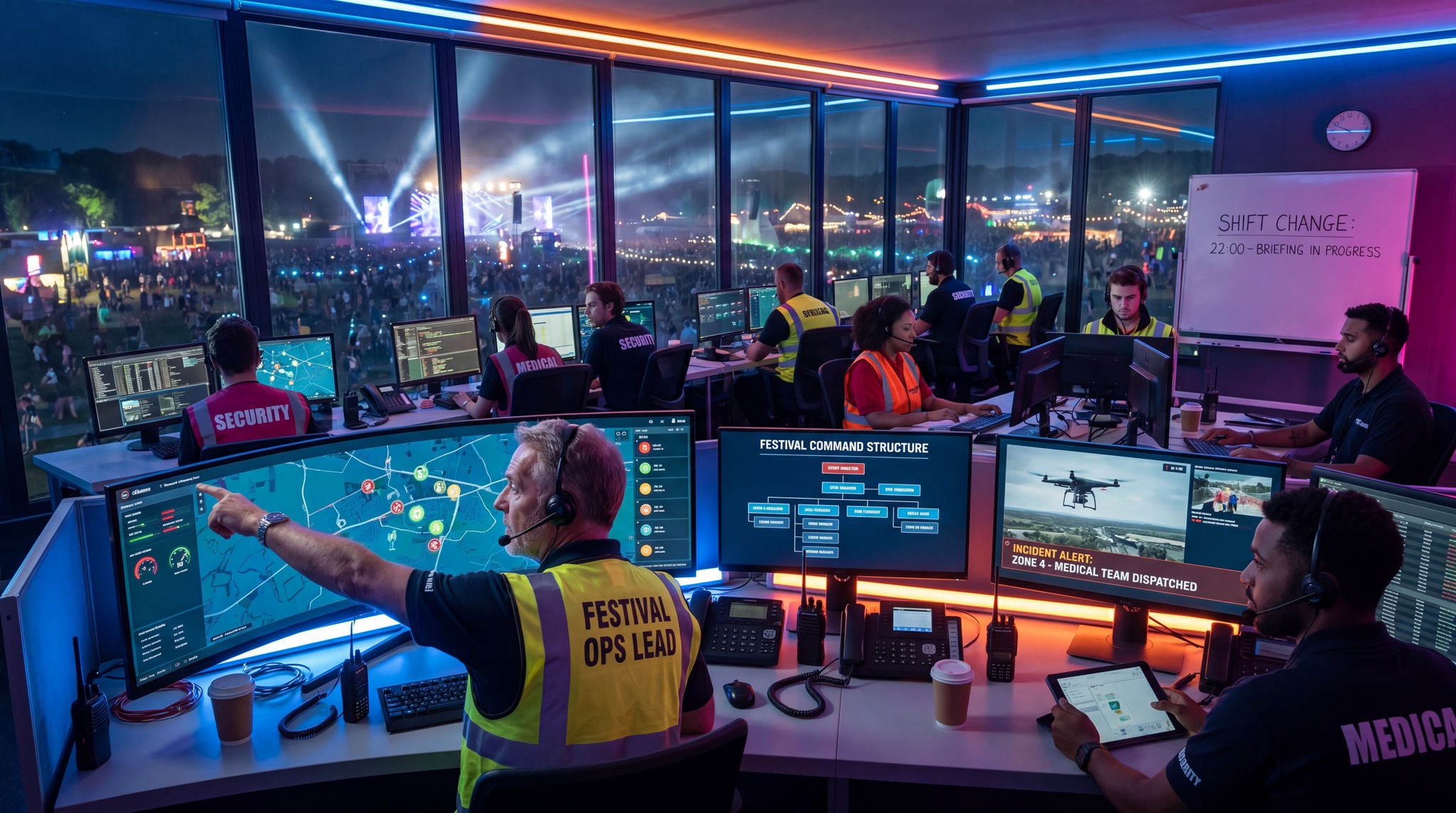
- Event Days: You should have a schedule or run sheet for each event day that covers key times: gates open, set times, specific programming (workshops, meet-and-greets, etc.), when to switch lighting for evening, when particular staff shifts change, and when you might have daily briefings or when press/VIPs are touring. It’s also wise to note at what time each day you’ll make certain decisions (like weather calls – e.g., “if thunderstorm by 3 PM, decide on evacuation or delay by 3:30 PM”). These event-day schedules often run from early morning prep (sound checks, vendor restocks) to after the last act and securing the site for overnight.
- Load-Out/Post Event: Plan teardown as carefully as setup. Usually, some hires (like trash removal, stage teardown crew) need to be scheduled immediately after event or next morning. If the venue needs to be cleared by a deadline, list the priority (e.g., “By +12 hours after event: stage out, tents down; By +24 hours: all rentals picked up; By +48 hours: final sweep and site inspection with venue”).
For on-site scheduling, a visual site map with timeline notes can help. Some production managers create “day-of-show” binders with all these schedules that they distribute to team leads. Some use tools like Airtable or shared Google Sheets that everyone can live-update.
Event Production Schedule Example
To visualize how these phases connect, consider a simplified event production schedule example for a multi-day outdoor gathering. At T-minus six months, your event planning production schedule focuses heavily on securing municipal permits, booking headliners, and launching early-bird tickets. By T-minus three months, the focus shifts to advancing artist riders, finalizing site maps, and locking in food vendors. During load-in week (T-minus five days), the timeline transitions into a strict daily breakdown: Day 1 is heavy machinery and staging; Day 2 is audio, lighting, and video (AVL) rigging; Day 3 is site decor and vendor load-in. Finally, the show-day document becomes a precise timetable of when events start and finish—often referred to as the Run of Show (ROS)—detailing exact set times, stage changeovers, and curfew cut-offs. This level of detail is what separates amateur setups from professional festival and event production.
Managing Overlapping Workstreams and Avoiding Crises
Festivals involve many workstreams happening simultaneously. The production schedule is your tool to ensure they don’t collide in chaos:
Communication is Key: Keep all department heads in the loop about the master schedule. Weekly production meetings up until the last month, then maybe daily check-ins in the final week, ensure that if, say, the site build is delayed one day due to weather, the vendor setup team knows to adjust their arrival. Everyone should treat the schedule as the source of truth.
Slack/Buffer Time: A secret pro tip in scheduling is to build in buffer time, especially for high-risk tasks. If a stage build “should” take 2 days, schedule it for 3 days on the timeline if possible. That way if something goes wrong or takes longer, you’re not immediately in panic mode. Worst case, if it finishes early, you have breathing room to double-check things.
Parallel Processing with Caution: Some tasks can happen in parallel, but watch out for physical site conflicts. Example: Can the fencing crew install fence on one end of the site while the stage crew works on another area? Sure – but make sure there’s no single gate they both need to use at the same time causing a jam, or heavy machinery crossing paths unsafely. As a production scheduler, talk to technical directors or crew chiefs about any concerns if multiple crews work simultaneously. Sometimes the schedule might need specific notes like “Tents team must finish area A before electrical team can lay cables there – coordinate by Wednesday noon.”
Smooth Entry With Mobile Check-In
Scan tickets and manage entry with our mobile check-in app. Supports photo ID verification, real-time capacity tracking, and multi-gate coordination.
Track Progress: Use your project management tool’s status features. Mark tasks as completed when done, or flag if delayed. Many tools allow task dependencies such that if one shifts, it can automatically adjust subsequent tasks – but still, manual oversight is needed. If “Permit approval” is late, everything depending on it might need rescheduling; be ready to cascade changes and inform all affected parties.
Last-Minute Scenarios: Even with a great schedule, last-minute crises can occur (supplier truck gets a flat tire, a vendor backs out, a storm halts build for half a day, etc.). How to cope?
- First, have a bit of contingency in the schedule (as mentioned, buffer time).
- Second, pre-identify backup resources (know which other stage rental company might bail you out, or have extra volunteers on call to make up lost time).
- Third, maintain a calm prioritization mindset: if behind schedule, determine which tasks are absolutely show-stoppers and which can be abbreviated. For instance, if time is short, you might decide aesthetic decor takes a backseat to core infrastructure.
- Fourth, huddle with your team to problem-solve – collective brainstorming often finds quick solutions.
Use Checklists and Run Sheets: For complex days like event day, create specific checklists aside from the main timeline. For example, a “Opening Day Morning Checklist” for ops (e.g., “6:00 AM – confirm all radios charged; 7:00 AM – volunteer check-in starts; 8:00 AM – vendors final stock check; 9:30 AM – security briefing; 10:00 AM – gates open”). This complements the main schedule and ensures nothing is forgotten in the hustle.
Mastering festival and event production means anticipating these collisions before they happen. Experienced technical directors and site managers know that a schedule is only as strong as its contingencies. By embedding flexibility into your festival production management strategy, you empower your crew to pivot seamlessly when the unexpected occurs, keeping the overall build on track.
Tools and Documenting the Schedule
A quick note on tools: Many festival teams use spreadsheets or project management software for the big stuff, and sometimes a giant whiteboard or printed timeline on the office wall for constant visibility. Use whatever works for your team’s style, but ensure it’s accessible to those who need it and update it religiously. If it’s digital like Google Sheets or Asana, everyone sees real-time changes. If it’s offline, make sure changes get communicated asap.
Ultimately, planning and executing the build and break phases of your event is no small task. The sheer volume of moving parts during load-in and load-out requires precision. By adopting robust festival and event production software, your production schedule remains in safe hands, allowing your core team to focus on real-time problem solving rather than hunting down outdated spreadsheets.
Boost Revenue With Smart Upsells
Sell merchandise, VIP upgrades, parking passes, and add-ons during checkout and via post-purchase emails. Increase average order value by up to 220%.
Transitioning to a dedicated festival planner program can drastically streamline these complex workflows. Unlike generic task trackers, specialized event management software is built specifically for the nuances of live entertainment. A robust planner program allows technical directors and site managers to overlay site maps with real-time Gantt charts, automate vendor document collection, and instantly push schedule updates to mobile devices across the festival grounds. When evaluating a platform, look for features that support multi-departmental permissions, so your marketing team can view lineup confirmations without accidentally altering the main stage’s audio load-in times.
Adopting a comprehensive festival planner platform goes beyond simple task tracking; it centralizes your entire operation into a single source of truth. The best platforms integrate ticketing data, artist advancing, credential management, and site operations into one dashboard. When your core team, vendors, and site crew all operate from the same centralized system, you eliminate the friction of siloed communication. This means that if a headliner’s arrival is delayed, the platform can instantly notify ground transportation, stage managers, and hospitality teams simultaneously, keeping your event production schedule intact.
For specialized live music events, the role of a dedicated music festival planner—whether that refers to an experienced lead producer or a comprehensive digital platform—is indispensable. A seasoned planner understands the unique cadence of live music operations, from advancing complex artist riders to coordinating rapid audio-visual changeovers between sets. By centralizing these responsibilities, a music festival planner ensures that the overarching production schedule remains resilient, even when inevitable live-event curveballs arise.
Keep a version history or archive of schedules as they evolve. Why? For learning (we’ll talk about iterative improvement in another article) – you can look back and see, for example, where you consistently were late on tasks year after year, and fix that timing.
When considering how to document an event from a logistical standpoint, organizers should look beyond just archiving the final run of show. Proper documentation involves capturing the entire lifecycle of your festival production. This means saving daily build reports, photographing site infrastructure setups for future reference, and compiling a comprehensive post-event wrap report. By meticulously recording how the timeline was actually executed versus the original plan, you create an invaluable blueprint for next year’s operations.
In conclusion, a master festival production schedule is the heartbeat of your project management. It translates your vision into actionable steps and aligns your team towards opening day readiness. Spend the time to get it right and keep it updated – your future self (and your stress levels) will thank you. When everyone knows the plan and timing, it reduces confusion and panic. Instead of frantic scrambles, you’ll experience a more controlled, orchestrated buildup to a festival that runs on schedule. And there’s nothing more satisfying than watching months of planned tasks culminate in a fantastic event that feels like it unfolded like clockwork.
Frequently Asked Questions
What is the critical path in festival production?
The critical path in festival production represents the longest chain of dependent tasks where a delay in any single item causes the entire event to fall behind schedule. Identifying these dependencies, such as ensuring power installation precedes sound checks, helps organizers prioritize essential milestones and create backup plans for potential slippage.
What are the key milestones in a festival production schedule?
Essential milestones for a festival production schedule include booking deadlines for headliners, permit approval dates, and ticket launch timelines. Organizers must also schedule major equipment orders, on-site access dates for load-in and load-out, and specific contract payment deadlines to ensure the event remains viable and vendors are paid on time.
How do you organize tasks in a festival production schedule?
Organize festival tasks by breaking milestones into detailed subtasks and categorizing them by workstreams like Talent, Production, and Marketing. Each task requires a specific deadline, an assigned owner for accountability, and noted dependencies to track prerequisites. Using project management software or Gantt charts helps visualize these sequences and overlapping responsibilities.
How should on-site festival production be sequenced?
On-site production sequencing requires a logical order of operations, starting with infrastructure like fencing and staging before adding sensitive equipment like audio or decor. The schedule should include detailed daily run sheets for event days and a prioritized load-out plan that coordinates immediate teardown needs with final site clearance deadlines.
How can festival organizers avoid scheduling crises?
Festival organizers avoid crises by building buffer time into high-risk tasks and maintaining constant communication across departments. Effective scheduling involves identifying backup resources for emergencies, using checklists for complex days, and carefully managing parallel workstreams to prevent physical site conflicts between different crews working simultaneously during the build.
What tools are best for managing festival production schedules?
Effective tools for managing festival schedules range from specialized project management software like Asana, Trello, or Monday.com to simple spreadsheets and Gantt charts. Visual site maps and shared digital documents allow teams to track progress in real-time, while physical whiteboards or printed timelines can provide high-visibility updates in production offices.
When should vendor discussions regarding finalizing timeline print pieces be scheduled?
Discussions with vendors to finalize timeline print pieces should be scheduled at least four to six weeks before the event’s load-in date. This dedicated planning window ensures that all sponsor logos, booth assignments, and operational details are accurately incorporated into physical programs, site maps, and banners well ahead of hard printing deadlines.
What is an event production schedule example?
A standard event production schedule example breaks down the timeline into distinct phases: pre-event planning (booking, permitting, marketing), load-in (staging, AVL rigging, vendor setup), the live event (a precise timetable of when events start and finish), and load-out (teardown and site restoration). This comprehensive document guides the entire festival and event production team from concept to completion.
What features should organizers look for in a festival planner program?
A high-quality festival planner program should offer real-time collaboration, dynamic Gantt charts for critical path tracking, and mobile accessibility for on-site crew. Organizers should also prioritize software that includes vendor management portals, automated dependency shifting (so if a stage build is delayed, subsequent tasks adjust automatically), and granular permission settings to keep different departments focused on their specific workstreams.
What is the difference between an event production timeline and a run of show?
An event production timeline covers the entire lifecycle of the festival, from early planning and permitting months in advance to the final stages of load-out. In contrast, a run of show (ROS) is a highly detailed, minute-by-minute schedule focused exclusively on the live event days, dictating exact stage times, artist changeovers, and cue calls.
Why is a comprehensive event production timeline critical for large-scale festivals?
A comprehensive event production timeline is critical because it synchronizes multiple overlapping departments—such as marketing, site operations, and talent buying—ensuring that prerequisite tasks are completed in the correct sequence. This macro-level scheduling prevents costly delays during the build and break phases, keeping the entire festival and event production process on track and within budget.
How does a festival planner platform improve production scheduling?
A dedicated festival planner platform improves production scheduling by centralizing all operational data—from artist advancing and vendor load-in times to credential management and site maps—into a single, accessible dashboard. Unlike generic spreadsheets, these specialized platforms offer real-time updates, automated dependency tracking, and multi-departmental permissions, ensuring that every stakeholder is working from the most current version of the master timeline.
What does festival production management entail?
Festival production management encompasses the comprehensive planning, coordination, and execution of all logistical, technical, and operational elements required to stage a live event. This discipline relies heavily on a master event production schedule to align various departments—such as site operations, talent buying, and vendor coordination—ensuring that every phase from initial permitting to final load-out is executed safely and efficiently.
How do you document an event’s production process?
Documenting an event’s production process involves archiving all iterations of your event planning production schedule, saving daily site build reports, and compiling a post-show wrap document. Organizers should also take reference photos of infrastructure setups and note any timeline deviations to improve future festival production workflows.
What is the role of a music festival planner in production scheduling?
A music festival planner—whether a lead professional or a specialized software platform—centralizes the complex logistics of live music events. They oversee the master production schedule, ensuring that artist advancing, technical load-ins, and site operations are perfectly synchronized to prevent delays and keep the event running smoothly.
What are the core components of music festival planning?
At its core, music festival planning involves synchronizing talent booking, site infrastructure, and technical production into a unified timeline. Organizers must coordinate artist advancing, stage builds, and audio-visual changeovers while managing standard event logistics like permitting, ticketing, and crowd control.
How do promoters handle lineup announcements and set time clashes for large-scale events?
For complex multi-stage operations, such as major heavy metal festivals or sprawling electronic music events, organizers must finalize stage grids long before public announcements. Promoters utilize specialized scheduling apps and visual grid methods to plan for and mitigate artist clashes. This strategic approach to festival production ensures safe crowd distribution across the venue and allows marketing teams to announce set times without risking logistical bottlenecks.
How does festival programming impact the production schedule?
Festival programming directly dictates the complexity and timing of your production schedule. Because modern events feature a mix of main stage headliners, interactive art installations, and experiential activations, organizers must build a timeline that accommodates diverse technical riders, varied load-in requirements, and staggered operational hours across different venue zones.