Festivals – whether film, music, or cultural – are live, complex events where crisis situations can arise without warning. Technical failures, sudden weather emergencies, or safety incidents can throw even a well-organised festival into chaos. How festival organisers respond in those critical moments can make or break the event’s reputation. This guide draws on decades of festival production experience and real case studies to help the next generation of festival producers prepare for and communicate during crises effectively.
Why Crisis Communication Matters for Festivals
A festival’s reputation is built over years but can be damaged in minutes if a crisis is mishandled. Attendees, media, and sponsors will remember not just what went wrong, but how the organisers responded. In the age of social media, news of problems spreads instantly – from a power outage halting a premiere to a storm evacuation or a medical emergency. Proactive, transparent communication during a crisis isn’t just about PR; it’s about attendee safety, trust, and community goodwill. Successful festival producers approach crisis comms with the same care as programming or budgeting, knowing that reputation resilience – the ability to bounce back – depends on keeping the public informed with honesty and empathy.
Preparation: Plan Ahead for the “What-Ifs”
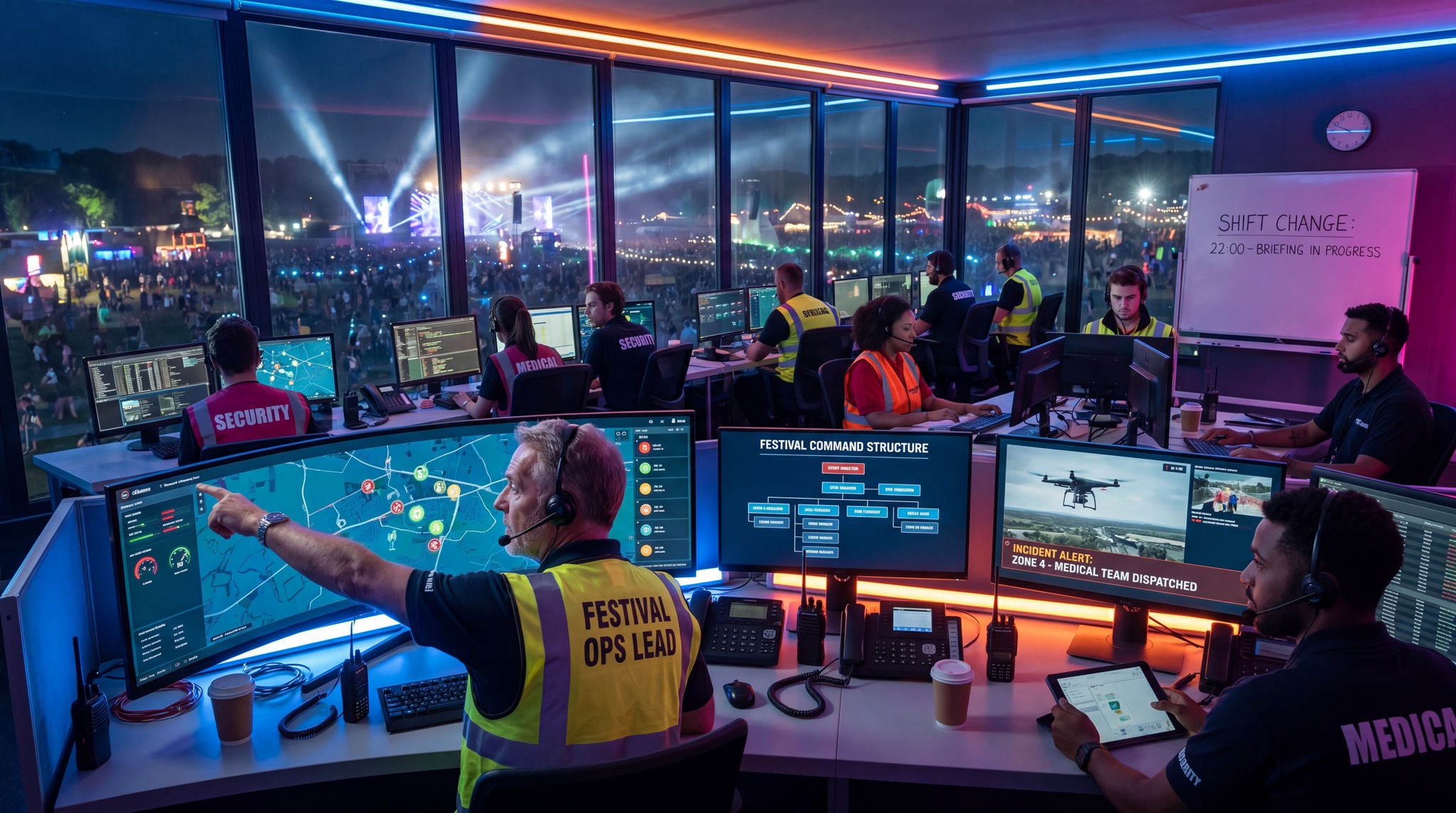
Every festival should start with a crisis communication plan. Before the gates open or the projector rolls, gather your core team – including festival leadership, communications/PR managers, legal advisors, and operations heads – to map out possible scenarios and how you’ll respond. This preparation includes:
- Identifying Potential Crises: Brainstorm everything that could go wrong. For a film festival, that might be technical glitches (projector or sound failures, ticketing system crashes), venue issues (power outages, fires), weather disruptions (for outdoor screenings or events), or safety threats (crowd accidents, medical emergencies, even controversial protests). Each scenario may require a tailored approach.
- Drafting Holding Statements: For each crisis type, prepare a short template statement in advance. These “holding statements” can be quickly adapted and released to acknowledge an issue while you gather more details. For example, if the festival’s ticketing website crashes, a holding statement could be: “Update: We’re aware of technical difficulties with our ticketing system. Our team is working urgently to fix the issue. We sincerely apologise for the inconvenience and will provide an update within the hour. Thank you for your patience.” Having these drafts ready saves precious time when emotions are high.
- Assigning Roles and Spokespeople: Decide who will speak for the festival in various situations. Typically, festivals designate a single authoritative voice – this could be the festival director for major incidents or the head of communications for more routine issues. The key is consistency: one voice prevents confusion. Make sure all team members know the chain of command for approvals and that legal, PR, and leadership are aligned on messaging. As a veteran producer would advise: never let everyone rush to make their own statements. Instead, convene your crisis team (often virtually or by phone) for a quick huddle on the facts and decide the messaging and messenger in unison.
- Coordination with Authorities: Many crises (like safety incidents or severe weather) involve police, fire departments, or local officials. Establish contacts with these stakeholders ahead of time. Know who will be liaising with emergency services and how their information will be integrated into your public updates. For example, if a storm is incoming, you’ll likely be echoing guidance from the National Weather Service or local meteorological offices. In a health or safety emergency, authorities might even take the lead in communications, so be ready to support their messaging with festival-specific details (e.g., evacuation routes, assembly points).
By planning for chaos in advance, festival teams can react swiftly and confidently when something goes awry. As the saying goes, “hope for the best, plan for the worst.” In festival terms: hope the projector never fails or the skies stay clear – but have a plan if not.
Free Tool: Size Your Festival Site
Zoned capacity planning for arena, campsite, parking and entry lanes — against UK Purple Guide and NFPA density standards. Finds your bottleneck zone.
Aligning Legal, PR and Leadership on Messaging
One of the most critical behind-the-scenes steps in any crisis is aligning the perspectives of legal, PR, and festival leadership. These three groups sometimes have different instincts: legal advisors focus on liability and precise wording; PR teams focus on public perception and empathy; leadership (festival directors or producers) want to protect the event’s mission and relationships. In a crisis, all must speak with one voice.
Who Speaks and When: Decide quickly if the situation calls for a written statement, a social media post, a press conference, or all of the above. High-impact crises (like an injury or major outage) might warrant the festival director appearing in person or on video to address attendees and press. More contained issues (like a brief technical delay) might be handled through official social media and event app notifications only. Agree on the spokesperson early – and make sure that person is prepped. For instance, a film festival facing a last-minute venue evacuation might have its CEO or director hold a quick on-site press briefing while the comms team distributes a written statement online.
Planning a Festival?
Ticket Fairy's festival ticketing platform handles multi-day passes, RFID wristbands, and complex festival operations.
Legal Sign-Off vs. Authenticity: It’s a tricky balance – you must communicate with humility and human touch, but also avoid legal missteps like admitting fault prematurely. The solution is to stick to verified facts and sincere concern. Legal can ensure nothing in the statement inadvertently accepts blame or breaches privacy laws, while PR ensures the tone remains compassionate. A good example is how an event organiser might phrase an apology: instead of saying “we are liable for this failure,” they can say “we are deeply sorry for what our attendees experienced” – expressing regret without legal concession. Prior to release, run statements by legal counsel quickly, but don’t let that process slow down an urgent update. Seasoned festival organisers often have pre-approved language for apologies and commitments, so they don’t get bogged down waiting for formal legal edits in the heat of the moment.
Consistency is Key: Ensure that everyone internally gets the final agreed message before it goes public. This means briefing your front-line staff, volunteers, social media team, and anyone who might be asked about the situation. If a guest asks an usher about a delay, the usher should echo the official explanation (“Yes, the screening is delayed due to a projector issue, but the team is resolving it and we expect to begin shortly”). When the messaging is consistent, you avoid rumors and misinformation from filling the vacuum.
Crafting Effective Crisis Statements (with Examples)
Not all festival crises are equal. Here we break down approaches for three common categories – technical failures, weather emergencies, and safety incidents – each with its own considerations. In all cases, the guiding principles are the same: acknowledge quickly, state the facts as known, communicate with empathy, and inform what’s next.
1. Technical Failures: Keeping Attendees Informed and Calm
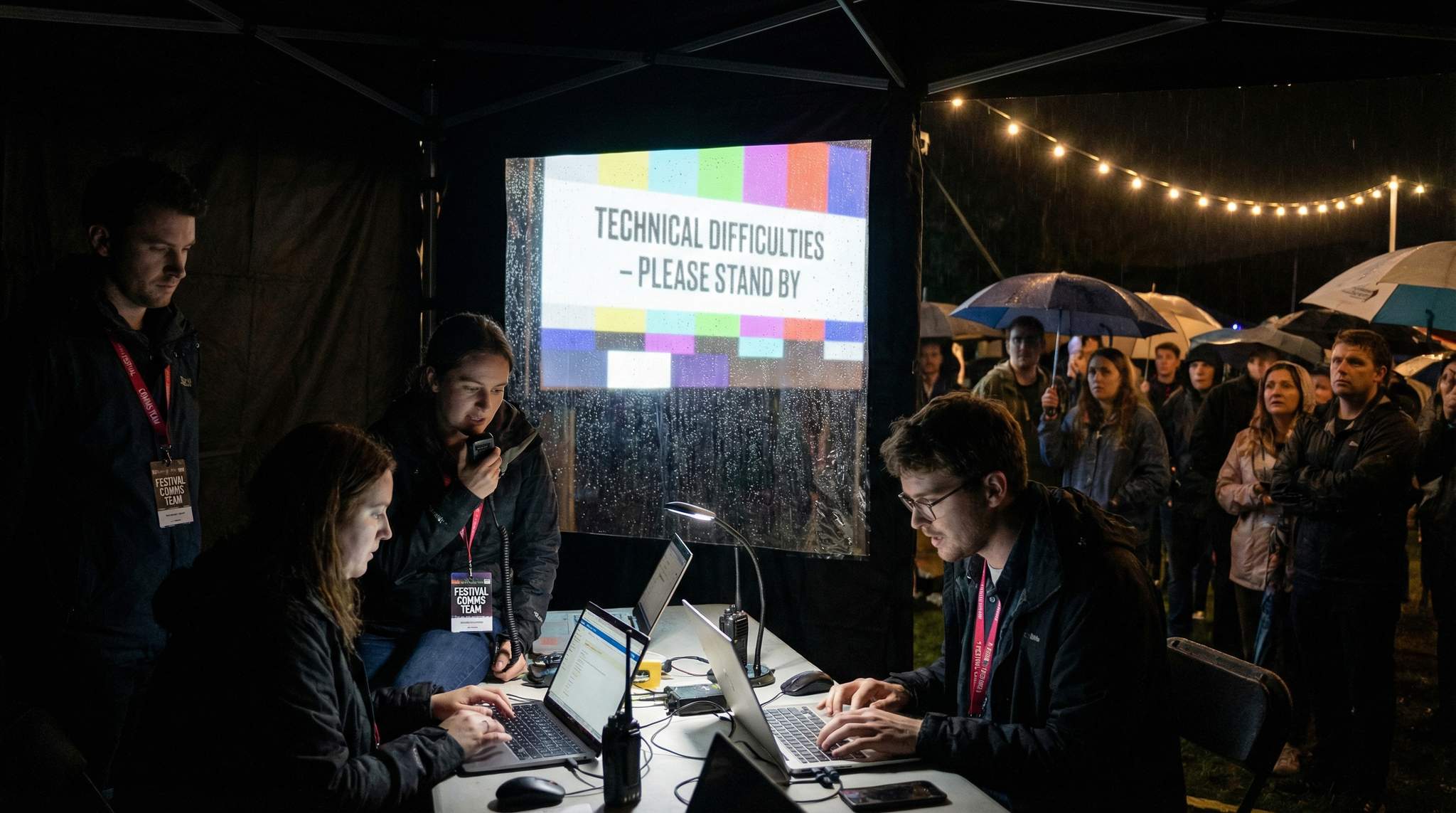
Technical issues can be frustrating but are often manageable if addressed transparently. In film festivals, this might include projection problems, sound malfunctions, ticketing system outages, or power cuts. While these situations may not threaten life and limb, they do impact the audience experience and schedule, so swift communication is vital to manage expectations (and tensions).
Grow Your Social Following With Every Sale
Require social media follows, shares, or playlist adds to unlock presale access or special pricing. Turn every ticket purchase into audience growth.
What to Do: The moment a significant technical glitch is identified, make a quick announcement or post acknowledging it – even if you’re still troubleshooting. Attendees will be more patient if they know you’re aware of the problem. Provide any immediate instructions (e.g., “please remain seated” or “hold on to your tickets”). If possible, give a rough timeline for updates: e.g., “We will update you on the status in 15 minutes.” This is far better than leaving audiences in the dark (literally or figuratively).
Example: At a recent Toronto International Film Festival (TIFF), a software glitch in an IMAX projector led to a screening being cancelled on opening day. Festival-goers waited for information that wasn’t immediately forthcoming – some took to social media to vent their frustration about standing around with no official update in sight, as reported in coverage of technical difficulties at TIFF. The lesson? Don’t let silence speak for you. A simple, prompt announcement like: “We’re sorry, a technical issue has interrupted this screening. Our tech team is on it. We’ll have an update in 10 minutes – thank you for your patience” would at least show the audience that the festival is actively addressing the issue. In contrast, festivals like Sundance have handled tech snags by quickly communicating and resolving them: when a closed-captioning device failed during a Sundance premiere in 2023, the festival’s CEO publicly explained that the equipment had been tested beforehand but malfunctioned, and assured they were working to improve accessibility for all attendees, a situation detailed in AP News reports on Sundance accessibility challenges. Audiences appreciate hearing both an apology and a solution.
Need Festival Funding?
Get the capital you need to book headliners, secure venues, and scale your festival production.
For ticketing or entry tech failures (e.g., your online ticket sales platform crashes under demand, or scanners stop working at the gate), immediately use all channels to notify attendees of the hiccup. An example holding statement could be: “Ticketing Update: We’re aware of an issue preventing some passes from scanning at entry. Our team is fixing this now. Rest assured no one will be turned away due to this technical error – we will honour all valid tickets. Thank you for bearing with us.” By affirming that you’ll take care of your guests (even if it means manually checking tickets or letting people in), you prevent frustration from boiling over. During EDM festival Electric Zoo 2023 in New York, a tech meltdown at the gates left huge lines of ticket-holders outside; many were eventually denied entry due to capacity issues, causing outrage. Organisers were slow to communicate in real-time, resulting in confusion and anger. Don’t let that happen at your event – even if systems fail, deploy extra staff with megaphones or push notifications via your festival app (if you have one) to explain the situation on the ground.
Tone and Facts: In technical crises, keep the tone humble and accountable. Even if the issue was beyond your control (a vendor’s software failed, a citywide power outage), avoid dumping blame in the moment. Instead of “This isn’t our fault – the power grid went down,” say “We’re sorry for the interruption and are in contact with the venue to restore power as quickly as possible.” Focus on what you’re doing to fix it. Once the issue is resolved or a work-around is in place, update the audience immediately and thank them for their patience. If there’s any compensation (free popcorn for a delayed movie, partial refunds, or future ticket credits), announce that proactively to turn a sour experience into a more positive memory.
2. Weather Emergencies: Safety First, Communication Fast
Outdoor events and festivals always have to respect Mother Nature. Film festivals sometimes include open-air screenings, red carpet galas, or parties that can be impacted by weather, not to mention music or cultural festivals heavily at the mercy of the elements. Whether it’s an approaching thunderstorm, extreme heat, or in rare cases a natural disaster, weather-related crises demand an absolute commitment to safety and clear instructions.
What to Do: The moment weather threatens to become dangerous – lightning in the area, high winds, torrential rain, flood risk – be ready to pause or evacuate parts of the event. Have an evacuation or shelter plan in advance (and communicate it to your staff and attendees via signage or festival maps). When triggering that plan, tell people directly what to do and why. Use stage announcements, loudspeakers, and phone alerts if possible. A textbook example comes from Lollapalooza 2012 in Chicago: as a massive storm approached, organizers made the call to evacuate tens of thousands of attendees before the worst hit. They posted an official notice stating: “Due to an approaching storm and warnings from the National Weather Service, Lollapalooza organizers have suspended the festival until further notice”, and instructed festival-goers to head to pre-designated shelter areas in nearby parking garages, a strategy documented in Los Angeles Times coverage of the Lollapalooza evacuation. Because of this timely communication, the crowd moved in an orderly way and there were no serious injuries, even though the event shut down for about three hours. Once the storm passed, they were just as quick to announce the all-clear and resume the music.
Free Tool: When Should You Announce?
Pick your event date and genre — the free planner outputs a recommended announce, presale, on-sale and reminder schedule anchored to how your audience actually buys.
In less extreme cases – say a schedule delay due to a passing rain shower – you might not evacuate but still need to inform attendees of changes. For example, “Tonight’s outdoor screening will be delayed by 30 minutes due to high winds; please take cover in the lobby area and we’ll resume as soon as it’s safe. Safety is our top priority.” Always put safety messaging upfront (“your safety is our priority” or “for everyone’s safety, we are …”). Festivals that have had to cancel entire days due to weather have earned goodwill by being forthright. A famous instance is Bonnaroo 2021, which was cancelled at the last minute because remnants of a hurricane flooded the festival grounds. The organisers’ announcement was compassionate and transparent, saying “We are absolutely heartbroken to announce that we must cancel Bonnaroo… [the grounds are]flooded to the point that we are unable to… park vehicles safely”, according to Paste Magazine’s report on the Bonnaroo cancellation. They emphasized that they tried every possible option but ultimately safety had to come first, and they promptly initiated refunds for all ticket-holders. While fans were devastated, most respected the decision because the festival communicated it with such clarity and empathy.
During the Weather Event: If you do evacuate or shut down midway, continue to update the crowd at reasonable intervals. While everyone shelters from the storm or waits for further news, use any means available (PA announcements, SMS blasts via your ticketing system, Twitter/Facebook updates) to say “we’re monitoring and will update again at X time.” If the event will resume, tell people how you’ll let them know (e.g., “We will email all ticket holders when gates reopen”). If it’s a cancellation, once that decision is confirmed, deliver that news straight – don’t drag it out. Attendees would rather hear “Tonight’s event is unfortunately cancelled due to safety concerns; here’s what to do next…” than stand around uncertain. Always have that post-crisis info ready: where to get refunds or new schedules, how to exit safely, etc.
And importantly, show humility in the face of nature. Phrases like “Mother Nature had other plans” or “safety is more important than the show” help convey that you care about people over profits. It’s okay to express that you’re heartbroken or disappointed – it humanizes the organisers. Just back it up with practical information and next steps.
3. Safety Incidents: Compassion, Clarity, and Control
The scariest crises are those involving personal safety – an accident, medical emergency, violence, or any scenario where attendees or staff are harmed. For film festivals, this could range from a medical issue in a theater (e.g., someone has a seizure or heart attack), a crowd control problem at a popular premiere, or even a controversial incident (like a protest that turns chaotic or a celebrity misconduct that affects the event). In any such incident, human life and well-being come first in your communications. Reputation concerns are secondary at the outset – but how you handle the situation will define your festival’s reputation long-term.
Immediate Response: If a serious incident occurs, stop the event (if necessary) and make an announcement if it’s something the audience is witnessing. In the case of an emergency health issue, for example, you might pause the screening and clearly but calmly ask the audience to remain seated while first responders do their work. It’s crucial not to let misinformation spread. If people see something awful but hear nothing from organisers, panic and rumors rise. Consider the unfortunate example of a 2017 incident at Mad Cool Festival in Spain: an acrobat performer suffered a fatal fall in front of the crowd, but the festival continued with the show without immediately informing attendees of what happened. Organisers later explained that security officials feared that stopping the show abruptly could spark a dangerous reaction in the crowd, an incident analyzed in The Washington Post’s review of the Mad Cool tragedy. However, the lack of transparent communication in the moment led to public criticism and hurt the festival’s image – many felt it was handled insensitively. The takeaway: whenever feasible, be honest with your audience about a safety incident, even if the full details are still unclear. You might say, for instance, “Ladies and gentlemen, we have a serious situation and are temporarily pausing the event. Please remain calm and follow instructions from staff. Medical professionals are on-site handling an emergency. We’ll update you shortly.” Such a message at least acknowledges the issue and asserts control over the narrative.
Who Communicates: In a major safety crisis (like an event evacuation, fatality, or violence), it’s often best for the festival director or another high-ranking official to be the voice of the response, working in tandem with law enforcement or emergency agencies. Show that the leadership is personally engaged and caring. If there are injuries or worse, express heartfelt empathy: “Our hearts go out to those affected.” Do not speculate on causes or blame at this stage – just assure that an investigation or full review is forthcoming and that you’re cooperating with authorities.
Free Tool: Project Your Bar Revenue
Per-head spend benchmarks by event type turned into projected bar and food revenue, with a stock-mix estimate and gross-margin line. Free calculator.
Transparency and Updates: For incidents that require clearing the venue or canceling part of the festival, be very clear about what steps people should take (“Please exit slowly via the north gate and meet at the safety zones marked on your maps”). Misinformation can be dangerous, so if you know the issue is contained (for example, a security scare that’s now neutralized), let people know that too: “The situation is under control, but we need to evacuate as a precaution.” Continue providing updates through official channels as the situation evolves. Even a tweet or text that says “Update: everyone on site is safe, awaiting all-clear from police” can reassure and prevent panic.
In the aftermath, once the immediate crisis is over, that’s where reputation resilience truly comes into play. Own the narrative by being the first to put out a comprehensive statement about what happened. Include known facts (avoid speculation or rumors), acknowledge any pain or inconvenience caused, and most importantly, detail what actions are being taken. For example, the day after an incident you might release: “Last night, an incident occurred in Theater 1 where a festival guest was injured. Our on-site medical team responded immediately and the guest is now in stable condition at a local hospital. We are reviewing how this happened and working closely with authorities. Today’s screenings will continue as scheduled, but we have increased safety measures in place (additional staff and clear signage) to ensure our attendees’ well-being.” Such a statement balances empathy (concern for the injured guest), information, and steps to move forward.
Festivals that handle crises with compassion and clarity can even strengthen their community in the long run. People tend to rally around an event that demonstrates it truly cares. The Roskilde Festival in Denmark is often cited in case studies: after a tragic crowd crush incident in 2000 where nine fans died, the festival did some soul-searching and drastically overhauled its safety protocols. They publicly acknowledged the tragedy, built memorials for the victims, and invested millions in crowd safety measures to make sure nothing like that would happen again, as discussed in Euronews’ retrospective on the Roskilde Festival tragedy. Over time, Roskilde restored its reputation by showing an unwavering commitment to attendee safety and openness about what they learned. While we pray never to face such extreme situations, the principle stands: when things go wrong, show the world exactly how you’re making them right.
Communicating with Humility and Facts
No matter the crisis – big or small – the tone of your communication should consistently hit a few key notes: humility, honesty, and helpfulness. What does that look like in practice?
- Start with Empathy: If people are inconvenienced, disappointed, or hurt, acknowledge it right away. A sincere apology or expression of concern is never out of place. Avoid corporate-speak that sounds like a cold press release. The audience should feel there are human beings behind the festival who genuinely care. Phrases such as “we are deeply sorry,” “we understand how upsetting this is,” or “your safety is our top priority” set the right tone. During the chaos of a crisis, humility earns patience; defensiveness or arrogance sparks anger.
- Stick to Facts (and Say What You Don’t Know): Misinformation can spread like wildfire during a live event crisis. Your job is to be the source of truth for your festival’s audience. That means sharing verified facts promptly and avoiding speculation. If you don’t yet know something (e.g., the cause of a power outage or the full extent of an incident), it’s perfectly fine to say “We are investigating the cause” or “We will share more details as soon as we have them.” It’s better to admit uncertainty than to issue incorrect information that you might have to retract. However, do commit to updating as you learn more – and then follow through on that promise.
- No “No Comment” Blackouts: While it’s understandable that not every detail can be shared (especially if legal or law enforcement are involved), total silence or a “no comment” stance can be fatal to public trust. If the situation is sensitive and you truly can’t disclose much, at least say something proactive: e.g., “We’re aware of an incident and cooperating with authorities. We’ll update everyone as soon as we are able.” This tells the public you’re not ignoring the issue. In the absence of information, people fill the void with assumptions – often the worst ones.
- Channel-Appropriate Humility: The language might differ slightly by channel, but the message should be consistent. On social media, you might adopt a compassionate but brief tone (“We hear you – and we’re on it. So sorry for the trouble, and more info is coming soon.”). In a press release or press conference, you’ll give a bit more detail and a formal apology, but still speak in first or second person (“we” and “you”) to sound human. If doing an on-camera statement, the spokesperson’s body language and voice should convey concern and confidence, not panic or aloofness. Prepare them with talking points that contain clear facts and empathetic language.
- Avoiding Blame and Defensive Language: Crisis communication is not the time for finger-pointing – at least not in public statements. Even if a vendor screwed up or an artist caused the problem (as happened with one music festival where an artist’s on-stage behaviour got the event shut down), keep the official communications focused on solutions and concern. Any accountability or blame can be sorted out in internal debriefs or legal arenas later. Publicly, your festival brand should take responsibility for managing the outcome, regardless of the cause. Phrases to avoid include “it’s not our fault,” “we warned them,” or anything that sounds dismissive of people’s experiences. Instead of saying “Attendees didn’t follow the rules, so this happened”, flip it to “We will be reviewing our crowd management and communication to ensure this doesn’t happen again.” Always bring it back to what you (the festival team) will do.
Updating as You Learn More
A crisis situation is fluid. Initial reports are rarely 100% accurate, situations evolve, and information trickles in over time. That’s why a one-and-done statement is often not enough. Plan for a series of communications: an initial holding statement, interim updates, and a follow-up once the dust settles.
It’s a good practice to set a schedule for updates if possible. For example, after an emergency evacuation you might announce, “We will provide the next update in one hour.” Even if you have nothing substantially new to say at that time, check in anyway: “Update: We are still coordinating with authorities and all attendees are safe at this time. No decision yet on tonight’s remaining shows – next update by 5:00 PM.” This assures people that you haven’t forgotten them. It also pressures your team (in a positive way) to keep gathering info and addressing concerns in a timely manner.
Smooth Entry With Mobile Check-In
Scan tickets and manage entry with our mobile check-in app. Supports photo ID verification, real-time capacity tracking, and multi-gate coordination.
Use multiple platforms for updates: social media (Twitter, Facebook, Instagram) for quick blasts, email or SMS for direct messages to ticket holders (Ticket Fairy’s ticketing platform, for instance, allows organisers to send urgent updates via email/SMS to all registered attendees – a very useful feature in moments like these), and website/app updates for a detailed bulletin. On-site, continue to use public address systems or digital signage. The key is to push out consistent info across all these channels so no one misses it. Remember that during a festival, not everyone is glued to social media – some might be in your venue with no signal or not checking their phone. That’s why audible announcements or staff with loudspeakers and megaphones walking through crowds can be effective old-school solutions.
As you learn more facts, fold them into your messaging. If the cause of a tech failure becomes known, you can explain it in a later update (e.g., “The projector bulb burst, and we’re installing a new one now. The screening will resume at 9:30 PM.”). If the outcome of a safety incident is clearer, share it if appropriate (“The affected guest is receiving treatment and is stable.”). Be mindful of privacy – don’t share victim names or unconfirmed injuries without consent – but anything that helps quell false rumors is good. It’s better attendees hear accurate news from you than speculative gossip from others.
Post-Mortem: Publicly Debriefing and Learning Lessons
Once the crisis has passed and the festival is back on track (or over, if the crisis ended the event early), it’s time to think about the post-mortem communication. This is a step many event organisers neglect in the rush to move on, but it’s crucial for rebuilding and maintaining trust. A public post-mortem is basically answering: “What did we learn, and what will we do to make things right and prevent this in the future?”
Consider a Post-Event Statement or Report: Depending on the severity of the incident, you might do something as simple as a blog post or a letter to attendees, or as formal as a press release or media briefing. In this communication, recap what happened (succinctly and factually), acknowledge any shortcomings in the response, and enumerate the actions being taken as a result. Were refunds issued or compensation given? Say so clearly. Are you implementing new measures or policies? Describe them. This level of transparency shows maturity and accountability. For instance, after the widespread issues at Electric Zoo 2023 – where many ticket-holders were stranded outside or events were cancelled – the organisers eventually issued a detailed apology and explanation. In a heartfelt open letter, they admitted, “We know we let you down… As we continue forward, we will work every day to earn back your trust”, a statement highlighted in Brooklyn Vegan’s coverage of the Electric Zoo aftermath. They outlined exactly who would get refunds and how, and apologised for the delayed communication. While it took them months to deliver this post-mortem (which was a criticism in itself), when it came, it at least provided closure and a path forward for the damaged festival brand.
By contrast, festivals that never speak of the incident again leave a cloud of doubt. Don’t assume “no news is good news” after a crisis – silence can look like you’re hoping people forget, or that you didn’t learn anything. Even if the festival itself was a one-time affair (like a single-year event), a thorough public debrief can provide lessons to the industry and show that you take responsibility.
Engage the Community: A public post-mortem can also invite feedback or support from your community of attendees, artists, partners, and local residents. Maybe set up a forum or feedback email for suggestions on how to improve. Show appreciation for those who kept faith or helped during the crisis (like volunteers, first responders, even attendees who stayed calm). Festivals often pride themselves on the community vibe – leveraging that after a crisis can turn a negative into a rallying point. For example, if an outdoor film screening was rained out, perhaps you organise a free “make-up” screening later for those who missed out, and publicly thank everyone for understanding. These goodwill gestures, paired with open communication, bolster your festival’s reputation for caring about its audience.
Finally, demonstrate that the lessons will stick. When you announce next year’s festival (or next event), mention improved measures especially if they relate to the past issue – e.g., “We’ve upgraded all our projection equipment and added backup generators” or “We have a new weather alert system and evacuation plan in place”. This tells anyone who was apprehensive about returning that you’ve actively worked to fix the problems.
Conclusion: Turning Crises into Opportunity (to Build Trust)
While no festival organiser ever wants to experience a crisis, those tough moments truly test the mettle of an event and its leadership. Handled correctly, a crisis does not have to permanently damage your reputation – in fact, it can showcase your festival’s values and resilience. A calm, quick, and caring response will be remembered far more than the crisis itself. Attendees will tell the story not just of what happened, but how the festival team responded heroically, responsibly, and humanely.
Remember, at the core of all effective crisis communication is respect – respect for the truth, for the people affected, and for the audience you serve. Communicate as you would wish to be communicated with if you were in the crowd or on the other side of that social media post. In doing so, you honour the trust that people have placed in your festival.
The next generation of festival producers can take these hard-earned lessons and build even stronger bonds with their audiences. Be prepared, be transparent, and never underestimate the power of a sincere apology and a promise kept. Reputation resilience isn’t about never having problems – it’s about responding to problems in a way that your community says, “Wow, they really handled that well.”