Introduction to Crypto-Enabled Festivals
Web3 Meets the World of Festivals
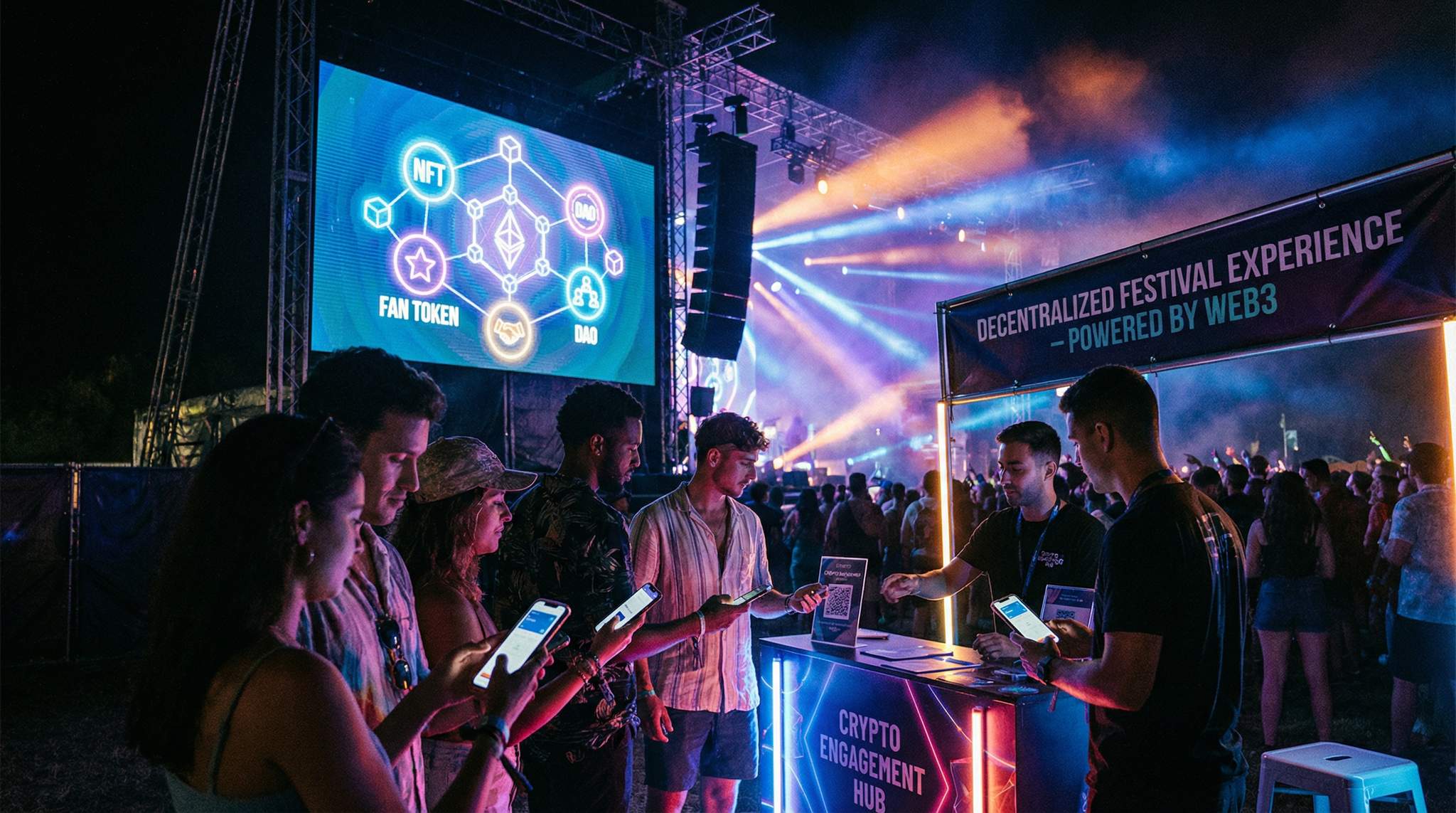
Blockchain technology is rapidly converging with live events, giving rise to crypto-enabled festivals that leverage NFTs, fan tokens, and DAOs. From music and art festivals to food and film events, organisers worldwide are experimenting with these Web3 tools to enhance the fan experience and unlock new funding models. This trend isn’t just about hype—it’s driven by real benefits like tamper-proof ticketing, global community building, and novel revenue streams. Forward-thinking festival producers see parallels with how social media once transformed event marketing; now blockchain promises to transform festival engagement and financing in equally profound ways.
Why Use Crypto? New Funding and Fan Engagement Models
Traditional festivals often rely on sponsorships, ticket sales, and merch for revenue. Crypto technologies introduce entirely new channels for funding and fan interaction. By selling NFT tickets or collectibles, events can generate advance capital and offer lasting digital memorabilia. Launching a fan token (a festival-specific cryptocurrency) can rally a community of supporters who effectively become micro-investors or loyal members, deepening their personal stake in the festival’s success. And by organising certain decisions or funding through a decentralized autonomous organization (DAO), festivals can democratise involvement – fans aren’t just attendees, but part-owners or co-creators. These models can boost cash flow (e.g. raising funds upfront via token sales) while simultaneously boosting fan loyalty through a sense of ownership.
From Early Experiments to Mainstream Adoption
In the late 2010s, a few pioneers dabbled in blockchain at festivals – for example, DJ 3LAU’s 2018 “Our Music Festival” experiment with its own crypto token. Fast forward to today, and major festivals like Coachella and Tomorrowland have joined the fray. Coachella made headlines by auctioning lifetime passes via NFTs, netting over $1.4 million in sales according to Digital Music News, while Belgium’s Tomorrowland launched NFT membership collectibles that grant holders VIP perks. What began as niche trials has evolved into real-world implementations at scale. Even outside of music, events like art fairs and esports tournaments have begun using NFTs for tickets or DAOs for community curation. This guide will explore how festival producers – from small boutique organisers to large-scale event promoters – can practically harness NFTs, fan tokens, and DAOs to finance their events and supercharge fan engagement.
NFTs Unlock New Possibilities for Festivals
NFT Ticketing for Fraud-Proof Entry
One of the most mature applications of blockchain in live events is NFT ticketing. An NFT ticket is a unique digital pass stored on a blockchain, which makes it virtually impossible to duplicate or counterfeit. For festivals plagued by ticket scalping and fake passes, NFT tickets offer a secure alternative. When a fan buys an NFT ticket, a one-of-a-kind token is minted and assigned to their digital wallet – think of it like a next-gen e-ticket with a verifiable proof of authenticity. Scanning an NFT ticket at the gate is similar to scanning a QR code, but behind-the-scenes the system verifies the token on the blockchain to ensure it’s legit and not previously used. This extra security layer means no more duplicate tickets or fraud at the door, ensuring that real fans (not bots or scammers) get in. Additionally, since NFTs are programmable, organisers can embed rules right into the ticket – for instance, preventing transfers until a certain date to deter scalpers, or automatically paying a royalty to the festival whenever the ticket is resold (recapturing some secondary market value). The end result is a more controlled, fraud-resistant admissions process that protects both fans and festival revenue.
Go Cashless With RFID Technology
Enable contactless payments, faster entry, and real-time spending analytics with RFID wristbands and NFC-enabled ticketing for your events.
Collectible NFTs as Festival Memorabilia
Beyond entry passes, festivals are also creating collectible NFTs as digital memorabilia and VIP access passes. These might include digital artwork, animated festival posters, limited-edition video clips of performances, or virtual merchandise that fans can own and trade. For example, major festivals have released NFT collections tied to perks: Coachella’s 2022 NFT drop included 10 “Coachella Keys” NFTs granting lifetime festival access plus exclusive on-site experiences, as reported by EDM.com. Those unique perks (like backstage tours or gourmet meals at the event) were baked into the NFT’s metadata. Fans treated these NFTs not just as art, but as golden tickets with special privileges. Other events have offered commemorative NFTs – say a 3D artwork of the festival’s iconic stage – that double as a VIP membership for future events. Electronic festival Tomorrowland launched “Medallion of Memoria” NFTs that welcomed holders into an exclusive club with invites to secret shows and never having to wait in ticket queues. By offering digital collectibles, festivals tap into fans’ desire to own a piece of the experience. These NFTs can become sought-after souvenirs that also keep fans engaged year-round, as owners might get access to online forums, airdrops of new content, or first dibs on next year’s tickets. For the festival, it’s a win-win: NFT memorabilia sales bring in revenue and extend the brand’s presence into the digital lives of attendees long after the stages go quiet.
Implementing NFT Tickets Step-by-Step
Introducing NFT ticketing at a festival requires planning and the right partners, but it’s becoming increasingly accessible. Here’s a practical roadmap for producers:
Planning a Festival?
Ticket Fairy's festival ticketing platform handles multi-day passes, RFID wristbands, and complex festival operations.
- Choose a Blockchain Platform: Select a blockchain known for low transaction fees and high speed (such as Solana, Polygon, or Flow) to ensure ticket purchases and scans are quick and cost-effective. Some festivals opt for custom platforms or work with NFT ticketing providers that handle the blockchain layer behind the scenes.
- Partner with an NFT Ticketing Service: Unless you have in-house blockchain developers, you’ll likely partner with a ticketing company or startup that supports NFT tickets. Look for one that can integrate with your current ticketing process – for example, allowing fans to buy with regular credit cards and receive an NFT without needing technical know-how. Successful implementations often hide the crypto complexity: fans purchase as usual and get a scannable ticket (the NFT) in an app or email link, with an option to transfer it via a simple interface. The blockchain validation happens in the background.
- Minting and Distribution: When sales go live, each ticket is minted as an NFT in real time or in batches. Ensure your vendor can handle surges in demand. It’s wise to do a small pilot first (perhaps NFT VIP upgrades for a side-event) to test the system under load. Upon purchase, the NFT can be delivered to the buyer’s crypto wallet. If the buyer doesn’t have one, provide a custodial wallet option (where the ticketing service creates a wallet for them and sends an access link). Make the delivery process foolproof – clear instructions, and customer support ready for those new to NFTs.
- Gate Entry Integration: Equip your gate staff with scanners (or a scanning app) that can read NFT tickets. This might involve an API or app from your NFT ticket provider. Train staff to handle both the usual QR-code scans and to assist attendees who might be pulling up an NFT in their crypto wallet app for the first time. Have a backup plan too – a list of valid ticket IDs or a hotline to tech support – in case connectivity issues or verification hiccups occur.
- Adding Perks and Utility: To maximize fan engagement, think beyond “just a ticket.” Perhaps the NFT ticket also unlocks a discount on festival merch, or turns into a collectible after the festival (for instance, it might display an exclusive artwork or live photo from the event once scanned). These extras delight fans and encourage them to hold onto the NFT (or trade it as a collectible), rather than immediately transferring it away.
- Post-Event Follow-up: After the festival, leverage the fact that you know who holds your NFT tickets (thanks to the transparency of blockchain). You could airdrop all attendees a “Thank You” NFT – maybe a badge of this year’s festival – which could unlock early access to next year’s ticket sale. This keeps your community engaged and rewards them for being part of this new ticketing experiment. Also, analyze the blockchain data: did many people resell their NFT tickets? Did some wallets buy in bulk (indicative of brokers)? This insight can inform future pricing and anti-scalping measures.
By following these steps, even a mid-sized festival can pilot NFT ticketing with relatively low risk. For instance, smaller events have trialed NFT VIP passes or limited-edition digital collectables to test the waters before a full switch. The key is to partner with reliable tech providers, educate your audience on how to use the new system, and to start small – proving the concept’s value to both your team and your fans.
Case Example: Coachella’s $1.5M NFT Passes
It’s worth highlighting a real-world example of NFT ticketing innovation. Coachella, one of the world’s most iconic music festivals, blazed a trail in 2022 by offering the “Coachella Keys” NFT collection. These 10 one-of-a-kind NFTs granted their holders a lifetime pass to Coachella (one weekend every year, forever), plus unique VIP experiences each year like secret parties or front-row viewing for favorite acts. The auction was a resounding success: the Keys collectively sold for about $1.474 million at auction, with the most coveted “Infinity Key” fetching a whopping $270,000 on its own. Coachella didn’t stop there – it also sold thousands of more affordable NFTs (like digital festival photos and soundscapes at $60 each) which came with tangible perks (e.g. a photo book for some collectors). This example shows the two-sided benefit of NFT integration: fans gained unprecedented perks and a piece of Coachella history, while the festival gained a significant infusion of funds and pioneered a new engagement model. Importantly, Coachella partnered with a major crypto marketplace to run this sale securely and ensure a smooth user experience. For other festival producers, Coachella’s venture into NFTs underscores that with a creative approach (like offering lifelong value and exclusive perks), NFT tickets and collectibles can not only generate buzz, but also drive meaningful revenue and fan goodwill.
Fan Tokens and Festival Currencies
What Are Fan Tokens in a Festival Context?
While NFTs serve as unique assets or passes, fan tokens are typically fungible digital tokens – more like a festival’s own cryptocurrency that all fans can own and use. In sports, fan tokens have let supporters vote on team decisions or unlock rewards. In a festival setting, a fan token might be used as an internal currency or membership token tied to the event. Think of it as creating a economy around your festival: attendees could buy the token to get special privileges, merchandise, or even a share in decision-making. These tokens usually run on standard blockchain protocols (like ERC-20 tokens on Ethereum or similar on other chains) and can be distributed or sold to your community. The concept is powerful – by holding the festival’s token, fans have a stake in the event’s ecosystem. They might get access to exclusive content, early ticket sales, or the right to vote on certain festival elements. Crucially, fan tokens are fungible (interchangeable), meaning every token is the same value and utility, unlike unique NFTs. This makes them suitable as a currency for purchases or as voting chips in a DAO-style governance system. In essence, issuing a fan token turns supporters into a sort of micro-community of stakeholders who are invested (emotionally and financially) in the festival’s success.
Creating a Festival Token Economy
How can a festival practically use a token as part of its economy? One approach is to adopt a token for cashless payments on-site. Many festivals already use RFID wristbands or pre-loaded cards for cashless transactions; a crypto token can serve a similar role but with added benefits. For example, Mystic Valley Festival in Thailand launched its own token called $MYST for a three-day event. Attendees purchased MYST and used it to pay food, drinks, and merch vendors by scanning their festival app – no paper money needed. By using a blockchain token, Mystic Valley aimed to reduce transaction fees (their partner’s network fees were around $0.01, much cheaper than traditional payment processors). The token system also let the festival go fully cashless in a transparent way, with every transaction traceable on the blockchain. Festival producers considering this route should collaborate with a crypto payment provider or exchange to set up a user-friendly app. In Mystic’s case, they partnered with a local crypto exchange (for easy conversion of cash to tokens and vice versa) and a blockchain platform (to handle the token minting and transactions). The result was a smoother payment flow and an innovative marketing hook – the festival branded itself as a tech-forward event offering a safer, touch-free transaction method (which was especially attractive during the pandemic).
Keep Tickets in Fans' Hands
Our secure resale marketplace lets attendees exchange tickets at face value, eliminating scalping while keeping you in control of the secondary market.
Beyond payments, a festival token can foster a whole loyalty and reward ecosystem. You might reward fans with tokens for engaging in certain actions – e.g. early buyers get a bonus amount of tokens, or people who complete a survey earn tokens that can be spent on-site. The token could also be used for discounts: merchandise might be cheaper when paid in the festival’s token, encouraging its use. Some festivals are exploring tiered membership programs via tokens: e.g. holding 100 tokens might elevate a fan to a “Silver” tier (with access to an express entry lane), 1000 tokens to a “Gold” tier (meet-and-greet with an artist, perhaps). Because tokens are easily transferable, they could even be traded among fans or sold on exchanges, providing liquidity and real-world value. However, festival organisers need to carefully design the token’s utility so that it’s attractive to hold rather than just cash out. The overarching goal is that the token becomes central to the festival’s community economy – driving on-site spending, year-round fan engagement, and even forming a basis for fan governance if desired.
Loyalty and Perks via Fan Tokens
A primary benefit of launching a fan token is the ability to deepen fan loyalty through tangible perks. When fans buy or earn your festival’s token, they’ve effectively opted into your community at a higher level. To reinforce that, you’ll want to offer meaningful perks that reward token holders. Some effective strategies include:
Need Festival Funding?
Get the capital you need to book headliners, secure venues, and scale your festival production.
- Early Access and Discounts: Token holders could get early access to ticket sales (ensuring they never miss out on a sold-out show) or exclusive discount codes. For example, a festival might announce that anyone holding 500+ tokens by a certain date gets to purchase tickets 24 hours before the general public. This incentivises more token acquisition and rewards your biggest supporters.
- Exclusive Experiences: Consider token-gated events or areas. Perhaps an afterparty or a special lounge at the festival is only open to people who prove they hold a certain amount of the fan token. This was seen in practice when some events created token-holders-only lounges, making holding the token a status symbol at the festival.
- Merchandise and NFT Airdrops: Token owners could receive free or limited-edition swag. A festival might say “any wallet holding X tokens on festival day gets a free NFT poster” or a physical merch item pickup at the info booth. This drives engagement both digitally and on-site.
- Voting and Influence: Even outside of a full DAO structure (which we cover in the next section), you can let token holders vote on smaller-scale decisions. For instance, let’s say your festival has 5 contenders for a fan-voted stage design or a wildcard slot for a local band. You could tally votes weighted by how many fan tokens each voter holds (to give super-fans more influence) or simply one-token-one-vote for fairness. This gives token holders a voice and signals that their commitment is valued.
- Year-Round Community: Use the token as an “access key” to online communities (Discord servers, private Instagram accounts, etc.) where you drop insider info, host Q&As with artists, or preview next year’s theme. Knowing that only token holders are in these spaces can make them feel like an insider club. For example, some music events have launched Discord channels accessible only by connecting a wallet that contains the festival’s token, thereby filtering the chat to verified core fans.
All these perks can significantly boost fan loyalty. Instead of just buying a ticket once a year, fans who hold the festival’s token are continually interacting with the brand – checking for updates, participating in votes, showing off their token-backed status on social media, and more. This creates a tribe-like community feeling. Importantly, always communicate these benefits clearly when launching the token: fans should understand that by holding it, they’re not just getting a speculative asset, but concrete privileges and a closer connection to the festival experience.
Case Example: Mystic Valley’s Cashless Crypto Payments
To see fan tokens in action, let’s revisit the earlier example of Mystic Valley Festival in Thailand. In 2020, Mystic Valley’s organisers wanted a fully cashless event, and rather than use typical RFID wristbands, they issued their own cryptocurrency token on the Fuse blockchain. Attendees exchanged their money for MYST tokens (via a festival app or at top-up stations) and then used their phones to pay for everything at the festival. This move not only reduced physical contact (a health concern at the time) but also slashed transaction fees – the blockchain they used had negligible fees, saving both vendors and organisers money. The festival hyped this as a futuristic feature: fans got a taste of crypto in a convenient way, and vendors enjoyed fast settlements without hefty point-of-sale charges. Mystic Valley also carefully managed the user experience by partnering with a local crypto exchange (Bitazza) so that festival-goers could easily convert unused tokens back to cash after the event, alleviating concerns about being “stuck” with leftover crypto. The success of MYST showed that even a large multi-day music festival could run on its own token economy, paving the way for others. It’s a case study in how a fan token can start as a practical tool (cashless payments) and evolve into a marketing differentiator (branding the event as tech-savvy and fan-forward). Festivals considering a similar approach should study Mystic Valley’s model: the technology worked best when it was invisible (using the token via a simple scan felt just like any digital payment) and when it provided clear value (cheaper and easier than cash or credit on the festival grounds). By aligning the token with a better fan experience, Mystic Valley earned both goodwill and a reputation as an innovator.
DAOs: Decentralizing Festival Decisions
The Power of Community Governance
Imagine if your festival’s fans could help shape the festival’s future – from lineup choices to new initiatives – in a structured, transparent way. This is what DAOs (Decentralized Autonomous Organizations) offer: a framework for collective decision-making using blockchain-based voting. In a festival DAO, the community (often composed of token holders or NFT membership holders) has the power to propose ideas and vote on certain festival decisions. The appeal is obvious – fans feel a deeper connection when they have a say, and organisers gain a devoted group of collaborators rather than just consumers. At its core, a DAO is governed by smart contracts (self-executing code on a blockchain) which ensure votes are counted fairly and outcomes are executed as agreed. For festivals, this means key decisions can be put up for a transparent vote – much like a shareholder vote in a company, but often more inclusive and informal. By decentralizing some governance, festivals tap into the collective wisdom of their fan community and build a true sense of co-ownership. It’s the ultimate fan engagement: transforming passionate attendees into stakeholders who actively contribute ideas and vote on the festival’s direction.
DAO Structures for Event Organizations
Setting up a DAO for your festival doesn’t mean you relinquish all control – rather, you delineate what the community can govern and under what rules. There are a few structural approaches:
Turn Fans Into Your Marketing Team
Ticket Fairy's built-in referral rewards system incentivizes attendees to share your event, delivering 15-25% sales boosts and 30x ROI vs paid ads.
- Token-Based DAO: In this model, holding a specific token (fungible or an NFT) grants membership and voting rights. For example, you may issue a limited number of “governance NFTs” or a governance token; each token equals one vote (or a weighted number of votes if you want some to carry more influence). This is straightforward and transparent: a fan’s voting power is proportional to their stake (though that can raise concerns of wealthier fans having more say – something to consider carefully).
- Tiered Membership DAO: You might have different classes of members. Perhaps core contributors (like local community leaders or fan club heads) get a higher voting weight or even a committee role, while general token holders vote on more routine polls. The DAO can have an elected council (e.g., a small group of super-fans or industry advisors) that filters proposals or handles day-to-day operations, combined with larger community votes for major decisions.
- Snapshot Voting and Off-Chain Execution: Many festival DAOs use platforms like Snapshot, which allow token-weighted voting off-chain (to avoid gas fees) and then the festival team manually executes the decisions. This can be perfectly fine – the blockchain ensures the vote tally is tamper-proof, but you don’t have to automate the outcome with a smart contract (which can be complex if the decision is, say, “book Artist X” – you can’t automate that, a human must do it). In essence, the DAO’s smart contract might just handle membership verification and vote counting, while the organisers agree to honor the results.
- Fully On-Chain Treasury DAOs: In more extreme cases, a festival might even put funds into a DAO-controlled multi-sig wallet. For instance, a portion of ticket revenue or sponsorship money goes into a pot that the community can vote to allocate – e.g. “$50k of the budget is reserved for fan-voted ideas.” Smart contracts could release payments when proposals pass. This level of decentralisation requires a high degree of trust and legal structuring (since handling funds can get tricky), but it exemplifies the concept of fans literally governing the budget.
The structure you choose depends on how comfortable you are with shared governance and what makes sense for your community. Many festivals start small: maybe a DAO that votes on one stage’s lineup or on the theme for next year, rather than controlling the whole event. This provides a sandbox to learn what works. The key is to clearly define the scope of DAO power – fans will be most engaged when they know their votes matter on specific issues, and festival staff will be comfortable when there are guardrails (e.g., fans can’t vote the festival into something unfeasible or bankrupting). A well-structured DAO can bring democratic engagement to festivals in a manageable, positive way.
Voting on Festival Lineups, Locations, and More
What kinds of decisions might you crowdsource to a DAO? Some intriguing possibilities have already been tested by forward-thinking events:
- Lineup Selection: While a festival’s headline bookings are usually done by professionals (talent buyers considering availability, fees, etc.), a DAO could be given power to pick a fan-voted artist slot. For instance, the festival team might secure 4 possible artists within budget and let the community vote which one gets a place on the lineup. An electronic festival DAO could let token holders pick one of the lesser-known DJs to fill a sundown slot on a side stage – giving fans a direct role in curation. This not only engages the community but also provides marketing buzz (“You voted, we listened – fan-picked artist X is joining the lineup!”).
- Venue or City: If a festival brand tours or is considering multiple location options, fans could vote on where the next edition should be. Imagine a festival that can happen in either city A or city B next year – the DAO votes and the majority choice wins, so fans feel the festival is literally coming where they want it. One DAO-run festival in Croatia, Circus Maximus, empowered its NFT holders to make decisions including choosing the venue location via blockchain voting – a bold move that ensures the festival lands where its core community is excited to gather.
- Themes and Experiences: Let fans vote on the annual theme, art installations, or which food trucks to bring back. These creative elements can be perfect for community input. Maybe the DAO doesn’t decide the big operational moves, but it can vote on “fun” things: the theme for the costume day, the design for this year’s festival mascot, or one of the movies to screen at a film festival. This can be done through simple polls gated by token ownership.
- Budget Priorities: As mentioned, some DAOs allow voting on budget allocation. For example, the community might get to allocate $100,000 across options: “Add more campground facilities vs. Invest in a bigger main stage production vs. Bring a third headliner on Sunday.” The votes could split the budget accordingly. In practice, one festival DAO experiment allowed members to direct funds (collected from NFT ticket sales) to different aspects of the event – essentially letting the crowd decide where enhancements or expansions should happen. This level of involvement can make fans feel an unparalleled sense of ownership and transparency.
- Rules and Policies: The DAO might also vote on community guidelines – say, what sustainability initiative to adopt, or whether to make the festival 18+ only or all-ages. These policy votes can offer insight into attendees’ values. However, it’s wise to keep these non-binding or advisory unless you’re prepared to fully embrace the outcome.
The lesson from those testing DAO governance is to start with decisions that have wiggle room and aren’t mission-critical if fans make an unexpected choice. As trust in the process builds, a festival can expand the DAO’s influence. It’s remarkable to note that in the Circus Maximus example, the founders aimed to let the community eventually control the entire festival budget via DAO voting – essentially turning over what is normally a tightly-guarded producer role to the collective. That’s an extreme end of the spectrum, but it shows how far the concept can go. Even at a smaller scale, giving fans a vote in the festival they love can transform the attendee-organiser relationship into a partnership.
Transparency and Trust Through Blockchain
One of the often overlooked benefits of using blockchain for community governance is the radical transparency it provides. Every proposal, every vote cast, and (if using on-chain funds) every expenditure can be visible to the community on the blockchain ledger. This can drastically increase trust between festival organisers and fans. In traditional festival planning, decisions and finances are opaque – attendees have little idea how budgets are spent or why certain calls were made. With a DAO model, even if it’s partial, supporters feel in the loop. For instance, if the community wallet spends a certain amount on a new stage, that transaction can be viewed publicly, quelling any suspicions of mismanagement. Some DAOs release end-of-season reports on-chain, summarizing how funds were used, which proposals passed, and what’s planned next – it’s a level of openness that can turn casual attendees into passionate advocates because they see honest stewardship.
Additionally, blockchain-based voting prevents the kind of behind-the-scenes manipulation that might plague traditional fan polls (multiple voting from fake accounts, etc.). Each person’s vote is tied to a cryptographic token, ensuring one person (or one token) truly equals one vote (or however the rule is set). The community can verify the vote tally themselves, rather than trusting a PR announcement. This builds confidence that fan voices are genuinely heard.
From the organiser perspective, this transparency also has a benefit: it encourages more responsible decision-making. If you know your core fans can see and vote on certain decisions, you’re likely to avoid moves that flagrantly go against their interests. It creates a dialogue rather than a top-down monologue in festival planning. Of course, not everything should or will be public – you may still negotiate artist fees in private or keep some creative surprises under wraps – but by integrating blockchain governance in select areas, a festival can signal integrity and draw in a community that deeply trusts the event. In an era where festival-goers care about authenticity and ethos (e.g., sustainability, community values), operating part of your festival as a transparent DAO can be a powerful differentiator.
Smooth Entry With Mobile Check-In
Scan tickets and manage entry with our mobile check-in app. Supports photo ID verification, real-time capacity tracking, and multi-gate coordination.
Challenges and Practical Tips for DAO Governance
Before moving on, it’s important to address that running a festival DAO isn’t without challenges. Voter apathy can occur – many token holders might not vote unless the issue is exciting or the community is well-nurtured. That means you’ll need to actively encourage participation (through reminders, perhaps small incentives, or by making the process easy). Additionally, be wary of whale voters – if one person holds a large chunk of tokens, they could sway votes disproportionately. Some DAOs mitigate this by capping voting power or using quadratic voting (where each additional token gives a bit less voting weight). There’s also the risk of fans voting for popular choices that aren’t realistic (e.g., voting for a mega-artist the budget can’t afford). The festival team should curate the options to vote on, so all choices are viable – you’re not obligated to present options that you can’t deliver.
On the practical side: set up a user-friendly voting portal. Many fans won’t know how to interact directly with a blockchain, so platforms like Snapshot, Aragon, or custom web apps can let them vote with a click once they connect their wallet. Provide clear guides and support (think FAQ or even video walkthrough) on how to vote. It’s also wise to have a legal entity behind the DAO for liability reasons (some have a foundation or LLC that interfaces with the real world to sign contracts, etc., as directed by the DAO votes). We’ll touch more on legal compliance next, but suffice to say you’ll want to structure the governance so it’s fun and engaging for fans, yet safe and manageable for the festival. When done right, a DAO can turn your audience into an engaged community that feels a genuine co-ownership in the festival’s success and future.
Launching a Community Token Sale to Fund Your Festival
Designing Your Token and Its Utility
One of the most groundbreaking opportunities with crypto is using a token sale to fundraise for your festival. Essentially, this means pre-selling some form of cryptocurrency (whether it’s a fungible fan token or NFT passes or memberships) to raise capital that finances event production. To do this successfully, start by carefully designing your token’s purpose and utility – in other words, why should people buy it? The token could represent prepaid festival experiences (like future tickets or VIP access), a stake in the festival’s success (though be cautious – profit-sharing starts to look like a security, more on legal later), or simply membership in an exclusive club of festival backers. Clearly define what buyers get: Do tokens convert into tickets? Do they grant special privileges on-site? Are they scarce (limited quantity) to drive exclusivity? A well-defined utility is critical. For instance, a mid-sized festival might create 1,000 “Festival Coins” that each can be redeemed for a VIP pass, a merch package, and a vote in the DAO – effectively bundling a value pack. Or you could sell NFTs that correspond to different sponsorship-like tiers (e.g. an NFT that gives the holder naming rights to a stage or a meet-and-greet with an artist). Brainstorm creative perks that align with your event’s brand; these will be the selling points of your token.
In designing your tokenomics, decide on the supply and pricing. Will you have a fixed number of tokens/NFTs or issue more over time? Many events do a limited drop to create urgency. Price needs to balance raising funds with accessibility – perhaps offer a range: some high-end expensive tokens for big spenders (with huge perks) and some affordable ones for the average fan. You might also consider if the tokens can be resold easily (liquidity on exchanges or marketplaces can attract buyers who know they aren’t locked in forever). However, be wary of speculators – you ideally want long-term supporters, not pump-and-dump traders. One strategy is to lock certain benefits to the original buyer (e.g., only the initial sale grants the voting rights or the merch package, so flippers don’t get all the perks). Overall, spend plenty of time in this design phase – maybe even survey core fans for what perks would excite them. This planning will make the difference between a token sale that feels compelling versus one that falls flat.
Pre-Sale Community Building and Marketing
Launching a token sale is as much a marketing campaign as it is a technical endeavor. Before you actually list any token for sale, focus on building a community and buzz. This typically happens on platforms like Discord, Telegram, or dedicated forums – wherever crypto-savvy fans hang out, but also where your existing fanbase can comfortably join. Start by announcing your intentions in an exciting way: for example, “
Engage potential buyers by providing spaces for discussion. Host AMA (Ask Me Anything) sessions online where your festival team (and maybe artists or influencers) answer questions about how the token and DAO will work. This not only clarifies doubts but also builds trust. Early supporters should feel like they’re part of a movement, not just a transaction. You can encourage word-of-mouth by setting up referral programs or social media challenges (e.g., share a post about the token sale for a chance to win some free tokens). Another effective strategy is whitelisting or pre-registration – allow loyal fans to sign up for guaranteed access to the token sale, possibly even at a slight discount or bonus, as a reward for being early. This creates a sense of FOMO (fear of missing out) that can drive more people to get involved.
Smart Promo Codes & Presale Access
Create percentage or flat-rate discount codes with usage limits, date ranges, and ticket type restrictions. Plus unlock codes for private presales.
On the marketing front, make sure to educate as you promote. Not all festival-goers will be familiar with crypto wallets or buying tokens. Produce simple guides (“How to buy our token” blog posts or infographics) and share them widely. If you have partnerships with crypto communities or platforms, leverage them. For instance, some festivals team up with an existing crypto launchpad or an exchange for the token sale – this can bring in experienced crypto investors, but be careful to still cater to your core fanbase who might be newbies. The messaging should balance the innovation angle (“be part of the first festival in our region to do this!”) with the fan-centric angle (“this token is really about giving you more of what you love about the festival”). By the time the sale date arrives, you want a fired-up community that feels ownership and can’t wait to contribute. That momentum not only boosts the initial fundraising but sets the stage for an active token holder community afterward.
Executing the Token Sale
When it’s finally time to launch, executing the token sale smoothly is paramount. First, decide on the platform for the sale. Options include doing it on your own website via a custom smart contract (which requires solid development and security audit), using a third-party launchpad or marketplace (which can simplify things but may take a fee or require their approval), or even a major exchange’s token sale platform if your project is big enough. Many festivals have opted for dedicated NFT marketplaces for NFT-based sales (like Coachella did with their own marketplace powered by a crypto exchange) or crowd-sale smart contracts for fungible tokens. Whichever route, double-check everything: the token or NFT smart contract should be audited to prevent bugs, the purchase limits and pricing are set correctly, and you have a plan to handle high traffic.
During the sale, communication is key. Do a live countdown, keep the community chat channels moderated and updated (“50% sold in first hour!”, “200 tokens left at early-bird price!” etc. if applicable). If the sale is not first-come-first-served (some use a lottery or a bonding curve pricing), make sure those rules are crystal clear up front. Also, be prepared with customer support – some buyers might have transactions stuck or questions; have team members on standby to assist and maybe a FAQ page for common issues. Providing a step-by-step walkthrough on sale day (reminding people how to participate) will reduce frustration. It’s wise to set a cap per buyer to avoid one person buying up everything (unless that’s what you want, but generally community sales aim for wide distribution).
Technically, if it’s a fungible token sale, you might either fix a price (e.g., $1 per token) or let price float by demand. For NFTs, you might do an auction or a fixed price drop. Some innovative structures include bonding curves (price increases as more tokens are sold) to reward early buyers – this was used by Circus Maximus festival DAO for their NFT tickets on xDai. Choose what fits your supporter base: auctions can maximize revenue for the top tier NFTs but might price out regular fans, whereas fixed price ensures more equal opportunity.
Finally, once the sale concludes, appropriately distribute the tokens/NFTs to buyers (if it wasn’t instant). For fairness, verify all genuine payments and watch out for any failed transactions to possibly give those people another chance. It’s also a good gesture to publicly announce the outcome – how much was raised, how many people joined – thanking the community. For example, if you sold 5,000 tokens to 1,000 fans and raised $500,000, celebrate that milestone! Not only is it validation of your idea, but it also signals the start of a new, shared chapter. The sale execution sets the tone for trust, so doing it professionally and transparently will make your new token holders confident in the festival’s capability to follow through on the promises.
Post-Sale: Using Funds and Fulfilling Promises
With funds successfully raised through your token sale, the real work begins: delivering on what you promised and managing the raised capital responsibly. This is where many projects falter – but a festival has an advantage, since the “product” (the event) is a fixed point in time you’re building towards. First, if some tokens or NFTs are tied to specific entitlements (like a ticket or VIP package), ensure those are clearly recorded and plan how holders will redeem them. You might need to build a portal where NFT holders can register their details for ticket claims, or integrate with your ticketing system to validate an NFT as an entry pass. Communicate redemption steps early, so token buyers know, for example, when they can select which year to use their lifetime pass, or how they’ll get their backstage tour scheduled.
Grow Your Social Following With Every Sale
Require social media follows, shares, or playlist adds to unlock presale access or special pricing. Turn every ticket purchase into audience growth.
From a financial perspective, consider converting some crypto to fiat currency to lock in your budget. Crypto markets can be volatile, and you don’t want the festival budget subject to a price crash. Many festivals will convert a substantial portion of raised funds into stablecoins or dollars for paying vendors, while maybe keeping a portion in crypto if they plan to use it ongoing or believe it will appreciate. Be transparent with your community about major decisions like this – even a simple update “We converted X% of the raised funds to USD to secure our budget and left the rest in our multi-sig wallet for ongoing expenses” can build trust. Speaking of wallets, ensure the funds are kept securely (ideally in a multi-signature wallet which requires multiple approvals to move funds, protecting against any one person mishandling money).
Next, keep the token holder community engaged and informed. Regular updates (monthly, for instance) about festival planning progress, new artists booked (especially if with the help of the funds raised), and how community involvement is shaping things will reinforce buyers’ feeling of being part of something. If you promised DAO governance, start rolling that out (don’t wait until last minute). Maybe in the first post-sale month, token holders can vote on a minor logo tweak or the names of the stages – something light to get everyone comfortable with the process. As you get closer to the festival, ramp up communication: remind token holders of their perks (“Don’t forget to stop by the Token Holder lounge at the festival” or “use your fan token to get 10% off merch”). If some perks are post-event (like an NFT airdrop of festival highlights), mention the timeline for those too.
Crucially, execute the festival well using the funds. Token holders will be watching with a sense of ownership; delivering a great event is the ultimate way to validate their investment of money and trust. After the festival, consider publishing a transparency report – how funds were used, what went well, what could improve next time – and invite token holders to give feedback or even vote on post-event decisions (like “Should we make this an annual token-backed festival?” or “Which aspects should we allocate more budget to next time?”). By fulfilling promises and remaining accountable, you turn token buyers into long-term ambassadors who may very likely support future sales or expansions. A community sale isn’t a one-off transaction; if handled right, it kickstarts an ongoing relationship where fans and organisers jointly propel the festival to new heights.
Sample Timeline for a Festival Token Launch
It’s helpful to map out a rough timeline when planning a community-driven token launch for your festival. Here’s a sample schedule of milestones leading up to the event:
| Timeline (Before Event) | Key Milestones for Token Launch & DAO Setup |
|---|---|
| 12+ months out | Concept & Legal Planning: Define token utility and DAO scope. Consult legal experts on token compliance. Form core team and partnerships (blockchain platform, marketplace). Prepare a whitepaper or litepaper outlining the project. |
| 9-6 months out | Community Building: Announce the token project to fans. Open social channels (Discord/Telegram) for the community. Start marketing campaign with teasers about benefits. Incorporate fan feedback into final token perks. Develop smart contracts and get them audited early. |
| 6-3 months out | Pre-Sale Hype: Release the detailed token sale info (date, how-to, pricing). Open whitelist or pre-registration for loyal fans. Perhaps sell a small batch of NFTs as a “founders edition” to gauge interest. Host AMA sessions with organisers and artists to answer questions. Finalise partnerships (e.g. exchange launchpad or payment gateway for credit card buys). |
| 3-1 months out | Token Sale Launch: Execute the token sale according to plan. Monitor and support the process live. After sale, distribute tokens/NFTs properly. Begin delivering any immediate perks (e.g. send out thank-you NFTs, unlock community access). Also, start the DAO onboarding – get token holders set up on the voting platform and conduct a test vote or poll to warm up participation. |
| 1 month out | Integration & Rehearsal: Ensure all festival systems are ready – NFT ticket scanning is tested, token-holder perks (like special entrances or lounges) are prepared on-site. Brief your staff about identifying and servicing token holders (maybe special wristbands or an app scan to verify). If the token doubles as payment, pre-load vendors with necessary point-of-sale tools and do trial runs. |
| During Festival | On-Site Execution: Deploy the crypto features – NFT ticket validation at gates, enable token payments at vendors, run any DAO-driven events (maybe a live vote during the festival for fun, like choosing an encore song). Make sure there’s a help desk for any tech issues (attendees who can’t access their wallet, etc.). Document the process as you go – it’ll be valuable for post-event analysis and marketing. |
| Post-Festival | Follow-Through: Airdrop promised post-event NFTs (like an official aftermovie or photo NFT to all attendees). Reconvene with the community for feedback sessions – perhaps via DAO vote or surveys about what they liked or what to improve. Be transparent about financial outcomes if possible (without getting too granular, share success metrics). Crucially, keep the community alive during the off-season: continue updates about next year, and how you’ll use lessons learned. This maintains token holder interest and sets the stage if you choose to do another round in the future. |
Keep in mind, this timeline is just an example – each festival’s schedule will vary. The key takeaway is to start early, especially on legal and tech setup; don’t rush a token sale last minute. Build community momentum well in advance, and treat the launch as part of your festival’s journey that fans can join, rather than a separate financial product. By aligning the token project timeline with your overall festival planning, you ensure each step complements the event preparation rather than distracting from it.
Technical Implementation and Partnerships
Choosing the Right Blockchain and Partners
When diving into crypto for your festival, technology choices matter. Not all blockchains are created equal for tickets or tokens – you’ll want one that’s scalable, low-cost, and user-friendly. Ethereum is the most known, but high gas fees can make it impractical for thousands of ticket transactions (imagine paying $20 fee on a $100 ticket – not ideal!). Many festivals turn to layer-2 solutions or alternative chains like Solana, Polygon, Binance Smart Chain, or Avalanche that offer faster, cheaper transactions. For instance, Tomorrowland opted for Solana for its NFT drop to minimize fees and friction. Consider also the environmental impact; proof-of-stake chains are far more eco-friendly, which aligns better with festivals that often have sustainability pledges.
Beyond the blockchain, the ecosystem of partners is crucial. Identify what external expertise you need: an NFT marketplace platform, a crypto payments processor, a smart contract developer, and possibly a legal-tech consultant. Some all-in-one solutions are emerging for events (companies that handle NFT ticketing end-to-end), but if those are competitors to your ticketing partner, navigate carefully. You might integrate crypto features into your current ticketing system (for example, Ticket Fairy or others might allow you to plug in NFT modules or use API to validate tokens). Or you may run a parallel system just for the crypto tickets along with your regular tickets as a hybrid approach first year.
Choosing a marketplace or launch platform often depends on where your target audience is. If your festival has an art component, an NFT art marketplace might give you more visibility. If it’s more tech-oriented, launching via a crypto exchange’s token platform could attract crypto enthusiasts. Evaluate fees and terms – some platforms take a cut of NFT sales or require exclusivity. Also check if they support fiat on-ramps (i.e., can people pay with credit card and the platform handles converting to crypto). This can be a lifesaver for onboarding non-crypto fans.
In short, list out your needs (ticketing, payments, DAO voting mechanism, etc.) and do due diligence on partners for each. Talk to multiple providers and ask for demos. It’s much like selecting any festival vendor – you want reliability, alignment with your goals, and ideally, experience with events. If possible, reach out to other event organisers who’ve done crypto projects (many are eager to share lessons) and get their take on which platforms or tech stacks worked for them. With the right tech and partners in place, you’ll have a solid backbone to support your creative crypto initiatives.
Integrating Seamlessly with Existing Systems
A big goal for any festival tech innovation is seamless integration – attendees shouldn’t feel like they have to jump through hoops to enjoy the festival. For crypto features, this means blending them into your existing systems as smoothly as possible. For instance, if you already have a mobile app for your festival, consider adding a “My NFT Tickets” section in it rather than pushing users to an external crypto wallet app. Some festivals have built or commissioned white-label wallet apps that are basically custom-branded to the event, holding the fan’s NFT tickets and tokens alongside maps, schedules, etc. This way, the blockchain aspect is tucked under the hood of a familiar interface.
Likewise, think about your access control system: does your gate scanner software support reading a wallet QR code? If not, you might need middleware – perhaps an API that checks a user’s wallet address for a valid NFT and then tells your scanner “yes, admit” or “no, not valid.” Work with your ticketing provider to see if they have an extension for NFT tickets (some are developing these capabilities given the industry trend). The worst-case scenario is having to operate two parallel check-in processes (one for NFT holders and one for normal tickets) – that could be confusing and slow. Testing is your friend here: run through various scenarios (resold NFT ticket, partially used multi-day NFT pass, etc.) to make sure your systems handle them gracefully.
For payment tokens, integration means equipping vendors with point-of-sale that accepts crypto token payments. If you already use a cashless system (like RFID wristbands), consider whether the crypto token can be layered into that. One approach is having the festival app generate a QR code that represents a token payment, which vendors scan to receive payment (several crypto payment processors offer merchant apps for this). You may also need a fallback – if someone’s tech fails, can they convert their token back to cash on-site? Perhaps have a customer service booth to assist. Integrating with existing payment systems might involve partnering with a fintech that bridges card swipes to tokens (so someone could technically use their normal card but on the backend it buys tokens and pays the vendor – however, that might complicate more than simplify). Many festivals choose to run token payments in specific areas (like VIP bars or certain merch stands) at first as a pilot, while keeping regular payment options festival-wide.
In essence, the more invisibly you can weave crypto into your current workflows, the better. Attendees should ideally just see “cool new features” without needing to radically change their behavior. Schedule training sessions with your staff and any third-party vendors (food stall operators, etc.) so they understand how the integrated system works and can guide attendees. This prevents chaos on the ground. A seamless integration yields the benefit of crypto (security, transparency, novelty) without sacrificing the user experience that festival-goers expect.
Security and Wallet Management
Stepping into blockchain tech introduces new security considerations. Instead of worrying about physical ticket fraud, you’re now dealing with digital assets and wallets that could be targeted by hackers or simply confused users who lose their keys. As a festival organiser leveraging crypto, it’s partly on you to ensure a secure yet user-friendly experience.
First, any smart contracts you deploy (for ticket NFTs, tokens, or DAO governance) should be audited by security professionals. A bug in a smart contract could be disastrous – e.g., a flaw that lets someone counterfeit an NFT ticket or siphon out the funds raised. Work with reputable blockchain developers and insist on audits and testing. Similarly, if you’re using a multi-sig wallet for treasury, ensure multiple trusted team members are signers and have a protocol for approvals (and secure their own keys).
Next, consider wallet management for your users. Many festival-goers might not have a crypto wallet. One approach is to integrate a custodial wallet system, where the festival (or its tech partner) creates and holds wallets for users by email/login. This is easier for fans (no need to remember seed phrases), but you become a custodian of potentially valuable assets, which is a liability – you must safeguard those wallets effectively from hacks. Alternatively, encourage users to connect their own wallets (like MetaMask, Phantom, etc.) – more secure for them (since they hold the keys), but then you face the challenge of support when someone says “I lost my NFT ticket because I lost my wallet access.” There’s no central “reset password” in true crypto; that’s why ease-of-use services are popping up.
A balanced approach some events use: issue NFT tickets to an email-based wallet by default (so casual users are fine), but allow advanced users to transfer their NFT to their personal wallet if they want full custody. The email wallets can be provided by a third-party service with robust security (and insurance, ideally). Always educate your users on basic security: include guidelines like “beware of phishing, only trust links from our official site, you will never be asked to send your token to ‘verify’ something.” Unfortunately, crypto scams are common, and a festival community might be targeted with fake airdrop links or support scams. Proactively warn fans about this.
On-site, decide if you’ll help attendees with wallet issues or deliberately keep a hands-off approach. If someone shows up and can’t access their NFT ticket due to a phone/wallet problem, do you have a protocol to verify identity and admission? Perhaps one backup could be having a list of NFT holders (wallet addresses and names they registered with) such that you can manually check someone in if needed and later mark that NFT as used. It’s somewhat contrary to decentralization, but practical for showbiz – the show must go on, even if an app breaks.
Finally, think of contingency plans: if the blockchain network has an outage or extreme slow-down (it’s rare but has happened on big minting days), can you switch to an offline verification or honor ticket PDFs, etc.? These edge cases might never occur, but preparing for them turns a potential disaster into a minor hiccup. By prioritizing security at every level – contract, treasury, and end-user – you ensure that the innovative tech remains a benefit and doesn’t become a credibility nightmare due to a preventable breach or snafu.
Partnering with Crypto-Savvy Sponsors and Artists
An often overlooked avenue when implementing crypto at festivals is to collaborate with sponsors or artists who are already crypto-savvy. Many brands in the tech, finance, and gaming sectors are eager to reach the festival demographic and would love to associate with a cutting-edge project involving NFTs or fan tokens. For example, a crypto exchange might sponsor your event in exchange for branding and perhaps offering an easy onboarding for fans (like setting up a booth to help people install wallets or get a small amount of crypto to try out). This can offset costs and provide expertise – your partner gets marketing, and you get a smoother rollout backed by their tech support. Just be cautious to partner with reputable firms (given some high-profile crypto company collapses, do your due diligence).
Artists, too, can be great allies. If some of your performers are NFT creators or have issued their own tokens, involve them in your festival’s crypto plans. Maybe a headlining DJ agrees to release a special track as an NFT to all token holders, or a visual artist in your lineup helps design the artwork for your festival NFT. This not only adds star power to your campaign but also creates unique content that fans value. In 2021-2022, several musicians and artists embraced NFTs; if any of those align with your event, co-branding an NFT drop can drive both their fanbase and your attendees to engage.
Also, look at existing Web3 communities (like DAO-based collectives, NFT clubs, etc.) that align with your festival’s theme. If you run a comic-con style festival, maybe partner with a popular NFT comic project for a crossover collectible. If it’s a music fest, something like the Audius music streaming token community or Friends With Benefits (FWB) social DAO might be interested in doing a collaborative event at your festival. Such partnerships can bring in a new audience segment – the crypto community folks who might not have attended otherwise – boosting your ticket sales and token uptake.
In forging these partnerships, be clear about mutual value. Perhaps a deal could be: a crypto art platform sponsors an NFT gallery at the festival (covering costs) and in return your festival token is promoted on their platform. Or an artist gets a revenue share from NFT ticket resales in exchange for them hyping the NFT tickets to their followers. These win-win arrangements can amplify your message and lend credibility (fans might think “Wow, X exchange is backing this, so it must be legit”). Just ensure any partnership aligns with your festival’s identity – you want to enhance the experience, not overshadow it with overt corporate crypto advertising. Done tastefully, collaborations can significantly elevate the technology rollout and gain broader acceptance among fans.
Legal and Compliance Considerations
Navigating Securities Laws and Regulations
When you start dealing with tokens and selling them to the public, you enter a potential minefield of securities regulation. Many governments have strict laws on offering any investment-like instrument – and if your festival token or NFT could be seen as an investment (people buying with expectation of profit), you might inadvertently create a “security.” To avoid this, structure your token with utility in mind, not profit-sharing. For example, giving token holders a cut of festival profits or an increase in token value based on performance is a red flag to regulators. Instead, emphasize usage: the token is for access, voting, perks – not a stock or bond. Some festivals limit resale to avoid speculation, or explicitly state that the token is not an investment.
It’s absolutely crucial to consult with legal counsel experienced in crypto before launching a token sale. They can help determine if you need to restrict sales to certain regions (for instance, many projects exclude U.S. investors unless they comply with SEC exemptions, due to stringent U.S. laws). You might need to sell via a SAFT (Simple Agreement for Future Tokens) or only after registering or using a crowdfunding exemption if you really are offering something that could be construed as profit-sharing. However, most festival projects aim to be utility tokens – so have your lawyer draft clear terms and conditions that purchasers agree to, stating the token’s purpose, any transfer limitations, and disclaimers (like “not an investment, no promise of economic return”). Keep records of token buyers if needed for compliance (some jurisdictions require KYC/AML checks, especially if raising above certain thresholds, to prevent money laundering or sale to sanctioned parties). Yes, crypto is about decentralization, but as an event organiser you’re still operating in the real world of laws and permits.
On the NFT side, securities law is generally more lenient as long as the NFT is for a collectible or access. But even NFTs can cross a line if marketed as profit-making vehicles. So focus your messaging on fandom and utility, not “buy this and resell later for profit.” Also be aware of lottery/gambling laws: if you do something like “buy a token and one lucky holder will win a $10,000 VIP trip,” that could be seen as a lottery in some places and need a license. Legal advisors should vet any such promotion.
In summary, treat a token launch with the same seriousness as any public offering – get legal guidance, possibly file necessary notices, and make sure you’re not inadvertently selling unregistered securities. The compliance work might seem tedious, but it’s far better than facing fines or orders to refund everyone later. Many pioneering events have navigated this by keeping things community-driven and consumption-oriented, not investment-oriented. That typically keeps regulators satisfied that what you’re doing is a novel fan engagement, not a stock market in disguise.
Consumer Protection and Ticketing Laws
Even aside from securities law, regular consumer protection laws still apply when selling festival access or goods, NFT or not. Be mindful that an NFT ticket is still a ticket. If your jurisdiction has laws about ticket refunds, resale, or pricing caps, make sure your crypto approach complies. For example, some places require that if an event is canceled, tickets (hence NFT tickets) must be refunded – you’d need a mechanism for that (perhaps buying back the NFT or instructing marketplace to unlock refunds). Put clear language in your terms about what happens if the festival is postponed or canceled – since the NFT might be sitting in a fan’s wallet, clarify how they’ll be compensated or if the NFT will carry over to a rescheduled date.
Disclose the terms of the NFT or token usage clearly. Transparency is key for consumers: they should know what they are buying. For NFT tickets, explicitly state if they are transferable or not, and any resale conditions (e.g. “cannot be sold for above face value” – which you could enforce via smart contract or just ask people to honor if not coded). If the NFT offers perks, list them out so there’s no misunderstanding. Vague promises could lead to complaints or even legal claims of false advertising. Treat the NFT description like a contract – because effectively it is.
Another consideration: age and location restrictions. If your festival is 18+, ensure you’re not accidentally allowing minors to purchase tokens that grant entry (some ID verification might be needed somewhere in the process). If certain countries are blocked from attending due to travel or other reasons, similarly block token sales there. And tax: selling tokens or NFTs for cash might incur sales tax or VAT like any ticket would – check local tax laws so you don’t accidentally omit adding VAT if required.
Finally, have a plan for customer support and disputes. Traditional ticket buyers can call or email a support line; token buyers might need help too, especially if something goes wrong with a transaction. Put a support system in place (even if it’s just a specific email or Discord channel) where people can reach out if, say, they sent money but didn’t receive the token. The blockchain’s immutability doesn’t solve misunderstandings or user errors. Good customer service will prevent angry posts that could attract regulators’ eyes. By proactively aligning your crypto practices with existing consumer rights frameworks, you not only avoid legal trouble but also show your fans that this new tech isn’t diminishing their protection – it’s augmenting their experience under fair terms.
Taxation and Financial Reporting
Handling crypto funds adds complexity to your festival’s financial management. Tax authorities are increasingly addressing cryptocurrency, so you need to keep clean records. When you raise funds through an ICO (Initial Coin Offering) or NFT sale, that revenue will likely be treated similarly to ticket revenue or sponsorship income. Consult with an accountant who understands crypto on questions like: Is the token sale revenue recognized immediately as income? Or is it deferred until the festival occurs (since in a way you owe a service, the event, to token buyers)? This can affect how and when you owe taxes on it. Also, if you kept some funds in crypto and it appreciates by the time you convert to fiat, that could be capital gains that some jurisdictions tax separately.
Ensure you issue invoices or receipts for token purchases if required. Some buyers (especially if they’re sponsors or using the purchase as a business expense) might request documentation. It might feel odd to issue an invoice for “500 festival tokens,” but treat it like selling gift cards or tickets. Internally, track the wallet addresses where funds are held and how they move when you spend them. You might later need to report on these for auditing. There are crypto accounting tools that can help reconcile blockchain transactions with fiat value at that time – consider using these to simplify bookkeeping.
If your festival DAO actually handles money (say the DAO treasury funds some expenses), there’s a big question of who is liable for taxes on that money or if it’s held in a foundation. Some festival DAOs set up legal entities (like a non-profit foundation) to hold the crypto funds and then pay vendors, to make accounting clear and have an entity that can file tax returns and sign contracts. Otherwise, you might have a scenario where funds are raised by no formal entity – a potential accounting nightmare. It’s wise to incorporate somewhere, even if the goal is decentralization, so that entity can be the legal steward of funds for regulatory and tax purposes.
Don’t forget payroll and payouts: if you decide to pay some staff or artists in crypto (it’s happened – some artists might accept payment in Bitcoin or Ether), figure out how to handle withholding or reporting of those payments. You might end up treating it as if you paid them in cash of equivalent value. And any prizes or giveaways to fans (like “win 1 ETH at our festival scavenger hunt”) could technically be taxable prizes for them or at least reportable.
The bottom line: loop in your finance team early when planning crypto components. The technology might be new, but the financial principles of income, expenses, and reporting still apply. By being diligent, you’ll avoid surprises where a tax bill comes due or an auditor questions an untracked wallet. Many festivals likely convert most raised crypto to fiat precisely to simplify this, as mentioned earlier. But even that conversion has to be tracked (with possible gain/loss). A little extra effort in financial compliance will ensure your innovative funding doesn’t lead to a headache down the road.
Intellectual Property and Smart Contract Rights
When minting NFTs or launching tokens, consider the intellectual property (IP) involved. For instance, if your NFT features your festival’s logo or artwork from a poster, clarify what rights the NFT buyer has to that art. Usually, buying an NFT doesn’t automatically give commercial rights to the imagery (unless you explicitly grant it). You might allow the NFT holder to print a copy for personal use but not to sell merchandise with it, for example. If you collaborated with an artist to create NFT art, make sure you have the license to mint it and that both parties agree on royalties (one nice thing: you can bake in artist royalties on NFT resales through the smart contract, giving artists a cut every time it’s resold, if that’s part of the deal).
Also think about the festival name and brands. If you create a token called
Smart contract rights are another facet. When someone buys a festival token or NFT, what exactly are they entitled to? This overlaps with consumer protection, but it’s about defining rights in code vs. in terms. Some projects write certain guarantees into the smart contract – for example, an NFT ticket might have a condition that if the event is canceled, the NFT can be returned to the contract for an automatic refund in stablecoin. If you have such features, great – it automates consumer rights. If not, you must be clear that certain things aren’t coded in. The terms of service on your website should explicitly reference the token or NFT and outline any rights and limitations. Many NFT drops include a link to a Terms JSON or IPFS file in the metadata that detail such info; consider doing that for full transparency on-chain.
Lastly, privacy: blockchain transactions are public, but you might collect personal data when people redeem NFTs for tickets or register on your site. Ensure you have a privacy policy that covers this hybrid of blockchain and personal data. For instance, if you KYC token buyers, you’re holding sensitive info. Protect it as per GDPR or relevant laws. Even connecting a wallet address to an email (for custodial wallets) is linking personal data to a blockchain address – disclose and secure that accordingly.
All these legal and compliance layers may sound daunting, but they boil down to this: treat crypto initiatives with the same rigor as the rest of your festival operations. You wouldn’t slack on safety permits or contract fine print; this is no different. By doing your homework legally, you ensure your festival’s innovative venture is remembered for the right reasons – fan empowerment and successful funding – not for a regulatory controversy.
Case Studies: Pioneering Crypto-Enabled Festivals
To inspire and inform, let’s look at several festivals and events around the world that have blazed the trail in using NFTs, tokens, and DAOs. Each faced challenges but also demonstrated the potential of these tools in real-life settings.
Coachella: NFT Keys for Lifetime Access
When Coachella, the California mega-festival, embraced crypto in 2022, it did so in a headline-grabbing way. Partnering with a crypto marketplace, Coachella offered the “Keys Collection” – 10 NFTs that granted lifetime festival passes plus VIP perks. All 10 were snapped up via auction for a combined ~$1.5 million, proving that fans were willing to invest heavily for unique festival experiences. For example, the “Infinity Key” NFT sold for $270,000, coming with front-row viewing for any performance and a lavish dinner by a celebrity chef, according to EDM.com coverage. Another key offered lifetime Safari (luxury tent) camping each year, which went for over $200,000. Coachella also sold thousands of other lower-priced NFTs (like digital photo collectibles at $60 each that came with a physical art book). The innovation wasn’t just the money raised – it was how Coachella integrated the NFTs into the festival experience. NFT holders were treated as an elite club on site, enjoying their promised perks and recognition. The festival also pledged to donate a portion of NFT proceeds to charity, showcasing a benevolent use of the funds. Coachella’s experiment validated that NFTs can serve as ultra-premium tickets and memorabilia simultaneously. It also highlighted the importance of long-term planning: a lifetime pass means Coachella has essentially sold tickets for all future editions to those NFT owners, so they’ll need to honor that for decades. In doing so, Coachella cemented fan loyalty—those NFT holders are now bonded to the festival for life, and the brand got a PR boost as a forward-thinking innovator in the live event space.
Tomorrowland: Building a Web3 Community with NFTs
Tomorrowland, one of Europe’s largest EDM festivals, took a community-building approach with NFTs. In 2022, they introduced a series of NFT drops (on Solana) tied to an evolving narrative called the Medallion of Memoria. Fans who collected NFTs from three different collections earned this Medallion NFT, effectively joining an exclusive Tomorrowland membership club. The perks? Members were promised never to wait in line for ticket sales again (a huge benefit given Tomorrowland’s tendency to sell out instantly), plus invitations to exclusive events and experiences beyond the main festival. They even sold some NFTs on-site at the festival for attendees to easily purchase while in the euphoric moment. By combining digital collectibles with real-world VIP treatment, Tomorrowland tapped into FOMO and loyalty. Fans now had a year-round objective (collect the NFTs, complete the Medallion) which kept them engaged long after the festival ended. It’s a clever spin on a loyalty program, executed through NFTs. Technologically, Tomorrowland used a custom portal for the NFT holders – integrating it into their official site where members could log in to see offers. This case also underscores the importance of phasing: Tomorrowland didn’t drop thousands of NFTs in one go. They phased the release in three waves, learning and building hype as they went. For other festivals, the Tomorrowland story is a template on how to use NFTs not just as one-off collectibles, but as keys to a living fan community that spans both digital and physical realms.
Afterparty: An NFT-Gated Festival Experience
Rather than an existing festival adding crypto, Afterparty went the other direction – a new festival built entirely around NFTs. Debuting in 2022 in Las Vegas, the Afterparty NFT Art and Music Festival claimed to be the world’s first NFT-gated festival. To attend, you couldn’t just buy a ticket; you had to own an “Utopian” NFT from Afterparty’s collection. This NFT acted as a membership pass to the festival and even included guest tickets (each NFT holder could bring a +1 and received two extra NFT tickets to share, as detailed in their whitepaper). Headlined by top acts like The Chainsmokers and The Kid LAROI, the festival was a test of whether an NFT community could actually translate into a real-world event audience. The result was an intimate, VIP-feel festival where most everyone knew that everyone else was also an NFT holder – a like-minded community. On site, they emphasized art as much as music, highlighting NFT artists’ works, thereby marrying the crypto art world with live performance. Afterparty’s model essentially flipped the usual script: instead of selling tickets to build a community, they sold NFTs to build a community which then had a festival. In terms of funding, this meant the event production was largely financed by NFT sales well in advance. One challenge they navigated was ensuring NFT holders could easily claim their festival entry and the logistics of second-hand NFT sales (since NFT owners could sell their extra tickets). They handled this through a custom platform ensuring that once an NFT was used for entry, it was accounted for. Afterparty exemplifies the potential of NFTs to create highly curated live events – because access was limited to a particular NFT-holding group, it felt exclusive and different from a typical open-ticket festival. For producers, it shows that if you have a clear value proposition and community (like art + music crossover, exclusive access), NFT ticketing can fully replace traditional ticket sales, at least at boutique scale.
Circus Maximus: A DAO-Governed Festival in Croatia
The Circus Maximus festival in Croatia took decentralisation to heart, evolving into what they tout as the first-ever DAO-run music festival. Originally a regular annual EDM festival at a famous beach club, in 2022 the organisers shifted gears: they created a DAO and issued NFT tickets that doubled as governance tokens. These NFT passes (minted on the xDai blockchain) allowed holders not just entry to the August festival, but a say in key decisions. The community, through an online dashboard, could vote on things like the festival’s venue (though Circus Maximus was already at Noa Beach Club, future editions could potentially move based on votes) and even some lineup choices. They envisioned the DAO eventually controlling the entire festival budget, essentially handing over substantial decision power to fans. It’s a radical experiment in trusting the crowd. In practice, for the 2022 event, they allowed voting on certain experiential aspects and gathered input, while the core team still handled the heavy logistics. One interesting aspect: they used a bonding curve for ticket pricing, meaning the NFT tickets’ price increased programmatically as more were sold – an innovative way to let early backers get in cheap and latecomers pay a premium (rewarding the core community financially too). Circus Maximus is a case of pushing the envelope – not every festival would want to decentralise so far. They also signaled plans to turn their model into a “global protocol” so anyone can use their DAO template to throw a festival. The takeaway is that DAO governance can indeed work for festivals, particularly in engaging the super-fans. It may be complex, but Circus Maximus has shown that when fans are given real responsibilities, many will rise to the occasion, fostering a passionate and invested community.
W3bstock: A DAO-Produced Web3 Music Festival
Finally, the example of W3bstock highlights a community building a festival from scratch via a DAO. W3bstock isn’t tied to one location – it’s a “Web3 music festival” envisioned by a collective of crypto and music enthusiasts, as described by CryptoSlate. They set up a DAO where membership is limited to 500 NFTs (each granting two lifetime tickets to all future W3bstock events and voting rights), granting governance power. In essence, if you hold one of these membership NFTs, you are a part-owner and planner of the festival series. The DAO members vote on virtually all aspects: from the musicians that will play, to art installations, food vendors, and scheduling details. This level of fan (or rather, member) control is unprecedented – it’s like the festival is crowdfunded and crowd-curated entirely. By selling those 500 NFTs (at around 0.06 ETH each), they raised initial funds and formed a kind of cooperative. The idea is that the members have a shared interest in making the events amazing, since they’re coming for free (or rather, their NFT is their ticket) and they could potentially benefit if their NFT increases in value with the festival’s success. W3bstock’s approach is very much a product of the crypto ethos: community-run, transparency, and shared upside. It’s still a developing story (plans for a major festival in 2024 were in the works at last update), but it demonstrates a blueprint of how to start a festival from the ground up using crypto tools. For established festivals, adopting some practices from W3bstock could mean forming a core fan committee DAO that works alongside the professional production team. For new promoters, it presents an alternative to traditional financing – build your fan community first with a token, and let the event spring forth from that collective effort.
To summarise these case studies, here’s a comparison of how various festivals used crypto to innovate:
| Festival/Event | Crypto Tool Used | Outcome / Notable Benefits |
|---|---|---|
| Coachella (USA) | NFT Lifetime Passes & Collectibles | Sold 10 lifetime pass NFTs for $1.4M+, offering unique VIP perks; launched 10k+ collectible NFTs for fan engagement. Boosted revenue and brand innovation image. |
| Tomorrowland (Belgium) | NFT Membership (Medallion club) | Created multi-drop NFT series that unlocks exclusive club perks (skip ticket lines, secret events). Deepened year-round fan loyalty and pioneered festival loyalty NFTs. |
| Mystic Valley (Thailand) | Fungible Festival Token (MYST) | Implemented cashless payments via festival-specific crypto token. Achieved smoother transactions with minimal fees and positioned the event as a tech leader during pandemic. |
| Afterparty (USA) | NFT-Gated Ticketing | Required NFT ownership (“Utopians”) for entry; funded festival through NFT sales. Delivered a VIP experience with curated NFT art + music community, setting example for membership-based festivals. |
| Circus Maximus (Croatia) | DAO Governance + NFT Tickets | Transitioned an EDM fest to community governance with NFT ticket voters. Fans voted on elements like lineup and budget, increasing engagement; bonding curve NFT sales funded event and rewarded early supporters. |
| W3bstock (Global) | DAO-Run Festival (NFT membership) | Built a festival DAO from scratch; 500 NFT holders act as members with lifetime access and voting rights. Fully community-driven planning, showing a new model for festival creation via shared ownership. |
These examples illustrate that there’s no one-size-fits-all approach. Some festivals use crypto mainly for access control and perks (Coachella, Tomorrowland), others for payments (Mystic Valley), and some to fundamentally change governance and funding (Circus Maximus, W3bstock). What they share is a willingness to experiment for the sake of deeper fan connection and new value creation. Any festival producer looking to follow in their footsteps should study these cases to borrow ideas and learn from the hurdles each likely encountered (technical glitches, education needs, legal navigation). The path has been paved by these pioneers, making it easier for the next wave of events to venture into the world of crypto-enabled festivals.
Building Fan Loyalty Through Crypto Engagement
Fans as Stakeholders, Not Just Attendees
Perhaps the most transformative aspect of introducing NFTs, tokens, or DAOs to a festival is the mindset shift it creates: your fans become stakeholders. Instead of a one-off transaction where an attendee buys a ticket and that’s the end of the relationship, crypto-enabled tools let fans hold an ongoing stake in the festival’s ecosystem. This stake can be emotional (pride and influence as a DAO member) and tangible (financial or access privileges via tokens). When fans feel like stakeholders, their loyalty skyrockets. They start advocating for the festival, not just because they love the music or the vibe, but because they are invested in its success. This might manifest in them promoting the event to friends (to boost the community they’re part of), providing constructive feedback (since they have channels to be heard), or even helping out in voluntary capacities. Essentially, the festival transcends from a yearly event to their community. This sense of ownership is incredibly powerful; it’s why people are passionate about hobby clubs or sports teams they have shares in. Festivals that have embraced this – for instance, via DAO votes or exclusive token holder forums – report that their core community acts as an extension of the organising team, often coming up with great ideas and self-policing negative behaviors because they truly care about the festival’s reputation and longevity.
Year-Round Engagement and Content
One challenge for festivals is maintaining fan engagement during the long off-season. Traditionally, you might have sporadic social media posts or a lineup announcement to spark interest. But with a crypto-enabled community, you can sustain a much richer year-round engagement cycle. For example, if you have a fan token or NFT holders, you can organise monthly virtual meet-ups exclusively for them – like a Zoom town hall with the festival’s creative director sharing updates, or a livestream DJ set only accessible to token holders. You could drop content like behind-the-scenes videos of festival planning to the NFT holders as “secret chapters” leading up to the event. Some festivals might even launch mini-events (virtual or in different cities) that are free or discounted for token holders, essentially giving them benefits throughout the year. This keeps the hype alive from one festival to the next.
The blockchain aspect also means you can easily issue digital collectibles or achievements regularly. For instance, after the festival, airdrop everyone an NFT badge (“I survived Festival X 2024”) which could include a recording of the best performance. Mid-year, to keep people excited, drop a puzzle NFT or a teaser that reveals part of next year’s theme when collected. Traditional loyalty programs could do some of this, but NFTs and tokens make it more fun as fans can trade, display, and truly own these digital mementos. Communities like those around Tomorrowland’s Medallion NFTs show that fans relish having an ongoing quest or set of collectibles to chase related to the festival.
Year-round engagement also means feedback loops. Using DAO proposals or token-gated surveys, you can constantly gather fan input: what genres are they into lately, which cities should host pop-up events, how did they like the last merch drop, etc. This not only informs your decisions with real data from your most invested fans, but it makes those fans feel heard. When people see their suggestions implemented (“Hey, they actually booked that indie band I upvoted!”), it cements loyalty. In essence, crypto tools provide both the incentive (tokens that mark membership) and the channels (DAO platforms, token-gated sites) to turn a once-a-year attendee into an active community member 365 days a year.
Exclusive Access and VIP Experiences
Premium experiences have always been a tactic to reward loyalty – think fan clubs, VIP passes, meet-and-greets. Crypto allows you to offer these in new ways that feel earned or special due to the token mechanism. For example, a festival could designate a “Token Holders’ Camp” at the event – a dedicated camping section with better facilities only for those with a certain NFT. Or a backstage metaverse tour where NFT owners get a VR/AR experience during the festival that others can’t access. Because blockchain can verify identity in a distributed way, you don’t need to manually check someone against a list for VIP; their wallet holding the token is the ticket to the special perk, which is efficient and also feels high-tech to the fan (they show a wallet QR and a door opens, kind of vibe).
NFTs also allow you to create collectible experiences. For instance, you might hide QR codes around the venue that let fans “mint” an NFT proof they found an Easter egg, and if they collect all 5 hidden NFTs, they get to go on stage at the end or win a meet & greet with an artist. This gamification through NFTs can turn the festival ground into a more interactive space. Some festivals have started experimenting with AR treasure hunts tied to NFTs for this reason – it merges the digital and physical fun.
Additionally, consider collaborations: say your fan token could unlock VIP perks at other events or partner brands. If your token community is strong, other festivals or clubs might accept your token holders into their VIP sections on off-weekends, creating a network of perks. This is easier to manage with tokens as you can verify holders easily and there’s an intrinsic reputation (e.g. owning the prestigious FestivalX coin, means you’re a proven super-fan type). These cross-promotions elevate the sense that owning your festival’s token is like being part of a pan-VIP society.
In summary, giving token/NFT holders tailored VIP experiences – whether physical (lounges, front-row areas) or digital (exclusive content, games, AR features) – deepens their emotional investment. They feel rewarded for being part of the inner circle, and those not yet in it see the envy-inducing perks and might be enticed to join for next time. This creates a virtuous cycle of loyalty and growth for your community-backed festival.
Community Marketing and Word-of-Mouth
When fans become stakeholders, they often evolve into brand ambassadors. Crypto communities are especially known for their vocal promotion – you’ve probably seen how NFT or coin communities hype their projects on Twitter and Discord. A festival token community can be similar. If done right, you’ll have hundreds or thousands of token holders proudly displaying their affiliation (“I own XYZ Fest Coin”) on social media profiles, discussing plans in forums, and organically spreading excitement. This kind of word-of-mouth marketing is golden for festival organisers, as it’s both authentic and far-reaching. Each token holder has a vested interest in the festival’s success (because it can increase the value and prestige of what they hold), so they are likely to encourage friends to attend or join the community. They essentially become a volunteer street team, but one that operates year-round online.
To amplify this, festivals can create shareable moments and content targeting their crypto community. For example, release special edition festival NFTs that are only given to those who refer X number of new token buyers – a digital referral badge. Or run contests for token holders: e.g. video contests about “your best memory of the festival” with the winner decided by community vote and minted as an official NFT highlight. These activities prompt participants to share content widely to get votes or brag, inadvertently promoting the festival.
Another angle is leveraging the social influence of early adopters. Often, those buying festival NFTs or tokens early are well-connected or enthusiastic in other circles. Identify if any notable people are in your community (maybe a local music influencer or a crypto YouTuber ended up buying your token). Engage them, maybe even formally create a “Festival DAO Advisory Board” including some respected community token holders and industry advisors, and publicise it. This signals that your festival is a community-driven venture and those figures might talk about their role, further spreading awareness.
On the ground during the festival, you can also highlight the community. Perhaps have a “Token Holders Meetup” event or photo op and share it on screens or social feeds (“look at our amazing community!”). When others see a passionate group of fans getting recognized, they often want to be part of that tribe next time. Thus, by turning attendees into invested community members, you’re not only retaining them, but they will organically recruit new attendees through their enthusiasm. In marketing speak, your customer acquisition cost can drop if your crypto-engaged fans are doing promotion for you out of genuine passion. It’s the classic fan club effect boosted by the modern virality of crypto communities. As long as you continue to nurture and acknowledge your token holders, they’ll likely reward you with loyalty and advocacy that no paid ad could ever buy.
Listening and Co-Creation: The Emotional ROI
Finally, one of the most profound ways crypto engagement builds loyalty is by fostering a sense of co-creation. When fans contribute ideas in a DAO or see their vote influence a decision, they feel a victory of their own. The festival’s success becomes their success. This emotional return on investment (let’s call it EROI) can be even more binding than any financial ROI a token might incidentally have. For example, imagine a small fan-suggested change like “add a water station near Stage 2” being implemented via DAO vote. To the fans who pushed it, every time someone fills a bottle there, they feel proud – they made a difference. That pride translates into long-term attachment. They’ll likely be back next year to see what else they can co-create, and they’ll bring friends, boasting “I helped build this festival, it’s our festival.”
Co-creation can also extend to content. You might invite token holders to create art for the festival’s NFT releases or remixes for a collaborative fan album if it’s a music fest. The best contributions could be officially released, with credit (and maybe a revenue share) to the fan creator. This blurs the line between organiser and attendee in a positive way – the festival becomes a platform for fan talent, enabled by crypto tech (as you can easily track contributions, reward them with tokens, etc.). When fans see that investing their time and creativity is valued (not just their money), their loyalty becomes near-unbreakable. They’re no longer just consumers; they’re part of the festival’s DNA.
Of course, managing co-creation requires openness but also curation – you want to encourage input but also filter it into what aligns with your vision. Many DAOs solve this by having proposals go through a moderation or draft phase where core team and community refine ideas together. The key is participants feel respected and taken seriously. Even if a fan proposal doesn’t come to fruition, if you provide a thoughtful reason or perhaps integrate it in a smaller way, the goodwill remains.
Listening, via formal votes or informal chats in your token-gated groups, also helps you catch brewing issues early – essentially it’s a loyalty mechanism and a risk management tool in one. Fans will alert you if a policy is unpopular or if an artist has controversy, etc., giving you time to respond. That two-way communication loop is much stronger in a crypto community because everyone has a metaphorical seat at the table, not just a comment box on Facebook.
In summary, by using NFTs, tokens, and DAOs to truly listen to and create with your fans, you’re not just throwing them perks – you’re acknowledging their importance to the festival’s soul. This yields an emotional investment that translates to loyalty, positive word-of-mouth, and a festival that feels like a family or movement rather than just a big party. And ultimately, that emotional resonance is what makes festivals legendary and long-lasting.