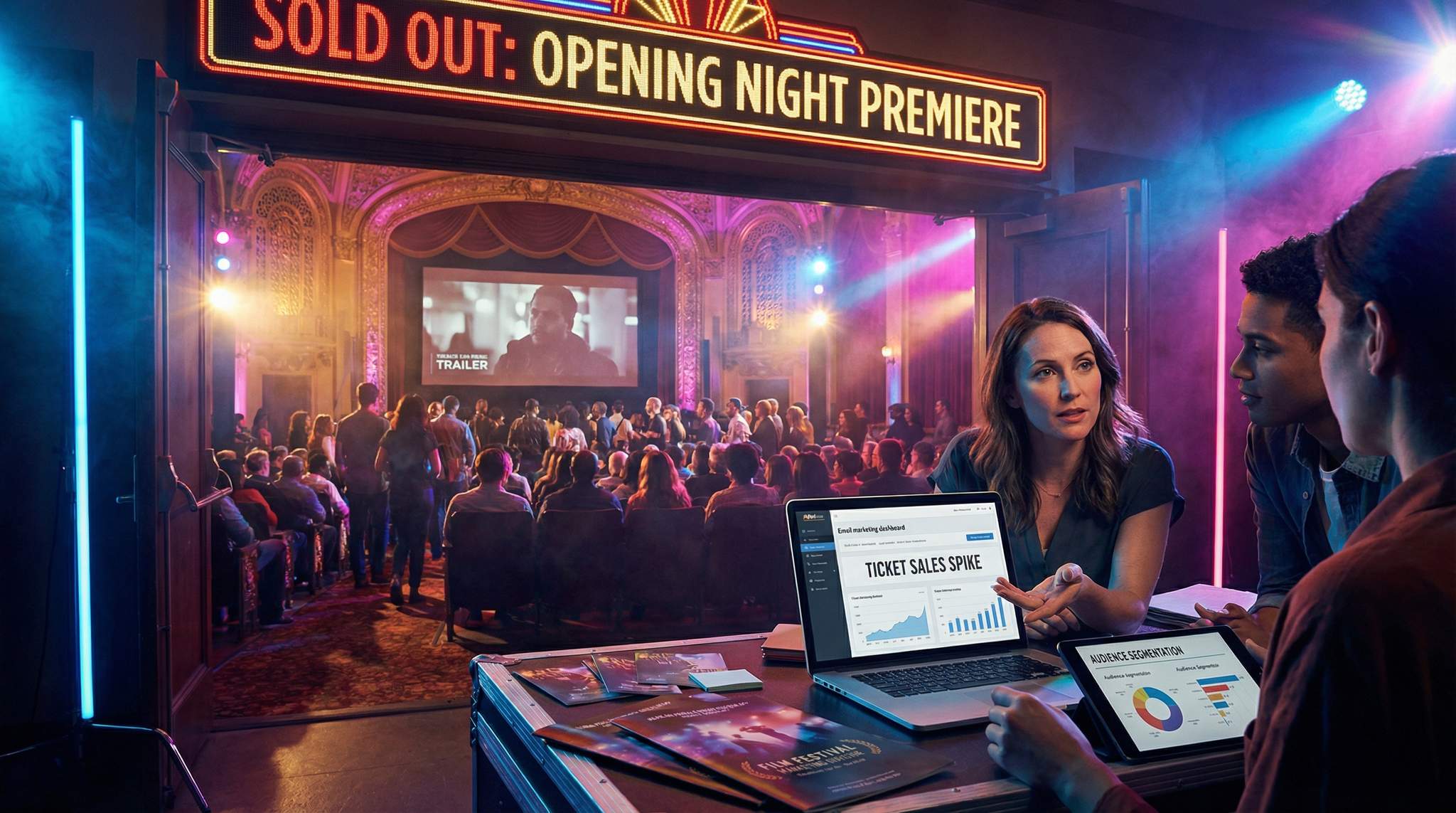
Email marketing remains one of the most powerful tools for driving film festival ticket sales and filling every seat in the house. While social media and digital ads are flashy, a well-crafted email reaches audiences directly with a personal touch – and it consistently delivers results. In fact, the marketing director of one festival noted, “When we look at our sales graph it always spikes when we send an email. If sales are slow, we know we can draft a campaign,” as highlighted in a case study by MailerLite. To harness this power, festival producers must go beyond generic blasts. The key is to segment audiences, personalize recommendations, create a sense of urgency, and craft emails that are short, visual, and action-oriented. Here’s how veteran festival organizers around the world use email to sell out their events, and how you can do the same.
Segment Your Audience for Relevance
Casting a wide net with one-size-fits-all emails is rarely effective. Successful festival promoters segment their email lists to target people with content that matches their interests and profile. Research shows that segmented email campaigns can boost engagement by up to 760%, which can make a crucial difference in selling tickets. Consider slicing your festival’s email list in a few smart ways:
- Interests & Genre Preferences: Tailor emails based on the type of films or events each person likes. For example, if a subscriber showed interest in horror films or attended horror screenings in previous years, send them updates about upcoming horror premieres or midnight thriller showings in your festival program. At the Festival at Sandpoint (a U.S. music festival), the team grouped audiences by the genre of show they attended and sent genre-specific promotions – a strategy that increased open rates and ticket purchases because people received content they care about. Film festival organizers can do the same by tagging subscribers by genre or theme interest (drama, documentary, sci-fi, etc.) and matching email content accordingly.
- Geography & Location: Segment by where your audience lives. A local attendee will appreciate parking tips and last-minute ticket offers, whereas an international visitor might need information on travel, accommodations, or festival highlights worth flying in for. Many global festivals use geographic segmentation: for instance, the Berlin International Film Festival (Berlinale) maintains separate communications for local German cinephiles versus international industry guests, ensuring each gets relevant language and content. If your film festival tours multiple cities or has screenings in different regions, target your promotions by city so people only get updates for events near them. Location-based targeting is proven to boost engagement because people love seeing events “near me” that fit their locale.
- Purchase History & Loyalty: Use your ticketing data to tailor emails based on past purchase behavior. A repeat attendee or pass holder should get a “welcome back” vibe – maybe early access to tickets or a loyalty discount – whereas someone who hasn’t bought yet this year might need a nudge about what’s new and exciting. Toronto International Film Festival (TIFF), for example, might segment out those who bought all-access passes last year and entice them with a VIP package upgrade, while sending a different email to folks who only attended free screenings, highlighting affordable ticketed events to convert them into buyers. Cienna Roget, the marketer for Festival at Sandpoint, uses segmentation to identify anyone who bought tickets in previous years but hasn’t for the current season, then sends targeted reminder campaigns just to them, according to MailerLite’s analysis. This kind of “we noticed you haven’t gotten your tickets yet” email can gently tap proven fans on the shoulder and bring them back.
The more relevant your emails, the more your readers will feel “this festival gets me.” Modern ticketing platforms like Ticket Fairy make this easier by capturing rich data on attendee preferences, location, and purchase history. A few upfront efforts to segment your list will pay off with higher open rates, clicks, and most importantly, conversions to ticket sales.
Leverage “Because You Liked…” Personal Recommendations
People love recommendations that resonate with their personal taste. Just as streaming services suggest movies “because you watched X,” festivals can recommend screenings “because you liked Y.” This technique uses past behavior or stated interests to drive ticket sales for similar events, and it makes your emails feel delightfully personal.
Built-In Email Marketing for Events
Send targeted campaigns, automated purchase confirmations, and post-event follow-ups directly from your ticketing dashboard.
Start by analyzing what films or events each segment of your audience has engaged with. Did a group of attendees all go crazy for last year’s surprise documentary hit? Promote this year’s documentary premieres to that same group with a note like, “If you loved Searching for Sugar Man last year, check out these new docu-gems on our lineup.” Many film festivals now offer online film wishlists or watchlists, which generate perfect data for personalized emails. In fact, the Sundance Film Festival emails users about films on their watchlist: one Sundance email had the preview text “Meet the artists behind the 2025 films on your watchlist,” highlighting movies the recipient had shown interest in, as seen in this Sundance email example. This kind of message feels tailor-made and excites the reader that those specific films are now available to book.
You can also cross-sell by interest: “Because you liked [a certain director or genre], you’ll love [upcoming film].” For example, Sitges Film Festival in Spain, known for horror and fantasy, could email past horror ticket-buyers about the newest vampire thriller on the schedule. Personalization can be as simple as inserting the film title or genre that matches the subscriber’s past behavior. The key is to show that you remember their preferences – it’s digital hospitality. According to marketing data, emails with personalized content drive significantly higher click-through rates and revenue, because readers feel the recommendation is relevant just for them.
Planning a Festival?
Ticket Fairy's festival ticketing platform handles multi-day passes, RFID wristbands, and complex festival operations.
Implementing these “because you liked” recommendations might involve a bit of data work – tracking which tickets each person bought or which email links they clicked. But with tools like customer relationship management (CRM) systems or Ticket Fairy’s analytics, even smaller festivals can automate this. When a subscriber sees an email that seems hand-picked (e.g. “Fans of Guillermo del Toro, don’t miss our new Mexican gothic horror feature!”), they’re far more likely to hit the Buy Tickets button. In practice, these personalized suggestions turn casual interest into concrete sales by connecting the right film with the right fan.
Create Scarcity and Urgency with Alerts
Nothing motivates action quite like the fear of missing out (FOMO). Savvy festival organizers use scarcity and urgency in their emails to spur indecisive ticket buyers. The idea is to let people know “seats are filling up – act now or you’ll miss your chance!” in a genuine, timely way. This isn’t about false hype; it’s about communicating real deadlines and availability to encourage earlier purchases.
One effective tactic is the “low ticket warning” email. When a popular screening or festival pass is close to selling out, send a targeted alert to those who haven’t bought yet. For instance, Sydney Film Festival might blast, “? Only 20 seats left for the Closing Night Gala – Get yours before they’re gone!” Such alerts tap into scarcity (a limited quantity) and create urgency. Similarly, time-based urgency works wonders: highlight early bird deadlines, final days for discounts, or countdowns to when online sales end. A real-world example comes from a Sundance Film Festival email titled “Don’t Miss Out: 2025 Festival Tickets on Sale Now”, with a note that the Early Bird sale only lasts until July 30, as noted in email archives. That campaign not only used FOMO-driven wording (“Don’t Miss Out”) but also reminded readers of a looming date, pushing thousands to snag tickets before prices rose.
When using scarcity in emails, a few tips ensure it remains effective and well-received:
Data-Driven Event Marketing
Track ticket sales, demographics, marketing ROI, and social reach in real time. Exportable reports give you the insights to make smarter decisions.
- Be truthful and specific: Only announce low ticket counts or deadlines that are real. If you say “only 10 seats left” or “last 48 hours to buy,” mean it. Audiences can sense fake urgency, but they respond to legitimate scarcity.
- Segment to avoid annoyance: Send these alerts primarily to people who haven’t purchased that particular ticket or event yet. You wouldn’t want to tell someone who already bought a pass that seats are limited – that would cause confusion or annoyance. Modern email tools let you easily exclude current buyers from these sends.
- Highlight popular events: Focus urgency emails on the most in-demand screenings or marquee events. If a lesser-known film is struggling, you might use a different approach (like a special highlight or bundle offer) rather than “few tickets left,” which works best when it’s a hot item that truly is almost gone.
By judiciously using scarcity, you can significantly boost last-minute sales surges. Many festivals report that “almost sold out” emails have some of the highest conversion rates – often the recipients were interested but procrastinating, and that urgent nudge gets them over the line to purchase. Just remember: urgency emails are like a strong spice – use sparingly and wisely for the best effect.
Keep Your Copy Short and Impactful
When communicating with busy festival-goers, brevity wins. Your email copy should be concise, punchy, and easy to scan. Think of your own inbox – endless blocks of text will lose your attention. Festival audiences are no different. They want the gist (what’s new, why it’s exciting, what to do next) without wading through an essay. In fact, studies show that readers spend on average only 51 seconds on a newsletter email and fully read only about 19% of it, according to FestivalNet data. That means most of your recipients are skimming quickly – so make every word count!
Need Festival Funding?
Get the capital you need to book headliners, secure venues, and scale your festival production.
To craft short yet impactful emails:
* Get to the point immediately. Don’t open with a long festival history or philosophy. Lead with exciting news or an offer: e.g. “Tickets just released for Award-Winning Climate Documentaries” or “Your Exclusive Early Access Code Inside!” This hooks readers in the first line or two.
* Use brief paragraphs and bullet points. A wall of text is daunting. Instead, write in one- or two-sentence paragraphs and break out key points into bullets or numbered lists. For example, if sharing festival highlights, list the top 3 reasons to attend rather than a dense paragraph narrative. White space is your friend – it makes the email more visually inviting and digestible, a key tip for email marketing.
* Write in a clear, casual tone as if speaking to a friend who loves films. Be enthusiastic but trim the fluff. Instead of “We are pleased to announce the availability of tickets for…” just say “Tickets are now on sale for…” or “Grab your seats for…”. Clarity and brevity beat formalities.
* Focus on one main message or action. If you find your email copy is running long, it may be trying to do too many things. It’s better to send two focused emails than one sprawling message covering ten announcements. Each email should ideally drive one primary action (buy a ticket, setup your RSVP website, view the schedule) – anything more can dilute the impact.
Keeping it short doesn’t mean leaving out important info – it means distilling your message to the essentials. You can always link to your website or a blog post for those who want more details. For a film festival, the email might tease a film’s synopsis in one catchy sentence, then link to the full description online. Or it might mention that a guest director will attend a Q&A, without giving their whole bio in the email. Tease, don’t cram. Your goal is to excite the reader just enough that they click through to learn more or to purchase. By respecting your audience’s time and attention span, you actually increase the chance they’ll engage and act on your emails.
Use Strong Visuals to Draw Interest
A picture is truly worth a thousand words – especially when you’re keeping text short. Strong visuals in your emails can instantly convey the vibe and attraction of your festival. Humans are visual creatures, and an image of a captivating movie scene or a packed theatre can spur emotion far quicker than text alone. Many successful festival campaigns use compelling images or even GIFs to grab attention as subscribers scroll through their crowded inbox.
Here are some visual strategies for festival emails:
Smart Promo Codes & Presale Access
Create percentage or flat-rate discount codes with usage limits, date ranges, and ticket type restrictions. Plus unlock codes for private presales.
- Showcase the experience: Use photos from past events – e.g. a jubilant crowd in a historic cinema, a filmmaker on stage during a Q&A, or a montage of last year’s highlights. This helps readers picture themselves there. For instance, Tribeca Film Festival emails often include stills from featured films or snapshots of red-carpet moments, giving recipients an immediate feel of the festival’s energy.
- Feature your content: If you’re promoting specific film titles, include an official still image or the movie poster thumbnail alongside the blurb. A striking film poster or a scene featuring a well-known actor can be the hook that makes someone stop and read. Festivals like Cannes and Venice routinely use film stills in their email newsletters to entice cinephiles – a glimpse of a beautiful cinematographic shot can pique interest more than words can.
- Keep design clean and on-brand: Use visuals, but don’t overload the email with too many images or clashing graphics. Ensure your festival’s branding (logo, colours, font choices) is consistently reflected. A clear hero image at the top with a short headline text overlay can work wonders. Follow with a simple layout that maybe alternates text and image sections for each highlight. Remember, the images should complement the message, not distract or confuse.
- Optimize for quick loading: Compress images and use web-friendly formats so the email loads fast. Many recipients will be on mobile devices or slower connections; large image files that take forever to display might lose their attention. A good practice is to use JPEGs/PNGs with proper compression and avoid very large dimensions. Also include descriptive alt text for each image – not only for accessibility, but in case images don’t load, the reader still sees a meaningful description (e.g. “Scene from Award-Winning Short Film X”).
Studying top-tier events can provide excellent inspiration for your own visual layouts. When analyzing the best email marketing Tribeca and other major festivals deploy, you will notice a consistent pattern: they prioritize high-contrast imagery, minimal text, and a clear visual hierarchy that guides the reader’s eye straight to the ticket link.
Visual emails tend to perform well because they convey emotion and information at a glance. An eye-catching photo can stop someone from deleting an email and instead make them curious. Just ensure your visuals reinforce the call to action. For example, an email for “Last chance to get Festival Passes” might show a photo of a full cinema theatre – visually implying that seats are filling up. Always tie the image choice back to what you want the reader to do or feel. With a balance of powerful visuals and tight copy, your emails will not only be pretty – they’ll be effective sales tools.
Make Your Call-to-Action (CTA) Unmissable
Every marketing email needs a Call-to-Action (CTA) – that’s the button or link that tells the reader what to do next (e.g. Buy Tickets, Register Now, Learn More). For a festival email whose goal is selling seats, your primary CTA is usually something like “Get Your Tickets” or “Book Seats Now”. It might sound obvious, but many event emails bury their CTA or use weak language, leaving readers unsure how to proceed. Don’t let that happen – make your CTA clear, prominent, and compelling.
Some best practices for CTAs:
- Use an eye-catching button: A brightly colored button with a short text is generally more effective than a simple text link. For instance, a big orange or blue button that says “?? Grab Your Festival Pass” will stand out. Place it near the top of the email so it’s seen early, and again at the bottom if the email is long. Many readers skim and will click a bold button without reading everything, so make sure it’s visible when they do their quick scan, advises Campaign Monitor.
- Strong, action-oriented text: Use commanding verbs and create urgency if appropriate. “Buy Now”, “Reserve My Seat”, “Secure Tickets”, or “Watch the Trailer” (if the goal is to view more info) are direct and clear. Avoid vague CTAs like “Learn More” if the goal is actually to sell a ticket – be direct about the action you want (e.g. “Get Tickets for Opening Night”). Also, consider the context – if the email promotes a specific film screening, the CTA could be “Book [Film Name] Tickets” for extra relevance.
- Single primary focus: While you may have multiple links, pick one primary CTA and design around it. If your email lists several featured films, you might have a “Tickets” link under each blurb, but also include one big overarching CTA at the top or bottom for the general festival passes or schedule. Be careful not to present too many different CTAs (e.g. “Buy Tickets”, “Donate”, “Follow us on Facebook”, all in one email) – that can dilute focus. Figure out the one thing that would best convert that reader right now and spotlight it.
- Mobile-friendly design: Ensure the button or link is easily tappable on a phone. A significant portion of email views are on mobile devices, so CTA buttons should be large enough and have enough padding to be tapped with a thumb. Also, don’t place two different links too close together (to avoid fat-finger taps on the wrong link). Test your email on a smartphone to confirm the CTA is obvious and works.
Finally, surround your CTA with a sense of benefit. Make it clear what the reader gets by clicking. Instead of a bland “Submit” or “Click here”, frame it as “Get my tickets”, implying the reward – the ticket – is waiting for them. One trick is to pair the CTA with a short line above it like “Don’t miss out on an unforgettable weekend!” and then the Get Tickets Now button below. This way, the reader connects the action (getting tickets) with the benefit (an unforgettable experience). A well-crafted CTA acts as the bridge between interest and action, so give it the attention it deserves in your email design. Your seat sales depend on it!
Steal This Framework: A Holiday-Themed Film Festival Email Template
Over my decades of producing events, I’ve found that holiday weekends present a unique ticketing challenge. Audiences have competing plans, so your programming needs to stand out as the ultimate destination. Whether you are hosting an outdoor summer screening series or a dedicated holiday weekender, having a reliable framework saves time. If you need a starting point, here is an adaptable 4th of July film festival email template that balances festive energy with clear, conversion-focused copywriting.
Recover Lost Ticket Sales
Automated abandoned cart emails re-engage potential buyers at the optimal time, recovering lost sales and boosting your conversion rate.
- Subject Line: Keep it festive and urgent. Example: “Sparks, Snacks, and Cinema: Your 4th of July Weekend Lineup ?” or “Early Bird Ends Soon: Secure Your Independence Day Screening Passes!”
- Header Visual: Use a high-quality image of your venue (like an outdoor cinema setup under the stars) or a striking still from your marquee holiday feature.
- The Hook (1-2 sentences): Acknowledge the holiday and position your event as the perfect celebration. Example: “Skip the crowded beaches this Independence Day. Join us for a curated weekend of classic summer blockbusters, indie Americana, and local food trucks.”
- The Lineup (Scannable Bullets): Highlight the top draws without overwhelming the reader.
- Friday, July 3: Midnight Thriller Double Feature
- Saturday, July 4: Family-Friendly Matinee & Evening Fireworks Watch Party
- Sunday, July 5: Director Q&A and Closing Night Gala
- The Urgency/Offer: Give them a reason to buy right now. Example: “VIP Weekend Passes are 80% sold out. Grab yours today to guarantee premium seating and complimentary popcorn.”
- The CTA: A single, brightly colored button. Example: “Get Your Holiday Weekend Tickets”
You can easily modify this Independence Day layout for Halloween horror fests, Valentine’s Day rom-com retrospectives, or winter holiday showcases. The core strategy remains the same: lean into the seasonal theme, keep the schedule scannable, and drive urgency toward a single call-to-action.
Track Revenue per Email and Keep Improving
How do you know if your email campaigns are truly effective? The answer lies in the data. The beauty of digital marketing is that you can (and should) measure everything. For festival emails, the golden metric is revenue per send – essentially, how much ticket revenue did each email generate? Tracking this not only proves the value of your campaigns, but also provides insights to refine your strategy over time.
Start by ensuring you have the right tools in place. Ideally, your ticketing platform or email service should let you track conversions from emails. For example, Ticket Fairy’s platform allows festival producers to see exactly how many tickets were sold via each email campaign, and the total revenue brought in. If such integration isn’t available, you can use workarounds like adding unique tracking links (UTM codes) to your email buttons and then checking Google Analytics or your sales reports to attribute purchases to specific emails.
Once tracking is set, treat your email campaigns like experiments. Analyze key metrics: open rates, click-through rates (CTR), and most importantly, conversion rate (what percentage of email recipients actually bought a ticket) and revenue. You might discover that an email with a modest 20% open rate but a targeted offer yielded $5,000 in sales, while another with a 30% open rate but generic content yielded only $1,000. Follow the money – which approaches bring the best return?
When evaluating these metrics, organizers often ask how their campaigns stack up against industry standards. For instance, the average CTR benchmark for music festival marketing email campaigns typically hovers around 2% to 3%, while highly segmented film festival newsletters can see click-through rates closer to 4% or 5%. If your engagement falls below these averages, it is a strong signal to refine your subject lines, clean your subscriber list, or make your calls-to-action more prominent.
Then, iterate. Use these insights to constantly improve:
* A/B test and optimize: Try sending two versions of an email – perhaps one with a personal subject line (“Jane, check out these films you’ll love”) vs. a generic one (“Announcing the lineup for July”) – and see which drives more ticket purchases. Test different send times, layouts, or CTAs. Over time, even small tweaks (like changing a subject line from “Film Festival Tickets” to “Don’t Miss Tonight’s Festival Premiere”) can meaningfully boost engagement and subscriber loyalty. Continual testing is how you zero in on what resonates best with your audience.
* Learn from successes and failures: If a particular email bombed (low opens, few sales), dissect why. Maybe the subject was dull, or the content wasn’t relevant to that segment. On the other hand, if an email blew past expectations – say, a targeted “because you liked” recommendation email had an unusually high conversion rate – figure out how to replicate that magic. Perhaps it’s worth doing more “Recommended For You” spotlights in future campaigns. Share findings with your team and build a set of email marketing best practices tailored to your festival.
* Monitor list health: Tracking isn’t just about immediate sales; watch long-term patterns too. Are people unsubscribing after certain emails? That could be a sign of over-mailing or content that missed the mark. Do certain segments never open emails? Maybe it’s time to clean that part of the list or try a re-engagement campaign. A healthy email list with active, interested subscribers will yield better revenue per send than a huge list of disengaged contacts.
Free Tool: Size Your Festival Site
Zoned capacity planning for arena, campsite, parking and entry lanes — against UK Purple Guide and NFPA density standards. Finds your bottleneck zone.
Successful festival email marketing is a cycle of plan, execute, measure, learn, adjust, and repeat. Even as a veteran organizer, remain a student of your own data – there are always new insights to discover as audiences and behaviors evolve. And remember, the ultimate goal is not just a high open rate or click rate, but sold-out screenings and satisfied attendees. By keeping a close eye on the numbers that matter and iterating your approach, you ensure that each email you send becomes smarter at selling seats than the last.
Frequently Asked Questions
What is the best email marketing tool for a local film festival to manage ticket sales and RSVPs?
The ideal platform depends on your specific operational needs, but the most effective solutions integrate directly with your ticketing software. Platforms like MailerLite, Mailchimp, and ActiveCampaign are popular for their automation features. However, using an all-in-one event platform like Ticket Fairy provides a distinct advantage, as it natively syncs your RSVP data, attendee demographics, and ticket sales, allowing you to trigger highly targeted campaigns without manually exporting lists.
What features should independent festival organizers look for in an email marketing platform?
When evaluating software to handle your event communications, prioritize platforms that offer seamless ticketing integrations, automated workflow triggers (such as abandoned cart emails or post-purchase confirmations), and robust audience segmentation. The ability to sync RSVP data in real-time ensures you aren’t sending promotional blasts to attendees who have already secured their seats.
How can I use email marketing to increase RSVP conversion rates for free festival screenings?
For free or community-focused events, securing an RSVP doesn’t guarantee attendance. To reduce drop-off rates, use your email marketing tool to set up automated reminder sequences. Send a confirmation immediately upon registration, a “what to know before you go” email 48 hours prior, and a final day-of reminder highlighting exclusive perks like director Q&As or limited merchandise. This keeps the event top-of-mind and significantly improves actual turnout.