Introduction: Festivals celebrating roots and Americana music have historically overlooked many of the very communities that gave birth to these genres. Women and artists of colour – Black, Latino, Indigenous – often struggled to find equal footing on stage and behind the scenes. Today, a new generation of festival producers is determined to change that. Achieving true equity in festivals isn’t just a moral imperative; it creates richer lineups and more vibrant experiences for everyone. This guide shares hard-earned wisdom on building festivals that champion underrepresented voices, with practical steps and real-world examples from across the globe.
Modern success stories show what’s possible. In 2019, Spain’s Primavera Sound became the first major festival to achieve a 50/50 gender-balanced lineup, proving that parity is attainable even at scale. And in 2023, Kansas City’s Celebrate AMERI’KANA festival “flipped the script” by featuring an entire bill of Black, Latinx, and Indigenous artists – a bold move to honor the diverse roots of American music. These examples underscore a key lesson: inclusion must be intentional. To truly amplify marginalised voices, festival organisers need to commit to clear representation goals, back them up with action (and accountability), and foster an inclusive culture from the stage to the staff HQ. Here’s how to get it done:
Set Representation Goals – And Share Your Progress
Commit to concrete diversity targets. Start by defining what equity looks like for your festival. This might mean setting a goal that your lineup will be 50% female and non-binary artists, or that a certain percentage of slots go to BIPOC (Black, Indigenous, and People of Color) performers. Be ambitious but realistic. When more than 45 festivals pledged to achieve gender-balanced lineups by 2022 through the Keychange initiative, it signaled that the industry was ready to change. Many events – large and small – have adopted similar benchmarks for racial and cultural diversity as well.
Include your crew, vendors, and hosts. Representation isn’t only about who’s holding the mic. Make it a goal to diversify backstage teams, technical crew, MCs, and even vendor booths. Are women and minority professionals represented in your sound and lighting teams? What about your stage hosts and festival emcees? Setting targets across all areas (not just artists) helps create an event that genuinely reflects your community. For example, the UK’s Fierce Festival not only tracks the diversity of its performers but also of its staff and leadership. All four of Fierce’s artistic directors since 1997 have come from varied backgrounds, and the festival publishes breakdowns of team and lineup demographics to hold itself accountable. By 2024, 57% of Fierce’s programmed artists were ethnically diverse, up from just 26% in 2017 according to their accountability reports – progress achieved by setting goals and measuring them.
Free Tool: Size Your Festival Site
Zoned capacity planning for arena, campsite, parking and entry lanes — against UK Purple Guide and NFPA density standards. Finds your bottleneck zone.
Be transparent and report outcomes. Public accountability drives change. Consider releasing an annual diversity report or a blog post outlining how your lineup and staffing measured up against your goals. This kind of transparency has multiple benefits: it builds trust with your audience, motivates your team to stay committed, and encourages other festivals to follow suit. Fierce Festival’s website, for instance, includes an “Accountability & Transparency” page sharing year-by-year statistics on the makeup of its festival programming and crew. Similarly, Denmark’s giant Roskilde Festival rolled out a comprehensive Diversity & Equity Action Plan in 2022 and has been reporting its progress since 2018, openly identifying areas for improvement. When you share your numbers – good or bad – you send a message that representation isn’t just talk for you; it’s a trackable commitment.
Book Parity in Prime Slots, Not Just the Small Print
Equal representation must extend to headliners and peak hours. It’s not enough to book diverse artists and then relegate them to early afternoon sets or tiny side stages. True equity means women and BIPOC artists get prime slots and high billing, right alongside the usual headliners. Unfortunately, old habits die hard – studies have found that even when festivals book more female acts, they often appear lower on the poster or in daylight “discovery” slots. According to a global survey by female:pressure, women accounted for roughly 27% of festival artists by 2020 (up from a dismal 9% in 2012) according to Resident Advisor data, but they are still too rarely seen at the top of the bill. The survey noted that larger festivals generally had a more imbalanced gender distribution, highlighting a “billing hierarchy” problem.
Planning a Festival?
Ticket Fairy's festival ticketing platform handles multi-day passes, RFID wristbands, and complex festival operations.
As a festival producer, you can break this pattern. If you have three headline slots, try to ensure at least one features a woman artist or an artist of color – every single day. Mix up your closing acts and give underrepresented performers the same sunset and late-night opportunities that draw the biggest crowds. When Glastonbury Festival in the UK faced criticism for a lack of female headliners, its team responded by actively seeking more women and non-white headliners for subsequent editions. Coachella offered a positive example in 2023: it crowned Bad Bunny as the festival’s first-ever Latino solo headliner and hosted Blackpink as the first all-female K-pop headliner, moves that not only made history for Latino and K-pop artists but also proved wildly popular with fans. Similarly, Primavera Sound showed that booking parity doesn’t hurt ticket sales; Primavera’s gender-balanced 2019 lineup – featuring major female artists like Robyn, Christine and the Queens, Janelle Monáe and others – was widely acclaimed by both critics and attendees.
Spotlight diverse talent during peak discovery moments. Beyond the headliners, think about the flow of your festival day. Early evening slots (just before the headliner) or weekend highlight shows are prime “discovery” moments when audiences are largest. Make sure these peak periods aren’t dominated by the same old faces. Curate your schedule so that emerging women, LGBTQ+ artists, and artists of colour get a chance to play to a packed house. For instance, the Newport Folk Festival – a storied Americana event – invited the Black Opry Revue (a collective of Black country and folk artists) to curate a prominent showcase in 2022, giving these artists a spotlight on a main stage rather than the margins. The result was a powerful set that introduced thousands of festivalgoers to outstanding Black Americana performers who might otherwise never have been heard in Newport’s historic line-ups. By programming inclusively at peak times, you not only give underrepresented artists the audience they deserve, but you also give your audience the thrill of discovering fresh perspectives in prime time.
Partner with Communities for Pathways and Context
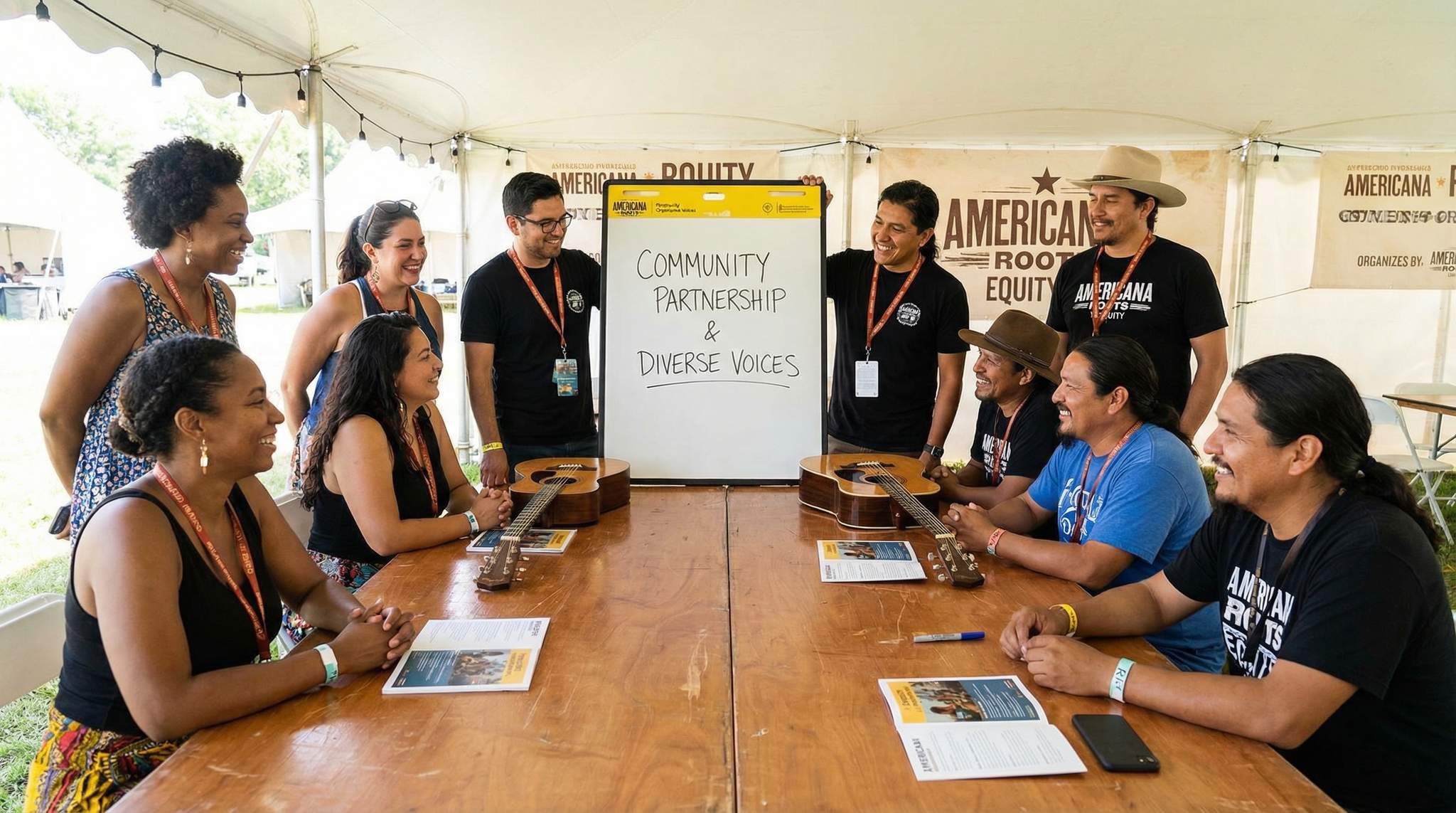
Work with community organisations to broaden your talent pool. One of the best ways to find and nurture diverse talent is by partnering with the communities you want to uplift. Community groups, cultural associations, and nonprofits can act as bridges to artists and crew from underrepresented backgrounds – and they often have invaluable knowledge on how to engage those communities authentically. If you’re aiming to include more Indigenous voices, collaborate with Indigenous arts organisations or tribal councils in your region. Looking to book more Latinx bands? Connect with local Latino cultural centres or music collectives. These partnerships can help you recruit performers, crew, and even interns through trusted channels, creating a pipeline of fresh faces for your festival.
A great case study is the Celebrate AMERI’KANA Music & Arts Festival. Co-presented by a Kansas City nonprofit (Art as Mentorship, which empowers young musicians) and a local Latin rock band, this festival was built on community partnership from day one. Through these ties, Celebrate AMERI’KANA not only assembled a lineup of Black, Latinx, and Indigenous artists, but also gave local youth performers a chance to share the stage with national acts. The organisers worked closely with mentors and grassroots groups to identify talent and even hosted free workshops leading up to the event. The payoff was huge: audiences experienced a genuinely inclusive celebration of Americana’s diverse roots, and emerging artists from marginalised communities got a career-changing opportunity.
Data-Driven Event Marketing
Track ticket sales, demographics, marketing ROI, and social reach in real time. Exportable reports give you the insights to make smarter decisions.
Provide cultural context and share stories. Partnering with community organisations isn’t just about booking artists – it’s also about educating and immersing your audience in those artists’ cultures. Inclusion is as much about how you present performances as who is performing. Consider involving community leaders or cultural experts to introduce acts, provide background, or host discussions. For example, many festivals in Australia and New Zealand have incorporated “Welcome to Country” ceremonies performed by local Indigenous elders to open the event and acknowledge traditional lands. This sets a respectful tone and helps the crowd understand the significance of the place and people. Similarly, at Canada’s Winnipeg Folk Festival, an Indigenous Advisory Circle works with festival producers to integrate First Nations culture and protocols throughout the event – from land acknowledgements to showcasing Indigenous artisans. By giving underrepresented voices not only the stage but also the narrative around it, festivals can create deeper connection and respect. Why not host a Q&A with that Indigenous throat-singing group about their heritage? Or invite a women-in-music advocacy group to curate a panel or small stage? These collaborations add richness and meaning to the festival experience.
Create pathways into the industry. Representation at a festival improves even more when communities are part of the festival’s fabric, not just invited for one-off appearances. Partner with local music schools, activist groups, or diversity initiatives to establish mentorship and training programs. Some festivals run internship schemes in partnership with organisations focused on women in audio engineering or BIPOC youth in event production. As a producer, you might sponsor scholarships for crew training or offer shadowing opportunities during your festival build. Building these pathways shows that you’re not just borrowing from a community’s culture for a weekend – you’re actively investing in that community’s talent year-round. Over time, this nurtures a new generation of diverse festival professionals. The Diversity On Tour initiative, for instance, encourages event organisers to visit schools and youth programs to raise awareness of careers in live music for girls and BIPOC youth. Even a small step like giving local community groups a booth or space at your event (to share their mission and work) can expand the festival’s inclusivity beyond the music itself.
Need Festival Funding?
Get the capital you need to book headliners, secure venues, and scale your festival production.
Train Your Team on Bias and Safe Practices
Equip staff and volunteers to recognize and counter bias. Even with diverse bookings in place, a festival must operate inclusively on the ground. This starts with your internal team. Unconscious biases can creep in anywhere – a security guard might profile a group of Latino teens unfairly, or a sound tech might assume a female musician doesn’t know her gear. Proactive training can open everyone’s eyes to these biases. Before your event, organise training sessions or workshops on diversity and inclusion for your staff, contractors, and volunteers. Many festivals bring in professionals or partner with campaigns like “Good Night Out” (which fights harassment in nightlife) or SoundGirls (which supports women audio engineers) to educate their teams. Training topics should range from cultural competency (e.g. respectful communication and correct name pronunciation for international artists) to accessibility awareness and overcoming stereotypes. The goal is to ensure every member of your crew – from the box office to backstage – understands how to create a welcoming environment for artists and attendees of all backgrounds.
Establish a zero-tolerance harassment policy. A truly inclusive festival is one where everyone feels safe. Develop a clear code of conduct that forbids harassment and discrimination of any kind, whether it’s sexual harassment, racist language, or homophobic behaviour. Crucially, train your team on how to respond if incidents occur. Festival security and staff should know how to assist someone reporting harassment and how to intervene appropriately when they witness problematic behaviour. In 2017, over 100 independent festivals in the UK united to launch the “Safer Spaces at Festivals” charter, committing to survivor-centric approaches for handling sexual violence and harassment. They pledged to treat all reports seriously and back that up with proper procedures and staff training. Your festival can take inspiration from this: work with local advocacy groups (like a sexual violence crisis centre or an anti-racism nonprofit) to train staff on bystander intervention and compassionate response. Make sure artists and attendees know how to find help if they need it – for example, designate clearly marked safe spaces or help desks on-site. When underrepresented artists join your lineup, they often come from scenes where harassment or bias may have driven them away from the mainstream. Show them – and their fans – that at your festival, hateful behavior will not be tolerated and will be addressed swiftly.
Foster an inclusive festival culture. Beyond formal training, set expectations among your crew for everyday inclusivity. Little things matter: pronounce every artist’s name correctly and learn a bit about their background so you can treat them with respect. Encourage your stage managers and MCs to use inclusive language (e.g., not assuming the gender of audience members, and correctly introducing artists’ pronouns). If your festival has camping or multi-day community areas, consider workshops or activities that promote inclusivity – like cultural appreciation sessions, diversity discussions, or signage highlighting the contributions of women and BIPOC in your music genre. By weaving these values into the fabric of the event, you create a positive feedback loop: artists feel valued and give their best performances, diverse audiences feel welcome and seen, and your team takes pride in running a festival that’s ahead of the curve.
Inclusion Is Both Programming and Practice
Diversifying a festival’s lineup is a powerful start, but true inclusion goes further. Think of it this way: inclusion is both programming and practice. It’s not just who you put on stage, but how you run the show and how you treat people at every step. A festival could book a mix of women, Black, Latino, and Indigenous artists and still fall short if those artists feel like tokens or face hostility on site. Conversely, you might have the friendliest, most respectful crew in the world, but if your lineup is homogenous, you’re not delivering the cultural richness your audience craves. Both aspects must work in tandem.
Free Tool: Project Your Bar Revenue
Per-head spend benchmarks by event type turned into projected bar and food revenue, with a stock-mix estimate and gross-margin line. Free calculator.
The most successful festival producers approach equity as a holistic mission. They set goals, implement policies, and follow through in every department – from the booking meetings to the post-event debrief. The learning never stops. Be ready to listen to feedback from artists and attendees. Maybe a female artist lets you know the backstage area felt unsafe for her at night, or a local community group points out you overlooked their genre this year. Treat this input as invaluable guidance for improvement, not criticism. Many trailblazing festivals have also admitted missteps along the way. What matters is owning up and continuing to push for better representation and a safer, more inclusive atmosphere.
At its heart, committing to equity in roots and Americana festivals (or any festival, for that matter) is about honouring the true spirit of the music. Americana and roots music are built on the stories and contributions of diverse peoples – from the African American blues singers and Indigenous storytellers to immigrant folk traditions and the women who kept oral histories alive. By making a place for all these voices on your stages and in your staff, you aren’t just checking a box; you’re creating a festival that resonates with authenticity and soul. And as countless organisers have discovered, when you champion inclusivity, you unlock new levels of creativity, community loyalty, and even commercial success. In other words, it’s not only the right thing to do – it’s the smart thing to do as well.
Conclusion: Building equity into a festival requires dedication, humility, and collaboration. But the reward is a dynamic environment where everyone feels they belong – from the headliner flown in from abroad to the first-time crew volunteer from down the road. By committing to representation goals, elevating marginalised voices in big moments, partnering with communities, and fostering a safe, bias-aware workplace, you set the stage for lasting change. The next generation of festival producers will thank you, as will the audiences who get to experience a fuller spectrum of talent. The roots of music run deep and wide; it’s time our festivals do the same.
Frequently Asked Questions
How can music festivals improve diversity and inclusion?
Festival organizers improve diversity by setting concrete representation goals for lineups, staff, and vendors. Strategies include partnering with community organizations to recruit underrepresented talent and implementing transparent reporting on progress. Additionally, providing bias training and establishing zero-tolerance harassment policies creates a safer, more inclusive environment for all participants.
Why is representation important in Americana and roots festivals?
Representation in Americana festivals honors the genre’s diverse origins in Black, Latino, and Indigenous communities. Championing these voices creates richer lineups and more vibrant experiences for audiences while correcting historical oversight. True equity involves intentional inclusion of women and artists of color to reflect the music’s authentic spirit.
How can festival organizers achieve gender-balanced lineups?
Organizers achieve gender-balanced lineups by committing to specific targets, such as the 50/50 goal demonstrated by Spain’s Primavera Sound. Success requires intentional booking across all time slots, ensuring women and non-binary artists secure prime headline spots rather than just early discovery slots. Public accountability and tracking progress help maintain these commitments.
What is the benefit of partnering with community organizations for festivals?
Partnering with community organizations creates authentic pathways to recruit diverse performers, crew, and interns. Collaborations with cultural groups, such as Indigenous councils or Latinx collectives, expand the talent pool and provide valuable cultural context. These partnerships help festivals engage marginalized communities meaningfully rather than just offering one-off appearances.
How does billing hierarchy affect festival diversity?
Billing hierarchy often undermines diversity when festivals relegate women and BIPOC artists to early afternoon slots or small stages despite having them on the lineup. True equity requires placing underrepresented artists in prime headline and late-night spots. Giving diverse acts equal billing ensures they receive the visibility and audience attention they deserve.
What diversity training should festival staff receive?
Festival staff should receive training on unconscious bias, cultural competency, and safe practices to counter discrimination. Workshops often cover respectful communication, correct name pronunciation, and accessibility awareness. Effective training also includes instruction on bystander intervention and enforcing zero-tolerance harassment policies to ensure a welcoming environment for artists and attendees.
Which music festivals have successfully implemented diversity plans?
Spain’s Primavera Sound achieved a 50/50 gender-balanced lineup in 2019, while Kansas City’s Celebrate AMERI’KANA featured an entire bill of Black, Latinx, and Indigenous artists. Additionally, the UK’s Fierce Festival and Denmark’s Roskilde Festival actively track and report their diversity statistics, demonstrating that parity is attainable through intentional planning and transparency.
How can festivals ensure safety for diverse artists and audiences?
Festivals ensure safety by establishing clear codes of conduct with zero-tolerance policies for harassment, racism, and discrimination. Organizers must train security and staff on survivor-centric responses and bystander intervention. Designating safe spaces and clearly marking help desks allows attendees and artists to report incidents and receive immediate, compassionate assistance.