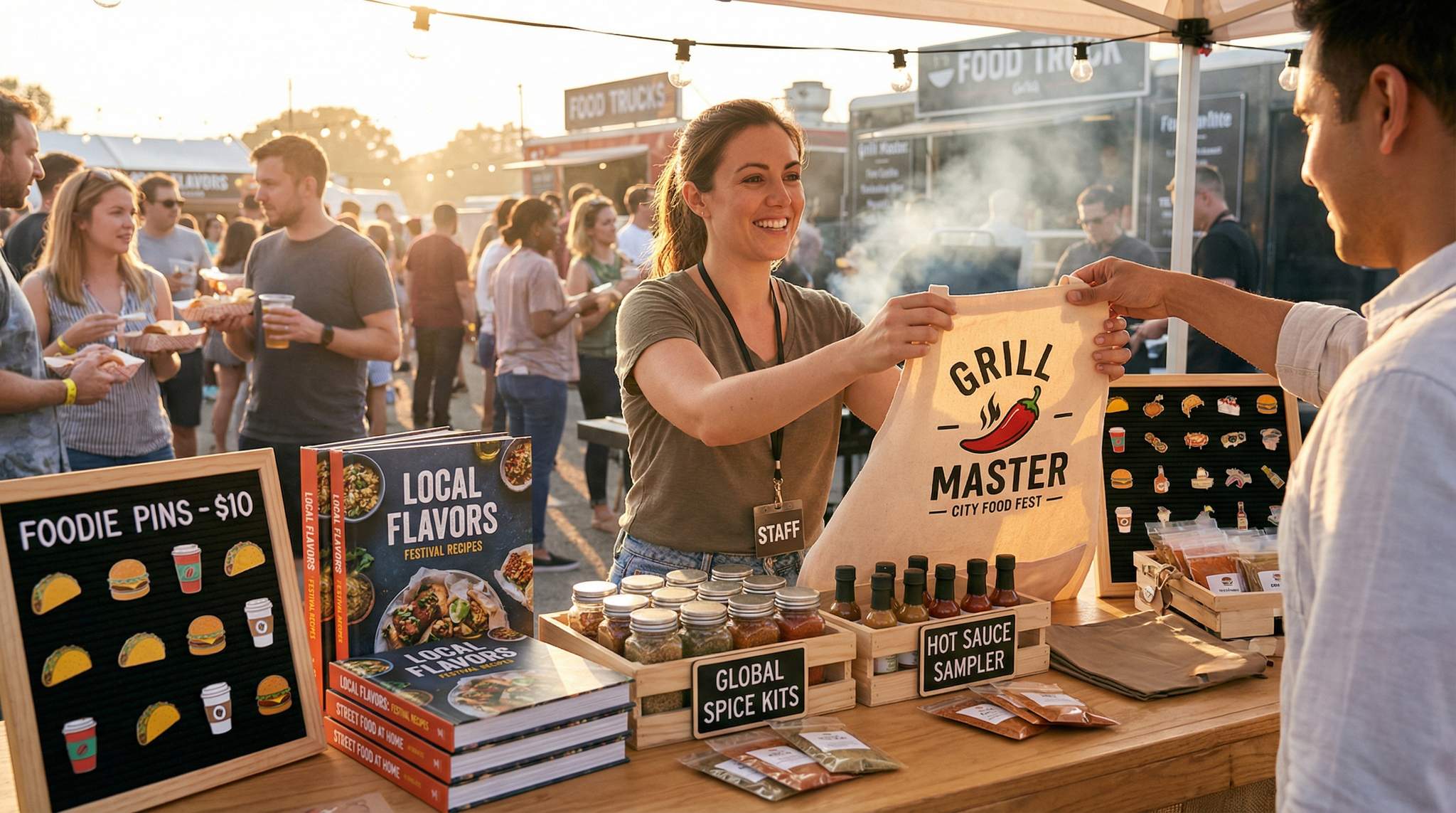
Running a successful food festival is not just about the mouthwatering dishes – it’s also about crafting an experience that attendees can take home with them. One way to extend the festival’s impact beyond the event is through merchandise that truly resonates with food lovers. The key is to offer items that align with their culinary passions rather than generic souvenirs. This article explores how festival producers can design and sell merchandise that food enthusiasts actually want, from creative aprons and spice kits to enamel pins and cookbooks, all while ensuring a smooth retail experience at the event.
Know Your Foodie Audience
Food festival attendees are a unique crowd often self-described as foodies – people deeply passionate about cuisine, cooking, and new flavors. Unlike a general music festival audience that might scoop up t-shirts or hats, food lovers are drawn to merchandise that reflects their culinary interests or enhances their kitchen at home. A savvy festival organizer researches what excites their particular audience:
– Functionality matters: Food lovers appreciate merchandise they can use, not just shelf. Items like quality aprons or useful kitchen tools are far more enticing than generic keychains.
– Culinary connection: Merchandise that ties into the event’s theme or cuisine will spark interest. For example, at a chili festival, a custom spice blend or hot sauce kit resonates strongly with attendees; at a regional food fair, a cookbook of local recipes or a tea towel printed with local spice pairings can be a hit.
– Aesthetic appeal: Just because an item is practical doesn’t mean it should be bland. Attractive design is crucial. A beautifully illustrated cookbook cover or a stylish enamel pin with a witty food pun can turn an ordinary item into a must-have keepsake.
– Quality over quantity: Seasoned festival producers have learned that it’s better to offer a few well-chosen, high-quality products than a cluttered stall of cheap trinkets. Durable materials and good craftsmanship leave a positive impression of your festival brand long after the event.
By understanding their audience’s tastes and habits, festival organizers worldwide – from street food celebrations in Singapore to gourmet fairs in France – can tailor their merchandise selection for maximum appeal and sales.
Aprons: Wearable Culinary Souvenirs
Aprons are a natural choice for food festival merchandise. They are highly practical for any cooking enthusiast and serve as a wearable reminder of the event. Rather than a plain apron with just a festival logo, consider designs that celebrate the spirit of the festival:
– Creative designs: Incorporate elements of your festival’s theme into the apron’s design. For instance, a BBQ festival apron might feature a fun graphic of flames or a slogan like “Grill Master at [Festival Name]”. A dessert festival’s apron could have a colorful pattern of cupcakes or a witty phrase about baking.
– Quality materials: Use sturdy, washable fabric (like thick cotton or a cotton-poly blend) that can withstand actual kitchen use. A well-made apron will be used frequently by buyers, giving your festival recurring visibility in their home. Cheaply made aprons that fray after one wash will only disappoint customers and reflect poorly on the event’s quality standards.
– Limited editions or collaborations: Take inspiration from major culinary events. Some festivals collaborate with known chefs or artists to create limited-edition aprons. For example, a food festival in Melbourne partnered with a local designer to produce aprons featuring illustrations of iconic local ingredients. Such unique collectibles can generate buzz and urgency – attendees know they won’t find these aprons elsewhere.
– Sizing and style: Remember that festival-goers come in all shapes and sizes. Offering adjustable neck straps or different apron lengths can make the product accessible to more people. Also consider unisex designs and colors that appeal broadly (or offer a couple of variants).
– Price point: Aprons typically fall into the mid-range pricing of merch. Setting a fair price that reflects quality (for example, $20–$30 or equivalent local currency) can make them attractive purchases without deterring budget-conscious attendees.
Boost Revenue With Smart Upsells
Sell merchandise, VIP upgrades, parking passes, and add-ons during checkout and via post-purchase emails. Increase average order value by up to 220%.
When sourcing these garments, organizers must consider which apron brands’ pricing best aligns with their brand image. A high-end wine and food classic might partner with premium culinary workwear brands, where the higher wholesale cost is justified by the luxury aesthetic. Conversely, a casual neighborhood street food fair might opt for reliable, budget-friendly wholesale suppliers that allow for a lower retail price point without sacrificing basic durability.
A well-designed apron not only generates revenue but also turns buyers into walking ambassadors for your festival every time they cook wearing it. One festival producer from California noted that their aprons sold out by the final day of a weekend food fest – proof that if you nail the design and quality, attendees will eagerly snap them up.
Planning a Festival?
Ticket Fairy's festival ticketing platform handles multi-day passes, RFID wristbands, and complex festival operations.
Spice Kits: Take-Home Flavor Experiences
Food festivals are all about flavor, so why not let attendees take those flavors home? Spice kits or seasoning sets are increasingly popular merchandise items at culinary events. They cater directly to food lovers’ desire to experiment in their own kitchens. Here’s how festival organizers can create spice kits that excite:
– Theme your spice sets: Align the spices with your festival’s cuisine or theme. Is it an international street food festival? Consider a “global spice kit” with small packets of spice blends from different continents. A local harvest festival might offer an herb mix featuring ingredients grown by regional farmers. For a chili or barbecue festival, a set of dry rubs or chili powders in varying heat levels is an obvious winner.
– Packaging and portions: Packaging should be airtight and food-safe to keep spices fresh. Small tins or jars in a branded box work well and make for an attractive presentation. Ensure each spice is labeled with its name and perhaps a suggestion of how to use it. Portion sizes can be sample-sized (to encourage experimentation without a big commitment) or larger if you expect aficionados who will appreciate a generous supply.
– Include recipes or usage tips: To add value, include a recipe card or pamphlet with ideas for using each spice. This not only helps those who might be unfamiliar with certain seasonings but also ties the product back to the festival experience (e.g., “Use the curry powder to recreate the signature dish you tasted at the festival’s Indian booth.”).
– Local and authentic sourcing: Partner with local spice merchants or artisan producers if possible. Not only does this support small businesses (a value appreciated in many communities, from India to New Zealand), but it also ensures authenticity. If you’re selling a Tuscan herb mix at an Italian food festival, sourcing from a reputable Italian herb farm or vendor adds credibility.
– Compliance and labeling: Remember that spices are food products. Different countries have regulations on labeling edible items. Make sure to clearly list ingredients (especially for mixes), note any allergens, and include expiration or “best by” dates. This transparency builds trust with buyers and keeps you compliant with health regulations.
– Pricing and profit: Spice kits can be priced based on the number of spices and packaging quality. They might range from an affordable $10 sampler pack up to $30+ for an elaborate set. Many attendees see these as unique souvenirs or gifts for friends. A tip from a festival organizer in Singapore: bundle a spice kit with a festival-branded cookbook at a slight discount to increase the perceived value and boost total sales per customer.
By offering spice kits, you allow guests to literally take home a taste of the festival. It’s a sensory reminder of their experience that will spark stories about your event each time they spice up a meal.
Enamel Pins: Bite-Sized Collectibles
Sometimes the most memorable items come in small packages. Enamel pins have become trendy collectibles across festivals of all kinds – and food events are no exception. These small, affordable items serve as badges of pride that attendees can wear or display, and they often become conversation starters. Here’s why enamel pins deserve a spot in your merch lineup:
– Whimsical, theme-driven designs: Pins give you a chance to get creative and playful. Think beyond just your festival logo. If it’s a donut festival, create a cute enamel pin of a frosted donut with the event name subtly included. For a wine and cheese festival, a tiny wine bottle or cheese wedge character can be an appealing design. The goal is a fun design that people genuinely enjoy wearing, not just a mini advertisement.
– Collectibility and series: If your festival is annual, consider releasing a new pin design each year or multiple designs for different aspects of the event. This can turn merch shopping into a treasure hunt for returning visitors (“Did you get the limited-edition truffle pin from this year’s festival?”). Some food festivals internationally have started traditions where each year’s pin features a different local dish or ingredient, encouraging attendees to collect them all.
– Display and presentation: To effectively sell pins, presentation matters. Pin them to a nice backing card that includes the festival name and year, and keep an eye-catching display at your merch booth (for example, a pin board or hanging banner where all the designs are visible). Attendees often impulse-buy pins, so the more visibly and neatly they’re showcased, the better.
– Price and upsell potential: Enamel pins are relatively inexpensive to produce in bulk and can retail at a friendly price point (say, $5–$15 depending on size and complexity). Because they’re lower cost, they make great impulse buys or add-on sales (“Add a pin for $5 at checkout”). In fact, Ticket Fairy’s ticketing platform allows festival organizers to offer merchandise upsells during ticket purchase – a strategy that could let fans buy a pin in advance and pick it up on-site, guaranteeing their collectible.
– Quality and durability: Work with a reputable pin manufacturer to ensure the colors are vibrant and the pin hardware (backs, clasps) are secure. Nothing is more disappointing than a pin that loses its enamel or falls off a bag. High-quality pins will reflect your festival’s commitment to excellence, even in the smallest of details.
Enamel pins might be small, but they carry big sentimental value. Attendees across the US, Europe, and Asia have been seen proudly decorating denim jackets and backpacks with pins from their favorite festivals. A tasty taco pin or a cute sushi roll pin can become a quirky fashion statement that keeps your festival in fans’ minds year-round.
Go Cashless With RFID Technology
Enable contactless payments, faster entry, and real-time spending analytics with RFID wristbands and NFC-enabled ticketing for your events.
Beyond Pins: Other Festival Trinket Ideas
While pins are incredibly popular, expanding your lineup with other small, low-cost keepsakes can capture even more impulse sales. When brainstorming festival trinket ideas, organizers should focus on items that are lightweight, easy to produce, and highly collectible. Custom die-cut stickers, branded fridge magnets shaped like signature dishes, and engraved wooden tasting spoons are excellent additions. These small trinkets serve as accessible entry points for attendees who want a physical memory of the event but may not have the budget for premium apparel or heavy cookbooks. By offering a diverse array of pocket-sized souvenirs, you ensure every guest has the opportunity to take home a piece of your festival’s brand.
Cookbooks: Curated Culinary Memories
For many food festivals, especially those featuring notable chefs or a focus on local cuisine, an official cookbook can be the crown jewel of the merchandise table. Cookbooks are a higher-end item, but they offer tremendous value and serve as a lasting archive of the festival’s culinary highlights. Crafting a cookbook (or even a smaller recipe collection) requires more effort, but here’s why it can be worth it:
– Showcase festival recipes: A festival cookbook typically includes recipes from popular vendors, local chefs featured at the event, or even prize-winning dishes from competitions. This gives attendees the exciting opportunity to recreate their favorite festival bites at home. For example, the South Beach Wine & Food Festival in the USA once published a cookbook with recipes and behind-the-scenes stories from celebrity chefs who participated – it became a treasured keepsake as well as a piece of culinary literature.
– Community and contributor engagement: One way to create a rich cookbook is to involve the community. Invite food stall owners or chefs at your festival to contribute a recipe. This not only diversifies the content but also guarantees sales – contributors will be eager to see their work in print and are likely to promote the book to their followers. Some festivals even run a contest for the best recipe to include, engaging the audience before the event.
– Quality production: A cookbook reflects strongly on your festival’s brand, so invest in quality writing, editing, and photography. High-resolution food photos, a cohesive layout, and maybe a short narrative about the festival’s food culture will make the book stand out. Durable binding and good paper are important, especially if you expect buyers to actually cook from it (stains happen – consider a semi-gloss paper that can be wiped easily).
– Print vs. digital: While printing physical books has upfront costs, people at festivals love tangible items. A physical cookbook has presence on a coffee table or kitchen shelf and can be signed by chefs at signing sessions. However, you can also offer a digital version (perhaps as part of a higher-tier ticket package via a download code) for those who prefer it. Be mindful of pricing – a hefty printed cookbook might sell for $25–$50 depending on size, whereas a shorter “festival recipe booklet” could be priced lower. Factor in production costs and set a price that covers expenses with a fair margin. Many event-focused cookbooks are successful as fundraisers too – proceeds can go to a charity or community cause, giving purchasers an added incentive knowing their money supports something good.
– Logistics of selling books: Books are heavier and bulkier than other merch, so plan your inventory and booth space accordingly. If you anticipate high demand, have enough stock on hand each day of the festival, but also arrange a safe, dry storage area (especially for outdoor festivals – you don’t want boxes of books ruined by rain or mud). Consider offering a shipping option for those who don’t want to carry a book around all day – you could take orders at the festival and mail the book to the attendee’s address after the event. This requires extra coordination but can significantly improve customer satisfaction for travelers or folks who simply don’t want the inconvenience.
Need Festival Funding?
Get the capital you need to book headliners, secure venues, and scale your festival production.
A thoughtfully compiled cookbook can become part of a festival’s legacy. Years down the line, people might still be cooking a beloved recipe from the festival’s cookbook and in the process, reminiscing about your event. It’s a powerful way to cement a long-term relationship with attendees and even reach those who didn’t attend but hear about it through the book.
Setting Up a Seamless Retail Experience
Having great products is only half the battle – you also need to effectively sell them amidst the hustle and bustle of a food festival. Managing a clean, efficient retail flow ensures that attendees have a positive experience purchasing merch (and that you maximize sales without causing crowding or confusion). Here are practical tips for setting up your merch area for success:
– Strategic location: Place your merchandise booth in a high-visibility area, but avoid spots that will create bottlenecks (for instance, right next to an extremely popular food stall might cause congestion). Near the festival entrance or exit is often ideal – early arrivals can browse and those leaving have a last chance to buy souvenirs. At larger festivals, multiple merch stations or a dedicated merchandise tent can spread out the foot traffic.
– Booth layout and signage: Design your merch space similar to a pop-up retail store. Use vertical displays and shelving to showcase items like aprons or cookbooks without taking too much floor space. Hang an apron or two for visibility, have an open spice kit for display (smelling a spice blend might entice buyers, if health regulations allow), and use a pin board to exhibit all enamel pin designs. Clear pricing signs for each item are crucial – customers shouldn’t have to guess or ask about the cost. Consider a banner or sign above the booth with the festival branding and the word “Merch” or “Festival Shop” so people spot it from afar.
– Smooth queuing and transactions: Anticipate peak times (perhaps lunchtime or right after main stage demos) when many might visit the merch booth at once. Set up a defined queue area with rope lines or floor markers to keep things orderly. Ensure you have sufficient staff at the booth during these times. Equip your sales team with modern point-of-sale systems – ideally accepting credit cards, mobile payments, and festival cashless wristbands or RFID if your event uses them. Going cashless or at least offering contactless payment speeds up transactions and appeals to international visitors who may not have local currency.
– Staff training and engagement: Your merchandise staff or volunteers should be personable and knowledgeable about the products. They should be able to answer questions like “Is this apron one-size-fits-all?” or “What recipes are in this cookbook?” Enthusiasm helps too – a staffer saying “These spice kits have been really popular, people love the jerk seasoning blend in it!” can pique interest. Also, train staff on basic upselling techniques (“If you like that apron, you might love our cookbook full of grilling recipes to go with it.”). However, balance is key – no one wants a hard sell at a fun festival.
– Inventory management: Keep track of stock in real time if possible. Nothing’s worse than promoting an item (on stage or via signs) that’s already sold out. If an item is running low, have staff know so they can suggest alternatives (“We just sold the last cookbook, but you might like this recipe tea towel as a keepsake – it has many of the festival’s top recipes printed on it.”). Consider using simple inventory apps or even a shared spreadsheet updated throughout the day. For multi-day festivals, analyze Day 1 sales and adjust for Day 2 (you may need to restock from your storage or reposition certain products for better visibility).
– Comfort and accessibility: Make the shopping experience comfortable. If a line is forming under the hot sun or in rain, maybe provide a canopy or hand out handheld fans on hot days (with your festival logo, doubling as a mini promotional item). Ensure the booth counter is accessible (not too high for people in wheelchairs, for example) and there’s space for people to step aside to pack their purchase or browse without being jostled.
– Security and loss prevention: With valuable stock and cash or payment devices on site, security is important. Keep smaller high-value items like pins or high-end cookbooks within view of staff or in display cases. After hours, move merchandise to a secure location. Use lockable cash boxes or better yet, minimize cash handling by emphasizing electronic payments.
For organizers hosting indie creators or managing dedicated merch tents, optimizing the physical space is critical. If you are researching convention and festival booth setup strategies for selling small items like enamel pins, focus heavily on table layout and inventory management. Use tiered acrylic stands to display small trinkets at eye level, preventing them from getting lost on a flat table. Clearly label pricing and keep backup inventory organized in labeled bins beneath the counter to ensure rapid restocking during rushes. Furthermore, streamlining the application process for independent creators who are figuring out how to become a vendor at festivals can help you curate a diverse, high-quality merchandise village that keeps attendees browsing longer.
A smooth retail operation not only boosts sales but also enhances the overall festival experience. Attendees will appreciate the ease of purchasing that perfect memento and head home happy – carrying your festival’s brand with them.
Free Tool: Size Your Festival Site
Zoned capacity planning for arena, campsite, parking and entry lanes — against UK Purple Guide and NFPA density standards. Finds your bottleneck zone.
Tailoring Merch Strategies to Festival Scale and Culture
Every festival is different, and a strategy that works for a massive international food expo might not be the same for a small local food fair. Here are a few considerations on scaling your merchandise plan:
– Small-scale festivals: If you’re organizing a community food festival or a one-day event with a few thousand attendees or less, keep the merch selection tight. One table or tent with a handful of best-selling items (perhaps just one type of each: one apron design, one pin, one cookbook or recipe collection, etc.) may be sufficient. You likely have a smaller budget, so invest in what you believe will resonate most with your specific audience. Also, you might rely on volunteers to run the booth. Train them well, and possibly use simpler tech (like a mobile card reader).
– Large festivals: Big festivals with tens of thousands of visitors can support a broader range of merchandise and larger inventory volumes. You might have multiple apron designs or pin sets, for example. It’s not uncommon for major food festivals – such as those in London, New York, or Dubai – to have an entire merchandise tent offering not just festival-branded items but also products from sponsors or celebrity chefs. Ensure that you have a professional system in place: dedicated merch managers, inventory tracking software, and maybe even an online store for those who missed out on-site. With scale, also consider offering festival merchandise bundles (e.g., a “Foodie Favorites Pack” with an apron + spice kit + pin at a value price) to encourage higher spending per customer.
– Cultural relevance: Festivals in different countries might see varying demand for certain merch. For instance, in Japan or Korea, cute enamel pins or character merchandise might be extremely popular due to the kawaii culture influence. In contrast, a wine festival in France might find more success with elegant glassware or gourmet product baskets. Always tailor the product selection to local tastes and cultural norms. Global festival producers know the importance of doing some local market research – what sells as merch at a Texas chili cook-off will differ from what works at a vegan food festival in Berlin.
– Feedback and iteration: Treat your merchandise strategy as something to refine year over year. Gather feedback – formally or informally. Which items sold out first? What did attendees ask for that you didn’t have? Perhaps your merchandise surveys reveal that people wanted t-shirts after all, or that last year’s cookbook was too pricey for many. Use that information to adjust future offerings. The most experienced festival organizers view each event as a learning opportunity to fine-tune their merch lineup to audience preferences.
By scaling your approach and respecting cultural contexts, you ensure that your merchandise truly complements the festival rather than feels like an afterthought.
Frequently Asked Questions
What kind of merchandise do food festival attendees actually want?
Food lovers prefer merchandise that is functional, high-quality, and aesthetically pleasing rather than generic souvenirs. Successful items include usable kitchen tools like aprons, culinary connections like spice kits, and creative collectibles like enamel pins. The key is offering products that align with their passion for cooking and flavors.
How can festival organizers design aprons that sell well?
Organizers should prioritize creative designs that celebrate the festival’s theme rather than just placing a logo on a plain background. Using sturdy, washable fabrics like thick cotton ensures durability for kitchen use. Offering adjustable sizing, unisex styles, and limited-edition collaborations with local artists or chefs increases appeal and collectibility.
Why are spice kits popular merchandise at food festivals?
Spice kits allow attendees to take the festival’s specific flavors home, offering a sensory reminder of the event. They cater to foodies’ desire to experiment in their own kitchens. To maximize value, organizers often include recipe cards or usage tips, packaging them in airtight, attractive tins that serve as gifts.
Are enamel pins a profitable item for food festivals?
Enamel pins are highly profitable because they are inexpensive to produce in bulk and retail at an affordable price point, typically between $5 and $15. Their small size makes them perfect impulse buys or add-on sales at checkout. Whimsical, theme-driven designs encourage attendees to collect them as badges of pride.
What makes a food festival cookbook successful?
A successful festival cookbook serves as a curated archive of culinary highlights, featuring recipes from popular vendors, local chefs, or competition winners. High-quality photography, durable binding, and community engagement—such as inviting stall owners to contribute—add value. These books allow attendees to recreate favorite dishes and preserve festival memories.
How should a festival merchandise booth be set up for maximum sales?
Merchandise booths should be located in high-visibility areas, such as near entrances or exits, to capture foot traffic without causing bottlenecks. An efficient layout uses vertical displays for visibility and clear pricing signage. Implementing defined queue lines and cashless payment systems ensures smooth transactions during peak times like lunch hours.
What are some effective festival trinket ideas beyond enamel pins?
Organizers can boost impulse sales by offering lightweight, low-cost keepsakes such as custom die-cut stickers, branded fridge magnets, and engraved wooden tasting spoons. These small trinkets provide an accessible price point for all attendees while keeping the festival’s brand top-of-mind.