Introduction
Naming rights sponsorships are among the most powerful – and delicate – deals in festival sponsorship strategies. The name of a festival or one of its main stages carries immense brand value. Granting a sponsor the right to put their name on your event can infuse significant funding and exposure. However, it also raises critical questions: Should a sponsor’s name headline your entire festival or be limited to a stage or zone? What are the risks to your festival’s identity and attendee experience? This guide compares whole-event naming rights (rare and high-stakes) with stage/zone naming rights (common and more controlled) – and how to handle each with care.
Defining the Concept: What Does Naming Rights Mean?
When structuring a commercial partnership deck, organizers often need to clarify exactly what naming rights mean for prospective corporate clients who may be new to live entertainment. Beyond a simple definition, this asset represents the ultimate transfer of brand equity. It means granting a partner the authority to become synonymous with the attendee experience. For a promoter, selling this inventory requires calculating the long-term impact on the festival’s independent identity versus the immediate capital injection required to scale operations, book larger talent, or expand venue infrastructure.
The Strategic Appeal of Sponsoring Festivals
For corporate brands, sponsoring festivals offers a unique opportunity to bypass traditional advertising fatigue and connect with consumers in a highly emotive, experiential environment. When companies look into sponsoring live events, they aren’t just buying logo placement; they are investing in the cultural relevance and community loyalty that promoters have spent years building. Understanding this underlying motivation is crucial for organizers before they even begin to negotiate high-stakes naming rights or stage takeovers.
When building an outreach pipeline, organizers often ask how to identify the right companies that sponsor music festivals. The most active music festival sponsors typically fall into high-margin, consumer-facing categories seeking experiential marketing opportunities. Beverage conglomerates (both alcoholic and non-alcoholic), telecommunications providers, automotive manufacturers, and financial services firms are historically the most reliable buyers of top-tier naming rights. However, modern promoters are increasingly securing lucrative deals with tech startups, lifestyle apparel brands, and even B2B software companies looking to entertain enterprise clients in VIP hospitality zones. To attract these corporate partners, your pitch must demonstrate clear audience alignment and offer bespoke activation spaces rather than just standard logo placement.
Free Tool: Size Your Festival Site
Zoned capacity planning for arena, campsite, parking and entry lanes — against UK Purple Guide and NFPA density standards. Finds your bottleneck zone.
Whole-Event Naming Rights: Rare and Risky
Selling the naming rights to an entire festival is uncommon in the industry – and for good reason. Whole-event naming rights mean a sponsor’s name becomes part of the official festival name in marketing, tickets, and media coverage. This “title sponsor” status can bring a huge financial boost and widespread brand exposure, but it comes with substantial risks and challenges.
Understanding the Title Sponsor Meaning and Hierarchy
To clarify the title sponsor meaning for newer promoters: a title sponsor is the highest tier of corporate partnership, where the brand’s identity is inextricably linked to the event’s primary name (e.g., “The [Brand] Music Festival”). When organizers ask, “what is a title sponsor compared to a presenting sponsor?”, the distinction lies in hierarchy and brand control. A title partner owns the master brand identity, whereas a presenting partner sits just below it (e.g., “SpringFest, presented by [Brand]”). Securing this top-level investment requires relinquishing a significant degree of creative control, which is why veteran producers reserve it for highly lucrative, multi-year agreements.
Planning a Festival?
Ticket Fairy's festival ticketing platform handles multi-day passes, RFID wristbands, and complex festival operations.
-
Brand Identity Impact: When a festival is rebranded as “[Sponsor Name] [Festival Name]” or “[Festival Name] presented by [Sponsor]”, the festival’s own brand can be overshadowed. Festival organizers must ensure the festival’s master brand remains legible and strong. For example, the long-running Wireless Festival in the UK initially included a telecom sponsor as “O2 Wireless Festival”, but eventually dropped the prefix and kept “Wireless” as the core identity once the sponsorship ended. The lesson is clear: make sure your event name can stand on its own if needed, and design sponsorship branding such that your festival’s name is still prominent.
-
Audience Perception: Some audiences might see full naming rights deals as over-commercialisation. A festival known purely by a corporate name can face pushback if fans feel the event has “sold out.” Festival organizers have to gauge their audience demographics and tolerance. In some cases, a title sponsor may enhance the event’s credibility – Bacardi NH7 Weekender in India, for instance, has long been associated with the Bacardi brand, which became part of the festival’s identity and funding. On the other hand, many iconic festivals (like Glastonbury or Coachella) refuse to alter their name for sponsors, reflecting a brand choice to prioritise cultural image over sponsorship revenue.
-
Successful Examples: There are instances where naming rights became a win-win. T in the Park in Scotland famously integrated its sponsor (Tennent’s Lager) into the very name and character of the festival for over 20 years. The “T” in T in the Park was synonymous with the beloved Scottish beer, and this partnership provided financial stability and marketing muscle while the event grew to international renown. Corona Capital festival in Mexico (named after Corona beer) leveraged a title sponsor to become one of the country’s largest music events, with Corona’s funding helping to attract big-name artists and attendees from around the world. In the United States, the Vans Warped Tour (a traveling punk-rock festival tour) similarly carried its sponsor’s name for decades – a case where the sponsor (Vans, a skate apparel brand) was embedded in the event’s identity from day one, providing crucial funding while aligning perfectly with the event’s fan community. These cases worked because the sponsors’ images aligned with the festival’s vibe and audience – the beer brands felt “at home” in a music festival setting.
-
Risks and Flexibility: Despite the potential upsides, whole-event naming is risky. If a title sponsor encounters a PR crisis or shifts strategy, your festival could be left in a tough spot. A scandal hitting your title sponsor can directly tarnish your event’s reputation by association. For example, if a hypothetical “Brand X Festival” sponsor were to become embroiled in controversy, the negative headlines would inevitably mention the festival’s name. This makes crisis planning essential (more on that later). Additionally, losing a title sponsor often forces a costly rebranding of the festival. Imagine building your event’s recognition around a sponsor’s name and then having to change it – you risk confusing your audience and losing brand equity. That’s why such deals usually make sense only with long-term partnerships and carefully negotiated terms.
Accept Payments Across 13 Countries
Local currency processing via Stripe, Razorpay, Xendit, Paystack, and OXXO across 13 countries with region-specific payment methods.
In summary, selling naming rights for a entire festival can deliver major funding and visibility, but it is rare for festivals to do so because it fundamentally alters your event’s identity. It should only be undertaken with a sponsor that deeply fits your festival’s values and with safeguards in place to protect your brand.
Stage and Zone Naming Rights: Common and Controllable
Far more frequently, festivals will grant sponsors naming rights to specific stages, areas, or zones on the festival grounds. Stage naming rights (or zone naming) are a popular way to secure sponsorship income while keeping the festival’s core name independent. This approach is common across large music festivals, food festivals, and even cultural conventions, because it’s easier to control and tailor.
Need Festival Funding?
Get the capital you need to book headliners, secure venues, and scale your festival production.
-
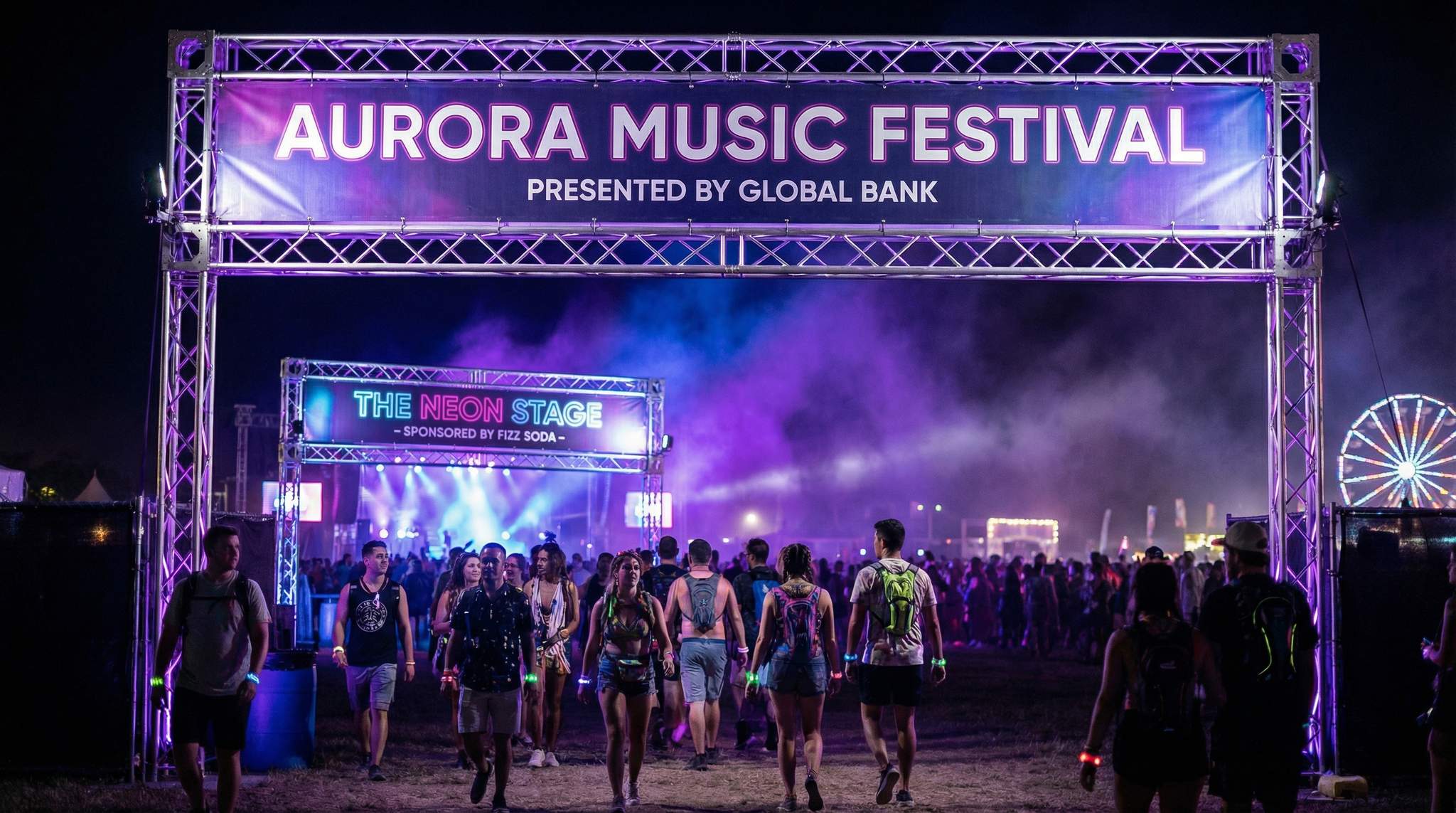
How It Works: A sponsor’s name is attached to a particular stage or area – for example, the “SponsorName Stage” or “SponsorName Zone”. The sponsor typically gets branding on the stage’s signage, mentions in the program and site maps, and sometimes a chance to design the look or offer interactive elements in that area. Unlike whole-festival naming, this doesn’t change what people call the festival itself; it simply labels one part of the experience.
-
Benefits: Stage and zone sponsorships are more flexible and lower-risk for festival organizers. You can have multiple sponsored stages, allowing several partners to participate without any one brand dominating the entire event. It’s also simpler to change or remove a stage sponsor year-to-year. If Brand Y sponsors the secondary stage one year and Brand Z picks it up the next, the festival itself isn’t thrown into confusion – you just update the signage and marketing for that stage. This modularity gives festival organizers much more control. A great example is major multi-stage festivals like Lollapalooza and Bonnaroo, where stages often carry sponsor names like Bud Light Stage or Honda Stage for the year. Attendees still refer to the “Bud Light Stage” during the festival, but the overall event remains “Lollapalooza” – the sponsor enhances the event rather than redefining it.
-
Revenue Potential: Selling naming rights for a stage can be a lucrative asset in your sponsorship catalog. Main stages (with the largest crowds and headliners) command premium prices, since a sponsor’s name will be seen by tens of thousands of attendees and mentioned in schedule line-ups (“Main Stage – 9:00 PM: Headliner (on the SponsorName Stage)”). Smaller stages or zones (like a DJ tent, a food court, or a VIP lounge) can also be sponsored at lower tiers. Over multiple stages and areas, these deals can add up to significant income. For instance, a festival might have a Vodafone Stage, a Red Bull Stage, and a Local Radio Station VIP Lounge all at once – each targeting different types of sponsors (telecom, beverage, media) and providing different levels of exposure.
-
Controlled Experience: From an operational standpoint, stage naming is more controllable. You maintain your festival’s main branding everywhere except those specific sponsor areas. There is less risk of audience confusion, because attendees understand that sponsors support individual parts of the event. Festival veterans are accustomed to hearing stage names like the “Pepsi Stage” or “Samsung Arena” – it’s an accepted norm. Crucially, if a sponsor’s involvement goes sour, it’s much easier to cover or rename one stage’s signage than to rebrand the entire festival on short notice.
Free Tool: Project Your Bar Revenue
Per-head spend benchmarks by event type turned into projected bar and food revenue, with a stock-mix estimate and gross-margin line. Free calculator.
-
Examples and Creative Integrations: Many festivals worldwide have leveraged stage sponsorships creatively. At some events, sponsors don’t just put their name on a stage – they program it. Red Bull has famously done this by bringing fully branded stages or domes to festivals, complete with their own sound system and artist line-up (sometimes called a “festival-within-a-festival”). This kind of activation can enhance the attendee experience (new attractions or themed stages) at the sponsor’s expense, a win-win if managed well. Another example is Vodafone’s stage at the Isle of Wight Festival in the UK, where the telecom sponsor not only named the stage but also boosted connectivity on-site (improving phone signal at the festival) – directly tying their product to a better festival experience. These cases show that stage sponsors can add real value beyond just a logo, when aligned with the festival’s content.
When executing stage sponsoring agreements, promoters must carefully match the corporate partner to the specific demographic of that area. For example, organizers often ask themselves: if a beer brand was sponsoring the perfect festival stage, which brand would fit that vibe? The answer dictates the pitch. A mainstream lager might be the ideal fit for a high-capacity main stage featuring pop headliners, whereas a local craft brewery aligns much better with an intimate indie or folk music tent. This strategic alignment ensures the partnership feels authentic to the audience rather than forced.
Beyond physical infrastructure, organizers can also package naming sponsorship around specific programming blocks. In the university market, for instance, understanding the pronite meaning in fest in college environments—short for “Professional Night,” where mainstream artists perform—reveals a highly lucrative asset. Brands frequently buy the sponsorship naming rights specifically for these high-traffic headline concerts, allowing them to dominate the most anticipated evening of a multi-day student event without needing to sponsor the entire festival.
While stage and zone naming rights are widely used and generally safer for your brand, they still require thoughtful execution. The next sections discuss how to price these sponsorships appropriately and how to keep your festival’s branding and operations running smoothly around sponsored names.
Pricing Naming Rights by Reach and Impressions
Whether it’s a title sponsor for the whole festival or a specific stage sponsor, pricing the deal correctly is crucial. The value of naming rights should be based on the reach, impressions, and the operational costs required to deliver the sponsorship benefits. In other words, you price it according to how many people will see the sponsor’s name (and how often), and what it will cost you to fulfil the agreement.
1. Audience Reach & Impressions: Start by estimating the exposure the sponsor will get:
* Entire Festival Naming: The sponsor’s name will be everywhere – on every poster, website mention, ticket, wristband, press release, and probably in media coverage. This could mean millions of impressions over the marketing cycle if your festival is large. For example, if 50,000 people attend and see the sponsor’s logo throughout the venue, and hundreds of thousands more see it online and in ads, the audience reach is massive. Pricing should reflect that dominant visibility. A whole-event naming deal often commands the highest price of any sponsorship tier because it’s essentially a blanket ad campaign and endorsement rolled into one. It’s wise to research comparables: look at similar-sized events or even sports venues for naming rights benchmarks. Big festivals might secure six- or seven-figure sums annually from title sponsors due to the scale of impressions delivered.
* Stage/Zone Naming: Here the reach is more segmented. Calculate roughly how many attendees visit or spend time at that stage/area. A main stage sponsor at a festival with multiple stages might still get exposure to most of the attendees (since big headliners draw the full crowd at night). In contrast, a smaller tent stage might only capture a portion of attendees interested in that genre. Use your attendance data: e.g., if an average of 5,000 people are watching performances at the “Sponsor X Stage” at any given time and programming runs 8 hours a day, that sponsor gets tens of thousands of attendee-hours of exposure each festival day. Don’t forget digital impressions too – every time the stage name is listed in your app, schedule, or mentioned on social media (“Caught an amazing set on the Sponsor X Stage!”), it’s added value for the sponsor. All these numbers help justify the sponsorship price in concrete terms.
No Hidden Fees, Just Honest Pricing
One all-inclusive fee covers the platform, payment processing, support, and every feature. Free events are always free. No setup costs, no surprises.
2. Media and Marketing Integration: Consider how prominently the sponsor’s name will feature in your marketing. A title-named festival likely includes the sponsor in your official festival logo lockup, social media handles or hashtags, etc., which multiplies impressions. Stage sponsors might get their logo on specific pages of your website (like the lineup page, next to that stage’s acts) and occasional shout-outs. If your festival is broadcast or live-streamed, a title sponsor might be mentioned by hosts or visible on-screen frequently, whereas a stage sponsor’s name might appear during certain artist segments or stage camera shots. The more integrated the name, the higher the value, and thus the higher the price you can command.
3. Operational Costs to Deliver: A critical but sometimes overlooked aspect of pricing is accounting for the costs you incur to activate the sponsorship:
* Changing the festival’s name to include a sponsor can be expensive in terms of design, printing, and labour. You may need to redesign logos, update banners and signs across the venue, overhaul your website and marketing materials, and coordinate with media partners to use the new name. These tasks take time and money. For instance, festival producers have found that a $100,000 title sponsorship might come with tens of thousands of dollars in rebranding costs – cutting significantly into the net income if not budgeted. Be sure to include these costs in the sponsorship fee or have the sponsor cover certain expenses directly (e.g. “Sponsor will provide on-site signage for the rebranded festival entrance”).
* For stage and zone sponsorships, operational costs are lower but still present. You’ll create sponsored stage banners or digital screen graphics, possibly rename the stage in your scheduling systems, and maybe give the sponsor hospitality or activation space near that stage. Calculate these costs (design, printing, extra infrastructure) and ensure the fee covers them. It could be as straightforward as a few hundred dollars for banners, or more if the sponsor expects a custom build-out or experiential booth next to the stage.
* Staff and Hospitality: Don’t forget the soft costs. Sponsors paying for naming rights often expect VIP treatment – free tickets, backstage access, or hospitality for their guests. Providing these has a cost (lost ticket revenue or catering expenses). Additionally, servicing the sponsorship (regular meetings, custom reports on performance, etc.) takes staff time. A common practice is to allocate a percentage (say 10-15%) of the sponsorship fee toward servicing costs. This ensures you’re not losing money fulfilling the sponsor’s needs.
4. Aligning Price with Value: Ultimately, naming rights pricing should match the value delivered to the sponsor. Savvy sponsors will look at your proposal and ask: How will this boost our brand or sales? Is the cost per impression reasonable? Be prepared to present data – for example, “Your brand will be seen by X attendees on-site and reached through Y million online impressions over 3 months of promotion, equating to $0.00Z per impression, which is competitive compared to standard advertising.” Also highlight qualitative value: association with the festival’s brand (e.g. “official energy drink of ___ Festival”) and exclusive perks (category exclusivity, speaking opportunities, etc.). Pricing by reach and impressions provides a rational baseline, but you can adjust for factors like prestige of the event, audience spending power, and the sponsor’s own goals (a sponsor might pay more if the partnership has high strategic importance for them).
5. Tiered Options and Negotiation: It’s wise to have a rate card and tiers prepared, but remain flexible. Perhaps you offer a discount for a multi-year naming rights deal (since a stable partnership benefits both sides and reduces your annual uncertainty). Or you might bundle a stage naming with other benefits (like a certain number of sponsored posts on your social media or on-site product sales rights) to increase the value – and justify a higher price. Use your operational cost analysis to set a firm minimum that covers expenses and delivers fair value, then negotiate up from there based on sponsor demand. In all cases, document exactly what the sponsor will get in terms of branding placements, mentions, and hospitality, so they know what they’re paying for and you can deliver on it.
By pricing naming rights based on data – attendance, marketing reach, and cost of delivery – you not only set a fair price but also build credibility with sponsors. It shows that your festival understands its audience and can offer a solid return on investment, which is key to closing and retaining these high-impact sponsorships.
Evaluating the True Value of Sponsorship Naming Rights
Before finalizing your rate card, remember that sponsorship naming rights extend far beyond physical banners and stage scrims. You are selling an association with your festival’s cultural cachet. When a brand purchases a naming sponsorship, they are acquiring a direct line to your audience’s lifestyle and loyalties. Therefore, your pricing model must account for intangible brand lift alongside hard impression data, ensuring that your top-tier packages reflect the true market value of your event’s community.
Smart Promo Codes & Presale Access
Create percentage or flat-rate discount codes with usage limits, date ranges, and ticket type restrictions. Plus unlock codes for private presales.
Structuring Naming Sponsorship Levels and International Packages
To maximize revenue, veteran promoters structure their inventory into distinct naming sponsorship levels. This tiered approach ensures you have offerings for various budget sizes while protecting the exclusivity of your top-tier partners. A standard hierarchy typically includes:
- Title Sponsor (Tier 1): The brand is integrated into the master event name. This level commands the highest premium and includes category exclusivity across the entire site.
- Presenting Sponsor (Tier 2): The event remains independent, but the partner is locked to the primary logo (e.g., “Summer Fest, presented by BrandX”).
- Stage and Asset Sponsors (Tier 3): Brands claim ownership of specific physical areas, such as the Main Stage, VIP lounges, or electronic music tents.
- Programming Sponsors (Tier 4): Brands underwrite specific experiences or timeframes, such as a sponsored headline night or a branded late-night afterparty.
When dealing with cross-border tours or multi-country festival brands, structuring sponsorship rights packages for an international music concert requires additional geographic scoping. Global brands may want to purchase international music concert sponsorship rights that cover a promoter’s entire portfolio across multiple continents. In these complex deals, organizers must clearly define whether the naming rights are global (the brand owns the stage name in every country the festival operates) or territory-specific (allowing the promoter to sell the same stage asset to a different regional brand in another country).
When developing comprehensive music festival sponsorship packages, promoters should look beyond just naming rights. The most lucrative sponsorships for music festivals often bundle a stage name with experiential footprint space, digital retargeting campaigns, and exclusive pouring or vending rights. By creating multi-tiered inventory, organizers ensure they can capture revenue from both global consumer brands seeking massive reach and endemic industry partners looking for targeted B2B networking opportunities on-site.
Furthermore, drafting comprehensive sponsorship rights packages for an international music concert demands strict attention to territorial exclusivity. A multinational brand may demand global category exclusivity, meaning local promoters cannot sign competing regional sponsors for the same tour stop. To navigate this, veteran organizers clearly delineate which assets fall under the global touring agreement and which remain available for local market monetization. This strategic division ensures that the overarching international partnership thrives without cannibalizing localized revenue opportunities.
What a Naming Rights Sponsor Looks For in a Pitch
Securing a dedicated naming rights sponsor requires a highly tailored pitch that goes beyond standard logo placement. A prospective naming sponsor is evaluating the long-term brand equity of your event. They want to see comprehensive audience demographic data, projected digital impressions, and a clear roadmap for how their corporate identity will seamlessly integrate with the festival’s culture. When pitching to a potential title or stage partner, organizers must emphasize category exclusivity, custom on-site activations, and the measurable ROI of being woven directly into the event’s daily vernacular.
Keeping the Festival Brand Clear (and Wayfinding Too!)
One golden rule of naming rights deals: never let a sponsorship name interfere with your festival’s branding or attendees’ ability to navigate the event. It’s a balancing act – you want to give sponsors visibility and credit, but not at the expense of clarity or the attendee experience.
Grow Your Social Following With Every Sale
Require social media follows, shares, or playlist adds to unlock presale access or special pricing. Turn every ticket purchase into audience growth.
-
Master Brand Legibility: Your festival’s name and image are its identity. Even with a title sponsor on board, maintain a style where the festival name is clearly distinguishable. Many events solve this by using a “presented by” format or a modest logo inclusion. For example, Australia’s Splendour in the Grass festival has major sponsors, but the official branding doesn’t morph into the sponsor’s logo; instead you’ll see “Splendour in the Grass, presented by [Sponsor]” in fine print on posters. This preserves the festival’s own brand recognition. If you do fully integrate the sponsor name, consider design techniques to keep the text readable – maybe the sponsor’s name is a prefix but in a different font or colour than the festival name. The key is that when people see your materials or merch, they instantly know it’s your festival, with the sponsor as a supporter, not the other way around.
-
No Conflict with Wayfinding: Clear navigation at a festival is critical for attendees’ enjoyment and safety. When sponsors name stages or zones, choose names that complement or at least do not confuse the directional signage. Avoid a scenario where people can’t find a stage because the name changed. A good practice is to incorporate the stage’s function or a consistent identifier alongside the sponsor’s name. For instance, “Main Stage – Powered by XYZ Corp” communicates both the location (Main Stage) and the sponsor, whereas simply renaming “Main Stage” to “XYZ Stage” might bewilder attendees used to the old name. Some festivals use numbering or cardinal directions for stages in addition to names (Stage 1, Stage 2, etc.), which can be very helpful on maps – if you have a Stage 2 sponsored by Company B, mark it clearly as “Stage 2 (Company B)” on maps and signs. This way, someone asking a volunteer where “Stage 2” is won’t be met with a blank look if the volunteer only knows it by the sponsor name.
-
Consistency and Duration: If possible, keep sponsored names consistent for the duration of each event (and even across years). Changing a stage name mid-festival because a sponsor pulls out – or swapping name every year – can confuse artists, crew, and fans. If you expect to rotate sponsors annually, consider using a dual name as mentioned or at least heavily publicising the new name in advance (“The Forest Stage will be known as the XYZ Stage in 2024!”). When a sponsor commits for multiple years, it helps consistency. Fans at Belgium’s Tomorrowland festival, for example, know that stages like the “Core Stage” or “Atmosphere Stage” might have presenting sponsors, but those core names remain year after year for familiarity.
-
Designing Signage and Maps: Work closely with your event production and design teams when implementing sponsor names. Signage should be legible from a distance and not too cluttered. Often the sponsor’s logo can appear alongside the stage name, rather than replacing it. For example, a directional sign might say “? Beach Stage sponsored by BeachCorp” in smaller text, which keeps navigation intuitive. Also, ensure that any abbreviations or nicknames are understood by staff – if your internal radio calls the backstage of “SponsorX Stage” simply “Stage Blue,” that’s fine, but front-facing materials should stick to one naming scheme to avoid mix-ups with attendees.
-
Protecting the Atmosphere: Remember that part of keeping your brand clear is maintaining the festival’s intended atmosphere. A loud corporate branding could clash with a carefully curated aesthetic. Some boutique festival organizers only accept sponsorship if the branding is subtle and in line with the festival theme (e.g., rustic wooden sponsor signage at a folk festival instead of a glaring neon logo). Integrate sponsors tastefully so that their presence feels like a natural part of the event, not an intrusion. This ensures that your festival’s brand – which includes its look and feel – remains intact. Your master brand also extends to values and messaging; if your festival is about sustainability, for example, keep that narrative front and center even if a big sponsor comes in. Don’t let a sponsor rename things in a way that undermines your core messages (like a “Gas Guzzler Main Stage” at an eco-conscious event would be a clear mismatch).
In short, any naming rights you grant should add to the festival experience, not detract from it. By keeping your festival’s name prominent and ensuring sponsor names are used in a logical, attendee-friendly manner, you keep control of your event’s identity and operations.
Crisis Management and Ethics: Exit Clauses Matter
In the excitement of signing a big sponsorship deal, it’s easy to overlook the worst-case scenarios. But seasoned festival producers know that names carry power and baggage – if something goes wrong, you need a way out. That’s where crisis and ethics exit clauses in your naming rights contracts come in, acting as a safety net for your festival’s reputation and financial security.
-
Why Have an Exit Clause? An exit (or termination) clause allows you to break the sponsorship agreement under certain conditions without severe penalty. For naming rights deals, it’s wise to include specific triggers that would let you remove the sponsor’s name from the event. One reason is to guard against a sponsor-related crisis: if the sponsor’s brand faces a scandal, legal trouble, or public backlash, the festival must have the option to swiftly distance itself. Festivals have faced scenarios where a sponsor’s actions suddenly became objectionable to the audience or artists. For example, in 2024, SXSW (South by Southwest) festival endured public criticism and artist boycotts due to a controversial sponsor partnership (in that case, a sponsor’s political affiliations sparked protest), as reported in Time Magazine’s analysis of the withdrawals. An event doesn’t want to be stuck promoting a sponsor whose reputation is in freefall – an exit clause makes it possible to pull the sponsor’s name off stages, signage, and marketing in such a crisis.
-
Ethics and Values Conflicts: Similarly, include terms addressing if either party violates certain ethical standards or public values. If your festival preaches inclusivity and your title sponsor suddenly is accused of discriminatory practices, you need the freedom to act. Conversely, sponsors may want reassurance that the festival won’t tarnish their name – for instance, if the festival were to be involved in something like security failures or an artist controversy, the sponsor might seek to dissociate. These clauses should ideally work both ways (mutual termination rights) when core values or reputational damage are at stake. Crafting a balanced clause shows professionalism and foresight, which serious sponsors will understand.
-
Define the Process: In the contract, clearly define what constitutes cause for invoking the exit clause. It could be wording like “Sponsor actions that bring the event into disrepute” or reference specific scenarios (e.g., major crimes, fraud charges, public boycotts). Also outline the financial consequences: usually, if the sponsor is at fault (say their scandal caused the break), the festival keeps the fee already paid, or only has to return a prorated amount. If the festival is canceling the deal for reasons not the sponsor’s fault, you might have to return funds. Define whether the sponsor’s name will be removed from all materials and announcements immediately upon termination and who bears the cost for removing physical signage or reprinting schedules. The more detail you put in upfront, the less legal wrangling if a crisis hits.
-
Backup Plans: Have a contingency for replacing the sponsor if possible. This isn’t always feasible on short notice, but it’s worth considering a plan B. For instance, if you had a title sponsor and they exit, can your festival revert to its original name or a neutral “festival” moniker without too much confusion? (One reason not to entirely drop your own name from the branding, as mentioned earlier.) For a stage sponsor, maybe you have a secondary sponsor who can step in, or you at least communicate to attendees that the stage will simply be called something generic for now. Importantly, coordinate with your PR team on a crisis communication plan – you may need to explain to media and fans why a sponsor’s name disappeared from the event. Transparency and honesty go a long way in these situations and can even earn respect if you acted to uphold ethical standards.
-
Real-World Lessons: History has shown that world events and social issues can suddenly make a previously innocuous sponsor look bad. Festivals in Europe and Asia have had to cut ties with sponsors over issues like environmental damage (imagine a climate-focused festival dropping a sponsor accused of pollution) or political unrest (sponsors linked to controversial regimes or policies). By including a well-defined exit clause, you’re not dooming the partnership – you’re simply preparing for the unexpected. It’s akin to having insurance: you hope not to use it, but it’s there for peace of mind. Ensure both your team and the sponsor’s team discuss these clauses openly during negotiation; it sets the tone that your festival takes its values and reputation seriously, and that you expect your partners to do the same.
In the end, the goal is to form naming rights partnerships that are positive, lucrative, and long-lasting. But being ready for crisis scenarios is part of professional risk management. It shows that you as a festival organizer are seasoned and considerate of all outcomes, which ultimately protects the festival’s legacy and the sponsor’s investment.
Conclusion
In the world of festival sponsorship strategies, naming rights deals are among the most potent tools at a producer’s disposal – but also the most sensitive. Whole-event naming rights offer unparalleled exposure and funding yet are rare because they can alter how the world sees your festival. Stage and zone naming rights are more common, letting you pepper sponsor names throughout your event in a controlled way that usually preserves your identity. Both strategies rely on carefully balancing the sponsor’s objectives with the festival’s branding and attendee experience.
A veteran festival organizer will advise: names are power – handle with care. A sponsor’s name attached to your festival or stages can amplify your event’s profile and deepen the sponsor’s engagement, but every naming deal should be approached thoughtfully. That means pricing it based on real reach and costs, integrating the sponsor in a way that enhances rather than confuses, and always having contractual protections for when things go off-script. When done right, naming rights partnerships – whether for the whole festival or just a beloved stage – can create a synergy between brand and event that audiences embrace. When done poorly, they can dilute your brand or lead to logistical and PR nightmares.
Ultimately, keep sight of the festival’s vision. Choose naming partners that align with your audience and values, negotiate clearly and fairly, and never sacrifice the attendee experience for a sponsorship dollar. By using the strategies and precautions outlined above, the next generation of festival producers can harness the power of naming rights confidently and responsibly, elevating their events to new heights while keeping the soul of the festival intact.
Frequently Asked Questions: Naming Sponsorships
How do you determine the right naming sponsorship levels for a new festival?
When establishing naming sponsorship tiers for a debut event, start by evaluating your physical and digital real estate. Create distinct levels—such as title, presenting, stage, and activation tiers—based on projected foot traffic and media impressions. Offering clear sponsorship naming rights at various price points allows you to attract both marquee global brands and local partners without diluting the core festival identity.
What is typically included in sponsorship rights packages for an international music concert?
For cross-border tours or global festival brands, international music concert sponsorship rights usually encompass multi-territory stage naming, global broadcast integration, and standardized VIP hospitality across all tour stops. Promoters must carefully structure these packages to balance global brand consistency with local market exclusivity.
Can you sell naming sponsorship for specific days or nights of a festival?
Yes, day-specific or event-specific takeovers are highly effective. For example, in the collegiate market, organizers leverage the “pronite” (professional night) by selling exclusive naming rights just for that headline concert. This allows a brand to own the peak attendance window without paying for a full-weekend whole-event sponsorship.
How do you identify the ideal naming rights sponsor for a new event?
Finding the right naming rights sponsor involves looking for brands whose target demographic perfectly overlaps with your attendee profile. The ideal naming sponsor often has a proven track record of investing in experiential marketing and is seeking deep, long-term cultural association rather than just short-term lead generation.
What should be included in standard music festival sponsorship packages?
Effective music festival sponsorship packages typically combine physical branding (like stage or zone naming rights) with experiential activations, digital marketing integration, and hospitality perks. The most successful sponsorships for music festivals are highly customized, allowing brands to engage directly with attendees through interactive booths, sponsored lounges, or exclusive product integrations rather than relying solely on logo placement.
Why are brands increasingly interested in sponsoring festivals?
Brands are drawn to sponsoring festivals because live events provide unparalleled experiential marketing opportunities. Instead of passive media consumption, festival sponsorships allow companies to engage directly with a captive, enthusiastic audience. For organizers, this means you can pitch your event not just as an advertising channel, but as a vital cultural touchpoint where corporate partners can build genuine loyalty and affinity.
How do territorial exclusivity clauses impact international concert sponsorships?
When a global brand secures international music concert sponsorship rights, they typically require category exclusivity across all tour stops. Promoters must carefully draft their contracts to ensure local venue partners or regional co-promoters do not accidentally sell secondary naming assets to a competing brand in that specific country. Clear communication of these global rights packages is essential for seamless cross-border event production.
What are naming rights in the context of event production?
In event production, naming rights refer to a premium sponsorship agreement where a brand purchases the exclusive right to append or integrate their corporate name into the official title of a festival, stage, or specific venue zone. This financial transaction grants the sponsor maximum visibility and deep cultural association with the event’s brand.
What is a title sponsor in festival production?
A title sponsor is the highest level of corporate partner for an event, where the sponsor’s name is integrated directly into the festival’s official name (e.g., “The [Brand] Music Festival”). This tier offers the maximum possible brand exposure and category exclusivity, but requires the promoter to share master brand control with the sponsoring corporation.
What are some common naming rights sponsorship examples?
Prominent naming rights sponsorship examples include whole-event takeovers like the Corona Capital festival, or stage-specific integrations such as the Bud Light Stage at Lollapalooza. Other examples include branded VIP lounges, sponsored electronic music tents, and fully programmed brand domes that operate as a “festival-within-a-festival.”
What types of companies typically sponsor music festivals?
The most active companies that sponsor music festivals usually operate in sectors with high consumer acquisition costs, such as telecommunications, automotive, financial services, and global beverage conglomerates. These corporate partners leverage live events to bypass traditional advertising fatigue, utilizing experiential activations to build direct, emotional connections with attendees.