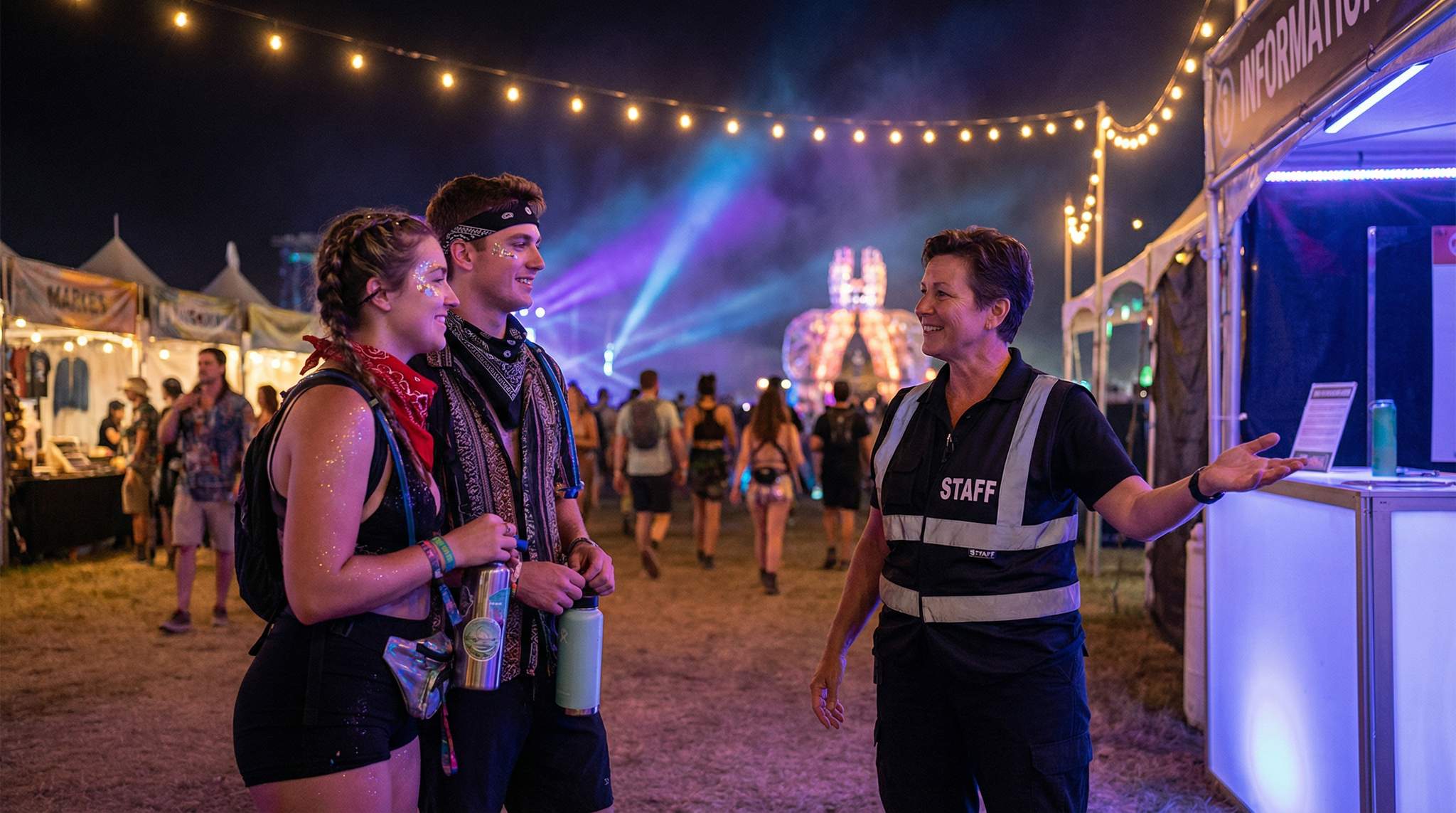
Security at festivals isn’t just about bag checks and barricades – it’s about welcoming attendees and keeping them safe without dampening the fun. Modern festival producers are reimagining security as a part of the hospitality team, not separate from it. The goal is to make safety measures almost invisible in a good way – attendees should feel protected and cared for, not policed. With the right approach, security staff become ambassadors of safety, creating an environment where safety feels safe.
The difference is tangible: a stern guard scowling at the crowd puts everyone on edge, whereas a friendly festival security team that greets guests with a smile can set a positive tone. Consider how attendees reacted when a security guard was filmed happily dancing at a UK drum & bass festival – the clip went viral with people calling her an “absolute legend” and the “best security” according to viral footage covered by Newsweek. This goes to show that approachable, human security not only makes guests feel at ease but also enhances the festival’s vibe. From boutique folk gatherings to mega music festivals, treating security as part of the guest experience is a winning strategy around the world.
The Strategic Framework for Hospitality and Event Security Integration
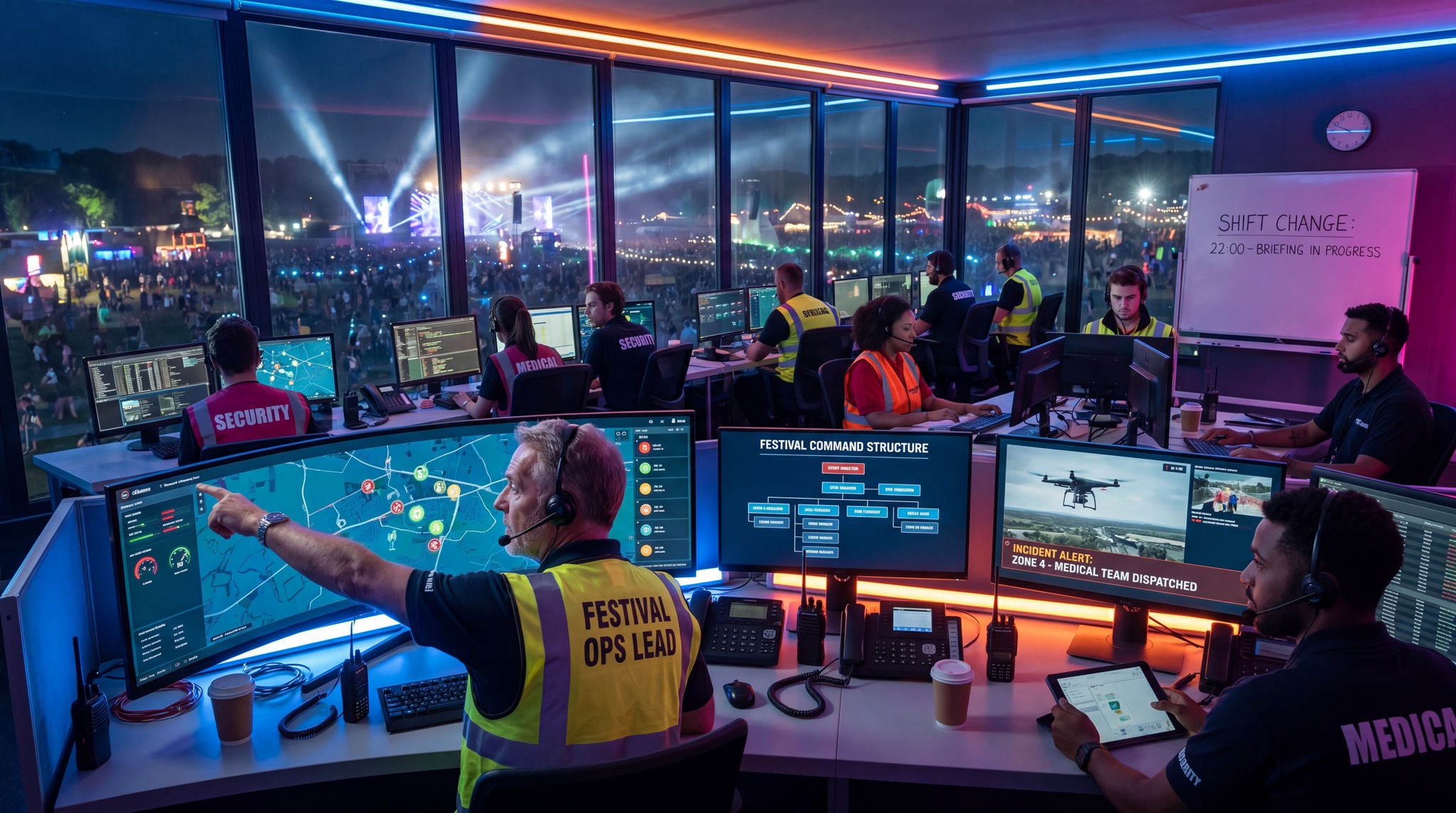
Achieving true hospitality and event security integration requires more than just telling guards to smile. It demands a top-down operational shift where safety protocols are woven directly into the guest experience strategy. For festival producers, this means bringing security directors into early planning meetings alongside guest services and site operations managers. By aligning these departments from day one, organizers can design entry gates, VIP areas, and main stage barricades that prioritize both robust protection and a welcoming atmosphere. This holistic integration ensures that every safety measure—from bag checks to perimeter patrols—feels like a natural extension of the event’s customer service.
Training Security Staff in Hospitality and Soft Skills
A well-trained team is the cornerstone of hospitable security. Beyond basic crowd management, festival security staff need training in soft skills like conflict de-escalation, consent awareness, and what one might call “pin-drop room” etiquette. These skills ensure that even during tense moments, staff act with calm, compassion, and respect. Leading festival organisers invest in thorough training sessions (often with scenario role-playing) before the event, covering everything from talking down an agitated guest to politely conducting a pat-down search. By equipping security personnel with hospitality mindsets, incidents are resolved more peacefully and attendees walk away feeling the staff were helpers, not intimidators.
Free Tool: Size Your Festival Site
Zoned capacity planning for arena, campsite, parking and entry lanes — against UK Purple Guide and NFPA density standards. Finds your bottleneck zone.
Hospitality Crowd Control: Managing Flow with a Smile
Implementing hospitality crowd control shifts the focus from rigid barrier enforcement to proactive, guest-centric movement management. Instead of simply barking orders at bottlenecks, trained festival security teams use clear, friendly directional guidance to keep foot traffic moving safely. For example, when a main stage empties out, staff practicing this approach might use illuminated batons and upbeat verbal cues—like “Thanks for joining us, folks! Quickest exit to the food vendors is right this way!”—to naturally guide the masses. This method of crowd management reduces crush risks and frustration, proving that effective perimeter and flow control can still feel like a premium guest service.
Conflict De-escalation as First Response
Instead of meeting aggression with aggression, festival security should meet tension with de-escalation. This means making calm dialog the first tool out of the toolkit. For example, if two attendees start arguing, a security team member trained in de-escalation will step in with a friendly but firm approach: open body language, a calm tone, and words aimed at defusing anger. A phrase as simple as “Hey folks, let’s take it easy – what’s going on and how can I help?” can prevent a fight from erupting. At large events like Glastonbury or Coachella, security supervisors emphasise mellow crowd management – many incidents are settled by talking and active listening long before they require any physical intervention. By prioritising verbal resolution and empathy, incidents get resolved quickly without turning into show-stopping problems, a strategy emphasized in Churchill Support Services’ guide to festival safety. Training in conflict resolution and anger management pays off: staff learn to identify the underlying issue (like someone upset about a spilled drink or a misplaced item) and address it or guide the person to a solution. This approach not only avoids unnecessary use of force, it also earns attendee goodwill – people remember that the staff treated them decently even when they were upset.
Planning a Festival?
Ticket Fairy's festival ticketing platform handles multi-day passes, RFID wristbands, and complex festival operations.
Consent and Respect in Every Interaction
Consent isn’t just a term for attendees – it’s equally crucial in how staff interact with guests. Festival security must be mindful and respectful whenever they touch or closely approach someone. For instance, if a bag search or pat-down is needed, asking permission and explaining the reason can turn an invasive moment into a respectful one. A simple script like “Is it okay if I check inside your bag? It’s for everyone’s safety.” gives the guest a sense of control and understanding. This extends to critical situations too: if a concert-goer is intoxicated or needs medical help, staff should explain what’s happening (“We’re going to help you over to the first aid tent, alright?”) rather than grabbing or ordering them abruptly.
Consent culture training is also becoming standard. Staff learn about sexual harassment awareness, bystander intervention, and how to handle reports of inappropriate behavior sensitively. They must appreciate that some guests – especially women or minority attendees – may already feel vulnerable. A trauma-informed, empathetic approach is key. As one industry analysis noted, security personnel and volunteers should be trained to understand harassment dynamics and trauma-informed response. At some festivals, organisers now deploy specialized harassment liaison officers (wearing “safe to talk” badges) separate from the main security team, so victims of harassment can reach out to a clearly identified safe staff member, a practice highlighted in industry reports on festival harassment. The bottom line: every interaction should convey respect for personal boundaries. Whether it’s getting consent before a search or responding to a distress call, the message to attendees is “Your dignity matters here.”
“Pin-Drop Room” Etiquette: Handling Sensitive Situations
Even in the middle of a loud, busy festival, there are moments and places where security needs to behave as if they’re in a quiet library – where gentleness and discretion are paramount. This is the idea behind “pin-drop room” etiquette: acting with such calm and control that you could hear a pin drop. In practical terms, this means speaking softly, moving slowly and deliberately, and keeping a composed demeanor when dealing with sensitive situations. For example, if a guest is having a panic attack in a crowded tent, the security staff should create a bubble of calm around them – using quiet, reassuring words and minimal fuss as they guide the person to a calmer environment. If there’s a medical emergency or an upset individual in a “chill-out” or first aid area, staff should avoid shouting or dramatic motions; instead, they communicate clearly but gently so as not to startle others. The entire security team can rehearse this etiquette: how to lower voices, control body language, and essentially bring calm into chaos. This approach not only helps the person in distress feel safe, but it also prevents drawing unwanted attention from onlookers. It’s the opposite of the stereotype of a blaring security intervention – sometimes the best tactic is a quiet and caring presence that diffuses tension by its mere demeanor.
Distinct Teams for Security Screening vs. Guest Services
Another practical way to make safety feel welcoming is to separate the “guard” functions from the “guide” functions among your staff. In many successful festivals, the crew that handles bag searches, ID checks and rule enforcement is a different subgroup from those who roam the grounds helping attendees. By creating clearly defined roles, each team can focus on excelling in their approach.
Turn Fans Into Your Marketing Team
Ticket Fairy's built-in referral rewards system incentivizes attendees to share your event, delivering 15-25% sales boosts and 30x ROI vs paid ads.
Security screening staff (the bag-checkers, gate crew, and perimeter patrol) can concentrate on upholding policies firmly but fairly. Meanwhile, a dedicated guest services or welfare team can be branded in a more approachable way – different coloured shirts, friendly logos, or titles like “Festival Support” on badges. This branding matters: attendees can easily identify helpers versus enforcers. It also signals that not every person in a high-visibility vest is there to bust you; some are there to assist you. For instance, Insomniac Events (organisers of EDC and other large raves) deploy a special team called “Ground Control” in bright purple outfits who are separate from security. Their only job is to wander the festival checking on people and offering help and water, as detailed in Houston Press coverage of EDC’s safety teams. They greet anyone who looks troubled with a warm “Are you having fun?” and are trained to respond if someone needs medical or emotional support, ensuring attendees have a safe resource. This kind of friendly presence hugely improves the atmosphere – attendees know there are staff who won’t judge or punish them for seeking help.
Likewise, many UK festivals pair hired security with volunteer stewards or “welfare teams” who focus on guest well-being. At Boomtown Fair and Shambala in England, for example, welfare tents staffed with trained volunteers provide a refuge for anyone feeling overwhelmed, separate from security personnel. And at the iconic Burning Man event in Nevada (though not a traditional festival), volunteer “Black Rock Rangers” patrol the grounds in khaki uniforms, acting as mediators and guides rather than police. They are distinctly branded and trained to resolve issues through conversation, deferring to law enforcement only when absolutely necessary. The wisdom here is clear: when people know who to turn to for help (and trust they won’t get in trouble for it), safety issues surface and get solved sooner. By dividing roles, you prevent situations where a guest in need hesitates to approach staff because they’re not sure if they’ll be treated like a suspect.
Need Festival Funding?
Get the capital you need to book headliners, secure venues, and scale your festival production.
Structuring Specialized Festival Security Teams
Beyond just separating guards from guides, elite event producers often divide their festival security teams into highly specialized units. For example, you might deploy a dedicated perimeter response unit, a backstage access control squad, and a roaming rapid-response team. By assigning specific operational zones, each unit becomes intimately familiar with their area’s unique crowd dynamics and potential hazards. This modular approach to event safety allows organizers to scale their security presence dynamically, shifting resources from the main stage to the campgrounds as the event schedule dictates.
Unique Considerations for Music Festival Security
When planning security for music festivals, producers face distinct environmental challenges that differ from standard trade shows or county fairs. High-decibel audio, multi-stage crowd surges, and complex backstage artist compounds require specialized operational tactics. In these dynamic settings, safety personnel must rely heavily on visual communication, advanced crowd-flow modeling, and rapid-response protocols tailored to live music environments. By adapting hospitality-driven strategies to the specific demands of a concert setting, organizers ensure that even the most high-energy crowds remain safe and well-managed.
Sourcing Local Festival and Fair Security Partners
For regional events, building effective festival security teams often means partnering with local contractors who understand the community dynamic. Whether you are organizing a massive multi-day music event or seeking reliable festival and fair security in Wichita, KS, or similar mid-sized markets, local knowledge is invaluable. Regional security vendors often have established relationships with local municipal law enforcement and emergency services, which streamlines the permitting and planning process. When vetting these local partners, festival producers should ensure the vendor’s training aligns with the hospitality-first approach. It is not enough to simply hire bodies to man the barricades; organizers must work closely with local firms to integrate them into the event’s specific culture, ensuring that even temporary or locally contracted staff embody the same welcoming, de-escalation-focused mindset as the core production team.
When evaluating regional providers—whether you are booking specialized festival security teams for a massive electronic dance music event or coordinating general fair security in the Midwest—it helps to request case studies of their past crowd management deployments. Ask potential vendors how their guards handle high-stress bottlenecks and whether they supply dedicated supervisors who understand the nuances of live event production. A well-structured local partnership ensures that your safety personnel are not just filling a quota, but actively contributing to the operational success of the show.
Smooth Entry With Mobile Check-In
Scan tickets and manage entry with our mobile check-in app. Supports photo ID verification, real-time capacity tracking, and multi-gate coordination.
Recruiting and Retaining Top-Tier Festival Security Staff
Finding the right personnel to execute a hospitality-driven safety plan requires a strategic approach to hiring. When building your roster of festival security staff, look beyond standard guard cards or basic crowd control certifications. The best event producers actively recruit individuals with backgrounds in customer service, hospitality, or even education, as these professionals naturally possess the soft skills required for de-escalation and empathetic communication. To retain these high-quality team members season after season, organizers must offer competitive compensation, clear advancement pathways (such as promoting standout guards to specialized rapid-response or welfare liaison roles), and a supportive work environment. Providing catered meals, adequate break areas away from the noise, and recognizing exceptional performance during nightly debriefs ensures your safety personnel feel valued, which directly translates into better treatment of your attendees.
Warm Communication: Scripts for Common Scenarios
Even with great training and role separation, the heat of the moment can make words come out wrong. That’s why many seasoned festival organisers prepare scripts and phrases for security and support staff to use in typical situations. Having a script doesn’t mean sounding robotic – it means staff have a rehearsed, polite response ready when facing a drunk guest or a rule-breaking camper, even under stress. The tone should always stay warm, patient, and respectful. Here are a few examples of common situations and how a “security-as-hospitality” approach might sound:
- Entrance Screening (prohibited item): “Hi there! I’m sorry, but we can’t allow that item inside the festival for safety reasons. I know it’s a bummer, but we have a bin where you can leave it, or I can help you secure it elsewhere. Thank you so much for understanding – we want to make sure everyone stays safe.”
- Asking an Aggressive Guest to Calm Down: “I can see you’re upset. Let’s step over here for a minute and talk, okay? We want to sort this out for you. I’m here to help – what can we do to make this right?”
- Assisting Someone Who Looks Unwell: “Hey, I just want to make sure you’re doing alright. Would you like some water or to sit down for a moment? There’s a quiet tent just over there. I can walk with you – no rush at all.”
- Addressing Unwanted Touching or Harassment: (To the person reporting) “I’m so sorry that happened to you. Thank you for telling me – you’re safe now and we take this seriously. If you’re comfortable, we can move to a private area to talk about what happened, and we’ll figure out the next steps together.” (To the accused or offender, if appropriate) “Hey, I need you to come with me away from the crowd for a moment.” (said firmly but without yelling, to avoid escalating the tension further in public.)
- Ejecting a Rule-Breaker: “Unfortunately, what you’ve been doing breaks our festival rules and we have to ask you to leave for everyone’s safety. I understand you’re frustrated, but we’ll walk you out calmly. Our goal isn’t to ruin your time – it’s to keep everyone here safe. Thank you for cooperating.”
These scripted approaches swap stern commands for polite requests and empathy. Notice the themes: apologising when denying requests, explaining the “why” behind rules, offering help or options, and maintaining the person’s dignity. By standardising friendly language, you reduce the chance that a staff member will snap or say something unhelpful under pressure. Of course, every situation is unique, but having these guiding words in mind keeps interactions consistent and on-brand for your festival. It’s a form of customer service – and festivals like to remind their teams that attendees are customers and community members, not adversaries. Keeping the tone warm can mean the difference between an incident that ends with a “thank you” versus one that ends with an angry complaint.
Nightly Debriefs: Learn and Improve Each Day
A multi-day festival offers a golden opportunity that single-day events don’t: the chance to learn and course-correct overnight. Smart festival management sets aside time after each day (or each shift) for the security and guest services teams to debrief. This is when you review any incident reports, radio logs, and even body-cam footage if your security uses cameras. The aim is to spot what went well and what could be handled better tomorrow. For example, if staff had an encounter where a guest felt disrespected, the team can discuss how it might be handled with a warmer touch next time. Conversely, if a particular approach defused a tricky situation (say, a guard successfully calmed an angry VIP guest), that can be highlighted as a best practice for everyone to emulate.
Coaching in real time like this keeps improvements rolling. Some festivals have a policy of nightly all-hands meetings for security supervisors to swap notes and reinforce the hospitality mindset for the next day. If body cameras recorded a tense altercation, watching the clip as a team (in a private, blame-free discussion) can reveal subtle cues – maybe an officer’s tone was unintentionally harsh, or maybe a guest responded positively when a guard knelt down to talk at eye level. These insights are invaluable for training. Over the course of a weekend festival, these micro-adjustments make a noticeable difference: by the final day, the security crew is often operating more smoothly and in sync with the crowd’s needs. The debriefs also show the team that management cares about their performance and growth, which boosts morale. Remember, the quest for a hospitality-driven approach to security is ongoing – every event is a chance to refine the art of keeping people safe and happy at the same time.
Safety should feel safe – that’s the underlying principle. By training your staff in hospitality, dividing their roles wisely, giving them the words to handle tricky situations, and constantly learning from each day’s events, you create a festival environment where security isn’t scary. Instead, it’s part of the customer service ethos. When done right, attendees barely notice the “security” because they’re too busy feeling comfortable and cared for. They’ll remember that your event had a positive vibe, even when issues arose. As a veteran festival producer will tell you, achieving that balance is no easy feat – but it’s incredibly rewarding. After all, a festival is about joy and community, and nothing should undermine that – not even safety protocols.
Free Tool: Project Your Bar Revenue
Per-head spend benchmarks by event type turned into projected bar and food revenue, with a stock-mix estimate and gross-margin line. Free calculator.
Frequently Asked Questions
What is the hospitality approach to festival security?
The hospitality approach reimagines security staff as ambassadors of safety who welcome attendees rather than just policing them. This strategy focuses on making safety measures feel invisible and ensuring guests feel protected and cared for through friendly interactions, soft skills, and approachable demeanor.
What soft skills training do festival security guards need?
Festival security staff require training in conflict de-escalation, consent awareness, and calm communication techniques. Leading organizers use scenario role-playing to teach staff how to resolve incidents peacefully, ensuring they act as helpers rather than intimidators during tense moments or crowd management situations.
How should security handle aggressive festival attendees?
Security personnel should meet tension with de-escalation rather than aggression. This involves using open body language, a calm tone, and active listening to identify the underlying issue. Verbal resolution is prioritized to settle disputes quickly before they require physical intervention or ejection.
What is pin-drop room etiquette for festival security?
Pin-drop room etiquette involves security staff acting with extreme calm and discretion during sensitive situations, such as medical emergencies or panic attacks. Staff speak softly, move slowly, and create a bubble of calm to diffuse tension without drawing unwanted attention from the surrounding crowd.
Why separate festival security screening from guest services?
Separating guard functions from guide functions allows specific teams to focus on enforcement while others prioritize attendee welfare. Distinct branding, like different colored shirts, helps guests identify approachable support staff for help without fear of judgment, ensuring safety issues are reported and solved sooner.
How can festival security conduct respectful bag checks?
Security staff should ask for permission and explain the safety reason before touching a guest or their property. Using a script like asking if it is okay to check inside a bag for everyone’s safety gives attendees a sense of control, understanding, and dignity during the search.
What are festival welfare teams and what do they do?
Welfare teams are distinct groups, often volunteers, dedicated to guest well-being rather than rule enforcement. Examples include Insomniac’s Ground Control or Burning Man’s Black Rock Rangers, who roam grounds offering water, emotional support, and a non-judgmental resource for attendees in distress.
How can organizers improve security performance during a festival?
Conducting nightly debriefs allows teams to review incident reports and body-cam footage to course-correct immediately. Managers can identify successful de-escalation tactics or areas needing a warmer approach, providing real-time coaching to ensure the security team operates more smoothly and empathetically each day of the event.
How do organizers select the right festival security teams for regional events?
When sourcing security for regional gatherings, such as a county fair or a mid-sized music festival, organizers should look for local vendors with strong community ties and a willingness to adopt a hospitality-first mindset. Vetting these partners involves reviewing their de-escalation training and ensuring they can seamlessly integrate with the event’s core guest services staff.
How does hospitality crowd control differ from traditional methods?
Hospitality crowd control focuses on proactive, guest-centric movement management rather than rigid barrier enforcement. Instead of shouting orders at bottlenecks, festival security teams use friendly, clear directional guidance and upbeat verbal cues to safely manage foot traffic, reducing crush risks while maintaining a welcoming atmosphere.
How should organizers structure their festival security teams?
Organizers should structure their festival security teams by dividing them into specialized units, such as perimeter control, backstage access, and roaming rapid-response squads. This modular approach allows staff to master specific operational zones and enables producers to dynamically shift safety resources based on crowd flow and event schedules.
What qualifications should organizers look for when hiring festival security staff?
Beyond standard licensing and crowd management certifications, organizers should prioritize candidates with strong interpersonal skills, customer service experience, and a proven ability to remain calm under pressure. Hiring personnel who naturally align with a hospitality mindset ensures that safety protocols are enforced respectfully and effectively.
What are the key benefits of hospitality and event security integration?
Hospitality and event security integration aligns safety protocols with the overall guest experience. By merging customer service training with crowd management, festival organizers reduce attendee friction, lower the rate of physical altercations, and foster a welcoming environment where safety measures enhance rather than detract from the event’s atmosphere.
What are the unique challenges of planning security for music festivals?
Planning security for music festivals involves managing high-decibel environments, multi-stage crowd dynamics, and complex backstage access control. Organizers must deploy specialized personnel trained in visual communication and rapid response to handle the unique energy of live music events while maintaining a hospitable, guest-centric atmosphere.