Festival Security Tone: Firm, Friendly, and Country
(Bring the Warmth of Rural Hospitality to Security)
Every country music festival thrives on a welcoming atmosphere, but safety must never be compromised. The challenge is striking a balance between being firm with rules and friendly in manner, all while adding a dash of country charm. Festival producers around the world have learned that security culture starts at the gate – the moment attendees arrive, the tone is set. A security team that embodies polite rural hospitality yet remains authoritative can make guests feel both safe and warmly welcomed. This approach has turned first-time attendees into lifelong fans and prevented countless incidents through positivity and respect.
When designing security for festivals, organizers must recognize that operational safety and guest experience are deeply intertwined. Effective music festival security goes beyond simply deploying guards at the perimeter; it requires a holistic strategy that integrates crowd management, emergency preparedness, and customer service. Whether you are producing an intimate boutique gathering or a massive multi-day event, establishing the right security framework early in the planning phase is critical to protecting both your attendees and your brand’s reputation.
Train Teams in De-escalation, Consent, and Rural Hospitality
A well-trained security team is the backbone of a safe and enjoyable festival. Top country music festivals invest heavily in training programs that cover conflict de-escalation, consent awareness, and good old-fashioned rural hospitality.
Free Tool: Size Your Festival Site
Zoned capacity planning for arena, campsite, parking and entry lanes — against UK Purple Guide and NFPA density standards. Finds your bottleneck zone.
-
De-escalation Training: Security personnel should be adept at calming tense situations before they explode. This involves teaching them techniques like active listening, empathetic body language, and maintaining calm under pressure. For example, at Boots and Hearts Festival in Canada, security teams run through role-playing exercises where they practice diffusing arguments between attendees. By learning to speak calmly, keep an open posture, and offer solutions, they can prevent fights or panicked crowds before official intervention is needed.
-
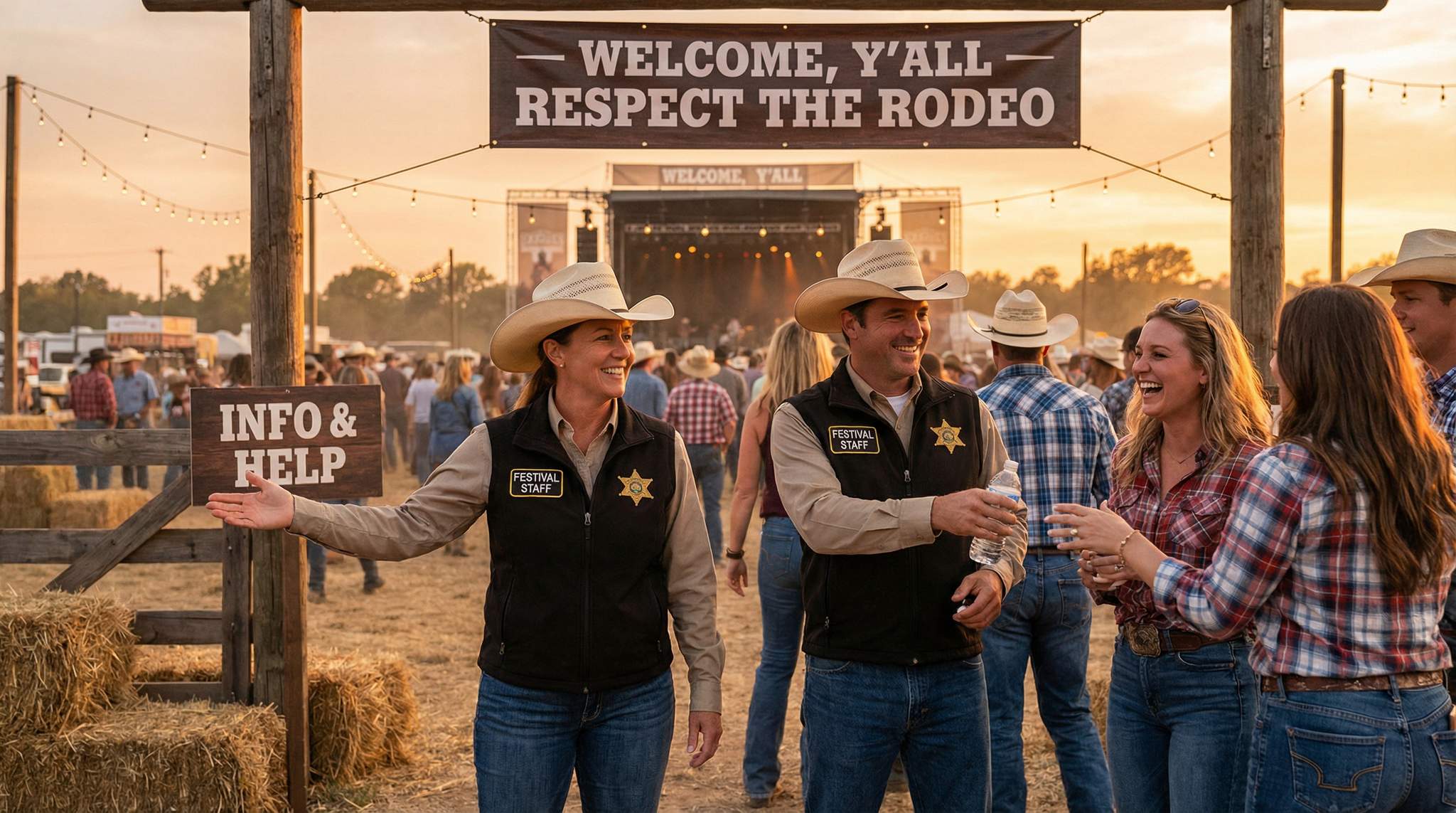
Consent and Patron Safety: Every festival producer knows that protecting guests from harassment or unwanted contact is as important as protecting them from physical dangers. Training in consent means security staff recognise situations where someone might feel unsafe – such as an attendee being harassed – and know how to intervene appropriately. Many festivals partner with organisations like Safe Gigs for Women in the UK or Our Music My Body in the US to educate staff on handling disclosures of harassment or assault. C2C: Country to Country Festival (which tours the UK and Europe) introduced a “Respect the Rodeo” initiative in their security briefings – a playful country-themed reminder that everyone should treat each other with respect. Security personnel there are trained to respond supportively to anyone reporting discomfort, ensuring that issues are handled with discretion and care.
Planning a Festival?
Ticket Fairy's festival ticketing platform handles multi-day passes, RFID wristbands, and complex festival operations.
-
Rural Hospitality: “Country hospitality” isn’t just a phrase – it’s a powerful tool for security. In rural communities, folks are known for politeness, looking out for neighbors, and a personal touch. Bringing this ethos to festival security means training teams to smile, greet festivalgoers warmly (using “ma’am” or “sir” where culturally appropriate), and offer help proactively. For instance, at a boutique country festival in New Zealand’s farmland, organisers brief their security to treat each guest as a neighbour. Tamworth Country Music Festival in Australia, held in a tight-knit town, similarly emphasises community values: many security staff are locals who naturally mix friendly banter with their duties. This doesn’t mean being a pushover – it means enforcing rules with respect. A firm “Howdy, we can’t let you bring that inside for everyone’s safety, but I’ll hold it for you right here” comes across much better than a blunt “Oi, get rid of that or you’re out.” Small language tweaks make a huge difference in keeping the mood upbeat while maintaining order.
By blending these training elements – de-escalation, consent awareness, and hospitality – festival security teams become more than enforcers; they become guardians of the vibe. Attendees who feel respected are more likely to respect the rules in return.
Separate Search and Guest-Help Roles with Clear Uniforms
Another lesson from seasoned festival producers is the importance of clearly defined security roles. At large events like Stagecoach in California or Glastonbury Festival in the UK, you’ll notice different shirts or uniforms distinguishing the teams. This isn’t by accident – it’s by design.
Why separate roles? The person who pats you down at the gate has a different job from the one you ask for directions or help. By separating “search” duties from “guest-help” duties, each team member can focus on doing their job well without sending mixed signals. A guest who just had their bag searched might feel uneasy asking the same stern guard for concert schedule info or lost-and-found. But if they see a smiling crew member in a clearly different outfit labeled “Customer Care” or “Festival Ambassador,” they know exactly whom to approach.
Free Tool: Project Your Bar Revenue
Per-head spend benchmarks by event type turned into projected bar and food revenue, with a stock-mix estimate and gross-margin line. Free calculator.
-
Distinct Uniforms: Provide your entry search teams with one uniform (say, a security t-shirt or high-visibility vest in one colour) and your roaming assistance or welfare teams with another (perhaps a bright “Here to Help” shirt or a friendly cowboy hat as part of the uniform for that country flair). At Latitude Festival in the UK, stewards in pink high-vis vests handle crowd guidance and questions, while those in black or yellow vests are trained security handling bag checks and interventions. This clarity reduces friction – attendees are less likely to feel intimidated by every staff member, and security-focused staff can concentrate on safety tasks.
-
Expert Search Teams: Those assigned to bag checks and pat-downs should be the best at what they do: efficient, respectful, and consistent. Giving them a distinct title like “Gate Security” sets expectations. They enforce rules firmly (no prohibited items, checking tickets, verifying IDs) but should also be trained to be courteous. For example, CMA Fest in Nashville uses off-duty police and trained security at their entrances; these personnel often wear official polos and badges. Meanwhile, separate “Info Tent” or volunteer crews in casual attire help with attendee questions. Splitting roles means the tough conversations (like turning someone away for contraband) don’t dampen the approachability of the entire staff.
Need Festival Funding?
Get the capital you need to book headliners, secure venues, and scale your festival production.
-
Guest Service Teams: By contrast, staff designated to help attendees (with directions, answering questions, assisting distressed patrons, etc.) are there as the “good guys” in the eyes of the crowd. At some country festivals, these might be local volunteers or hired hospitality staff wearing cowboy-themed attire to match the event. They roam the grounds ready to lend a hand, and because they aren’t also tasked with enforcing every rule, festivalgoers naturally trust them. A clear example is the Calgary Stampede (more rodeo than music festival, but still relevant) where white-hatted volunteers called “White Hatters” greet visitors and answer questions, complementing the security officers who handle bag checks separately. Two teams, one goal: a safe, happy crowd.
In practice, this division of labour with visual cues (uniforms) speeds up entry, improves guest satisfaction, and lets each team excel in their role. Attendees can easily find help when they need it, and security incidents can be handled by specialists.
Script Common Interventions for Consistency
Even with great training and clear roles, security staff will face challenging moments. Having pre-written scripts or phrases for common situations can be a lifesaver. It’s not about reading lines robotically, but about preparing your team with language that is firm, friendly, and on-brand for your festival.
Consider developing scripts (and practicing them) for scenarios such as:
Turn Fans Into Your Marketing Team
Ticket Fairy's built-in referral rewards system incentivizes attendees to share your event, delivering 15-25% sales boosts and 30x ROI vs paid ads.
-
Prohibited Items at the Gate: Inevitably, someone will try to bring in an item that’s not allowed – whether it’s outside alcohol, a weapon, or a large umbrella. Rather than each guard improvising (which could lead to rude or inconsistent messaging), give them a script. For example: “Howdy! I’m sorry, but that item can’t come in for everyone’s safety. We have to hold on to it, and you can pick it up when you leave, alright? Appreciate your understanding.” This statement is polite but leaves no room for negotiation. It reflects a warm, country tone (“howdy” and friendly phrasing) while clearly stating the rule.
-
Ejecting or Denying Entry to Intoxicated Guests: At any music festival, especially one where tailgating or camping is prevalent (common at country festivals like Country Thunder in the US or Deni Ute Muster in Australia), guests might overindulge. Security should have a rehearsed approach for turning someone away or removing them for their own safety. A scripted approach might be: “We’re worried about you right now and think it’s best if you take a break. Let’s get you to the medical tent/water station to cool down.” If they must leave the festival, security can say, “We can’t let you in right now for safety reasons. Let’s have you sit and rest, and we’ll recheck in a bit.” This focuses on concern for the patron’s well-being instead of sounding punitive. It’s firm (they’re not getting in immediately) but compassionate.
-
Handling Minor Conflicts or Harassment Reports: Security might be called to intervene if a couple of attendees are arguing or if someone reports being groped in the crowd. For disputes, a script like “Hey folks, what’s going on here? Let’s keep it calm – we’re all here to enjoy the music. How can I help resolve this?” can defuse tension. It acknowledges the issue but also reminds them of the bigger picture (enjoy the music). For a harassment complaint, a security team member could respond, “Thank you for telling me. I’m here to help. Let’s step over here and talk about what happened.” Followed by involving the appropriate medical or welfare personnel. Having these responses scripted and practiced ensures victims receive a consistently supportive reply, and troublemakers see that staff won’t fumble in addressing bad behaviour.
-
Emergency Announcements: While not an everyday occurrence, having pre-approved language for emergencies (like severe weather evacuations or missing child alerts) is crucial. Though these may be delivered by stage MCs or over PA systems rather than individual security guards, security staff might need to echo the messages. Scripts ensure clarity and calm. For example: “Attention: We have a weather situation approaching. Please calmly make your way to the nearest exit or sheltered area as directed by staff. Our team will assist you.” Practicing this in advance means when adrenaline is high, staff still communicate clearly.
By writing and distributing these scripts, festival organisers provide a playbook that frontline teams can rely on. During pre-festival training workshops or briefings each day, have team members rehearse these lines in mock scenarios. It boosts their confidence so that when real incidents happen, their responses are second nature – consistent, courteous, and confident.
Celebrate Positive Interactions in Briefings
Security work at festivals can be exhausting – long hours on your feet, dealing with heat, loud music, and occasional difficult patrons. Keeping the team morale high is essential for maintaining that friendly and proactive attitude. One effective method experienced festival producers use is recognising and celebrating positive interactions during team briefings.
Smooth Entry With Mobile Check-In
Scan tickets and manage entry with our mobile check-in app. Supports photo ID verification, real-time capacity tracking, and multi-gate coordination.
What does this look like? Each day or shift, supervisors should share a quick story or shout-out highlighting when a security or guest services member went above and beyond or exemplified the festival’s values:
-
Share Success Stories: For example, “Yesterday, one of our security guards, Sam, noticed a young fan who was separated from her friends and very upset. He not only helped reunite her with her group quickly, but he did it with such kindness that she told our info booth staff it was the best festival experience she’s had. Great job, Sam!” Sharing this in the pre-shift briefing not only motivates Sam further but also encourages others to approach similar situations with the same helpful attitude.
-
Highlight De-escalation Wins: If a team member peacefully defused a potential fight or gently convinced an unruly guest to cooperate, let everyone know. It might sound like: “We avoided what could have been a big scuffle near the beer tent last night thanks to Aisha’s quick thinking and cool head. Instead of getting physical, she calmly chatted with the group and got them to shake hands and enjoy the show again. That’s exactly the firm-but-friendly approach we need!” These real examples validate the training – showing de-escalation and hospitality in action – and build confidence across the whole team.
-
Reinforce the Vision: Briefings are also a chance to remind everyone of the core mission in a positive way. Phrases like “Remember, we’re not just security, we’re also hosts contributing to everyone’s great time. Let’s keep showing them our famous [Festival Name] hospitality out there!” can pump up the team. At Glastonbury, for instance, managers often remind their volunteer stewards and security alike that they are “the face of the festival” and every interaction counts. At smaller local festivals, simply calling the team “Festival family” in briefings fosters camaraderie and a sense of pride.
-
Incentivise and Thank: Some festivals even give small rewards or recognition pins for exceptional service. A security guard at Big Valley Jamboree in Canada might get a mention in the festival newsletter or a photo on the event’s social media for being particularly helpful, which not only rewards that individual but signals to attendees that the festival cares about hospitality. Even if budgets are tight, a sincere public thank-you in front of peers can go a long way.
By celebrating the good, you combat the fatigue and stress that can build up during multi-day events. It reminds everyone that their work matters and that kindness and professionalism are noticed. This practice, over time, builds a security team culture where positive interactions are the norm, not exceptions. And when the team feels valued, they pass that positive energy straight on to the festivalgoers.
Data-Driven Event Marketing
Track ticket sales, demographics, marketing ROI, and social reach in real time. Exportable reports give you the insights to make smarter decisions.
Culture Starts at the Gate
Every seasoned festival organiser agrees on one point: the front gate is where festival culture is born each day. The security screening and ticket scan aren’t just logistical steps – they are the first face-to-face exchange a guest has with your event. How that exchange goes can define the attendee’s mindset for the rest of the festival.
To make the entry experience both secure and uplifting:
-
Greet Everyone Warmly: A simple “Welcome to the festival!” or in a country festival’s spirit, “Howdy y’all, welcome! We’re glad you’re here!” sets a positive tone immediately. Train the gate staff to make eye contact, smile, and use a friendly tone, even as they enforce the necessary rules. At Bonnaroo in Tennessee (not exclusively a country fest, but famously hospitable), volunteers at the gate have been known to cheer and high-five arriving cars, instantly breaking down barriers between security and attendees. Such welcomes aren’t just for show – they reduce anxiety for guests who might be nervous about large crowds or strict checks.
-
Speed and Efficiency Matter: Long queues can sour anyone’s mood, and frustrated guests are more likely to snap at security or break rules. That’s why efficient entry systems are crucial. Using a reliable ticketing platform (like Ticket Fairy’s scanning app, which verifies tickets quickly and cuts down wait times) means your security team isn’t overwhelmed by bottlenecks. With shorter lines, staff can spend those extra seconds saying hello or answering a quick question instead of just herding people through. Efficiency also demonstrates professionalism – attendees see that the festival staff have it together, which builds trust and compliance.
-
Visible Information and Signage: Set up clear signage at the entrance indicating what items are prohibited, where to go for will-call or VIP entry, etc. When guests know the rules upfront (e.g., “No outside alcohol past this point” or “All bags will be searched for your safety”), they’re less likely to object when security enforces those rules. This transparency is part of a welcoming culture – you’re treating attendees like partners in keeping the event safe. Some festivals even station a few volunteers near the queue to informally chat with waiting guests, answer any questions, and pass out pocket guides or maps. It turns a potentially dull wait into an orientation and makes people feel cared for.
-
Consistency and Fairness: Ensure the gate procedures are the same for everyone, every time. If one security checker is lenient and another is strict, attendees will notice and feel unfairly treated. Establish a standard: for instance, every bag gets a quick check, every ID for drinks is verified without exception. When staff stick to the script (literally, if you’ve created one for greeting and checking), it prevents complaints of “They let me bring this yesterday, why not today?” A culture of fairness at the gate earns respect; people might not love surrendering that extra beer can, but if they see everyone doing it and being treated politely, they’ll go along with far less pushback.
The gate is your festival’s handshake with the world – make sure it’s a firm handshake with a smile. Whether your event is a 500-person local fair or a 100,000-strong mega-festival, this principle scales. For example, the massive Zac Brown Band Homecoming concert in Atlanta (tens of thousands attending) trained their entry staff to operate like a well-oiled machine while swapping hearty “Welcome, enjoy the show!” greetings with fans in cowboy hats and boots. On the other end, at a tiny Texas chili cook-off and country music weekend, the volunteer on the single entry gate knows many attendees by name and personally welcomes newcomers. In both cases, the feeling on entering is: this is a place that cares about us. And that feeling is often what people remember long after the last song has played.
Scaling Music Festival Security for Different Event Sizes
Implementing robust security for festivals requires adaptable strategies that scale with your capacity and venue layout. While the core principles of firm, friendly hospitality remain constant, the logistical execution of music festival security shifts dramatically as crowd sizes grow.
- Boutique and Mid-Sized Events: For gatherings under 10,000 attendees, organizers can often rely on a tightly knit team of local security personnel and trained volunteers. The focus here is on community policing—where staff recognize familiar faces and manage minor disputes through direct, conversational de-escalation.
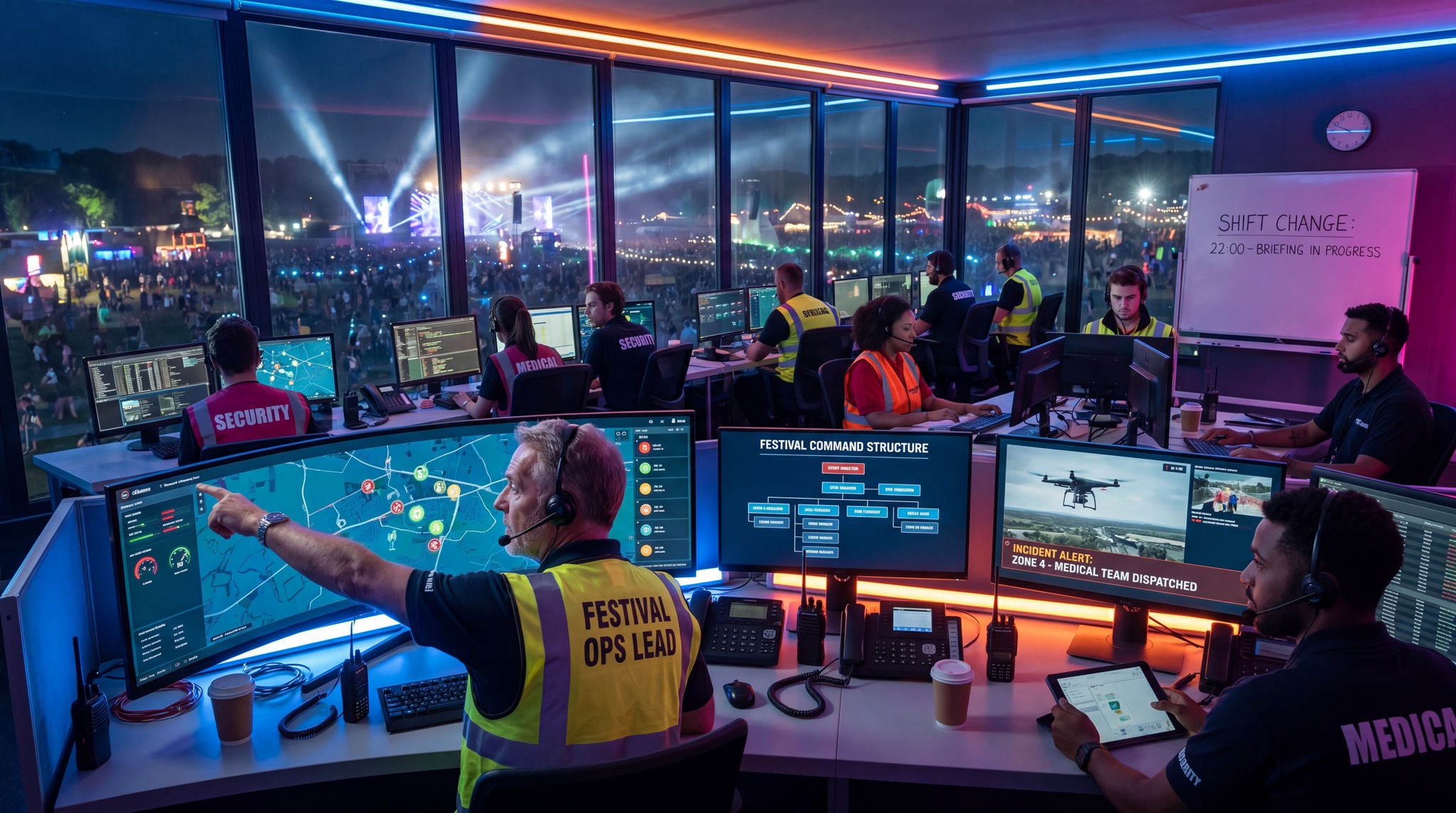
- Large-Scale Mega-Festivals: When capacities exceed 50,000, festival security must transition into a highly structured, multi-tiered operation. This involves deploying specialized response teams, establishing centralized command centers (often integrated with local law enforcement), and utilizing advanced crowd-monitoring technology. At this scale, separating roles—such as dedicated perimeter defense, roaming welfare officers, and rapid-response medical escorts—becomes an operational necessity rather than just a best practice.
Regardless of the event’s footprint, successful promoters ensure their security contractors align with the festival’s specific cultural ethos, embedding those values into every pre-shift briefing and operational protocol.
Frequently Asked Questions
How can festival security balance safety with a friendly atmosphere?
Festival security balances safety and friendliness by combining authoritative rule enforcement with rural hospitality. Teams use polite greetings like “ma’am” or “sir” and open body language to make guests feel welcomed. This “firm but friendly” approach, supported by de-escalation training, prevents incidents while maintaining a positive atmosphere.
What specific training should country music festival security receive?
Top country music festivals prioritize training in conflict de-escalation, consent awareness, and rural hospitality. Security personnel learn active listening to diffuse arguments and recognize harassment situations to protect patron safety. Hospitality training ensures staff offer proactive help and polite greetings, transforming security into guardians of the event’s vibe.
Why should festivals separate security roles from guest services?
Separating security roles from guest services prevents mixed signals and reduces attendee intimidation. “Search” teams focus on safety checks using distinct uniforms, while “guest-help” teams in approachable attire assist with questions. This division allows specialized focus, ensuring strict safety enforcement doesn’t compromise the event’s welcoming nature.
How should security handle intoxicated guests at music festivals?
Security should use pre-scripted, compassionate language that focuses on the patron’s safety rather than punishment. Staff can deny entry or suggest a break by stating concern for the individual’s well-being and directing them to medical tents or water stations. This firm, non-confrontational approach de-escalates potential conflicts effectively.
What is the role of consent training in festival security?
Consent training empowers security staff to recognize and intervene in situations involving harassment or unwanted contact. By partnering with organizations like Safe Gigs for Women, festivals ensure personnel know how to handle disclosures of assault with discretion. This training creates a safer environment where attendees feel respected and protected.
How does the front gate influence festival security culture?
The front gate sets the tone for the entire event as the first point of contact. A welcoming entry process featuring warm greetings, efficient ticket scanning, and clear signage reduces attendee anxiety. When security checks are consistent and polite, guests feel respected, establishing a cooperative culture immediately upon arrival.
What is the best way to enforce prohibited item rules at festivals?
Enforcing prohibited item rules requires consistent, scripted responses that are polite yet non-negotiable. Security staff should explain that the item is restricted for everyone’s safety and offer to hold it for collection later if possible. Using friendly phrasing like “Howdy” softens the refusal while maintaining strict safety standards.
How can organizers maintain high morale among festival security teams?
Organizers maintain security morale by publicly recognizing positive interactions during daily briefings. Sharing specific success stories where staff de-escalated conflicts or helped distressed guests validates their hard work. Highlighting these “wins” combats fatigue and reinforces a culture where kindness and professionalism are valued and repeated throughout the festival.
What are the foundational elements of effective security for festivals?
Effective security for festivals relies on a combination of comprehensive risk assessment, specialized staff training, and clear communication protocols. Organizers must integrate crowd management strategies with customer service, ensuring that personnel can enforce safety regulations while maintaining a welcoming environment for attendees.
How do promoters adapt music festival security for different genres?
Promoters adapt music festival security by tailoring their operational approach to the specific audience demographics and cultural expectations of the genre. While a country event might emphasize rural hospitality and conversational de-escalation, an electronic dance music (EDM) event might prioritize roaming medical welfare teams and harm reduction strategies, ensuring the safety measures match the crowd’s unique dynamics.