Introduction
In festival production, tents and temporary shelters form the backbone of a successful event environment. They provide essential cover for stages, vendors, VIP areas, and serve as critical safe havens during unexpected weather shifts. Choosing the right tents—and setting them up correctly—can mean the difference between an event that continues seamlessly or one that grinds to a halt because of wind or rain. This guide offers practical insights into selecting appropriate tent structures and ensuring they’re securely erected, drawing on decades of festival production experience.
Understanding Common Tent Types
Choosing the right type of tent is fundamental. Festival organizers typically rely on three main categories of tents, each with different strengths and ideal use cases:
When evaluating different tents for events, producers must look beyond basic aesthetics and consider the operational demands of their specific site. The most effective event tent structures are those that balance rapid deployment with robust weather resistance. Whether you are sourcing a massive clearspan for a main stage or a simple temporary event tent for a remote box office, understanding the engineering limitations of each category is the first step in building a safe, compliant festival footprint.
Pole Tents
Pole tents are classic high-peaked tents supported by center poles and perimeter poles under tension. Advantages: They create an iconic festival look with swooping peaks, and they come in very large sizes (some can accommodate thousands of people). Pole tents are often more cost-effective per square foot than other types, making them budget-friendly for covering big areas. Considerations: They require sufficient open space for setup because ropes (guy lines) extend out around the tent’s perimeter, usually by several feet. The stakes for these ropes must be driven into the ground, so pole tents are best suited to grassy or soft soil venues. Additionally, the center poles inside can obstruct sightlines or floor layouts. For example, if you plan to use a pole tent for a stage, you need to position the stage and audience carefully so that a support pole isn’t blocking the performer from the crowd’s view. Many large music festivals have used pole tents as secondary stages, but they learned to integrate the poles into stage design (like wrapping them with decor or using them as lighting towers) rather than treating them as an afterthought.
Free Tool: Size Your Festival Site
Zoned capacity planning for arena, campsite, parking and entry lanes — against UK Purple Guide and NFPA density standards. Finds your bottleneck zone.
Frame Tents
Frame tents use a rigid metal frame (usually aluminum) to support the canopy, eliminating the need for interior center poles. Advantages: With no poles in the middle, you get an unobstructed interior space—great for vendor booths, merch areas, or intimate performance stages where every inch counts. Frame tents can be set up on almost any surface, including parking lots or concrete, since they don’t rely on staking for structure (only for anchoring). This flexibility makes them popular for urban festivals or street fairs. They can also butt up against buildings or be joined together to cover odd-shaped areas. Considerations: Frame tents typically have a lower peak height and a boxier shape than pole tents, which may be less visibly striking from afar. They are also a bit heavier in structure, so installation can take longer for large frames, and they tend to cost more than pole tents of equivalent size. Frame tents still need to be anchored securely (either by stakes or weights) to withstand wind—just fewer anchor points are needed compared to pole tents. For instance, a 20×20 foot frame tent might be anchored at its four corners and mid-sides, whereas a pole tent of similar size might have many more stakes around the perimeter.
Clearspan Structures
Clearspan structures (also known as structure tents or marquee structures) are the heavy-duty solution for large festivals and long-term installations. They feature an engineered aluminum frame with no interior poles and can span very wide areas (some clearspans reach 40–50 meters in width or more). Advantages: They provide a completely open, unobstructed space like a warehouse, perfect for main stages, big top arenas, or massive weather-proof vendor halls. Clearspan tents often have high load capacities—meaning you can hang lighting, sound equipment, or heavy decor from the frame (with proper engineering approval). They also have modular wall and door systems, offering a more building-like environment with solid sidewalls, doors, and even HVAC for climate control if needed. Many high-profile festivals use clearspan structures for their premium stages or VIP mega-tents because of their durability and professional appearance. Considerations: Clearspans are typically the most expensive option and require skilled crews and machinery (like forklifts or cranes) to install. Setup can take significant time—a large clearspan for a stage might need several days of build time. They also demand very secure anchoring. Smaller clearspan structures (below a certain width, often around 40–50 feet or ~15 meters) can be weighted down if staking isn’t possible, but the larger ones almost always must be staked into the ground for safety. Ensure you have permission for staking or plan for massive ballast weights; the vendor will usually calculate exactly how much weight is required per leg based on wind load ratings. One legendary example of clearspan success was a festival that turned a giant clearspan tent into a late-night dance arena—when a surprise thunderstorm hit, the main outdoor stage had to pause, but the party continued safely under the clearspan, keeping attendees dry and the event momentum going.
Planning a Festival?
Ticket Fairy's festival ticketing platform handles multi-day passes, RFID wristbands, and complex festival operations.
Other Structures (Stretch Tents, Domes, and More)
Beyond the big three, festivals sometimes opt for alternative structures like stretch tents (flexible canopies that can be rigged into organic shapes), geodesic domes, or even shipping containers with temporary roofs. These can serve specific themes or practical needs—for example, a geodesic dome might house an art installation or a small stage with 360° audience layout. Tips: If using non-standard structures, work closely with specialty vendors who understand their engineering and setup. Always verify weight load, anchoring needs, and weather resistance; never assume an eye-catching structure is as weather-proof as a proven tent design.
When evaluating temporary structures for outdoor events, organizers must balance aesthetic ambition with practical engineering. Whether you are deploying a custom stretch canopy or a standard clearspan, these temporary event structures must meet the same rigorous safety codes as permanent buildings, especially regarding wind loads and fire resistance.
Ultimately, the diverse range of temporary festival structures available today allows producers to build immersive, multi-functional environments. Whether you are erecting a massive clearspan for a main stage or deploying a unique architectural dome, treating every festival structure as a critical piece of event infrastructure ensures both aesthetic appeal and operational safety.
Custom and Architectural Festival Structures
Beyond standard rental inventory, many organizers invest in bespoke festival structures to serve as iconic landmarks, entrance archways, or immersive brand activations. A custom festival structure might combine scaffolding, custom-milled timber, and tensioned fabric to create a unique focal point that standard tents cannot achieve. When designing these specialized temporary festival structures, producers must work closely with structural engineers to ensure they meet the same rigorous wind-load and fire-safety ratings as off-the-shelf clearspans. Furthermore, if you are designing a small temporary structure at a fair or festival where goods or services are sold—such as a bespoke merch kiosk or a branded sampling booth—it must still adhere to commercial fire lane regulations and accessibility guidelines. Whether it is a multi-story viewing deck or a highly themed vendor stall, treating every custom build as a highly regulated piece of infrastructure is essential for site safety and permitting.
Boost Revenue With Smart Upsells
Sell merchandise, VIP upgrades, parking passes, and add-ons during checkout and via post-purchase emails. Increase average order value by up to 220%.
Small Temporary Tent Structures
While massive clearspans dominate the skyline, the operational efficiency of a festival often relies on deploying small temporary tent structures. These compact units—ranging from 10×10 pop-ups to 20×20 frame tents—are essential for auxiliary functions like ticketing gates, token booths, and remote first aid outposts. When sourcing these temporary tent structures, organizers must ensure they meet the same commercial fire-retardant standards as the main stage covers. Even a basic structure tent used for a standalone merchandise kiosk requires proper ballasting and a documented wind-action plan to prevent it from becoming a hazard during sudden squalls.
Integrating Tents into Broader Temporary Event Infrastructure
While the canopy overhead is the most visible element, a successful festival site relies on a comprehensive approach to temporary event infrastructure. Tents do not exist in a vacuum; they must seamlessly integrate with other short-term structural elements to create a safe, functional venue from the ground up. This holistic site planning includes heavy-duty trackway for vehicle access, modular flooring systems to protect turf, and temporary fencing to establish secure perimeters. When designing your layout, consider how your temporary event structures will interface with power distribution nodes, portable sanitation hubs, and water supply lines. For example, a massive clearspan stage cover requires dedicated cable ramps and reinforced ground protection to safely route high-voltage lines from generators to the production towers. By treating your tents as just one component of a larger, interconnected temporary infrastructure grid, producers can ensure smoother load-ins, enhanced attendee safety, and a more resilient festival environment.
Need Festival Funding?
Get the capital you need to book headliners, secure venues, and scale your festival production.
When scaling up your site plan, mapping out the deployment sequence for these short-term builds is critical. Erecting large-scale temporary structures for outdoor events often requires heavy plant machinery, such as telehandlers and all-terrain cranes, which need stable ground conditions and wide turning radii. Organizers must sequence the build so that the largest clearspans and heavy-duty stage roofs are constructed first, allowing the heavy machinery to exit the footprint before smaller vendor stalls, pedestrian walkways, and delicate turf protection are installed.
Best Practices for Temporary Structures at Music Festivals
Implementing best practices for temporary structures at music festivals goes beyond simply choosing the right tent size. Organizers must establish a rigorous chain of command for structural sign-offs, ensuring that every stage roof, VIP viewing deck, and front-of-house tower is inspected by an independent structural engineer before the site opens to the public. A core operational standard is the implementation of a comprehensive wind management action plan. This document should clearly define the specific wind speed thresholds at which sidewalls must be removed, production gear lowered, and ultimately, when the festival structure must be fully evacuated. Furthermore, maintaining detailed daily inspection logs for all load-bearing points, guy wires, and ballast weights ensures that any shifting caused by ground settling or overnight weather is immediately addressed.
Even when dealing with a small temporary structure at a fair—such as an independent food vendor stall or a sponsor activation—the same fundamental safety principles apply. Every individual festival structure, regardless of its footprint, contributes to the overall risk profile of the event site. Standardizing the procurement and installation of these smaller units ensures that fire lanes remain unobstructed and that all fabric canopies meet commercial flame-retardant specifications.
Selecting the Right Tent Size and Layout
Determining sizes for tents is both science and art. It involves calculating the space needed for the intended use and accounting for comfort and safety. Here are a few guidelines and examples:
Free Tool: Project Your Bar Revenue
Per-head spend benchmarks by event type turned into projected bar and food revenue, with a stock-mix estimate and gross-margin line. Free calculator.
-
Stages and Audience Tents: If you want to shelter a stage and a standing audience, estimate roughly 10 square feet (about 1 square meter) per person for a dense crowd under a tent. For example, if you expect 500 people watching a smaller stage in the rain, a tent of about 5000 sq. ft. could be needed (such as a 50’ x 100’ tent). If seating is involved (chairs or tables), increase the space per person (closer to 15 sq. ft. per person or more) to allow room for aisles and furniture. Always allow extra space for the stage structure itself, backstage wings, and tech areas. One mid-sized festival learned this the hard way: they provided a tent just big enough for the audience, but forgot the space needed for the mixing console and camera platform – resulting in those areas getting soaked at the edges of the tent. The lesson: map out your stage and production needs inside the tent footprint ahead of time.
When sourcing stage shelter tents, organizers must also account for acoustic treatments and rigging capacities. Deploying temporary structures for music requires specialized engineering to safely suspend line arrays, lighting trusses, and LED video walls while minimizing sound reflections that can muddy the audio mix.
Beyond the main performance area, stage shelter tents must also provide adequate coverage for the monitor beach, guitar worlds, and quick-change booths. When designing temporary structures for music, ensure the roof canopy extends far enough past the stage deck to prevent wind-driven rain from reaching sensitive backline gear and high-voltage power distribution racks.
-
Vendor and Exhibit Tents: For rows of vendors (craft stalls, food booths, merch tables), you can either give each vendor a small individual tent (like a 10’x10’ pop-up canopy) or use a larger collective tent that houses multiple vendors side by side. For individual vendor tents, plan aisle space between rows (at least 10 feet, ~3 meters or more for crowd flow). For large shared tents (say a 20’x100’ long tent with dozens of vendors inside), consider ceiling height too – food vendors with grills may need ventilation, so an airy tall tent is better. Ensure there’s enough depth for vendors to work behind their tables (8-10 feet minimum). As an example, an organizer of a food festival opted for one big tent for all food stalls to simplify weatherproofing and power distribution; however, they found that noise and smells traveled through the open tent, so the next year they switched to separate tents for each vendor to create more distinct spaces and improve ventilation.
Similarly, when setting up a temporary tent at a fair or community expo, consider how foot traffic flows between attractions. Using modular festival shelters for ticketing gates, first aid stations, or craft vendor rows helps establish clear navigation pathways while protecting staff and attendees from the elements.
When standardizing the footprint for a small temporary structure at a fair or festival where goods or services are sold, consistency is key. Providing uniform vendor booths—such as commercial-grade 10×10 frame tents—simplifies power distribution, standardizes fire lane measurements, and creates a cohesive visual experience for attendees browsing the marketplace.
-
Small Activations and Kiosks: When deploying a small temporary structure at a fair—such as a 10’x10’ pop-up for a sponsor activation or local artisan—organizers must still enforce strict safety standards. Even these compact festival shelters require proper ballasting (minimum 40 lbs per leg) and fire-retardant certification. Grouping these smaller units together can create an inviting marketplace feel, but be sure to leave adequate fire lanes and secure all loose fabric to prevent wind damage.
For multi-day community events, the operational demands on a temporary tent at a fair extend beyond daytime use. Organizers must plan for overnight security, weather-tight closures, and safe overnight power isolation for these smaller footprints to protect vendor inventory and technical equipment when the site is closed to the public.
Furthermore, utilizing standardized temporary structure tents across your site simplifies the load-in process for your site crew. By standardizing the hardware for these smaller footprints, you reduce the variety of spare parts needed on hand and streamline the training required for volunteer setup teams.
-
VIP, Backstage, and Operations: Don’t forget the functional tents that make the festival run behind the scenes. Backstage green rooms, artist hospitality lounges, first aid stations, and production offices often use frame tents or clearspan structures. These might not be as large as stage tents but are still crucial. For instance, a production office might only need a 20’x20’ frame tent with tables, chairs, and power for staff. A VIP lounge might be a 40’x40’ with a stylish interior, requiring a higher peak or even a clearspan for an upscale feel. Plan these spaces based on how many people will use them at peak times (e.g., if 50 staff need a break area at once, ensure enough square footage and seating). Also consider adding small tents for critical needs like storage (e.g., a 10’x10’ for storing electrical gear or merchandise boxes) and ensure they’re placed conveniently (like near stages or ticketing areas as needed).
In addition to executive and artist areas, deploying dedicated team festival shelters is vital for crew welfare. Whether it’s a shaded break zone for the volunteer squad or a weather-proof hub for medical responders, a reliable festival shelter keeps your workforce protected. Providing these specific team festival shelters ensures your core staff maintains high morale and operational readiness during long, demanding shifts.
-
Weather Contingency Areas: Always have a plan for where the crowd can go if sudden heavy rain or intense sun occurs. This might mean allocating a couple of medium-sized tents as chill-out zones or emergency shelter areas. For example, a 30’x50’ tent could hold a few hundred people in a pinch who are seeking refuge from a downpour. These tents can double as activity zones (workshops, demo areas, or lounges) during normal operations, but become weather shelters when needed. The key is not to use every single tented area for absolutely critical functions; keep some space flexible for the unexpected.
Tip: When planning layouts, use a to-scale map of your site to place tent shapes and ensure you leave enough clearance between tents for crowds, fire lanes, and vehicle access if needed. Remember that a tent’s stated size (e.g., 20’x40’) is just the covered area – you’ll need a buffer beyond that for stakes or weights and a bit of walking space. It’s common for festival producers to mark out tent footprints on the ground with biodegradable spray paint or flags a day or two before installation to avoid confusion when the tent crew arrives.
Anchoring and Stability: Staking vs. Weighting
A tent is only as good as its anchors. Improperly anchored tents can be extremely dangerous – strong winds have lifted tents into the air, causing injuries and equipment damage. There are two primary anchoring methods:
-
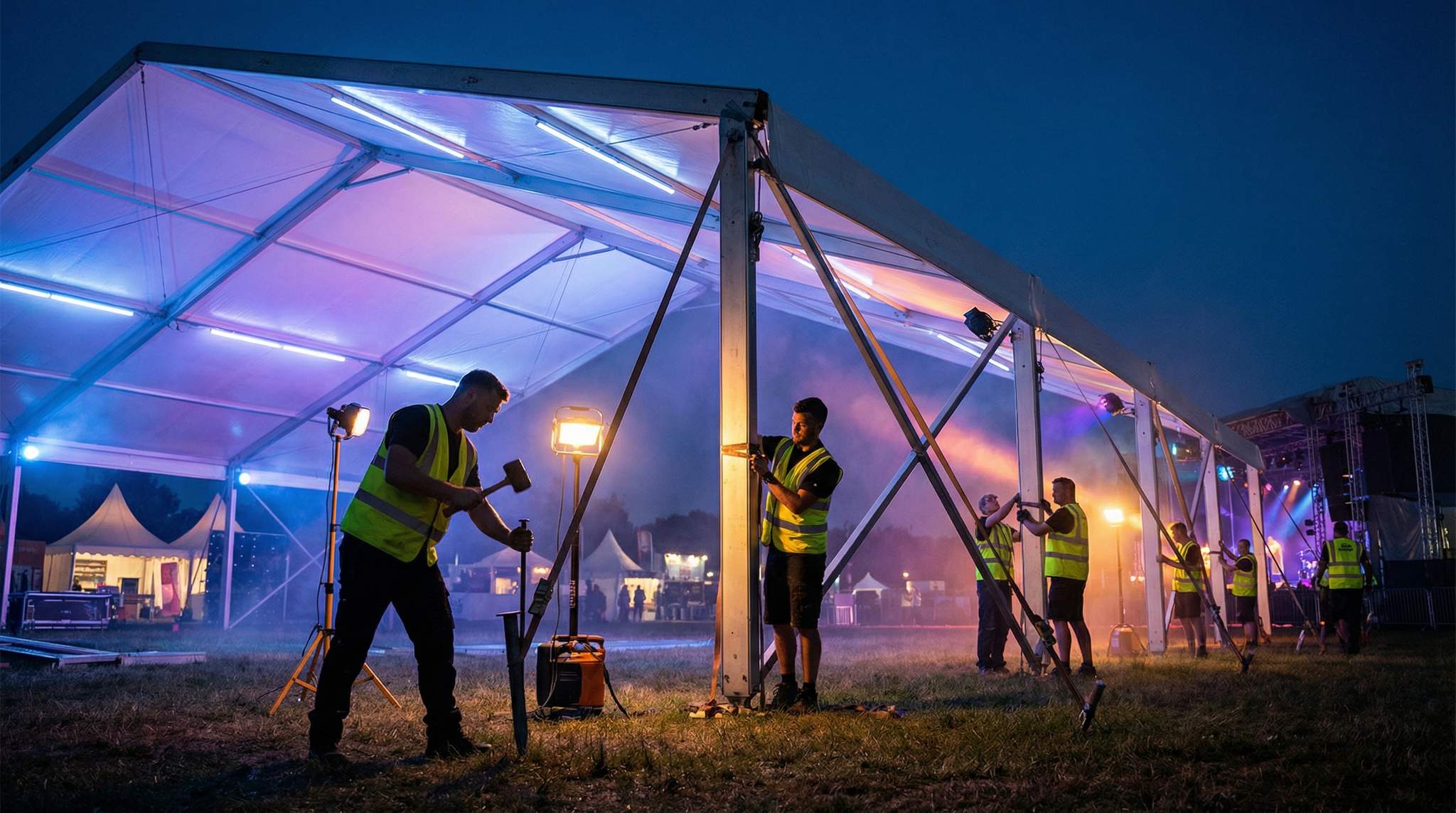
Staking: This involves driving long metal stakes (pins) into the ground and attaching the tent’s poles or frame to these stakes with straps or ropes. Staking is generally the most secure method if you have soil or asphalt that can be staked into. Stakes can be 3 to 4 feet (about 1 meter) long and are driven deep for maximum hold. Large pole tents might require dozens of stakes around their perimeter. When staking, it’s vital to check for any underground utilities or irrigation lines – coordinate with the venue and use utility locating services if needed to avoid puncturing pipes or cables. Also, some surfaces (like historic sites or sensitive turf) may have restrictions on staking. When allowed, staking provides peace of mind because properly driven stakes resist very high winds. An experienced crew will angle stakes and fully hammer them in for best grip. Pro tip: Have a few extra stakes and sledgehammers on hand during the festival. If the forecast calls for high winds, adding additional stakes or re-tensioning ropes on a pole tent can further secure the structure.
-
Weighting (Ballasting): When staking isn’t possible (for instance, on a city plaza, concrete lot, or indoors on a slab), weights are used to anchor tents. These weights can be concrete blocks, metal plates, water barrels, or specially designed ballast blocks provided by tent companies. The key is having enough weight for each tent. As a general rule of thumb, small tents (like 10’x10’ pop-ups) should have at least 40 pounds (18 kg) of weight on each leg. Larger frame tents might require several hundred pounds per corner. And huge clearspan structures often need thousands of pounds of ballast on each footing to resist wind loads. Always follow the tent vendor’s recommendations on how much weight is needed—don’t cut corners. For example, one festival attempted to use 55-gallon water barrels (which are about 400 lbs when full) on each corner of a 40’x100’ frame tent, when the calculation actually called for double that weight; a sudden wind gust lifted one side of the tent, causing a minor collapse and a major scare. The lesson: secure more weight than you think you need, and then some.
-
Hybrid Anchoring: In some cases, you might use a combination of stakes and weights. This could happen if you can stake in some areas of a site but not others, or if you want extra security. For example, a tent on asphalt might use concrete anchors on the corners but still have some stakes driven into adjacent dirt along the edges if available.
When working with your tent rental provider, ask about the anchoring plan. Reputable vendors will have engineering specs or wind rating charts that show how many pounds of ballast or how many stakes are required for each tent size to handle (for example) a 30 mph wind. Don’t be afraid to request that information to satisfy yourself and any safety inspectors that the tents are secure. Remember, safety is paramount: a flying tent can end a festival faster than any rainstorm.
Coordinating with Tent Rental Vendors
Partnering with a reliable tent rental vendor is essential, especially for medium to large festivals. Here’s how to coordinate effectively:
-
Advance Planning and Booking: Large tents and clearspan structures are in high demand during peak festival seasons. Secure your tent rentals well in advance. It’s not uncommon to book many months (or even a year) ahead for big events. Provide the vendor with details on the event date, location, expected attendance, and the purposes of each tent (stage cover, beer garden, etc.) so they can recommend appropriate sizes and types.
-
Site Visits and Consultation: Arrange a site visit with your tent vendor if possible. They can evaluate the terrain, note any installation challenges, and measure out areas. As a seasoned festival organizer would advise, walking the grounds with the tent professional often catches things you might miss – like noticing a slope that could affect a stage tent, low-hanging tree branches that need trimming, or figuring out where trucks can drive to unload the tent equipment. During the visit, discuss where to place tents for optimal traffic flow and safety (e.g., not blocking exit routes). A good vendor might also bring up ideas, such as adding flooring if the ground is uneven or recommending a different tent shape to better suit the spot.
-
Permits and Code Compliance: Many local authorities require permits for large tents (often those above a certain size like 400 square feet or a certain capacity). Permits usually mandate that tents are certified flame-retardant (which quality rental tents are) and may require a fire marshal inspection after setup. Make sure your vendor provides documentation on the tent’s fire retardant rating, and coordinate on adding features like exit signs, ‘No Smoking’ signs, and fire extinguishers inside big enclosed tents if required. Also, some jurisdictions might require engineering drawings or stamped calculations for huge structures like clearspans. This ties back to choosing a reputable vendor – they will typically handle or assist with these permits and have those documents ready. As an organizer, you should still double-check that all necessary permits are pulled well before festival day to avoid any last-minute shutdowns.
-
Scheduling Setup and Teardown: Tents can take a significant chunk of time to install. A crew of a few people might put up a 40’x40’ frame tent in half a day, whereas a team with machinery might need 2-3 days to build a 100’x200’ clearspan mega-structure. Coordinate the schedule so that tent setup is one of the first tasks on the site (after any heavy equipment has graded the land or installed stages that need to go first). You want all tents up and secured before you start setting up sound gear, decor, or anything that needs to go under them! Likewise, post-event teardown often requires the tents to be one of the last things to come down, after you’ve cleared out equipment from inside. Plan labor accordingly—your crew or volunteers might be needed to assist the tent company or at least to keep the area clear. If your festival uses multiple vendors (e.g., one for main stage clearspan, another for small vendor tents), ensure they coordinate so that they aren’t blocking each other’s work and to confirm that each has the necessary access (like bringing a crane in for the clearspan before the smaller tents fill up the field around it).
-
During the Event: It’s good practice to have contact info for a tent company representative during the festival in case issues arise (say, a strap comes loose or you want to remove/attach sidewalls due to changing weather). Some vendors offer on-call service or even have staff stay on-site if you have a lot of infrastructure. Also, instruct your festival staff and security to keep an eye on tents during the event—sometimes enthusiastic attendees might tamper with straps or move weights (for example, someone might sit on a ballast box or unplug a blower on an inflatable structure thinking it’s fine). Make sure these anchors remain untouched and clearly marked (you can put small safety fencing or cones around stakes and weights to prevent trip hazards and interference).
-
Budgeting and Cost Management: The temporary structures for outdoor events cost can vary wildly based on size, style, and site conditions. When budgeting for temporary event structures, factor in not just the rental price of the canvas and frame, but also the delivery, heavy machinery required for setup, engineering permits, and necessary accessories like flooring, lighting, and climate control. A basic frame tent might be highly affordable, whereas a massive clearspan with custom glass walls and leveled flooring will require a significant capital investment.
Weather Preparedness and Contingency Plans
Weather is the biggest wildcard for any outdoor festival. The right tent setup helps mitigate weather risks, but it doesn’t eliminate them. Always have a weather contingency plan that works hand-in-hand with your tent infrastructure:
-
Rain: For rain, having enough tents is key. Stages need roofing (either a tent or a dedicated stage roof structure) to keep equipment and performers dry. Attendees will seek cover – ensure those shelter tents are free of tripping hazards if they suddenly get crowded. Sidewalls on tents can keep out wind-blown rain but also trap heat, so use them judiciously (maybe keep sidewalls rolled up at the sides of a stage tent unless rain is blowing in from that direction). If heavy sustained rain is forecast, consider putting down flooring in high-traffic tents; otherwise, those areas could turn muddy even under cover due to foot traffic.
-
Wind: High winds are a serious concern for tents. Know the design wind load of each tent (your vendor can provide this, e.g., many frame and pole tents might be rated for around 30–40 mph winds if properly anchored; clearspans can sometimes handle a bit more). If forecasts predict winds nearing those speeds, be prepared to take action: this could mean proactively evacuating large tents like stages or vendor areas as a precaution, or even taking down smaller unsecured tents before a storm hits to prevent them from flying. Some festivals have a protocol where if wind exceeds a certain threshold, certain areas are cleared or closures happen until it’s safe. Don’t wait until a tent is teetering—err on the side of safety. In 2019, one regional festival had to temporarily close their big top tent when a freak wind gust (over 50 mph) came through; thanks to clear communication and previously rehearsed plans, they ushered attendees out calmly and no one was hurt, and the tent held up because it had been expertly secured. Planning for these situations is part of responsible festival management.
When evaluating stage shelter tents specifically, wind ratings become even more critical. Because these structures often have open fronts to face the audience, they can act like a parachute during sudden gusts. Work with your structural engineer to ensure that any temporary structures for music performances feature reinforced guying and heavy-duty ballasting designed to counteract this uplift, protecting both the performers and the suspended production gear.
-
Heat and Sun: Tents also provide shade and heat relief. A hot sunny day can be just as dangerous as rain if attendees have no shelter from sunburn or heat exhaustion. Ensure there are shaded areas, especially near stages (where crowds stand for long periods) and in food/drink areas. Consider tents with removable or translucent tops for different effects – a white top tent will reflect sun and keep things cooler underneath, whereas a clear roof tent might look stunning at night under lights but can become a greenhouse during a hot day. If you use a clear roof for aesthetic reasons, be mindful of the heat and perhaps plan to cover it with a shade cloth or only use it when the sun is low. In terms of setup, if extreme heat is expected, you could incorporate fans or even misting systems into some tents (making sure electrical equipment is safely installed with GFCI outlets if water is involved).
-
Cold: Less common for festival season, but if you have a fall or winter event (or high elevation nights), tents can be outfitted with heaters. Plan for safely installing heaters (propane forced-air heaters, for example, which stay outside the tent with ducts blowing warm air in). Always maintain clear space around heater units and make sure the tent has some ventilation when sides are down, to avoid carbon monoxide build-up. Coordinate this with vendors too – some tent rental companies also offer heaters and flooring, which simplifies logistics.
Emergency Evacuation: Despite all preparation, sometimes weather will force an evacuation (lightning storms, extremely high winds, etc.). Tents are safer than open ground in rain, but not safe enough for severe thunderstorms or tornado-level winds. Identify solid structures nearby (if any) that could serve as true shelters. At the very least, have a procedure for delaying or canceling performances and directing people to exit to their cars or other safer areas if truly hazardous weather is approaching. Use your tents as a means to buy time (keep people reasonably comfortable and safe in mild storms) but know when to call it quits for everyone’s safety.
Successes, Failures, and Lessons Learned
Every veteran festival producer has stories of both triumph and tragedy when it comes to temporary structures. Here are a couple of condensed lessons from the field:
-
Case Study – The Underweighted Tent: A small-town music festival once set up a 30’x30’ frame tent to cover their merchandise and info booth. The team, inexperienced with tents, placed a couple of cinder blocks on each foot, thinking it would suffice. When an afternoon storm rolled in, a strong gust sent the tent lifting off the ground. Staff and bystanders caught it before it blew away completely, but not before one corner crashed down on the merch table, damaging goods and giving everyone a scare. The post-mortem was clear: they had used maybe 100 lbs of total weight when that size tent really needed several times that. The following year, they contracted a professional tent company to handle installation, and every tent leg had proper ballast. The peace of mind was worth the cost.
-
Case Study – Weather-Proofing Saves the Day: A large food and wine festival invested heavily in tenting – every demo stage had a tent, walkways between vendor booths were under tent canopies, and a big clearspan was set aside as a weather contingency hall with live entertainment. Ticket buyers might have questioned why so much of the site was covered in canvas on a sunny opening day. But on day two, when an unexpected cold front brought rain showers, the festival hardly missed a beat: attendees simply moved under cover, tastings continued in the big tent, and the live music was moved into the clearspan structure. The event earned praise for its comfort and smooth operation despite the bad weather. The lesson here is that investing in the right tent infrastructure can directly translate to resilience and a better experience, which in turn protects the festival’s reputation and bottom line.
-
Lesson – Fit the Tent to the Task: One common mistake is using whatever tent is cheap or available, rather than one suited to the specific need. For example, a promoter tried to use a pole tent as an outdoor stage cover because it was cheaper than a stage roof or clearspan. Unfortunately, the center pole was directly in front of the stage thrust, creating a poor viewing experience, and the guy ropes limited how close the audience could get. In hindsight, a frame tent or clearspan (with open sides and no center poles) would have been the better choice for a stage, even if at higher cost. The takeaway: match your tent type to the usage scenario—sometimes spending a bit more or choosing a different style greatly enhances safety and attendee satisfaction.
-
Lesson – Communication with Vendors and Crew: Another real scenario involved a miscommunication where a tent crew arrived to set up a 60’x100’ pole tent only to find the area wasn’t cleared as expected – the festival’s volunteers had parked gear and fencing all over the spot. The delay not only irritated the tent installers but also pushed back sound checks and vendor load-in. This taught the organizers to always double-check that a site is prepped for tent installation: mark the area, clear the obstacles, and confirm the schedule with all parties. It may sound simple, but in the rush of festival build week, such details can slip through the cracks unless someone is specifically tasked to oversee the tent setup process.
Frequently Asked Questions
What is the difference between pole tents and frame tents?
Pole tents rely on center poles and tension ropes staked into the ground, offering high peaks and cost-effectiveness for large grassy areas. Frame tents use a rigid metal structure without interior poles, allowing for unobstructed views and setup on hard surfaces like concrete using weights instead of stakes.
How much space per person is needed for festival tents?
For a standing audience under a festival tent, estimate approximately 10 square feet (about 1 square meter) per person. If the layout includes seating with chairs or tables, increase the allocation to roughly 15 square feet per person to accommodate aisles, furniture, and comfortable movement.
What are the advantages of using clearspan structures for festivals?
Clearspan structures feature engineered aluminum frames with no interior poles, creating massive unobstructed spaces ideal for main stages or VIP areas. They offer high load capacities for hanging equipment, support modular wall and door systems for climate control, and provide a durable, professional environment similar to a permanent building.
How do you anchor a tent on concrete or asphalt?
When staking isn’t possible on hard surfaces like concrete, tents must be anchored using heavy weights or ballast blocks. Small tents typically require at least 40 pounds per leg, while larger structures need hundreds or thousands of pounds per anchor point based on engineering wind load calculations.
How much wind can festival tents withstand?
Many standard frame and pole tents are rated to handle winds around 30 to 40 mph when properly anchored. Larger clearspan structures may withstand higher speeds, but organizers must monitor weather closely and evacuate tents if wind speeds approach the specific design load rating provided by the vendor.
Why is a site visit important before renting festival tents?
A site visit allows tent vendors to evaluate terrain, identify installation challenges like slopes or low-hanging branches, and determine optimal placement for traffic flow. Walking the grounds ensures trucks have access for unloading and helps organizers avoid layout mistakes that could obstruct emergency exits or stage views.
What are the key requirements for temporary structures for music festivals?
When deploying temporary structures for music, organizers must prioritize load-bearing capacities for rigging sound and lighting equipment, acoustic properties to prevent audio echoing, and clear sightlines. Stage shelter tents and clearspan marquees used for performances also require strict adherence to local fire codes and engineered wind ratings to ensure artist and audience safety.
What are the safety requirements for a small temporary structure at a fair?
Even a small temporary structure at a fair, such as a 10×10 pop-up canopy used for ticketing or information, must meet strict safety guidelines. Organizers should ensure these compact festival shelters are certified flame-retardant and properly anchored with at least 40 pounds of weight per leg to prevent wind displacement.
Why are dedicated team festival shelters important for event operations?
Providing specific festival shelters for your production crew, security personnel, and medical teams ensures operational efficiency and staff welfare. A dedicated team festival shelter acts as a secure command hub and a safe rest area, keeping essential workers protected from extreme weather during long shifts.
What types of temporary festival structures are best for vendor marketplaces?
For vendor marketplaces, organizers typically rely on modular frame tents or heavy-duty pop-up canopies. When deploying a small temporary structure at a fair or festival where goods or services are sold, using uniform, commercial-grade tents ensures consistent power routing, simplifies fire marshal inspections, and maintains a cohesive aesthetic across the event site.
How much do temporary structures for outdoor events cost?
The cost of temporary event structures varies significantly based on size, type, and location. Basic pop-ups or small frame tents may cost a few hundred dollars to rent, while massive clearspan structures used for main stages or VIP lounges can run into the tens of thousands. Organizers must also budget for delivery, labor, heavy machinery, permits, and essential add-ons like ballasting, flooring, and climate control.
What is considered a custom festival structure?
A custom festival structure goes beyond standard pole or frame tents, often utilizing scaffolding, custom woodwork, or specialized truss systems to create unique architectural elements like entrance archways, multi-level viewing platforms, or immersive art installations. These bespoke builds require dedicated structural engineering and specific municipal permits to ensure they meet safety and wind-load standards.
What is included in temporary event infrastructure?
Temporary event infrastructure encompasses all the non-permanent physical elements required to build a functional festival site. Beyond tents and stage roofs, this includes modular flooring, heavy-duty trackway for vehicle access, temporary fencing, scaffolding, power distribution networks, and portable sanitation facilities. Coordinating these elements ensures that temporary event structures operate safely and efficiently within the overall site plan.
How far in advance should organizers book temporary structures for outdoor events?
For large-scale festivals, organizers should secure their primary temporary event structures at least six to nine months in advance. High-demand inventory, such as massive clearspan tents and specialized stage roofs, often books out quickly during peak summer festival seasons. Early procurement also allows ample time for structural engineering approvals, municipal permitting, and detailed site layout planning.
What are the best practices for managing temporary structures at music festivals?
Key best practices include hiring independent structural engineers to sign off on all load-bearing builds, implementing a strict wind management action plan with defined evacuation thresholds, and conducting daily safety inspections of all anchors, guy lines, and ballast weights throughout the event.
What are the best uses for small temporary tent structures at a festival?
Small temporary tent structures are ideal for auxiliary operational needs such as ticketing booths, token sales, remote first aid stations, and individual vendor kiosks. Despite their compact size, these temporary structure tents must adhere to strict commercial safety standards, including proper ballasting and fire-retardant certifications.
What are the most versatile tents for events?
For most festival organizers, frame tents and clearspan structures are considered the most versatile tents for events. Because these event tent structures do not rely on center poles or extensive exterior guying, they can be deployed on almost any surface, including concrete parking lots and sensitive turf. This flexibility makes a temporary event tent in the frame or clearspan category ideal for everything from VIP hospitality lounges to high-capacity vendor halls.