Introduction
Festivals thrive on the passion and energy of volunteers. From local community fairs to world-famous music events, volunteers often form the backbone of festival operations. However, using volunteer labour comes with critical legal and ethical responsibilities. In recent years, several festivals have faced lawsuits and public backlash for misclassifying workers as “volunteers” and violating wage laws. This makes it essential for every festival organizer to navigate labor regulations carefully when structuring a volunteer program. A compliant and fair volunteer strategy not only protects the event from legal trouble – it also upholds the festival’s reputation and keeps your crew motivated.
Why Compliance with Labour Laws Matters
Volunteer programs must be designed within the boundaries of labour laws to avoid severe consequences. In many jurisdictions, for-profit events cannot legally use unpaid volunteers in the same way charities or community organizations can. For example, U.S. law says for-profit businesses cannot have “volunteers,” since true volunteering is limited to government or charitable purposes, as outlined in legal toolkits for farmers markets and events. If a festival is a commercial enterprise and treats crew members as unpaid “volunteers” while assigning them essential work, it risks violating minimum wage laws. Organizers found misclassifying employees as volunteers may be liable for back pay, fines, and penalties, a risk highlighted by NCVO guidance on national minimum wage. Beyond legal sanctions, there’s a reputational risk: festivals known to exploit volunteer labour can face public boycotts and difficulty recruiting staff in the future.
Consider the high-profile case of Insomniac Events (a major music festival producer) in California. Volunteers at one of Insomniac’s festivals alleged they were “hired to carry out the work of paid employees” without compensation, leading to class action lawsuits against promoters. They worked long shifts performing regular staff duties, yet received no wages – a clear violation of the Fair Labor Standards Act. The ensuing class-action lawsuit accused the festival’s promoters of failing to pay minimum wage, not tracking working hours, and illegally using unpaid workers for a for-profit event. Such cases underscore that willingness to volunteer does not exempt an event from labour laws. Misclassification can lead to costly litigation, so it’s crucial to distinguish volunteers from paid employees in practice, not just in name.
When new promoters ask, “can you volunteer for a for profit business?”, the legal answer in most jurisdictions is a resounding no—unless specific structural exemptions apply. Commercial event producers cannot simply accept free labor from willing fans to offset operational costs. To maintain strict volunteer compliance, for-profit festivals must either partner with a registered charity or ensure the roles are purely educational, such as academic internships. Attempting to bypass these rules by labeling core operational staff as unpaid helpers directly violates labor standards and invites severe financial penalties.
Turn Fans Into Your Marketing Team
Ticket Fairy's built-in referral rewards system incentivizes attendees to share your event, delivering 15-25% sales boosts and 30x ROI vs paid ads.
For event producers operating under a formal corporate structure, the rules are equally rigid. When founders ask, “can a for profit company have volunteers?”, they must understand that registering as an LLC, C-Corp, or similar commercial entity strictly prohibits the use of unpaid labor for standard business operations. Even if your production company is operating a community-focused street fair or a small boutique gathering, the corporate tax status dictates your labor compliance requirements. The only viable workaround for a commercial enterprise is establishing a formal joint venture or operational partnership with a registered 501(c)(3) or equivalent non-profit, ensuring the volunteer labor directly benefits the charitable partner rather than the corporate bottom line.
Volunteer or Employee? Know the Difference
Understanding the volunteer vs. employee distinction is fundamental. Simply calling someone a “volunteer” doesn’t make them one in the eyes of the law, a distinction clarified by employment and labor law compliance resources. Authorities will look at the facts: the nature of the work, the level of control the festival has over the person’s tasks and schedule, and any form of compensation provided. Generally, a true volunteer meets these criteria:
Planning a Festival?
Ticket Fairy's festival ticketing platform handles multi-day passes, RFID wristbands, and complex festival operations.
- Affiliation with a Non-profit or Community Purpose: They offer services for a charitable, educational, or community event (often run by a non-profit or government body) with no expectation of profit. For instance, volunteers at a city-sponsored arts festival or a charity fundraiser are usually legitimate. In contrast, a worker providing free labor at a privately-run commercial music festival is likely not considered a lawful volunteer under many labour codes.
- No Compensation or Contractual Pay: Volunteers do not receive wages. They might get perks or reimbursement (free entry, meals, T-shirt, travel costs), but these should be nominal and not a substitute for pay. If you promise a volunteer substantial benefits “in exchange” for their work, you may inadvertently create an employment contract. In the UK, even non-monetary benefits can trigger an obligation to pay the National Minimum Wage if the role starts to look like a job. Organizers must ensure that any perks are given as a gift of appreciation, not as a quid pro quo contractual reward.
- Flexible Role and Schedule: Unlike employees, volunteers typically have more say in choosing their hours or tasks and can leave without obligation. Imposing full-time hours or strict work schedules on volunteers (especially over multiple days) will make the role resemble paid employment. A volunteer role should be limited in scope – for example, helping for a few hours per day or for one festival stage, rather than running core operations all weekend.
By design, volunteers should be supplementing the festival team, not replacing essential paid staff. A good rule of thumb is to avoid using volunteers for any duties that you would normally hire someone to do if volunteers weren’t available. If an important crew member (like a licensed security guard, electrician, or stage manager) calls in sick, you cannot simply plug in a volunteer to avoid hiring a replacement – that could be seen as using volunteer labor to fill an employee role. Keep volunteer assignments to supportive tasks, participant-facing help, or creative contributions that enhance the event without taking away legitimate jobs.
Common Pitfalls in Festival Volunteer Programs
Designing a volunteer program requires careful thought to steer clear of common pitfalls. Here are key mistakes festival organizers must avoid:
- Misclassification of Workers: As discussed, mislabeling employees as “volunteers” is a major legal risk. If your festival is for-profit, assume that anyone doing real work should be paid unless you have a clear charitable framework. For example, a few years ago volunteers at a major festival sued after being asked to operate merchandise booths and concession stands with zero pay, essentially doing the same work as paid employees. The fallout included backdated wage claims and negative press. Always evaluate roles critically – if the person is performing a task that directly drives your event’s revenue or operations under your direction, it’s safer to classify them (and pay them) as an employee or contractor, not a volunteer.
- Violating Wage and Hour Laws: Even if you believe a helper is a genuine volunteer, certain labor standards still apply. One big no-no is assigning excessive hours without breaks. Volunteers should never be scheduled to work extreme shifts that would breach overtime or working time rules for employees. In one alleged case, a volunteer at a music festival worked a 14-hour shift entirely on her feet with only a short meal break, according to details from the Insomniac lawsuit, and had no time to actually enjoy the event as promised. Such practices are both unfair and expose the festival to wage-hour claims (since regulators may say that person should have been paid and given overtime). Avoid overstepping reasonable hours – for instance, limit volunteer shifts to manageable lengths (e.g. 4-6 hours at a time) and enforce rest periods. This isn’t just about law compliance; it’s about basic human decency and safety.
- “Paying” with Perks (the Wrong Way): It’s common in festival volunteering to offer perks like free tickets, merchandise, or food instead of money. However, problems arise if these perks are handled improperly. Advertising a position as “20 hours of work for a free VIP pass (worth $300)” is essentially bartering labor for compensation – which could be interpreted as an employment relationship. A smarter approach is to frame perks as a thank-you gift for contributing, not as a wage equivalent. Also, be mindful of the value of perks: if volunteers receive too lavish a package, it might raise red flags with authorities (e.g. receiving high-value items could be seen as remuneration). Always check local regulations on what non-monetary rewards volunteers can accept. In some regions, even gift cards or stipends beyond a nominal amount can jeopardize volunteer status.
- Volunteer Deposits Misuse: Many large festivals implement a refundable deposit system – volunteers pay a deposit before the event (often equal to a ticket price) and get it back after completing their shifts. This helps ensure accountability. The pitfall comes if organizers abuse this system. There have been instances where festivals kept volunteers’ deposits for minor infractions or due to poor planning, effectively charging people to work, a practice that has seen festival volunteers hit promoters with legal action. This is not only unethical but also invites legal trouble. If you use deposits, handle them transparently: communicate the conditions clearly, and return the money promptly to every volunteer who fulfils their commitment. Never hold deposits ransom or use them as a stealth revenue stream.
- Ignoring Minor and Youth Labor Laws: Festivals often attract young fans eager to help. If you allow under-18 volunteers, be extremely careful to follow child labor laws. Many jurisdictions restrict the hours that minors can work (even as volunteers) and the type of tasks they can do (no hazardous duties, no serving alcohol if under legal age, etc.). Always get parental consent for underage volunteers and provide extra supervision. It might be wise to set a minimum volunteer age (say 16 or 18) to avoid the complexities of youth employment regulations altogether.
- Lack of Insurance and Safety Cover: Overlooking volunteer safety is a pitfall with both moral and legal implications. If a volunteer gets injured on the festival site, the fact they weren’t on payroll doesn’t erase your responsibility. Volunteers should be covered under the event’s liability insurance or a special volunteer insurance policy. In many countries, health and safety laws extend to volunteers just as they do to paid staff. For example, in the UK, the same duty of care under the Health and Safety at Work Act applies to anyone on site, including volunteers. Failing to provide safety training, proper equipment, and a safe environment can lead to serious legal consequences and harm to your team. (We’ll cover more on health & safety in the volunteer context below.)
- Mismanaging Street Teams and Paid Advocates: Festivals frequently use promotional street teams or brand ambassadors to distribute flyers or generate hype. A critical compliance error occurs when organizers blur the lines between a genuine volunteer and a paid promotional worker. If you are offering cash stipends, commission on ticket sales, or hourly wages to street team members, they are not volunteers—they are employees or independent contractors. Just as political campaigns face strict rules regarding a paid protester versus a grassroots volunteer, festival producers must strictly separate paid promotional staff from unpaid community helpers. Mixing these classifications invites immediate regulatory scrutiny.
By anticipating these pitfalls, festival organizers can put controls in place to avoid them. The goal is to run a volunteer program where helpers feel valued and excited – not overworked or taken advantage of – and where the festival’s bases are covered legally.
Structuring a Legal and Fair Volunteer Program
Building a successful volunteer program starts with structuring roles and policies that respect both the law and the volunteers’ well-being. Below are strategies to design your volunteer program the right way:
Free Tool: Size Your Festival Site
Zoned capacity planning for arena, campsite, parking and entry lanes — against UK Purple Guide and NFPA density standards. Finds your bottleneck zone.
A robust intake process is the first line of defense for volunteer compliance. Every festival season, thousands of enthusiastic fans actively look for opportunities, often searching for information on how to volunteer at concerts or multi-day music events. As a producer, you must ensure that your public-facing recruitment materials immediately set the right legal tone. Rather than informally accepting help via social media DMs, direct all prospective helpers to a standardized application portal. This ensures that from the moment someone asks how to volunteer in concert settings, they are presented with clear terms, role limitations, and the exact non-monetary perks they will receive, establishing a compliant framework before they ever step foot on site.
Define Volunteer Roles Carefully
Begin by identifying which tasks at your festival are suitable for volunteers. Ideal volunteer roles are those that enhance the event experience or support the community aspect of the festival, rather than jobs that are integral to your commercial operations. For example:
Need Festival Funding?
Get the capital you need to book headliners, secure venues, and scale your festival production.
- Guest Services & Information: Helping attendees with directions, handing out schedules, staffing information booths.
- Hospitality & Artist Liaison Assistants: Assisting in artist hospitality areas (under staff supervision), or acting as stage runners (provided they are not doing technical crew work).
- Environmental Crew: Litter picking, recycling initiatives, and managing eco-friendly programs (many festivals have “green teams” of volunteers).
- Ambassadors & Community Outreach: Engaging with the local community or doing attendee surveys during the event.
- Creative Contributions: Decor, art installations, or interactive activities where community participation is part of the vibe.
These roles provide meaningful help while typically not requiring the expertise of paid professionals. They also offer volunteers a fun experience (e.g. interacting with guests or contributing art). When defining roles, ask yourself:
- Is this task something we would typically budget to pay a staff member for, if volunteers weren’t available? If yes, it might not be appropriate for volunteers.
- Does this role allow the volunteer to also enjoy the festival? A good volunteer role should come with downtime or shift patterns that let helpers soak in the event they’re contributing to.
Always draft a role description for each volunteer position. This helps in recruiting the right people and sets clear expectations. In the description, include the purpose of the role, key duties, required skills or attributes, the timeframe or shift length, and who supervises the volunteer. By being transparent up front, you ensure volunteers truly understand what they’re signing up for – preventing misunderstandings later.
Set Reasonable Hours and Shift Patterns
When it comes to scheduling volunteers, fairness and legality go hand in hand. Determine in advance how many hours total you expect from a volunteer over the course of the event (including any pre-event training). Many festivals cap volunteer commitments to ensure no one is overburdened.
For example, the Glastonbury Festival in the UK (through its partner charity Oxfam) asks volunteers to complete about three eight-hour shifts over a 5-day festival, as reported in coverage of Oxfam’s festival recruitment. In return, volunteers get free entry for the weekend and other perks, and they have ample time to enjoy performances off-shift. This roughly 24-hour total commitment is a reference point – it’s substantial work, but spread out with breaks and leisure time. Smaller festivals might ask for fewer hours, like two 4-hour shifts, especially if the event is only a day or two long.
Free Tool: Project Your Bar Revenue
Per-head spend benchmarks by event type turned into projected bar and food revenue, with a stock-mix estimate and gross-margin line. Free calculator.
Key guidelines for scheduling:
- Limit Daily Hours: Keep volunteer shifts to a practical length (commonly 4-6 hours, and rarely more than 8 hours in one go). If a volunteer does an 8-hour shift, ensure they get meal breaks and ideally free time before and after to rest or enjoy the event.
- Provide Off-Days or Free Time: If your festival runs multiple days, do not schedule volunteers to work every single day from dawn till midnight. Either assign them one full day on, one day off, or half-days, etc. The classic approach is “work a few hours, then you’re free to have fun”.
- Avoid Overnight or Hazardous Tasks: Unless specifically cleared (and volunteers are properly trained adults), avoid assigning volunteers to graveyard shifts or dangerous tasks. Leave security, medical, heavy equipment operation, and other high-responsibility or risky work to paid licensed professionals.
- Use Shift Rotations: Rotate volunteers through different assignments if possible, so no one gets stuck doing the less popular jobs all day. This can also help them experience different aspects of the festival. It’s also a goodwill gesture – for instance, if someone volunteers in cleanup during one shift, maybe the next shift they can be at the front of house where it’s more engaging.
By humanizing the schedule, you reduce the risk of anyone feeling exploited. Happy volunteers are actually more reliable and energetic, which benefits the festival operationally too.
Offer Appropriate Perks (Without Crossing the Line)
One way to keep a volunteer program attractive (and fair) is to offer perks or rewards, while being mindful not to create an employment relationship. The key is to provide perks as a token of gratitude, not as wages. Here are common and acceptable perks many festivals use:
- Free or Discounted Festival Entry: Most festivals grant volunteers free admission on the days they aren’t working (or after their shifts end each day). Some give a full festival pass upfront in exchange for volunteering X hours. This is a primary incentive – people volunteer partly to attend the event without buying a ticket. If doing this, ensure the volunteers still pay a refundable deposit equal to the ticket price (especially for high-demand festivals) to discourage no-shows, and then refund it once duties are completed.
- Meals and Refreshments: Provide at least one hot meal per shift or per day, plus water and snacks. Keeping volunteers fed and hydrated is both a courtesy and a safety practice. It also acknowledges that they’re giving their time and energy.
- Merchandise and Swag: A volunteer T-shirt or badge not only identifies volunteers on site but is a nice keepsake. Other swag like hats or goodie bags can be given as thanks. These have marketing benefits too – volunteers often wear their festival shirts proudly, which promotes the event.
- Exclusive Access: Some festivals reward volunteers with perks like access to a special volunteers-only lounge, an appreciation party, or the chance to watch a headliner from a designated viewing area. For example, a festival might have a wrap-up party for all crew (including volunteers) with a free concert or DJ set as a thank-you.
- Certificates or References: For volunteers seeking to build a resume (like event management students), offering a certificate of volunteer service or a reference letter from the festival can be valuable. It costs nothing but can help them in their career, making the volunteer gig mutually beneficial.
When offering these perks, be transparent and upfront about them. According to event industry veterans, successful festivals clearly highlight the perks and intangible rewards of volunteering to attract helpers. Let volunteers know what they’ll get in return for their time – whether it’s learning experience, free entry, or being part of a special community. For instance, the Mile of Music festival in Wisconsin demonstrates how powerful community involvement can be – it mobilizes over 500 local volunteers each year, proving that aligning volunteer interests with community goals is key to the event’s success. By promoting benefits like complimentary entry, free food, a cool crew T-shirt and the chance to meet artists, you set a positive tone that this festival values its people.
Crucially, frame perks as gifts rather than earned wages. You might include language in your volunteer agreement (see documentation section) that “volunteers are provided certain benefits at the discretion of the festival, which are not payment for work”. This helps protect against claims that the perks have monetary value requiring minimum wage equivalency. Keep perks modest and in line with what other festivals do, and you’ll strike the right balance: attractive to volunteers but not so excessive as to look like disguised pay.
Partner with Non-profits or Community Groups
One of the smartest ways to ensure your volunteer program stays within legal bounds is to partner with a non-profit organization or community group. If your festival itself isn’t owned by a non-profit, you can collaborate with charities that recruit and manage volunteers for events:
Boost Revenue With Smart Upsells
Sell merchandise, VIP upgrades, parking passes, and add-ons during checkout and via post-purchase emails. Increase average order value by up to 220%.
- In the UK, a famous model is the partnership between major festivals and charities like Oxfam. Oxfam coordinates teams of volunteers for festivals such as Glastonbury, Reading and Latitude. The volunteers sign up through Oxfam (a registered charity) and in return for their work, a donation is made to Oxfam and they enjoy the festival on off-hours. This arrangement legitimately classifies their work as charitable volunteering. As noted, Oxfam’s program asks volunteers for three 8-hour stewarding shifts with breaks, and provides free festival entry and camping, a standard set by Oxfam’s volunteer requirements. The success is clear – Oxfam recruits around 8,500 volunteers for UK summer festivals each year, benefiting both the events and the charity’s mission, benefiting both the events and the charity’s mission.
- Many U.S. festivals use a similar approach, partnering with local non-profits or fan organizations. For example, some festivals invite volunteer groups to staff the clean-up crew or beverage stations, then make a donation to a community cause for each volunteer hour. This way, the individuals are volunteering for a cause, not the for-profit company directly. The festival gets needed help, the volunteers get into the event and feel good about supporting a charity, and the arrangement aligns better with labour laws.
- Community service programs: If your festival is welcomed by a local town, you might coordinate with civic groups (like a Rotary Club, school, or environmental group) where volunteers sign up through that group. They might even handle their own volunteer insurance and paperwork, taking a load off your team.
When partnering, be sure to clearly delineate roles and responsibilities. The non-profit can handle volunteer recruitment, basic training, and maybe on-site supervision, while your festival provides the context (venue access, task assignments, perks, etc.). Always have a written agreement (an MOU or contract) with the partner organization outlining that volunteers are not employees of the festival company, and any compensation (like donations or the volunteers’ perks) is managed properly.
This strategy not only helps legally – it also boosts your community engagement. Festivals that involve charities and local groups often enjoy a halo of goodwill. It sends a message that the event is giving back, not just taking free labor. Just ensure the collaboration is genuine and not a shell to get around the law. The volunteer experience should still be positive and well-managed, reflecting well on both the festival and the partner charity.
Document Everything: Agreements and Policies
Clear documentation is your best defense (and offense) in volunteer management. Treat setting up your volunteer program with the same rigour as hiring staff – but using volunteer-appropriate paperwork. Key documents and policies include:
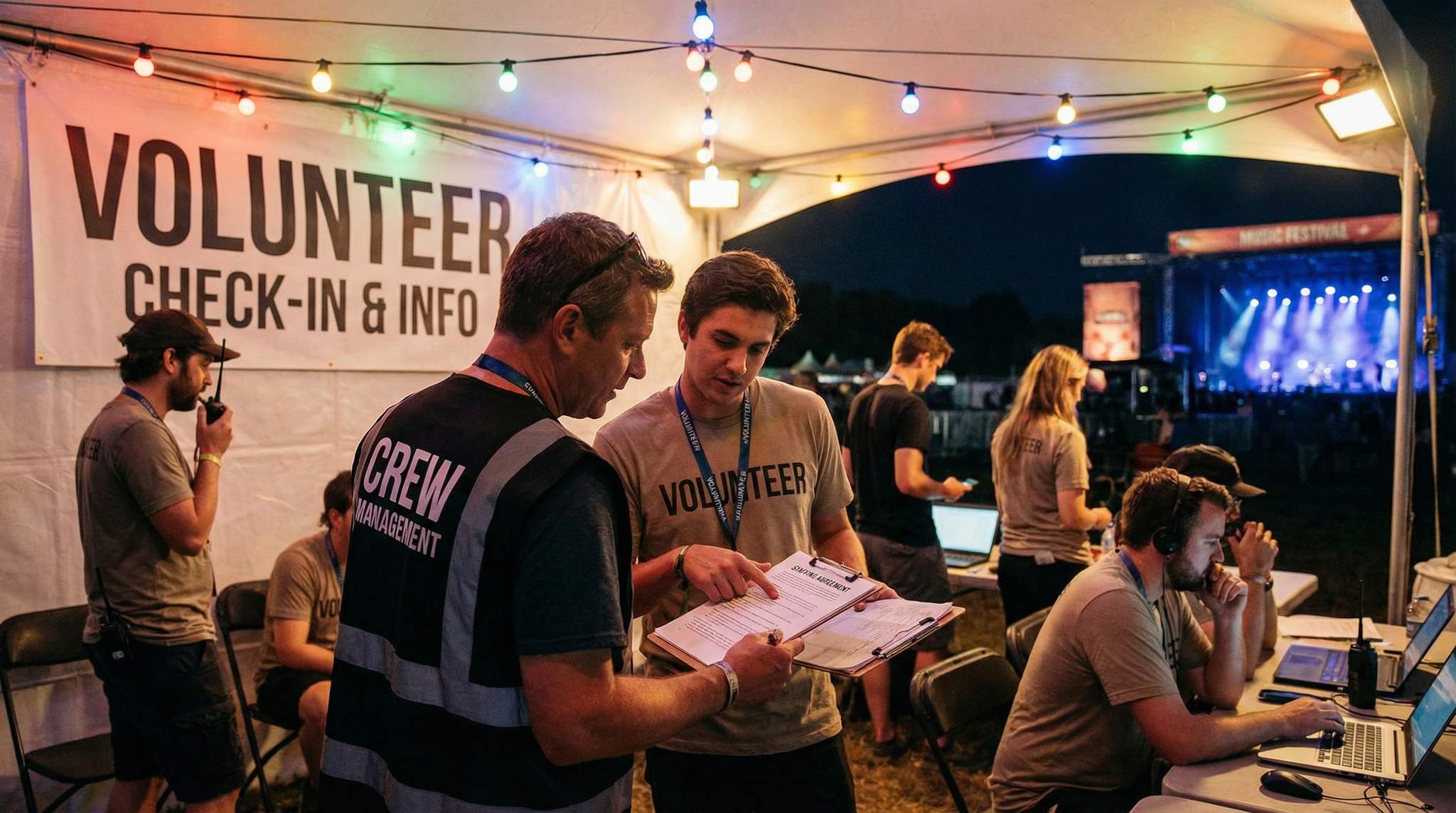
- Volunteer Agreement: Every volunteer should sign a volunteer agreement before starting work. This is not an employment contract, but rather a mutual understanding of the volunteer relationship. It should explicitly state that the individual is volunteering of their own free will, is not an employee or contractor, and will not be paid for their time. For instance, one festival’s volunteer waiver includes a clause that any provided food, drink, or event entry perks “do not constitute compensation” and that the volunteer work “does not constitute employment or contract labor,” similar to terms found in a standard festival volunteer agreement. Using such language makes the intent crystal clear to all parties. The agreement should also outline the scope of the role (e.g. “the volunteer will assist with guest services for X hours”), the timeframe, any perks offered, and conditions for things like the deposit refund if applicable. It can include basic conduct expectations and reference that volunteers must follow festival policies (safety rules, confidentiality if needed, etc.).
- Liability Waiver: Often integrated into the volunteer agreement is a liability release. Volunteers should acknowledge inherent risks of working at the event (from physical activity, large crowds, etc.) and waive claims against the organizers for ordinary incidents. However, note that you cannot waive gross negligence or your duty to provide a safe environment. The waiver also typically states the volunteer isn’t covered by workers’ compensation or employee insurance, so they understand the need to look after their own insurance if necessary. (In practice, your festival insurance should cover volunteers under general liability – consult your insurer on this.)
- Code of Conduct and Policies: Provide volunteers with a condensed version of relevant event policies. This includes anti-harassment and discrimination policies (volunteers, just like employees, should be protected from any form of discrimination or harassment on the job). Make it clear who volunteers report to if they encounter any issues or misconduct. Include safety guidelines here: for example, an evacuation procedure, who to contact for first aid, the requirement to wear any provided safety gear or high-visibility vests, etc. If you have a crew handbook, put a volunteer section in it or create a separate volunteer handbook.
- Documentation of Hours: Keep a log of volunteer hours and shifts worked. Have volunteers sign in and out, or use a digital system to record their time. This serves multiple purposes: tracking contributions (which can be reported if needed for community service credits or just internal analysis), making sure no one is overstaying their planned hours, and providing evidence in case any question later arises about whether someone overworked (or conversely, didn’t fulfill their commitment). If a volunteer later claims they effectively worked full-time and deserves wages, your logged records can help verify the actual hours and nature of their tasks.
- Parental Consent Forms: If you engage any volunteers who are minors, always obtain a signed parental/guardian consent. This form should outline the tasks the minor will do, the hours, and include the guardian’s emergency contact information. It’s also wise to have a policy that under-18 volunteers are supervised at all times by a staff member or a vetted adult volunteer leader.
Finally, maintain all these records for a reasonable period after the festival. Sometimes disputes or regulatory checks can occur weeks or months later. Having a paper trail of agreements and time logs shows that you ran a structured, fair program.
Managing and Integrating Volunteers into Your Team
Volunteer compliance isn’t just about paperwork and laws; it’s also about how you manage volunteers on-site as part of your crew. A well-managed volunteer team will operate safely and happily, which in turn keeps you on the right side of fair practice. Consider these management tips:
- Assign a Volunteer Coordinator or Team Leaders: Designate a staff member (or a small team, for larger festivals) to oversee volunteers. The volunteer coordinator is the go-to person for any volunteer questions, last-minute cancellations, or issues during the event. They should be well-versed in the labour guidelines too, ensuring no volunteer is asked to do something inappropriate. For larger crews, appoint team leaders among the volunteers (veterans who can help guide others) – this creates a clear chain of command and mentorship structure.
- Provide Thorough Training and Orientation: Before the festival (or at the start of a volunteer’s first shift), give them an orientation. Cover the essential training for their role – for example, if they’re checking wristbands at a gate, train them on the scanner device and the entry rules; if they’re helping at the medical tent front desk, train them on privacy and quick triage protocol. Also review safety procedures: what to do in emergencies, how to contact supervisors by radio or phone, and where volunteers can get first aid or rest. Many festivals prepare a simple training script or handbook for volunteers, so everyone receives consistent information.
- Foster Team Inclusion: Make volunteers feel like they are part of the festival crew, not second-class help. This is important for morale and also for smooth operations (they’ll be more committed and responsible). Simple actions can help: invite volunteers to crew meetings or briefings alongside paid staff, give them staff T-shirts or badges that identify them as crew, and encourage staff to thank and acknowledge volunteers throughout the event. Some festivals even pair volunteers with experienced staff as buddies, which is mutually beneficial – the volunteer learns the ropes, and staff get extra hands.
- Monitor Workload and Well-being: Keep an eye on your volunteers during the event. Because they’re not employees, some volunteers might be too shy to speak up if they are tired or overwhelmed. It’s the management’s job to ensure no one is overexerted – proactively rotate someone out if they look fatigued, check that everyone takes water breaks (especially in hot outdoor festivals), and maintain a volunteer HQ area where they can rest. A culture of care goes a long way. Remember, volunteer welfare is directly tied to compliance; if someone collapses from exhaustion, that’s a failure in duty of care and will reflect very poorly on the organizers.
- Feedback and Recognition: After the festival (and even during it), gather feedback from volunteers about their experience. What did they enjoy? Were there any tasks that felt too hard or unclear? This information is gold for improving future volunteer programs and nipping any brewing issues in the bud. Additionally, show appreciation – a small thank-you goes far. Give shout-outs on social media to your volunteer crew, send a thank-you email or certificate, or have a post-event gathering to celebrate the team’s success. When volunteers feel respected and appreciated, they’re likely to spread positive word-of-mouth and even come back next year. That loyalty is priceless and also serves as a buffer against public criticism; happy volunteers will defend your event’s reputation.
Global Legal Considerations
Labour laws around volunteers can vary by country (and region), so international festival producers must tailor compliance to each locale. Here are a few global points to keep in mind:
Free Tool: Model Promoter Payouts
Flat-percentage, flat-per-ticket, or tiered-bonus commission structures — get per-promoter payouts and total commission as % of gross. Free calculator.
- United States: As noted, the Fair Labor Standards Act (FLSA) doesn’t allow volunteering at for-profit businesses. Essentially, if your festival is a commercial venture, U.S. regulators presume workers must be paid at least minimum wage and overtime when applicable. Volunteers can only be used in a narrow context, such as genuinely volunteering for a charitable nonprofit that is involved with the event. Internships must meet strict educational criteria to be unpaid. Recently, there’s been increased scrutiny – even huge corporations like Live Nation faced lawsuits for using unpaid festival interns and volunteers, as seen when plaintiffs sued under the Fair Labor Standards Act. Each state may have additional rules too (for example, California has tough laws on what constitutes an employee). Always consult an employment attorney if you plan to use volunteers at a U.S. event that isn’t a charity.
- United Kingdom: The UK recognises volunteer roles, even in some private events, but the line between “volunteer” and “worker” is crucial. If a volunteer receives any fee or contractual benefit for their work, they may be deemed a “worker” entitled to the National Minimum Wage, according to NCVO guidance on employment status. Genuine volunteers can receive reimbursement for expenses (travel, meals) and trivial perks, but they should not be obligated to work particular hours or shifts under a contract. The moment you require a commitment in return for something (like a free concert ticket), you risk creating an employment contract. To stay safe, many UK festivals either go through charities for volunteer staffing or ensure their volunteer agreements specify no employment relationship. Also remember health and safety laws (and insurance requirements under Employers’ Liability) do cover volunteers, so plan accordingly.
- Europe & Other Regions: Many EU countries have similar approaches – volunteering is generally reserved for nonprofit activities or very limited roles in events. Some countries (like France, for instance) have a tradition of volunteerism in cultural festivals but also strong labour protections that could apply if volunteers complain. In Australia and New Zealand, the concept is much like the US: for-profit events technically shouldn’t use unpaid volunteers except possibly via a charity or if the festival itself is a not-for-profit organization. Australia’s Fair Work Ombudsman has cracked down on unpaid work arrangements in recent years, cautioning event organizers to pay anyone who’s contributing to a business enterprise. Always research the specific labour laws for volunteers in the festival’s host country – if needed, seek local legal advice to design a compliant program. The investment in advice is far cheaper than a legal dispute or fine down the line.
- Visas and International Volunteers: As a side note, if your festival attracts volunteers from abroad (for example, travelers who volunteer in exchange for a free ticket and experience), be mindful of immigration laws. Some countries consider volunteering as “work”, which could require a work visa even if it’s unpaid! Make sure foreign volunteers are aware of any visa implications, or limit volunteer roles to locals to avoid immigration compliance issues.
By acknowledging these regional differences, you ensure that your festival’s volunteer policy isn’t unintentionally legal in one country but illegal in another. The underlying principle everywhere is the same: fairness. If you treat volunteers with fairness and transparency, you’re likely aligning with the spirit of laws worldwide, even as the letter of those laws varies.
Frequently Asked Questions About Volunteer Compliance
What is the most important factor in festival volunteer compliance?
The most critical factor is ensuring that unpaid helpers are not performing essential, revenue-generating tasks that would otherwise require a paid employee. True compliance requires that roles are supplemental, flexible, and ideally tied to a charitable or community-focused initiative.
How should promoters respond when fans ask how to volunteer at concerts?
Organizers should direct all inquiries to a formal application portal. When attendees want to know how to volunteer in concert environments, providing a standardized form with a clear volunteer agreement ensures that legal boundaries and perk structures are understood upfront, protecting the event from misclassification claims.
Can you legally use volunteers for a for-profit festival business?
In most jurisdictions, including the U.S. under the Fair Labor Standards Act, a commercial enterprise cannot legally use unpaid helpers to perform standard operational work. For-profit event organizers must either pay minimum wage or partner with a recognized non-profit organization to compliantly host an unpaid crew.
Are there any exceptions that allow a for-profit company to have volunteers?
Generally, a commercial enterprise cannot utilize unpaid workers for operational tasks. However, a for-profit company can have volunteers if the individuals are participating in a legitimate, academically accredited internship program, or if the event is co-produced with a registered charity where the unpaid crew is exclusively managed by and benefiting the non-profit partner.
Conclusion
Structuring a volunteer program within legal boundaries is both a challenge and an opportunity. It’s a chance to build a festival community that is passionate and engaged, while also demonstrating that your event operates with integrity. The world’s most successful festivals have shown that it’s possible to harness volunteer enthusiasm ethically and safely. They invest time in planning roles, abide by labour laws, partner with community organizations, and make volunteers feel like an integral part of the team.
Smooth Entry With Mobile Check-In
Scan tickets and manage entry with our mobile check-in app. Supports photo ID verification, real-time capacity tracking, and multi-gate coordination.
For the next generation of festival organizers, the message is clear: don’t take shortcuts with “free” labour. Every volunteer’s time is precious – compensate it with respect, perks, and adherence to fair practices. By doing so, you not only dodge legal landmines like wage claims or fines, but you also earn the loyalty of volunteers and the trust of the public. A festival that cares for its crew (paid or unpaid) is a festival that audiences and communities will support year after year.
In the end, running a festival is a team effort in the truest sense. Volunteers can be your festival’s greatest ambassadors if you treat them right. Use the guidance above to navigate the maze of labour laws and ethical considerations. When in doubt, err on the side of caution and compassion – pay people if legally required, offer training and benefits generously, and never exploit someone’s love for the festival. By balancing compliance and kindness, you’ll protect your event’s future and create a positive legacy that goes well beyond the music and lights.