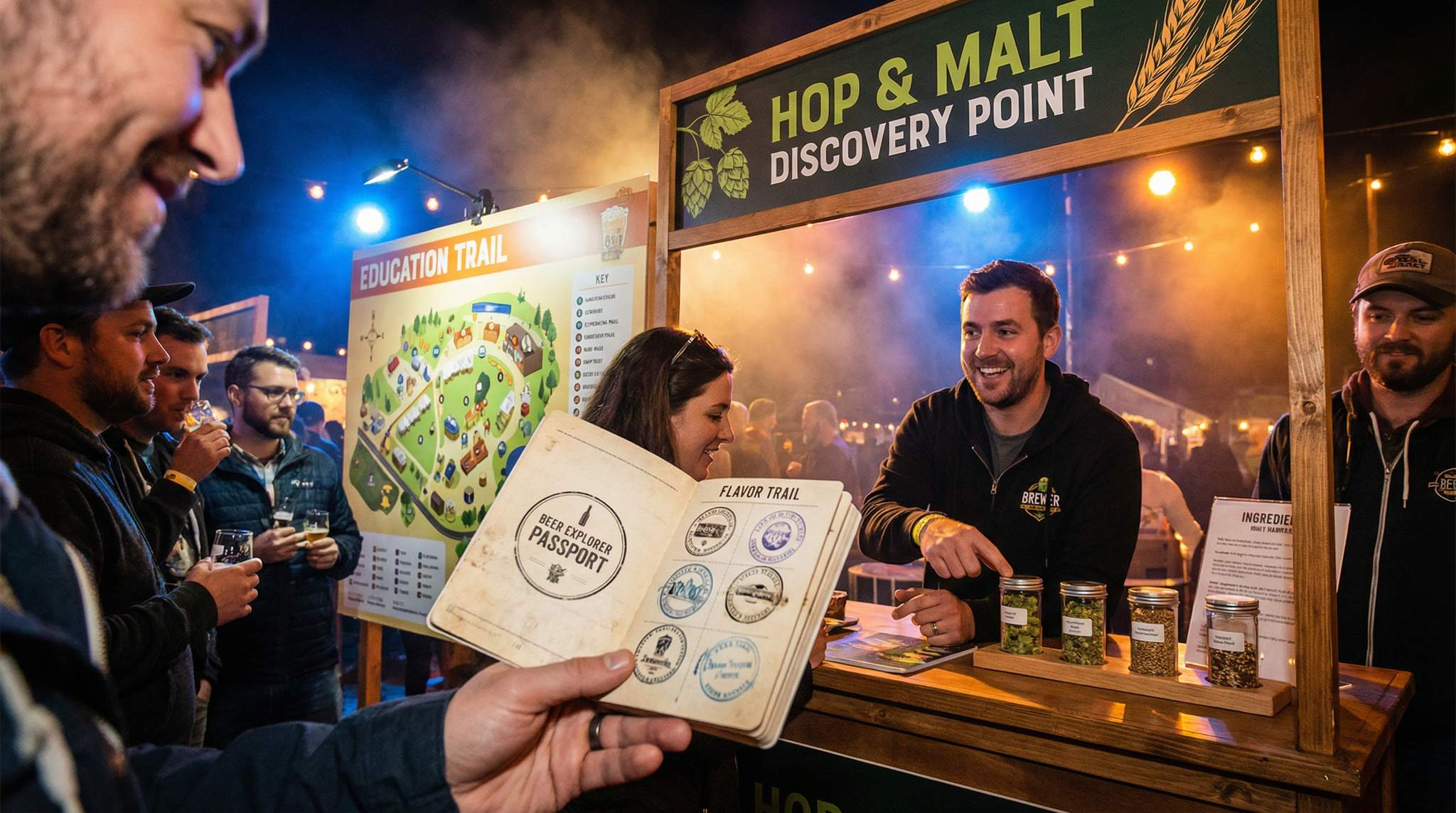
Ever wandered through a beer festival and wished there was a fun way to encourage attendees to try new brews, rather than just flocking to familiar favorites? Gamified tasting passports and educational beer trails are innovative tools that do exactly that. By turning beer tasting into an interactive adventure, festivals can nudge people to explore lesser-known styles and breweries, all without turning the event into a rowdy drinking contest. This approach creates a more enriching and memorable experience for attendees, and adds value for brewers and organizers alike.
What Is a Gamified Tasting Passport?
A tasting passport is a festival program (physical booklet or mobile app) that lets attendees collect stamps or QR code scans for each beer or brewery they sample. Think of it as a game where each stamp in the passport represents a new beer style tasted or a brewery visited. The goal is to “travel” through different tasting experiences much like collecting visa stamps in a real passport. This gamification adds a sense of adventure and achievement to the tasting experience.
Key features of a gamified passport include:
- Stamp or QR Check-ins: Each brewery booth provides a unique stamp or scannable QR code when an attendee samples their beer. This could be a physical stamp on a card or a digital badge in an event app. Organizers often supply each vendor with a custom stamp or a unique QR code to ensure authenticity.
- Progress Tracking: As attendees collect stamps, they can see their progress. For example, filling a row of stamps might indicate they’ve tried all beers in a category (like all IPAs or all local breweries). Digital passports often include progress bars or checklists, while paper passports might have dedicated stamp sections for each vendor or beer style.
- Completion Goals: The passport sets a friendly challenge, such as “Collect stamps from 10 different breweries” or “Try at least one beer from each region of the festival.” These goals encourage people to explore beyond their comfort zone. It’s important to calibrate the goal so that it’s achievable without excessive drinking — the focus is on variety, not volume.
When brainstorming passport ideas for events, organizers aren’t limited to just beer styles. Creative concepts can include “Meet the Brewer” bingo, ingredient-focused scavenger hunts, or cross-promotional passports that encourage attendees to visit specific food pairings alongside their beer samples. The most successful concepts align the game mechanics directly with the festival’s unique theme.
Smooth Entry With Mobile Check-In
Scan tickets and manage entry with our mobile check-in app. Supports photo ID verification, real-time capacity tracking, and multi-gate coordination.
Expanding on these event passport ideas, producers can also incorporate VIP access tiers, hidden “speakeasy” tasting rooms, or sustainability challenges (like rewarding attendees for using public transit or recycling their cups). The most engaging gamification strategies seamlessly blend the core tasting experience with the broader cultural footprint of the festival.
The beauty of a tasting passport is that it transforms the festival into an exploratory journey. Instead of rushing to the nearest popular beer, attendees become travelers on a beer adventure, seeking out new flavors and stamps to complete their journey.
Planning a Festival?
Ticket Fairy's festival ticketing platform handles multi-day passes, RFID wristbands, and complex festival operations.
Innovative Beer Festival Ideas to Complement Your Passport
While gamification is a powerful tool, the most successful organizers view tasting passports as just one component within a broader portfolio of creative beer festival ideas. To truly captivate attendees, consider pairing your passport program with other interactive concepts. For instance, you might host live brewing demonstrations where guests can smell the hops and taste the wort, or set up dedicated food pairing stations that require a passport stamp for entry. Other engaging concepts include hosting a “brewer’s lounge” for VIP ticket holders or organizing a blind tasting competition where fans vote for their favorite mystery pour. By layering these diverse event strategies, producers can build a multi-dimensional experience that keeps attendees engaged from gates open to last call.
Designing an Educational Beer Trail
To enhance the passport concept, festivals can create education trails – curated paths through the event that highlight certain themes, ingredients, or stories behind the beers. An education trail might focus on a specific style or an aspect of brewing, turning the act of tasting into a mini class on beer appreciation. Here’s how to design one:
- Themed Trails: Divide your passport into sections or “trails” with themes. For example, a Flavor Trail might include stations for beers that showcase specific ingredients (a malty stout, a hoppy IPA, a funky wild ale, etc.), while a World Beer Trail might have booths featuring beer styles from different countries. Attendees who complete a trail (collect all stamps in that section) not only earn a sense of accomplishment, but also gain a deeper understanding of that theme.
- Educational Prompts: At each stop on the trail, provide a bite-sized educational prompt or fun fact. This could be in the passport itself or on signage at the booth. For instance, an IPA booth might have a note saying, “Notice the citrus aroma — that comes from American hops!”, while a Belgian ale booth could ask, “Can you detect the spicy notes from the yeast?”. These prompts encourage attendees to slow down and savor, raising their palate literacy by teaching them how to identify malt, yeast, and aroma characteristics.
- Interactive Elements: Make learning engaging. Some festivals hand out flavor wheels or aroma charts so that as attendees taste, they can match what they’re smelling and tasting to common beer flavor descriptors. Others might include a quick quiz question in the app (“Which ingredient gives this stout its coffee-like taste?”) that attendees can answer to earn an extra bonus stamp or points. Such interactions turn tasting into a two-way engagement rather than a passive drink-and-move-on.
- Guided Tours and Talks: Consider integrating scheduled mini-tours or brewer talks as part of the trail. For example, a brewmaster could lead a 15-minute tasting session of three beers highlighting how different malts affect flavor. Attendees get a special stamp for attending the session. This not only educates the audience but also increases dwell time at the festival – people stick around longer because there’s more to do than just drink.
By weaving educational content into the passport, you ensure the festival isn’t just about what people drink, but how they drink and learn. Attendees often report that these insights make the experience richer and more satisfying, as they come away with new knowledge, not just a buzz.
Encouraging Exploration Over Intoxication
One of the main reasons to implement a tasting passport is to gently push attendees toward exploration of lesser-known breweries and beer styles. However, it’s critical to do this in a way that doesn’t encourage irresponsible drinking. Here are strategies to achieve that balance:
Free Tool: Size Your Festival Site
Zoned capacity planning for arena, campsite, parking and entry lanes — against UK Purple Guide and NFPA density standards. Finds your bottleneck zone.
- Focus on Variety, Not Volume: Structure the passport goals around variety. For example, challenge attendees to collect 8 stamps from different breweries (not 20 beers from one booth!), or to try each major style available (ale, lager, stout, sour, etc.). By rewarding diversity of tasting, you implicitly limit the quantity any one person will consume from a single category. This reduces the chance of over-consumption because the game is about breadth, not depth.
- Sampling Sizes: Festivals typically serve beer in small tasting portions (often 2–4 oz pours). Reinforce this by making it clear that a stamp is earned per sample, not per full pint. Many beer festivals around the world already operate on a tasting glass model – the passport just overlays a game on that. If an attendee needs, say, 10 different stamps to complete the passport, that might equate to 10 small pours spread out over several hours, which is a manageable amount for most people. (In fact, some events explicitly cap the number of samples for the passport challenge to ensure no one overindulges.)
- Safe Pacing Cues: Use the passport to encourage pacing. You might include “hydration break” icons or reminders every few stamps, e.g., after 5 stamps the passport has a page reminding attendees to drink water and grab a bite of food. Some festivals even partner with food vendors to offer a discount coupon on the passport once half the stamps are collected, as an incentive to take a snack break. By building these cues into the experience, you steer the crowd toward a healthier festival behavior without lecturing.
- No Speed Rewards: Avoid any prize mechanic that rewards finishing the passport fastest. This is not a race. Make that clear in the rules. If people think the first 50 to complete get a prize, guess what – some will try to slam 50 samples quickly, which is dangerous. Instead, use prize mechanics that reward completion or creativity (more on that later), and emphasize that there’s no benefit to rushing. The journey should be enjoyable and safe.
- Promote Responsible Enjoyment: Set the tone through festival branding and announcements. Encourage attendees to “complete the adventure” rather than “drink as much as possible.” Many successful festivals in the US, Europe, and Asia have adopted language focusing on discovery, community, and learning. For example, a craft beer festival in Singapore might promote its passport as a way to “discover new flavors across 20 breweries,” while a local boutique festival in Mexico City could highlight how the passport helps you “meet the brewers behind the beers.” By framing it as an exploration, attendees naturally shift their mindset away from pure consumption.
In short, the passport should feel like a treasure hunt or educational quest. Attendees wind up having conversations with brewers, comparing notes with friends, and seeking out hidden gems – all behaviors that enrich the festival atmosphere and divert attention from just getting drunk.
Prize Mechanics That Motivate and Educate
Gamification works best when there’s a reward at the end of the journey. Prizes give attendees an extra incentive to participate in the passport, but designing the right prize mechanics is key to keeping the contest friendly and fraud-free. Here are some effective approaches:
Need Festival Funding?
Get the capital you need to book headliners, secure venues, and scale your festival production.
- Completion Prizes: Offer a small guaranteed prize for completing the passport (or a specific trail within it). This could be a custom festival sticker, a button or pin, or a commemorative beer glass. The reward is mainly a token of accomplishment – it’s amazing how motivating a simple “Beer Trail Conqueror” badge can be. Because everyone who completes can get one, it fosters a sense of achievement without pitting attendees against each other.
- Tiered Rewards: Introduce levels of achievement. For instance, 5 stamps might earn a bronze level, 10 stamps silver, and 15 stamps gold. Each level could correspond to a better prize or additional perks: bronze might get a high-five and a mention on the festival’s social media, silver a small merch item like a koozie, and gold a festival t-shirt or entry into a grand prize drawing. Tiered goals encourage people to go further if they want to, but even hitting a lower tier still feels rewarding.
- Raffle Drawings: A popular method to avoid a “fastest chugger wins” scenario is to use a raffle. Anyone who completes the passport (or at least gets a substantial number of stamps, say 80%) can submit their passport (or show their app) to enter a prize drawing. Prizes could be bigger items like VIP tickets to next year’s festival, gift cards to local breweries, or a mixed six-pack of rare beers. Because it’s a sweepstakes among completers, there’s no time pressure – whether you finished first or last, everyone has an equal chance in the draw. This promotes a relaxed pace.
- Challenges and Quests: Instead of one big prize for doing “all the things,” consider smaller challenges built into the passport. For example, a passport might contain a list of optional mini-quests: “Find a beer brewed with fruit,” “Locate the brewery that traveled the farthest to be here,” or “Try the cask-conditioned ale.” Completing each mini-quest could earn a sticker or a ticket that goes into a specific prize bucket. Attendees can choose which quests interest them. This flexibility makes the game more personalized and fun. It also spreads people around the festival as they pursue different quests.
- Educational Rewards: Tie rewards to learning. For instance, if your festival has a quiz or trivia element (say, a question at the back of the passport or in the app that can only be answered if you talked to a brewer or read an info poster), a correct answer could earn an extra raffle entry. You could even have a short “beer IQ” quiz at a designated booth where staff award bonus stamps for passing. This way, you reward not just tasting, but knowledge gained.
- Partner-Sponsored Prizes: Collaborate with breweries and sponsors for prizes. Many breweries are happy to contribute swag like hats, shirts, or free tour vouchers for the sake of promotion. A local sponsor (like a homebrew shop or beer magazine) might offer a bigger prize such as a homebrew starter kit or a year’s subscription. Partnering on prizes saves cost for the organizer and strengthens community ties. Just be sure the prizes align with the spirit of the event – for a beer festival, beer-related prizes or experiential rewards (like brewery visits) resonate more than something random.
When planning prizes, also estimate how many people might actually complete the passport. Surprisingly, not everyone who starts will finish, especially if the passport is extensive. Based on similar festivals, completion rates might range from 10% to 30% of attendees, depending on difficulty and how “hardcore” the audience is. Make sure to have enough prizes for at least that many winners if it’s guaranteed, or limit guaranteed prizes to the first X completions (announced upfront) and use raffles for the rest. If you do limit, as mentioned, don’t hype it as a race – frame it as “supplies are limited, so don’t forget to claim your prize when you’re done.”
Anti-Fraud and Fair Play Measures
Whenever there’s a prize or competition, a few people might be tempted to cheat the system. In the context of a tasting passport, fraud could mean someone faking stamps, getting extra scans without actually tasting, or any tactic to complete the passport illegitimately. It’s important to design some basic anti-fraud measures so the game remains fair and credible:
- Unique Stamps or Codes: If using physical passports, give each brewery a uniquely shaped or colored stamp (or even stickers). This prevents someone from, say, buying one generic stamp and marking their entire card themselves. It also makes each stamp a cool collectible icon of that brewery. For digital, ensure each QR code can only be scanned once per user account. Most event apps or scanning systems will lock out duplicate scans automatically or flag if someone tries to reuse a QR code.
- Staff Verification: Instruct brewery staff or festival volunteers to only stamp or scan when they actually serve a tasting. They should mark the passport in front of them, not hand the stamp to attendees. For digital systems, often the staff will have a scanner app to scan the attendee’s QR code on their wristband or phone, which automatically logs the taste. If using an app like Ticket Fairy’s platform, for example, each booth can quickly scan attendee QR codes to register a sample – this greatly cuts down on any possibility of self-scanning hacks.
- Hidden Markings and Watermarks: For paper passports, consider subtle anti-counterfeit features. Simple tricks include using a special color ink for stamps that’s not easily found in stores, watermarked paper, or printing a faint serial number on each passport and requiring attendees to register their number when entering a raffle (so photocopying a blank passport and stamping it won’t work because the serial won’t be in the system). These measures are more relevant for larger events where prizes are valuable – most small festivals won’t need high-security printing, but a little precaution can deter would-be cheaters.
- Monitor Unusual Activity: If using a digital passport, you can monitor the back-end for any suspicious patterns – e.g., one account scanning a bunch of codes in implausibly quick succession or one booth’s code being hit far more times than that booth served beers. This could indicate someone found a way to scan without being at the booth (like scanning a shared photo of the QR code). In such cases, you can void those entries (and perhaps gently remind attendees that passports are meant to be fun, not gamed). Thankfully, these tech abuses are rare if the system is well-designed and codes aren’t guessable.
- Clear Rules & Messaging: Announce the rules of the passport clearly at the start. Let attendees know that passports will be checked for validity when claiming prizes. Sometimes just stating “fraudulent entries will be disqualified” is enough to discourage mischief. Also, emphasize again that it’s not about speed or volume – discourage any behavior that could ruin the spirit of the game or the safety of the event. Most people will respect the rules if they know them.
- Limit One Passport per Person: It may sound obvious, but ensure each attendee can only play once. If you’re using an app, that’s naturally enforced by one login per ticket. For physical passports, you might stamp their festival wristband or check off their name when giving out the passport to prevent someone from grabbing multiples for extra chances. You want everyone enjoying one fair shot at the game.
By putting these measures in place, festival organizers protect the integrity of the gamified experience. A fair game ensures that genuine participants feel their effort was worthwhile, and it keeps brewers happy too – they want real interested tasters at their booths, not people just fishing for stamps.
Real-World Success Stories
Gamified tasting passports have been implemented at festivals of all sizes, with encouraging results. Here are a few examples and lessons learned from around the globe:
Turn Fans Into Your Marketing Team
Ticket Fairy's built-in referral rewards system incentivizes attendees to share your event, delivering 15-25% sales boosts and 30x ROI vs paid ads.
- Seattle, USA – Regional Craft Beer Festival: A mid-sized beer festival in Seattle introduced a digital tasting passport through their ticketing platform. Attendees could scan QR codes at each brewery booth to track their tastings, rate the beers, and mark favorites. The festival director noted that this digital passport was a “game changer” for engagement – attendees loved the novelty and interacted more deeply with each brewery, and brewers appreciated getting real-time feedback on which beers were popular. The data collected also helped organizers see which lesser-known breweries got a boost in traffic. The key lesson was that a user-friendly tech solution can enhance the festival without distracting from the beer itself.
- London, UK – Ale Trail at a Local Beer Fest: A small local beer festival in London’s suburbs created a paper “Ale Trail” passport to support newer breweries. The booklet listed 10 up-and-coming breweries that attendees might not visit normally. Those who collected stamps from all 10 got a special pint glass at the end. The organizers observed that about 60% of the festival-goers participated in the trail, and it successfully drove foot traffic to every single newcomer booth. Some attendees even said the trail was their favorite part of the event because it felt like a guided tour of undiscovered beers. However, a few passports came back with obviously doctored stamps (people can be crafty!). Since the prize was modest, organizers simply reminded everyone to play fair next time and decided to use more unique stamp designs in the future.
- Melbourne, Australia – Educational Beer Garden Quest: At a large beer and food festival in Melbourne, organizers set up an “Education Quest” within the beer garden. Attendees picked up a card with challenges like “Talk to a brewer about their brewing process” and “Identify the hop aroma in the Pacific Ale.” Completing each challenge earned a sticker, and completing all got you entered into a draw for a VIP brewery tour. This more free-form passport (focused on tasks rather than specific beers) led to fantastic anecdotes – attendees were actively chatting with brewers and jotting down notes. Breweries reported that those who came with the quest card were more engaged and likely to stick around longer at their stalls. The festival team did caution that not everyone is outgoing enough to do a scavenger hunt like this, so they plan to offer both a simplified tasting passport and the advanced quest next year to cater to different attendee types.
- Bangalore, India – Craft Beer Week Passport: In an emerging craft beer market like India, one beer week event in Bangalore issued digital passports via a mobile app. Because many attendees were new to craft beer, the app included a glossary of beer terms and a flavor wheel to help educate them as they tasted. Attendees earned badges for trying various styles (like a badge for “Explorer: tasted 5 beer styles”). The prize for collecting a broad range of badges was a mixed pack of beers from participating microbreweries. The initiative was successful in increasing the range of styles each person tried — many discovered styles like stouts and sours for the first time through the prompts. The organizers found that having multi-language support in the app (English and the local language Kannada) was important for inclusivity. Their advice: know your audience’s familiarity level and tailor the educational content accordingly.
- City-Wide Integration – Promoting Local Attractions: Some organizers wonder if there are companies that provide curated experience packages, like a craft brewery passport, for promoting local attractions alongside the main event. The answer is yes. Partnering with local tourism boards or specialized destination marketing agencies allows festivals to extend their gamified trails beyond the venue gates. For example, a multi-day festival might offer an extended event passport that includes check-ins at downtown landmarks, partner restaurants, or regional taprooms. This not only drives economic impact for the host city but also transforms a standard beer fest into a comprehensive weekend getaway package.
When exploring whether there are specialized agencies or platforms that build these curated experience packages, festival producers should look toward experiential marketing firms and white-label event tech providers. These companies specialize in crafting custom craft brewery passports that seamlessly connect a flagship festival with surrounding local attractions. By leveraging specialized ticket software for beer tastings and tours, these partners can bundle off-site excursions—like a guided historical pub walk or a regional farm-to-glass tasting—directly into the main event’s ticketing flow. This creates a cohesive, multi-day itinerary that benefits both the festival’s bottom line and the local hospitality ecosystem.
Across these examples, a common theme is that gamified passports can significantly boost engagement and satisfaction at beer festivals. Whether it’s a digital system or paper-and-stamp, the investment in planning and execution pays off in happier attendees and happier brewers. People walk away not only having had a good time, but also having learned something and discovered new favorites – which is exactly the outcome you want for a festival built around beer culture.
Practical Tips for Implementation
If you’re considering rolling out a tasting passport or education trail at your festival, here are some practical tips from veteran producers to ensure it goes smoothly:
- Plan Early and Coordinate with Breweries: Introduce the passport concept to your participating breweries well in advance. Breweries should be eager to participate (it drives people to them), but they need to know the logistics. Will you provide stamps or devices? How much time might stamping take per person? Early buy-in prevents confusion on festival day. Many organizers host a quick briefing with all booth staff at the start of the event to go over how the passport works.
-
Decide on Format (Physical vs Digital): Consider the size of your event and your audience when choosing paper passports or a mobile app. Physical passports are tactile and simple, great for smaller festivals or audiences less likely to use smartphones. They also serve as a souvenir. Digital passports are superb for larger crowds and tech-savvy attendees – they can prevent bottlenecks (scanning can be faster than stamping), and they automatically log data. They also eliminate the “lost passport” problem. If you go digital, ensure Wi-Fi or cellular service at the venue is robust, or use an app that can scan offline and sync later.
For larger events, consider using a robust event management platform that offers a digital passport system. For example, Ticket Fairy’s beer festival toolkit includes a mobile tasting passport with QR code scanning and rating features, which can streamline your setup.
When evaluating a dedicated beer tasting ticketing system, organizers should look for platforms that seamlessly blend entry management with these gamified elements. A unified software solution allows you to link a guest’s admission ticket directly to their digital passport or RFID wristband. This integration not only simplifies the check-in process but also provides invaluable data on attendee flow and sampling preferences, helping you refine future events.
Go Cashless With RFID Technology
Enable contactless payments, faster entry, and real-time spending analytics with RFID wristbands and NFC-enabled ticketing for your events.
Beyond the main festival grounds, many organizers incorporate VIP brewery visits or guided educational sessions into their programming. Utilizing dedicated beer tastings and tours ticket software allows producers to manage capacity for these intimate side-events, bundle tour access with general admission, and track attendance across multiple venues. A comprehensive beer festival ticketing system will seamlessly sync these add-on experiences with the attendee’s digital passport, creating a unified journey from the first scan at the gate to the final guided tasting.
-
Test Your System: If using a digital platform, do a trial run. Test scanning at a dummy booth, have staff practice using the scanner app, and let a few beta testers try the attendee app before the festival. Iron out any UX issues so people aren’t fumbling with their phones at the event. Likewise, if using physical passports, test that the stamps don’t smudge, ink pads are supplied, and that the paper quality holds up (beer gets spilled – consider laminated or coated paper if possible).
- Explain the Game to Attendees: A passport is only fun if people know about it! Promote it in your pre-event marketing (for example: “Join the Beer Trail challenge at your festival for a chance to win prizes and become a certified Beer Explorer!”). At the event entrance, have staff or signage instruct attendees how to get started. Include a page in the passport or a screen in the app with the simple rules and where to claim prizes. During the fest, MC announcements can playfully remind folks “Have you collected your stamps? Don’t miss the sour beer booth in the corner for a unique taste and a stamp on your passport!”
- Monitor and Adapt in Real Time: Keep an eye on how things are going during the event. Are there long lines at certain booths because of the passport? (If so, you might deploy a volunteer to help with stamping or encourage people to come back later.) Are many people finishing way earlier than expected? (Maybe your challenge was too easy.) Be ready to sprinkle in an extra challenge or simply congratulate them and encourage them to enjoy the rest of the fest responsibly. If hardly anyone is doing it, have staff or volunteers gently encourage people to join in – sometimes a quick demo is all that’s needed to spark interest.
- Collect Feedback: After the festival (or as people claim prizes), ask for quick feedback: Did they enjoy the passport? Did it change how they explored the festival? Which parts were most fun or least fun? This feedback is gold for improving the concept next time. You’ll learn whether the prizes were motivating, if the rules were clear, and if the educational aspects were effective. Some organizers send a follow-up email survey to all attendees; you could include a question or two there about the passport experience specifically.
- Acknowledge the Participants: Post-festival, celebrate those who participated. You might publish a social media shout-out to the “Beer Trailblazers” who completed the passport, or share some fun stats (“Over 500 attendees collected 3,200 stamps collectively – that’s 3,200 unique beer tasting experiences shared!”). This not only gives people recognition (driving loyalty and return attendance), but also serves as great marketing for your next event. It shows that your festival is about community and discovery, not just drinking.
- Leverage Specialized Software for Complex Itineraries: If your event passport ideas include off-site excursions or multi-venue access, standard general admission platforms may fall short. Upgrading to a robust beer tasting ticketing system allows you to manage capacity across various micro-events. Whether you are coordinating shuttle buses to local attractions or scheduling intimate brewer meet-and-greets, utilizing advanced ticket software for beer tastings and tours ensures that every scan, stamp, and entry is tracked in one centralized dashboard.
When analyzing the operational strategies of the best beer festivals globally, a common denominator is their reliance on a robust, all-in-one event management platform. A top-tier beer festival ticketing system doesn’t just process admissions; it acts as the central hub for the entire attendee journey. By unifying entry gates, VIP upgrades, and digital passport tracking into a single software ecosystem, producers can eliminate data silos and deliver the frictionless experience that modern craft beverage fans expect.
By following these tips, you’ll set up your gamified tasting passport for success. Like any new feature, it takes some effort to implement, but the returns in attendee engagement and satisfaction can be well worth it.
Conclusion
In the ever-evolving world of beer festivals – from intimate brewpub gatherings in New Zealand to massive Oktoberfest-style celebrations in Germany – one thing remains constant: people are looking for memorable experiences. Gamified tasting passports and educational trails tap into that desire, turning a day of beer tasting into a richer adventure of exploration and learning.
For festival organizers, these tools offer a powerful way to differentiate your event. They create structure and purpose that sponsors love, that breweries benefit from, and that attendees rave about afterwards. Instead of a free-for-all drinking spree, your festival becomes a curated journey. Attendees leave not only having enjoyed great beer, but also having discovered new favorites, learned the stories behind the brews, and maybe even made new friends along the trail.
Boost Revenue With Smart Upsells
Sell merchandise, VIP upgrades, parking passes, and add-ons during checkout and via post-purchase emails. Increase average order value by up to 220%.
As a veteran festival producer would advise: innovation and authenticity are the keys to longevity. A tasting passport program embodies both – it’s an innovative twist on the classic beer fest, and it authentically celebrates what beer culture is all about: variety, creativity, and community. So, whether you’re organizing a local beer fiesta in India or a large-scale craft beer expo in California, consider gamifying the tasting experience. Done thoughtfully, it’s a win-win-win for attendees, breweries, and you, the organizer.
Cheers to creating festivals that are fun, educational, and unforgettable!
Frequently Asked Questions
What is a gamified tasting passport for beer festivals?
A tasting passport is a physical booklet or mobile app that allows festival attendees to collect stamps or QR code scans for every beer or brewery they sample. Functioning like a game, it encourages participants to travel through different styles and vendors, transforming the tasting experience into an interactive adventure with progress tracking and completion goals.
How can festivals design an educational beer trail?
Festivals can create educational beer trails by dividing the passport into themed sections, such as a Flavor Trail or World Beer Trail. Organizers should place educational prompts at booths to teach palate literacy and include interactive elements like flavor wheels or quizzes. These features turn tasting into a mini-class on beer appreciation while increasing attendee dwell time.
How do tasting passports encourage responsible drinking?
Tasting passports promote responsible consumption by focusing on variety rather than volume. Strategies include challenging attendees to collect stamps from different breweries instead of drinking heavily at one, reinforcing small sample sizes (2–4 oz), and incorporating pacing cues like hydration breaks. Organizers should also avoid prize mechanics that reward speed to ensure a safe experience.
What are effective prize mechanics for festival passports?
Effective prize mechanics include offering guaranteed small rewards like stickers or commemorative glasses for completion, or using tiered systems where more stamps earn better perks. To avoid dangerous speed-drinking, organizers often use raffle drawings for anyone who completes the passport. Educational rewards, such as bonus entries for answering trivia questions, also successfully motivate attendees without encouraging excess.
How can organizers prevent fraud in gamified tasting passports?
Organizers can prevent fraud by using unique, hard-to-replicate stamps or one-time-use QR codes for digital passports. Staff verification is crucial; volunteers should stamp or scan only when serving a tasting. Digital systems can monitor for suspicious activity like rapid scanning, while physical passports may use watermarked paper or serial numbers to deter counterfeiting and ensure fair play.
Should festivals use digital or physical tasting passports?
The choice depends on event size and audience. Physical passports offer a tactile souvenir and work well for smaller crowds or less tech-savvy attendees. Digital passports via mobile apps are ideal for larger festivals, as they prevent bottlenecks through faster scanning, automatically log data for brewers, and eliminate lost booklets, though they require robust Wi-Fi or offline capabilities.
What features should organizers look for in a beer tasting ticketing system?
A robust beer tasting ticketing system should go beyond basic admission. Organizers should look for platforms that integrate digital tasting passports, token or sample tracking, and RFID or QR code scanning capabilities. Additionally, the software should offer real-time data analytics to monitor attendee engagement, track popular brewery booths, and manage capacity safely.
How does ticket software for beer tastings and tours benefit festival organizers?
Specialized ticket software for beer tastings and tours allows organizers to manage complex event schedules, such as VIP brewery visits, guided tasting sessions, and multi-day access. A comprehensive beer festival ticketing system integrates these add-on experiences with digital passports, streamlining capacity management, check-ins, and attendee data tracking across all event activations.
Are there companies that provide curated experience packages, like a craft brewery passport, for promoting local attractions?
Yes, many destination marketing organizations and specialized event agencies partner with festival producers to create curated experience packages. These collaborations often utilize digital event passport ideas to promote local attractions, driving foot traffic to regional taprooms, historic landmarks, and partner restaurants alongside the main festival programming.
How do the best beer festivals utilize ticketing systems for gamification?
The best beer festivals leverage an integrated beer festival ticketing system to unify admission, VIP upgrades, and digital tasting passports. By using a single software platform, organizers can seamlessly track attendee sampling behavior, manage capacity for exclusive tours, and deliver a frictionless, gamified experience from the entry gate to the final pour.
What are some creative passport ideas for events beyond traditional beer sampling?
Innovative event passport ideas can include “Meet the Brewer” bingo, ingredient-focused scavenger hunts, and cross-promotional trails that highlight local attractions or food pairings. By integrating these concepts into a comprehensive beer festival ticketing system, organizers can track participation data, reward attendees for exploring off-the-beaten-path vendors, and create a more dynamic, interactive festival environment.
What are some other engaging beer festival ideas that pair well with tasting passports?
Beyond gamified trails, organizers can elevate their events with creative beer festival ideas such as live brewing demonstrations, blind tasting competitions, and dedicated food pairing zones. Integrating these concepts with a passport system—for example, offering bonus stamps for attending a brewer Q&A or voting in a tasting contest—creates a cohesive, highly interactive attendee experience.