Introduction
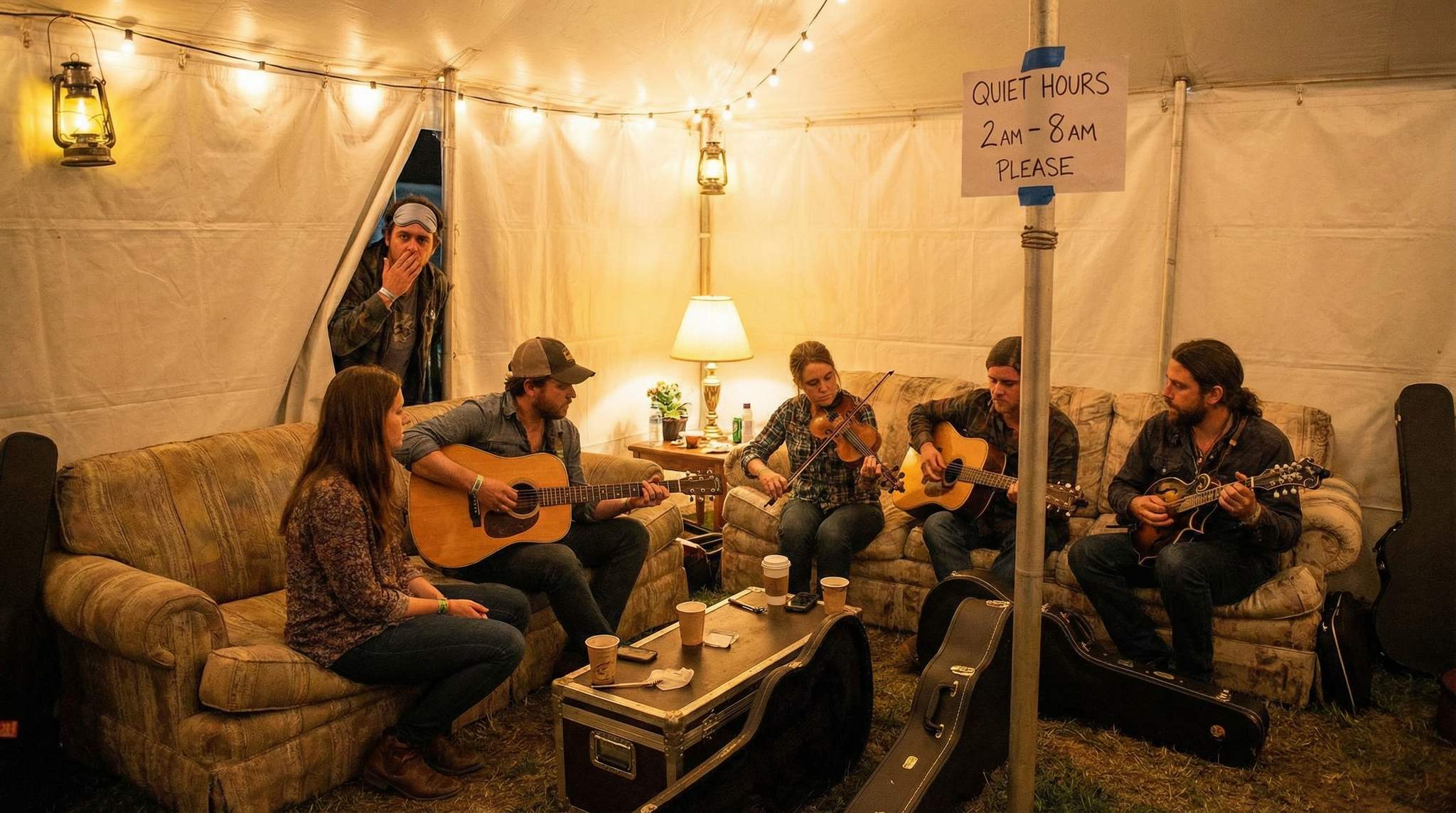
Picture a late-night scene at a folk festival: the final set has wrapped up, and in a cozy backstage corner, fiddles and guitars emerge as artists gather for an impromptu jam. It’s a magical greenroom moment – until a tired singer, who has an early set the next day, pokes their head in, hoping for some quiet. Balancing these two needs – preserving quiet downtime and enabling joyful jam sessions – is a common challenge for festival organizers. Seasoned festival producers know that a harmonious backstage environment doesn’t happen by accident; it requires thoughtful etiquette guidelines and a bit of structure.
Greenroom etiquette for jam-ready artists is all about setting expectations so that spontaneous creativity can flourish without stepping on anyone’s toes. From decades of global festival experience – from intimate folk gatherings in New Zealand to massive multi-stage events in the US and UK – experts have learned what works (and what doesn’t) when managing backstage jams. This guide shares practical tips on quiet hours, shared space courtesy, clear signage, recording policies, and building camaraderie among artists. The goal is simple: keep the greenroom a positive, productive haven where both all-night jammers and early-to-bed performers feel respected.
Quiet Hours vs. Jam Hours: Balancing Rest and Revelry
One of the first steps in greenroom etiquette is establishing quiet hours and jam hours. Artists at folk festivals often have different rhythms – some thrive on late-night song swaps, while others desperately need rest or silence to preserve their voice for tomorrow’s performance. A wise festival producer will delineate times (or separate spaces) for each.
-
Set Dedicated Quiet Times: Clearly communicate when the backstage area (or parts of it) should be noise-free. For example, you might enforce quiet hours from, say, 1:00 AM until 8:00 AM, when no loud jamming or amplified sound is allowed. This gives singers and tired musicians a guaranteed window for sleep. Some festivals even post signs like “Quiet Time – please keep noise down until morning.” If your event runs late or artists stay on-site, consider implementing shifts for quiet vs. jam-friendly times.
Free Tool: Size Your Festival Site
Zoned capacity planning for arena, campsite, parking and entry lanes — against UK Purple Guide and NFPA density standards. Finds your bottleneck zone.
-
Create Jam-Friendly Slots: Likewise, let artists know when jam sessions are welcome. Perhaps after the main stage closes, from 11:00 PM until midnight (or later if your festival site and local noise ordinances allow), the greenroom or an artist lounge can be a “jam hour” zone. By explicitly setting these jam hours, you legitimise those magical collaborations instead of leaving them to chance – and artists can plan their rest or participation accordingly.
This structured approach has been tested in various festivals. In Texas, for instance, the long-running Kerrville Folk Festival distinguishes between quiet areas and jamming areas in its campground. Kerrville’s organizers designate an overflow camping section as a quiet zone and encourage musicians to keep the party in the campground where music can run late. That principle can be applied backstage too: if possible, provide a separate artist jam space (like a tent or lounge slightly away from dressing rooms) so that a fiddler’s 3 AM reel doesn’t inadvertently wake the acoustic duo sleeping before their sunrise set.
Planning a Festival?
Ticket Fairy's festival ticketing platform handles multi-day passes, RFID wristbands, and complex festival operations.
Don’t forget to check local regulations or venue rules. Outdoor festivals may face community noise curfews – the last thing you want is the festival receiving a noise complaint or fine because an impromptu bluegrass jam carried on past midnight. If your site has strict quiet hours for the surrounding neighbourhood, you might move late-night jams indoors or to a soundproof room. Communication is key: announce the quiet hours and jam hours in advance through artist info packs and remind everyone with friendly signage on site.
Respect Shared Spaces and Gear
A festival greenroom is a shared sanctuary. It might be a trailer, a tent, a dedicated artists’ lounge, or even a corner of a barn at a rustic folk retreat – but whatever the setting, it’s collectively used by dozens of performers. Basic respect for shared space and gear goes a long way in keeping the peace.
-
Keep It Tidy & Accessible: Treat the greenroom as a communal living room. Don’t sprawl your cases, costumes, or half-eaten food all over the only sofa. Use marked storage areas (or under benches) for large instrument cases. Festival staff can help by providing ample instrument racks or lockers so fiddles and guitars aren’t strewn about underfoot. A clutter-free space is safer and more inviting for an impromptu jam circle.
-
Mind Personal and House Gear: Many festivals provide some communal gear in the backstage area – perhaps an upright piano, a drum kit, or spare amplifiers – specifically to encourage collaboration. If you use it, treat it gently and leave it as you found it. More importantly, always ask before handling someone else’s instrument or gear. It’s tempting when you see an interesting banjo or a rare bouzouki sitting there, but an artist’s instruments are like extensions of themselves. One veteran producer recalls a near-disaster when an enthusiastic guest picked up a headliner’s guitar to join a jam without asking – only to discover it was tuned in a very unique way and nearly popped a string. A quick polite ask (“Mind if I play along on your guitar for this tune?”) avoids such mishaps and shows respect.
Free Tool: Project Your Bar Revenue
Per-head spend benchmarks by event type turned into projected bar and food revenue, with a stock-mix estimate and gross-margin line. Free calculator.
-
Share the Sound Spectrum: In a jam setting, especially if multiple people are playing, be conscious of volume and tonal space. Jamming isn’t an onstage performance with full PA – it’s a conversation. Listen to others, take turns and don’t dominate. For example, if three fiddlers are sawing away, maybe the dobro player can sit out a verse or add subtle harmony instead of everyone trying to solo at once. This kind of musical courtesy might seem obvious among professionals, but gentle reminders can help, especially when different musical cultures meet (a loud brass horn might overpower a soft-spoken harp unless they adjust).
-
Gear Placement and Safety: If a jam session is about to spark, consider moving to a suitable spot in the greenroom – away from delicate equipment or crowded corners. Festival staff might set up a designated jam corner with chairs or cushions in a circle and maybe some spare picks, drum brushes, and water, inviting musicians to gather there. Keep pathways to the stage and exits clear (no one wants to trip over a cello case during a midnight snack run!). Also, respect any no-smoking or fire safety rules – if you’re on a farm or indoor venue, that late-night vibe should not include setting off fire alarms with incense or cigarettes.
Need Festival Funding?
Get the capital you need to book headliners, secure venues, and scale your festival production.
-
Hydration Over Intoxication: While not exactly “gear,” it’s worth mentioning etiquette around alcohol and refreshments backstage. Many greenrooms stock drinks or artists bring their own. A bit of local craft beer or whiskey can certainly oil the wheels of a folk jam, but moderation is key. Festival organizers should ensure plenty of water, tea, and snacks are on hand so that anyone jamming late stays hydrated and no one feels pressured to drink to participate. If someone prefers to sit with just tea and listen, that choice must be as respected as another musician diving into the free wine. An inclusive shared space is one where all can feel comfortable.
By fostering a culture where the greenroom is seen as a collective space, you prevent a lot of potential friction. Some festivals even appoint an artist hospitality coordinator or peer ambassador to gently remind folks to clean up or to facilitate instrument sharing. For instance, at large events like WOMAD or Glastonbury, there might be a volunteer in the artist lounge whose job is tidying and helping artists get what they need – essentially modeling respectful behavior for others.
Clear Signage and Simple Rules
Even at the most free-spirited folk gathering, a few ground rules posted in plain sight can make a huge difference. Artists arriving at a festival often appreciate knowing the “house rules” of the greenroom up front. It avoids misunderstandings and helps newcomers acclimate to the festival’s culture quickly.
- Draft a Friendly “Jam Etiquette” Poster: Compose a short list of do’s and don’ts and pin it on the greenroom wall or door. Keep the tone positive and simple – this isn’t an exhaustive legal document, just a helpful reminder. Something like:
Welcome to the Jam! Please:
- Keep it down during quiet hours (1 AM – 8 AM, posted on the schedule).
- Jam considerately: listen as much as you play, and make room for everyone.
- Ask first if you borrow someone’s instrument or want to record a jam.
- Tidy up after yourself (we’re all sharing this space).
- Relax: All participation is optional – rest and recharge when you need to!
Using a warm, collegial tone (“we’re all in this together”) sets the right vibe. You might even get creative and incorporate a bit of humour or local flavour in the signage. At one Canadian folk festival, the organizer posted a sign saying “Backstage Jam Zone – All Ye Who Enter, Be Kind! (and in tune).” Lighthearted touches can make rules feel less like rules and more like part of the community ethos.
-
Multilingual or Icon-based Signs: If you have international artists (common in world music and folk festivals), consider making the main points understandable for non-native English speakers. Simple icons – a quiet “shhh” symbol for quiet hours, a camera with a slash through it for no recording without consent, etc. – can transcend language barriers. Folk festivals often draw performers from many countries (think of events like the Rainforest World Music Festival in Malaysia or WOMAD in the UK), so clear visual cues help everyone get on the same page fast.
-
Post Schedules and Contacts: Alongside etiquette reminders, post the jam hour schedule or designated jam areas map in the greenroom. If there’s a specific “late-night jam room” or artist afterparty, make sure it’s noted. Also list a contact (like your artist relations manager’s phone or the stage manager on duty) in case any issues arise or someone has concerns. This way if, for example, an artist really needs quiet at an off-time, they know whom to approach instead of stewing in frustration.
-
Reinforce Rules in Briefings: Many festivals do a short artist welcome briefing or include guidelines in the artist packet. Be sure to mention greenroom etiquette highlights there too. E.g., “We love jams, but please remember our two golden rules: no loud jams after 2 AM in the main lounge (see you at the separate jam tent!), and absolutely no filming backstage without permission.” Consistency between what’s written in an email and what’s posted on the wall ensures there’s no ambiguity.
By providing signage and simple rules, you actually free up artists to relax. They won’t worry if they’re unknowingly annoying someone, because the expectations are transparent. It also empowers artists to self-police gently – if someone forgets and starts noodling loudly during quiet hours, another musician can point to the sign with a friendly shrug, defusing the situation without personal confrontation.
Recording Opt-Outs: Respecting Privacy and Creative Freedom
In the age of smartphones, any spontaneous jam could be recorded or filmed at the drop of a hat. But just because technology makes it easy doesn’t mean it’s always welcome. A crucial piece of greenroom etiquette is establishing a “recording opt-out” policy – in other words, making sure no one feels blindsided by a video of last night’s jam floating around online if they weren’t okay with it.
Go Cashless With RFID Technology
Enable contactless payments, faster entry, and real-time spending analytics with RFID wristbands and NFC-enabled ticketing for your events.
-
No Recording Without Consent: A good default rule is no unofficial recording in the greenroom unless all parties agree. Backstage jams are essentially private, offstage moments. Artists may be trying out new songs or playing covers they haven’t licensed, or they might simply not be at performance-level polish in a casual jam. Festival producers should communicate that photography, audio recording, or video in artist-only areas requires permission first. This can be included on your signage: a small camera icon with “Ask before recording – respect your fellow artists’ wishes.”
-
Offer Opt-Out Signals: Some artists are fine with a bandmate hitting the voice-record on a phone to capture a cool riff for later reference. Others may bristle at the sight of any camera. One idea is to implement an easy signal or system: for instance, colored lanyards or wristbands for artists who explicitly do not want to be recorded in any fashion. If that’s too formal, just encourage artists to voice it – “If anyone is uncomfortable being recorded, speak up – no questions asked, we’ll put the phones away.” The greenroom needs to be a safe space creatively. Knowing they can veto recordings helps artists feel secure to experiment or jam freely.
-
Enforce Privacy for Industry and Media: Often festivals have media personnel or VIP guests backstage. Make sure they understand that jam sessions are off-limits for public broadcast unless cleared. A respected festival director in Australia recounts how a beautiful backstage collaboration between two famous singer-songwriters turned sour when a label rep live-streamed a snippet to social media without asking. The artists felt their trust was violated. After that incident, the festival introduced stricter backstage media rules and explicitly banned live-streaming from the greenroom.
-
Leverage Professional Recording the Right Way: On the flip side, sometimes truly magical jams happen – the kind that festival legends are made of. If all artists involved are enthusiastic, the festival might consider capturing it professionally (e.g., a high-quality audio recorder discreetly run by the sound crew, or an official videographer). This should still be done only with full consent, but if everyone says yes, you’ve now got a golden piece of content for the festival archives (or even a post-festival social media clip). Some festivals turn these into bonus material: Newport Folk Festival famously had impromptu backstage singalongs that later got shared as special videos, always with artist approval. The key is giving artists the opt-out power at every step.
-
Respect Intellectual Property: Especially at folk and world music festivals, artists might share traditional tunes or unreleased compositions in a jam. There can be cultural sensitivities or copyright considerations. For example, an indigenous group collaborating with a DJ might be cool jamming privately, but they may not have the authority to let that fusion be recorded and publicized. By honouring recording opt-outs, you also sidestep any unintended misuse of material. It’s all part of respecting the artists’ rights and comfort.
Ultimately, what happens in the greenroom should be decided by those in the room. Setting a norm of “ask first, record later (maybe)” ensures that a jam stays fun and pressure-free. As a festival organizer, you are the steward of that space – you can gently remind anyone seen surreptitiously filming to put the camera away unless they’ve cleared it with everyone.
Camaraderie Without Obligation
One of the most beautiful aspects of folk festivals – and indeed many music festivals – is the camaraderie among artists. Backstage jams and conversations can spark lifelong friendships, new band collaborations, even marriages or band formations! As a retiring festival producer passing the torch, one cannot overstate the value of making camaraderie easy. However, it’s equally important that socializing never feels like an obligation or forced fun.
-
Foster a Welcoming Atmosphere: Little gestures can set the tone. Provide a comfortable, inviting greenroom with cozy seating clusters, rugs, soft lighting, and maybe some festival-themed decor. When artists walk in, have a host or volunteer greet them, show them where to find refreshments, and mention casually “We’ve got a jam corner over here if you feel like playing, and a quiet nook over there if you’re knackered and just want to relax.” This immediately signals that all preferences are okay. At international festivals like the Rainforest World Music Festival, organizers actively facilitate cross-cultural mingling by scheduling informal meet-and-greet sessions where artists from different countries swap simple tunes or rhythms – but participation is optional and laid-back, so those who are jet-lagged can just listen in.
-
Lead by Example with Mixers: Some festivals host a casual welcome dinner or after-party for performers on the first night. For instance, the Cambridge Folk Festival in England traditionally hosts an opening night gathering for all artists and crew, sometimes complete with a local ceilidh band to break the ice. Those who want to dance or jam can jump in, while others hang back at the edges chatting – both choices are fine. The event serves to introduce everyone in a low-pressure setting. As a producer, if you arrange something like this, make it opt-in fun. You might say a few words of thanks, acknowledge any elders or notable attendees to build respect, then let the music and mingling happen organically.
-
Create Breakout Spaces: Not every artist recharges in a crowd. Recognize that introverts and those who traveled far might need solitude. In the greenroom, if space allows, set up a quiet corner with a few books, earplugs, even some sketch pads or notepaper. This gives people an escape hatch even within the social environment. It’s perfectly fine for a musician to curl up with a notebook to jot down lyrics while next door a jam is happening – as long as the quiet space is honored. Many large festivals solve this by providing separate areas: one backstage lounge with the bar and music, and another more lounge-y area (or separate artist trailer) designated as a “chill-out zone.”
-
Encourage Mentorship and Inclusion: Camaraderie thrives when egos are checked at the door. You can encourage a culture where headliners and emerging artists mix as equals. One way is to informally appoint “jam hosts” – maybe a few extroverted, jam-loving artists who are happy to bring others into the fold. For example, at a bluegrass festival in North Carolina, the organizers asked a veteran fiddler (known for leading campground jams) to hang out in the hospitality tent and kick off some tunes each night. He’d actively invite shyer musicians, “Hey, come join us on this one!” – making newcomers feel included. Meanwhile, nobody was forced to join; some artists would just clap along or listen while sipping tea. Over time, these gentle invitations can help even the newer artists feel part of the festival family, without any peer pressure to perform beyond their comfort.
-
Respect When “No Means No”: Just as we encourage inclusion, we must also validate opting out. If an artist declines to join a jam or skips the afterparty, that’s completely okay. Festival staff should never guilt-trip someone for “not being social” – remember, touring and performing can be exhausting. In fact, several well-known performers have a personal rule of heading to bed by a certain hour or saving their voice by avoiding talking on show days. The backstage culture should accommodate these needs without stigma. A simple “We’ll miss you, but see you tomorrow – rest well!” is a supportive response if someone bows out. Camaraderie can be quiet too: sometimes the deepest connections form from a one-on-one chat at breakfast or a shared silence watching another act from the side stage.
Interestingly, when the atmosphere is crafted to be welcoming yet pressure-free, camaraderie often happens naturally. Artists repeatedly mention in post-festival surveys how much they enjoyed the backstage vibe, the late-night jam or the camaraderie – even those who didn’t personally jam can appreciate the positive energy it created. The Montreux Jazz Festival is a great example from the jazz world: festival founder Claude Nobs used to host all-night jam sessions at his chalet for the artists, creating a legendary space of musical camaraderie away from the limelight. Those sessions were joyful and creatively charged, but no one was “required” to show up – it remained an invitation, not an expectation. Folk festivals can take a page from this book by facilitating wonderful opportunities for bonding while explicitly telling artists: partake as much or as little as you wish.
It’s worth noting that a jam session itself is inherently a cooperative, no-pressure musical form. As one guide to jam etiquette puts it, playing in a jam is more about socializing than performing – it’s understood that mistakes are fine and the point is to enjoy sharing music. By extending that same ethos to all backstage interactions, you create a supportive environment. Festivals from Newport Folk in the US to WOMAD in New Zealand thrive on that community spirit, where artists leave not just with a paycheck, but with new friends, inspirations, and stories to tell.
Tailoring Etiquette for Different Scales and Cultures
Before wrapping up, remember that greenroom etiquette isn’t one-size-fits-all. A small-town folk festival with 10 artists might handle things more informally than a mega-fest with 100 performers. Be ready to adapt these principles to your festival’s scale and cultural context:
-
Small Boutique Festivals: With fewer artists, it might feel like one big family. Jams could spontaneously include everyone. Here, fewer rules may be needed, but don’t hesitate to address issues that have come up. If last year’s jam went till dawn and upset a few people, implement a gentle quiet time rule this year. In close quarters, personal respect is even more crucial (everyone will remember who left the greenroom a mess or who was considerate enough to make coffee for the 6 AM crew).
-
Large Festivals: When dealing with dozens of artists, multiple stages, and maybe separate greenrooms, formalize the etiquette more clearly. You might have to dedicate staff to manage each backstage area. Zoning is useful: e.g., a “jam greenroom” near the folk stage where it’s expected to be lively, versus a “quiet greenroom” near the acoustic stage for songwriters who want peace. Communication channels (like WhatsApp groups for artists or nightly newsletters) can relay reminders about etiquette and jam opportunities (“Tonight at 12, join us in the Artist Village tent for a Celtic jam session – earplugs available at reception for those turning in early!”). Big festivals can still have intimate moments—just plan ahead so they don’t turn into chaos.
-
Cultural Considerations: Folk festivals around the world have their own customs. In some cultures, late-night music is a norm; in others, quiet reflection is valued after performances. Be mindful of the traditions of your artists. For example, if you’re hosting a Sufi qawwali ensemble from India and a Scandinavian fiddle troupe, their ideas of appropriate jam times or styles may differ. Brief them on what to expect at your festival (maybe the Scandinavians are used to 3 AM parties, whereas the qawwali singers prefer to rest their voices after their devotional performance). Also, consider religious or cultural needs – provide space for prayer or meditation which could conflict with a loud jam next door, for instance. A bit of cultural sensitivity in how you enforce etiquette will earn trust and appreciation from artists worldwide.
-
Feedback Loop: Encourage artists to give feedback on the backstage environment. Perhaps include a question in your artist feedback form like “Did you feel the backstage atmosphere was conducive to both relaxation and collaboration?” Their responses can illuminate if quiet hours should start earlier, or if the jam space needed better soundproofing, etc. Festival producers should continuously refine etiquette guidelines based on real-world outcomes and artist input.
Conclusion
Crafting the perfect backstage experience at folk festivals is an art in itself – one that balances structure and spontaneity. Greenroom etiquette might start as a list of rules or guidelines, but really it’s about respect and empathy. When festival organizers respect artists’ need for rest, artists in turn respect the opportunity to jam considerately. When everyone understands the boundaries – quiet hours, shared space tidiness, consent for recording, optional camaraderie – it engenders a sense of mutual trust. And trust is the fertile ground from which creativity blooms the brightest.
Around the world, from the jam tents of Americana festivals to the session bars of Celtic gatherings, the same principles apply: communicate openly, set the stage (literally and figuratively) for artists to connect, but give them the freedom to choose how. The result can be seen in countless success stories – artists raving about how rejuvenating the backstage vibe was, incredible cross-genre collaborations born over late-night tunes, and zero complaints come morning time.
As festival producers, our job is part logistics, part psychology, and part hospitality. By implementing clear yet flexible greenroom etiquette, you’re not just avoiding problems – you’re actively creating a home away from home for artists. In that kind of supportive environment, performers are happier and give better shows, audiences indirectly benefit, and your festival’s reputation soars as both professional and artist-friendly.
In the end, folk festivals celebrate community – on stage, in the crowd, and yes, backstage too. With these greenroom etiquette practices, you ensure that the spirit of community music is alive and well behind the scenes, jam after jam, year after year.