Picture a festival where every attendee feels genuinely cared for from the moment they arrive. Questions get answered with a smile, problems are resolved on the spot, and guests leave with memories of kindness as much as of the music. The difference between an okay festival experience and an outstanding one often comes down to guest services. By training and empowering staff and volunteers to put attendees first, festivals around the world are turning first-time visitors into lifelong fans. This article provides a blueprint for building a strong customer service culture at festivals – with practical techniques and real examples showing how excellent attendee care prevents crises, boosts loyalty, and ultimately fuels long-term success.
The Importance of Exceptional Attendee Care
Evolving Expectations of Festival-Goers
Festival-goers today expect more than great lineups – they expect to be treated well throughout the event. In an age of social media and high customer service standards set by theme parks and hotels, attendees bring those expectations to festivals. A decade ago, a music festival might get a pass for being chaotic or rough around the edges, but now even boutique events strive to provide a smooth, welcoming experience. Attendees notice details: how they’re greeted at the gate, whether staff are helpful when they’re lost, and how quickly issues are addressed. Festivals like Fuji Rock in Japan are famous for the politeness and efficiency of their staff, reflecting a culture where courtesy is paramount. The takeaway is clear – as attendee expectations evolve, festival producers must elevate their guest services to match.
Cross-Industry Standards: Conferences and Galas
These rising expectations aren’t limited to music festivals. Event producers often ask what makes an attendee experience feel well-run at a large conference, trade show, or when throwing an honorary gala for VIPs. The answer almost always comes down to the same core hospitality principles: seamless navigation, proactive communication, and empowered staff. Whether a guest is navigating a massive B2B expo hall or a multi-stage outdoor festival, they want to feel anticipated and valued.
Reputation, Loyalty, and Word-of-Mouth
Exceptional attendee care isn’t just a “nice to have” – it directly impacts a festival’s reputation and bottom line. Positive word-of-mouth is one of the most powerful marketing tools for festivals. When guests rave about how well they were treated – how friendly the volunteers were or how quickly a problem was fixed – their friends take notice. On the flip side, poor customer service can ignite social media backlash or scathing reviews. High-profile festival failures like the infamous Fyre Festival showed how betraying attendees’ trust can cause lasting brand damage. In contrast, festivals known for hospitality, such as Bonnaroo with its “Radiate Positivity” ethos, have cultivated loyal communities that return year after year. Attendee loyalty is built through hundreds of tiny interactions: a helpful answer at an info booth, a security guard who diffuses a situation with empathy, or a volunteer who goes out of their way to help. These moments accumulate into a reputation. Satisfied attendees become repeat customers and enthusiastic ambassadors, telling others “you have to go to this festival – they really take care of you.”
Turn Fans Into Your Marketing Team
Ticket Fairy's built-in referral rewards system incentivizes attendees to share your event, delivering 15-25% sales boosts and 30x ROI vs paid ads.
Preventing Small Problems from Becoming Big Crises
A strong guest services culture can also be the difference between a minor hiccup and a full-blown crisis. Festivals are complex operations where things will go wrong – a gate gets backed up, a water station runs dry, an artist cancellation upsets fans. How these issues are handled is critical. Trained staff who can proactively address complaints or concerns on the ground can resolve issues before they escalate. For example, if lines are getting long in the heat, empowered crew might start handing out water and updates to those waiting, preventing frustration. If an attendee loses their wallet or phone, a well-organised lost & found with compassionate staff can turn their panic into relief (and that grateful attendee will likely praise the festival’s honesty and help). By listening to attendee concerns early – and having a plan to respond – festivals avoid negative energy spreading through the crowd. Many seasoned festival producers say the same thing: when you prioritize attendee needs quickly, you avoid snowball effects that could lead to safety issues or PR nightmares. In short, excellent attendee care isn’t just about making people happy in the moment – it’s a form of risk management that keeps the festival running smoothly.
Building a Guest-First Culture
Leadership Vision and Values
Creating a guest-first culture starts at the top. Festival organizers and directors need to clearly articulate that attendee experience is a core value on par with booking great acts or making profits. This vision filters down through every department. When leadership prioritises guest service in planning meetings and budgets, it sends a powerful message: our attendees come first. Some festivals even establish a dedicated Guest Experience Lead (sometimes called Guest Services Director) on the management team to champion the attendee perspective. This role ensures that everything from entrance logistics to toilet facilities is designed with the guest in mind. Leadership can set the tone by sharing stories of great attendee interactions, reinforcing the idea that making festival-goers happy is everyone’s job. When the festival’s values emphasise respect, inclusivity, and going the extra mile, staff and volunteers are more likely to embody those values on the ground.
Planning a Festival?
Ticket Fairy's festival ticketing platform handles multi-day passes, RFID wristbands, and complex festival operations.
Hiring and Onboarding for Hospitality
A guest-centric festival culture also means hiring the right people and training them from day one. Whether you’re bringing on paid customer service staff or recruiting volunteers, look for individuals who exhibit empathy, patience, and enthusiasm. Many festivals include hospitality-related questions in interviews or application forms (for example, asking how a candidate handled a past situation helping someone). It’s often said in the event world: hire for attitude, train for skill. A person with a friendly, problem-solving attitude will thrive in guest services once they learn the festival specifics. During onboarding, make the festival’s commitment to attendee care crystal clear. Orientation sessions should cover the festival’s mission, the importance of creating a welcoming atmosphere, and the expectations for staff behavior when interacting with the public. For instance, WOMADelaide festival in Australia briefs every new hire and volunteer on their “friendly and safe space” policy, setting an immediate expectation of kindness and professionalism. By front-loading your team with people who genuinely like helping others – and letting them know that this is a top priority – you lay the foundation for excellent guest service on-site.
In some cases, organizers choose to partner with specialized staffing agencies or a dedicated frontline collective to source experienced personnel. Whether you are hiring a party entertainment service to manage VIP areas or bringing in external crowd-management professionals, it is vital that these third-party teams undergo the same cultural onboarding as your internal staff. Consistency is key; an attendee doesn’t distinguish between an outsourced contractor and a core team member. If you are utilizing an event ticketing outsourcing checklist to vet box office partners, ensure that “alignment with our guest service values” is at the very top of that list.
Volunteer Engagement and Morale
Volunteers are often the face of a festival’s guest services, especially at non-profit or community events. Keeping these volunteers motivated and happy is key to excellent attendee care, because happy volunteers translate to happy attendees. Festival producers have found success in building volunteer programs rooted in hospitality and mutual respect. This starts with thorough training (as we’ll cover in the next section) and carries through to how volunteers are treated during the event. Provide volunteers with comfortable break areas, meals or snacks, and rotate them out of high-stress posts before burnout hits. Something as simple as a thank-you party or a shout-out from the stage to acknowledge volunteer contributions can boost morale tremendously. For example, the Roskilde Festival in Denmark hosts over 30,000 volunteers each year and makes them an integral part of the festival community – volunteers receive perks like exclusive camping zones and celebratory gatherings, fostering pride in their role. When volunteers feel valued by the festival, they bring extra positivity to their attendee interactions. Additionally, pairing new volunteers with experienced ones (a “buddy system”) can help pass on the culture of helpfulness in a very practical way. Engaged volunteers who believe in the festival’s mission will naturally go the extra mile to assist attendees, creating a virtuous cycle of good vibes.
Understanding how to manage festival staff effectively is a cornerstone of this guest-first approach. Successful event producers know that managing a large, diverse team of paid crew and volunteers requires clear communication channels, realistic shift scheduling, and designated chain-of-command structures. When supervisors check in regularly with their teams, provide adequate breaks, and offer clear directives, staff remain energized and focused on delivering top-tier attendee care.
Free Tool: Size Your Festival Site
Zoned capacity planning for arena, campsite, parking and entry lanes — against UK Purple Guide and NFPA density standards. Finds your bottleneck zone.
Recognizing and Rewarding Great Service
To cement a culture of putting attendees first, festivals should actively recognize and reward examples of great service. This can be done during the event – for instance, daily briefings might include shout-outs to team members who solved a tricky guest issue or received a compliment from a patron. Some festivals create informal awards like “Star of the Day” for staff or volunteers who exemplify the festival’s values, complete with a small prize or simply public acknowledgment. Highlighting these stories not only rewards the individual but also provides teachable examples to the whole team of what “attendees first” really means in action. Post-event, consider gathering feedback specifically on staff helpfulness and then sharing standout positive comments with the team (e.g., “So many attendees mentioned how security guard Alex kept everyone smiling in the entry line on that rainy day – great job Alex!”). Many events also give volunteers a letter of thanks or even a certificate noting their contribution to guest services – a nice touch that can encourage them to return next year. By building recognition into the festival’s DNA, you reinforce that exceptional attendee care is a collective achievement the whole team can be proud of.
Pre-Event Training and Preparation
The Business Case: Why Festival Training Matters
Before diving into specific modules, organizers often need to justify the budget and time required for comprehensive staff education to stakeholders. If you are outlining exactly why festival training is a non-negotiable expense, look directly at the impact on your bottom line and risk profile. Proper instruction transforms a disparate group of temporary hires and volunteers into a unified, capable workforce. It drastically reduces liability by ensuring everyone understands safety protocols, emergency escalation paths, and crowd management basics. Furthermore, well-prepared teams work more efficiently, requiring less micromanagement from core producers on event days. Ultimately, investing in thorough pre-event education protects your brand’s reputation, as knowledgeable staff are the first line of defense against negative attendee experiences and viral social media complaints.
Need Festival Funding?
Get the capital you need to book headliners, secure venues, and scale your festival production.
Hospitality Skills and Customer Service 101
Comprehensive pre-event training is the bedrock of a strong guest services team. Even if staff or volunteers have worked events before, it’s crucial to bring everyone up to speed on your festival’s specific approach to hospitality. Start with the fundamentals of customer service: warm greetings, attentive listening, positive body language, and maintaining composure under pressure. Training sessions should include practical communication tips – like how to effectively calm an upset attendee or the importance of saying “I’ll find out for you” rather than “I don’t know” when asked a question. Some festivals bring in professional hospitality trainers or use materials from the hotel industry to cover service basics. For example, team leads at Singapore’s ZoukOut festival (an all-night beach event) train their staff to greet every guest with eye contact and a smile, reflecting the gracious service culture Singapore is known for. The goal is to ensure everyone on the team, from ticket scanners to bar staff, understands the tone of friendliness and helpfulness they need to set. A motto like “We are glad you’re here!” can be instilled during training so that it comes through naturally in interactions. Don’t assume everyone knows how to be hospitable – teach them the skills and phrases that embody your festival’s attendee-first ethos.
Scenario Role-Playing and Problem Solving
One of the most effective training techniques is to simulate the real scenarios staff and volunteers will face. Role-playing exercises immerse your team in common festival guest service situations and teach them how to respond. Break the team into small groups and have them act out scenarios with one person as the attendee and another as the staffer. Cover both everyday questions and tougher problems. For example, role-play how to assist someone who looks lost (“Let’s figure out where you need to go, do you have a map or the app? Here, I can show you…”), how to handle an angry guest upset about a long queue (“I understand this is frustrating – your time is important to us. Let me see what I can do or find out for you.”), or how to help a person who trips and falls (“Are you okay? Let’s get you to the first aid tent, I’ll come with you.”). Encourage participants to practice empathetic responses – phrases that acknowledge the person’s feelings (“I’m sorry you’ve had to wait” or “I’d be upset too if that happened”). Also walk through the steps for each solution: when to offer a simple fix versus when to call a supervisor. By rehearsing these situations, staff gain confidence. They won’t be flustered the first time an inevitable issue arises because they’ve effectively been there during training. Festivals known for great attendee experiences – from small gatherings like the Cambridge Folk Festival in the UK to mega-events like Lollapalooza in Chicago – invest time in customer service role-playing so that their teams are prepared to be helpful, courteous, and solution-oriented from day one.
Festival Knowledge and Site Orientation
Knowledge is power when it comes to assisting attendees, so a key part of training is ensuring your team is well-versed in festival information. Every staff member and volunteer who deals with the public should have a solid grasp of the event basics: the site layout, stage names, schedule highlights, locations of food, water, restrooms, medical tents, exits, and any key rules (like what items are prohibited, or the procedure for lost children). Providing a handy FAQ sheet or a “cheat sheet” of commonly asked questions is extremely helpful. For instance, volunteers at Coachella receive pocket guides with festival maps and answers to FAQ so they can quickly direct attendees or clarify policies. A brief site walk-through during training or on the day before gates open can also boost confidence – it’s much easier to point someone to the nearest ATM or water station if you’ve been there in person. Encourage the team to use the festival’s mobile app (if one exists) and familiarize themselves with how information is presented to attendees. Essentially, guest services staff should be walking info kiosks. When an attendee runs up asking “What time does the XYZ band start?” or “Where’s the parking lot shuttle?”, your crew should either know the answer or know how to get it quickly (via a radio call or the app). Attendees feel taken care of when staff are knowledgeable and can guide them swiftly – it prevents frustration and keeps the event flowing smoothly.
Diversity, Inclusion and Accessibility Training
Modern festivals attract a diverse audience, and great guest service means making everyone feel welcome. It’s important to train your team on cultural sensitivity, inclusivity, and accessibility. This can include simple but meaningful practices like using inclusive language (e.g. saying “Hi folks” instead of assuming “ladies and gentlemen”), being respectful of all cultures and backgrounds, and understanding any cultural etiquette relevant to your audience. If your festival draws international attendees, brief your team on any major cultural differences that could affect customer service (for example, understanding that some guests may not speak English fluently – having translators or language help can be a big plus). Accessibility training is equally vital: ensure staff and volunteers know how to assist attendees with disabilities with dignity and respect. Go over the locations of accessible facilities like ADA viewing platforms, ramps, or accessible toilets. Teach basic etiquette such as not touching a person’s wheelchair without asking, or how to guide a visually impaired person if help is requested. Some festivals even offer sign language training for key phrases or have dedicated accessibility teams – for instance, Glastonbury Festival in the UK coordinates an Accessibility team that trains volunteers to help disabled festival-goers navigate the vast grounds. By incorporating diversity and accessibility into training, you send a message that every attendee’s experience matters. Teams prepared in this way can better handle situations like helping a neurodivergent person who is feeling overwhelmed in the crowd (perhaps guiding them to a quiet space), or assisting a family with young children by providing thoughtful answers about kid-friendly areas. Empathy and awareness are teachable, and including them in your training ensures your festival’s guest services are truly universal.
Smooth Entry With Mobile Check-In
Scan tickets and manage entry with our mobile check-in app. Supports photo ID verification, real-time capacity tracking, and multi-gate coordination.
To ensure these initiatives are actually working, organizers must implement specific guest service measurements. Diversity training and overall guest experience metrics should be tracked together. For example, post-event surveys can include questions specifically asking attendees if they felt the environment was inclusive and accessible, allowing you to quantify the impact of your team’s cultural sensitivity education.
Training Timeline and Milestones
Effective training for festival guest services should be rolled out over time, not crammed in at the last minute. Here’s an example of a training timeline leading up to an event:
| Timeline (Before Festival) | Training Activity | Purpose/Outcome |
|---|---|---|
| 8–6 weeks out | Initial orientation (in-person or virtual) for staff & volunteers. | Introduce festival values, guest-first philosophy, and basic roles. Early engagement sets expectations. |
| 4–3 weeks out | Comprehensive hospitality training workshop. | Teach customer service basics, communication skills, and festival policies. Establish standard procedures for common scenarios. |
| 2–1 weeks out | Scenario role-play drills and site walk-through. | Practice real-life situations (lost ticket, complaint, etc.) and familiarize team with the venue layout on-site. Builds confidence and team cohesion. |
| 1–0 weeks out (just before event) | Final briefing and Q&A session; distribute cheat sheets and update team on any last-minute changes. | Refresh key information, answer lingering questions, and ensure everyone feels ready. Clarify who to contact for various issues. |
This phased approach prevents information overload and allows the team to absorb concepts gradually. It also creates multiple touchpoints to reinforce the “attendees come first” message. Festivals like SXSW (USA), which relies on a large volunteer crew, hold several training sessions in the weeks before the event and even offer online training modules for those who can’t attend in person. The investment in training time pays off: by event day, your guest services team is skilled, unified, and prepared to deliver exceptional attendee care.
When stakeholders ask why festival training requires such a significant investment of time and resources, the answer lies in risk mitigation and operational consistency. Proper preparation reduces on-site errors, minimizes the escalation of minor complaints into major crises, and ensures that every team member represents the event’s brand accurately. Ultimately, comprehensive instruction is what transforms a group of temporary workers into a cohesive, highly effective guest services unit.
On-Site Guest Services Infrastructure
Information Centers and Help Desks
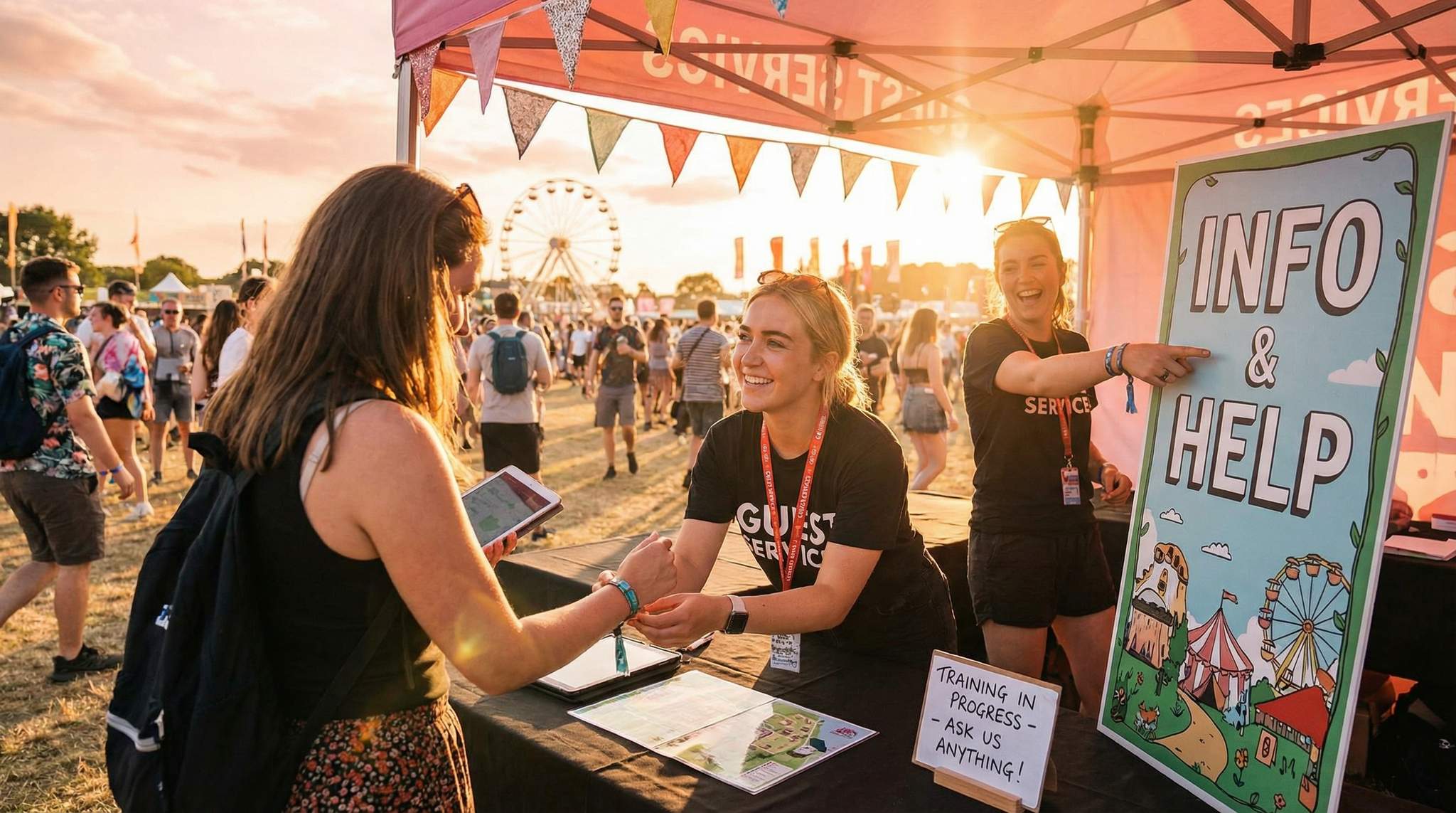
Once your festival is live, you need to make it as easy as possible for attendees to get help or information at any time. Well-placed information booths and help desks are a cornerstone of on-site guest services. These should be clearly marked (think bright “Info” signs or flags) and ideally staffed every hour that your venue is open. Many festivals place an info booth near the main entrance/exit and additional help desks at key locations like major stage areas or campground hubs. The staff at these centers should be among your most trained and resourceful, since they’ll handle a bit of everything: answering questions, collecting lost & found items, reuniting lost children with parents, fielding complaints, you name it. For example, at Tomorrowland in Belgium, centrally located “Info Points” offer festival maps and program details and are staffed by multilingual volunteers to assist the event’s international crowd. A best practice is to equip info booths with resources like printed maps, program schedules, a communication radio, and a logbook to track any incidents or common questions (this log can be invaluable later for post-event analysis). By having dedicated help points, you send a message to attendees: we’re here for you – just ask. And be sure to publicize them in your program or mobile app (e.g., “Questions or problems? Visit our Info Booth by the Main Stage”). Visible, accessible help desks turn potentially frustrated attendees into grateful ones by giving them a go-to place for assistance.
Roving Ambassadors and Mobile Support
Not all attendees will make the trek to an info booth – sometimes the help needs to come to them. That’s where roving ambassadors (mobile guest services teams) come in. These are staff or volunteers assigned to wander the grounds, especially in high-traffic or problem-prone areas, proactively offering help. They might be outfitted in easily identifiable shirts or hats (bright “Here to Help” uniforms or carrying an “Ask Me” flag). Their job is to be the friendly face that an attendee can approach anywhere, anytime. Roving teams can check on queues, give directions when they overhear someone confused, and keep an eye out for anyone looking distressed. A great example is Insomniac’s “Ground Control” teams at festivals like Electric Daisy Carnival – these are volunteers in distinct outfits who roam the venue, handing out water to those who need it, helping lost attendees find friends, or alerting medical staff if someone looks unwell. These ambassadors are essentially customer service on wheels (or on foot), adding a personal touch in the massive crowd. To make this work, ensure roving staff have radio communication to call in bigger issues and perhaps a fanny pack of useful items (earplugs, a few band-aids, schedule leaflets, etc.). By training part of your team to circulate and engage, you create a safer, more caring atmosphere. Often attendees are amazed and delighted when a staff member approaches them to ask, “Hey, how’s your day going? Need any help finding something?” – it’s an unexpected level of service that can make your festival stand out.
Go Cashless With RFID Technology
Enable contactless payments, faster entry, and real-time spending analytics with RFID wristbands and NFC-enabled ticketing for your events.
Signage, Maps, and Information Distribution
Good guest service isn’t only about human helpers – it’s also about empowering attendees with information so they can help themselves. Thoughtful signage and readily available info materials are crucial parts of on-site attendee care. First, clear directional signage throughout the venue (arrows to stages, camping, exits, water stations, restrooms, etc.) helps prevent guests from feeling lost or frustrated. When people can navigate easily, they’re happier and less likely to bombard staff with the same questions. Many festivals use colour-coded or icon-based signs (for example, a big “?” symbol for Info Booths, or a water droplet icon for refill stations) to communicate without language barriers. Second, maps should be widely accessible: large map posters at info boards, small paper map handouts, and in the festival app. Glastonbury Festival prints a comprehensive map in its program and also has towers with “You Are Here” maps around the grounds – a lifesaver on the 900-acre site. Next, consider real-time information channels: use stage video screens or PA announcements for important attendee messages (“Storm approaching, take shelter at X” or “The 5pm workshop location has moved to Tent B”). Push notifications via the festival app or SMS broadcasts can also keep guests informed of schedule changes or emergency announcements in a timely way. Lastly, ensure any printed materials (program guides, brochures at entry) highlight guest services like lost & found location, medical tent info, and code of conduct reminders. When your festival provides abundant information clearly and accessibly, attendees feel more in control and cared for – which reduces anxiety and the load on your guest services staff.
Lost & Found and Welfare Tents
Two specific services that significantly impact attendee experience are Lost & Found and Welfare or sanctuary tents. A well-run lost & found can turn someone’s day around, so treat it as a mini guest service operation of its own. Designate a tent or booth (often adjacent to an info center) where lost items are catalogued and stored securely. Train the staff here to be patient and reassuring – losing a phone, wallet, or keys at a festival is stressful, and a compassionate response matters. Have a system in place: tag and log found items, maybe even use an online form where attendees can later claim items. Some festivals, like EDC Orlando, have gone digital with lost & found, allowing attendees to submit a report online and get notified if the item is turned in. Quick tip: common items like phones or ID cards can be partially anonymized when announcing (“Found: iPhone with purple case, come to Lost & Found”) so owners can identify their property without false claims.
Welfare tents (also known as chill-out zones or sanctuary spaces) are another hallmark of festivals that truly care about attendees. These spaces are designed for guests who might be overwhelmed, dealing with substance overuse effects, or just in need of a quiet break from the crowd. Staffing these areas with trained volunteers – often those with backgrounds in first aid or counseling – is crucial. For example, in Ireland a volunteer-led service called Psycare provides 24-hour welfare support at events, with team members trained in drug crisis intervention and mental health first aid. They work alongside medical services, ensuring that someone having a panic attack or a difficult moment has a safe, calm place to go for help, a vital service highlighted in reports on voluntary welfare bodies at festivals. By placing welfare tents near the medical area—as Psycare insists to enable easy hand-off if medical treatment is needed—festivals can better care for attendees’ well-being. Even if your event is not a giant mega-festival, consider having a small “chill-out tent” with comfy seating, shade, water, and a couple of empathetic staff. It can make a world of difference for someone who’s feeling anxious or unwell – and it shows that your festival prioritizes festivalgoers’ welfare and safety. Ultimately, robust lost & found and welfare services both say to your audience: we’ve got your back, even if things go wrong.
Coordinating with Operations and Safety Teams
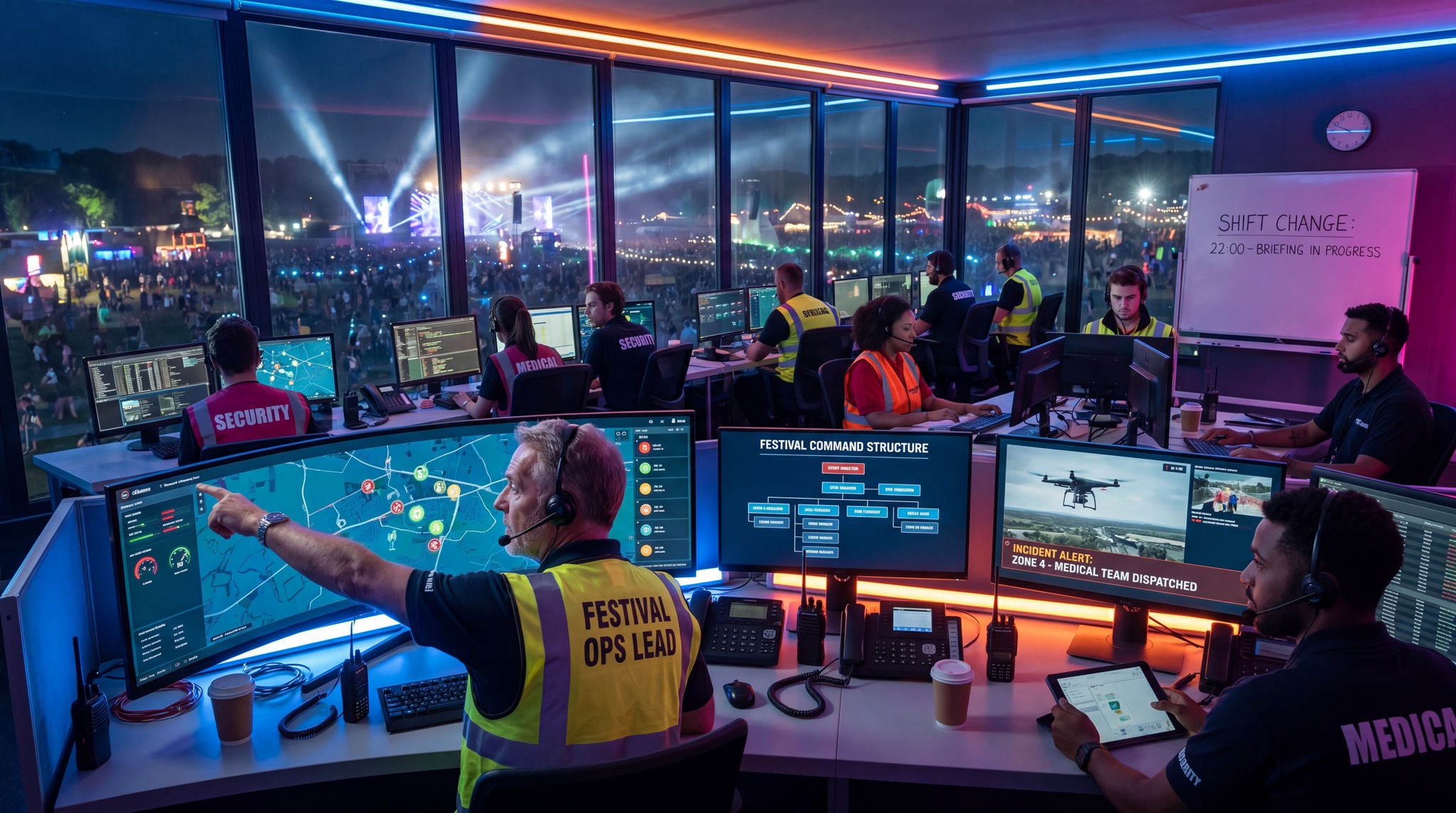
Guest services do not operate in a vacuum – they are one part of the larger festival machine and need to coordinate closely with other departments. For instance, if an info booth starts getting flooded with the same complaint (say, “The water refill station by Stage 2 is empty”), that information must quickly reach Operations so they can fix the issue. Regular communication between the Guest Services team and departments like Operations, Security, Medical, and Communications is essential for swift problem-solving. Many festivals implement a daily all-hands meeting or a brief cross-department check-in where the Guest Services lead shares any attendee feedback or recurring issues (“People are confused about the wristband policy at re-entry – can we get Comms to put a clarification on social media?”). Likewise, security or operations might alert guest services of things like a section closure or schedule delay before it becomes public, so your team can be ready to answer questions or redirect guests. Establishing an escalation ladder (often detailed in a contact sheet or phone/radio directory) lets front-line staff know exactly whom to call for various problems – whether it’s a power outage affecting a stage (call Operations Manager), a missing child report (call Security control or dedicated child-find team), or a PR issue with an upset VIP (call Guest Relations Manager). By rehearsing these communication flows in training and having tools like radios or a staff WhatsApp group, you enable rapid response to attendee issues. The smoother the behind-the-scenes synchronization, the more seamless the service that attendees experience on the ground. In effect, guest services becomes the friendly face of the entire festival operation, translating backend fixes into positive frontline interactions.
Part of this coordination involves training guest services staff on basic situational awareness protocols. For example, many international events utilize the “notice, check, share” procedure to identify and report potential safety issues or suspicious behavior. When teaching teams the key principles to follow for the “check” part of the notice, check, share procedure, emphasize the importance of verifying the situation calmly from a safe distance and trusting their instincts before sharing the information with the central command or security dispatch. This ensures that front-line staff act as an effective, observant extension of the security team without putting themselves in harm’s way.
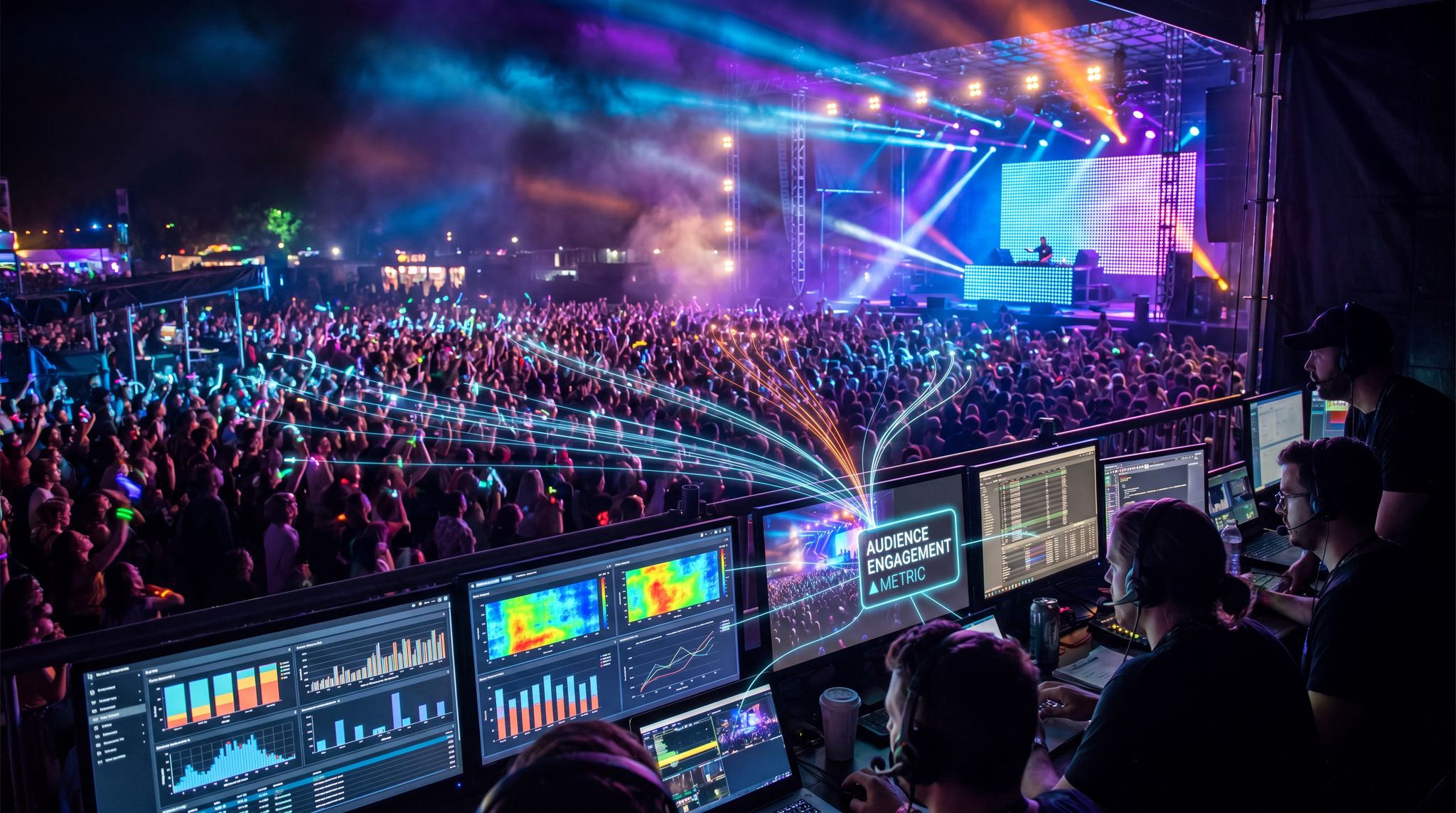
Another critical aspect of this cross-departmental coordination is improving festival service efficiency. By analyzing real-time data from the ground—such as queue lengths at specific info booths or the volume of medical tent visits—organizers can dynamically redeploy staff to high-demand areas. This agile approach to resource management prevents bottlenecks, reduces attendee wait times, and ensures that support teams are always positioned exactly where they are needed most.
Data-Driven Event Marketing
Track ticket sales, demographics, marketing ROI, and social reach in real time. Exportable reports give you the insights to make smarter decisions.
To illustrate how different front-of-house roles contribute to attendee care, here’s a quick overview of common guest services roles at a festival:
| Role | Key Responsibilities | Examples of Duties |
|---|---|---|
| Entrance Greeter | First point of contact at gates; welcome attendees, check tickets or wristbands, provide basic info. | Cheerfully greet arrivals, scan tickets, answer “Where do I go for XYZ stage?” questions, enforce entry policies politely. A positive first impression sets the tone. |
| Information Booth Staff | Serve as info experts; answer questions, handle lost & found, help with directions and schedules. | Provide maps or schedules, log lost items and assist in retrieval, answer queries about set times or facilities, take note of recurring questions to report back. |
| Roving Ambassador | Mobile support in crowd; proactively assist attendees throughout the grounds. | Roam popular areas and queues, ask if people need help, give directions on the fly, carry basic supplies (water, earplugs), identify and assist anyone in distress, report issues to supervisors. |
| Welfare/Support Volunteer | Staff quiet zones or act as attendee welfare support; focus on health and safety of guests. | Operate a chill-out tent or “sanctuary” space, talk down anxious attendees, monitor for anyone who might need medical or emotional help, coordinate with medics for serious cases. Ensure vulnerable attendees are cared for. |
| Guest Services Supervisor/Manager | Oversee attendee services on-site; support frontline staff and handle complex issues or VIP concerns. | Monitor the big picture of attendee experience, field escalated complaints (e.g. a ticketing issue or serious grievance), liaise with other departments (ops/security) for solutions, make decisions on offering refunds or special accommodations when needed. |
Every role above works in concert to deliver exceptional attendee care. By defining these roles clearly and training each group for their specific duties (while also teaching them to collaborate), a festival can cover all bases – from entry to emergency – with professionalism and heart.
Empowering Staff to Resolve Issues
Clear Protocols and Authority Levels
All the training in the world won’t help if staff feel paralyzed when a real issue arises. Empowerment starts with clarity: give your team clear protocols on what they can and cannot do to assist guests on the spot. This often means setting authority levels. For example, front-line volunteers might be authorized to grant small “quick fixes” like giving a bottle of water, a map, or a free locker token to solve minor guest inconveniences, whereas bigger requests (like reissuing a lost ticket or offering a refund) may require a supervisor. The key is to map out common scenarios and decide in advance what resolution each level of staff can provide without asking for permission. Create a simple guide (one page or a small card) that outlines these empowerment rules. Disney parks, known for legendary guest service, train their employees on similar principles – even a custodial staff member can take the initiative to help a lost child or replace a spilled drink because there’s a culture of do what’s right for the guest. In the festival context, empowerment protocols could include things like: authority to offer a free upgrade to a viewing platform for a disabled attendee who’s having trouble in the crowd, or ability to swap a damaged merch item on the spot. When staff have clear guidelines, they’re not second-guessing – they know the festival trusts them to do the right thing within certain bounds. This clarity speeds up service since team members aren’t chasing managers for every small decision. It also prevents inconsistency (attendees getting different answers from different people) because everyone operates from the same playbook.
Trusting Front-Line Decision Making
Empowerment is as much about mindset as it is about rules. Festival leaders should actively encourage staff and volunteers to take ownership of guest issues and use their judgement in service of the attendee. Front-line team members are the closest to the problem – often, they can see the simplest solution. If they know leadership has their back, they’ll be more confident in making quick calls to help someone. For instance, if a volunteer at a water station sees an attendee with mild heat exhaustion, they shouldn’t hesitate to escort them to the medics or even drive them in a golf cart if available, even if it means leaving their post for a few minutes – because saving an attendee’s day (or life) is the priority. Establish a culture where it’s okay to bend a rule to do the right thing for a guest, as long as it doesn’t compromise safety or fairness severely. This could mean letting a distraught attendee into a staff-only shaded area to cool down, or a security guard using discretion and compassion when someone shows up at the wrong entrance confused. A powerful way to build this trust is by sharing stories of employees at other organizations who solved customer problems creatively. For example, Ritz-Carlton hotels famously allow their staff a budget (up to $2,000) to fix any single guest’s problem without manager approval – while a festival won’t have that kind of cash perk, the philosophy can inspire. The message is: we trust you to make our attendees happy, and we’ll support your reasonable decisions. When staff believe that, they’re far more proactive and effective.
Escalation and Support Channels
Empowering staff doesn’t mean every problem rests entirely on their shoulders. It’s just as important to have clear escalation paths and support so that when something is above someone’s pay grade or expertise, they can swiftly hand it off to the right person. Train your team on identifying issues that require escalation: safety incidents, medical emergencies, serious attendee disputes, VIP complaints, technical failures, etc. Everyone should know exactly who to contact (and how) for different scenarios. A common method is a tiered radio code or phone tree. For instance, volunteers might radio their area supervisor for anything beyond minor issues; that supervisor has direct lines to security dispatch or the operations center if needed. Set up a 24/7 “Command Center” phone/radio channel during the festival that any staff can reach in emergencies. Additionally, equip your team with a list of key contacts (guest services manager, security chief, medical coordinator, etc.). Make sure escalation is seen not as a failure but as simply part of the process – “if in doubt, escalate” is a good mantra for new staff. It’s also useful to establish a protocol for how to smoothly transfer a situation: e.g., if a volunteer cannot solve an attendee’s problem, they should guide the attendee to the info tent manager or have that manager come over, rather than leaving the person feeling abandoned. The goal is for the attendee to always feel they are being taken care of, even as their issue gets bumped up the chain. A simple handoff script taught in training can help, like: “I’m going to get my manager who can assist you further – they’ll be right here, and we will sort this out for you.” When escalation works well, front-liners feel supported (they’re never stuck with something they can’t handle alone) and attendees feel important (because their concern gets attention from higher-ups promptly). It’s a win-win that keeps service quality high in tough moments.
Empowerment in Action: Quick Solutions
What does empowerment look like on the ground at a festival? It looks like quick solutions without red tape – the kind that save an attendee’s day. Many festivals have informal “goodwill” protocols: small tokens or fixes any staff can offer to resolve a complaint or inconvenience. For example, if a food vendor line was excessively long and an attendee is irritated, a staff member armed with some free drink coupons could offer “Here, enjoy a complimentary soft drink on us while you wait, we’re sorry about the delay.” Such gestures cost very little but can completely turn around the attendee’s mood. If a piece of festival merchandise is defective or the wrong size, a merch booth worker might be empowered to do an on-the-spot exchange for the guest rather than requiring a complicated return process. At Wellington’s CubaDupa festival in New Zealand, volunteer zone managers carry extra festival-branded rain ponchos and earplugs to hand out whenever needed – keeping attendees comfortable and showing proactive care, especially when unexpected weather hits or someone stands too close to speakers unprepared. Empowerment also means solving the unique problems: like printing a new copy of a lost festival schedule for an elderly attendee who’s not app-savvy, or a stage manager taking a moment to let a young fan with sensory sensitivity watch a performance from a calmer side-stage area. When staff know they have permission to be flexible and creative, these magical moments happen more. A helpful mindset combined with reasonable latitude in rules results in attendees feeling truly looked after. As the saying goes, it’s not the problem that attendees remember, but how it was handled. Empower your team to handle things right, and even issues can become opportunities to impress.
Grow Your Social Following With Every Sale
Require social media follows, shares, or playlist adds to unlock presale access or special pricing. Turn every ticket purchase into audience growth.
To help staff understand how to act in common situations, it’s useful to provide a quick-reference matrix like the one below during training:
| Attendee Issue | Front-Line Action (Empowered Response) | When/How to Escalate |
|---|---|---|
| Lost item (phone, keys, etc.) | Guide the attendee to Lost & Found, or radio to check if the item’s been turned in. Offer reassurance and take their contact info for follow-up. | Escalate to Lost & Found manager if it’s a sensitive/valuable item (passport, expensive gear), or if the person is extremely distressed. Security may be involved for high-value items. |
| Minor complaint (long line, messy restroom) | Apologize sincerely for the inconvenience. If possible, provide a small perk (e.g., a voucher for a free drink, or inform cleaning crew for restrooms). Explain any reason for the issue and that it’s being addressed. | Escalate to area supervisor if the issue is widespread (e.g., multiple reports of an area not cleaned or a line problem that might need operations to intervene). Keep supervisor informed of repeated complaints. |
| Medical concern (non-emergency) | Immediately escort or direct the person to the First Aid tent. If they can’t move easily, use radio to call medical team to your location. Stay with the attendee until help arrives if possible, keeping them calm. | Escalate via radio to the medical team and event control if it’s beyond a simple bandaid situation. Any head injury, allergy, or serious symptom should be treated as urgent – get professional medics ASAP. |
| Attendee conflict or harassment report | Stay calm and listen to the attendee reporting the issue. If a conflict is in progress, call security or a supervisor on radio with location details. If someone reports harassment that happened, assist them to a safe space and call in the appropriate support (security or welfare team). | Escalate immediately to security for any harassment, fights, or if anyone feels threatened. Also loop in the welfare/psych support team if the attendee is shaken. Such issues often require official incident reporting by security team or police. |
| Ticketing or entry problem (e.g., lost wristband) | Empathize (“I understand it’s upsetting to lose your wristband”). Check their proof of purchase or ID if possible. Front-line empowerment might include accompanying them to the ticket office or contacting the ticketing manager to approve a replacement. | Escalate to the ticketing manager or box office lead if the situation requires issuing a new credential or if the person is very agitated. Never simply turn them away; ensure a higher-up makes the final call on replacements or solutions. |
Such guidelines ensure everyone on the team knows how to react quickly and when to pull in additional support. This balance of immediate empowered action with smart escalation keeps attendees feeling cared for while also protecting the festival from mishandled situations. Over time, as staff gain experience, these responses become second nature – that’s the hallmark of a truly empowered guest services team.
Leveraging Technology for Attendee Support
Mobile Apps and Chatbot Assistance
In the digital age, some of your attendees’ customer service needs can be met via their smartphones. Many festivals now offer official mobile apps or mobile-friendly websites that put maps, schedules, FAQs, and support at attendees’ fingertips. A well-designed app not only helps attendees self-serve information (reducing simple questions at info booths), but it can also provide direct support channels. For example, a festival app might include a “Help” button or chatbot feature where attendees can ask questions like “What time does parking open?” or “Where are the ATMs?” and get an instant answer. If the technology is available, chatbots can be trained on the festival’s frequently asked questions, offering 24/7 virtual assistance. Even without advanced AI, a simple in-app contact form or help chat that connects to a staff member during event hours can be a lifesaver for attendees who lose track of something and don’t know where to ask. There are cases of tech-forward festivals integrating chat support for attendees – San Diego Comic-Con, while not a music festival, introduced a chatbot in their app to guide visitors to event info, which greatly cut down confusion for first-timers. When implementing such tools, always test them thoroughly; nothing frustrates users more than a buggy app. And importantly, promote the app’s support features so people know they exist (mention it in pre-event emails, signage on-site like “Need help? Use the FestivalApp to chat with our team!”). Mobile support will never replace friendly humans, but it’s a powerful supplement. It meets tech-savvy attendees where they are and can handle simple queries en masse, freeing up your on-site team for more complex, human-touch interactions.
Social Media Monitoring and Live Updates
Attendees often turn to social media as a real-time help line – tweeting about what’s happening on-site or messaging the festival’s Facebook/Instagram with questions. A proactive festival producer will have a social media monitoring team as part of attendee support. Assign staff (or savvy volunteers) to watch the event hashtag and mentions on Twitter/X, Instagram, Facebook, etc. during festival hours. By catching attendee posts in real time, you can often address issues even before they formally reach out for help. For instance, if someone tweets “Water refill near Stage 3 is empty #FestivalName”, your team can reply quickly: “Thanks for letting us know – our crew is on it now! In the meantime, the next closest water station is by Stage 2. Stay hydrated!” Such responsiveness not only helps the individual, but it shows everyone else watching that the festival cares and is on the ball. Likewise, be ready to answer DMs or comments with useful info (you might get a flood of “what time does parking open tomorrow?” – treat it like an extended info booth). Social media also doubles as a way to push out important live updates that affect attendees: weather alerts, schedule changes, traffic or transport notices. Many festivals use Twitter or Instagram stories for quick announcements (“Lightning in area – stage program paused, seek shelter, we’ll update in 30 minutes”). The key is to use the channels your attendees are already on. Make sure your communications team and guest services team are in sync so that the info being given out on the ground and online is consistent. A quick tip: have some pre-drafted template responses for likely scenarios (like lost & found inquiries, or “where do I find set times?” questions) to maintain accuracy and speed. In sum, meet attendees in the feeds they’re scrolling – responsive social media customer service can turn potential complaints into public praise if done well.
Attendee Hotlines and Text Services
Not everyone uses social media or a festival app, so it’s wise to offer more direct communication channels as well. Some festivals set up an attendee support hotline – basically a phone number (or even a dedicated WhatsApp line) that guests can call or text for help. Phone hotlines can be resource-intensive (you need people to answer), but texting services have become popular because one staffer can manage multiple text conversations at once. One innovative approach is using SMS short codes for specific help: for example, several UK festivals partnered with organizations to use a text number for reporting harassment or feeling unsafe. Attendees could discreetly text a code like “FESTHELP” with their location to a central system, and it would dispatch security or support. This kind of system requires coordination with security and comms, but it’s invaluable for attendee safety and peace of mind. Even beyond safety, a general help text line could allow attendees to ask “Is there re-entry allowed if I leave?” and get a quick answer from staff at the other end of the chat. If you advertise a support number, staff it adequately and train those staff with the same customer service tone as on-site teams. Also, only promote channels you know you can monitor in real-time. There’s nothing worse than telling attendees to email or text for help and then not replying until the next day – by that time the festival might be over or the issue moot. If a live chat or phone line isn’t feasible for your event, at least ensure your website and app have an up-to-date FAQ and maybe a contact email that’s monitored frequently during the festival. Ultimately, giving attendees a direct line to ask for help – and responding promptly – makes them feel valued and secure, even when they’re one person in a crowd of thousands.
Team Communication Tools for Quick Response
Empowering your guest services team with technology is just as important as attendee-facing tech. Fast internal communication allows your staff to deliver faster service. Two-way radios have long been the standard on festival grounds – make sure every info booth, roving team, and guest services manager is equipped with a radio and knows the right channel for different needs (e.g., Channel 1 for general ops, Channel 2 for medical, etc., as per your comms plan). Train the team in basic radio etiquette and codes (like saying “Copy” or using phonetic alphabet for clarity) so they feel comfortable using them. In addition to radios, some festivals use team messaging apps (like Slack, WhatsApp groups, or specialized event ops apps) to coordinate. For instance, your lost & found might have a WhatsApp group where any staffer who picks up a lost item can post a photo/description so all info booths know instantly. Or the guest services supervisors might have a group chat to alert each other of hot spots (“Heads up: lots of complaints about sound bleed into the campground – we’re investigating”). During pre-production, decide on the toolset and ensure cell coverage or Wi-Fi is present if using internet-based apps on-site. Redundancy is key: if the cell network gets overloaded by attendees, radios can be the fallback. Conversely, if radio chatter is too busy, a text might reach someone faster. Encourage a culture of “see something, say something” within the team – if a volunteer notices something amiss (like a fence breach or an upset attendee), they should know how to immediately alert the rest. When your guest services and operations teams communicate seamlessly, attendees benefit. They might not see the Slack messages or hear the radio calls, but they will certainly notice that “wow, they fixed that problem so fast!” – which is the hallmark of a well-connected festival crew.
Continuous Improvement Through Feedback
Gathering Attendee Feedback Post-Festival
Once the lights are off and the last tent is packed up, the quest for better attendee experience isn’t over. In fact, post-festival feedback is one of the most valuable tools for improving guest services year on year. Deploy surveys to your attendees as soon as possible after the event – the experience will still be fresh in their minds. Ask targeted questions about customer service: Did you feel welcomed and safe? Were staff easy to find and helpful? What was your most positive interaction with festival staff? Were any of your issues unresolved? Keep surveys short but do include a mix of rating-scale questions and open-ended prompts so people can elaborate on specific experiences. Many festivals incentivize feedback with a chance to win tickets or merch, increasing response rates. Analyzing this feedback will highlight what you did well and where you fell short from the attendee perspective. For example, you might discover that many people had trouble finding the info booths, or that a particular entrance’s staff were mentioned repeatedly for being exceptionally friendly (or unfortunately, perhaps not). Look for patterns. If multiple attendees mention long waits for resolving lost items, that’s a clue to beef up Lost & Found efficiency. Positive feedback is just as instructive – it shows what to keep doing or amplify. Some festivals share a summary of changes they’ll make based on attendee feedback (in a blog or social post), which demonstrates to the audience that their voices were heard. According to event industry research, learning from your festival audience is crucial, and festivals that utilize attendee feedback and surveys to act on input often see higher return attendance. In short, treat your audience’s opinions as free consulting from thousands of “mystery shoppers” – it’s a treasure trove for shaping next year’s training and customer care strategies.
Staff and Volunteer Debrief Sessions
Don’t forget to also gather feedback from the inside team – your staff and volunteers who were on the front lines. They often have the keenest insights into operational hiccups that affected attendee service. Organize debrief sessions or surveys for volunteers and staff after the festival. Prompt them with questions like: Were you adequately prepared to help attendees? What scenarios did we miss in training? What tools or information were you lacking on-site? Which guest interactions were the most challenging or rewarding? This is where you might learn, for example, that volunteers at the info booth didn’t have a clear process for handling lost kids, or that the radio channel was too cluttered making it hard to escalate issues. It’s also common to discover morale factors – maybe volunteers felt under-supported during a tough weather situation. By collecting this feedback, you can tweak your planning. Additionally, encourage team members to share standout stories: hearing about a volunteer who improvised a great solution or a staffer who encountered an unusual guest request can enrich next year’s training with real anecdotes. Some festivals hold a casual “post-mortem” meeting with key team leads to brainstorm improvements, while others send an anonymous survey to all crew for more candid input. Both approaches are valid. The crucial part is to close the loop: summarise what you learned from the team and implement changes. If volunteers said they needed better maps for attendees, make sure those are ready next time. If staff felt unsure about empowerment boundaries, adjust the training or manual. Your team in the field is like the canary in the coal mine – they will often spot emerging issues or needs before attendees do, so tap into their knowledge to make your guest services even more bulletproof.
Tracking Service Metrics and Incidents
To take your continuous improvement a step further, consider tracking some metrics around your guest services operations. While festivals aren’t retail stores with sales quotas, you can still quantify aspects of attendee care to see trends. For instance, log the number of inquiries at info booths each day and what the top topics were – if you see 500 questions about the shuttle schedule on Day 1, that’s a sign the transportation info wasn’t communicated clearly pre-event or signage was lacking. Track lost & found item counts and return rates (e.g., “200 phones turned in, 180 returned to owners”) – a high success rate here is a point of pride and can be improved with better cataloging systems. Record response times for certain tasks: how quickly did staff respond to a medical call on average? How long were typical wait times at guest services booths during peak hours? Some festivals use incident management forms for any notable guest incident (like an injury, an eviction, a major complaint) which include fields on how it was resolved; these can be reviewed later to evaluate if protocols were followed and effective. If you run an attendee hotline or social media support, analyze those logs: number of calls, common questions, how many issues resolved on first contact. The goal isn’t to obsess over numbers but to get a data-informed picture of your attendee experience. By identifying bottlenecks or frequent pain points through metrics, you can address them proactively next time. For example, if 80% of complaints were about long entry lines on Day 1 at opening, you might open gates earlier or add more staff for Day 2. Or if the south info booth got double the traffic of the north booth, you might re-locate one to balance coverage. Continuous improvement in guest services thrives on both the qualitative feedback (stories, suggestions) and quantitative data (counts, times, percentages). Together, they tell the full story of how well you delivered on the promise of exceptional attendee care.
Beyond simply logging data, the ultimate goal of tracking these metrics is continuously improving festival service efficiency. When organizers audit their various festival services—from VIP hospitality to general admission entry flows—they can identify redundant processes that slow down attendee care. For example, if data shows that front-gate staff spend excessive time answering basic directional questions, deploying digital wayfinding or repositioning information kiosks can drastically streamline operations. By systematically refining these touchpoints, producers ensure that their resources are utilized effectively, reducing overhead while simultaneously elevating the guest experience.
Implementing Changes Year-to-Year
The final step in the feedback loop is taking all those learnings and implementing concrete changes for your next festival. This is where leadership and planning teams need to be receptive – no event is perfect, and the best festivals in the world constantly tweak their approach to get better. Start by prioritizing issues: which problems from the last festival caused the most attendee dissatisfaction or operational headaches? Tackle those first in your planning. Maybe you realized that your volunteer-to-attendee ratio was too low to properly serve everyone, so next year you recruit more volunteers or adjust their shift coverage. Or you discovered that your team wasn’t equipped to support a large population of international attendees – so you decide to add a multilingual guest services desk or translate key signage into other languages. Training should be updated too: incorporate those real examples that came up and address any knowledge gaps identified. For instance, if a surprising number of people needed assistance with the festival’s cashless payment system and staff felt unprepared, make “using the cashless system” a training module next time. It’s also worth acknowledging improvements publicly where relevant. If attendees complained about water availability, announce in your pre-event comms that you’ve doubled water stations and have hydration teams roaming (then follow through). When a festival visibly fixes issues that were previously criticized, it builds trust with your audience – they feel heard and are more likely to give a second chance or spread positive news. Keep a record (even just a shared document) of all the changes you plan to implement for guest services, and check them off as you prepare for the next edition. By treating attendee care as an evolving practice, you ensure that your festival’s reputation for service only grows stronger each year. Remember: attendee expectations will always be rising, so continuous improvement isn’t just ideal, it’s necessary to stay ahead of the game.
Long-Term Benefits of Exceptional Guest Services
Building Loyalty and Repeat Attendance
Festivals aren’t one-off events – the successful ones become annual traditions, drawing fans back time and again. Delivering exceptional guest service is one of the surest ways to build that loyal returning attendee base. When people have an amazing experience not just with the music or programming but with how they were treated, they form an emotional bond with the event. It’s the difference between an attendee saying “Yeah, I went once, it was pretty good,” versus “I go every year because they make it so enjoyable and easy for us.” Consider Tomorrowland in Belgium, which sells out its vast capacity in minutes every year: of course the spectacle and lineup are big draws, but many attendees cite the overall friendly and magical atmosphere, created in part by the attentive staff and seamless organization, as a reason they return despite the cost and journey. On a smaller scale, regional festivals often recognize familiar faces – guests who come back annually and even bring more friends along each time. Those loyal attendees are your festival’s lifeblood; during rough years (bad weather, economic downturns), they’ll stick with you because of the goodwill you’ve banked with them through great service. They’re also more forgiving of the occasional mistake. Essentially, exceptional guest services create festival fans, not just customers. These are the folks who will snag early-bird tickets for next year without even seeing a lineup, because they trust they’ll have a great time. Investing in attendee care is therefore investing in the longevity of your festival – it turns one-time ticket buyers into a community that sustains the event for the long haul.
Positive Brand Image and Differentiation
In a crowded festival market, delivering superior attendee care can become a key part of your brand identity and set you apart from the competition. Think about it: lineups and locations can blur together, but a reputation for hospitality stands out. Festivals like Burning Man (Nevada, USA) are legendary for their community-driven ethos where attendees actively help each other – while it’s a unique case of a participant-run event, it underlines how a culture of care becomes a defining trait. Another example, Shambala Festival in the UK, has won awards not just for sustainability but also for attendee experience, often highlighting how friendly and helpful their staff are. They’ve differentiated themselves as a festival that’s intimate and attendee-focused, which attracts a certain crowd that values that warmth. Incorporating your guest service values into your branding can be powerful: you might mention in marketing materials that your festival is known for its safe environment or top-notch hospitality. New potential attendees will see those signals and might choose your event over a larger but less personal one. Moreover, sponsors and partners appreciate well-run festivals where attendees are happy – it reflects well on any brand associated with you. Consistently good attendee feedback can lead to press coverage that emphasizes the “experience” rather than just the entertainment. In essence, a strong customer service reputation is a competitive advantage. It’s something you can tout in press releases: “Festival X scores 95% satisfaction in attendee surveys, thanks to new guest services initiatives.” Over time, that positive image draws not just attendees but also quality vendors, artists who’ve heard it’s a great fest to play at, and more. Being the “festival that truly cares” is a branding win in every sense.
Word-of-Mouth and Community Growth
We touched on word-of-mouth earlier, but it’s worth reiterating as a long-term benefit. Your attendees are your unofficial marketing team if you impress them. Each delighted guest may tell numerous friends about their experience or post an excited recap on social media. In today’s world of instant communication, a single viral tweet praising your festival’s kindness can reach thousands of potential new attendees. For example, if an attendee shares on TikTok: “I lost my wallet at XYZ Festival and thought it was gone forever, but the staff not only found it, they delivered it to me with everything intact and threw in a free T-shirt to cheer me up – unreal!” – that story will resonate. People love to recount when they were treated exceptionally well; it’s more unexpected than complaining about something. Building a culture of great service creates these little “wow” moments that people feel compelled to talk about. Over years, the accumulation of positive stories forms a kind of mythology around your event. Many festivals proudly share fan testimonials in their promotions, which often highlight the community and caring vibe (e.g., “I felt like family at this festival” or “the volunteers looked after us so well during the rainstorm”). This positive word-of-mouth not only brings in new attendees through trust (a friend’s recommendation is more convincing than any ad), but it also strengthens the festival community itself. Attendees who feel cared for are more likely to pay that forward – helping others at the event, volunteering next year, or just engaging with your festival’s online community in the off-season. A strong, positive community becomes self-perpetuating. And at the core of that is the experience each person has on-site with your team. So in the long term, your guest services excellence doesn’t just solve issues in the moment – it actively fuels the growth and vibrancy of your festival’s fan base.
Resilience in Times of Crisis
When festivals face challenges – whether a sudden downpour, an unexpected cancellation, or even a global pandemic forcing postponement – those that have banked goodwill through years of great attendee relations are far more resilient. Attendee trust is like a reservoir: if you’ve consistently done right by your audience, they are more likely to be patient and supportive when things go wrong. For instance, during a weather emergency requiring evacuation, a festival with a strong service culture will manage communication and assistance calmly, and attendees will generally cooperate because they trust the organizers to keep them safe and informed. There have been real cases, such as Rock am Ring 2017 in Germany, where a day had to be evacuated due to a security threat; the organizers’ clear communication and provision of refunds/options, along with staff helping guide people out safely, resulted in attendees largely praising the handling of the crisis rather than slamming the festival. Contrast that with events where poor communication and neglect of attendee welfare during a crisis led to public relations disasters. Having an empowered, trained team means when a crisis hits, they’re ready to handle it with empathy and efficiency, whether it’s reuniting families in a sudden evacuation or distributing water when heat skyrockets. Moreover, festivals that nurture their community find that attendees often rally to help in tough times. There are stories of festival-goers volunteering spontaneously when a storm caused damage on-site, largely because the festival had fostered a spirit of “we’re all in this together.” In the wake of the unprecedented challenges like COVID-19, festivals that maintained open, caring communication with ticket holders – offering fair refund policies, rollovers, and heartfelt messaging – retained much more loyalty for when they returned. Ultimately, excellent attendee care is a long-term insurance policy for your festival’s brand. It doesn’t mean problems won’t happen, but it does mean you’ve built a reservoir of goodwill and a competent team that can protect your festival’s future when they do.
Frequently Asked Questions About Festival Guest Services
How do you measure the impact of diversity training on the guest experience?
Effective guest service measurements for diversity training involve tracking specific guest experience metrics before and after implementation. Festival organizers should use post-event surveys with targeted questions about inclusivity, monitor the volume of accessibility-related complaints, and track the resolution speed for accommodations. Comparing these data points year-over-year provides a clear picture of how cultural sensitivity education directly improves attendee satisfaction.
What makes an attendee experience feel “well run” at a large conference compared to a festival?
While festivals focus heavily on crowd flow and sensory environments, a well-run large conference prioritizes seamless professional networking, clear directional signage for breakout rooms, and frictionless registration. However, the core hospitality principles remain identical: attendees at both types of events need proactive communication, empowered on-site staff, and accessible help desks to feel valued.
What are the key principles to follow for the “check” part of the notice, check, share procedure?
When event staff observe something unusual, the key principles to follow for the “check” part of the notice, check, share procedure include assessing the situation from a safe distance, verifying if the behavior or item is genuinely out of place for the specific event context, and trusting your instincts. Staff should never put themselves in danger; the goal is simply to gather enough context to accurately brief security or central command during the “share” phase.
What should be included in an event ticketing outsourcing checklist?
A comprehensive event ticketing outsourcing checklist must evaluate a vendor’s technical reliability, data security compliance, and integration capabilities. For guest services, it is equally critical to assess their frontline collective or customer support team—ensuring their box office staff or VIP party entertainment service align perfectly with your festival’s hospitality standards and attendee-first culture.
How do you effectively manage festival staff on-site?
Effectively managing festival staff requires establishing clear communication protocols, realistic shift schedules, and a defined chain of command. Event organizers should ensure supervisors conduct regular check-ins, provide adequate breaks to prevent burnout, and empower frontline workers with the authority to resolve minor attendee issues independently.
Why is comprehensive festival training necessary?
Festival training is essential because it mitigates operational risks, ensures consistent brand representation, and equips temporary staff with the skills needed to de-escalate conflicts. Proper preparation directly correlates with improved attendee satisfaction and smoother overall event execution.
What are the best methods for improving festival service efficiency?
Improving festival service efficiency requires a combination of real-time data analysis, cross-departmental communication, and strategic resource allocation. Organizers should regularly audit all festival services—such as ticketing, information desks, and welfare tents—to identify bottlenecks. Implementing mobile support technologies, empowering frontline staff to make quick decisions, and dynamically redeploying personnel based on crowd flow are proven strategies to streamline operations and enhance the overall attendee experience.