Serving a warm cup of spiked cider on a frosty night might sound like the perfect way to delight festival-goers – but when temperatures plummet, responsible alcohol service faces unique challenges. Cold weather affects how alcohol impacts the body and how people behave at events. Successful festival producers in winter settings must adjust their strategies to keep attendees both warm and safe. This means balancing cozy hot beverages with smart policies and precautions grounded in cold-weather reality.
Balancing Warm Alcohol with Hydration and Food
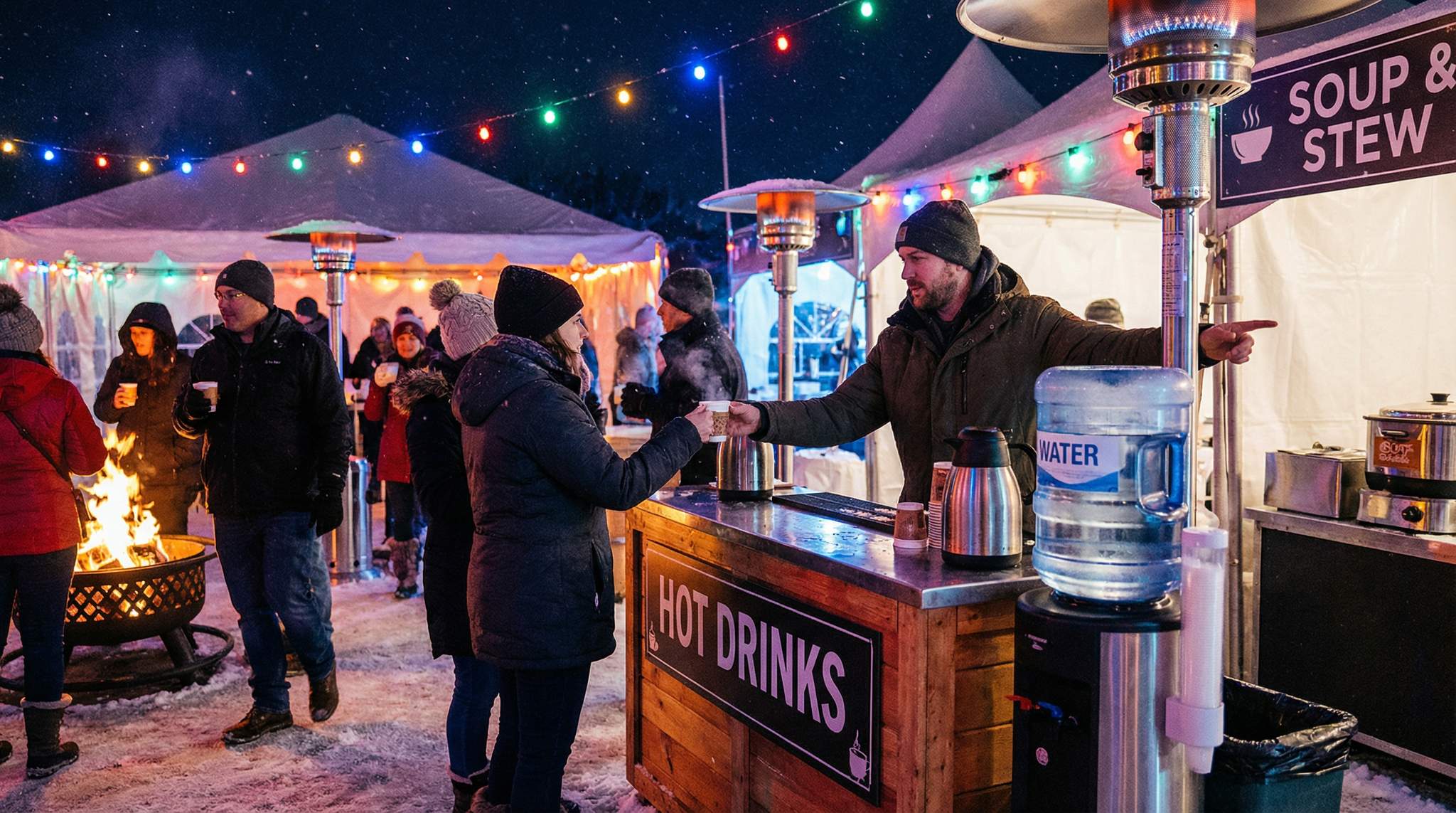
Festivals in chilly climates often feature mulled wines, hot toddies, high-ABV stouts, and other “warming” drinks. It’s crucial to balance these enticing offerings with plenty of water and food available nearby. Alcohol acts as a diuretic and can dehydrate attendees even in freezing temperatures – and in the cold, people might not feel thirst as readily as they would on a hot day. Make water highly accessible at all bars and throughout the venue. Many events even provide free water stations (in some regions this is legally required) and encourage guests to alternate alcoholic beverages with water to stay hydrated. For instance, one wine festival’s safety policy explicitly provides free water to keep patrons hydrated and affordable food to encourage eating throughout the event.
Equally important is making hearty food readily available. Drinking on an empty stomach is risky in any weather, but in cold conditions alcohol’s effects can hit harder and faster. Offer a variety of warm, substantial foods – think soups, stews, grilled meats, pastries, or regional favorites – so attendees have real sustenance and warmth from calories. Keeping food vendors close to bar areas is a smart move so that grabbing a bite is as easy as grabbing a drink. Not only does food slow the absorption of alcohol, it also provides genuine warmth and energy. An attendee holding a hot pretzel or a cup of chili is less likely to chug another spiked drink purely for warmth.
Beyond food and drink, consider providing sources of physical warmth at the venue. Outdoor heaters, fire pits, or heated tents give people a way to warm up without relying on alcohol. Some winter festivals – for example, Montreal’s famous Igloofest in Canada – set up communal bonfire pits for attendees to warm up and socialize; this encourages guests to take a break with a snack or marshmallow roast instead of continuously sipping alcohol for heat. These measures, combined with water and food, help ensure that “hot drinks” don’t lead to cold-weather mishaps.
Free Tool: Size Your Festival Site
Zoned capacity planning for arena, campsite, parking and entry lanes — against UK Purple Guide and NFPA density standards. Finds your bottleneck zone.
Staff Training: Cold Weather Intoxication Cues
Festival staff and bartenders must be specially trained to recognize intoxication in cold environments. Low temperatures can mask or alter the usual signs of drunkenness, making it harder to tell when someone has had too much. For example, in summer an intoxicated attendee might be flushed and sweating, but in winter the cold air could keep their skin cool – or conversely, a red face might just be windburn or the temperature. Heavy coats and layers can disguise unsteady postures or clumsy movements. And if the ground is icy or snowy, even sober people may slip, which can hide the telltale stagger of intoxication.
Moreover, alcohol can reduce a person’s own awareness of how impaired they are or how cold they’re getting. It’s well documented that drinking alcohol gives a false sensation of warmth by drawing blood to the skin and dulling the body’s perception of cold. This so-called “beer jacket” effect means a guest might genuinely feel fine when in reality their core body temperature is dropping and their decision-making is impaired. They may not shiver as much or complain about the cold – which are cues staff normally rely on to gauge someone’s condition. Staff should be aware that a patron who isn’t shivering on a frigid night could actually be dangerously inebriated or even in the early stages of hypothermia, rather than “handling the cold well.”
Planning a Festival?
Ticket Fairy's festival ticketing platform handles multi-day passes, RFID wristbands, and complex festival operations.
Training for winter event bar staff and security should emphasize:
- Closer observation and engagement: Don’t rely solely on visible cues. Staff should talk to guests if needed – a brief conversation can reveal slurred speech, confusion, or delayed responses that heavy clothing might hide.
- Look for odd behavior: An intoxicated person may start shedding layers or wandering off without a coat because they “feel warm.” If staff see someone removing their hat and jacket in sub-zero weather, it’s a red flag to intervene.
- Coordinate with medical teams: Ensure first aid or medics on site know to watch for combined alcohol and cold exposure issues. Hypothermia can mimic intoxication and vice versa, so a guest appearing disoriented or fumbling might need medical help, not just a cut-off from the bar.
By preparing staff to recognize these cold-climate anomalies, festival organizers can prevent problems. A guest might insist they’re “okay” because they aren’t feeling the usual effects – but a well-trained team will understand the cold can be misleading. In practice, this might mean having a slightly lower tolerance for serving someone additional drinks in freezing conditions than you would on a mild evening. It’s better to politely refuse service or get someone to a heated recovery area early than to deal with an emergency later.
Warm Non-Alcoholic Options with Equal Prominence
Not everyone in the crowd is drinking alcohol – and those who are will often welcome a non-alcoholic break if it’s appealing enough. In winter festivals, hot non-alcoholic beverages should be offered and advertised as prominently as mulled wine or hot cocktails. This is both a safety consideration and good hospitality. Think beyond basic coffee and tea (though those are important too): offer creative, cozy drinks like spiced apple cider, hot chocolate, chai lattes, or alcohol-free mulled punch. In many European holiday markets, for example, vendors serve Kinderpunsch, a delicious alcohol-free mulled fruit punch, as an alternative to the traditional glühwein. Having a warm, flavorful drink in hand – even without booze – lets attendees partake in the festive atmosphere and stay warm.
To ensure these options get the attention they deserve, integrate them into your menus and signage instead of tucking them in a corner. Feature them on chalkboards and digital menu boards with fun names and descriptions, just like the cocktails. Train your bar staff to offer a non-alcoholic warm drink suggestion unprompted (“Maybe a hot spiced cider next, to warm you up without the buzz?”) especially if they sense someone might need a break. Price them attractively as well – a $5 gourmet hot cocoa with marshmallows can be as enticing as a $10 mulled wine, and people will appreciate the lower alcohol pace.
Free Tool: Project Your Bar Revenue
Per-head spend benchmarks by event type turned into projected bar and food revenue, with a stock-mix estimate and gross-margin line. Free calculator.
It’s also wise to provide free or very low-cost hot beverages at certain points or areas, if possible. For instance, a late-night complimentary coffee or tea station near the exits can encourage people to sober up a bit and get cozy before heading home. By giving equal prominence to non-alcoholic choices, you promote a culture where staying warm and having fun doesn’t always mean getting drunk. This empowers designated drivers, non-drinkers, and those who simply want to moderate their intake to fully enjoy the festival.
Capping Cup Sizes and Portion Control
In cold weather, the way people consume drinks can change. A piping hot beverage might be sipped slowly at first (to avoid burning one’s tongue), but as it cools, there’s a temptation to chug the rest before it goes cold. Offering oversized servings of high-ABV drinks in these conditions can inadvertently encourage rapid consumption of a lot of alcohol. Festival producers should cap cup sizes or portion amounts for potent drinks to mitigate this risk. For example, if you’re serving spiked hot chocolate or mulled wine, consider using smaller insulated cups (perhaps 6–8 ounces, around 180–240 ml) instead of large 16-ounce (470 ml) mugs. This way, attendees are more likely to finish their drink while it’s still warm and flavorful, and they’ll ingest a more moderate amount of alcohol before potentially coming back for more.
Need Festival Funding?
Get the capital you need to book headliners, secure venues, and scale your festival production.
Portion control is especially important for high-ABV offerings. Many brew festivals and bars already practice this by pouring strong beers (say, above 8% ABV) in smaller glasses than a standard pint. The same logic applies at winter events: if you have a specialty 14% ABV spiced ale or a whisky-based hot toddy, serve it in a sensible volume. You might also limit multiple sales of such drinks – for instance, avoid promotions like double-size servings or buying rounds of straight shots in frigid conditions. While you want patrons to enjoy themselves, safety comes first. It’s easier to offer a refill if needed than to deal with someone who overdid it on a giant cup of boozy punch.
Another tactic is to design your drink menu with balance in mind. Offer lower-ABV versions of popular winter cocktails (for example, a mulled wine that’s diluted with juice or tea, or a “session” winter beer that’s lighter in alcohol) so that not every warm drink packs a punch. Clearly label the stronger drinks and perhaps gently remind customers to savor them slowly. Some festivals even implement a token or voucher system for alcohol purchases, which can naturally space out how quickly one can obtain multiple drinks. Whether or not you use a formal system, simply setting sensible serving sizes has a big impact. It demonstrates your event’s commitment to responsible service and can prevent the kind of quick overconsumption that leads to incidents.
Frequently Asked Questions
Why is serving food important when selling alcohol at winter festivals?
Serving hearty foods like soups, stews, and grilled meats slows alcohol absorption and provides necessary caloric warmth. Since alcohol dehydrates the body even in freezing temperatures, offering substantial food ensures attendees have real sustenance and are less likely to consume excess alcohol purely to generate body heat.
How does cold weather affect signs of intoxication?
Low temperatures often mask traditional cues of drunkenness, such as sweating or flushed skin, while heavy winter clothing can hide stumbling or unsteady posture. Staff must look for subtle behavioral signs, such as confusion, slurred speech, or guests removing layers of clothing despite the freezing conditions.
Does drinking alcohol keep you warm in cold weather?
Alcohol creates a false sensation of warmth, often called a “beer jacket,” by drawing blood to the skin’s surface. This effect actually dulls the body’s perception of cold while the core temperature drops, potentially leading intoxicated guests to underestimate their risk of hypothermia or frostbite.
What are the best non-alcoholic drinks for winter events?
Successful winter festivals feature creative, warming options like spiced apple cider, gourmet hot chocolate, chai lattes, or alcohol-free mulled punch (Kinderpunsch). Offering these beverages prominently on menus allows designated drivers and guests to participate in the festive atmosphere and stay warm without consuming alcohol.
How should festivals manage alcohol portion sizes in winter?
Event organizers should use smaller insulated cups, typically 6–8 ounces, for high-ABV hot drinks rather than large mugs. This strategy prevents attendees from feeling compelled to chug large amounts of potent liquid before it cools down, effectively moderating consumption rates and maintaining safer alcohol levels.
How can festival organizers keep attendees warm without alcohol?
Venues should provide physical heat sources such as outdoor heaters, fire pits, or heated tents to reduce reliance on alcohol for warmth. Creating communal warming areas, like the bonfire pits at Montreal’s Igloofest, encourages guests to take breaks and socialize without continuously sipping alcoholic beverages.