Introduction
Families are increasingly becoming a vibrant part of the festival scene. Parents want to share the magic of live events with their children, but doing so comes with unique challenges. In the past two decades, festivals across the globe have evolved to welcome all ages, adding family zones, baby-changing stations, and kids’ entertainment. But beyond these additions, making a festival truly comfortable for families requires a shift in how the event is planned from the ground up. Imagine pushing a stroller through throngs of people or coaxing a tired toddler across a sprawling fairground – what feels like a short walk to adults can seem like a marathon to little legs. Festival producers around the world have learned that making events truly family-friendly means rethinking everything from site layout to signage. This is where the idea of “Little Steps” mobility routes comes in – transforming the festival march into a leisurely, enjoyable stroll for families.
The Challenge of Little Legs at Festivals
A festival that’s pure fun for adults can be daunting for children. Long distances between stages, uneven terrain, and crowded pathways can turn a day out into an endurance test for kids (and their parents). Young children have shorter strides and tire quickly; 200 metres to a food court might be nothing for an adult, but to a preschooler it can feel interminable. We’ve all seen the mid-festival meltdowns – often a result of exhaustion, overheating, or overwhelming crowds.
Safety and comfort are also big concerns. In dense crowds, small children can feel unsafe or even become separated from parents. At large events like Glastonbury Festival in the UK (which covers over 900 acres of farmland), families are advised to bring wagons to help little ones manage the long walks. The message is clear: mobility matters. If a festival’s layout doesn’t account for “small legs,” family attendees may limit their exploration or skip the event entirely in future.
Smart festivals offer choices for families. As one mother who frequents the Irish festival Body & Soul explains, “Children’s energy changes quickly and you have to have choice to meet those needs”, and that event “definitely accommodates that so well” by providing multiple easily accessible spaces, as noted in this Irish Times feature on family camping. If the main music area gets crowded or loud, parents can seamlessly slip over to a calmer kids’ zone without hassle. This kind of flexibility is exactly what a family-friendly mobility plan provides.
Free Tool: Size Your Festival Site
Zoned capacity planning for arena, campsite, parking and entry lanes — against UK Purple Guide and NFPA density standards. Finds your bottleneck zone.
What Are “Little Steps” Mobility Routes?
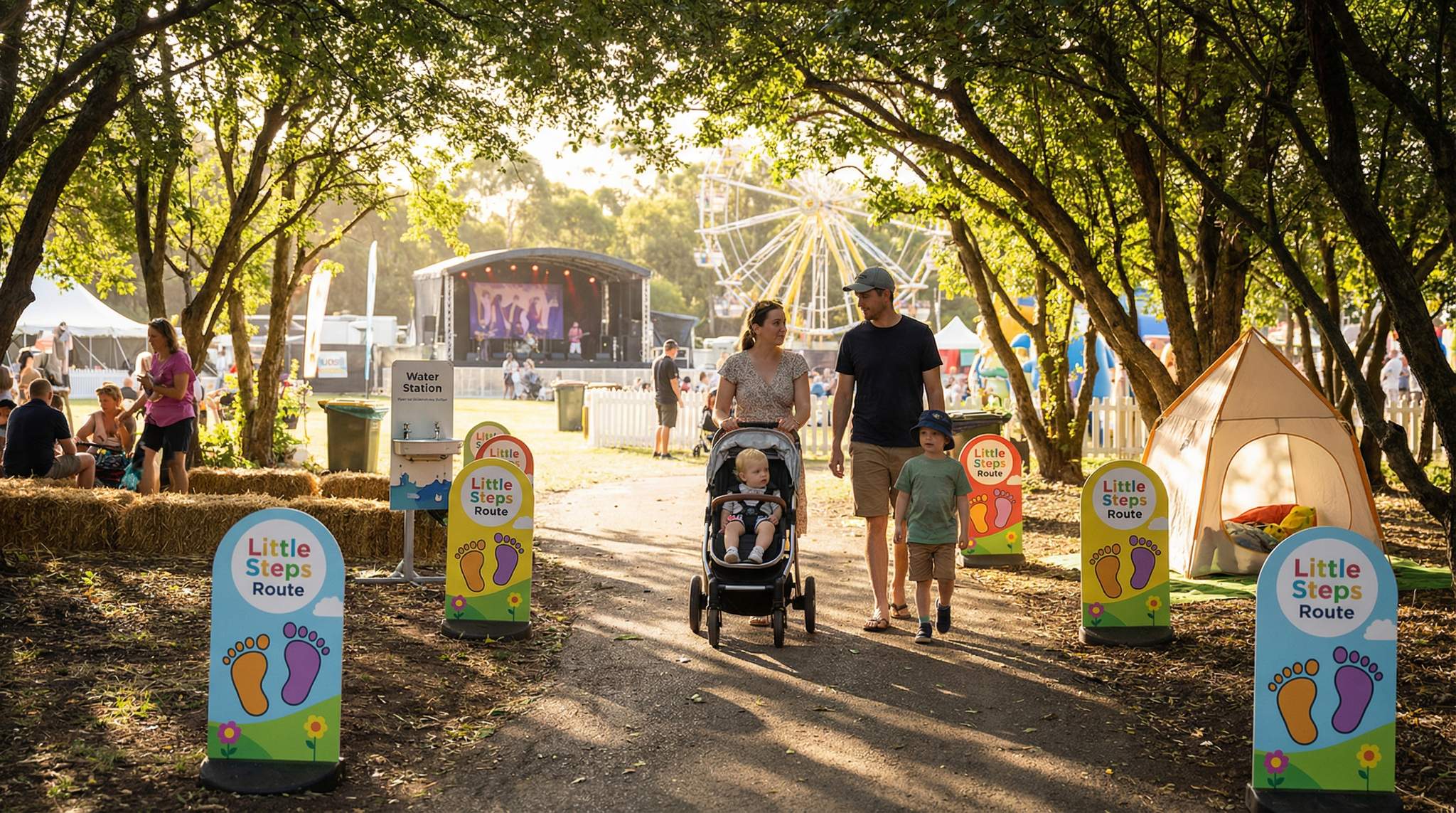
“Little Steps” mobility routes refer to designated paths through the event that are optimized for family use. These routes prioritise gentle slopes, avoid the densest crowds, and include regular stops for rest and relief. The goal is to provide an alternative navigation network within the festival that parents with young children (or even attendees with mobility issues) can use to get around comfortably. Instead of rushing or pushing through jam-packed shortcuts, families can take a more scenic, relaxed path where the journey is part of the fun.
Key features of “Little Steps” routes include:
Planning a Festival?
Ticket Fairy's festival ticketing platform handles multi-day passes, RFID wristbands, and complex festival operations.
- Gradual slopes: If the venue has hills or elevation changes, the family route will take the longer, gentler incline rather than a steep shortcut. This spares young kids (and parents carrying them) from exhausting climbs.
- Low-crowd pathways: The route is plotted through less congested areas. For example, instead of cutting right in front of a main stage during a peak performance (where crowds are thickest), the family path might loop around a quieter backside of that stage or through wider walkways.
- Clearly marked: It appears on festival maps and is signposted on the ground with kid-friendly symbols (bright colours, footprints, or a “Little Steps” logo). This makes it easy to follow even for older children who can recognise signs.
- Integrated facilities: The path intentionally passes by amenities useful to families – water refill stations, toilets with changing tables, first aid points, and family service areas (like lost-child booths).
By overlaying such a route onto the festival map, organisers create a family-centric “road network” that parallels the main arteries of the event.
Designing the Route: Gradual Slopes and Low Crowds
Designing a great family mobility route starts in the venue selection and layout planning stages. If you have the luxury of choosing a site for a new festival, think about natural terrain and how easy it will be for families. A flat, compact site with established paths (like a city park or fairground) will inherently be easier for small children than, say, a rocky farm with steep sections. Many successful family-oriented festivals consciously pick venues that are pram-friendly and mostly level. For instance, Camp Bestival in Dorset, England is held around Lulworth Castle’s rolling lawns, which are largely accessible for pushchairs and little feet. In Australia, Splendour in the Grass provides a chilled-out family camping area and a dedicated Little Splendour kids’ zone, detailed on the official festival website, acknowledging that families need space to move comfortably.
However, not every festival has gentle landscape – some of the most iconic events (Glastonbury’s fields, mountain music festivals in India or Canada, etc.) have challenging topography. Here, route planning is critical. Festival producers should survey the site well in advance to identify a circuit of gentle gradients. Use existing service roads or fire lanes if they have smoother slopes. If a steep hill is unavoidable, consider installing temporary measures like traction mats or even switchback ramps to reduce the incline difficulty.
Crowd flow data from past editions (if available) or from similar events can help identify choke points to avoid. Plot the family route to skirt around those areas. As an example, if a food court gets notoriously packed at noon, the family path might detour behind a vendor row rather than straight through it. Some festivals create separate pedestrian lanes – one “fast lane” for crowds on the go and one slower lane for families and those wanting a calmer walk. Disney theme parks use a similar idea by providing alternative routes around parades or congested hubs, ensuring visitors with strollers or wheelchairs aren’t stuck in bottlenecks.
Free Tool: Project Your Bar Revenue
Per-head spend benchmarks by event type turned into projected bar and food revenue, with a stock-mix estimate and gross-margin line. Free calculator.
Importantly, make sure these routes are inclusive. A path good for kids will also benefit anyone with mobility challenges, including pregnant attendees, seniors, or disabled festival-goers. In fact, “Little Steps” routes can double as accessibility paths, aligning with ADA (Americans with Disabilities Act) guidelines in the US or similar standards elsewhere. Gradual slopes and less crowded options help people in wheelchairs or with limited mobility enjoy more of the festival too. For the organisers, this dual-purpose design is efficient and promotes an image of an inclusive, well-thought-out event.
Comfort Along the Way: Benches and Shade
Even with easier routes, kids (and adults) will need breaks. One hallmark of a child-friendly festival route is the provision of frequent rest spots. Experts recommend placing seating at regular intervals – roughly every 100–200 metres – so that no family has to walk too far without a chance to sit. These rest areas can be simple benches, hay bales, or ground-level platforms where a parent can take a breather and maybe let a toddler crawl around safely for a minute. At a large city event in India, one organiser noted that having a bench or two every few minutes of walking distance dramatically cut down on kids crying from exhaustion and reduced the number of parents having to carry children on their shoulders by day’s end.
Need Festival Funding?
Get the capital you need to book headliners, secure venues, and scale your festival production.
Shade is equally vital. Young children are especially susceptible to sun and heat – a long walk under a blazing sky will sap their energy fast. Savvy festivals install shade canopies or tents along family routes, particularly at those rest stops. For example, at Coachella in California (known for its desert sun), shaded art installations and misting areas are placed throughout the grounds; while not aimed only at kids, families benefit greatly from these cool-down spots when planning their path. Similarly, Body & Soul Festival in Ireland, though smaller and milder in climate, ensures that its family camping and kids’ zones have plenty of covered areas and rain shelters, giving children a break from sun or drizzle when needed.
An excellent case study is Splendour in the Grass’s Parents’ Retreat tent mentioned earlier, highlighted by Families Magazine. This giant tipi offered shade, seating, and even amenities like high chairs and a microwave for warming bottles. By placing a facility like that within the family area (and ideally along the route between major attractions), Splendour made it easy for parents to recharge. The same principle can be applied to your entire site: if natural shade (trees or permanent structures) is sparse, budget for rental shade sails, umbrellas, or tents at strategic points. In hot climates like Mexico or Australia, consider partnering with a sponsor – for example, a sunscreen or beverage brand – to provide branded shade lounges where families can rest. It offsets cost and adds a bit of comfort marketing.
Hydration goes hand-in-hand with shade and rest. Ensure water refill stations are near these rest areas. Children get dehydrated quickly, so a family route should pass by water points frequently. Some events even provide free cups or have vendors offering cold treats (like fruit ice or popsicles) by family rest zones – a small refreshment can do wonders to keep kids motivated for the next leg of the journey!
Kid-Minute Signage: Speaking a Child’s Language
Time and distance feel different when you’re a kid. To make navigation more relatable, many family-focused events have started using “kid minutes” on their signage. Instead of (or in addition to) listing a distance or an adult walk time between zones, the sign might say “Playground – 5 kid minutes” or “Parking – 8 kid minutes away.” This concept estimates how long it typically takes with kids in tow. It sets more realistic expectations for parents and helps children visualize the journey in terms they understand (“5 minutes” is easier for a child than “500 metres”).
Turn Fans Into Your Marketing Team
Ticket Fairy's built-in referral rewards system incentivizes attendees to share your event, delivering 15-25% sales boosts and 30x ROI vs paid ads.
How do you determine a “kid minute”? A general practice is to assume roughly double the adult walking time for short distances, adjusting for a typical young child’s pace and pauses. For example, if it’s a 5-minute walk for an adult to the next stage, call it 10 “kid minutes.” Some festivals calibrate this by doing test-walks during site rehearsals, literally having staff with children stroll the route and time it. It’s a playful touch, but one that demonstrates you’ve designed the festival on a child’s level.
To keep these time estimates useful, keep them updated in real time. Festivals can leverage technology here. Just as navigation apps update drive times based on traffic, you can update walk times based on crowd density. If an unexpected bottleneck is adding delays (say a parade is passing through and slowing foot traffic), a central team can adjust the estimated minutes on digital displays or push a notification to the festival app. This is where having a robust event app (through your ticketing platform or a custom solution) is invaluable – it can send alerts like “Family Route to Stage 2 is currently 5 minutes longer due to crowd congestion, plan a little extra time or enjoy the nearest chill zone.”
Even low-tech solutions work: station volunteers or staff at key junctures with walkie-talkies, and equip them with flip charts or chalkboards to manually update times (“currently 10 kid minutes to Food Court via this route”). The sight of festival staff actively managing the route in real time reassures parents that the organisers are proactively looking out for them.
Engaging and Informing Families
Creating the infrastructure is half the battle; you also need to make sure families know about these amenities. This is where marketing and communication intersect with the on-site experience. Promote your “Little Steps” mobility route in pre-event materials – festival websites, social media pages, and ticket confirmation emails can all include a section on family facilities. Highlighting these features can actually be a selling point: if a mum or dad sees that you offer shaded rest zones, kid-minute signage, and perhaps even stroller rentals or wagon parking, they’ll feel more confident buying tickets.
For instance, Hong Kong’s Clockenflap festival proudly advertises its family-friendly features like the “Future Fields” kids’ zone, nursing and baby-changing facilities, and even the allowance of strollers on festival grounds, a feature praised by Sassy Mama HK. By clearly communicating such details in advance, Clockenflap successfully draws many young families each year. Similarly, Ireland’s Electric Picnic has doubled the size of its family campsite in recent years and makes sure parents know that the family camping area sits right next to a dedicated children’s activity zone, encouraging families to make the trip – meaning shorter walks to kid-centric fun and less time trekking across the venue. These marketing messages set expectations that your event is welcoming to families and has planned for their needs.
On site, use signage and staff to keep families informed. At every festival entrance or info booth, provide a simple family map highlighting the “Little Steps” route in a distinct colour or icon. Signs around the grounds should consistently use a family-friendly marker (perhaps a cartoon child or pram symbol) to point towards the easy routes and family amenities. Encourage your staff and volunteers to proactively guide families: a quick tip like “If you need a quieter way to the main stage, follow the purple flag route marked Little Steps” can be a lifesaver for a parent with a toddler in tow.
Boost Revenue With Smart Upsells
Sell merchandise, VIP upgrades, parking passes, and add-ons during checkout and via post-purchase emails. Increase average order value by up to 220%.
Events have also found success leveraging social media and apps during the festival to engage families. A timely tweet or app push notification such as “Remember, parents – take the Green Path from Stage A to the Food Court for a stroller-friendly stroll and free water refills!” can nudge people to use the routes and amenities you’ve set up, reducing strain on everyone. Some festivals even run fun mini-games or scavenger hunts along the family route (e.g., “Collect a stamp at each Little Steps rest stop and win a kids’ goodie bag at the info tent”) to turn the act of moving around into part of the entertainment.
Real-World Examples and Lessons Learned
Festival producers worldwide have begun to embrace these concepts, often through trial and error. Here are a few examples and lessons – both successes and challenges – from real festivals:
-
Body & Soul (Ireland): This boutique music and arts festival has earned praise from parents for its thoughtful layout. The event site is small enough to walk end-to-end, and they provide “lots of different spaces that are easily accessible”, including an easy escape when things get too intense, according to this festival camping guide. When the main music arena gets crowded or loud, families can retreat to the Soul Kids zone where children drum, play, and run around. Lesson: Providing alternate spaces and short, clear routes between them helps families adapt to kids’ changing energy levels and moods.
-
Camp Bestival (UK): A festival designed from the ground up for families, Camp Bestival scatters its attractions (from circus shows to soft-play tents) so that no walk is too long. Organisers Rob Da Bank and team chose a site where they could centrally locate the kids’ field and ensure ample seating and open space around major attractions. One challenge they faced in early years was insufficient shade during a particularly hot summer – families complained there were few spots to escape the sun. The next year, organisers responded by installing more tented chill-out zones and even handing out free sunscreen at info points. Lesson: Act on feedback. If parents say something’s not working – be it distances, heat, noise, or crowds – adjust your layout and amenities accordingly in the next edition.
-
Lollapalooza (USA): Primarily known as a massive rock festival, Lollapalooza also hosts Kidzapalooza, a mini-festival on site with its own stage and activities for children. However, the layout in Chicago’s Grant Park is long and linear. In early years, families noted that getting from the Kidzapalooza area to the main stages felt like a trek. Organisers responded by improving pathways: they added clearly marked family-friendly route signage along the park’s quieter edges (away from the thickest crowds) and increased the number of benches along these paths. They also stationed volunteers at the family area entrance to advise parents on the easiest way to reach different stages. Lesson: Even if your festival isn’t exclusively for families, dedicating resources to their navigation and comfort pays off in goodwill and return attendance. Sometimes simple signage and a few benches can significantly ease the journey.
-
Woodford Folk Festival (Australia): This multi-day festival in Queensland is beloved for its inclusive, family-friendly atmosphere. The site is quite large and hilly, so Woodford introduced a creative solution: a “Folklorist’s Path” – essentially a storytelling trail designed for kids to follow between venues. It winds around steep hills to avoid tough climbs and along the way features little storyboards and art installations that encourage families to take it slow and enjoy the walk. Parents reported that their kids were so busy racing to find the next story stop that they forgot about the distance. Woodford also learned from a less-successful idea – one year they tried providing a tractor-pulled wagon shuttle for families, but it ended up causing delays and bottlenecks. The gentle walking path with interactive elements turned out to be more flexible and fun. Lesson: Engage children’s imagination on the journey and they’ll hardly notice the distance. High-maintenance solutions (like shuttles) can backfire if not able to handle demand; sometimes a simple, well-planned path is more effective.
Go Cashless With RFID Technology
Enable contactless payments, faster entry, and real-time spending analytics with RFID wristbands and NFC-enabled ticketing for your events.
-
City Festivals and Fairs: You don’t have to be a big music festival to implement “Little Steps.” Smaller community events from Singapore to New Zealand have embraced similar ideas. A street food festival in Singapore created a “Family Lane” along one side of its market, where crowd density was limited and benches, fans, and stroller parking were provided. Meanwhile, a waterfront festival in Wellington worked with city officials to temporarily flatten curbs and set up ramps on the walkways so prams could roll easily between attractions. Lesson: The concept can scale to any size. Even a one-day city fair can benefit from a designated easier path and a few thoughtful additions to help out families – it can be the difference between parents staying for an extra hour or calling it a day early.
In sharing these examples, it’s clear there’s no one-size-fits-all approach. Each event must tailor the mobility route concept to its unique venue and audience. The common thread is empathy: considering the event through the eyes (and little legs) of a child, and the weary arms of a parent carrying them. By doing so, festivals create a more welcoming atmosphere for all.
Risk Management and Safety Considerations
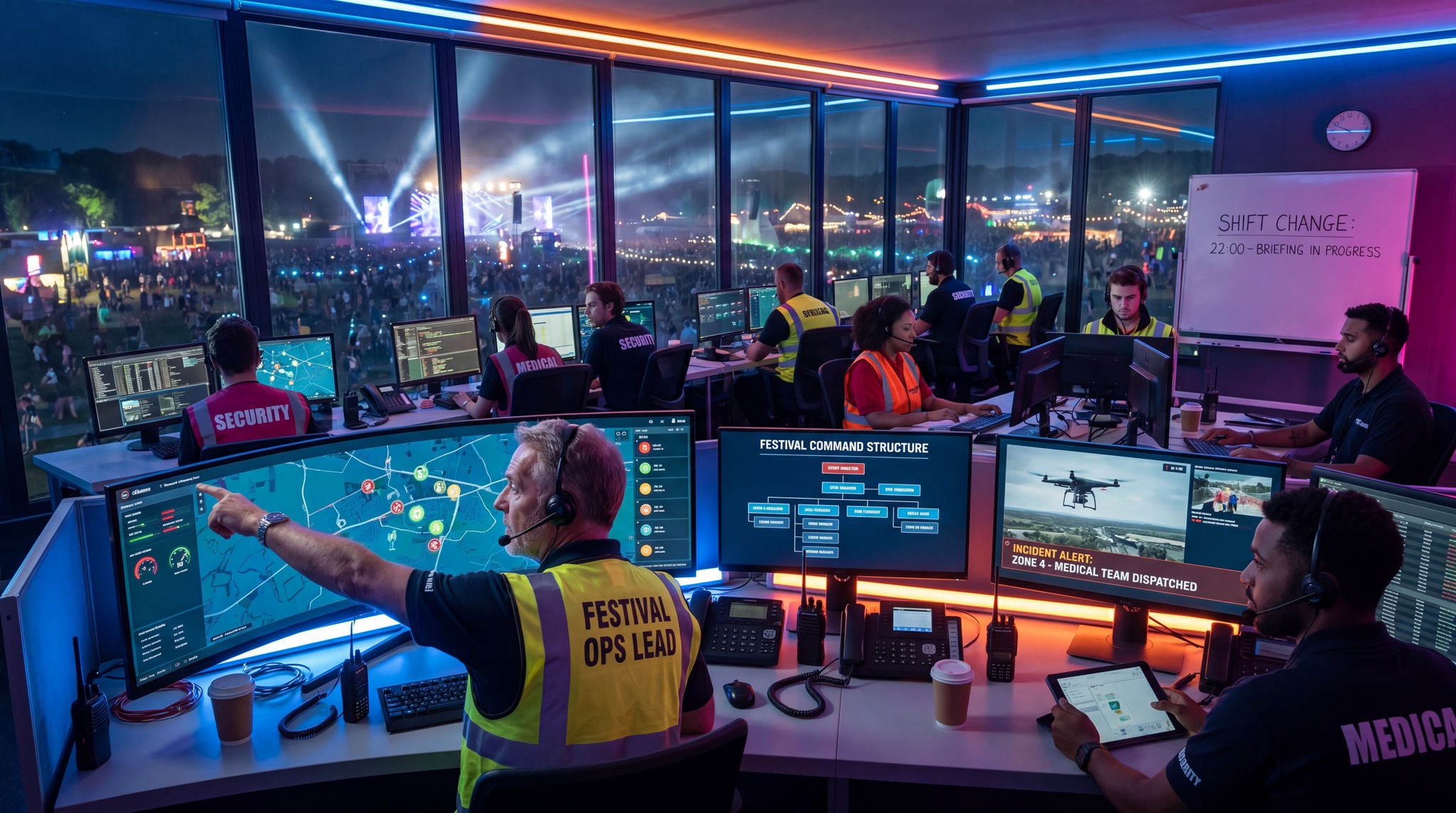
Beyond comfort and fun, “Little Steps” routes contribute to overall festival safety and risk management. For instance, having less-crowded alternative paths can be invaluable in emergencies – if a primary thoroughfare is jammed or an area needs to be evacuated, these secondary pathways can help families move out calmly. Attendees who are moving at a slower pace won’t get caught in a fast-moving crowd surge if they’re on a separate, gentler route away from the main throng.
Lost children are any parent’s worst fear in a crowded event. A well-marked family route, combined with diligent staff presence, can mitigate this risk. Station festival volunteers or security personnel at intervals along the family path. Not only can they assist with directions or first aid, but they serve as immediate points of contact if a child gets separated. Many festivals implement a “tag-a-kid” identification system (for example, Austin City Limits provides free wristbands for each child with the parent’s phone number on it) and instruct parents and kids that if they become separated, to look for staff or go to designated meeting spots. If your family route is staffed and clearly signposted, a lost child is more likely to encounter a helper there than if they wander into the anonymous crowd.
From a health standpoint, providing things like frequent rest and shade isn’t just a nicety – it can prevent medical issues. Heat exhaustion, dehydration, or fainting in young ones can escalate quickly. By planning for shade, water, and downtime, you’re actively reducing those risks. This kind of foresight also shows local authorities and insurers that you take duty of care seriously. It highlights professionalism in your operations and can be a point in your favour when negotiating permits or insurance premiums.
Budgeting and Partnerships for Family Infrastructure
One might ask: how much will all this cost? The answer is that family-friendly design can be as modest or as grand as your budget allows – but even on a shoestring, there are effective measures you can take. Benches and seating need not be designer pieces; many festivals use hay bales (cheap and with a fun rustic vibe) or simple rented folding chairs in shaded areas. Local councils or parks departments might loan public benches for a weekend community festival at low cost. For larger events, consider investing in durable portable benches that you can store and re-use each year.
Shade structures can range from open-sided tents to more creative solutions. At one festival in Spain, organisers borrowed large patio umbrellas from a sponsor during the day for the family areas – providing shade without purchasing new equipment. You can also invite sponsorship specifically for family comfort: imagine a “Family Chill Zone presented by [Brand]” to help cover the costs of tents, beanbags, and misting fans. Companies related to parenting, beverages, or outdoor gear often love opportunities for positive exposure like this.
Tech upgrades like real-time “kid minutes” displays might require some investment in your mobile app or on-site screens. If you already use a comprehensive ticketing or event management platform, check if it offers a festival app or live mapping features; you might integrate route updates through it rather than building a system from scratch. If budget is tight, the low-tech route works too – volunteers with whiteboards are far cheaper than LED screens! What’s important is the information reaching the parents when they need it, not how flashy the delivery is.
When budgeting, weigh the benefits: attracting more families can boost ticket sales (especially if you offer family packages or free entry for young kids, as many festivals do), and those attendees tend to spend on-site on food, merchandise, and kid treats. Moreover, happy families often become loyal repeat customers, returning year after year and telling their friends. The upfront cost of a few benches or extra shade is a small price for long-term goodwill and an expanded audience.
Putting It All Together: A Stroll, Not a Sprint
Ultimately, the aim of “Little Steps” mobility routes is to reshape a family’s festival experience from a tactical mission (“How will we ever get from the parking lot to the stage with these kids?”) into a pleasant adventure. By overlaying the festival map with thoughtful, gentle pathways, adding rest and relief at smart intervals, and communicating in terms that resonate with parents and kids, the dynamic of movement changes completely – the march becomes a stroll.
A family that isn’t exhausted by midday will stay longer, enjoy more shows, and create positive memories. This not only fulfills the ethical duty of care that event organisers have, but it also makes great business sense. Festivals from Mexico to Singapore, Canada to Indonesia are discovering that a little extra attention to small feet yields big rewards in attendee satisfaction.
As veteran producers will attest, think of festival-going as a journey. For adults, the destination (the headline act, the beer garden, the art installation) might be the focus, but for kids, the journey is the experience. So make that journey as enchanting, comfortable, and accessible as possible. In doing so, you’re nurturing the next generation of festival lovers in the gentlest way imaginable.
Frequently Asked Questions
What are Little Steps mobility routes at festivals?
Little Steps mobility routes are designated festival pathways optimized for families, prioritizing gentle slopes and low-crowd areas to facilitate easier navigation. These routes feature frequent rest stops, shade, and amenities like water stations, transforming a strenuous trek into a manageable stroll for parents with strollers and young children.
How can festivals make walking easier for young children?
Festival organizers facilitate easier walking for children by designing routes with gradual slopes and avoiding steep inclines or rough terrain. Strategies include utilizing existing service roads, installing traction mats on hills, and plotting pathways around crowd choke points to ensure a safe, less exhausting experience for little legs.
What does “kid minutes” mean on festival signage?
“Kid minutes” is a navigational concept that estimates walking time based on a child’s slower pace rather than an adult’s. Typically calculated as double the standard adult walking time, this signage helps parents set realistic expectations for travel between stages and amenities, accounting for shorter strides and frequent pauses.
How frequently should rest spots be placed at family festivals?
Experts recommend positioning seating or rest areas every 100 to 200 meters along festival pathways to prevent exhaustion in young children. These stops, which can utilize simple benches, hay bales, or ground platforms, provide necessary breaks that reduce physical strain and minimize the likelihood of child fatigue-related meltdowns.
Why is shade important for family-friendly events?
Shade is critical at family events because young children are highly susceptible to heat exhaustion and dehydration. Strategically placing shade canopies, tents, or misting stations along mobility routes and at rest stops prevents overheating, allowing families to recharge safely and extending their duration of stay at the event.
Do family mobility routes benefit festival attendees with disabilities?
Family-centric mobility routes directly benefit attendees with disabilities, seniors, and pregnant women by providing paths with gradual slopes and reduced crowd density. These inclusive designs often align with accessibility standards like the ADA, ensuring that navigable, less congested pathways are available for wheelchairs and anyone with limited mobility.
How do designated family routes improve festival safety?
Designated family routes enhance safety by separating children from dense, fast-moving crowds, reducing the risk of separation or injury. These quieter pathways often feature stationed staff or volunteers who can assist with first aid and quickly manage lost child situations, providing a secure environment for vulnerable attendees.
What amenities are essential for family-friendly festival pathways?
Essential amenities for family mobility routes include frequent water refill stations, toilets with baby-changing facilities, and first aid points. Integrating these services directly along the designated path ensures parents have immediate access to hygiene and safety resources without needing to navigate through heavy crowds to find them.