Mastering Contests & Giveaways for Event Promotion in 2026: Engaging Fans & Driving Ticket Sales
Contests and giveaways have become one of the event marketer’s most engaging tools in 2026. These promotions tap into fans’ love of freebies and friendly competition, sparking massive social buzz and word-of-mouth excitement around events. When executed strategically, a contest can amplify an event’s reach, boost fan engagement, and even directly drive ticket sales – all without devaluing the tickets you need to sell. However, poor planning or over-generosity can undercut revenue and train your audience to wait for a free ride. This comprehensive guide breaks down how to plan and run effective contests and ticket giveaways that get fans hyped and buying tickets, illustrated with real examples and hard-earned lessons from events worldwide.
Why Contests & Giveaways Work for Event Promotion
Excitement and Engagement that Fans Love
Contests and giveaways tap into a basic fan psychology: the excitement of possibly winning something valuable. The mere chance of a free VIP upgrade or festival pass creates buzz and gets people talking. Nothing sparks online engagement quite like the thrill of a contest, especially in the event world, where building hype and engagement long before the festival is crucial. Furthermore, festival contests not only generate massive buzz but also strengthen identity. Attendees share contest posts with friends, tag their festival crew, and discuss entries – all spreading your event’s name far and wide. In fact, nearly 58% of consumers say they’re more likely to engage with brands that offer contest rewards, according to marketing statistics on contest planning. For event promoters, that means a well-crafted giveaway can significantly amplify social media interactions, comments, and shares around your show. This heightened engagement not only increases awareness but also builds an emotional investment – fans start to feel part of a community, bonded by the contest experience.
Building Word-of-Mouth & Organic Reach
A powerful aspect of contests is how they encourage fans to spread the word for you. Many contest formats (like “tag a friend” or referral competitions) inherently create word-of-mouth marketing. When someone tags friends in a Facebook contest post or forwards an email to gain extra entries, your event is introduced to new potential attendees through a trusted recommendation. Research shows people trust friends’ suggestions far more than any ad, which highlights the power of word-of-mouth marketing – so these peer-to-peer contest shares boost credibility and interest. A simple giveaway on social media can drive a 45% higher follower growth rate than standard campaigns, as noted in user growth data for contest campaigns, as each participant brings others along. Media outlets and influencers might even pick up on a particularly creative contest, further expanding your reach. For example, mid-campaign radio ticket contests can put your event on the airwaves to thousands of people who aren’t following you online, helping in reigniting ticket sales during a slump. By turning fans into ambassadors eager to share and invite others, contests create an organic promotional engine that paid ads alone struggle to match.
FOMO, Urgency & Ticket Sales
Beyond engagement, contests can strategically drive ticket purchases when aligned with sales tactics. Done right, a giveaway introduces ethical urgency – a limited chance to win that pushes fence-sitters to act. Many fans hate the thought of their friends winning tickets or VIP perks while they miss out (hello FOMO!). An expertly timed contest can leverage this psychology to convert on-the-fence followers into buyers. For instance, offering “everyone who buys a ticket this week is entered to win a backstage meet-and-greet” adds a bonus incentive to purchase now instead of later. The key is balance: contests should complement, not replace, your core sales strategy. Seasoned event marketers know to use giveaways as sweeteners alongside tactics like early-bird pricing and countdowns, which is vital when measuring success in a privacy-first era. By making the contest time-bound and explicitly tied to your ticketing goals (e.g. boosting early sales or a last-minute push), you tap into urgency and FOMO without resorting to gimmicks. Fans feel excited rather than pressured – a crucial distinction for trust. The result is often a ticket sales lift that comes from motivation, not manipulation.
Turn Fans Into Your Marketing Team
Ticket Fairy's built-in referral rewards system incentivizes attendees to share your event, delivering 15-25% sales boosts and 30x ROI vs paid ads.
Buzz Without Cannibalizing Revenue
A common worry is that giveaways might train people to wait for free tickets instead of buying. Indeed, any contest must be designed to avoid “giving away the farm.” The good news: when planned carefully, contests can generate buzz and incremental sales without hurting your revenue. The trick is to limit prize quantities and structure rewards such that they attract new audiences or add value for purchasers, instead of simply handing out what you hope to sell. For example, giving away one pair of tickets to generate thousands of social shares is usually a great trade-off – you lose perhaps £100 in ticket value but gain far more in free advertising and new leads. Similarly, offering upgrades or unique experiences (e.g. a backstage tour) as prizes drives excitement while still requiring the winners to have a ticket. In other words, contests should create additional reasons to buy, not alternate paths to attend for free. Later in this guide we’ll explore how to choose prizes and formats that maximize buzz without cannibalizing your core ticket revenue. With smart planning, contests become a revenue enhancer: one festival’s contest campaign contributed to a significant boost in ticket sales during a seasonal promotion, proving influencer campaigns drive higher engagement. The following sections will ensure you set the right foundation so your contest promotions fuel the hype – and the sales – you’re after.
Setting Clear Goals and Contest Rules
Define Success: Engagement, Leads, or Sales?
Every great contest starts with a crystal-clear goal. Are you trying to drum up social engagement and brand awareness? Build an email list or follower count for future marketing? Or directly drive ticket purchases for an upcoming event? Knowing your primary objective is critical because it shapes every aspect of your contest – from the entry method to the prize to how you promote it, as seen in social media contest planning guides. For instance, if your goal is lead generation, you might run a sweepstakes that requires email sign-ups or newsletter subscriptions to enter. If you need an immediate sales boost, you might make contest entry contingent on having purchased a ticket (e.g. a raffle among buyers). Experienced event promoters often set specific targets, like “500 new email leads” or “100 extra ticket sales in two weeks,” to measure contest ROI. Having these metrics upfront keeps your team focused and allows you to judge afterward if the contest was worth it. It’s no surprise that 71% of marketers in 2025 ranked contests as their most effective lead generation tactic, with 71% of marketers agreeing on their efficacy – but that’s only true when the contest is intentionally designed to capture leads. Define what success looks like for you (likes, shares, sign-ups, or revenue), and let that guide every decision.
Ready to Sell Tickets?
Create professional event pages with built-in payment processing, marketing tools, and real-time analytics.
Choosing the Right Contest Format
Once your goal is set, pick a contest format that naturally delivers that outcome. Different contest types serve different purposes, so choose one aligned to your needs:
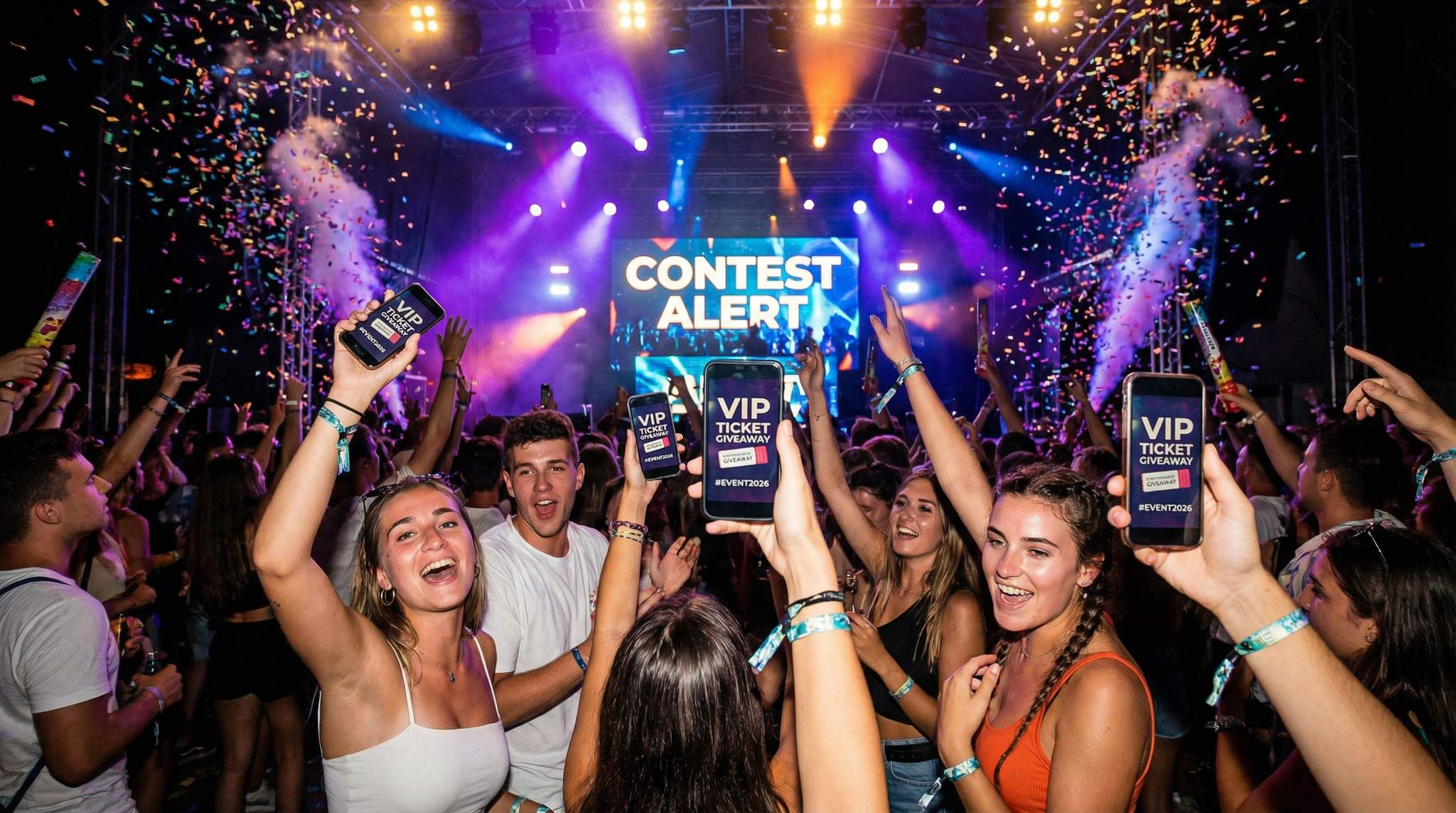
- Random Giveaways (Sweepstakes) – Best for maximizing participation and reach. Entry is simple (e.g. like, comment, tag a friend, or fill out a form) and the winner is chosen by chance. This format is great for awareness and follower growth because it lowers barriers – anyone can try their luck. It won’t guarantee immediate sales, but it can flood your funnel with new prospects.
- User-Generated Content Contests – Ideal for deep engagement and rich content creation. Fans submit something of their own (photos, videos, artwork, etc.), often with a branded hashtag. This yields authentic UGC you can repost, and these contests typically see 64% higher engagement than generic brand posts, reinforcing the value of user-generated content in marketing. UGC contests are perfect if your goal is to boost community involvement or gather creative content, though the barrier to entry is higher (only your truly enthusiastic fans will participate).
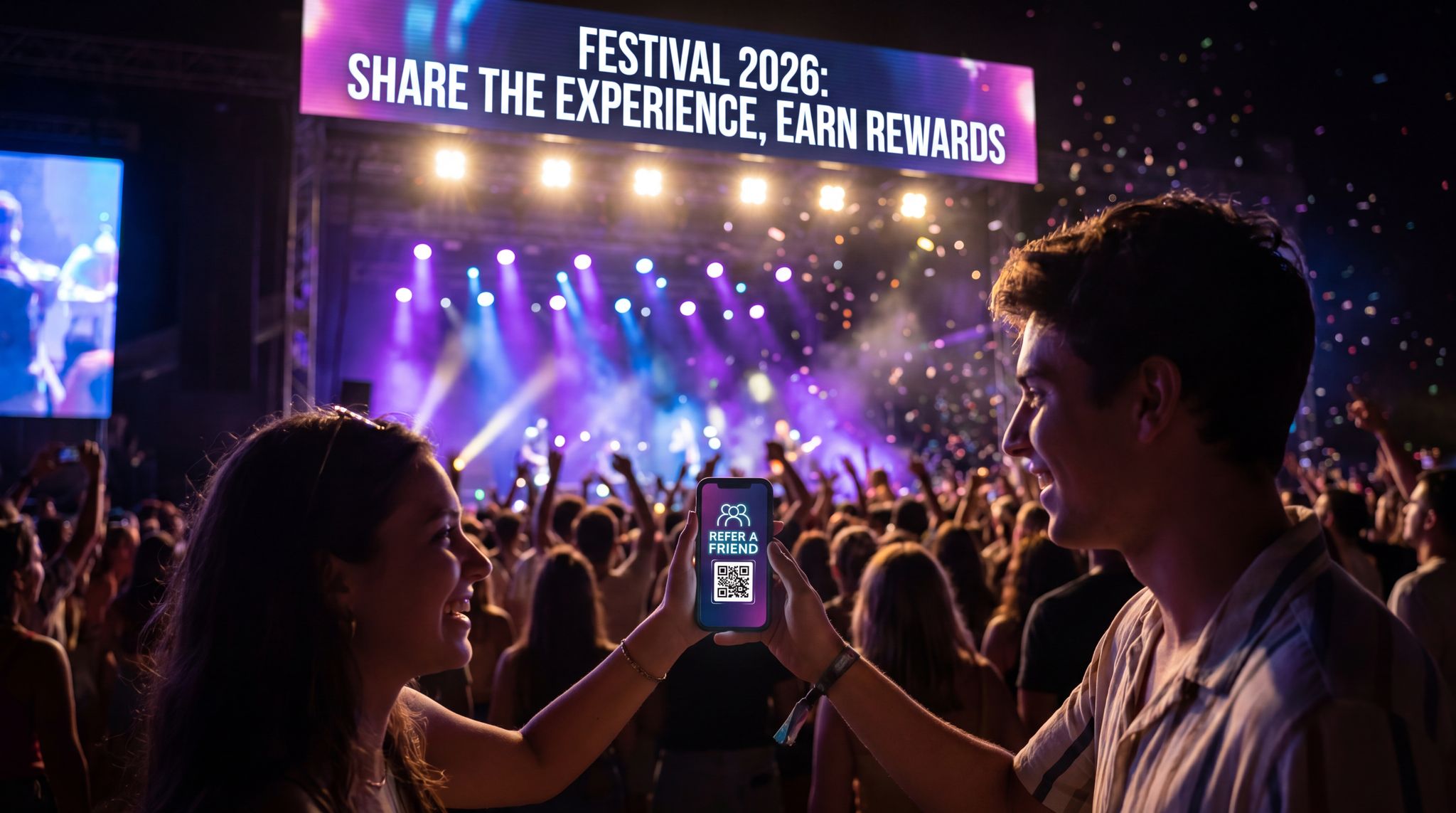
- Referral Competitions – Designed for word-of-mouth growth, ticket sales and lead generation. Participants get unique referral links or codes to invite friends; those who bring in the most new ticket buyers or sign-ups win. This format directly taps into social networks and can turn fans into a volunteer sales force. Many events see a huge viral lift from referral contests – for example, one festival’s pre-sale referral giveaway drove 30% of its total sign-ups and helped sell one-third of tickets in the first week, demonstrating how pre-sale signups launch with referral giveaways.
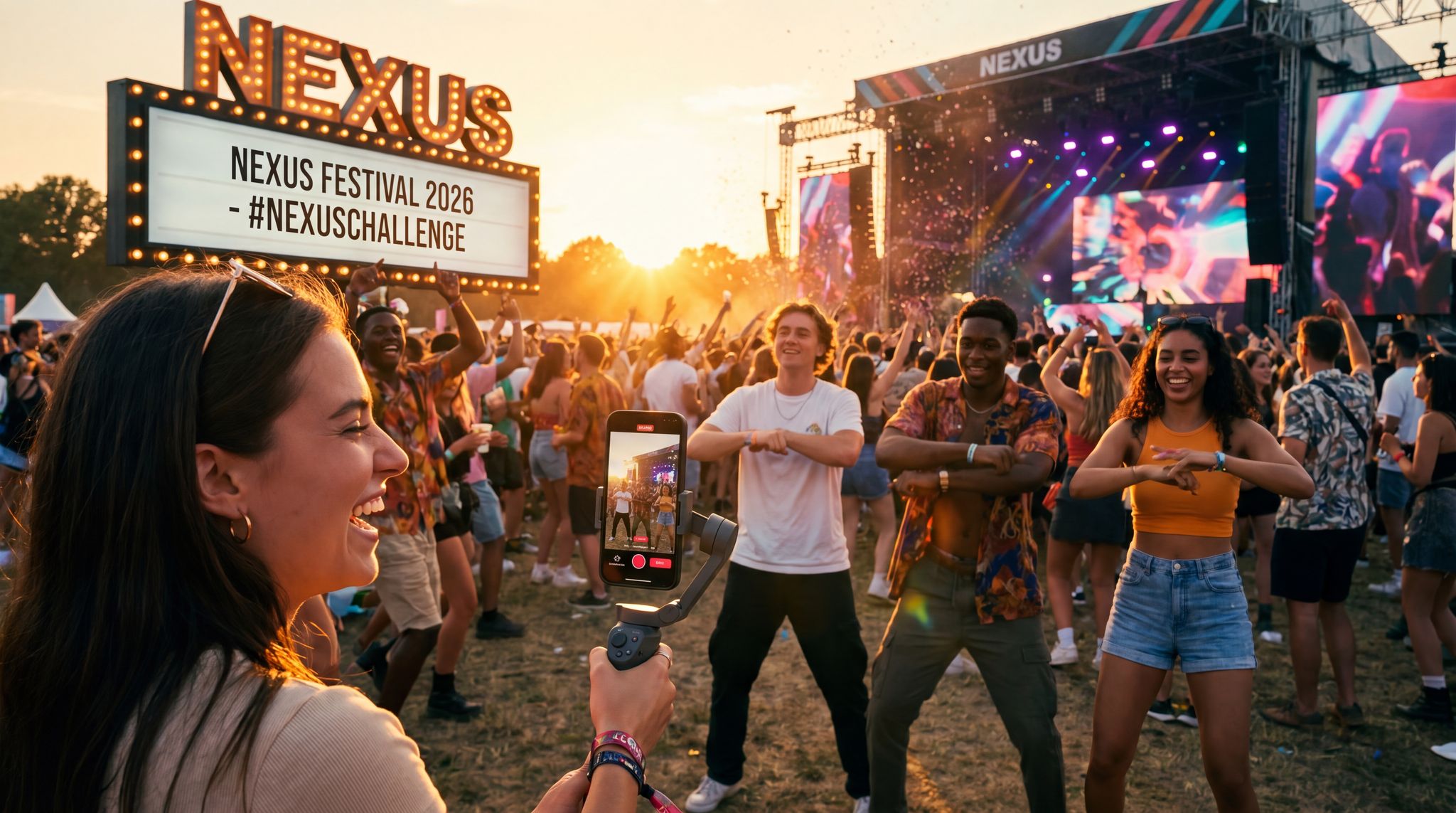
- Trivia & Challenges – Good for ongoing engagement and educating your audience. You might pose daily trivia questions about your event or artists, with each correct answer counting as an entry, or run a fun challenge (like a dance challenge on TikTok). These keep fans interacting with your content regularly and learning more about the event. While they may not directly drive purchases, they maintain buzz during lulls and make casual followers more likely to convert over time.
- “Purchase to Win” Raffles – Best when you need to incentivize buying now. In these contests, buying a ticket (or other purchase) is the entry mechanism: “All customers who buy tickets this week will be entered to win a VIP upgrade.” This format explicitly ties contest excitement to purchasing behavior – great for boosting early-bird sales or last-minute surges. Just be mindful of legal restrictions (in some regions, you must offer a free entry method if the winner is random, to avoid running an illegal lottery).
To illustrate, here’s a quick comparison of common contest formats and what goals they serve best:
| Contest Format | Best For | Example |
|---|---|---|
| Random Giveaway (Sweepstakes) | Maximum participation and broad awareness. Easy entry means lots of people will join. | “Like our Facebook post and tag a friend for a chance to win 2 free concert tickets.” (Winner is drawn at random) |
| UGC Contest (Skill-Based) | Deep engagement and community content. Great for fan creativity and viral sharing. | “Post your best festival outfit photo with #FestStyle2026 for a chance to win a VIP upgrade.” (Best photo wins, judged by panel or votes) |
| Referral Competition | Direct ticket sales, lead generation, and word-of-mouth reach. Leverages fans to bring others. | “Invite friends with your unique link – whoever brings the most new ticket buyers wins a backstage meet-and-greet.” (Tracks referrals; rewards top referrer) |
| Trivia/Challenge Series | Sustained engagement and education. Keeps your audience interacting over time. | “Daily trivia: Answer a question about the lineup each day to enter to win festival merch.” (Each correct answer = one entry in prize draw) |
| Purchase-to-Enter Raffle | Urgent sales boost. Encourages immediate ticket purchases. | “Buy your ticket by Sunday and you’ll be entered into a draw to get your entire order refunded.” (Only ticket buyers in the timeframe are eligible) |
The format must match your campaign goal and audience. A club promoter seeking quick local buzz might do a simple Instagram ticket giveaway, whereas a B2B conference might run a referral contest to turn attendees into recruiters. You can also layer multiple contests throughout your timeline – for example, an early bird sign-up contest for leads, and a last-week purchase raffle for closing sales. Just ensure each contest has a clear purpose and doesn’t confuse your audience with too many overlapping promotions.
Official Rules, Fairness, and Legal Musts
Before you launch, nail down the official rules and ensure you’re following any relevant laws or platform policies. Nothing will sour your promotion faster than an avoidable legal issue or accusations of unfairness. Clearly outline your contest terms: how to enter, who is eligible (age, location, etc.), the entry period, how and when winners will be chosen, and what the prizes are. Transparency builds trust – fans should feel the contest is fair and that everyone’s playing by the same rules. From experience, veteran promoters know to anticipate questions and list details upfront (e.g. “One entry per person,” “No purchase necessary,” “Winners responsible for their travel to the venue,” etc.). If you’re picking a winner by judging (say, “best photo wins”), describe the criteria or judging process to avoid any perception of bias.
Smart Promo Codes & Presale Access
Create percentage or flat-rate discount codes with usage limits, date ranges, and ticket type restrictions. Plus unlock codes for private presales.
Legally, be aware of contest and sweepstakes regulations in the regions you’re targeting. Many countries (and U.S. states) have strict rules on “no purchase necessary” if winners are decided by chance – essentially, you typically can’t require someone to buy a ticket to enter a random draw, unless you provide a free entry alternative. If your contest involves voting or judging (a skill contest), those might be exempt from lottery laws, but get familiar with the distinctions. When in doubt, consult a legal advisor or at least do research on sweepstakes laws in your area. It’s also important to follow each social platform’s promotion guidelines. For example, Facebook’s terms prohibit requiring people to share a post on their personal timeline or tag themselves in a photo to enter (tagging friends in comments is allowed, however). Instagram and Twitter have their own rules (such as encouraging a disclaimer that the contest isn’t affiliated with Instagram/Twitter). Violating platform rules could get your contest post removed or your account penalized, so take the time to read the official promo guidelines that Facebook, Instagram, TikTok, etc., provide.
Compliance becomes even more critical when dealing with massive prize pools. For instance, if a major destination festival or corporate brand partner is running high-value giveaways in 2026 (such as a minimum $100,000 prize package), strict “no purchase necessary” laws apply across the US. Organizers must provide a free, alternative method of entry (AMOE), such as a mail-in option, and often need to register and bond the sweepstakes in specific states like New York and Florida. Failing to navigate these high-stakes legal requirements can result in severe fines and reputational damage.
Grow Your Events
Leverage referral marketing, social sharing incentives, and audience insights to sell more tickets.
Fairness is another key aspect. Use dependable methods to choose winners (if random, use a random number generator or a third-party draw service; if skill-based, involve impartial judges or clear voting mechanisms). And be vigilant against cheating. Unfortunately, contests can attract bots or individuals creating multiple fake entries. Consider measures like one entry per email/IP, CAPTCHA on entry forms, or requiring users to authenticate via social login to prove they’re real. If it’s a referral contest, watch out for someone trying to game the system with dummy accounts. It helps to state in your rules that you reserve the right to disqualify fraudulent entries. Fans will appreciate that you’re keeping things fair. In one mid-campaign contest, an event team noticed a suspicious spike in “referrals” from one person and swiftly addressed it – had they not, real fans might have lost faith in the promotion.
Lastly, decide how you’ll notify and announce winners. It’s good practice to directly contact winners (via email, DM, etc.) and publicly announce them (if they consent). Public winner announcements not only prove that your contest was legit, but they also generate positive buzz (“Congrats @JaneDoe!”). Just be sure to respect privacy – first name and maybe last initial or a social handle is usually enough when announcing. Also, prepare an alternate winner or two in case the first choice is ineligible or unresponsive. Planning these details in advance will save headaches later and ensure your contest concludes as smoothly as it began.
Keeping Contests Ethical and Respectful
In the quest for engagement, maintain an ethical approach so that your contest reflects well on your event and brand. Don’t put fans in uncomfortable or risky situations just to participate. For example, requiring excessive personal data or app permissions can backfire. If you’re tempted to run a highly interactive contest that asks people for sensitive info or access (like a contest app that wants to track their location or scan their contacts), pause and reconsider – is the value to the user clear, and can you achieve your goal in a less invasive way? Often, a simpler entry method is better for both trust and participation rates, avoiding complex interactive contests requiring excessive data. Respect people’s privacy and time: asking a few survey questions for an entry is fine, but making them complete a 30-minute questionnaire is not.
Be mindful as well of the content you might get from entrants. If you prompt user-generated content, set some basic guidelines (e.g. “keep it PG-13,” “no hate speech or violence in submissions,” etc.) to prevent unpleasant surprises. You’ll be moderating those entries, and you have the right to discard any that violate the contest rules or your event’s values. It’s wise to include a clause that you can remove or disqualify submissions that are inappropriate. This keeps the focus on fun, positive participation and protects your brand from being associated with off-brand content.
Grow Your Social Following With Every Sale
Require social media follows, shares, or playlist adds to unlock presale access or special pricing. Turn every ticket purchase into audience growth.
Ethical also means sticking to your word. Award the prizes exactly as advertised and do so promptly. There have been cautionary tales of events that ran contests but never actually gave out the prize (or delayed for so long that winners blasted them on social media). Those situations erode trust quickly. Treat contest winners like VIPs – after all, they’re likely to become some of your loudest cheerleaders if they have a great experience. Deliver what you promised, follow up to make sure they’re satisfied, and you’ll turn a contest win into long-term goodwill and possibly word-of-mouth sales (“I won tickets to XYZ Fest, it was amazing, you should come next year!”). In short: play fair, play smart, and your contests will yield not just entries, but enthusiastic new fans.
Choosing Prizes that Excite Fans (Without Hurting Revenue)
Prizes That Fans Actually Crave
The allure of your contest hinges largely on the prize. The right prize can turbocharge participation; a ho-hum prize will fall flat. Event contests have a built-in advantage here – tickets and experiences tied to the event are often the most enticing rewards you can offer. Fans go crazy for things like free passes, VIP upgrades, meet-and-greets with artists, backstage tours, or exclusive merchandise. These prizes feel priceless to true fans, even if their cost to you is minimal. Always ask, “Would I be excited to win this if I were an attendee?” For a music festival, for example, a pair of VIP weekend passes or a chance to watch from side-stage might be far more motivating than a generic £100 gift card. If you’re promoting a tech conference, perhaps a private lunch with the keynote speaker or a free year of your software service could be the hook. Know your audience and what they value. Experienced promoters have found that offering unique experiences or access – things money can’t easily buy – tends to yield the best engagement. It’s not always about high monetary value; exclusivity and cool factor count. A limited-edition festival poster signed by all the headliners might create more buzz than a simple cash prize of similar value, because it’s directly tied to fan passion and the event experience.
For B2B events, the approach shifts slightly but the psychology remains the same. Organizers are constantly searching for unique conference swag ideas and buzzworthy prizes in 2026 to stand out on a crowded trade show floor. Instead of generic branded pens, consider high-value tech accessories, exclusive masterclass access, or premium subscriptions. These elevated rewards not only drive higher participation rates among professionals but also position your conference as a forward-thinking industry leader.
Balancing High Value vs. Cost
When selecting prizes, you need to balance fan appeal vs. cost and consider how prizes might impact your ticket sales. The goal is to maximize perceived value while minimizing any loss of revenue or excessive expense. Here’s a rule of thumb: whenever possible, give away things that cost you little but mean a lot to the fan. Tickets are an obvious example – comping a pair of tickets has a low marginal cost (especially if your event isn’t sold out yet) but a high face value to the winner. Even better are upgrades or VIP perks: upgrading someone from GA to VIP costs you almost nothing extra (aside from maybe some hospitality), but fans see it as a luxury prize. Similarly, experiences like backstage access, a shout-out from the stage, or a chance to dance onstage for one song are essentially free to provide, yet unforgettable for winners.
Physical prizes like merch can also work, though their draw might be lower. Bundling multiple items can sweeten the deal (e.g. a “festival fan pack” with a t-shirt, hoodie, and drink coupons). If you do offer merchandise or third-party products, make sure they align with what your attendees want. A gaming expo giveaway might be a high-end graphics card donated by a sponsor – huge appeal to that crowd at no cost to you – whereas the same prize would be meh at a jazz festival. Avoid prizes that have high cost to you but low relevance to your audience; they won’t move the needle on entries and could drain your budget.
One thing to be cautious about is giving away too many core tickets. The idea of, say, 50 free ticket winners might sound exciting, but that’s 50 tickets you didn’t sell (and possibly 50 paying customers who now won’t buy because they got a freebie). A better approach is to limit the number of ticket prizes to a very small percentage of your capacity (for example, giving away 2–5 free passes for an event that expects 5,000 attendees). That way, the revenue at risk is negligible, and the promotional upside (thousands of engagements or sign-ups) far outweighs it. Many promoters also structure ticket prizes in ways that still encourage sales – for instance, awarding “ticket upgrades” (where winners who already bought GA get upgraded to VIP) or “+1 tickets” (so the winner gets an extra ticket, but they likely already purchased one for themselves). These tactics ensure you’re not simply handing out tickets to people who might have paid.
Built-In Email Marketing for Events
Send targeted campaigns, automated purchase confirmations, and post-event follow-ups directly from your ticketing dashboard.
Partnering with Sponsors for Prizes
A savvy strategy to boost prize appeal without increasing your costs is partnering with sponsors. Sponsors and local businesses love contests because it puts their brand in a positive light with your audience. You can often get high-value prizes donated in exchange for some promotion. For example, a popular local restaurant might contribute a £100 gift certificate as a prize for your club night giveaway, knowing that all your entrants will see their name. A travel company or airline might sponsor flights or hotel stays for a festival “flyaway” contest. In one mid-campaign push, a marathon race struggling with registrations partnered with a chain of gyms and provided free race entries for the gyms to raffle off – this pulled in fitness enthusiasts the regular marketing hadn’t reached, a strategy often used for overcoming the mid-campaign sales slump.
When working with sponsors on contest prizes, ensure the prize aligns with your event and audience. If your audience cares about sustainability, a prize from an eco-friendly brand will resonate more than something unrelated. Make the partnership clear in your contest messaging (e.g. “Win a VIP festival trip including flights courtesy of XYZ Airlines!”). This gives the sponsor exposure and goodwill, and it lends extra credibility to your contest (“wow, big brands are involved, this is legit”). It’s also a way to get media attention – local press is more likely to cover a contest if there’s a notable or creative prize (like a sponsored “Ultimate Festival Fan Experience” package) and human-interest angle.
Be sure to coordinate logistics with the sponsor. Decide who will physically provide the prize and how the winner will redeem it. It’s common to have the sponsor send the product or voucher to you, and then you deliver it to the winner (or have a will-call arrangement for event-related prizes). Also clarify how you’ll mention the sponsor – typically in contest posts, emails, and any ads related to the giveaway. These partnerships can extend your reach as well, since sponsors often promote the contest to their followers/customers, bringing new eyes to your event. Just maintain a balance: the contest should feel like a fun opportunity for fans, not just an advert for the sponsor. As long as the prize is something your fans value, the sponsorship will feel organic.
To summarise how different prize options stack up in terms of fan appeal and cost to you, consider the following:
| Prize Idea | Value to Fans | Cost/Impact to You | Notes |
|---|---|---|---|
| Free GA Tickets | High – Free entry to the event is always attractive. | Medium – Lost ticket revenue for each free ticket (unless your event wouldn’t have sold out). | Use sparingly. Best for attracting new attendees who might not have come otherwise, rather than giving regular fans a free ride. |
| VIP Ticket Upgrade (for existing buyers) | Very High – Exclusive perks and status at the event. | Very Low – Minimal cost (just the VIP amenities) since the person already bought a GA ticket. No revenue lost. | Great for contests that drive purchases (e.g. “buy early for a chance at VIP”). Adds value without costing much. |
| Artist Meet-and-Greet or Backstage Pass | Off the Charts – Money-can’t-buy experience for hardcore fans. | Low – Requires coordination with artist/crew, but little monetary cost. | Huge buzz generator. Ensure the artist or speaker is on board. These prizes create priceless fan moments and social media content. |
| Merchandise Pack (T-shirt, poster, etc.) | Moderate – Fun swag and memorabilia. | Low – Cost of goods is relatively small per winner. | Good as secondary prizes or consolation prizes for runners-up. Reinforces your brand but may not alone drive massive entries. |
| Sponsor Product or Voucher | Varies – Can be very high if it’s a coveted item or big gift card. | None (if donated by sponsor). Possibly promotion of sponsor in return. | Win-win: enhances your prize pool at no cost. Make sure it’s relevant (e.g. music gear for a music event). Sponsor may promote the contest too, expanding reach. |
| All-Inclusive “Event Trip” (tickets + travel + hotel) | Very High – A dream experience, especially for non-local fans. | High – Significant cost if you cover travel/lodging (unless those are sponsored). | Can attract entries from a wide region and draw media attention. If budget allows or partners cover it, this generates huge excitement. Just plan logistics carefully (booking windows, etc.). |
By selecting prizes wisely – ideally those with high fan value but low cost to you – you ensure your contest excites the audience without blowing your budget or undercutting ticket sales. The best prizes create win-win scenarios: fans are delighted to win, and you either spend very little or even benefit (in the case of upgrades or promotional value) from providing them.
Avoiding Prize Pitfalls
While choosing great prizes, keep an eye out for potential pitfalls so your giveaway doesn’t inadvertently cause issues. One common mistake is overvaluing a prize to the point it overshadows your event. For example, giving away a brand-new car for a small music event might draw a ton of attention – but mostly from people who don’t care about the music at all. You’d get entries, but not quality ones, and very few would turn into ticket buyers. It’s usually better to offer a prize that appeals specifically to fans of your event. That way, almost everyone who enters is a potential customer or genuine fan.
Free Tool: When Should You Announce?
Pick your event date and genre — the free planner outputs a recommended announce, presale, on-sale and reminder schedule anchored to how your audience actually buys.
Another pitfall is poor prize fulfillment planning. If your prize involves travel, shipping, or scheduling, make sure you have a clear plan (and budget) to handle it. Spell out any key restrictions in the rules (“Prize trip must be taken by X date”, “Merch pack will be shipped only within our country”, etc.). Surprises after the fact – like a winner learning they have to pay taxes or fees on a “free” prize – will turn a goodwill event into a PR headache. If the prize is expensive (above a certain threshold in some countries, winners may owe taxes), gently remind winners of any tax obligations in private and consider providing paperwork if needed. These details, while not glamorous, are part of running a smooth contest.
Keep the timeline between winner announcement and prize delivery short. Ideally, fulfill digital prizes (tickets, codes) within days, and physical prizes within a couple of weeks. This prevents winner frustration. Publicly, you can even post a follow-up when the prize is delivered (“Enjoy your VIP experience, @WinnerName!”) – it’s extra marketing and assures everyone that the contest was legitimate and completed.
Finally, be prepared with a backup plan in case a prize falls through. Sometimes an artist might cancel the meet-and-greet opportunity you planned, or a sponsor might back out last-minute. Always have an alternative of equal or greater value that you’re willing to offer. It’s better to upgrade a prize or offer credit towards future events than to tell a winner “sorry, you’re out of luck.” For instance, if that meet-and-greet is nixed, perhaps you can offer side-stage viewing for a different headliner, plus some free merch and drink tokens to make up for it. Most fans will understand changes if you communicate proactively and make sure they still feel like VIPs.
In short, sweat the details on prizes just as you do on the contest itself. A well-chosen prize energizes your promotion; a poorly handled one can undermine it. When fans see amazing prizes smoothly delivered to winners, it builds trust and eagerness to participate next time – and it reinforces the perception that your event really values its community.
Designing Contest Mechanics and Entry Methods
Simple vs. Complex Entries: Finding the Sweet Spot
Deciding how people will enter your contest is just as important as choosing the prize. The easier it is to enter, the more participants you’ll get – but with simple entry you may sacrifice some targeting or depth. The more complex or demanding the entry, the fewer (but potentially more engaged) participants you’ll see. The key is to find the sweet spot that fits your goals.
If your aim is sheer reach and virality, keep the entry method dead simple. “Like this post and tag a friend” or “Enter your email on our site” are low-friction actions that anyone can do in seconds. These will maximize the number of entries. In fact, contests with the simplest mechanics (one-click or one-comment entries) often get the highest participation rates because there’s no barrier. Use simple entries when you want to fill the top of the funnel with as many potential fans as possible, or when you’re looking to boost social media metrics.
Free Tool: Split Tickets for Max Gross
Given capacity and a target price, the optimizer proposes Early Bird / GA / VIP allocations and prices — with projected gross at 100%, 80% and 60% sell-through.
On the other hand, if your goal is to generate quality content or identify super-fans, a more complex entry can be beneficial. Requiring a bit of effort – like creating a piece of content, answering open-ended questions, or completing a challenge – will naturally filter your audience for the most enthusiastic folks. A fan who’s willing to submit a 30-second video of themselves singing your festival anthem is likely a die-hard who might convince 10 friends to come if they win. Plus, the content you get can be golden for marketing. Just know that each additional requirement (e.g. “fill out this form, then post a photo, then tag 3 friends”) will sharply drop the number of entries. There’s a balance: make it just hard enough to get serious participants, but not so onerous that even excited fans give up. A good practice is to test the process yourself (and maybe on a few colleagues) – if it feels tedious, simplify it.
It’s also worth considering mobile-friendliness. Many entrants will discover your contest via a mobile device. Ensure that whatever entry mechanism you choose (website form, social media action, etc.) is easy to do on a phone. If it’s an online form, keep fields to a minimum (name, email – maybe a couple of preference questions at most). If it’s on Instagram, assume people will be tapping on their screens, not typing long responses.
One increasingly popular strategy is tiered entry options. For example, you might allow a basic entry via email or like, but give additional entries for extra actions: “Get 1 entry for signing up, +2 entries for each friend who signs up from your referral link, +5 entries if you submit a video,” etc. This way, casual fans can still participate (they’ll just have one entry), while your most engaged supporters can choose to put in more effort to improve their odds. Tools like contest apps or platforms often support this multi-tiered approach, automatically tracking points or entries per person. It can dramatically increase engagement – some fans will go all out to rack up entries if they really covet the prize. Just be transparent about how the system works, and cap things if needed to keep it fair (you don’t want one person spamming 10,000 entries either).
Leveraging Social Platforms & Hashtags
Social media is the natural habitat for many contests, and each platform has its own strengths for contest mechanics. Tailor your entry method to the platform(s) you’re focusing on:
- Instagram – Great for like/tag contests, photo or video submissions, and hashtag challenges. An example mechanic: “Follow our account, like this post, and tag 2 friends in the comments to enter.” This is straightforward and can exponentially grow awareness as friends are tagged. For UGC, asking followers to post content to their own feed or story with a specific hashtag (and to mention @youraccount) works well – just set your profile to notice those tags. Instagram contests tend to get high engagement since the whole platform is about visuals and sharing. Just remember Instagram’s rule: include a line that the promotion isn’t affiliated with or endorsed by Instagram.
- Facebook – Still useful, especially for events with an older or broader demographic. Simple comment-based contests (like “comment on this post with your favorite song by the headliner to enter”) can explode with engagement on Facebook. You can also use reactions (e.g. “vote for the afterparty theme: Wow emoji for Neon Jungle, Love for Retro 90s, etc.”) as a form of contest if you plan to “randomly pick someone who voted for the winning theme.” Facebook’s reach for pages has declined, but a fun contest can spur shares that bring in new eyeballs. Consider pinning the contest post to the top of your page during the entry period for visibility.
- Twitter (X) – Good for quick-hit contests, like retweet-to-win or using a specific hashtag. For example, “Retweet this tweet and follow us by Friday for a chance to win 2 tickets.” Twitter’s virality can spread messages fast, but the half-life is short. It works best for flash giveaways or when big news (like a lineup drop) is trending – you hitch the contest onto the buzz. Make sure to track entries (Twitter’s native tools are limited; using a third-party or manually pulling hashtag mentions might be needed).
- TikTok – Ideal for creative challenges and reaching Gen Z audiences. A TikTok contest might ask users to create a short video with a certain sound or hashtag related to your event (e.g. a dance challenge or a “storytime” about their best festival memory). TikTok’s algorithm can propel a contest hashtag to viral status if it catches on. The content can be amazing, but expect to do some work aggregating entries (often it’s manual search by hashtag, or using a social monitoring tool). Reward creativity and encourage entrants to have fun with it – TikTok users respond to authenticity and humour. And be prepared: you might get some truly funny or off-the-wall submissions!
- Email/Web – Not to be overlooked, especially for drawing in those who may not follow you on socials. A simple landing page on your website with an entry form (name, email) can capture leads effectively. You can drive traffic to it via email blasts (“Click here to enter our ticket giveaway”) and ads. This method is highly trackable – you know exactly how many entered, and you own the data (emails for future marketing). Just make sure the page is mobile-optimized. You might combine a web form with social actions (e.g. after sign-up, prompt them to share on social for an extra entry, using unique referral links). One global festival ran a pre-sale sign-up contest via a web form and saw thousands of entries, which seamlessly turned into a targeted email list for their on-sale announcement.
For promoters in the electronic and digital music space, interactive mobile formats are gaining traction. Understanding tap giveaway rules for digital music events is essential when utilizing platforms like Spotify or Apple Music integrations, where fans “tap” to pre-save a track or follow an artist playlist to enter. Ensure your entry mechanics comply with both the streaming service’s API terms and local sweepstakes laws, clearly stating what data is collected when a user taps to authenticate their entry.
Executing a successful tap giveaway for digital music releases or festival lineup drops also requires seamless integration with your ticketing CRM. When fans tap to enter, capturing their streaming preferences allows promoters to build highly targeted segments for future tour announcements, ensuring that the initial contest engagement translates into long-term ticket-buying loyalty.
Whatever platform or method you use, consider creating a unique hashtag for the contest (if it makes sense). Something like #FestivalXGoldenTicket or #RockfestTicketBlitz can help you track social chatter and also serves as marketing in itself. When people see the hashtag trending or used by friends, it piques curiosity. Just keep the hashtag short and easy to spell. And always monitor the conversation – respond to excited fans, answer questions about the contest, and generally stoke the enthusiasm. Contests are interactive by nature, so the more your team engages during the process, the more momentum you’ll build.
Tracking Entries and Preventing Fraud
Behind the scenes, you’ll need a reliable way to track entries and ensure the contest runs fairly. If you’re using a dedicated contest platform (like Gleam, Rafflecopter, Woobox, etc.), a lot of this heavy lifting is done for you – these tools can track social actions, referral links, and entries automatically, and even pick random winners. They often integrate with your social accounts or provide embeddable widgets for entry forms. The downside is they might come with a learning curve or cost, and sometimes users have to authorize the app, which can deter a few people. But for bigger contests or those with multi-step entries, they’re worth considering. They also help in detecting duplicate entries or bot behavior.
When selecting third-party tools, it is crucial to rely on legitimate viral giveaway websites in 2026. Platforms like Gleam, Viral Loops, or Rafflecopter have established trust and robust anti-fraud mechanisms. Avoid unverified, fly-by-night software that promises inflated entry numbers; these often turn out to be a red flag contest liability, exposing your event to data privacy breaches or bot-filled entry pools that provide zero actual ticket-buying intent.
If you’re running things manually, create a system. For a simple social contest, that might be as easy as exporting a list of all commenters or hashtag users at the end and numbering them. Many social platforms don’t have an “export” button for comments, so you might use a tool (or even copy-paste into Excel) to compile entries. Ensure you document the process, both for your own sanity and in case you ever need to prove the winner was chosen fairly. Some organizers even screen-record the random draw selection to show no funny business – a nice transparency move that hardcore contest entrants appreciate.
For referral contests, unique codes or tracking links are a must. Platforms like Ticket Fairy (the ticketing system) have built-in referral tracking where each fan gets a unique link, and you can easily see who brought in how many buyers, as Ticket Fairy’s ticketing system features built-in referral tracking. That kind of first-party data is gold in a cookieless world – you’ll know exactly who your top evangelists are. If your ticketing or email system doesn’t support referral links, consider a service like Viral Loops or similar, which is literally designed for viral referral campaigns and can plug into your site or emails.
Beyond simple link tracking, understanding exactly how The Ticket Fairy boosts event exposure is crucial for modern promoters. The platform’s ecosystem actively turns ticket buyers into micro-influencers by instantly offering them incentives (like VIP upgrades or cash rebates) to share their unique purchase links. This automated word-of-mouth engine ensures that every ticket sold has the potential to reach the buyer’s extended network, exponentially increasing your event’s visibility without additional ad spend. By integrating these gamified referral mechanics directly into the checkout flow, organizers can seamlessly scale their promotional reach.
On the fraud prevention side, keep an eye out for common cheat tactics:
- Fake accounts: Suddenly seeing entrants from brand-new social accounts with no profile pics? Likely fakes. You can require a minimum account age or activity for eligibility (e.g. “Twitter account must be at least 1 month old” or simply filter obvious fakes when picking a winner).
- Duplicate entries: If someone enters multiple times under different emails or accounts, it can be tricky to catch. Using confirmation emails or requiring a phone number (which can be verified) for entry can cut down on throwaway entries. For social, check if the same name keeps popping up suspiciously. Many contest apps have options like “one entry per IP” to prevent the same person spamming forms.
- Bots and Automation: Popular contests sometimes get shared on contest forums or by “sweepstakes bots.” You might see a flood of entries from people who have no clue what your event is (they just enter everything). Some of that is inevitable, but you can discourage it by adding a simple question that only real fans would know (“Which artist are you most excited to see at our event? – we might share your answer!”). Bots will skip that, and casual freeloaders might be weeded out. Plus, you get some nice insights from genuine answers.
- Referral fraud: Someone could try to game a referral contest by referring themselves with alternate emails or convincing strangers online to sign up just to inflate numbers. Combat this by validating referrals – for example, only count referred entries that confirm their email or that result in a ticket purchase. Also, set a reasonable limit if one person is far ahead; if “Alice” has 500 referrals and the next highest is 50, you might investigate before declaring her the winner. It’s possible Alice is just that influential, but it’s worth a second look.
Don’t let these concerns scare you – 98% of the time, contests run smoothly and fans play fair. But a little diligence ensures that one bad actor doesn’t ruin the experience. In the end, if something does go awry (say you catch someone blatantly cheating), handle it decisively and transparently. You might privately disqualify them and choose the next person (as long as your rules reserve that right). If drama spills into public comments, respond calmly: “We identified an issue with an ineligible entry and, to be fair to all participants, we awarded the prize to the next randomly-drawn entrant.” Most onlookers will applaud that you kept it fair. Remember, an honest contest where real fans win will build trust and positive buzz for your brand – exactly what you want out of this effort.
Promoting Your Contest for Maximum Participation
Multi-Channel Promotion: Socials, Email, and Beyond
Once you’ve planned a fantastic contest with an enticing prize and clear rules, you need people to know about it. Promotion is crucial to get the word out and drive entries. Start with the channels you own:
- Social Media Posts: Announce the contest with eye-catching posts on all your active platforms (Facebook, Instagram, Twitter, TikTok, LinkedIn if it’s a B2B event, etc.). Use an image of the prize or a bold graphic saying “Ticket Giveaway!” to grab attention. Pin the post (or add to Stories highlight on IG) so it’s prominent. Remember to post periodic reminders as the deadline approaches – each platform’s feed moves fast, so not everyone will see it the first time. Vary the copy slightly or share entrant enthusiasm (“Over 500 entries so far – have you entered to win your Ultra VIP upgrade?”) to keep it fresh. Encourage sharing by framing it as a community opportunity (“Tag friends who NEED to be at this show with you”). In many cases, the contest itself can act as the promotion: a well-designed contest on social media inherently encourages users to spread it by tagging or sharing, effectively encouraging followers to tag friends.
- Email Blasts: Email is a powerhouse for driving contest participation, especially among your existing subscribers. Craft a dedicated email announcing the giveaway – highlight the prize and how easy it is to enter. Use a compelling subject line (emails mentioning “Giveaway” or “Win Tickets” can see significantly higher open rates – 36% higher, according to marketing statistics on email subject lines). Don’t bury the lede: make the call-to-action (“Enter Now”) prominent with a big button that leads to the entry page or instructions. Also consider including the contest announcement in your regular newsletters, with a banner or sidebar mentioning it. If your email list is segmented (e.g. past attendees, new sign-ups, etc.), personalize the pitch: past attendees might be reminded how awesome the last event was and told they could experience it free this time, whereas new leads might be enticed by how this is the perfect chance to attend their first. And of course, send a last call email a day or two before the contest ends – create some urgency (“Only 24 hours left to enter!”) to catch procrastinators.
- Website & Ticketing Pages: Leverage your site traffic. Add a banner or pop-up on your event website or ticket purchase page about the contest (“Feeling lucky? Enter our contest to win free tickets!”). If your contest is aimed at driving ticket sales, you can strategically place it where buyers will see it – for instance, after someone buys a ticket, you might show a confirmation page note like “Thanks for your purchase! Increase your crew’s size – enter to win two extra tickets for your friends.” Conversely, if someone is lingering on the info page, a contest prompt might entice them to throw their hat in the ring (capturing their email at least, which you can later use for retargeting). Just avoid anything that confuses the primary path (you wouldn’t want a giant contest pop-up that actually deters someone from completing a purchase, for example). It’s about finding the right moments and placements.
- On-Site at Other Events: If the timeline is long enough and you have presence at other events or physical locations, promote your contest there too. e.g. If you run a club and the contest is for a festival you’re organizing, have your MC announce it during club nights (“Go to our Instagram now and enter our ticket giveaway!”). Put up flyers or handbills with a QR code linking to the contest entry. Even at partner venues or sponsor retail locations, you might have signage (“Win tickets to XYZ Fest – ask us how!” with a URL or text shortcode). People in the real world are often excited to hear about a chance to win on the spot. This also reaches folks who might not see your social or email campaigns.
If you are wondering, “how can I promote my giveaway to get more participants?”, the answer lies in layering these channels effectively. Looking at successful contest promotion examples, top-tier promoters often combine a dedicated email blast to past attendees with a pinned Instagram reel and a targeted Facebook ad campaign. Another excellent example of contest promotion is partnering with a local lifestyle publication to host the giveaway on their website, driving their readership directly to your ticketing page. By diversifying your promotional mix, you ensure the campaign reaches beyond your immediate follower base.
Importantly, coordinate the timing of these promotions. It’s often best to launch everything in parallel (social posts live, emails sent, site banner up on launch day) so you get a big initial wave of entries. That buzz can create its own momentum (people see others posting about it, etc.). If you have a longer contest duration (say a few weeks or more), plan periodic boosts: another social push or reminder email each week. Keep the energy up so the contest doesn’t fizzle out after the first days. You can share milestones (“1,000 entries and counting!”) or contestant content (if applicable) to keep folks interested.
Finally, don’t be shy about cross-promotion. If you have industry partners, artists, or influencers involved with your event, ask them to share the contest too. An artist tweeting “My fans can win a meet-and-greet with me at the festival – check this out” amplifies your reach to exactly the right audience (their followers). We’ll dive more into influencer promotion next, but the overarching rule is: promote your contest everywhere you reasonably can. The more people who know, the more will enter, and the bigger the impact on your event hype and sales.
Navigating Paid Ads for Giveaways
While organic reach is fantastic, putting budget behind your contest can exponentially increase its visibility. However, event marketers must strictly adhere to social media giveaway promotion paid ads guidelines in 2026. Platforms like Meta and TikTok have tightened their policies regarding incentivized engagement. When running paid campaigns to boost a contest, ensure your ad copy clearly links to the official rules and avoids language that guarantees a win or sounds like an illegal lottery. Targeting is also critical here; rather than broadcasting to a generic audience, use custom audiences to retarget past attendees or lookalike audiences based on your current ticket buyers. This ensures your ad spend attracts high-intent leads rather than professional sweepstakes entrants.
Emerging Promotional Tactics for 2025 and 2026
When organizers ask how to promote a giveaway to get more participants in 2025 and 2026, the answer increasingly revolves around algorithmic alignment and community-led growth. Rather than relying solely on static feed posts, modern promoters are utilizing short-form video hooks on TikTok and Instagram Reels, where dynamic, behind-the-scenes prize reveals capture higher organic reach. Furthermore, integrating giveaway announcements into private community channels—such as Discord servers or exclusive WhatsApp groups for past attendees—creates an immediate surge of high-intent entries that algorithms reward with broader visibility.
Furthermore, when looking at how to promote a giveaway to get more entries and participants in 2025 and 2026, event marketers are increasingly turning to AI-driven personalization. By dynamically adjusting the promotional messaging based on the user’s past event attendance or musical preferences, organizers can significantly lower the barrier to entry. Combining these personalized email and SMS flows with interactive countdown timers creates a sense of urgency that reliably spikes participant numbers during the final 48 hours of a campaign.
Influencers, Media & Community Amplifiers
To truly supercharge a contest’s reach, tap into influencers and media partners. When credible voices beyond your own channels talk up the contest, it both extends your audience and adds a layer of trust (“look, this popular DJ I follow just shared that festival’s giveaway – it must be cool!”). Here’s how to leverage these amplifiers:
- Influencer Collaborations: Authentic influencer marketing is powerful for events, helping in turning fans into brand ambassadors, and contests provide a perfect collaboration point. You could have a local celebrity, artist, or social media influencer host the giveaway on their profile. For example, a well-known DJ might post, “I’ve partnered with XYZ Festival to give away 2 VIP tickets! Here’s how to enter…” Their fans (who are likely your target audience) will jump on it. Make it easy for the influencer: give them the exact caption or info, the contest hashtag, and perhaps a unique tracking link or code if you want to measure the traffic they drive. Influencer-led contests often see significantly higher participation – one study noted contests promoted by influencers saw a 41% higher entry rate on average, showing the impact of influencer-only promotions. Ensure the influencer discloses the partnership per platform rules (usually a simple #ad or #sponsored tag suffices along with their genuine enthusiasm). The prize itself can involve the influencer too, which boosts appeal – e.g. “Win tickets and a backstage hangout with [Influencer Name] at the show.” Fans will feel like they’re winning time with someone they idolize, on top of the event experience.
- Media and Radio Partners: Traditional media can also be a huge ally. Local radio stations often run ticket giveaway promotions for concerts and festivals – it’s content for them and promo for you. A mid-campaign strategy might be to have a radio partner give away a pair of tickets each day during a particular week, mentioning your event on-air constantly to assist in reigniting ticket sales mid-campaign. This not only moves the needle on awareness (thousands of listeners hear about your event and the contest) but can drive direct sales – especially if on-air personalities hype how exciting the show will be as they push the contest. Similarly, local newspapers or lifestyle websites might run a contest for your event on their platform (sometimes in exchange for a small sponsorship fee or just for the content). They’ll gather the entries, promote it in their publication (“Win tickets to the hottest festival of the year!”), and provide you the winner’s info. It’s essentially a PR play – you’re getting your event in front of their audience in a positive, engaging way. Just coordinate so that, for example, you’re not giving away so many tickets via media that it undercuts your sales. Usually a couple of pairs is plenty to enlist their support.
- Community Groups and Partners: Think about the communities connected to your event. Is there a fan club, forum, or subreddit for your genre that would love a chance to win? Reach out to those community leaders about doing a special giveaway just for them. For instance, if you run an anime convention, offer the big anime Facebook Group an exclusive contest (they’ll feel special and likely raffle it among themselves or use it to drive membership). Or if it’s a citywide festival, partner with the local tourism board – they might promote the contest on their channels to attract out-of-town attendees. Community-driven contests can be as simple as “email us your favorite memory of last year’s event for a chance to win” – something that resonates with that specific group. The key is tailoring the contest announcement to each audience so it feels personal and relevant.
- Cross-Promote with Other Events: If you have multiple events or friendly relationships with other promoters, consider cross-promoting contests. Example: “Our friends at XYZ Club are giving away tickets to our festival at their next show – be there to win!” and reciprocally, you mention their event in your contest. It’s a bit unconventional, but when events aren’t direct competitors (or even if they are, but have a cooperative spirit), this can expand both audiences. It works especially well if the events are related (like a club night that leads up to a festival). Attendees at one get a taste of the other through the giveaway, and vice versa.
When involving external promoters of your contest, always provide them with clear, concise info: the prize, exactly how to enter, the deadline, and any special link or code. You want to ensure their followers get the correct instructions (you’d hate an influencer to mistakenly tell people “just comment to win” if actually they needed to fill a form, for example). It can help to create a simple promo kit: a short blurb or image they can just copy-paste or share. The less work for them, the more likely they’ll push it out promptly and accurately.
One pro tip: use UTM tracking links or unique URLs for each partner where possible. For instance, give an influencer a link like yourfest.com/win?ref=DJMike or a unique code “MIKEVIP” for entrants to mention. This way you can track how many entries or clicks came from each source. It helps quantify the impact (you’ll know if that radio giveaway brought 500 new people to your site, etc.). In a cookieless and privacy-first era, lean on these straightforward attribution methods, especially given the challenges in the cookieless era – they’re old-school but effective to see which promotional efforts yield results. You can also create professional event pages with real-time analytics capabilities to better track these campaigns.
By casting a wide net with influencers, media, and community partners, you amplify your contest far beyond your own follower list. You’ll capture segments of your target audience that you might not reach otherwise, all buzzing about the chance to win and, by extension, talking about your event. This halo effect – even those who don’t enter now know about the event – is part of the goal. And crucially, it comes with an implied endorsement: if their favorite DJ/station/blog is talking about your event’s contest, your event just earned extra credibility and excitement points.
Timing Your Contest Promotion
When and how long you promote a contest can greatly influence its success. The timeline should sync with your ticket sales cycle and overall marketing campaign for the event. Here are some timing considerations and strategies:
- Lead with Contests in Early Promotion: Kicking off your event marketing with a contest can jump-start buzz. For instance, launching a big giveaway when tickets first go on sale can create a surge of attention just when you need early sales momentum. Many events do a “launch contest” – as soon as the event is announced or the lineup drops, they roll out a giveaway (like “win the first two VIP tickets”). This leverages the natural excitement of the announcement and gives fans another reason to share the news. Early contests are typically about awareness and list-building: you capture lots of leads and social engagement right at the top of the funnel, which you can nurture through to purchase as the event draws closer, utilizing social media challenges to build hype.
- Mid-Campaign Boosters: It’s common for ticket sales to plateau mid-campaign after the early rush, a common scenario where reigniting ticket sales becomes necessary. A well-timed mid-campaign contest can reignite interest. For instance, a flash 48-hour giveaway in the middle of an on-sale period can jolt people who’ve been on the fence. You might tie it to a milestone (“halfway to the event – celebrate with a giveaway!”) or a specific marketing push (like after a lineup addition or new trailer release, run a contest to capitalize on that fresh content). These mid-campaign contests often aim to either collect new prospects for a final sales push or to drive referrals (“Refer a friend this week to win upgraded tickets”). They create a mini-peak of activity in what might otherwise be a lull, effectively getting people buzzing about the event again. Just be sure to message it as a special, time-limited opportunity, not an act of desperation. Keep the tone upbeat: “Summer slump? Not here – we’re giving away goodies to keep the excitement going!”
- Last-Minute Urgency Contests: As the event nears and you’re trying to sell those last remaining tickets, a contest can target last-minute buyers. One tactic is a daily or weekly giveaway leading up to the event: e.g. each day of the final week, everyone who buys a ticket is entered to win an upgrade or a backstage tour. This effectively adds extra value for those who purchase now, leveraging contest excitement to create urgency. It’s an ethical way to apply pressure – fans don’t want to miss out on the chance at a bonus, helping to supercharge mid-campaign sales. Some events partner with media for these last-week pushes (e.g. a radio station giving away final tickets on air) to amplify reach among procrastinators who haven’t committed yet, often through collaborating with influencers and partners. Last-minute contests should have very short entry periods – the whole point is to inject fast action. Even a “last 24 hours giveaway” on social (like “flash contest! tell us your favorite song by tomorrow and win a ticket”) can scoop up a few more attendees at the tail end, or at least flood your feed with excited comments that might convince some peers to join in.
- Post-Event and Loyalty Contests: While our focus is on driving ticket sales for the event, don’t forget about keeping the love alive after. Running a small contest post-event (“Share your best photos from the festival to win free merch or tickets to our next event”) can sustain engagement and seed the ground for your next on-sale, adopting a voluntary approach to data collection. It turns attendees into content creators and evangelists even after the gates have closed. This doesn’t directly boost the current event’s sales, but it pays forward into your brand community and future sales. Plus, it’s a nice way to reward fans and show appreciation. Those who didn’t attend might see all the post-event hype and contest entries and think, “I’m not missing out next time!” – which is exactly the mindset you want.
In terms of contest duration, shorter is generally better. Many successful contests run for about a week or two, tops. If you run it much longer, say a 6-week long contest, you risk losing momentum and people forgetting they entered. A notable stat: contests shorter than 7 days can generate 29% more entries per day than longer ones, highlighting the value of shorter contest durations, likely because the urgency to enter is higher and the excitement is concentrated. That said, align it with your campaign needs – if you need continuous engagement over a month, you could do a series of weekly mini-contests rather than one long one. This keeps giving you new material to promote regularly (Week 1 winner announced + Week 2 contest start, etc.) without audience fatigue.
Also pay attention to days of the week and times. Launching a contest on a Monday morning might catch people as they’re cruising social at work, but many marketers find engagement peaks toward mid-week and weekends. For example, a “Free Ticket Friday” contest that runs each Friday could become a recurring hook. Or launching on a Thursday so that people see it going into the weekend when they have more free time to engage. If it’s a local event and radio is involved, kicking off on a Monday with daily giveaways through Friday can dominate that week’s conversation. Adjust to your audience’s patterns – if you know your target demographic is highly active on social media at night, time your posts accordingly. And consider time zones if your audience is spread globally; you might even do two rounds (one timed for Europe, one for the US, etc.) to give everyone a fair shot.
The overarching principle is to integrate the contest seamlessly into your overall promotion schedule. It should feel like a natural (and exciting) part of your event’s story, not an isolated gimmick. When timed right, contests act as accelerators at key points: kicking off campaigns, spurring mid-cycle growth, and adding urgency at the end. By mapping your contests onto the lifecycle of your ticket sales, you ensure they have maximum impact on driving those numbers – which, at the end of the day, is what every event marketer aims for.
Measuring Contest Success and Ticket Sales Impact
Key Metrics to Track
Running a contest isn’t just about the feel-good fan engagement – you’ll want to evaluate how it moved the needle for your event. Start by identifying the metrics that align with your original goals (remember those goals you set at the beginning?). Common contest success metrics include:
- Entries/Participants: The total number of people who entered the contest. This is your broad reach metric – how many individuals cared enough to take part. Break it down by channel if possible (e.g. 500 via Instagram, 300 via email form, etc.). This number is a good indicator of engagement. If it’s low, it might mean the prize or promo didn’t resonate, or maybe the entry method was too cumbersome. If it’s high, congratulations – you created something viral! But raw entries alone aren’t everything; you also want quality.
- New Leads Collected: How many email addresses or contact permissions did you gain? If you ran the contest to build your database, this is crucial. For example, if 2,000 people entered by providing an email and 1,500 of those were new to your list, that’s a big win for future marketing. Make sure to tag or segment these new contacts in your CRM – they might be prime targets for an upsell (“didn’t win the contest? Here’s a small discount to buy a ticket anyway”).
- Social Metrics: Look at likes, shares, comments, hashtag uses – whatever is relevant to the platform you used. Did your contest post outperform your regular content in reach and engagement? Often you’ll see it did, by orders of magnitude. Also track follower growth during the contest period. It’s common to get a spike in new followers as contests require or attract them. For instance, if you gained 1,000 Instagram followers that week versus 100 the week before, the contest likely drove that. Just be aware some people might unfollow after (common post-contest behavior), but if your ongoing content is good, many will stick around.
- Referral and Traffic Data: If you utilized unique links or Google UTM parameters for contest promotions, dig into those analytics. See how many clicks the contest drove to your site, and from where. Did the influencer link bring 5,000 visitors? Did the email link have a 20% click-through rate? This data not only shows contest interest but can inform future promotions (e.g. if one channel wildly outperformed others in driving traffic, maybe that’s where your audience really lives). Also check your website analytics for overall traffic lift – a big contest can cause general spikes in direct or organic traffic as people search for your event after hearing about it.
- Ticket Sales During Contest: This is the big one – did your ticket sales increase, and can any of it be attributed to the contest? Look at your ticketing reports for the contest period and compare to prior periods. If you ran a contest in the launch week, was there an uptick in conversion rate or volume compared to expectations? For mid-campaign contests, did you see a boost in daily sales while the contest hype was on? Sometimes it’s directly trackable (e.g. you provided a special link to contest entrants for a discount – how many used it). Other times it’s more observational, especially if multiple promos overlap. But you might notice patterns: say, 50 people enter a contest and also end up buying tickets in the same session – that’s a key insight that the contest attracted active buyers. Using UTM tracking or cookies can help attribute if someone came via a contest link and later purchased, despite the challenges in the cookieless landscape, but with privacy changes not everyone is trackable. In any case, note your sales before, during, and after the contest push.
- ROI (Return on Investment): Calculate roughly what the contest cost you and what it yielded in monetary terms. Costs include the prize cost (face value of tickets, cost of merch, any paid ads boosting the contest, fees for contest apps, etc.). The benefits monetary-wise would be any immediate ticket revenue you can tie to the contest (for a purchase-to-enter contest, that might be substantial), and the long-term value of the leads gained. If, for example, you spent £300 in prize value/ads and you attribute £2,000 in ticket sales to contest participants or the awareness it generated, that’s a clear positive ROI. Even if direct sales during the contest were small, a lot of new leads have future value – you can project some estimated conversion of those. Marketing veterans might use an attribution model: maybe give 50% credit of a sale if the buyer interacted with the contest at some point, ensuring goals provide enough data for algorithms. It doesn’t need to be super scientific, but attempt to tell the story using data from dashboards to illuminate blind spots in attribution: “We invested X in this contest and got Y back immediately, plus Z potential down the road.”
Analyzing and Learning
Numbers are only as good as the insights you pull from them. After the contest, take time to analyze what worked and what didn’t. Gather your team (or just a coffee and notepad if you’re solo) and debrief:
- Which channel brought the most high-quality entries? Perhaps you got more entries on Facebook than Instagram, but the Instagram ones led to more ticket purchases. That could indicate the audience on one platform is more aligned with your event, or that your approach was stronger there. Use this knowledge for next time – maybe you’ll focus efforts differently or tailor content for the top-performing platform.
- What feedback did participants give (directly or indirectly)? Read through comments and messages. Sometimes people say “This was fun!” or they ask clarifying questions that reveal confusion. For example, if many asked “When will winners be announced?”, that might mean you should make the timeline clearer in future posts. If someone commented “I never win these things ?”, it could just be sentiment, but it might inspire ideas like offering a small consolation to all entrants next time (like a discount code) so everyone feels like a winner.
- Did the prize genuinely excite people? Look at engagement levels and qualitative reactions when you revealed the prize. If it was tepid, maybe the prize wasn’t juicy enough or not the right fit. If it was through the roof (tons of “OMG I need this” comments), that’s a clue to what your audience values most. Also, note how the actual winners responded – were they over the moon? A thrilled winner story can be part of your event narrative moving forward (with their permission, you might even share “Meet our contest winner Jane – she’s flying in from Berlin for her first Tomorrowland!” etc., which further humanizes and promotes your brand).
- Timing analysis: Did the duration seem right? For instance, if most entries came in the first 3 days and then tapered, you might conclude a shorter window would have sufficed. Or maybe entries surged only after a reminder, implying you’ll want to schedule more reminders in future contests. If a last-minute contest didn’t yield sales, perhaps next time shift that tactic earlier or tweak the offer.
- Any pitfalls or hiccups: Was there any significant cheating that had to be dealt with? A technical glitch with the entry form? Low uptake on a certain platform? These operational learnings are key to smooth future contests. Make notes on what to adjust: e.g. “Use a better comment picker tool, the last one missed some entries” or “TikTok contest got few entries – perhaps our audience isn’t active there or instructions were too complicated for that platform.” Treat it as an experiment: every contest is an opportunity to refine your approach.
Crucially, tie the contest results back to ticket sales in your post-mortem. Did you observe a higher conversion rate among those who participated in the contest versus those who didn’t? Sometimes you can track this: for instance, compare email open/click rates or purchase rates of contest entrants vs. a control group. If contest participants ended up buying at a higher rate, that’s strong evidence the contest helped move people down the funnel. If not, maybe the contest mainly served an awareness role (which is still fine, but you might combine it with stronger sales calls to action next time).
Also, consider attribution windows. Some fans might have entered the contest, not won, but then bought a ticket a few weeks later when they saw more ads or their friends convinced them. Those sales are hard to directly attribute, but qualitatively you can guess that the contest served as an introduction. If you added a survey question in your ticket checkout (“How did you hear about this event?”), you might even see some folks mention the contest.
Lastly, share the success internally (or with stakeholders). Show your team or boss the highlights: “Our giveaway generated 5,000 social mentions, added 2,000 new emails to our list, and we saw a 15% bump in week-of-launch ticket sales compared to last year’s event with no contest.” Hard numbers like that make it easier to secure buy-in for doing contests regularly. Plus, it’s a morale booster – everyone likes to see their work paying off in excited fans and tangible results.
If the results were underwhelming, that’s okay too – it’s a chance to learn and improve. Maybe the timing was off, or the prize didn’t match the audience, or you didn’t promote it enough. Identify one or two major improvements to implement next time. In the dynamic world of event marketing, experimentation is key. Contests and giveaways are creative tools, and like any creative endeavor, some will hit the mark more than others. By measuring and learning every time, you’ll get progressively better at leveraging contests to legitimately drive ticket sales and fan engagement.
Post-Contest Follow-Through
Measuring success doesn’t end at picking the winner. How you follow through after the contest can extend the benefits and set the stage for the next phase of your marketing:
- Announce the Winner (and make it exciting): Publicly congratulate the winner on your main channels (unless privacy concerns dictate otherwise – in which case, at least announce that a winner was chosen). This closes the loop for all entrants. A contest where the winner is never seen or heard can breed skepticism (“Was there even a real winner?”). If appropriate, share a bit about them: “Congrats to @SarahL – she and her best friend are going to Ultra Japan on us!” Include a photo if you can (some winners are happy to provide a pic with their prize or a thank you note). This not only validates the contest, it’s additional promotional content – showing real people engaged with your event. It might even trigger some late sales (“oh man, seeing her win made me realize I better grab a ticket before it sells out”).
- Thank Participants: Don’t let the non-winners feel left out in the cold. A classy move is to send a thank-you email to all entrants, expressing appreciation for their enthusiasm. This is also a prime opportunity to offer a consolation prize in the form of a discount or exclusive offer: e.g. “As a thank you for entering, here’s a 10% off code for tickets” or “Didn’t win? We’ve opened a special extra early-bird allotment just for you – grab your tickets by Friday before prices go up.” This tactic can directly convert some contestants into paying customers. They already showed interest by entering; a gentle push might seal the deal. It also frames the purchase as an added-value opportunity, almost like everyone wins something, which helps to supercharge mid-campaign momentum. Even a small freebie like “show this email at the merch booth for a free sticker” can delight entrants if you want to avoid discounting – it’s about goodwill.
- Leverage UGC and Stories: If your contest generated user content (photos, videos, stories), with permission, share the best entries on your channels. “Check out some of our favorite fan submissions” – this shows love to your community and also markets the event through authentic fan eyes. People love seeing themselves or their content shared by an event they care about; it will encourage more participation in the future. It’s essentially free promotion material. A fan’s video about “why I want to attend” can be more persuasive to peers than your polished ad copy. It adds to the narrative that your event is the place people are excited to be.
- Analyze Audience Data: Take those new emails or social followers and do a bit of profiling (in aggregate). Are they mostly from a region you didn’t expect? Did you suddenly gain a bunch of followers from a neighboring city or university because of the contest? That might reveal a pocket of demand to target in other campaigns. If you required entrants to answer a question or choose options (like preferred genre, etc.), tabulate those responses. They can inform your content and stage production too (e.g. if 80% of contest entrants said the main stage artist is their favorite, you know where fan hype is concentrated). This ties back to the measurement, but it’s less about ROI and more about understanding the audience you captured.
- Internal Debrief & Documentation: Write down the key outcomes and lessons while fresh in your mind (as discussed in the analysis section). Keep a contest “playbook” for your organization. Over time, you might notice patterns like “Instagram contests in this genre average X entries” or “Twitter never works for us, stop doing Twitter contests”. Having these documented means each new contest can build on the last rather than starting from scratch.
Remember that a contest is as much a community-building exercise as a marketing one. The way you close it out will influence how those participants feel about your brand. If someone didn’t win but got a nice thank you, a small perk, and saw that the winner was real and celebrated, they’ll come away feeling positive about the experience. Maybe they’ll try again next time, or they’ll go ahead and buy a ticket, or at minimum they’ll remain engaged with your content because they saw your event treats people right. If, conversely, they never hear from you after entering, or the prize awarding seems opaque, it could leave a sour taste.
In essence, treat contest entrants like the valuable leads and community members they are. Nurture them. Every contest should end with you having more fans (even if they didn’t all get free tickets). With solid follow-through, you turn a one-time promotion into lasting fan relationships – and that’s where the real payoff comes, as those relationships will yield ticket sales and word-of-mouth benefits long after the contest is over.
Real-World Examples and Lessons Learned
Success Story: Pre-Sale Hype Contest in Action
To illustrate how all these pieces come together, let’s look at a real-world styled example. Camp Bestival, a family-friendly music festival in the UK, employed a referral-based giveaway before their tickets went on sale. Their marketing team partnered with an agency to set up a contest where fans signed up on a pre-sale list and got their own referral link to invite friends. Participants who referred at least one friend got early access to tickets, and the top referrers could win VIP upgrades. The results were remarkable: the contest drove about 30% of the total pre-sale signups for the festival, and when tickets did go on sale, 33% of the entire festival’s tickets sold in the first week – a huge first-week capture, proving how pre-sale signups with referral giveaways drive results. The contest created a snowball: each fan had incentive to recruit others (for early access and possible prizes), which massively expanded the reach. The key takeaway is how aligning the contest with the goal (get a big pool of engaged leads ahead of on-sale) paid off. By the time tickets launched, they had a fired-up audience ready to buy, and the numbers show it. The festival also observed that many of the signups who didn’t win still converted to ticket buyers because the early access was a reward in itself.
Why it worked: The prize (VIP upgrades and early access) appealed directly to people who were already interested in attending. The mechanics (referrals for access) leveraged word-of-mouth in exactly the target demographic – families and friend groups who go to the festival. And the timing was perfect: it built momentum going into the on-sale, which is when you want the hype to be peaking, utilizing social media challenges and gamification. Plus, by using a referral platform, they tracked everything and could attribute a chunk of revenue to the contest. For future campaigns, they learned the value of mobilizing fans as ambassadors in a controlled, contest-driven way – a strategy we see many events using in 2026.
Cautionary Tale: When a Contest Oversteps
Not every contest goes to plan. An international rock tour in 2019 ran a contest that inadvertently hurt ticket sales due to poor structuring. The promoters announced that 50 “lucky superfans” in each city would win a pair of last-minute tickets, chosen from those who followed the band on Spotify and shared a particular song link. Sounds fun – except, many casual fans misunderstood the promotion as “the band is giving away free tickets at the end.” Sales in some markets actually stalled because people thought they could just try to win instead of buying. The contest was also launched late in the campaign (only two weeks before the show), so it confused the messaging at a critical buy-or-don’t-buy moment. In the end, they did give out the tickets (a lot of them – 50 pairs per city, which is significant), but saw a negligible bump in engagement online. To make it worse, some winners simply resold the free tickets at a discount since it was so close to the show, undercutting the promoter’s own late sales.
Lessons learned: This contest violated a few principles. First, it wasn’t clearly tied to a goal that made sense – it wasn’t boosting awareness (launch would’ve been the time for that), it didn’t significantly build a mailing list or social following (the Spotify mechanic was cool for streaming stats but not for ticket conversions), and it took place when they actually needed to push sales. It created a disincentive to buy (“hold off and see if I win”). They also gave away too many tickets, assuming those people would bring friends who’d buy, but at last-minute that didn’t happen – it mostly rewarded people who likely would have paid. Essentially, the contest cannibalized revenue and delivered little marketing value. The band’s team realized later they should have done something like this much earlier for buzz, or much smaller scale, or perhaps give away upgrades instead of full tickets so it wouldn’t stop people from buying. Also, not promoting what happens if you don’t win (no consolation offer, etc.) left fans with an all-or-nothing gamble that, when they lost, just left them with nothing (and maybe too late to organize going to the show).
This cautionary tale emphasizes the importance of contest design and timing. A giveaway should never confuse your audience about whether they should purchase. If anything, it should spur purchases (like the earlier examples) through added urgency or bonus value. And giving away large amounts of your core product (tickets) is usually a red flag unless you have a very specific strategy (such as seeding a new market or rewarding loyal street teamers – and even then, it’s controlled). It’s a reminder: always think through the possible unintended effects of a contest on consumer behavior. If a reasonable person could interpret it as “maybe I don’t need to buy a ticket now,” revisit your plan!
Global Festival Case: Social Media Challenge Success
A major EDM festival in Asia in 2025 engaged fans worldwide with a TikTok dance challenge contest. They created a simple but catchy dance tied to their festival anthem and announced that anyone posting the dance with the official hashtag over a two-week period would be entered to win a VIP trip (flights, hotel, tickets) for two to the festival. The result was viral: over 5,000 TikTok videos were submitted from fans in dozens of countries, generating over 50 million combined views on the hashtag. The festival’s song also climbed streaming charts thanks to the usage. From a ticket sales perspective, this contest succeeded in putting the relatively new festival on the map globally. Web traffic from international markets spiked, and the festival reported a noticeable uptick in overseas ticket package purchases (they sold special travel packages) which they attributed to the awareness from the challenge. Even though only one grand prize trip was awarded (plus a few smaller prizes like merch for runners-up), the festival gained massive international fan attention. Many TikTok entrants said in their captions how they “wished they could go” – and some ended up organizing group trips to attend, even though they didn’t win, simply because the festival now looked so exciting and community-driven.
Takeaway: Even though this contest had a high-value prize, it achieved a marketing goal of expanding reach and desirability. The content (dance videos) essentially became free advertisements for the festival, but in a fun, fan-driven way. By offering a complete VIP trip, they enticed people who weren’t even in the same country to engage – turning distant online fans into actual attendees. This shows the power of aligning a contest with social trends (dance challenges were hot on TikTok) and music culture. It also highlights an advanced strategy: using contests to target new geographic or demographic segments. The festival knew that to grow, they needed international buzz, and a social media contest gave them exactly that. The key was that the contest itself was shareable content – people participated not just for the prize but for the fun and clout of joining a trending challenge. That’s like contest nirvana, when the process of entering creates its own marketing.
Long-Term Ambassador Programs (Turning Contestants into Advocates)
Real-world campaigns have also shown how contests can feed into longer-term ambassador programs. For example, a New Zealand touring festival in 2024 invited all contest entrants to join their “Street Team” program. Those who signed up and completed small tasks (like putting up posters or sharing posts regularly) could earn points toward free tickets or meet-and-greets. They basically converted the enthusiasm of contest participants into an ongoing referral program, giving purchasers their referral links immediately. While only a handful won the original contest, dozens continued to promote the event for months in hopes of earning other perks. This hybrid approach blurred the line between a one-time giveaway and a sustained ambassador initiative. It paid off: the festival saw a measurable lift in grassroots promotion in cities where they had these ambassadors, and it cost them only some merch and a few extra comp tickets as rewards. They reported that one super-fan single-handedly referred 20 new ticket buyers through a special contest-turned-referral contest of her own, helping to supercharge mid-campaign sales through word-of-mouth (she set up a little competition among her friend group to win her extra perks!).
The lesson here is to consider how a contest can be a springboard into deeper engagement. Someone who enters a contest is raising their hand as a big fan or at least an interested prospect. Don’t lose them after the contest ends – maybe invite them to a Facebook group for fans, or like in this case, into an ambassador program. Even if it’s informal, you now have a list of engaged people – think about the next step in nurturing them. The contest might be the spark that recruits your next generation of loyal promoters (who do it for love, not just prizes). Some events formally integrate this by always offering “everyone who enters joins our special VIP club for future presales and giveaways” – giving a sense of continued exclusivity. It’s about leveraging the momentum rather than letting it dissipate. Make sure to communicate clearly as contests are ending to transition these fans smoothly.
Frequently Asked Questions About Event Contests
How does The Ticket Fairy boost event exposure during a contest?
The Ticket Fairy boosts event exposure by embedding automated referral mechanics directly into the ticketing and pre-sale registration process. When fans enter a contest or buy a ticket, they are immediately incentivized to share their unique tracking links with friends to earn rewards, effectively turning your audience into a dedicated promotional street team.
What are the best practices for B2B event giveaways?
For B2B conferences and trade shows, focus on high-value, career-enhancing prizes rather than generic consumer goods. Offering exclusive masterclass access, premium software subscriptions, or VIP networking dinners ensures you attract qualified leads and industry professionals rather than casual sweepstakes entrants.
How can I promote my giveaway to get more participants?
To maximize participation, utilize a multi-channel approach. Combine organic social media posts, dedicated email blasts to your existing database, and strategic partnerships with influencers or local media. Running targeted paid ads and utilizing gamified referral links can also exponentially increase your entry pool.
What are the legal considerations for high-value sweepstakes in the US?
When organizing high-value giveaways (such as those exceeding $5,000 or reaching massive $100,000+ tiers), US law strictly requires a “no purchase necessary” alternative method of entry to avoid being classified as an illegal lottery. Additionally, certain states require organizers to formally register and bond the promotion before launch.
What are the most effective ways to promote a giveaway to get more participants in 2025 and 2026?
To maximize entry volume in the current landscape, event organizers should move beyond basic social posts. The most effective strategies include leveraging gamified referral loops (where entrants earn bonus entries for sharing), partnering with micro-influencers for targeted reach, and utilizing cross-promotional email drops with sponsor brands. Additionally, running short-burst paid retargeting ads aimed at past ticket buyers can significantly boost participation rates.
How can organizers maximize giveaway entries and participant engagement in 2025 and 2026?
To get more entries and participants in 2025 and 2026, promoters should focus on reducing entry friction through one-click social authentications and tap-to-enter mechanics. Pairing these streamlined entry methods with tiered rewards—where participants unlock better prizes by referring friends or sharing user-generated content—creates a viral loop that exponentially increases total giveaway entries without requiring additional ad spend.