Why Rebrand an Event in 2026? The Risks and Rewards
Evolving Audiences and Market Trends
Live events have always needed to evolve, but in 2026 that pace has accelerated. New generations of attendees have different tastes, technologies, and values, making some long-running event brands feel out of sync. An event that was cutting-edge a decade ago might now seem dated to Gen Z. As the live events landscape shifts post-pandemic, many organizers find that what worked before isn’t driving the same excitement now. Rebranding offers a chance to reposition for today’s market, shedding elements that no longer resonate and highlighting what will. In fact, rebrands have become common in recent years – one analysis found 75% of companies have rebranded since 2020 – as businesses adapt to changing consumer demands.
The Payoff: Reigniting Interest and Ticket Sales
When done right, a rebrand can inject fresh energy into an event’s marketing and directly boost the bottom line. A new identity can capture attention in ways a stale brand cannot. According to industry data, an effective brand redesign can increase revenue by up to 21%, as it attracts new customers and renews enthusiasm among past attendees. Changing an event’s name or look might also expand awareness – Nielsen research showed that renaming a company can lift consumer awareness by 75%. In the live event world, that could mean thousands of new people discovering your festival for the first time. Rebranding can also signal positive internal changes (new leadership or vision) that build trust with sponsors and partners. The ultimate reward is renewed ticket sales, media buzz, and a broader audience base if the new brand truly resonates.
The Risks: Losing Equity and Loyalty
Rebranding isn’t a magic wand – it carries serious risks if mishandled. Your event’s current name and image likely carry brand equity from years of marketing and memories. Throwing that away could confuse or alienate loyal fans. A poorly executed rebrand might be met with skepticism (“Are they under new ownership?” “Will it still be the event I love?”). If the new identity doesn’t click or is seen as inauthentic, ticket sales can actually drop. For example, Tropicana’s infamous 2009 rebrand of its orange juice packaging – while not an event, it’s a cautionary marketing tale – cost $35 million but caused a 20% drop in sales within two months due to customer backlash. The company had to revert to the old branding almost immediately. The lesson for events: update, don’t erase. A rebrand must carry forward the aspects fans love, or you risk losing the community you’ve built. It’s a high-stakes move that requires careful planning and execution to avoid becoming a “what not to do” case study.
Summary: Pros and Cons of Rebranding a Conference or Event
For organizers weighing a major pivot, it helps to look at the objective pros and cons of rebranding a conference or event before making a final decision. The primary advantages include the ability to shed outdated perceptions, attract entirely new attendee demographics, and generate fresh media buzz that can revitalize stagnant ticket sales. A well-executed brand overhaul or name change also allows you to better align your outward identity with new programming, expanded formats, or corporate sponsorships. However, the disadvantages are equally significant. The most notable cons of changing a conference or event name include the immediate loss of hard-earned brand equity and the risk of confusing your loyal, returning attendees. Additionally, a comprehensive rebrand requires a substantial investment of time and budget to update all digital assets, physical signage, and marketing materials. Balancing these factors is essential to ensure the long-term rewards outweigh the short-term transition risks.
Smart Promo Codes & Presale Access
Create percentage or flat-rate discount codes with usage limits, date ranges, and ticket type restrictions. Plus unlock codes for private presales.
To summarize the core arguments for and against a major title shift:
- Pros: Instantly signals a new strategic direction, helps shed negative historical baggage, opens doors to new B2B sponsor categories, and creates a natural PR hook for industry media.
- Cons: Forfeits existing search engine ranking (SEO) for the old brand, requires a substantial budget for market re-education, risks alienating legacy attendees, and necessitates complex updates to legal trademarks and digital assets.
When evaluating the pros and cons of rebranding a business or event, promoters must also distinguish between updating a single festival property versus overhauling their entire event production company. Rebranding an overarching business entity (like an agency or promoter group) carries the distinct advantage of modernizing your corporate reputation, which can attract higher-tier B2B clients, venue partners, and institutional investors. However, the downside is that corporate rebrands often require complex legal restructuring and extensive B2B market re-education. Conversely, rebranding a specific event property is usually more consumer-facing, offering the pro of immediate ticket sales impact but the con of direct attendee backlash if the new identity misses the mark. Understanding these nuances ensures that whether you are pivoting a single summit or your entire organizational brand, the strategic approach aligns with your ultimate revenue goals.
Ready to Sell Tickets?
Create professional event pages with built-in payment processing, marketing tools, and real-time analytics.
Rebrand vs. Refresh: Do You Need a Makeover or a Touch-Up?
Not every event needs a full identity overhaul – sometimes a minor brand refresh is enough. It’s important to diagnose whether you have a deep brand problem or just surface-level staleness. A refresh might mean updating your logo, website, or slogan while keeping the name and core brand recognition intact. Many festivals periodically revamp their visual design or theme to stay current, without changing their well-known name. For instance, iconic events like Montreux Jazz Festival or Glastonbury have modernized logos and marketing each decade but never changed their name – they evolved while preserving powerful brand heritage. In contrast, a true rebrand involves a bigger shift (often a new name or fundamentally different positioning). If your event’s reputation is severely outdated or misaligned with your future vision, a comprehensive rebrand could be justified. But if the main issue is just tired graphics or a need for new programming, you might opt for an incremental refresh instead. Rebranding is a major endeavor, so weigh the options: sometimes consistency with a tweak beats starting from scratch, and sometimes only a clean slate will do.
Knowing When It’s Time to Rebrand
Stagnant Sales and Fading Buzz
One of the clearest signs an event brand needs a makeover is when ticket sales plateau or decline over successive editions despite marketing efforts. If each year it’s getting harder to generate buzz – ads that used to convert now fall flat, social engagement is dwindling – the issue might be brand fatigue. Audiences can sense when an event has lost its novelty. Seasoned promoters note that recurring events must refresh themselves with new themes, guests, or twists to prevent audience fatigue. Furthermore, keeping weekly or monthly events fresh is essential for long-term survival. If your festival has offered the same look, same message, same lineup style for years, people may tune it out as background noise. A rebrand can signal a break from the past routine and re-ignite interest. For example, a dance music promoter noticed attendance stagnating at their decade-old EDM festival. They realized the edgy, underground image that attracted crowds in 2012 wasn’t connecting with younger fans in 2022. This plateau was a red flag that a bold rebrand – with a new name and broader music programming – might be needed to jump-start growth again.
A Dated or Tarnished Image
Sometimes an event’s public image becomes a liability. Perhaps the name feels cheesy or outdated, or the logo screams an era long past. More seriously, maybe the event suffered bad press – safety incidents, organizational mishaps, or associations with a subculture that has since fallen out of favor. In these cases, clinging to the old brand can hold the event back. A rebrand offers an opportunity to reset perceptions. For instance, consider a festival that had a reputation for being poorly organized; even after improvements, the old name might still carry negative connotations for people. Rebranding under a fresh identity can help signal to the public, “This is a new chapter.” However, it’s crucial to accompany the cosmetic change with real action (e.g., new safety measures, new management) to ensure the rebrand isn’t seen as “putting lipstick on a pig.” When successfully executed, a name and brand change following a crisis can salvage an event’s future. Veteran promoters have even treated these situations like a crisis communications campaign – being transparent about what’s changing and why, much like how they’d handle a last-minute headliner cancellation by aligning artists and partners to amplify reach and control the narrative by ensuring important updates reach everyone.
Shifting Audience Demographics or Expansion Goals
Another reason to consider rebranding is to attract a new audience or expand beyond your niche. Perhaps your festival has historically catered to a niche genre or a specific age group, but growth has peaked in that segment. If you see an opportunity to broaden the demographic – maybe to draw younger millennials, Gen Z, or families – your current branding might be a hurdle. An event that sounds like it’s “for the old crowd” can struggle to win younger fans, no matter how much social media advertising you do. Rebranding with a more inclusive or contemporary identity can open the doors to new demographics. For example, a long-running rock music weekend might rebrand with a less genre-specific name and a more vibrant, modern visual style to signal that a wider range of music (and a younger vibe) is welcome. If international expansion is on the horizon, a rebrand can also help: some events adopt a new name that works in multiple languages or sheds local references, as they plan to tour to new countries, similar to how Trance Energy rebranded to appeal to a global audience. Just ensure that in courting new audiences, you don’t alienate the core fans who originally built your event (more on keeping their loyalty later).
Turn Fans Into Your Marketing Team
Ticket Fairy's built-in referral rewards system incentivizes attendees to share your event, delivering 15-25% sales boosts and 30x ROI vs paid ads.
New Direction, Ownership, or Partnerships
Events evolve, and sometimes they outright transform. Perhaps your event started as a small conference and has grown into a large expo, or what began as a local music festival has taken on a whole new theme or mission. Internal changes like new ownership, a new creative director, or a major new sponsorship can all prompt a rebrand. If the event’s scope or purpose has outgrown its original branding, it’s time to update the outward image to match the internal reality. A classic scenario is when a niche event adds new content: imagine a “Tech Demo Day” conference that now includes entertainment and art – a name change and rebrand to something like “FutureTech Festival” might better encompass the broader experience. Organizational shifts matter too: when Facebook Inc. rebranded the company to Meta, they also rebranded their flagship developer conference from F8 to “Meta Connect” to align with the new corporate identity. Similarly, if a festival is acquired by a larger promoter or gets a title sponsor, a rebrand might be negotiated to reflect those partnerships. It could be as simple as integrating the sponsor’s name, or as complex as a full rename if the event is essentially relaunching under new stewardship. In any case, a change in direction behind the scenes should be communicated through your branding so that your external image isn’t stuck in the past.
Competitive Pressure and Market Saturation
Even without internal changes, external forces can necessitate a rebrand. If new competitors have entered your space and are siphoning your audience, it might be a sign that your event needs to differentiate more strongly. For example, if you run an EDM festival and three similar fests popped up in the region, your once-unique brand could now be lost in the noise. A strategic rebrand can help carve out a distinct position again (e.g., emphasizing a particular subculture, location appeal, or experience that others don’t offer). Market trends also play a role; what’s “in” evolves every few years in music, art, and entertainment. An event that doesn’t adapt its branding to remain distinct and relevant can fall victim to a crowded market. Rebranding can signal to fans that your event is not just another generic offering – it has a unique identity and value. Think of it as repositioning: you’re staking out a new mental real estate in the consumer’s mind. Before jumping to this, of course, validate that a brand change is the answer and not simply better marketing. If the only issue is awareness, a heavy promotional push or waitlist-driven pre-sale campaign to build hype might do the trick. But if the deeper issue is that people aren’t excited by your brand anymore, a rebrand deserves consideration.
Grow Your Events
Leverage referral marketing, social sharing incentives, and audience insights to sell more tickets.
Laying the Groundwork: Planning Your Rebrand Strategy
Conducting a Brand Audit and Fan Research
A successful rebrand starts with research and introspection. Before you change anything, thoroughly audit your current brand and how it’s perceived. Gather data from surveys, social media, and attendee feedback. What do fans say about your event unprompted? What images or adjectives do they associate with it? Identify the gap between how you want your event to be seen and how it’s actually seen. Also audit your brand assets: your logo, name, tagline, website, and marketing materials. Are they consistent? Do they convey the experience you deliver? Often, a brand audit reveals surprising truths – perhaps your logo looks amateurish compared to newer festivals, or your event name no longer reflects the main attractions. For example, the marketing director of the Britt Music & Arts Festival in Oregon discovered that the festival’s visuals and name weren’t telling its story at all, failing to capture what made the on-site experience special. That “missed opportunity” spurred a comprehensive rebrand to align the branding with the beloved reality of the event. In addition to looking inward, study the competition and industry trends. How are other successful events branding and positioning themselves in 2026? You’re not rebranding in a vacuum – understanding the landscape will help you craft a fresh identity that stands out.
Defining Your New Brand Vision and Identity
With research in hand, clarify the vision for your rebrand. This means answering big strategic questions: What do we want this event to represent? What’s our mission or core promise to attendees? Which audiences do we aim to attract (and retain)? Your brand identity flows from these fundamentals. Develop a brand brief that outlines the new identity’s key elements – perhaps you’re shifting from “edgy underground rave” to “inclusive global dance celebration,” or from “corporate conference” to “community innovation festival.” Pinpoint a short list of brand values or attributes (e.g., “sustainability, local culture, and innovation” if those will define the new image). These will guide decisions on name, design, and messaging. Crucially, decide what not to change. There may be aspects of your current brand with strong equity that you should carry forward. Experienced event marketers emphasize keeping the “soul” of the event intact – the rebrand is about repositioning, not disowning your past. For instance, when a successful indie film festival rebranded to broaden its appeal, they kept their signature quirky tone and community focus, but adopted a new name and logo that felt more modern and geographically inclusive. By clearly defining the new brand’s essence and how it connects to the event’s legacy, you set a North Star that will guide all creative decisions and keep the rebrand cohesive.
Involving Stakeholders (and Even Fans) in the Process
When organizers ask who can help rebrand a conference to attract new audiences, the answer usually involves a mix of specialized external partners. B2B event producers often collaborate with experiential marketing agencies, demographic researchers, and specialized PR firms to ensure the new identity resonates with untapped markets. For instance, if your goal is to pivot a legacy corporate summit to attract Gen Z tech professionals, hiring a brand strategist who specializes in that specific demographic can prevent costly missteps. These experts conduct focus groups, analyze competitor positioning, and develop targeted messaging frameworks that internal teams might overlook. By bringing in external specialists to guide the transition, promoters can confidently expand their reach without alienating their foundational attendee base.
Grow Your Social Following With Every Sale
Require social media follows, shares, or playlist adds to unlock presale access or special pricing. Turn every ticket purchase into audience growth.
In 2026, a powerful approach is also to include your audience in the rebrand journey in some way. This doesn’t mean letting the crowd decide your new name via open vote (which could go off the rails), but you might involve fans through controlled co-creation. For example, you could solicit input on what aspects of the event experience matter most to them or run a moderated contest for fans to suggest a new tagline. Even something as simple as sharing “sneak peeks” of two potential new logos and gathering feedback can make loyal attendees feel valued and heard. Many events successfully use co-creation campaigns – like collaborative campaigns that boost engagement – to boost engagement. Just be sure to manage it wisely: provide options that all align with your brand vision, so harnessing fan enthusiasm through voting still works for you. You can also ask fans to vote on specific elements to increase buy-in. By involving your community, you not only generate buzz and buy-in, but you also reduce the risk of missing the mark. After all, your event exists for the fans – if the core audience instantly hates the new brand, that’s a problem better caught in planning than after you’ve rolled it out.
Creating a Rebrand Timeline and Budget
Rebranding is a multi-phase project that can easily take 6-12 months (or more for major festivals). Establish a realistic timeline with key milestones – from initial concept development to the public launch of the new brand. Rushing a rebrand is dangerous; you’ll need time for creative exploration, iteration, asset production, and coordinated rollout across all channels. A typical timeline might look like this:
| Time Before Event | Rebranding Milestone |
|---|---|
| 12+ months out | Initiate brand audit and market research; decide goals for rebrand. |
| 9-12 months out | Develop new brand concept (name, identity) and test it internally. Consider focus groups or trusted fan feedback on concepts. |
| 6-9 months out | Finalize new name, logo, and style guide. Begin updating website and systems behind the scenes. Secure trademark and domains for new name. |
| 3-6 months out | Coordinate with partners (artists, sponsors, ticketing platforms) about the upcoming change. Plan announcement strategy and create launch content (press release, teaser videos, etc.). |
| 2-3 months out | Soft-launch the rebrand to core fans (e.g., email newsletter reveals the new name to past VIP attendees) to gauge reaction. Start teaser campaigns on social media hinting at changes. |
| 1-2 months out | Publicly announce the new brand with full fanfare: unveil new logo, explain the “why” behind it. Update all digital profiles to new branding. Begin robust promotional campaign under the new brand. |
| Event day | Debut the new branding live at the event – from signage to merchandise. Make it a celebration of the “new era” for the festival. |
| Post-event | Gather feedback on the rebrand’s reception. Continue branding rollout (e.g., new branded content, follow-up marketing emphasizing the successful rebrand). |
This timeline will vary based on the scale of the event and whether you have an off-season year to retool. Some festivals take a gap year to relaunch under a new brand, though that’s not always feasible. Alongside timeline, set a budget for the rebrand. Costs may include design work (logo, graphics), website redesign, PR for the announcement, replacing signage and merchandise, and possibly paid campaigns to promote the new brand, alongside updates to your festival and event ticketing solutions.
| Rebrand Expense | Approx. % of Rebrand Budget | Details |
|---|---|---|
| Brand Strategy & Research | 10% | Audience surveys, brand audit, consultant fees. |
| Creative Design (Visuals) | 25% | Logo design, style guide, graphic assets creation. |
| Website & Tech Updates | 15% | Website/domain changes, ticketing system updates. |
| Marketing & PR Campaign | 30% | Announcement video, press releases, ads, influencer partnerships to spread the word. |
| Physical Rebranding | 15% | New signage, banners, merchandise, print materials. |
| Contingency | 5% | Buffer for unexpected costs (last-minute changes, extra promo). |
This is just an example – your actual budget breakdown can differ. The key is to ensure you fund the rebrand adequately; under-investing (like skimping on professional design or forgetting to budget for reprinting all your flyers/posters) can lead to a half-baked result. Treat the rebrand as an investment in the event’s future. It’s also wise to plan KPIs to measure success – for instance, set targets for social media engagement lift or improved ticket sales for your events after the rebrand, so you can objectively evaluate the impact.
Testing and Fine-Tuning Before the Big Reveal
It’s rare to get everything perfect on the first try. Test elements of your new brand wherever possible before full launch. This could be as informal as sharing the new logo or name with a trusted circle of industry colleagues and loyal fans under NDA, or as formal as doing A/B tests with digital ads using the new branding vs. old to see which resonates more. You could run a small pilot event (like a single club night) under the new brand name to observe audience reaction and work out any kinks in messaging. If your event has a core community forum or street team, those superfans can provide early feedback – sometimes they’ll catch issues (like the new name’s acronym accidentally spelling a bad word, or the logo being hard to read) that you overlooked. It’s much easier to tweak before you’ve publicly committed to a design or slogan. Even big companies do soft launches – e.g., a conference organizers’ association quietly rolled out a new logo on a few pages of their site initially and listened for feedback before promoting it broadly. By treating your rebrand as an iterative process, you can refine your approach and come to launch day with confidence that the new image will hit the right notes. Remember, at every step it’s about balancing fresh appeal with familiarity. Experienced marketers often advise: “Keep what works, update what doesn’t.” Test to find that balance.
| Rebrand Expense | Approx. % of Rebrand Budget | Details |
|---|---|---|
| Brand Strategy & Research | 10% | Audience surveys, brand audit, consultant fees. |
| Creative Design (Visuals) | 25% | Logo design, style guide, graphic assets creation. |
| Website & Tech Updates | 15% | Website/domain changes, ticketing system updates. |
| Marketing & PR Campaign | 30% | Announcement video, press releases, ads, influencer partnerships to spread the word. |
| Physical Rebranding | 15% | New signage, banners, merchandise, print materials. |
| Contingency | 5% | Buffer for unexpected costs (last-minute changes, extra promo). |
This is just an example – your actual budget breakdown can differ. The key is to ensure you fund the rebrand adequately; under-investing (like skimping on professional design or forgetting to budget for reprinting all your flyers/posters) can lead to a half-baked result. Treat the rebrand as an investment in the event’s future. It’s also wise to plan KPIs to measure success – for instance, set targets for social media engagement lift or ticket sales velocity after the rebrand, so you can objectively evaluate the impact.
Testing and Fine-Tuning Before the Big Reveal
It’s rare to get everything perfect on the first try. Test elements of your new brand wherever possible before full launch. This could be as informal as sharing the new logo or name with a trusted circle of industry colleagues and loyal fans under NDA, or as formal as doing A/B tests with digital ads using the new branding vs. old to see which resonates more. You could run a small pilot event (like a single club night) under the new brand name to observe audience reaction and work out any kinks in messaging. If your event has a core community forum or street team, those superfans can provide early feedback – sometimes they’ll catch issues (like the new name’s acronym accidentally spelling a bad word, or the logo being hard to read) that you overlooked. It’s much easier to tweak before you’ve publicly committed to a design or slogan. Even big companies do soft launches – e.g., a conference organizers’ association quietly rolled out a new logo on a few pages of their site initially and listened for feedback before promoting it broadly. By treating your rebrand as an iterative process, you can refine your approach and come to launch day with confidence that the new image will hit the right notes. Remember, at every step it’s about balancing fresh appeal with familiarity. Experienced marketers often advise: “Keep what works, update what doesn’t.” Test to find that balance.
Executing the Brand Makeover: Name, Logo, and Messaging
Renaming Your Event: Preserve Equity or Start Fresh?
The name of your event is its most public and permanent brand asset – changing it is a big deal. Some rebrands won’t require a name change (you might decide your current name still fits and only the visuals/messaging need updating). But if you do choose to rename, follow some best practices. First, ensure the new name aligns with your vision and appeals to the target audience. A great event name is memorable, evocative, and ideally gives a hint of the experience or values. It should also be unique enough to avoid confusion with other events. Keep it simple and authentic. Many legendary events have short, punchy names (Tomorrowland, Burning Man, Summerfest) that became iconic over time. If your old name is cumbersome or has negative baggage, a fresh, concise name can be a game-changer. Nielsen data indicates that a name change can dramatically boost awareness, but only if the new name is compelling.
When evaluating the pros and cons of changing a conference or event name during a rebrand, organizers must weigh immediate market impact against historical value. The primary advantage of a complete title overhaul is the ability to instantly signal a massive shift in programming, shed outdated industry perceptions, and capture the attention of entirely new B2B demographics or sponsor categories. Conversely, the major disadvantage is the sudden loss of search engine authority and the potential to confuse legacy attendees who have championed the original brand for years. Ultimately, the pros and cons of rebranding a conference or event with a name change come down to ROI: does the long-term growth potential of the new identity justify the substantial marketing budget required to educate the market on the transition?
Furthermore, promoters must carefully distinguish between altering a single property’s title and overhauling the parent organization. Analyzing the pros and cons of rebranding a company or event name change reveals distinct operational challenges for each. A corporate name change often requires extensive legal restructuring, B2B market re-education, and updates to vendor contracts, but it yields the pro of a modernized overarching reputation. In contrast, an event-specific name change is highly consumer-facing; it offers the advantage of immediate ticket sales impact but carries the con of direct attendee backlash if the new identity misses the mark. Understanding these differences ensures your rebranding strategy aligns with your ultimate revenue and growth objectives.
When navigating the pros and cons of changing a conference name or event title, organizers should also consider the operational timeline. A rushed rebrand amplifies the disadvantages, leading to disjointed marketing and confused ticket buyers. Conversely, a phased rollout—where the new identity is introduced gradually alongside the legacy brand—maximizes the advantages by retaining search visibility while slowly pivoting the audience’s perception.
However, don’t toss your old name lightly if it still holds goodwill. Some events opt for an evolved name rather than an entirely new one – for example, Canada’s O’Keefe Centre concert series rebranded to “Toronto Centre” when the venue changed sponsorship, keeping continuity by retaining the “Centre” aspect. You might find a way to bridge the old and new, such as incorporating part of the original name into the new one or using a tagline like “formerly known as X” during the transition period. This can reassure fans that it’s still the event they love. On the other hand, if your old name is truly toxic or misleading, a clean break might be needed. Brainstorm extensively and, if possible, test the new name on a sample of your audience. Check for unintended meanings or difficult translations in other languages if you have an international audience, as seen when Trance Energy became simply Energy. Also, take care of the practicalities: secure domain names and social media handles for the new name early, and handle trademark registration to protect your new brand.
One more tip: Aim for a name with marketing power. An evocative name that sparks curiosity or emotion will be much easier to promote than a generic one. A strong name paired with compelling storytelling can transform a one-time event into an annual pilgrimage, as seen in how festivals leverage their names and branding to make a lasting impact on attendees. Make sure your chosen name passes the “headline test” and the “merch test” – it should sound good in media coverage and look good on a T-shirt!
Crafting a Visual Identity: Logo, Colors, and Design
Your event’s visual identity – the logo, color scheme, typography, and overall design style – is where a rebrand becomes most immediately visible. People will form impressions in seconds based on visuals, so this is a critical area to get right. Start by translating your brand vision and values into design concepts. Are you aiming for a bold and edgy feel, or a warm community vibe? Should the look be luxurious and premium, or funky and fun? Work with a skilled designer or agency (if budget permits) who has experience in branding, not just generic graphic design, because they’ll consider how the visuals work across all mediums and scales.
Logo Redesign
Your new logo is the centerpiece. It might be an evolution of your old logo or a completely new symbol. There’s a case to be made for both approaches. Evolving an old logo (like modernizing the font or simplifying the icon) can retain continuity – fans still recognize it – while updating the style. This was the route taken by events like the Britt Festival: their team noted that the festival’s branding had been inconsistent and confusing, so they launched a rebrand that included a cleaner, cohesive logo that finally gave the event a “throughline” identity, as Fiasco’s rebrand captured the unique spirit of the festival and provided a consistent visual narrative. On the other hand, a totally new logo can be impactful if the old one is too tied to a past image. Whichever path, prioritize a design that is versatile (works on posters, apps, stage banners, merch), legible, and unique. Avoid overly complex or trendy motifs that might not age well. And definitely avoid copying elements from other festivals’ logos – the live events industry is tight-knit, and fans will notice a “me-too” logo instantly.
Pay attention to color choices as well. Colors carry psychological impact and can become strongly associated with your brand (think of Coachella’s earthy tones or Ultra Music Festival’s neon palette). Choose colors that match the mood you want to evoke but also differentiate from competitors. Research shows that 91% of consumers say a brand’s color scheme affects their perception, so this isn’t just an aesthetic decision – it’s strategic. If your old branding was dark and grungy but you want a friendlier vibe, introducing brighter, welcoming colors can subconsciously shift how people feel about the event. Just don’t stray so far that you lose recognition among your core audience. Sometimes weaving in a subtle nod to previous colors (for instance, keeping one of your original colors as an accent) can bridge old and new.
Visual Consistency Across Platforms
Design consistency is vital once you’ve settled on the new look. Create a brand style guide that defines the correct logo usage, color codes, fonts, and design elements. This guide ensures that everyone – your team, partners, even artists or sponsors who co-brand materials – use the new visuals correctly. Nothing dilutes a rebrand faster than having multiple versions of the logo or clashing graphics floating around. Roll out the new design across every channel: website, social media profiles, email templates, ticketing pages, event apps, and physical collateral. Fans should get the same visual experience whether they see an Instagram post or a printed flyer. If you’re using a robust event ticketing platform like Ticket Fairy, take advantage of white-label features to fully skin your ticketing pages with the new branding. (Platforms that allow custom branding on your event pages let you maintain a seamless brand experience from promotion through checkout, which reinforces the new identity at every step.)
Don’t forget on-site visuals too. Plan to update banners, stage scrims, staff uniforms, wristband designs, and signage at the venue with the new logo and style. The first event under the new brand should be a full takeover of the new look – attendees will snap photos and share them, and you want those images to cement the rebrand in people’s minds. Seeing the new branding in the wild will help skeptics realize this is a serious, long-term change. It’s a good idea to coordinate with vendors early (e.g., if you need new merchandise or stage decor produced) so everything is ready by event day. The visual identity might take a lot of work to implement, but it’s one of the most powerful tools to convey “We’re new and improved!” at a glance.
Free Tool: When Should You Announce?
Pick your event date and genre — the free planner outputs a recommended announce, presale, on-sale and reminder schedule anchored to how your audience actually buys.
Updating Your Brand Voice and Messaging
A rebrand isn’t just about outward appearance – it also involves refining how you talk about the event. Your brand voice (the tone and style of communication) and key messages should align with the new identity. Start by revisiting your tagline or slogan, if you have one. Does it capture the essence of the reimagined event? A great tagline can crystallize the change in a few words, e.g., “X Festival: Reborn for a New Decade” or something more specific like “Now CityName’s Ultimate Summer Celebration” if you’re positioning around local pride. Whatever it is, it should feel fresh and exciting, but also truthful. Don’t over-hype or mislead; if you call it “ultimate” or “all-new,” be sure you’re delivering on that promise.
Next, align your messaging pillars with the rebrand’s goals. Identify 3-5 key points you want to communicate about the new brand, and weave these into all your content. For example, if one goal of rebranding is to emphasize diversity of music genres, your messaging might include “multi-genre lineup spanning EDM to hip-hop” in press releases and ads. If another goal is shedding a past safety issue, messaging might highlight “new emphasis on attendee safety and comfort.” Essentially, consider what pain points the rebrand addresses (boring lineup, outdated vibe, etc.) and make sure your new messaging flips those into positives (exciting variety, modern experience, etc.).
Maintain a consistent tone of voice that fits the new image. If you used to sound very formal or corporate, but the new vibe is more community and fun, relax the language and inject warmth or humor where appropriate. Conversely, an event rebranding to appeal to high-end clientele might adopt a more polished, luxury tone. It can be useful to create a brief tone-of-voice guideline with examples of phrases or social media captions that feel “on-brand” for the new identity. Share this with anyone writing copy for emails, website, or ads.
A critical aspect of messaging during a rebrand is explaining the “why” to your audience in a positive way. Don’t assume people will automatically get it. Craft an origin story for the rebrand: perhaps mention the event’s history and why it’s entering a new phase. For instance, “After 10 amazing years as X Festival, we’re evolving into Y Festival – a name that represents our growth beyond just techno music into a full-spectrum celebration of electronic sound and art.” By framing it as an exciting evolution rather than just “we changed the name and logo,” you invite fans to come along for the journey. Transparency and a bit of storytelling can go a long way in getting buy-in.
Aligning the Experience with the New Brand
Finally, remember that branding isn’t just marketing fluff – it’s part of the product. If you promise a changed experience, you need to deliver it on the ground. As you plan the rebrand, consider whether your event content or operations need adjustments to fulfill the new brand vision. For example, if a family-oriented festival rebrands to target young professionals, perhaps the programming shifts to have more after-dark entertainment and less children’s programming. Or if you’re rebranding to emphasize sustainability and local culture, make sure to incorporate eco-friendly practices and local vendors at the event, not just in the marketing copy.
Some rebrands happen precisely because the event has changed organically – e.g., a small community jam session grew into a multi-stage music festival – so the rebrand is catching up to reality. In those cases, ensure all those new facets are highlighted. In other cases, the rebrand is aspirational (you’re repositioning to what you intend to become). There, it might be wise to introduce a few pilot elements in the upcoming edition to signal the new direction. For instance, if “more interactive art and tech” is part of your refreshed brand, debut some art installations or AR experiences (even if small) at the next event to make good on that promise. If you herald a more VIP, upscale experience in branding, then upgrades like comfortable lounges or premium food options should accompany the change.
Built-In Email Marketing for Events
Send targeted campaigns, automated purchase confirmations, and post-event follow-ups directly from your ticketing dashboard.
Keep in mind, the rebrand sets expectations. Your long-time attendees will be curious what’s new, and newcomers attracted by the new brand will be forming first impressions on-site. Aim to wow both groups by truly embodying the new brand in the live experience. At the same time, don’t throw away signature elements that attendees consider tradition unless they no longer make sense. It’s a balancing act – evolve the experience enough to feel new and improved, but keep the core spirit that made the event special. If you can pull that off, the rebrand will be more than skin-deep; it will be reinforced by the actual memories people make, which is the strongest branding of all.
Rolling Out the New Identity: Communicating Your Rebrand
Crafting a Compelling Rebrand Announcement
When you’re ready to go public, plan your announcement strategy carefully. This is a one-time opportunity to make a big splash and frame the narrative on your terms. Many successful rebrands kick off with a coordinated announcement across multiple channels on the same day – for example, a press release to industry media, an email blast to your mailing list, and a social media reveal all timed together. Consistency and timing here prevent misinformation and ensure as many people as possible hear it directly from you first.
Start by preparing a clear, positive message about why you’re rebranding and what it means for attendees. Emphasize the exciting improvements or expansions the new brand brings. You might title your announcement something like “Introducing [New Name], the Next Chapter of [Old Name]” to immediately connect the two in fans’ minds. In the announcement content, acknowledge the event’s history (“After five amazing years as OldFest…”) but pivot to the future (“…we’re thrilled to usher in a new era as NewFest”). Highlight 2-3 key benefits of the rebrand for fans – whether it’s a broader lineup, better amenities, a more inclusive atmosphere, etc. Including a quote from a high-profile stakeholder can add weight, e.g., the festival director or a well-known artist, about how this change reflects growth and serves the community.
Visually, make the announcement eye-catching: reveal the new logo, perhaps via a teaser video or animation that transitions from old to new. Some events create side-by-side comparison graphics of the old vs new branding to help fans instantly grasp the difference. If you have the resources, consider producing a short “brand story” video that narrates the journey and shows off the new identity in action (footage of past events leading into motion graphics of the new logo, etc.). Video content tends to get strong engagement on social media and can convey emotion effectively – great for something as emotional as a beloved event changing identity.
Working with the press is also valuable. Craft a press release and pitch it to music or event industry outlets. Many will be interested if you present it as “Big Festival Rebrands to Reach New Audiences” – it’s newsworthy. Prepare a media FAQ to answer questions journalists or curious fans will have (Why the change? Is the ownership different? Is the lineup changing too? What about tickets already bought?). By anticipating and answering these in your announcement materials, you control the narrative and reduce confusion. And of course, update your official website on announcement day to reflect the new branding and include an explanatory blog post or FAQ there as well. Anyone seeking info should find the official explanation easily.
Bringing Existing Fans Along
One of your most important communication tasks is reassuring and exciting your current fan base. These are the people who’ve attended in the past – maybe for years – and they might be emotionally attached to the old brand. When they hear about the rebrand, it could spark mixed feelings or even resistance (“Why change something we loved?”). How you handle this can make the difference between keeping loyal customers or seeing them drift away.
Free Tool: Model Promoter Payouts
Flat-percentage, flat-per-ticket, or tiered-bonus commission structures — get per-promoter payouts and total commission as % of gross. Free calculator.
Start by giving your loyal fans a “first look” if possible. For instance, send the announcement email to previous ticket buyers a few hours before you blast it everywhere else, as a gesture of respect. In messaging to this group, be a bit more personal: thank them for their support under the old banner and emphasize that this change is for them as much as for new fans. Explain that you’re investing in the event’s future to make it even better, and that their favorite aspects aren’t going away. If anything is significantly changing that could worry them (say you’re cutting a stage or moving to a new venue as part of the rebrand), address it head-on: e.g., “Yes, we have a new location to go with our new name – but rest assured, the atmosphere you’ve come to love will remain, and we’re adding even more space for attractions.” Transparency builds trust.
It’s also effective to involve nostalgic callbacks for continuity. Perhaps in the first year of marketing under the new brand, you use phrases like “from the creators of OldFest” or “the festival you love, evolved” in some copy. You might run a social media series highlighting great moments from past editions, tagging them with both the old and new names (e.g., #OldFestMemories and #NewFestBegins). This signals that you’re not disowning the past – you’re building on it, and fans’ memories are part of the journey. Some events even incorporate a tribute segment at the first rebranded event: a short video montage or a speech on the main stage acknowledging the history. Gestures like that can go a long way to make longtime attendees feel seen and respected, rather than feeling like their festival was “killed” and replaced with something unrecognizable.
On a practical note, expect a lot of questions from existing ticket holders or followers. Common ones: “I already bought a ticket to X, is it still valid for Y (the new name)?” “Is this the same event or has it been taken over by someone else?” “Why did you change it?” Prepare clear, friendly answers canned for your social media moderators and customer support. Often, the answer is simple (the ticket is still valid, it’s just a name change; we’re still the same team running it). But prompt responses are key. If fans inquire via Facebook comment or DM, a quick, reassuring reply can turn confusion into support. Fast, empathetic customer support during a rebrand announcement can actually deepen loyalty – people appreciate turning fan questions into ticket sales by providing timely answers, which makes them more likely to become an attendee. Perhaps dedicate extra staff or chatbots to handle the influx on announcement day and the week after. Every answered question is a chance to reinforce your message and excitement.
Spreading the Word to New Audiences
While nurturing existing fans, you also want to broadcast the new brand far and wide to capture fresh audiences. After all, reaching new people is likely one of the reasons you rebranded. Leverage every marketing channel at your disposal with a coordinated campaign. On social media, unveil the new brand across all profiles (Facebook, Instagram, TikTok, X, etc.) with a consistent hashtag and tagline. You might run targeted ads introducing the new event name to lookalike audiences who hadn’t engaged with the old brand. The announcement period is a good time to align artists, venues, and sponsors to amplify reach of the news. Provide them with shareable graphics or suggested captions so the messaging stays on-point. When artists post “Excited to play the newly reimagined Festival Y (formerly X Festival) this year!” it lends authenticity and reaches their fanbases too.
Consider an influencer or media campaign around the rebrand. Invite local media to cover the story behind the new brand – maybe a piece on “Festival X Relaunches as Y: Here’s What to Expect.” If your budget allows, a few sponsored articles or social influencer features can amplify reach. For example, if you’re rebranding a food and music festival, have a popular foodie Instagrammer talk about how the festival’s new identity will spotlight local chefs. Align any promotions with the aspects of the new brand that would excite their particular audience.
Another tactic: treat the rebrand like an event in itself. Host a launch party or a livestreamed reveal event. Some organizers have done things like a countdown to the new logo/name reveal on their website, or a special edition of a smaller event to celebrate the new identity. This creates an occasion for people to talk about. If you go this route, tie in a promotion or offer to entice new attendees: e.g., “In honor of our rebranding, we’re releasing a limited batch of early-bird tickets at last year’s prices” or “Sign up on our new site in the first 48 hours for a chance to win VIP passes.” Such incentives can spur not only buzz but immediate conversions, translating rebrand interest into ticket sales momentum.
Throughout all outward communication, keep hammering the key points of what makes the new brand exciting. Repetition is helpful – assume that many in your new target audience have never heard of the old event at all, so you need to build the brand from scratch for them. The good news: you also aren’t tied to the old perceptions with them. Make sure SEO is updated too; if people search the old name, have your website redirect and show the explanation of the change. Over time, your goal is that the new name stands on its own. But in the early phase, smart use of “formerly known as” in marketing can capture anyone who might miss the memo. Typically, events will use the dual naming in ads and social bios for the remainder of the season in which the change is announced, then drop it by the next year once the new brand has taken hold.
Multi-Channel Marketing Plan in Action
To illustrate, here’s how a coordinated rebrand marketing push might play out across channels:
– Email – Send personalized emails to past attendees with an exclusive heartfelt announcement and perhaps a loyalty offer (e.g., a discount code for the upcoming event as a thank-you for sticking with us through the change).
– Social Media – Post an announcement video and new graphics. Pin these posts. Run a series highlighting new elements (e.g., “New Name, New Experiences: here’s one new attraction…”). Use interactive features like polls or Q&As on Stories to engage followers about the rebrand (“Which logo version did you like? Any guesses why we chose the new name? Answer below!”). Keep the tone optimistic and two-way.
– Press & Blog – Publish a blog post on your site with a detailed Q&A about the rebrand. Encourage local news or industry blogs to cover the story (supply them with press kits). Any article that appears, share it on your channels for added credibility.
– Paid Advertising – Update your ad creatives immediately to avoid brand confusion. If you’re running Facebook/Instagram or TikTok ads, use the new branding and perhaps an “Introducing [New Name]” angle to pique curiosity. Ensure your Google Ads and search keywords now include the new name (and possibly still bid on the old name with ads that explain “X is now Y – click to learn more”). Programmatic display ads can carry a bold announcement banner in the weeks following the reveal, targeting relevant audiences.
– Website/SEO – Flip your website to the new design and name at the moment of announcement. Set up redirects so that old URLs (like oldfestivalname.com) automatically take people to the new site (with a message like “Don’t worry, you’re in the right place – we’ve rebranded!”). Update your meta tags and event listings on sites like Songkick, Festicket, etc. to reflect the new name, so people searching either name find you.
– Community Outreach – If your event has a community forum, subreddit, or Facebook Group, do an AMA or informal chat to discuss the changes with your most engaged fans. Let them express concerns or excitement and respond humanly – this group often influences others with their opinions. Showing them you care can turn them into vocal advocates for the rebrand.
By executing a cohesive campaign across all these channels, you maximize the chances that everyone who cares about your event, plus many who didn’t before, hears the message loud and clear. The consistent story – “This event is transforming for the better, and here’s why you’ll love what’s coming” – should come through no matter how someone encounters your marketing.
On-Site Reinforcement and Transition Strategy
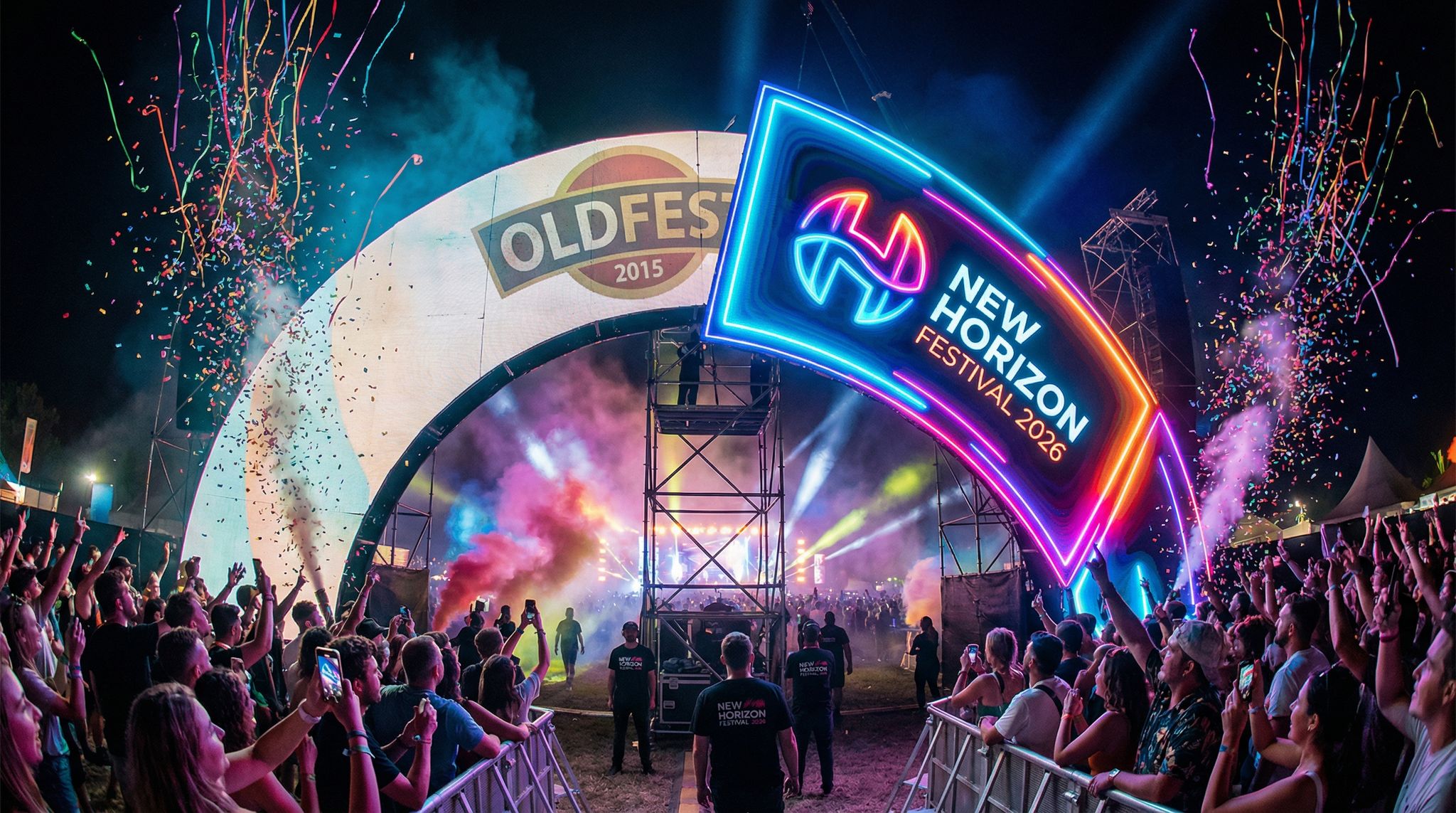
All your pre-event communications set the stage, but the first actual event under the new brand is the real test. Plan to reinforce the new identity on-site and make that first impression count. From the moment attendees arrive, they should feel the difference (in a good way). Use the new logo and colors everywhere visible: entry gates, wristbands, stage visuals, vendor tents, and so on. If you have the budget, some events do a dramatic reveal at the event – like unveiling a new stage design or dropping a banner with the new logo at peak time – but even simply having all staff in new branded T-shirts and a refreshed decor can signal “welcome to the new us.”
One effective method is to create a sense of occasion around the rebrand at the event itself. For example, you could have the MC or host make a short speech or announcement acknowledging the new era (“How do you all like the new look? We’re excited to start this next chapter with you!”). Perhaps you commemorate the change with a special activity, like a massive group photo spelling out the new name, or a countdown to an opening ceremony under the new branding. Make attendees participants in the transition, not just bystanders. This can generate emotional investment; people will remember “I was there the first year they became NewFest.”
At the same time, carefully manage any lingering references to the old brand. Ideally, by event day, the old name/logo should be entirely phased out publicly. But inevitably, some fans will still use it casually (“Remember last year at OldFest…”). Train your staff and volunteers to gently adopt the new name in responses, to help reinforce it. For example, if someone says “Where is the OldFest merch booth?”, staff might reply, “At the NewFest merch booth right around that corner…” – subtly normalizing the new terminology. It might feel pedantic, but repetition and consistency help solidify the change in everyone’s minds.
Lastly, be prepared for any hiccups. Maybe some signage vendor prints the old logo by mistake, or a performer on stage shouts “Thank you, OldFest!” out of habit. These moments will happen – don’t panic. Have a sense of humor and respond quickly if needed. If a big screen flashes the wrong name, fix it by the next set. If social media posts from attendees use the wrong hashtag, leave polite comments like “We’ve rebranded – make sure to tag #NewFest so we can see your post!” Most fans will catch on fast, but a forgiving, upbeat attitude from your team will keep the atmosphere positive. Over the course of the event, as long as everyone’s having a great time that delivers on the promise of the new brand, the rebrand will be accepted and even celebrated.
Keeping the Core: Retaining Loyalty Through the Transition
Honoring the Legacy and Keeping Familiar Touchstones
While you charge ahead with a new identity, it’s important to honor the legacy of what came before – especially for the sake of loyal attendees. Abruptly pretending the old brand never existed can leave a bad taste. Instead, integrate subtle nods to the event’s history in your new branding and programming. For instance, if your festival had a nickname or iconic mascot under its old identity, find a way to carry that forward (even if just as an “easter egg”). Maybe a small version of the old mascot appears in the new logo design, or you name one of your stages after the founder or after the old festival name. These cues reassure veteran fans that the heart of the event is still the same.
Celebrate milestones that connect past and present. If this upcoming edition is the 10th year of the event overall, say so in your marketing (“10th Anniversary – First Year as NewFest”). Show that the event’s legacy continues, just under a new banner. Some rebrands publish retrospective content – e.g., a gallery of “through the years” photos on the new website – to reinforce continuity. When fans see their own memories acknowledged, they’re more likely to embrace the new brand rather than feel like something they loved was erased.
It’s also wise to keep certain familiar elements intact unless there’s a compelling reason to change them. Think about which traditions or features your loyal attendees value most. Is it a particular stage design, a yearly ritual like a closing fireworks show, or even little things like the style of wristband? If those can live on under the new brand, let them. For example, when Insomniac rebranded one of their long-running dance music events, they kept the general festival layout and many returning artists the same for the first edition under the new name – so fans felt at home, even as the decor and name were different. Over successive years they evolved those elements too, but the initial continuity helped retain the core base.
Transparent Communication and Education
During the transition, communication is your best friend. Be very transparent about what’s changing and what’s not. As mentioned earlier, an FAQ on your website is a great tool. Common questions to address include:
– “Is this just a name change? Are there new organizers or owners?” – Make it clear if it’s the same team or if new partners are involved. Fans often worry if a beloved event got bought out; if that’s the case and it’s positive (e.g., new investment), spin it as a benefit.
– “What happens to my tickets/vouchers from the old event?” – Clarify that all commitments are being honored. For example, “Tickets purchased for OldFest will be valid at NewFest – only the name on your ticket will change. We’ve emailed new PDF tickets reflecting our new name to all buyers.” Taking that proactive step (reissuing tickets or at least assuring people at the gates you’ll accept the old ones) prevents confusion.
– “Why the change now?” – Reiterate your reasoning. If it’s to expand the experience, say “so we can bring you even more amazing content.” If to address issues, say “to better reflect our commitment to XYZ.” The more you explain the why, the more people will understand and accept it.
– “Is anything going to be different at the event?” – You can use this to actually promote the enhancements! List the improvements or new additions coming under the new brand. Conversely, explicitly mention beloved aspects that aren’t changing: “We’ll still have three stages, camping will still be available, and yes the famous silent disco will be back – NewFest wouldn’t be the same without it.”
By educating your audience, you not only quell rumors and incorrect assumptions, but you also demonstrate respect for them. You’re treating them as partners in this transition, not just passive consumers. This level of openness builds trust – an essential component of brand loyalty. Fans who trust that you have their interests at heart are far more likely to stick around (and vouch for the event to others) despite a major change.
Rewarding Loyalty and Involving Core Fans
Another strategy to retain your base is to reward their loyalty through the rebrand. Show them that while you’re chasing new audiences, you still cherish those who got you here. There are several ways to do this. One is through exclusive perks: for example, give past attendees early access to tickets for the first festival under the new brand. Label them as “loyalty presale” tickets, maybe even at a small discount or with an added bonus like a free merch item featuring the new logo. This not only drives immediate sales, but it makes your long-term fans feel valued, effectively harnessing pre-sale hype and FOMO to boost ticket sales.
You could also organize a VIP appreciation event or after-party during your festival weekend just for longtime attendees (you’ll know who they are from your ticketing data if you’ve kept track of repeat buyers). At this gathering, the organizers can mingle and personally thank them, maybe give a commemorative gift that has both old and new branding (“limited edition” nostalgia swag can become a collector’s item). It creates a sense that the community remains, name change or not.
Some events elevate loyal fans into brand ambassadors during rebrands. You might reach out to your most vocal supporters (say, the ones always active in your Facebook group or who bring big crews every year) and brief them early, even involve them in preparations. Perhaps invite them to tour the new venue or preview the new branding before the general public, asking for their feedback. When people feel like insiders, they are more likely to support the new brand outwardly. They might help answer questions in the fan community or just spread enthusiasm. Turning your fan community into active partners in the rebrand can convert potential skeptics into your champions – they’ll advocate “trust the organizers, this is going to be great” to others, which carries a lot of weight.
Monitoring Sentiment and Being Responsive
Once the rebrand is out in the world, stay tuned in to your audience’s sentiment. This is where tuning into fan conversations via social listening becomes invaluable. Track what people are saying on Twitter (X), Reddit, Instagram comments, and other forums. Set up alerts for your new event name (and old name) to catch any discussions. Early on, you may need to correct misconceptions (“Actually, it’s not run by a new company – same team, just new name!”) and address criticisms constructively (“We hear you miss the old logo’s colors – we chose the new scheme to be more visible at night, but we’ll keep tweaking to make sure it feels like ‘us’”). By being present in the online dialogue, you guide the narrative and make fans feel heard, proving that social listening boosts engagement and protects your brand better than silence ever could. You can also respond to feedback in real-time to show you care.
Also pay attention to engagement metrics and sales patterns among your core audience segment. If you see an unusual dip in repeat buyers after the rebrand announcement, that’s a potential sign of lost loyalty that you need to investigate and remedy (maybe through a targeted campaign, survey, or outreach to understand their hesitation). On the flip side, hopefully you see a surge of interest – positive social sentiment from fans (“love the new look!”) and maybe lapsed attendees (those who hadn’t come in a while) buying tickets again because the rebrand sparked their curiosity. Share these wins with your team and community. For example, if someone tweets “I haven’t gone to OldFest since 2018, but NewFest looks amazing – count me in,” amplify that testimonial (retweet it, highlight it in marketing emails) to reinforce to everyone that the change is working.
Be ready to iterate if needed. A rebrand doesn’t end at launch; you may find after the first year that some adjustments would improve acceptance. Maybe fans loved the new music programming but missed a certain aspect of the old brand’s aesthetic – you can find ways to incorporate that next year. Continuous listening and willingness to adapt show that your brand is responsive, not rigid. As one marketing adage goes, building brand trust is about consistency + responsiveness. Maintain consistent core values, but respond to your community’s needs in real time. Do that, and loyalty will not only remain, it will likely deepen under your refreshed brand, proving to the crowd you’ve listened.
Avoiding Pitfalls: Don’t Alienate the Base
To sum up retaining loyalty: avoid the common pitfalls that alienate an existing fan base during rebranding. Pitfall 1: acting like the event just started from zero – instead, always acknowledge the road that led here. Pitfall 2: dismissing criticism outright – if a chunk of fans dislike an aspect of the new brand, listen and consider if you can address their concerns without sacrificing the goals (sometimes a slight tweak or even just explaining the rationale converts critics). Pitfall 3: failing to communicate – silence or patchy info causes rumors to fill the void, so err on the side of over-communication in the early stages. Fans have invested time, money, and emotion in your event over the years; in return they deserve clarity and consideration now.
One cautionary example: a regional comic-con event decided to rebrand with a new name and highbrow image to attract more celebrities, but they completely dropped all references to their fun, fan-driven past. Longtime attendees felt it became too corporate and abandoned it for smaller fan cons. The event had to backtrack in subsequent years, bringing back fan-focused elements and even subtly nodding to the old name again to regain trust. The lesson: don’t turn your back on your core audience. You can evolve and still keep them onboard if you handle it with care. Make them feel like part of the journey, not a relic of the past, and they’ll reward you with continued patronage and positive word-of-mouth.
Learning from the Real World: Rebrand Case Studies
Success Story: Outside Lands – Broadening Vision and Audience
Sometimes a rebrand is sparked by growth and the desire to reflect a broader vision. A great example is Colorado’s Outside Festival. In its first couple of years, Outside Festival was a modest event celebrating outdoor recreation and music. By its third year, it had exploded in popularity and scope – far beyond just a niche festival, it became a convergence of outdoor industry leaders, athletes, and artists. Sensing this shift, the organizers decided to rebrand for 2026. They announced that Outside Festival would become “Outside Days”, with a new name and location, as reported in local news regarding the 2026 festival changes. The name change might seem subtle, but it carried meaning: “Outside Days” evokes a continuous experience and a lifestyle, rather than a one-off fest.
The organizers explained their thinking in the press: “What started as a festival has quickly become something much bigger. ‘Outside Days’ reflects a broader movement that celebrates the joy we feel when we head outdoors with our communities,” linking via Axios Denver’s coverage of the rebrand. This messaging effectively communicated that the event had outgrown its old identity. Alongside the name change, they moved to a larger venue and hyped an expanded lineup (more days, more activities). The result? The rebrand generated fresh buzz in the media and outdoor enthusiast circles for being vision-driven. It positioned Outside Days not just as an event, but as a movement and meetup for the outdoor community.
By framing the rebrand around inclusive values and community joy, rather than just growth for growth’s sake, they kept existing fans on board (who could hardly object to more cool content) and intrigued new attendees who might have overlooked it before. Early indicators showed strong ticket demand from both previous attendees and newcomers keen on the new concept. This case shows how a rebrand can successfully signal an evolution – turning a regional festival into a must-attend major event by choosing a name and message that matched its ambition.
Success Story: Britt Music & Arts Festival – From Hidden Gem to Branded Destination
The Britt Music & Arts Festival in Oregon provides a textbook example of revitalizing an event’s image while respecting its rich heritage. Britt has been around since 1963, hosted in a picturesque amphitheater among pine trees, featuring everything from classical concerts to big-name rock acts. Despite its legacy, by the mid-2020s Britt’s branding had become fragmented and ineffective. Each year’s marketing looked different, there was no consistent logo or identity, and many potential attendees had no idea what Britt was about. The event was, in the words of their marketing director, a “hidden gem” – great on the ground, but hidden behind incohesive branding, prompting a rebrand that captures the unique spirit.
The team launched a comprehensive rebrand working with an agency to unify the visual identity and narrative. They kept the well-known name “Britt” (given its 60-year history, changing that would risk too much). But they introduced a new logo that visually connected to the natural setting and musical heritage. They also standardized the festival’s full name and messaging around being Oregon’s premier outdoor summer concert series, emphasizing both the unique venue and the variety of artists. Importantly, they fixed the issue of consistency: no more changing designs every season. The new logo and style would carry forward year to year, creating cumulative brand recognition.
When unveiling the rebrand, they told the story to the public – how Britt’s essence (connection, nature, artistry) is now captured in the branding, whereas before it wasn’t. Attendees and locals responded positively, saying it “finally feels like Britt knows itself.” The new cohesive look made Britt more memorable in advertising and social media; it no longer looked like a patchwork of unrelated concerts, but a unified festival series. The subsequent season saw an uptick in ticket sales, especially from first-timers who noted the festival “looked really professional and cool” – a subjective but valuable perception change brought by branding.
This case underscores that even without a name change, a brand makeover can reignite interest. By addressing a huge missed opportunity (in Britt’s case, an underwhelming brand presence that didn’t match the on-site magic), they turned a sleepy classic into a re-energized destination. The key to their success was deep authenticity: they didn’t invent a new persona; they revealed the true soul of the event through better branding. The lesson: if your event is high-quality but under-appreciated, a rebrand can be like giving it a microphone to finally sing its virtues loud and clear.
Success Story: B2B Conference Name Change Examples That Drove Growth
When analyzing successful event and conference rebrand name change examples, B2B corporate summits offer some of the most strategic blueprints. Consider a common industry scenario: a long-running regional software convention originally called “The Tri-State SaaS Expo.” As the organizers expanded their programming to include artificial intelligence, hardware showcases, and global networking, the original title became a limiting factor. To reflect this broader scope, they executed a calculated name change, rebranding to “TechForward Global.” This wasn’t just a cosmetic update; it was a strategic repositioning. By dropping the regional and niche constraints from their title, the organizers successfully attracted international sponsors and a wider demographic of tech executives. The transition was smoothed over by using the tagline “Formerly the Tri-State SaaS Expo” during the first year’s marketing cycle. This approach highlights how a well-planned conference name change can eliminate outdated perceptions, align the brand with current industry trends, and ultimately drive a significant increase in B2B ticket registrations and corporate partnerships.
Looking at other successful event and conference rebranding examples, we see a similar pattern of strategic alignment. For instance, a well-known marketing summit transitioned from “Digital Marketers Annual” to “GrowthCon.” This shift wasn’t merely cosmetic; it allowed the organizers to incorporate sales, product development, and customer success tracks into their programming. By analyzing such case studies, promoters and B2B organizers can learn that a brand overhaul should always signal an expansion of value rather than just a departure from the past. These successful transitions prove that when a new identity is tied directly to attendee needs and industry evolution, the change not only retains the core audience but significantly boosts new ticket registrations and sponsorship opportunities.
When evaluating a conference or event name change rebranding, success or failure often hinges on how well the new identity bridges the gap between legacy value and future ambition. A successful transition retains the core professional community by clearly communicating the benefits of the broader scope, whereas a failure typically occurs when organizers abandon their established niche without securing buy-in from past attendees. To ensure your corporate summit or trade show falls on the winning side of this equation, promoters must pair the updated title with tangible programming upgrades and a robust, multi-channel educational campaign.
To execute these high-stakes transitions flawlessly, many organizers invest in professional rebranding for conventions. Unlike consumer festivals, B2B conventions often have complex stakeholder ecosystems, including industry associations, long-term corporate sponsors, and specialized advisory boards. A professional convention brand overhaul typically involves hiring specialized B2B marketing agencies that understand these nuances. These experts conduct deep-dive stakeholder interviews, competitive gap analyses, and brand equity assessments to ensure the new identity resonates with C-suite attendees while retaining the trust of legacy exhibitors. By treating the convention’s identity as a premium corporate asset, organizers can confidently navigate the transition and position their summit as a definitive industry leader.
Success Story: Transitioning a Regional Expo to a National Summit
Another powerful illustration of successful event and conference rebrand examples involves scaling a geographically limited property into a national destination. Consider a mid-sized B2B gathering originally known as the “Midwest E-Commerce Expo.” While the event consistently sold out its 2,000-capacity venue, the regional title deterred national sponsors and coastal keynote speakers. By executing a strategic rebrand to “CommerceNext Summit,” the organizers removed the geographic ceiling. This transition is a hallmark of successful event and conference rebrand examples: it didn’t just alter the logo; it redefined the event’s market positioning. Within two years of the name change, the summit doubled its attendee footprint and secured enterprise-level sponsorships that were previously out of reach. For promoters, these successful event or conference name changes and rebrands demonstrate that a title should reflect the event’s future trajectory, not just its historical origins.
Framework for a Successful Conference or Event Name Change
When executing a successful event or conference name change, the rebranding strategy must go beyond a simple logo swap. The most effective transitions follow a phased approach. First, organizers must secure stakeholder buy-in by demonstrating how the new identity aligns with industry trends and expanded programming. Next, a comprehensive communication plan is essential. This involves using transitional messaging—such as “The New Era of [Old Name]”—to bridge the gap for legacy attendees while simultaneously launching targeted acquisition campaigns to capture the broader market. Finally, updating all digital touchpoints, from ticketing platforms to sponsor decks, ensures a seamless brand experience. By treating the name change as a strategic repositioning rather than just a cosmetic update, promoters can mitigate the risks of attendee confusion and maximize the long-term ROI of their rebranding efforts in 2026.
Cautionary Tale: Trance Energy’s Identity Crisis
Rebranding can fail spectacularly if it ignores the core audience. The story of Trance Energy in the Netherlands is a famous example in the music festival world. Trance Energy was a beloved annual trance music festival running since 1999, known among fans as a haven for pure trance music with a massive loyal following. In 2011, the organizers (ID&T) decided to broaden the event’s appeal. They renamed it simply “Energy” (with the tagline “the Network” briefly attached), as detailed in archives of the Trance Energy rebrand, and shifted the music policy to include other EDM genres beyond trance, stating that other genres would appear.
This rebrand was positioned as just a name modernization, but fans immediately sensed the core change – it was no longer a trance-dedicated festival. The first edition of Energy featured house and hardstyle DJs in the lineup where previously it would be all trance. The backlash from the traditional audience was swift. Loyal trance fans felt betrayed that the identity of their gathering was erased. The broader EDM crowd, whom the rebrand aimed to attract, didn’t have the same emotional connection or reason to choose Energy over other multi-genre festivals. Essentially, by trying to be more mass-market, the event lost its unique selling point and the passionate community that sustained it.
Ticket sales suffered and the brand never gained traction under the new identity. Within a couple of years, the festival was discontinued entirely. It’s a sobering reminder that a rebrand must carry your existing fans with it or you risk trading something precious (a dedicated tribe) for something fickle (a hypothetical new audience). In Trance Energy’s case, a more gradual expansion or a sub-event might have been wiser – or at least involving the community (“how can we evolve together?”) rather than a top-down decree that “trance is over, we’re something else now.” The lack of fan buy-in made this rebrand a textbook failure. Promoters considering a similar leap should heed the warning: don’t alienate your core in pursuit of a new crowd. If genre or content expansion is the goal, find a way to do it that still honors what made your brand beloved, or introduce changes incrementally.
Cautionary Tale: Rebrand Without Substance
Another pitfall is rebranding as a shallow attempt to paper over problems. Attendees will quickly see through that. A hypothetical example (based on several real situations combined): imagine a festival that had two poorly organized years – long lines, artist cancellations, frustrated attendees. Its reputation tanks. The organizers decide to rebrand the next year with a new name, hoping people won’t realize it’s the same event. They put out flashy new graphics and messaging about a “new experience,” but fail to address the operational issues or make any real improvements. What happens? The same issues occur (long lines, etc.), and now the new brand is also tainted, plus people feel deceived when they discover it was just a rebranded disaster. The festival then dies for good.
The moral: if your rebrand is prompted by past failings, you must fix those failings simultaneously. In marketing terms, don’t promise a new image if the product hasn’t changed to support it. Attendee trust is hard to regain once broken. Sometimes it might be better to keep the old brand and openly announce “we’ve made mistakes and here’s how we’re fixing them,” rather than do a stealth rebrand. However, if you do rebrand, ensure robust changes accompany it – new management, new safety measures, better customer service, etc., whatever was lacking before. Otherwise, it’s a coat of paint on a cracked wall, and people will spot the cracks.
The Balance of Old and New
Looking at these stories, a theme emerges: the successful rebrands managed to be forward-thinking yet respectful of their roots, while the failures either disregarded their core community or weren’t backed by real change. The best approach is a balanced one. As branding expert David Brier noted about rebranding, you should “keep what works and update what doesn’t”, making sure not to erase what your fans love, or risk making a $50M rebrand mistake like Tropicana did. A healthy rebrand in the event world reinvents the aesthetics and messaging to spark new interest, without losing the event’s authenticity. Do it right, and you can turn a struggling or plateaued event into a resurgent must-see, much like a band releasing a hit “comeback album” after years out of the spotlight.
Frequently Asked Questions
What are the benefits of rebranding an event?
Rebranding can increase revenue by up to 21% and lift consumer awareness by 75% by attracting new customers. It allows organizers to reposition an event for evolving audiences, such as Gen Z, while shedding outdated elements. A successful rebrand reignites ticket sales, generates media buzz, and signals positive internal changes like new leadership.
How do I know if my event needs a rebrand?
Key indicators include plateauing ticket sales despite marketing efforts, a dated public image, or a disconnect with younger demographics. Rebranding is often necessary when an event faces competitive pressure, undergoes ownership changes, or expands its scope beyond the original mission. If the current brand no longer generates buzz, a refresh is likely required.
What are the risks of rebranding a long-running festival?
The primary risk is losing brand equity and alienating loyal attendees who feel emotionally connected to the original identity. A poorly executed rebrand can cause confusion or skepticism, potentially leading to a drop in ticket sales. If the new image feels inauthentic or completely erases the event’s history, it may trigger customer backlash.
What are the steps to rebrand a live event successfully?
Start by conducting a brand audit and audience research to define a new vision. Create a timeline of 6 to 12 months for creative development, asset production, and a coordinated rollout. Involve stakeholders early, test new concepts with fans, and execute a multi-channel marketing campaign that clearly explains the reasons behind the change.
Should I change my event name during a rebrand?
Changing an event name is recommended if the current title is toxic, misleading, or limits expansion, but it carries significant risk. While a new name can boost awareness, retaining part of the original name or using a “formerly known as” transition helps preserve brand equity and prevents confusing loyal fans during the transition.
How long does the event rebranding process take?
A comprehensive event rebrand typically requires 6 to 12 months of planning before the public launch. This timeline includes phases for market research, creative concept development, legal trademarking, and coordinating with partners. Rushing the process risks mistakes, so organizers should allow ample time for testing assets and executing a phased rollout strategy.
How can I retain loyal fans while rebranding an event?
Retain loyalty by honoring the event’s legacy and communicating changes transparently through FAQs and direct messaging. Offer exclusive perks like loyalty presales or VIP appreciation events to long-time attendees. Incorporate familiar touchstones or nostalgic elements into the new brand to reassure fans that the core experience they love remains intact.
What are the pros and cons of rebranding a conference or event?
The main pros of rebranding a conference or event include attracting new target audiences, shedding outdated public perceptions, and generating renewed media interest that can boost ticket registrations. It also allows organizers to align the event’s name with updated programming or new sponsorships. The primary cons involve the risk of losing existing brand equity, potentially confusing loyal attendees, and the high costs associated with updating marketing materials, websites, and physical signage.
Is changing a conference or event name a good idea?
Changing an event or conference name is a good idea if the current title no longer reflects the event’s scope, carries negative baggage, or fails to attract your target demographic. However, organizers must weigh the pros and cons of a name change carefully, as it requires rebuilding brand recognition from scratch and executing a comprehensive communication strategy to ensure past attendees understand the transition.
What are some examples of successful conference or event name changes?
Successful conference or event name changes typically occur when an event’s scope outgrows its original branding. For example, a regional trade show might rebrand into a global expo to attract international sponsors, or a corporate summit might update its title to reflect a merger or new industry focus. These rebranding examples succeed because organizers pair the new name with expanded programming and transparent communication, ensuring past attendees understand the value of the transition.
How do you execute a successful event or conference rebrand name change?
Executing a successful event or conference rebrand name change requires balancing fresh appeal with existing brand equity. Organizers should start by securing the new domain and social handles, then develop a clear communication strategy that explains the “why” behind the transition. Using a transitional tagline like “formerly known as [Old Name]” for the first year helps retain loyal attendees while the new identity attracts a broader audience.
What lessons can organizers learn from successful event conference rebranding examples?
Analyzing successful event and conference rebranding examples reveals that the most effective transitions occur when the new identity aligns with expanded programming or a broader industry shift. For instance, when a niche software expo rebrands to a comprehensive technology summit, it signals growth to both attendees and sponsors. The key takeaway from these case studies is that a brand overhaul must offer clear, additive value—such as new networking opportunities or broader educational tracks—ensuring that loyal participants feel the event is evolving to better serve their professional needs.
What are the specific pros and cons of rebranding a conference or event with a complete name change?
The main pros of rebranding a conference or event with a complete name change include the ability to instantly break away from limiting niche perceptions, attract higher-tier corporate sponsors, and signal a major expansion in programming. However, the cons involve the immediate sacrifice of established brand equity, a temporary dip in organic search visibility, and the high cost of updating all digital and physical assets. Organizers must ensure the long-term growth potential outweighs these short-term transition hurdles.
What determines the success or failure of a conference or event name change during a rebrand?
The success or failure of a conference or event name change rebranding largely depends on strategic alignment and audience communication. A successful rebrand clearly signals expanded value—such as new B2B networking tracks or larger industry sponsors—while reassuring legacy attendees that the core experience remains intact. Conversely, failure usually stems from alienating the original audience, lacking a clear transitional marketing strategy, or changing the title without actually improving the event’s programming or operations.
Who can help rebrand a conference to attract new audiences?
Event organizers looking to reach new demographics should consider hiring specialized experiential marketing agencies, B2B brand strategists, and demographic consultants. These professionals provide objective market research, competitor analysis, and fresh design perspectives that internal teams might miss. Additionally, partnering with specialized PR firms can help communicate the updated identity effectively to untapped markets, ensuring the transition successfully drives new ticket registrations while maintaining the trust of legacy attendees.
What are the pros and cons of rebranding a business or event production company versus a single festival?
When weighing the pros and cons of rebranding a business or event, the primary difference lies in the target audience. Rebranding an event production business primarily impacts B2B relationships, offering the pro of attracting new corporate sponsors and venue partners, but the con of requiring extensive industry re-education. Rebranding a single festival is consumer-facing; the main advantage is the potential for an immediate surge in ticket sales from new demographics, while the primary disadvantage is the risk of alienating your existing attendee base.
How do you weigh the pros and cons before changing an event or conference name?
Organizers should weigh the advantages and disadvantages by conducting a brand equity audit. If the current title restricts growth, fails to attract target sponsors, or carries negative sentiment, the benefits of a rebrand usually outweigh the drawbacks. However, if the event relies heavily on organic search traffic and legacy attendee loyalty, the risks of a complete name change might make a subtle brand refresh a safer strategy.
Why should organizers invest in professional rebranding for conventions?
Investing in professional rebranding for conventions ensures that the transition is handled with the strategic depth required for B2B audiences. Conventions involve complex stakeholder ecosystems, including corporate sponsors, exhibitors, and industry associations. Professional branding agencies bring specialized expertise in stakeholder alignment, competitive positioning, and B2B market research, minimizing the risk of alienating legacy attendees while successfully repositioning the summit to attract higher-tier corporate partnerships.
How do successful event or conference name changes or rebrands impact long-term ticket sales?
Successful event or conference name changes or rebrands typically create a short-term spike in curiosity-driven registrations, followed by sustained long-term growth as the new identity attracts broader demographics. By shedding limiting titles and adopting more inclusive, forward-looking branding, organizers can tap into new B2B sponsor categories and attendee markets, ultimately elevating the event’s overall revenue ceiling.
What are the pros and cons of rebranding a company or event name change?
The pros and cons of rebranding a company or event name change depend heavily on the entity being updated. Changing a company name offers the advantage of modernizing your corporate reputation to attract higher-tier B2B clients and investors, but it comes with the disadvantage of complex legal restructuring and vendor contract updates. Conversely, changing an event name provides the pro of instantly signaling fresh programming to attendees, but carries the con of potential consumer backlash and the immediate loss of established search engine visibility for that specific festival or summit.
What are the most effective rebranding strategies for events in 2026?
In 2026, successful rebranding strategies focus on deep audience co-creation, digital-first visual identities, and seamless integration with event technology. Promoters are moving away from abrupt name changes in favor of phased rollouts that use transitional messaging to retain legacy attendees. Additionally, leveraging data from ticketing platforms to understand shifting demographic preferences ensures the new brand accurately reflects the desires of both current and prospective ticket buyers.