Why Gamification is a Game-Changer for 2026 Event Promotion
Understanding Gamification in Event Marketing
Gamification means applying game elements – think points, challenges, rewards, and competition – to non-game contexts like marketing an event. It’s more than just handing out prizes; it’s about tapping into people’s natural love for play and achievement. From earning badges for completing tasks to competing on leaderboards, these mechanics turn passive followers into active participants. Experienced event promoters know that when fans feel involved in a fun challenge, they engage more deeply with your event brand. In fact, industry insights indicate that adding game elements can dramatically boost participation – some events have seen attendee engagement jump as much as 50–60% after introducing gamified experiences, as noted in strategies for gamifying the festival experience.
Why 2026 Audiences Crave Interaction
In 2026, audiences are hungry for interactive experiences. Traditional ads and posts alone struggle to break through the noise – 63% of consumers feel bombarded by ads, a challenge discussed in guides on turning fans into ambassadors. What cuts through is engagement. Gamification appeals to a generation raised on interactive entertainment, from video games to TikTok challenges. It aligns with key trends in event marketing this year: fans don’t just want to watch, they want to participate. That’s why gamification is highlighted among 2026’s top event marketing trends for driving sold-out events. By inviting audiences to play along, you give them a stake in your event’s success – and a reason to keep talking about it.
At its core, successful gamified fan engagement transforms passive scrollers into active brand advocates. For festival producers and venue operators, this means designing interactive touchpoints—like digital scavenger hunts or social media voting—that capture attention long before the event date. When attendees actively participate in these mechanics, their emotional investment deepens, directly correlating with higher conversion rates at checkout.
From Engagement to Ticket Sales – The ROI of Play
Fun and games aren’t just fluff; they deliver real results for ticket sales. When done right, gamified campaigns massively amplify word-of-mouth buzz. A whopping 88% of consumers trust recommendations from friends and family over ads, so when fans share your event through challenges or referral games, their peers pay attention, aligning with word-of-mouth marketing statistics. This peer-driven promotion can translate directly into more tickets sold. For instance, one festival’s fan ambassador program led to a 20% jump in attendance while the organizers reduced ad spend – proving that sometimes your attendees can outsell ad campaigns if you give them the right motivation. The financial returns can be huge: one conference turned its expo hall into an interactive game and saw an astounding 12,700% ROI (over $2.3 million in pipeline deals) from the increased engagement, demonstrating how AR scavenger hunts generate sponsor value. With results like that, it’s no surprise the global gamification market is booming (projected to nearly triple from 2025 to 2029), as reported by global gamification market trends. In short, gamification isn’t just trendy – it’s a powerful ticket-selling strategy when harnessed effectively.
Turn Fans Into Your Marketing Team
Ticket Fairy's built-in referral rewards system incentivizes attendees to share your event, delivering 15-25% sales boosts and 30x ROI vs paid ads.
Game Mechanics 101: Points, Badges, and Beyond
Points, Badges & Leaderboards
At the heart of gamification are a few core game mechanics that event marketers can leverage:
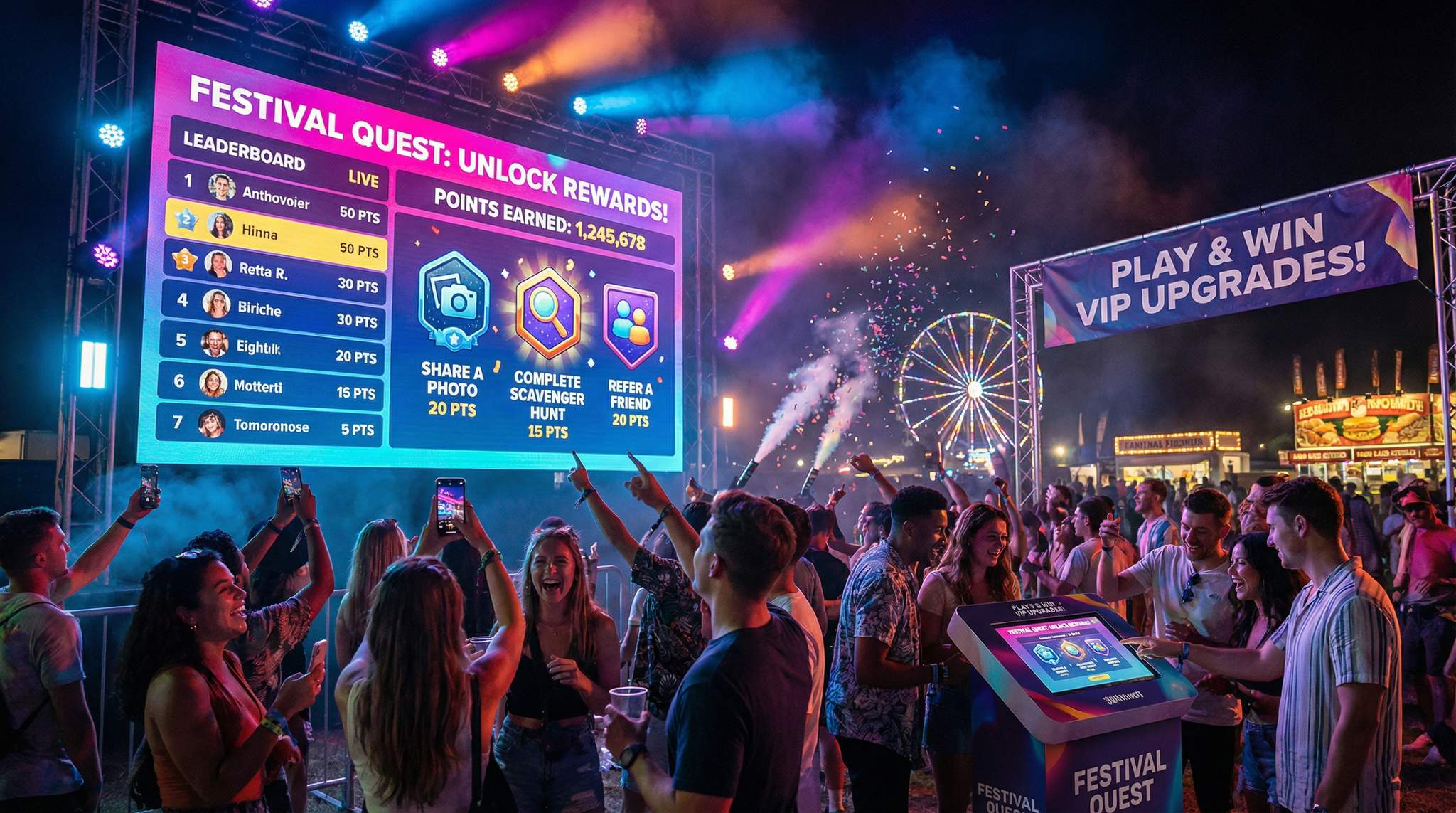
- Points: Assigning points for actions (like buying tickets, referring a friend, or posting on social media) gives fans instant feedback. Points tap into our competitive streak – attendees love watching their score climb. For example, a music festival might let fans earn points for each friend they refer, with a live leaderboard showing top point scorers.
- Badges & Achievements: Badges are digital trophies for reaching milestones (e.g. “Super Sharer” badge after 10 shares). They provide social recognition. People take pride in these status symbols – just as gamers show off rare achievements, superfans will proudly display a VIP badge earned by completing event challenges.
- Leaderboards: Publishing rankings of top performers (top referrers, contest winners, etc.) introduces a friendly competitive pressure. When fans see themselves nearing the top 10, it can spur them to participate even more. A leaderboard of ticket ambassadors, for instance, can motivate friendly rivalry to sell the most tickets.
These elements work together to make participation feel like a sport. Attendees aren’t just consuming marketing messages – they’re actively playing your marketing game.
Ready to Sell Tickets?
Create professional event pages with built-in payment processing, marketing tools, and real-time analytics.
| Game Mechanic | How It Engages Fans | Example in Events | Psychology Triggered |
|---|---|---|---|
| Points | Scores that accumulate with each action | 10 points per ticket bought or friend referred | Reward seeking, progress feedback |
| Badges/Achievements | Collectible symbols of milestones | “Street Team Captain” badge for 5 referrals | Status, recognition, accomplishment |
| Leaderboards | Ranks players against others | Leaderboard of top 10 trivia quiz winners at event | Competition, social comparison |
| Challenges/Quests | Tasks or missions to complete | Scavenger hunt: find 5 clues hidden in city | Curiosity, goal completion |
| Timed Rewards | Bonuses for quick action or limited windows | Early-bird ticket buyers get a spin of prize wheel | Urgency (FOMO), excitement |
Challenges and Quests
Not all game play is about points and competition – challenges and quests add an element of adventure. A quest might be a series of tasks or puzzles that fans must complete, either online or offline. For example, you could create a week-long “Puzzle Quest” leading up to your event: each day, a new riddle or mini-game is posted on your socials, with clues that ultimately reveal a secret headliner or unlock a discount code. Quests like these give fans a narrative to follow and a reason to come back each day. They also foster community, as players often team up or share tips to solve the puzzles.
Consider also collaborative challenges. Not every game has to pit fans against each other; some of the most engaging campaigns have attendees working together towards a common goal. For instance, you might announce that if 500 people post a photo with your event hashtag, all ticket holders get an extra perk at the show. This way, you turn individual actions into a collective achievement, sparking a sense of camaraderie and shared purpose among your audience.
Rewards and Incentives
Every good game needs a reward. In gamified event campaigns, incentives are the glue that make the whole system work. The key is choosing rewards that your audience actually values. Common incentives include:
- Free or discounted tickets – e.g. “Refer 5 friends, get 1 free ticket.” This directly drives sales (because those friends must buy tickets first) and gives a highly desirable reward. Experienced promoters often use this because it essentially pays for itself in new revenue.
- VIP upgrades or special access – e.g. contest winners get backstage passes, early entry, or meet-and-greets. These money-can’t-buy experiences excite fans and cost you little, but the perceived value is huge.
- Merchandise & collectibles – e.g. exclusive event merch, signed posters, or even digital collectibles (NFTs, anyone?). Swag works well especially for online contests where physical tickets aren’t as relevant. Fans love showing off limited-edition goodies that they “won.”
- Recognition – sometimes recognition itself is a reward: shout-outs on stage or social media, a leaderboard spotlight, or a title like “Super Fan of the Week.” Never underestimate the motivational power of ego-stroking!
It’s crucial that the effort required feels worth the reward. If the task is hard (say, convincing multiple friends to buy $100 tickets), the prize needs to be truly enticing. On the flip side, simpler games can use smaller rewards. Balance effort vs. reward so players stay motivated.
Smart Promo Codes & Presale Access
Create percentage or flat-rate discount codes with usage limits, date ranges, and ticket type restrictions. Plus unlock codes for private presales.
| Reward Incentive | Cost to Organizer | Perceived Value to Fans | Best Used For |
|---|---|---|---|
| Free GA Ticket | Lost ticket revenue (minimal if event isn’t sold out) | Very high – free entry to the event is the ultimate prize | Grand prize for referral contests or top ambassadors |
| VIP Upgrade | Low actual cost (uses existing VIP capacity) | Very high – exclusive experience feels premium | Contest awards, loyalty program tiers, top referrers |
| Merch Pack | ~$20–30 production cost | High – especially if exclusive or signed | Social media contest prizes, referral incentives (mid-tier) |
| Discount Code (10–20%) | Costs a % of ticket revenue only if used | Moderate – saves money but not as exciting as free | Low-barrier reward for referrals (e.g. for 1 friend) or consolation prizes |
| Meet & Greet / Backstage | Minimal cost (just coordination) | Extremely high – money-can’t-buy experience | Top contest prize, loyalty reward for superfans |
| Public Shout-out | Free | Moderate – recognition is meaningful to engaged fans | Bonus reward to encourage participation (e.g. top scorer announced on stage) |
The table above illustrates how different rewards stack up. The guiding principle: meaningful rewards = motivated fans. As a veteran promoter would advise, if you wouldn’t get off the couch for that reward, your audience probably won’t either. Make it worth their while.
Sparking Buzz with Social Media Challenges
Designing Viral Hashtag Challenges
In the age of TikTok and Instagram Reels, a simple hashtag challenge can catapult your event into virality. The idea is to get fans creating content that spreads your event’s name organically. When crafting a hashtag challenge, follow these tips:
Grow Your Events
Leverage referral marketing, social sharing incentives, and audience insights to sell more tickets.
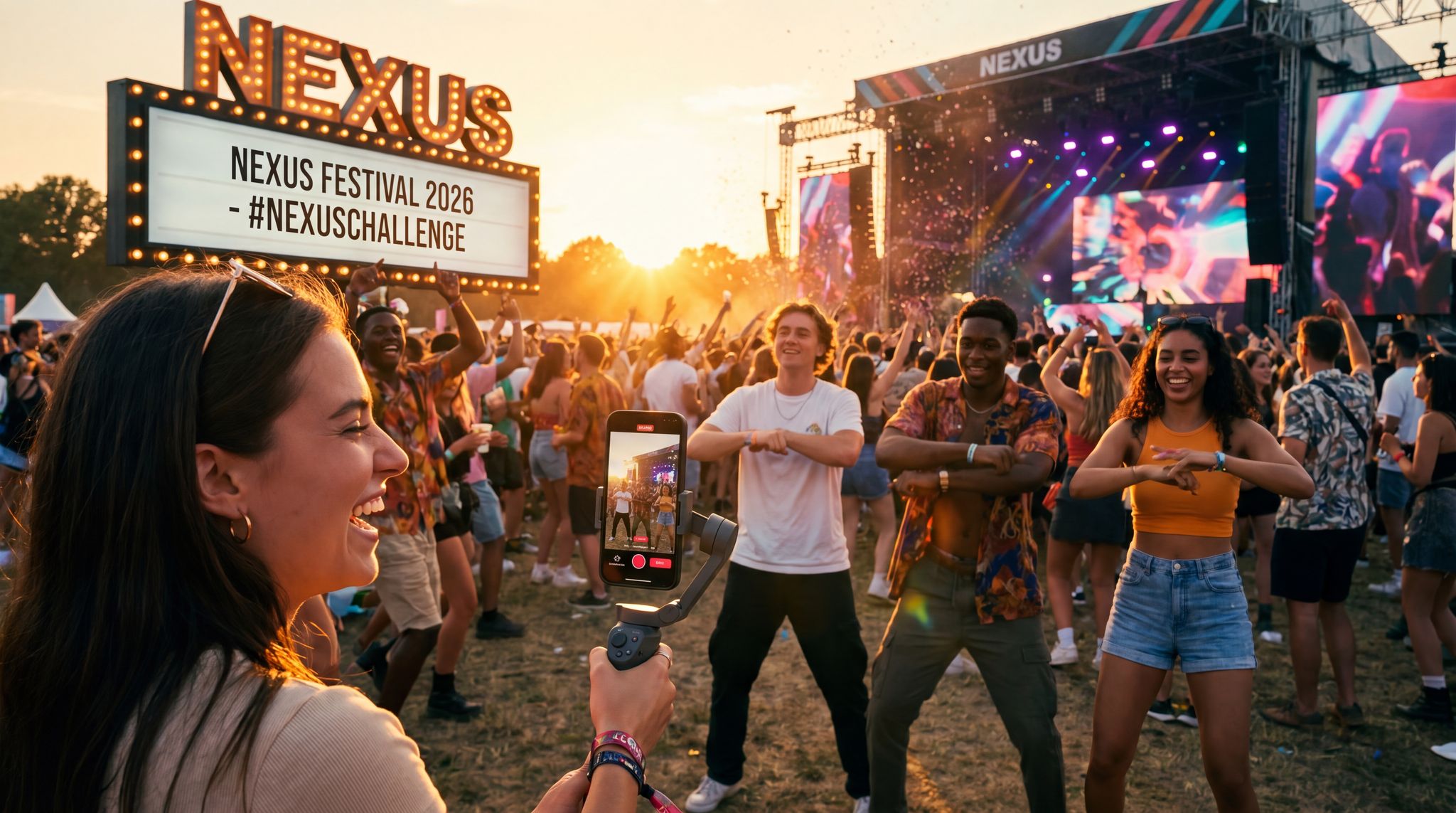
- Make it fun and on-brand: The challenge should tie into your event’s theme or vibe. For example, a dance music festival might launch a “#ShuffleShowdown” dance move challenge. It’s inherently fun and aligns with the event’s music and culture.
- Keep it simple: The task should be easy to participate in – a dance, a lip-sync, a costume pose, a short story. Overly complex challenges lose people. One successful example saw thousands of fans join a “pose with your festival outfit” challenge because it was light, quick, and gave everyone creative freedom.
- Provide a clear prompt: Show an example, whether it’s your team or an influencer demonstrating the challenge. This lowers the barrier to entry; people know exactly what to do.
- Use an enticing hashtag: Create a unique, short hashtag that’s easy to spell. The hashtag itself can be a call to action (e.g. #
DanceOff or #SingFor).
When a hashtag challenge resonates, the results can be huge. For instance, event marketers have seen challenges garner hundreds of user-generated videos, reaching millions of cumulative views – all free exposure. It’s one of the most effective event promotion tactics in the social media toolkit for 2026, as it turns spectators into content creators.
Fan-Generated Content Contests
Contests take the social challenge concept a step further by adding competition and prizes. Instead of just hashtag participation, you explicitly ask fans to submit something – a photo, a video, a slogan, artwork, or any creative content – for a chance to win.
Some proven fan contest ideas:
– Fan Art or Poster Design: Great for music events – have fans design a poster or piece of art featuring the lineup or theme. The winning design could even be used on official merch or displayed at the event.
– Cover the Headliner: For concerts, ask fans to submit a short video covering a song by a headliner on the lineup. This not only engages the superfans but also promotes the artists (who might reshare exceptional entries, amplifying reach).
– Memories or Throwbacks: Have past attendees share their favorite memory or a throwback photo from previous years’ events. This taps into nostalgia and FOMO for newcomers. During the contest, you’ll fill social feeds with positive testimonies about your event.
– Tag-a-Friend Giveaways: A simpler contest format on Instagram/Twitter – ask fans to tag a friend in the comments for a chance to win two free tickets. This works like a charm to extend reach; every tagged friend is a new person learning about the show. (Be cautious to follow platform rules – on Facebook, for example, asking for shares might be against terms, but tags are generally fine.)
Crucially, promote the contest across all your channels – email, social, your event website – to get maximum entries. And showcase notable entries as they come in (e.g. share the best fan art submissions in your Stories). This recognition encourages more people to join in. By contest’s end, you not only have boosted engagement and followers, you’ve likely collected a trove of awesome user-generated content to repurpose in marketing. Winners can be announced with fanfare (live stream it, if possible), further hyping the community.
Grow Your Social Following With Every Sale
Require social media follows, shares, or playlist adds to unlock presale access or special pricing. Turn every ticket purchase into audience growth.
Maximizing Reach with Voting and Sharing
To supercharge engagement, consider adding a voting or sharing component to your social contests. For example, if you run a fan art contest, open up voting on the finalists. Fans will rally their friends to come vote for their entry – thereby organically spreading your event to new audiences. A little competition can dramatically multiply your reach as entrants turn into evangelists campaigning for votes.
Another strategy: give bonus contest entries for social shares. Using contest apps or manual tracking, you can say, “Each time you share this event on your Story, you get another entry into the raffle.” This incentivizes participants to actively spread your promotion in return for better odds of winning. Just be transparent about how they should report/prove the share (some tools track automatically, or you might have them submit screenshots).
A real-world example of reach amplification: one mid-sized festival in New Zealand ran a simple Facebook giveaway for free passes that blew up because participants could increase their chances by sharing the post. It amassed over 5,000 shares and the festival’s page likes jumped by 30% during the campaign. The key was that every entrant became a micro-influencer, pushing the event to their friends.
One caution: Ensure you have clear rules to prevent spamming or gaming the system. For instance, if using voting, limit it to one vote per person to avoid bots or excessive self-voting. Always prioritize a fair, fun experience over sheer numbers.
Scavenger Hunts: Turning Promotion into Adventure
City-Wide Treasure Hunts & Secret Clues
Imagine turning your city (or the internet) into a giant playground where fans hunt for clues related to your event. Scavenger hunt promotions create incredible buzz because they blend the real world with the excitement of a quest. This works especially well for festivals, large concerts, or any event with a passionate local fanbase.
One approach is to hide secret clues or items around town and drop hints on social media. For example, a promoter might hide envelopes with free tickets at iconic spots around the city and post riddles or GPS coordinates for fans to decode. The first to find each stash wins. This kind of treasure hunt can earn you local media coverage (radio stations love reporting on fun citywide contests) and social media chatter from participants sharing their adventures.
Data-Driven Event Marketing
Track ticket sales, demographics, marketing ROI, and social reach in real time. Exportable reports give you the insights to make smarter decisions.
Even if you don’t want to literally hide objects, you can do a digital scavenger hunt. Plant “clues” across your online channels – maybe a code word buried on a webpage, a puzzle on your Instagram Story, a hint in an email – which fans compile to unlock a final challenge or secret pre-sale link. During the pandemic, some events ran fully online scavenger hunts to keep fans engaged at home, proving this tactic can work virtually too.
AR Quests and Gamified Event Apps
Technology takes scavenger hunts to the next level. Augmented Reality (AR) and event apps let you create interactive quests that overlay the game onto the event experience. For instance, a conference could develop an AR treasure hunt where attendees scan QR codes at different booths or locations, “collecting” virtual tokens or characters. Find all the tokens, and you win a prize or unlock an exclusive experience.
This approach not only delights fans but can deliver tangible value to partners. A famous case study involved a pharmaceutical conference that turned its exhibit hall into an AR treasure hunt. Attendees who normally would breeze past booths instead scrambled to find AR clues, visiting many more sponsor booths in the process. The result was a 12,700% ROI and $2.3 million in new business generated through the gamified experience. This illustrates how a well-designed game can dramatically increase engagement – in this case, booth visits shot up 60% thanks to the AR quest, a metric highlighted in case studies on gamified event ROI.
For consumer events like festivals, AR challenges can be just for fun and exploration. Many events now have mobile apps – you can integrate AR scavenger hunts into your festival app to get attendees exploring every corner of the venue. For example, a festival might place AR markers at each stage, art installation, or vendor; attendees who “catch ’em all” by scanning every marker could win an upgrade or merchandise. Festivals that hide secret symbols or QR codes around the grounds and challenge fans to find them all for a prize are seeing huge participation – attendees love the novelty and the sense of adventure, which enhances exploration and participation. These games ensure people discover the full breadth of what’s on offer, rather than camping at one stage all day.
Beyond simple scavenger hunts, comprehensive event app gamification allows organizers to track attendee behavior in real-time. By embedding point systems directly into the mobile experience, promoters can reward users for attending specific panels, visiting sponsor booths, or participating in live polls. This mobile-first approach not only keeps attendees engaged throughout the day but also provides invaluable data on crowd flow and session popularity, making it easier to prove ROI to stakeholders.
In-Event Games that Spur Social Sharing
Gamification doesn’t stop once the event starts. In fact, on-site games can amplify your marketing in real time by encouraging attendees to create content during the event. A few ideas:
Free Tool: When Should You Announce?
Pick your event date and genre — the free planner outputs a recommended announce, presale, on-sale and reminder schedule anchored to how your audience actually buys.
- Live Photo Hunts: Give a list of things to photograph or a “bingo card” of experiences (e.g. take a selfie with a costumed performer, snap a photo of the craziest outfit you see, etc.). If attendees complete the card and post the photos with your hashtag, they get a reward at the info booth. This floods social media with authentic, fun snapshots of your event experience – priceless advertising to everyone watching at home.
- Check-in Challenges: Use RFID wristbands or your event app for check-ins at various locations (each bar, each stage, sponsor booth, etc.). Attendees who check in at all locations (or a certain combination) unlock a prize. This not only spreads out crowd flow (good for operations) but also encourages attendees to encounter all your sponsors/activations. It’s a win-win: guests get a game, sponsors get traffic.
- Real-Time Polls and Trivia: Host live trivia during breaks, or poll the crowd via the event app or Twitter for decisions (“Which song should the DJ play as an encore? Vote now!”). If you keep a running score for trivia participants across the day, you can award the top scorers at the end. People love seeing instant results on the big screen – it makes them feel in control of the show.
On-site gamification mainly boosts attendee enjoyment and engagement, which pays off in the long run through stronger loyalty and positive word-of-mouth. But it can also yield immediate marketing gains: when attendees are posting about how much fun they’re having completing your challenges, their friends and followers are getting serious FOMO – and your ticket link is just a tap away.
Loyalty Programs: Keep Attendees Coming Back
Points and Tiered Rewards Programs
Gamification isn’t just useful for marketing an upcoming event – it’s hugely powerful for building long-term loyalty across event series or recurring festivals. A loyalty program essentially gamifies the entire attendee relationship over time. Attendees earn points or credits for each event they attend (and sometimes other actions like spending on merchandise or engaging on social media), then redeem those points for rewards.
A classic example is a “show passport” or membership card: attend 5 shows, get the 6th free. Many nightclub promoters and concert series have used punch-card style loyalty programs for years. In 2026, we can take that digital. By issuing unique fan IDs or using an app, you track each ticket purchase and auto-award points. Fans might level up to tiers like Silver, Gold, Platinum based on their participation, with higher tiers unlocking better perks.
The psychology here is pure commitment and reward. People love being recognized for their loyalty. When you give them a gamified goal (“Attend 3 more events to reach Gold status and earn a free VIP upgrade!”), it motivates repeat business. It’s the same reason airline frequent flyer programs (a form of gamification) are so effective – the more you put in, the more you get out.
Exclusive Perks for Superfans
Free Tool: Model Promoter Payouts
Flat-percentage, flat-per-ticket, or tiered-bonus commission structures — get per-promoter payouts and total commission as % of gross. Free calculator.
- Exclusive presale access: Your repeat attendees get first dibs on tickets for the next event. This makes them feel valued (and drives early sales). It’s basically saying “thank you” for their loyalty by ensuring they never miss out.
- Discounts or freebies: e.g. 10% off all tickets for members, free drink vouchers on site, or free merch after a certain number of events. This provides immediate monetary value for being a member.
- VIP upgrades: Let’s say after 10 points (events attended, referrals made, etc.), they earn a free VIP upgrade or backstage tour. These experiences don’t cost you much but have wow factor for fans.
- Loyalty-only events or content: Throw an annual “members party” or offer a special bonus set at your festival just for loyalty program members. Or even digital perks like exclusive content, early lineup announcements, or a members-only forum to chat with organizers/artists.
- Physical rewards: Some programs mail out actual membership cards, pins, or swag to top-tier members. A tangible token of status (like a shiny card or badge) can reinforce that feeling of being part of an exclusive club.
The goal is to make loyal fans feel seen and appreciated – they’re not just another ticket buyer, they’re part of your event’s family. That emotional connection is worth far more than any discount you give. It translates into higher Lifetime Value (LTV) as fans stick with you year after year.
Loyalty in Action: Ultra’s “Passport” Program
A great real-world example of gamified loyalty is Ultra Music Festival’s “Ultra Passport” program. Ultra, a massive EDM festival brand, introduced a points-based loyalty program for its returning fans. Here’s how it works in a nutshell:
Every time a fan attends an Ultra event (whether the flagship Miami festival or one of its international editions), they accumulate Passport points. The more points you have, the higher your status level. Reaching certain point thresholds unlocks rewards – early access to line-up info, dedicated fast-entry lines at the festival, merchandise discounts, and even free tickets once you’ve attended enough Ultras around the world.
The results? Ultra has cultivated a globe-trotting community of super fans who are motivated to attend multiple events a year to build up their status. It’s not uncommon to see fans proudly sharing their Ultra Passport status on social media – effectively bragging about how loyal they are. That’s marketing gold: your fans flexing their loyalty, inspiring others to join in so they don’t feel left out.
Crucially, Ultra’s program shows that loyalty gamification can increase revenue and retention, a key factor when considering event funding and ticketing cash advances. Fans might choose Ultra over a competitor festival because they want to get those loyalty points. And Ultra captures a larger share of their audience’s “festival budget” since attending Ultra yields longer-term benefits than going to a non-Ultra event. Smaller organizers can emulate this concept on an appropriate scale – even a simple “attend 4 of our events, get the 5th free” punch card (digital or physical) can work wonders for a local event series. The principle is the same: reward loyalty and you’ll see more of it.
(Tip: If you use Ticket Fairy as your chosen event ticketing solution, note that it includes a built-in CRM and fan analytics. While it may not have a formal points system like Ultra’s out-of-the-box, you can track repeat attendees easily and implement your own tiered rewards manually. Many modern festival and event ticketing platforms – including Ticket Fairy – support promo codes, membership lists, and other tools that make running a loyalty or fan club program much easier.)
Referral Challenges: Turning Fans into Ambassadors
Setting Up a Referral Contest
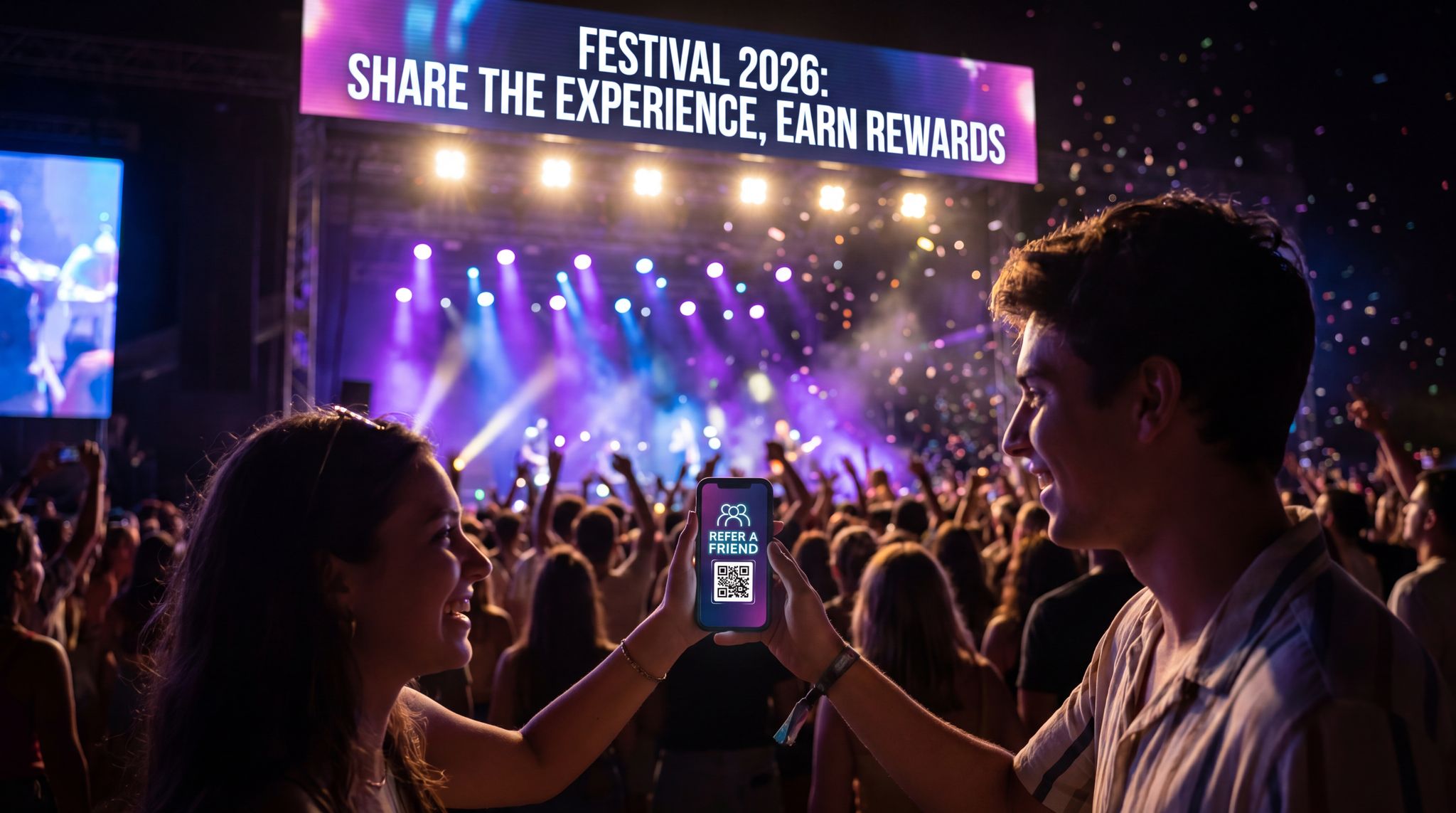
One of the highest-ROI gamification approaches is referral programs – essentially, turning your fans into a volunteer salesforce. In a referral contest, you invite attendees (or even just interested followers) to promote the event in exchange for rewards when their friends buy tickets. It’s classic “bring a friend” marketing, supercharged with game mechanics.
Getting started, you’ll need a way to track referrals. Most leading event ticketing software nowadays have this feature baked in (for instance, Ticket Fairy provides each ambassador a unique tracking link or code). Alternatively, you can create a manual system with Google Forms or referral apps, but integration with ticket sales is key to keep it seamless, and can also help accelerate your event’s cash flow.
Next, recruit your players – often called ambassadors or street team members. You might do an open call on social media: “Love our event? Sign up to be an ambassador and earn free rewards for bringing your friends!” Focus on enthusiastic fans, because they’ll be the most effective at convincing others. You can also personally invite influencers or community leaders in your scene to join the program for extra clout.
Once you have your team, arm them with what they need to succeed:
– A unique referral link or discount code for each fan ambassador. This tracks their referred sales (and could even give their friends a small discount – more on that soon).
– Eye-catching promotional content to share – official graphics, promo videos, sample social posts. Make it easy for them to post about your event with just a couple of clicks.
– A clear brief on key event details (date, lineup, selling points) so their messages to friends are consistent and accurate. Ambassadors should feel like insiders with knowledge.
– A leaderboard or regular update: send weekly emails or have a private group where you announce the current top referrers. This ignites friendly competition among your ambassadors (“I’m in 2nd place, time to hustle harder to get to #1!”).
Referral Challenges: Turning Fans into Ambassadors
Setting Up a Referral Contest
(Tip: If you use Ticket Fairy as your chosen event ticketing solution, note that it includes a built-in CRM and fan analytics. While it may not have a formal points system like Ultra’s out-of-the-box, you can track repeat attendees easily and implement your own tiered rewards manually. Many modern festival and event ticketing platforms – including Ticket Fairy – support promo codes, membership lists, and other tools that make running a loyalty or fan club program much easier.)
Referral Challenges: Turning Fans into Ambassadors
Setting Up a Referral Contest
One of the highest-ROI gamification approaches is referral programs – essentially, turning your fans into a volunteer salesforce. In a referral contest, you invite attendees (or even just interested followers) to promote the event in exchange for rewards when their friends buy tickets. It’s classic “bring a friend” marketing, supercharged with game mechanics.
Getting started, you’ll need a way to track referrals. Most leading event ticketing software nowadays have this feature baked in (for instance, Ticket Fairy provides each ambassador a unique tracking link or code). Alternatively, you can create a manual system with Google Forms or referral apps, but integration with ticket sales is key to keep it seamless.
Next, recruit your players – often called ambassadors or street team members. You might do an open call on social media: “Love our event? Sign up to be an ambassador and earn free rewards for bringing your friends!” Focus on enthusiastic fans, because they’ll be the most effective at convincing others. You can also personally invite influencers or community leaders in your scene to join the program for extra clout.
Once you have your team, arm them with what they need to succeed:
– A unique referral link or discount code for each fan ambassador. This tracks their referred sales (and could even give their friends a small discount – more on that soon).
– Eye-catching promotional content to share – official graphics, promo videos, sample social posts. Make it easy for them to post about your event with just a couple of clicks.
– A clear brief on key event details (date, lineup, selling points) so their messages to friends are consistent and accurate. Ambassadors should feel like insiders with knowledge.
– A leaderboard or regular update: send weekly emails or have a private group where you announce the current top referrers. This ignites friendly competition among your ambassadors (“I’m in 2nd place, time to hustle harder to get to #1!”).
Referral Challenges: Turning Fans into Ambassadors
Setting Up a Referral Contest
One of the highest-ROI gamification approaches is referral programs – essentially, turning your fans into a volunteer salesforce. In a referral contest, you invite attendees (or even just interested followers) to promote the event in exchange for rewards when their friends buy tickets. It’s classic “bring a friend” marketing, supercharged with game mechanics.
Getting started, you’ll need a way to track referrals. Most ticketing platforms nowadays have this feature baked in (for instance, Ticket Fairy provides each ambassador a unique tracking link or code). Alternatively, you can create a manual system with Google Forms or referral apps, but integration with ticket sales is key to keep it seamless.
Next, recruit your players – often called ambassadors or street team members. You might do an open call on social media: “Love our event? Sign up to be an ambassador and earn free rewards for bringing your friends!” Focus on enthusiastic fans, because they’ll be the most effective at convincing others. You can also personally invite influencers or community leaders in your scene to join the program for extra clout.
Once you have your team, arm them with what they need to succeed:
– A unique referral link or discount code for each fan ambassador. This tracks their referred sales (and could even give their friends a small discount – more on that soon).
– Eye-catching promotional content to share – official graphics, promo videos, sample social posts. Make it easy for them to post about your event with just a couple of clicks.
– A clear brief on key event details (date, lineup, selling points) so their messages to friends are consistent and accurate. Ambassadors should feel like insiders with knowledge.
– A leaderboard or regular update: send weekly emails or have a private group where you announce the current top referrers. This ignites friendly competition among your ambassadors (“I’m in 2nd place, time to hustle harder to get to #1!”).
(Tip: If you use Ticket Fairy as your ticketing platform, note that it includes a built-in CRM and fan analytics. While it may not have a formal points system like Ultra’s out-of-the-box, you can track repeat attendees easily and implement your own tiered rewards manually. Many modern ticketing platforms – including Ticket Fairy – support promo codes, membership lists, and other tools that make running a loyalty or fan club program much easier.)
Referral Challenges: Turning Fans into Ambassadors
Setting Up a Referral Contest
One of the highest-ROI gamification approaches is referral programs – essentially, turning your fans into a volunteer salesforce. In a referral contest, you invite attendees (or even just interested followers) to promote the event in exchange for rewards when their friends buy tickets. It’s classic “bring a friend” marketing, supercharged with game mechanics.
Getting started, you’ll need a way to track referrals. Most ticketing platforms nowadays have this feature baked in (for instance, Ticket Fairy provides each ambassador a unique tracking link or code). Alternatively, you can create a manual system with Google Forms or referral apps, but integration with ticket sales is key to keep it seamless.
Next, recruit your players – often called ambassadors or street team members. You might do an open call on social media: “Love our event? Sign up to be an ambassador and earn free rewards for bringing your friends!” Focus on enthusiastic fans, because they’ll be the most effective at convincing others. You can also personally invite influencers or community leaders in your scene to join the program for extra clout.
Once you have your team, arm them with what they need to succeed:
– A unique referral link or discount code for each fan ambassador. This tracks their referred sales (and could even give their friends a small discount – more on that soon).
– Eye-catching promotional content to share – official graphics, promo videos, sample social posts. Make it easy for them to post about your event with just a couple of clicks.
– A clear brief on key event details (date, lineup, selling points) so their messages to friends are consistent and accurate. Ambassadors should feel like insiders with knowledge.
– A leaderboard or regular update: send weekly emails or have a private group where you announce the current top referrers. This ignites friendly competition among your ambassadors (“I’m in 2nd place, time to hustle harder to get to #1!”).
Setting up is just step one – the real magic is in how you motivate and reward these fan promoters, which we’ll cover next.
Incentives That Drive Sharing
Designing the right reward structure will make or break your referral program. This is where gamification truly comes in: you create a game out of “promote and sell tickets” by offering escalating rewards for more referrals. A common approach is to set tiers of rewards:
- Easy win tier: 1 referral might get the ambassador something small but desirable, like 10% off their own ticket or a free drink at the event. This way everyone who brings at least one friend gets a pat on the back.
- Mid tier: 3 referrals could earn a piece of merch or free upgrade. For example, “Refer 3 friends, get an exclusive T-shirt.” This tier should be enticing but achievable by an average motivated fan.
- Top tier: 5 referrals might earn a free ticket (so they essentially bring 5 paid attendees and their 6th is free), or a VIP upgrade for themselves. This is the jackpot that really drives the super motivated fans.
- Legendary tier (optional): Some programs include a “reach for the stars” level, like 10 or 15 referrals = some truly unique prize (backstage meet-and-greet, dinner with the organizers, DJ booth access, etc.). Only a few will hit this, but it’s there to spark ambition (and great for marketing – “wow, I could actually earn that?”).
It’s critical to also reward both sides in referrals. As marketing experts often note, referral schemes work best when the new customer (your friend) also gets something – e.g. “Give your friend this code for 10% off their ticket, and you’ll get 10% off yours (or points towards a free one).” This way, it’s not just the ambassador benefiting; the friend has an incentive to buy as well. It removes any hesitancy like “why should I use your code instead of just buying normally?”
A well-calibrated referral game creates a win-win-win: new attendees get a deal, your ambassador earns rewards, and you sell more tickets. And it can scale like crazy. Seasoned event marketers have seen situations where an ambassador program drove 15–20% of total ticket sales – essentially for free, aside from the cost of some comp tickets and merch as rewards. Those kinds of numbers dwarf typical ad conversion rates and underscore the power of passionate fans.
One pro tip: Create urgency and competition by running the referral program for a limited time or limited spots. For example, “Our Ambassador Challenge runs from now until 30 days before the event” or “Only the first 50 people to hit 5 referrals get the free ticket reward!” This prevents procrastination and pushes folks to start sharing immediately rather than “I’ll get around to it later.” It also gives you a clear timeline to wrap up the program, reward winners, and transition to final event prep.
Real-World Wins from Fan Ambassadors
To truly appreciate how referrals can boost ticket sales, let’s look at a couple of real-world success stories (and one instructive failure) from referral-based campaigns:
- Mid-sized Festival (UK): This independent rock festival noticed one superfan who organically brought dozens of friends each year. They formalized that with a small pilot ambassador program: they gave her 5 free tickets with the challenge to distribute them and encourage those friends to bring others. Those 5 free tickets led to 60 additional sales through her network – a 12x return on the comp! Buoyed by that, the next year they opened a referral program to all fans. The result: attendance jumped ~20% compared to previous years, even though they spent less on Facebook ads. The festival director noted that empowering enthusiastic fans turned out to be more effective than any ad campaign in reaching new attendees. This case is a highlight in our festival referral program guide – sometimes your own attendees can be your best marketers.
- Club Nights Series (USA): Not only big festivals use referrals – a promoter running weekly 500-capacity EDM club nights in Los Angeles set up a tiered referral challenge for college students. With rewards like “skip the line access” for 1 referral and free entry + a DJ shoutout for 5 referrals, they turned party-loving students into a street team. The results were dramatic: 30–40% of their attendees started coming via friend referrals rather than direct ads, and the events consistently hit near-capacity even on weeknights. The organizer slashed his marketing budget because the ambassadors’ word-of-mouth was doing the heavy lifting. An unexpected bonus: many of the new folks brought in by referrals became regular attendees on their own. So the referral game didn’t just fill one night, it grew the overall community for the long term.
- The Cautionary Tale – Insufficient Incentive: On the flip side, a European theater festival learned that if you make a game with lame prizes, nobody plays. They tried offering a meager 5% ticket discount per referral (about €5 off a €100 ticket). Unsurprisingly, few people bothered to chase such a tiny reward – it just wasn’t worth the effort for most. The campaign fizzled with almost no impact on sales. The next year, they retooled the program with more enticing tiers (like a free ticket after 5 referrals instead of €5 each) and suddenly referrals accounted for about 15% of ticket sales, proving that insufficient incentives can kill a campaign. Lesson learned: your gamification is only as compelling as the incentives behind it. A token reward won’t spark joy; you need carrots that get your audience genuinely excited.
In sum, referral and ambassador programs epitomize gamified promotion: they turn the marketing process itself into a game for your fans. And when fans play, you win.
Planning and Integrating Gamified Campaigns
Match the Game to Your Audience
Just as with any marketing strategy, one size does not fit all in gamification. The first step in planning an interactive campaign is to consider your specific audience demographics and preferences. A game that excites 20-something festival-goers might fall flat with a more mature conference crowd, and vice versa. Successful promoters often segment their audience and tailor tactics accordingly – echoing the principle that segmenting your event marketing by audience personas yields better results than a generic approach.
Ask yourself: what will your fans find fun? If you target Gen Z music fans, they might love a TikTok dance challenge or an AR Snapchat filter scavenger hunt. If your event is a B2B industry conference, those attendees might respond better to a networking bingo game or a trivia challenge that tests their knowledge (professional pride can be a motivator!). Families at a community festival could enjoy a simple on-site treasure hunt or a colouring contest for kids. Do your research – even a quick poll of your audience can reveal whether they’d be more interested in, say, a photo contest or a referral program. By aligning the gamification concept with your crowd’s interests, you set yourself up for a win.
Also, define your objectives clearly. Are you trying to boost early ticket sales? Then maybe an early-bird contest or referral drive is ideal. Is your goal to increase social media buzz and follower count? Then a hashtag challenge makes sense. Aimless gamification (“let’s do this because it’s trendy”) can waste effort. Purpose-driven gamification (“let’s do X to achieve Y”) keeps the campaign focused and easier to measure.
Timing is Everything: Integrating into Your Campaign
The next consideration is when and how your gamified elements roll out in the larger marketing timeline. Treat these interactive campaigns as key beats in your promo calendar. For example:
- Pre-launch teaser games: In the lead-up to your ticket on-sale, you could run a puzzle or ARG (alternate reality game) that gradually unveils the lineup or theme. This serves as a teaser to build anticipation. Many events do cryptic lineup reveals – hiding artist names in word searches or drip-feeding clues on social media – which hardcore fans eat up. By the time you officially announce, those participants are already invested (and likely to buy early). Our guide on mastering your ticket on-sale launch emphasizes building buzz in advance, and a gamified teaser is an excellent way to do it.
- Mid-campaign boosts: After the initial on-sale, there’s often a lull. This is a perfect moment (maybe 2-3 months out from the event) to inject a fun contest or challenge to reignite excitement. Think of it as a marketing crescendo – a big giveaway, a viral challenge, etc., can spike web traffic and ticket sales again in the middle of your timeline. Time your most engaging gamified campaign when you need that extra push.
- Last-minute pushes: In the final weeks or days before the event, use gamification to drive procrastinators to act. Flash contests (“48-hour scavenger hunt to win final tickets!”) or a social media blitz where fans compete for very limited last-minute prizes can create urgency. When people see others scrambling to win tickets, it signals that tickets are valuable – leveraging a bit of FOMO psychology from our ticket sales psychology playbook. Just be careful to keep it fair and not spark desperation or bad blood.
- During-event and post-event: As discussed, an on-site game can keep momentum during the show. And afterwards, you might gamify post-event engagement (maybe a photo contest of the best moments from the event, with a chance to win tickets to your next one). This smoothly transitions into your post-event marketing cycle, feeding into loyalty.
Mapping out gamification in your overall strategy ensures it feels like a natural extension of your campaign, not a random distraction. The interactive elements should complement your other marketing efforts – each should have a purpose (e.g. boost early sales, increase social reach, etc.), a defined start/end, and metrics to judge success.
Tools and Tech to Power Your Games
The great news for 2026 event marketers is that you don’t need to build everything from scratch. Plenty of tools and platforms exist to help execute gamified campaigns:
- Social media platform features: Many engagement ideas can be run with native features. Instagram Story quizzes, polls, and question boxes are mini-games themselves. Twitter polls can crowdsource decisions. TikTok’s duet and stitch features enable easy participation in challenges. Get creative with what’s already available for free on the platforms where your audience is active.
- Contest and giveaway apps: If you want to host a contest with more structure (entry forms, refer-a-friend links, tracking shares), platforms like Gleam, Rafflecopter, or SweepWidget can manage the logistics. They allow multiple ways to enter (e.g. visiting a link, following accounts, etc.) and automatically tally points or entries per person. These can save a ton of time and reduce the chance of error in picking winners fairly. Just ensure whatever app you use is mobile-friendly – most entries will happen on phones.
- Event apps and software: For on-site gamification, see if your event app (if you have one) has modules for scavenger hunts or interactive maps. Some event tech providers specifically advertise gamification features, like in-app challenges, AR experiences, or live polling integrated right into the app. Leveraging one system keeps things seamless for attendees (they don’t have to juggle multiple apps or websites). If you’re shopping for an event app, consider one that supports these interactive extras.
- Ticketing platform integration: As mentioned earlier, check your ticketing platform for built-in support. Ticket Fairy, for example, includes referral tracking links, so you can easily set up and monitor an ambassador program within your event dashboard – no separate system needed. Some platforms also let you tag VIPs or members, and segment email lists by purchase history, which is helpful for loyalty programs and targeted game invites (e.g. invite only your past attendees to a special loyalty contest).
When evaluating software, prioritize platforms that offer native event app gamification capabilities. A dedicated mobile application that seamlessly syncs with your event ticketing and CRM systems ensures that points, badges, and leaderboards update instantly. This real-time synchronization is crucial for maintaining the competitive momentum of your campaigns, whether you are running a multi-day music festival or a highly structured corporate summit.
Beyond just tracking, organizers often ask how Ticket Fairy boosts event exposure organically. The platform’s built-in pre-registration and social sharing tools are designed to amplify your reach from day one. When fans buy a ticket or join a waitlist, they are immediately prompted to share their unique referral link with their network. This automated word-of-mouth engine turns every buyer into a micro-influencer, significantly expanding your event’s visibility without requiring additional ad spend.
- DIY with common tools: Even without fancy software, you can run simple games. A private Facebook Group or Discord server can host an ongoing trivia league. Google Forms and Sheets can track scavenger hunt answers or referral submissions (though manual verification will be needed). If budget is zero, don’t let that stop you – you might just need to put in a bit more elbow grease to manage it. Plenty of low-budget events have pulled off fun gamification with a spreadsheet and a dream!
When scaling these efforts globally, utilizing dedicated referral software becomes essential for tracking cross-border campaigns. For instance, promoters expanding into Latin American markets frequently seek out plataformas de gestión de boletos que ofrecen recompensas a asistentes (ticketing platforms that offer rewards to attendees). Choosing a system with native multilingual support and built-in loyalty tracking ensures that your international fan base receives the same seamless, gamified experience as your local audience.
Beyond just tracking, organizers often ask how Ticket Fairy boosts event exposure organically. The platform’s built-in pre-registration and social sharing tools are designed to amplify your reach from day one. When fans buy a ticket or join a waitlist, they are immediately prompted to share their unique referral link with their network. This automated word-of-mouth engine turns every buyer into a micro-influencer, significantly expanding your event’s visibility without requiring additional ad spend.
- DIY with common tools: Even without fancy software, you can run simple games. A private Facebook Group or Discord server can host an ongoing trivia league. Google Forms and Sheets can track scavenger hunt answers or referral submissions (though manual verification will be needed). If budget is zero, don’t let that stop you – you might just need to put in a bit more elbow grease to manage it. Plenty of low-budget events have pulled off fun gamification with a spreadsheet and a dream!
When scaling these efforts globally, utilizing dedicated referral software becomes essential for tracking cross-border campaigns. For instance, promoters expanding into Latin American markets frequently seek out plataformas de gestión de boletos que ofrecen recompensas a asistentes (ticketing platforms that offer rewards to attendees). Choosing a system with native multilingual support and built-in loyalty tracking ensures that your international fan base receives the same seamless, gamified experience as your local audience.
The main thing is to ensure the tech doesn’t glitch during your campaign. Test everything thoroughly. Nothing kills the fun faster than a broken link or an app crash right when participants are eagerly trying to play. Reliable tech = smooth gameplay = happy participants who will sing your praises.
(Pro tip: Always have a clear support process in place. During a contest or referral program, expect some inbound questions – “I referred my friend but didn’t get my points” or “I’m having trouble uploading my photo”. Assign someone to respond quickly. Great support keeps frustration low and participation high.)
When evaluating websites for gamification summit ticket sales or similar B2B tech conferences, organizers must prioritize platforms that natively support these interactive features. The best method of ticket sales effective for a gamification summit event relies on a seamless user journey where the ticketing website itself acts as the first interactive touchpoint. By integrating reward tiers, early-bird unlockables, and referral tracking directly into the checkout flow, promoters can significantly boost their gamification summit ticket sale effectiveness without relying on disjointed third-party plugins.
Measuring Impact and Optimizing the Fun
Tracking the Right Metrics
As much fun as gamified campaigns are, at the end of the day you need to know if they worked. Measurement in gamification can be a bit tricky because you’re often tracking both engagement metrics and conversion metrics. Here are some key ones to consider:
- Participation Rate: How many people actually played? If you have 10,000 followers but only 50 submit to your contest, that’s a sign something didn’t resonate (or the promotion of it faltered). Track entries, players, or active users in whatever form is relevant (entries in a contest, users of your app challenge, etc.). This is your top-of-funnel engagement metric.
- Content Reach & UGC Volume: For social challenges, measure the number of posts, shares, or hashtag mentions generated. Also note the combined reach or impressions those are getting if possible. For example, “We got 500 hashtag posts reaching an estimated 200,000 unique users.” These figures demonstrate the expanded awareness your campaign created.
- Referral Conversions: In a referral program, this is the big one – how many actual ticket sales (or % of total sales) came from referrals/ambassadors. Your ticketing analytics or referral software should show the number of referred transactions and revenue. Calculate your Cost per Acquisition (cost of rewards / referred tickets sold) to compare against other channels like ads.
- Speed of Sales: Did tickets sell faster during or right after the gamification period? For instance, you can compare week-over-week sales – a spike corresponding to your contest launch indicates it likely drove people to buy (even those who didn’t win). This is especially relevant for contests which create urgency to buy “before it’s too late” or referrals where friends might purchase to help someone win.
- Web Traffic & Follower Growth: Gamified campaigns often cause surges in website visits (people checking out the event page after hearing about it from a friend or through a challenge) and social follower increases. Keep an eye on Google Analytics and social insights around your campaign timeline. An uptick in new users/followers is a secondary success metric – they might convert to ticket buyers later even if they didn’t this round.
- Engagement Quality: Not every metric is quantitative. Observe the qualitative response too. Did you get positive comments like “this was so fun” or “I can’t wait for this event now because of this game”? Did you see creative, high-quality entries that indicate people put real effort in? High engagement quality (enthusiasm, creativity, positivity) is a sign the campaign truly connected with your community. Those warm fuzzy feelings translate into brand loyalty and long-term word-of-mouth.
Make sure to consolidate these results into a report or debrief after the campaign. For example, if you run a referral program, you might conclude: “Ambassadors brought in 120 sales = 15% of total tickets, costing us 10 comp tickets and $500 in merch rewards. CPA was super low at $5 per ticket compared to our $20 per ticket Facebook ad CPA – let’s double down on this next year!” Such analysis helps justify the effort and informs you how to tweak future gamification for even better results.
Keeping it Fair and Fun
While gamification can do wonders, it also comes with some responsibilities. You’re essentially running games of chance or skill, and there are a few pitfalls to avoid to maintain trust and enthusiasm:
- Set clear rules: Be crystal clear about how the game works, the start and end dates, and how winners are determined. If it’s a contest, outline the judging criteria or if it’s random. If it’s referrals, explain any fine print (e.g. referrals only count if friends use your link, etc.). This transparency prevents disputes and disappointment. Post the rules on your website or a notes post and link to it in promotions.
- Prevent cheating: Unfortunately, any time you offer prizes, some people might try to game the system (bots, fake accounts, duplicate entries). Use tools to restrict entries (CAPTCHAs, one entry per email/IP, etc. for online forms). Manually review top results if possible – for a leaderboard, you might sanity-check the leader to ensure they played fair. It’s also wise to reserve the right to disqualify fraudulent entries in your terms.
- Moderate community interactions: If you have participants interacting in a group or on social, keep an eye out for toxic behavior. Most fans will be great, but occasionally contests can spark arguments (“So-and-so’s entry isn’t original!”, “The voting is rigged!”, etc.). Jump in and keep the tone positive. Remind everyone it’s meant to be fun. If someone is repeatedly negative or accusatory, address it calmly and swiftly (and offline, if needed, via DM or email).
- Deliver on promises: This is critical. If you say the winner gets a VIP pass and backstage meet-and-greet, you must follow through. Failing to honor rewards will spread like wildfire and damage your brand reputation. Also, fulfill them promptly – don’t make winners wait months to receive their prize. Essentially, don’t promise what you can’t actually provide. It’s better to offer more modest but reliable rewards than oversell and underdeliver.
- Legal and platform compliance: Make sure your contest or referral program doesn’t violate any laws or platform rules. Basic example: some jurisdictions have strict rules on sweepstakes and require certain disclosures. Social platforms often have guidelines (like “this contest is not affiliated with Facebook” disclaimers). Do a quick check or get a consultation if you’re running a large-scale contest to ensure you’re on the right side of regulations.
Keeping the experience fair maintains trust. The moment fans suspect a contest is rigged or an ambassador program is exploiting them, the goodwill evaporates. On the flip side, when they see that you run these campaigns with integrity – rewarding people properly, celebrating the community’s effort, and handling issues transparently – it boosts your brand trust. They’ll be even more eager to play the next time.
Finally, remember the wise words of event strategist Kristin Banta: “Gamification is effective when the goal is connection, not competition,” a sentiment echoed in predictions for the 2026 event revolution. In other words, design your campaigns so that they ultimately bring your community closer rather than just creating winners and losers. Emphasize the shared fun, the collective achievements, and the stories that come out of the experience. If everyone walks away smiling – even those who didn’t win a prize – you’ve done it right.
Iterating and Learning
The beauty of gamification is that it’s highly adaptable. Treat each campaign as an experiment from which you gather insights and improve. Maybe your first scavenger hunt had too many steps and you noticed a big drop-off halfway through. Next time, you simplify the quest. Or perhaps your initial prize wasn’t attractive enough – you can test a better one for the next contest. Don’t be afraid to ask for feedback directly: a post-event survey could include questions like “Did you participate in the Instagram challenge? How was your experience?” Use that data to refine your approach.
Also, keep an eye on industry trends and what other events are doing. By 2026, new gamification ideas are emerging all the time – from NFT-based loyalty tokens to AI-driven personalized challenges. Stay creative and don’t hesitate to borrow a great idea and give it your own twist. For example, if you see a festival doing a successful gamified fundraiser (like a charity challenge linked to the event), think about how that could fit your ethos.
One thing’s for sure: attention spans will not be getting any longer, and the competition for fan engagement will only intensify. Gamification gives you a powerful toolkit to continually delight and involve your audience in fresh ways. As long as you keep the focus on creating genuine value and fun for the fans, they’ll reward you with loyalty, advocacy, and ticket purchases.
Frequently Asked Questions About Event Gamification
What is the most effective method of ticket sales for a gamification summit event?
For B2B conferences like a gamification summit, the most effective ticket sales method integrates professional incentives directly into the registration process. Organizers should use a website gamification method for ticket sales that rewards early buyers or group registrations with unlockable perks, such as VIP networking access, exclusive workshop materials, or one-on-one speaker meet-and-greets.
Do I need standalone referral software to run an ambassador program?
While standalone referral software can be powerful for complex, multi-channel campaigns, many modern ticketing platforms include built-in ambassador tracking. Using an integrated system reduces friction, allowing promoters to automatically issue rewards and track conversions without syncing data across multiple third-party apps.
Are there ticketing platforms that offer rewards to attendees globally?
Yes, many global systems support international loyalty programs. In Spanish-speaking markets, organizers often look for “plataformas de gestión de boletos que ofrecen recompensas a asistentes” (platforms offering attendee rewards). It is crucial to select a ticketing partner that supports localized currencies, languages, and automated reward distribution to effectively gamify the global fan experience.
How does Ticket Fairy boost event exposure for organizers?
Ticket Fairy boosts event exposure by turning your existing audience into an active promotional team. Through automated referral tracking, social sharing prompts during the checkout process, and built-in gamification features, the platform incentivizes fans to invite their friends. This peer-to-peer marketing approach organically expands your reach, driving higher ticket sales and increasing overall brand visibility without relying solely on paid advertising.
How do organizers measure gamification summit ticket sale effectiveness?
To evaluate gamification summit ticket sale effectiveness, promoters should track metrics such as the conversion rate of gamified registration tiers, the volume of peer-to-peer referrals, and the speed of early-bird sell-outs. Comparing these figures against non-gamified baseline events helps quantify the exact ROI of interactive ticketing strategies.
What features should websites for gamification summit ticket sales include?
The most effective websites for gamification summit ticket sales offer built-in referral tracking, tiered reward systems, and seamless CRM integration. Platforms like Ticket Fairy allow B2B event organizers to embed gamified fan engagement mechanics directly into the checkout process, maximizing conversions and attendee advocacy.
How does event app gamification improve attendee engagement?
Event app gamification improves engagement by transforming passive attendees into active participants through mobile-based challenges. By integrating features like live leaderboards, push notification rewards, and digital badge collection directly into the official event application, organizers can incentivize desired behaviors—such as visiting sponsor activations, attending early sessions, or networking with peers—while simultaneously gathering valuable behavioral data.
Conclusion: Level Up Your Event Marketing
Gamification isn’t just a buzzword – it’s a mindset shift for event marketers. It challenges us to move beyond one-way promotion and instead invite our audience into an interactive journey. Whether it’s a simple hashtag challenge that has fans dancing on TikTok, a high-stakes referral contest that turns superfans into top sellers, or an immersive scavenger hunt that gets an entire city buzzing, these playful tactics inject new life into your campaigns.
What’s most exciting is how accessible gamification has become. You don’t need a Coachella-sized budget to do it. Any event, from a 200-person local meetup to a 20,000-person festival, can tailor game mechanics to fit their scale. The common thread across the examples and strategies we’ve discussed is the emphasis on engagement and community. By making your marketing fun and participatory, you’re not just selling a ticket – you’re giving people a story to tell and a role to play. That emotional connection translates into fans who feel personally invested in your event’s success.
In 2026 and beyond, mastering gamification could be the game-changer that sets your event apart in a crowded market. Audiences are craving experiences, and those begin from the first social post or email they see about your event. Turn that moment into a mini-adventure, and you’ve captured their imagination before they even step foot through the venue gates.
So go ahead – level up your next event promotion with a bit of play. Experiment boldly, learn from your attendees’ responses, and iterate. Your ticket sales, your sponsors, and most importantly your fans will thank you. In the end, a sold-out show with an audience that had a blast getting there is a win on every leaderboard.