Event promoters in 2026 face a paradox of plenty: endless digital channels to advertise on, yet an audience increasingly numb to generic online ads. Media partnerships – teaming up with radio stations, press outlets, and bloggers – offer a powerful antidote. By collaborating with trusted media voices, even modest events can punch above their weight, achieving publicity that money can’t easily buy. This comprehensive guide explores how to identify ideal media allies, craft win-win deals (think on-air ticket giveaways and exclusive interviews), and execute co-promotions that convert buzz into ticket sales. Along the way, we’ll share real examples from around the globe, proving that in 2026’s crowded marketing landscape, strategic media collaborations are often the ticket to a sell-out.
Why Media Partnerships Matter in 2026
Cutting Through Digital Noise
Online advertising is nearing saturation – consumers scroll past a sea of lookalike event promos every day. A creative media partnership helps your event stand out by leveraging channels audiences actively engage with. Instead of another paid ad in a feed, a lively radio discussion or a feature story in a popular magazine grabs attention in a less cluttered context. The modern media landscape is fragmented across countless platforms, from traditional newspapers and radio to global blogs, podcasts, and TikTok. In this environment, turning your event into a headline sensation requires strategic navigation of these channels. Earned media and collaborative promotions carry extra weight. A single compelling segment on a top radio show or an article on a respected news site can cut through the noise and reach potential attendees who might ignore digital ads. In fact, experienced event marketers often find that one major media feature can outweigh dozens of minor social posts in terms of influence. When your event is talked about as news or entertainment rather than just another advertisement, people pay attention.
Credibility and Trust Boost
Media partnerships don’t just amplify reach – they lend credibility. Audiences inherently trust endorsements or coverage from familiar media outlets more than direct marketing from an unknown event. Being featured on a local radio morning show or in the city’s leading cultural blog signals that your event is newsworthy and legitimate. Studies show that consumers trust recommendations and editorial content far more than ads. In fact, over 90% of people trust recommendations from individuals or outlets they follow over branded messaging, meaning a radio DJ’s excited mention or a journalist’s positive article holds persuasive power that your banner ad can’t match. Aligning with reputable media gives your event a stamp of approval. Listeners, readers, and viewers feel, “If this station or site I like is talking about the event, it must be worth checking out.” That trust translates into action, whether it’s clicks to your ticket page or actual purchases. Especially at a local level, communities still turn to local media as a trusted source of information – for example, 95% of respondents in one 2025 survey said accessing local news on their local TV station is important to them. Partnering with those trusted local voices lets you tap into that goodwill and built-in audience loyalty.
Exponential Audience Reach
The right media collaboration can expose your event to audiences far beyond your own follower base. Every media outlet – whether it’s a radio station with 100,000 weekly listeners or a niche blog with 5,000 devoted readers – represents a community you might not otherwise penetrate. By partnering up, you effectively borrow their megaphone. This is especially crucial for newer or smaller events that don’t yet have widespread name recognition. A local DJ chatting about your upcoming festival on-air or a popular blogger reviewing your event lineup puts you on the radar of thousands of potential attendees in one go. Importantly, these impressions often feel organic rather than forced, so people are more receptive. Media coverage also tends to snowball: one outlet’s story can beget coverage in another, and so on, in a virtuous cycle of visibility. And beyond raw reach numbers, media partnerships amplify engagement. Listeners might call into a station’s ticket giveaway, readers might share an online article about your event – these interactions deepen engagement compared to a passive ad view. The net effect is that your promotional message isn’t just coming from you alone; it’s echoed by multiple voices across platforms, multiplying its impact. In 2026, when attention is at a premium, having media partners amplify your message can be the difference between a struggling event and a sold-out success.
Smart Promo Codes & Presale Access
Create percentage or flat-rate discount codes with usage limits, date ranges, and ticket type restrictions. Plus unlock codes for private presales.
From Buzz to Ticket Sales
Publicity is great – but for event marketers, the real goal is putting people in seats. Media partnerships excel here too by driving tangible ticket sales when properly executed. A strategic partnership is not just about getting mentions; it’s about funneling that buzz into conversions. For example, a radio spot that not only hypes the concert but also gives out a promo code (“Use code RADIO10 for 10% off tickets”) creates a direct pipeline from on-air excitement to an online sale, allowing you to track how coverage drives revenue. Likewise, a blog’s preview article can embed your ticketing link and a call-to-action, turning readers into buyers with one click. Media exposure also fuels the FOMO and urgency that push fence-sitters to purchase – hearing a DJ say “tickets are almost gone!” or reading in the paper that “this show is the hottest ticket in town” can spur immediate action. Savvy event promoters know that earned media hype and social proof translate into accelerated sales. In other words, each on-air mention or press piece isn’t just abstract “buzz” – it’s a chance to move the sales needle. By prioritizing media deals that tie into promotions (exclusive presale codes, limited-time giveaways, etc.), you ensure these partnerships aren’t just boosting awareness, but actively filling your venue. Throughout this guide, we’ll highlight how to structure media collaborations with the explicit aim of selling tickets, because publicity alone doesn’t pay the bills – packed houses do.
Identifying the Right Media Outlets for Your Event
Not all media outlets are created equal – the key is choosing partners that align with your event and audience. A carefully selected media partner can deliver your ideal attendees en masse, while a mismatched one might generate noise but few ticket sales. Here’s how to pinpoint the best channels to collaborate with:
Ready to Sell Tickets?
Create professional event pages with built-in payment processing, marketing tools, and real-time analytics.
When evaluating potential media partners for events, organizers must look beyond raw circulation numbers. The most effective event partners are those whose editorial voice naturally aligns with your brand identity. Whether you are organizing a massive outdoor concert or an intimate B2B conference, securing the right media partner for an event means finding an outlet that actively champions your specific niche, ensuring their audience is primed to convert into ticket buyers.
Know Your Audience’s Media Habits
Start by asking: Where do your target attendees spend their time? The most effective media partner will be one that your desired audience already listens to, watches, or reads regularly. Dig into your attendee personas – their age, interests, and daily routines. If you’re promoting an EDM night aimed at Gen Z, a local Top 40 radio station or a trending music blog might hit the mark; if it’s a jazz festival for an older crowd, the city’s jazz radio hour or the arts section of the newspaper could be gold. Use data if you have it: survey past attendees on how they heard about events, or review social media analytics for clues on what platforms your fans use. Industry research can guide you broadly. For instance, radio commands a large share of audio listening among older demographics (accounting for ~73% of ad-supported audio time for ages 35+), whereas younger listeners split more time with podcasts and streaming audio formats. So, if your event skews older – say a classic rock reunion show or an alumni gala – local FM radio might be incredibly effective. On the other hand, a tech startup conference with twenty-something attendees might do better partnering with a popular industry podcast or online tech publication, as content creators operate like mini media outlets. The takeaway: find out what media your target audience consumes, and meet them there. Experienced promoters even create simple charts mapping audience segments to media channels (e.g., “College students -> campus radio + city culture blogs; young professionals -> business journal + LinkedIn” etc.). This ensures your partnership efforts focus on outlets with direct relevance to the people most likely to buy tickets.
Local vs. National Coverage
Decide whether you need a local bullhorn or a national spotlight (or both). If your event primarily draws attendees from the local area – like a community theater production, city food festival, or nightclub series – then local media is your best friend. Local radio stations, community newspapers, and city bloggers can directly reach people in your vicinity and lend a grassroots authenticity to your promotion. In fact, media like city papers or regional radio often hunger for local event content; they want to tell their audiences what is happening around town. On the flip side, if you’re running a large-scale event with a broader draw (say a destination festival or a multi-city tour), don’t shy away from national or international outlets. A mention in a major publication or on a widely streamed podcast can attract travelers and build global cachet. Often, the strategy is layered: secure local media partners in each key market (for localized buzz and last-minute ticket pushes) while also landing a feature in a national magazine or influencer channel (to boost overall awareness and prestige). For example, a touring concert series might pair with the top rock radio station in each city for localized promotion, and simultaneously collaborate with a global music blog or YouTube channel for overarching exposure. Keep in mind that local and national media have different angles – local outlets love community impact (“Bringing revenue to the city” or “featuring hometown talent”), whereas national outlets might focus on uniqueness or headline-worthy elements of your event. Tailor your outreach accordingly to interest each type. Whether local or national, ensure the outlet’s geographical reach matches your event’s: a local station might be irrelevant if you’re trying to sell tickets nationwide, but it’s a gem for a one-city show where almost all attendees are nearby.
Niche vs. Mainstream Appeal
Consider the nature of your event: is it broad appeal or niche? This helps determine if you should pursue mainstream media or specialist outlets. Mainstream media (major city newspaper, top FM radio, local TV news, large lifestyle blogs) will give you wide exposure to the general public. This is great for events with something for everyone (holiday festivals, big concerts, sporting events) where casting a wide net is beneficial. However, if your event targets a specific subculture or industry, a niche media partner can be far more valuable. A craft beer expo might get more traction being featured on a popular beer enthusiast blog or podcast than on the generic evening news. A comic convention will likely reap better results partnering with a well-known comic book YouTuber or geek culture site than the city’s general interest magazine. Niche outlets, even if smaller in audience size, often have hyper-engaged followers who are exactly your target market – their recommendations carry a lot of weight. On the other hand, mainstream outlets can lend an aura of importance (“As seen in the Times!”) and reach folks who might not seek out niche media but could be persuaded to try something new. There’s no rule against doing both; many events pursue a tiered approach: secure one big mainstream media partner plus a few niche ones. For instance, a music festival might partner with the major local newspaper and a genre-specific blog (like a hip-hop site if it’s a hip-hop festival). The mainstream partner brings broad legitimacy and casual attendee interest, while the niche partner delivers the die-hard fans. Evaluate each outlet’s audience profile and ask, “How close is this to my ideal attendee?” If it’s a tight match, that outlet is worth pursuing even if its numbers are smaller. If it’s a broad channel, ensure your event has a hook that will appeal to a decent slice of that broad audience.
Turn Fans Into Your Marketing Team
Ticket Fairy's built-in referral rewards system incentivizes attendees to share your event, delivering 15-25% sales boosts and 30x ROI vs paid ads.
For highly specialized verticals, aligning with digital-first publications is often the most effective route. Consider a gaming convention or an esports tournament; securing an online magazine as a media partner for an event in this space directly connects you with highly engaged, digitally native fans. Similarly, an industry award festival might partner with a leading trade blog or digital publisher to stream the ceremony or publish exclusive winner interviews. In these scenarios, the online magazine acts as a vital bridge, lending credibility and targeted reach that general local news simply cannot match.
When a niche game festival or an industry award festival secures an online magazine as a media partner, the collaboration can extend far beyond standard banner ads. The publication might host a dedicated digital hub featuring nominee spotlights, developer Q&As, and interactive community polls, effectively turning the outlet’s readership into an active participant base for the live event.
Grow Your Events
Leverage referral marketing, social sharing incentives, and audience insights to sell more tickets.
For these specialized verticals, the choice of media partners for events can dictate the entire marketing trajectory. If you are producing a competitive gaming tournament or an industry recognition ceremony, an online magazine acting as your primary media partner can host exclusive nominee reveals or developer interviews. This transforms the publication from a passive promotional channel into an active event partner, driving highly qualified, niche traffic directly to your registration pages.
Media Outlet Fit & Value
Finally, do some homework on each potential partner to gauge their fit and practical value. Look at their content: do they cover events like yours? (If you run an underground art show and the magazine only covers luxury galas, that might not be a fit.) Check their audience size and engagement – a radio station might boast 200,000 weekly listeners, but if your event is niche, perhaps only a fraction care; whereas a niche podcast with 10,000 devoted listeners might yield more buyers. Observe how the outlet typically partners with events. Some radio stations, for example, regularly do ticket giveaways and love it – others might rarely promote external events outside paid ads. Some bloggers frequently review local happenings, others may have never done a collaboration. If possible, estimate the potential reach vs. cost (or effort). You might make a quick table of target outlets with columns for audience size, relevance, potential partnership ideas, and any costs involved. For example:
| Outlet | Audience & Reach | Fit for Event | Potential Idea |
|---|---|---|---|
| Rock 99.5 FM (local radio) | ~150,000 listeners (city/regional); ages 25–54 | High – fits rock concert demographic | On-air ticket giveaway; artist interview live in studio |
| City Times Newspaper | 50,000 print readers + online site; broad local audience | Medium – reaches older locals; event is youth-skewing | Event listing in weekend section; possible feature story if pitched as community impact |
| IndieMusicBlog.com | 20,000 monthly visitors (global); indie music fans | High – niche alignment with event genre (indie bands) | Exclusive preview article with band interviews; blog running a promo code for readers |
| Local-TV Channel 7 News | ~100,000 viewers (metro area), general audience | Medium – wide reach but not music-focused | Morning show segment on event (tie-in charity aspect to interest them); ticket giveaway on air |
| @CityFoodie Instagram (blogger) | 15,000 followers; local lifestyle/food focus | Low – not directly related to music event (would fit food fest) | Probably not a priority for this concert (mismatch) |
This kind of evaluation ensures you focus your energy on outlets that will deliver genuine value. In the end, quality beats quantity – it’s better to have a deeply engaged partnership with one or two perfect-fit media outlets than a half-dozen lukewarm, mismatched ones. By knowing your audience and aligning with outlets that speak to them, you set the foundation for fruitful collaborations.
Beyond traditional media outlets, venue operators should also consider direct event partnerships with community creators. For instance, if an independent cinema is planning to partner with local artists for special events, the key to ensuring these collaborations are mutually beneficial is cross-pollination. The venue provides the infrastructure and a built-in patron base, while the artists bring their dedicated followers and unique cultural cachet. To attract new audiences effectively, these partnerships should include co-branded marketing assets and shared ticketing revenue or affiliate incentives, ensuring both the venue and the creators are financially motivated to promote the live event.
Grow Your Social Following With Every Sale
Require social media follows, shares, or playlist adds to unlock presale access or special pricing. Turn every ticket purchase into audience growth.
Crafting Win-Win Media Sponsorship Deals
Once you’ve identified promising media outlets, the next step is securing the partnership with a mutually beneficial deal. Media companies need to see value in the collaboration just as much as you do. Crafting a win-win agreement is about offering enticing perks to the outlet while ensuring you get ample promotion in return. Essentially, you’re trading assets: you give something of value from your event, and they give you exposure to their audience. Here’s how to structure these sponsorship-style deals for success:
Define the Value Exchange Clearly
Successful media partnerships operate on a simple principle: both parties should gain tangible benefits. Before approaching an outlet, inventory what you can offer and what you’d like in return. Common “currencies” you as an event promoter can offer include:
- Free Tickets & VIP Passes – Complimentary tickets for the media outlet’s use (for giveaways, staff, or contests). VIP or backstage passes are especially attractive for radio DJs, journalists, or contest winners, creating a special experience they’ll rave about on-air or in print.
- Exclusive Access or Content – Think first dibs on lineup announcements, artist interviews, or behind-the-scenes previews. Media love exclusivity; offering a scoop (like letting a magazine reveal your headliner before anyone else) is a powerful lure.
- On-site Presence – Allot space at your event for the media partner: a booth, banner placement, or even a live broadcast spot. Being the “Official Media Partner” on-site, with branding visible, is valuable to them. For example, you might provide a radio station a tent or stage time to engage with attendees.
- Brand Exposure – In all your event marketing, credit the outlet as an official partner. This means their logo on your flyers, website, and social media posts, shout-outs in email blasts (“thanks to our media sponsor XYZ”), etc. It’s essentially free advertising for them and prestige by association.
- Product Placement or Hospitality – Depending on the event, you could offer things like a reserved table for the press at a conference, a free booth if they want to distribute their magazine, or hospitality like free food and drinks at the event for their team.
On their side, you’re looking to secure specific promotional commitments, such as:
- Guaranteed Coverage – A certain number of pieces of content about your event. E.g., “two full-length articles in the magazine – one announcement, one event recap” or “at least one on-air mention per day during the 2 weeks before the event.” Nail down the quantity and format: article, interview, calendar listing, etc.
- Advertising Spots – Free or bonus ad placements on their platform. This could be radio commercials, print ads, banner ads online, or sponsored social media posts. If you can negotiate even a few free ad spots as part of the deal, that’s budget saved on your end.
- Regular On-Air Mentions/Shoutouts – For broadcast partners, ensure they’ll plug the event frequently. For instance, the radio station might commit to mention your event in every prime-time show, or a podcaster agrees to give a personal endorsement in a certain number of episodes.
- Contests or Giveaways – The outlet runs promotions giving out your tickets or merch to listeners/readers. This comes with them heavily publicizing the contest (and thus your event). It generates excitement and repeated mentions (“Tune in tomorrow for another chance to win tickets to XYZ Fest!”).
- Content Integration – This includes things like featuring your event in their email newsletter, adding it to their online event calendar, or doing a dedicated segment (like a “presenting sponsor” segment in a radio countdown where they talk about your event at length).
It’s wise to formalize these deliverables in writing – either in a media partnership agreement or at least an email – so everyone is accountable. Outline exactly who gives what, and when. For example, “Event will provide 10 VIP tickets, logo inclusion and stage announcements crediting Station 123 as Official Radio Partner. Station 123 will provide: 30x 30-second ad spots in the 3 weeks prior, 5 live mentions by hosts, one live broadcast from the event, and two social media posts.” Many veteran promoters use a simple table or checklist to track this, ensuring both sides fulfill their promises:
| What You Offer (Event) | What Media Partner Provides |
|---|---|
| 20 free tickets (10 pairs) for giveaways to listeners | 4 weeks of on-air mentions (min. 3 per day during drive time) |
| Exclusive announcement of the lineup on their show | One feature segment interviewing the event organizer or artists |
| “Official Partner” logo on all event ads & stage banner at event | 2 weeks of website banner ads + inclusion in media outlet’s newsletter |
| VIP access for a radio crew (up to 4 people) to broadcast on-site | Live remote broadcast for 2 hours from the event on opening night |
| Mention of the station in our press releases and social media | Dedicated social media contest (giving away tickets) hosted by the station’s accounts |
Laying it out like this makes it clear and easy to discuss. Both parties can instantly see the mutual benefit. Clarity is critical: if deliverables are vague (“we’ll promote you some, you promote us some”), you risk disappointment or misunderstandings later. Instead, be as specific as possible – e.g., “station will air at least 5 mentions/day during week of event” or “blog will publish a pre-event Q&A article on March 1 and a photo recap by March 10.” When each side knows the exact commitments, the partnership runs smoothly and both parties can verify the ROI.
(Pro Tip: Look for creative value adds. Is there something unique you can offer that a media outlet would love? Perhaps early access to artists for interviews, or the chance for a reporter to emcee a portion of your event on stage. Unusual perks can sweeten the deal especially if you’re a smaller event competing for attention.)
Free Tool: When Should You Announce?
Pick your event date and genre — the free planner outputs a recommended announce, presale, on-sale and reminder schedule anchored to how your audience actually buys.
Offer Irresistible Perks (Tickets, Exclusives, Access)
To get a media outlet truly excited, go beyond the basics – offer irresistible perks that make the partnership special. Free tickets are the baseline; virtually every media deal involves some complimentary passes. But think bigger: what experiences or access can only your event provide?
One powerful tactic is the exclusive content offer: give one media partner the “first rights” to break a story or host content. For example, let the local newspaper be the first to publish your full event schedule or an exclusive interview with the headliner. Or allow a blogger to debut the aftermovie or a behind-the-scenes rehearsal video on their site before you post it anywhere else. Exclusives make the media outlet feel like a true insider and they drive more audience engagement (“Check out our site for an exclusive first look at…”). Just be sure to grant exclusives strategically – you wouldn’t give every detail to everyone, but rather different unique angles to different partners (so they each feel special and you maximize overall coverage). For instance, a radio station might get the exclusive to announce your surprise guest artist on air, while a magazine gets an exclusive photo shoot with performers, and a blogger gets an exclusive discount code for followers. Each partner has something unique to brag about, which motivates them to promote you harder.
Beyond artist announcements, exclusive merchandise drops are a massive draw. If you are launching a limited run digital or physical collection as part of the event—such as an exclusive vinyl pressing, a collaborative streetwear capsule, or commemorative digital collectibles—give a top-tier media partner the exclusive rights to break the news. Letting a trusted outlet publish the official release date headline for these limited items drives immediate, high-intent traffic from collectors and superfans directly to your ticketing or merch portal.
Another top perk is VIP or behind-the-scenes access. Media folks love having something cool to experience (and talk about). Consider hosting a media preview or tour: e.g., invite press and bloggers for a soundcheck session or a meet-and-greet with artists before the general public. If a radio DJ gets to go backstage and chat with the band, you can bet it’ll become on-air content. Similarly, offer on-site perks during the event: a special media lounge with refreshments and charging stations, early entry before doors open, or even stage shoutouts (e.g., “This next song is brought to you by our friends at 102.5 FM who are here with us tonight!”). Not only does this give the media a great experience, it often results in more coverage (“Live from the VIP area, it’s amazing here!”). For example, many festivals trade VIP hospitality and broadcast space to radio stations in return for extensive coverage – the station sets up a booth right in the middle of the action, conducting live interviews with artists which entice listeners to come down, a tactic often used in media partnerships that move festival tickets. This kind of immersive partnership turns the media outlet into a participant in your event, not just an observer.
Ticket giveaways are a classic win-win perk as well. By providing a stash of free tickets for the outlet to give out to its audience, you effectively outsource some marketing to them – they’ll push the contest hard (because it boosts their ratings or readership engagement) and in doing so, they constantly plug your event. It’s a form of promotion that feels organic: the listeners think “I might win tickets!” and even if they don’t win, they’ve heard your event mentioned dozens of times. In markets like India, for instance, it’s common for music festivals to trade an official radio partnership for weeks of on-air buzz, generating huge anticipation among listeners. The station benefits by thrilling its audience with prizes, and the event benefits from the hype – plus the data capture of all those contest participants, which can be future leads.
In summary, don’t approach a media partner empty-handed; come with a goodie bag of offerings. The more enticing and unique your perks, the more the media outlet will make your event a priority in their content. It sets a positive tone that this is a true partnership, not a one-sided ask. And when media folks feel like they’re part of your event’s story – whether through exclusive intel or VIP treatment – they’ll naturally become enthusiastic ambassadors to their audience.
Free Tool: Split Tickets for Max Gross
Given capacity and a target price, the optimizer proposes Early Bird / GA / VIP allocations and prices — with projected gross at 100%, 80% and 60% sell-through.
Nail Down Deliverables and Timeline
After swapping ideas on what each side can contribute, ensure you lock down the deliverables and promotion timeline. This is where you turn a friendly understanding into a concrete plan. Start by syncing calendars: figure out when the media partner will run each piece of content or promotion relative to your event date, and coordinate it with your overall marketing campaign. It’s crucial that media promotions hit at the right times to maximize ticket sales. For example, you may want an initial announcement in the press about two months out (when early-bird tickets launch), a big radio ticket giveaway about 4 weeks out (to jumpstart a mid-campaign sales push), and a final burst of mentions in the last 1-2 weeks (“last chance to buy!”). Work with the outlet to schedule these in advance. Sharing a content calendar with your media partner is a great practice, as it helps align schedules and set traffic goals. It ensures both teams know what will be promoted when, and you can avoid conflict or gaps. Perhaps the radio station plans to promote a bunch of other events the same week you hoped for your big push – better to discover that early and adjust dates than to be surprised later.
Be explicit about the format and channels of each deliverable. If a magazine says they’ll do coverage, will it be a full article, a brief event listing, or a sponsored advertorial? If a blogger promises a feature, confirm if it includes social media shares. For radio/TV, confirm the length of any ad spot and whether it’s read live or pre-recorded. Pinning down these details manages expectations. For instance, a deal might specify: “Station X will air a 60-second interview segment with an artist on the morning show during the week prior, plus run 10x 15-second recorded ticket promos between 4-7pm drive time that week.” And, “Blog Y will publish a 800-word preview article one month out, and a follow-up review with photos within 3 days after the event.”
When finalizing these broadcast details, promoters frequently ask about the most effective length for radio advertising spots in 2026. Industry data suggests a hybrid approach works best: use 30-second spots early in the campaign to establish the event’s vibe and lineup, then transition to high-frequency 15-second spots during the final two weeks. Because modern listener attention spans are shorter, these punchy 15-second reminders are currently the most effective length for radio spots advertising an impending ticket price jump or low-ticket warning.
Once timeline and deliverables are agreed, get it in writing. An email recap confirming, or a simple contract (especially for bigger media deals), protects both sides. It doesn’t have to be overly formal, but it should list dates and deliverables clearly. Remember to include any attribution or crediting details: for example, insist that any article or post includes a direct link to your ticket page (this is critical for conversion!). Or if the radio spot runs, that they mention the official ticket seller or event website. You’d be surprised how often a promotion can run but forget to tell people how to buy tickets – so make that a non-negotiable deliverable in every channel.
One more tip: coordinate with your other marketing. Media partnerships shouldn’t operate in a silo. If the local press is dropping a feature story on Tuesday, maybe hold off your own big email blast until Wednesday to avoid competing for attention – or time them together and reference each other (“As seen in this morning’s City Times, our festival… [link].”). If a radio contest is ongoing this week, maybe that’s the week you also boost some social ads in the same area, capitalizing on increased awareness. Think holistically: media partner content is one piece of the puzzle in your omnichannel plan. In fact, combining media partnerships with your own digital marketing yields the best results – you create multiple touchpoints that reinforce each other. A reader sees an article about your event, then later that day sees your retargeted Facebook ad, then hears a radio mention – by the third hit, they’re convinced to buy a ticket. This synergy is the essence of omnichannel promotion, as covered in guides like Mastering Omnichannel Event Marketing in 2026 which emphasizes unifying all channels into one concerted campaign. Use your media partnerships as the tentpoles of your timeline, and fill in around them with supporting promotion from your own channels.
In short, treat the execution of media partnerships like a project within your marketing plan: define deliverables, set dates, assign responsibilities (who at the radio will send you the ad recording? who on your team delivers the VIP passes to their office?), and keep communication open. A bit of project management here goes a long way to ensure that what’s promised is delivered – and on schedule – so that both you and your media partners reap the rewards of the collaboration.
Built-In Email Marketing for Events
Send targeted campaigns, automated purchase confirmations, and post-event follow-ups directly from your ticketing dashboard.
Partnering with Radio Stations: Amplify Your Reach Through the Airwaves
Radio may be one of the oldest media channels, but in 2026 it remains a powerhouse for event promotion – especially at the local and regional level. Radio’s real-time, intimate connection with listeners can create excitement that translates directly into ticket sales, proving that great radio promotions are more than just giveaways. Collaborating with a radio station, whether big or small, can give your event constant buzz in the background of daily life (think morning commutes, workplace listening, etc.). Here’s how to make the most of radio partnerships:
Picking the Right Station (and Show)
The effectiveness of a radio partnership starts with choosing the right station for your event’s target demographic. Radio isn’t one-size-fits-all – formats range from Top 40 hits to niche genres, talk radio, sports, public radio, and more. Identify stations whose listener base aligns with your audience. If you’re throwing a hip-hop concert, look at the urban/hip-hop format stations; if it’s a country music festival, country stations are obvious targets; a tech conference might even consider a local news or talk station that business professionals tune into. Also factor in the station’s reach: is it a major station blanketing the whole metro area, or a smaller community station with a limited radius? Depending on your event, a smaller station might be fine (and often more open to partnerships if they’re community-driven). Don’t overlook college radio or internet radio stations for certain events – a college indie concert can benefit hugely from the campus station, for example.
Beyond the station overall, think about specific shows or time slots. Does the station have a popular morning show or drive-time show with engaged listeners? These shows often feature contests, interviews, and local happenings. A mention or segment there will have high impact. Alternatively, some stations have specialty shows (like a local music hour, genre-specific programs, or weekend events guide segments) – those can be perfect if they exist. Match your content to their programming. An electronic music promoter might zero in on the Friday night EDM mix show a station runs. A family-friendly festival might aim for the afternoon show that parents hear on school pick-up runs. Approach the station with a clear idea: e.g., “We’d love to partner with Rock 105, specifically by integrating into DJ Mike’s morning show, since that’s when our rock fan audience is listening.” Stations appreciate when you know their programming because it shows you’ve done homework and truly want a tailored partnership, not just generic airtime.
Approaching & Pitching the Station
Once you’ve identified a good station (or a few), the next step is to pitch the partnership. Start by reaching out to the right person – this is usually the Promotions Director or Marketing Director at commercial stations. For smaller community or college stations, it might be the Station Manager or even a specific show host if it’s a more informal operation. Craft a short, compelling pitch that highlights the mutual benefits. For example: introduce your event (what, when, audience expected), mention why it aligns with the station’s listeners, and propose a partnership idea. Something like:
“Hi, I’m organizing the XYZ Music Fest coming to Town Park on Aug 20, expected 5,000 attendees, lots of local rock fans. We know Rock 99.5’s listeners love this kind of music – many of our past attendees cited your station. We’d love to have Rock 99.5 on board as an Official Radio Partner. In exchange for on-air promotion and maybe a live broadcast at the festival, we can offer your listeners free tickets and give the station on-site visibility and shout-outs. Let’s discuss how we can partner to make this a win-win!”
Be sure to emphasize what’s in it for the station: access to a fun event for their crew, engaging content (interviews with artists, etc.), freebies for their audience, and brand alignment with a cool local happening. If you have any promo budget, you could mention the possibility of a small ad buy to sweeten the deal (though the goal is trade-out, even a token buy shows goodwill). However, many times cash won’t be needed if the event is attractive and you’re offering good perks. Highlight any past media partnerships or successes as social proof – e.g., “Last year we partnered with Jazz FM and they had one of their biggest audience engagement weeks doing our ticket giveaway.” If you’re a smaller event, focus on the community angle: how your event supports local culture, charity, or the station’s mission, rather than raw numbers.
When pitching, listen to their needs too. Maybe the station is trying to boost its social media presence – you could offer to cross-promote on social or invite their DJs to do an Instagram Live from your event. Or they might have a new morning show host hungry for content – offer them exclusive interviews with your event performers. The more you customize the partnership to fit the station’s goals, the more likely they’ll jump on board. Keep the tone enthusiastic and collaborative (“we’d love to work together to make this event huge for the community, and give your station some great content along the way”). Many stations are very open to such proposals, since events give them exciting material to engage listeners – it’s a break from routine music rotation and ads. Local radio especially thrives on local happenings, so they may welcome a partnership if approached professionally.
On-Air Promotions that Drive Ticket Sales
With a radio partnership in place, the real fun begins – using the airwaves to get people excited and buying tickets. There are several tried-and-true methods to integrate your event into radio programming in a way that sparks ticket sales:
- DJ Shout-Outs and Live Mentions: The simplest form – have the radio hosts mention your event in their own words. This works best when the DJs sound personally excited (“I’m really looking forward to this festival coming up…”). Provide them a few talking points (date, headliners, where to get tickets), but let them ad-lib enthusiasm. Regular mentions, especially during peak drive times, build awareness steadily. Make sure they often mention how to get tickets (“Tickets are on sale at TicketFairy.com…” or give a short URL) and any urgency (“early bird prices end Friday” or “only a few VIP passes left”). The casual, conversational plug from a trusted voice can directly lead people to search up your event or remember to purchase.
- Ticket Giveaways (Contests): As noted, this is a cornerstone of radio partnerships. Structure a fun contest that fits the station’s style. For example, a call-in contest (“Be caller number 9 to win a pair of tickets!”) is classic and still generates a flurry of calls – indicating active listener interest. Trivia contests about the performing artists, or a “finish the lyric” game, can be engaging. Some stations do text-in or social media tie-ins now (“text ‘ROCK’ to 12345 for a chance to win”). Make sure the contest runs multiple times over a few days or weeks for recurring exposure. Each contest promo is essentially a commercial for your event – even non-winners hear it and might decide to buy tickets. Pro tip: if the contest requires listeners to visit the station’s website to enter or see rules, have the station place your ticket link or event banner on that page, capturing some clicks from all entrants. Also, if the station allows, be present for the winners – for example, a DJ might call the winner on-air (“Congrats, you’re going to XYZ Fest!”) which is great hype, and you can follow up with those winners directly as brand ambassadors (they’ll definitely tell friends they won). Overall, a well-executed giveaway creates FOMO – listeners who didn’t win often turn into ticket buyers because hearing others win heightens their desire to be there.
- Artist Interviews or Event Spotlights: Work with the station to set up interviews involving your event. Many stations will jump at the chance to interview a performing artist or the event organizer if it’s pitched as exclusive content for them. Live on-air interviews with artists (or via phone) not only give great insight into the event, but the artists can drop a plug like “We can’t wait to see everyone at the festival on August 20th!” which is gold. Even a 5-minute chat with a mid-tier band member on the local rock station can energize fans. Alternatively, a morning show might invite you (the promoter) or a notable speaker/guest from your event to talk about it. Be prepared to make it interesting, not just an overt ad. Share a cool anecdote or something listeners would find entertaining or useful (like “Here’s a crazy stunt we have planned at the festival…” or “We’ve got a special discount code for listeners right now…”). Those interviews seamlessly weave promotion into content. Some stations also do longer form sponsored segments – e.g., a weekly “What’s Happening” show where your event could be the featured segment one week. Make sure any long-form content ends with a clear call-to-action (the date, place, and ticket info repeated). If the station agrees, plan these segments during prime ticket-selling windows (not too far from the event date so the excitement turns into immediate sales).
- Sponsored Traffic/Weather Segments: A clever tactic some events use: sponsor the “traffic report” or “weather update” on radio during the run-up to the event. Many stations have these short segments (“This traffic report is brought to you by XYZ Festival…”) which can include a one-liner about your event each time. It’s a subtle but frequent reminder. Because traffic and weather segments air multiple times daily, that’s repeated impressions. Example: “Weather is sunny and warm today. Brought to you by BeachBlast 2026 – the summer festival hitting our shores July 5. Tickets at BeachBlast.com!” It’s an advertising spend usually, but sometimes negotiated as part of the partnership trade. These kinds of mentions don’t give details, but hammer home name recognition and website recall through sheer repetition.
- Live Broadcasts and On-Site Coverage: (We’ll dive deeper next, but in brief) promoting that the station will be broadcasting live from the event can drive pre-event excitement. Listeners think “the station will be there, it’s a big deal.” In the lead-up, they’ll mention “Join us live at XYZ event this Saturday!” which not only encourages attendance but suggests it’s the place to be (if a station bothers to broadcast there, it must be noteworthy). We’ll cover executing live broadcasts in a moment, but even just advertising the live presence is a promotional boost beforehand.
The golden rule with on-air promotions: frequency and enthusiasm sell. A single mention won’t move the needle – but consistent chatter over days and weeks builds awareness and urgency. Radio is a frequency medium; people have to hear something a few times for it to stick. That’s why having structured contests (daily at 5 PM, etc.) and regular mentions inserted into programming is so effective. By the time your event rolls around, frequent listeners should feel like “I’ve been hearing about this event everywhere on my favorite station – I’ve got to go!” And thanks to the personal, friendly tone of radio, these promotions often feel less like ads and more like invitations, which lowers resistance and spurs action.
Live Broadcasts & Event Day Coverage
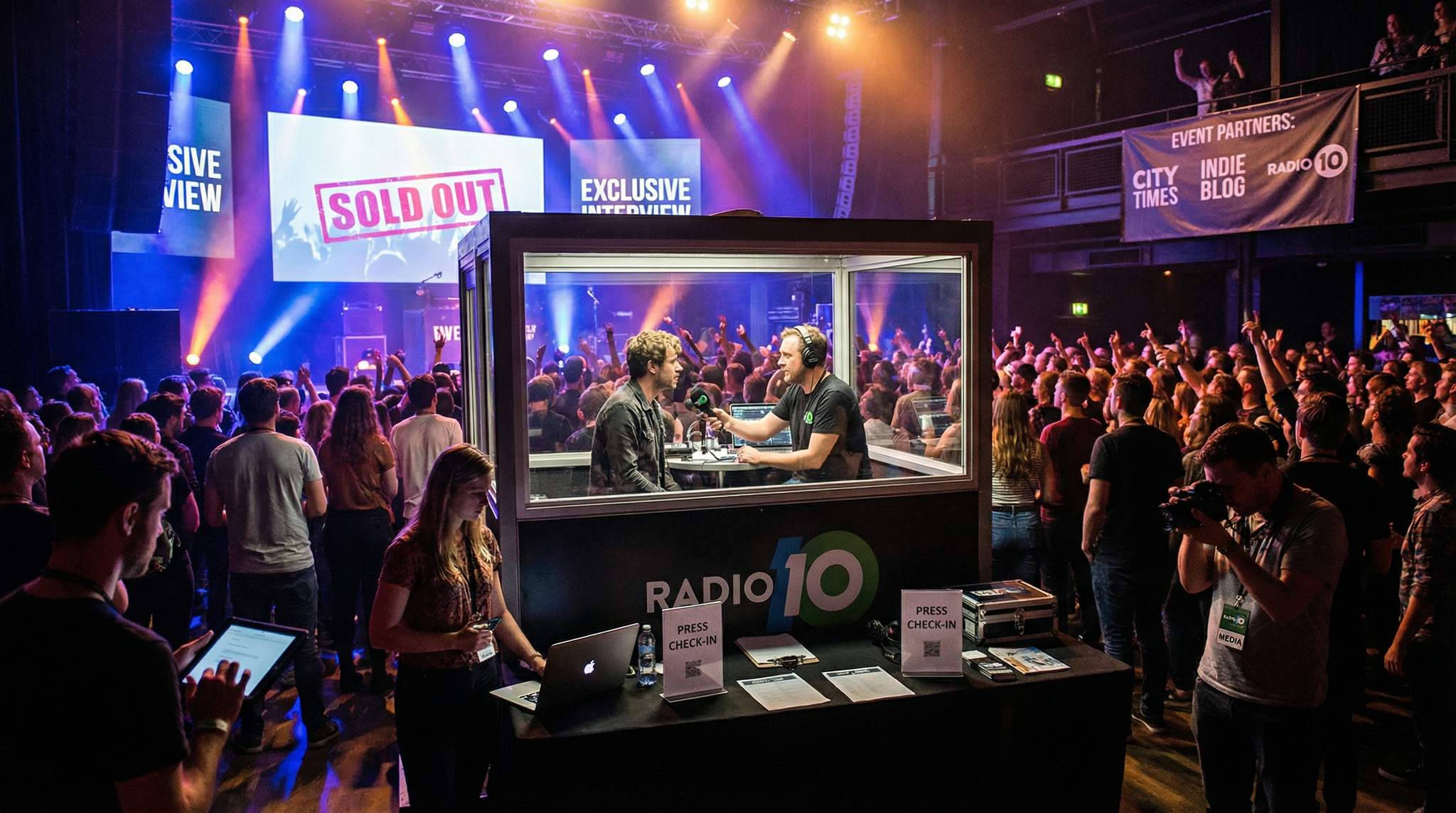
One of the most impactful things a radio partner can do is broadcast live from your event or related pre-events. This essentially turns your event into content for the station and extends the event’s reach to those not there (yet!). The classic scenario: the radio sets up a remote broadcast booth on-site – maybe near the entrance or in a buzzing area – and does segments or whole shows live during the event. They might interview performers as they come off stage, chat with attendees in the crowd (“the energy here is incredible!”), and give those at home a taste of the experience. This not only adds a layer of excitement for current attendees (“We’re on the radio right now!”) but also markets your event in real time to anyone listening. People tuning in who didn’t buy tickets might hear the fun and decide to head over if your event isn’t sold out or if it’s a multi-day affair. Even if they can’t come this year, it plants a seed for next time (“wow that sounded awesome, I’m going next year”). Major festivals leverage this massively – for instance, BBC Radio’s live coverage of events like Glastonbury and the C2C (Country to Country) festival broadcasts special programs and live segments that reach millions, often featuring a DJ enthusiastically covering the scene, amplifying the festival’s exposure well beyond the physical attendees.
To set this up, coordinate technical and logistical needs with the station ahead of time. They’ll need space, power, internet or satellite uplink capability, and possibly special access to artists. You may need to arrange broadcast clearance with your event venue. Often, big stations bring a “street team” and tent – which actually adds to your event’s attractions (fans might come watch their favorite radio hosts do the show live). Promote the live broadcast beforehand: “Can’t make it? Tune in to 102.5 FM for live updates from the festival!” – this still benefits you, because it keeps remote audiences engaged and likely to attend in future, plus it delights your sponsor. The station will promote it too (“Join us live at Town Park this Saturday from 4-7pm”).
For smaller events, or if a full broadcast isn’t feasible, consider inviting the station to do a live remote cut-in – e.g., they broadcast live for just a short segment like hourly updates or the opening ceremonies. Even hearing the DJ on-site for a few minutes (“I’m here at the fair and it’s packed! Music is about to start…”) brings your event to life on air. Another variation is a pre-event live broadcast: for example, a station might do their Friday afternoon show live from your event venue as you’re setting up, to encourage listeners to come that evening. This can build that last-minute surge.
On event day, treat the radio crew like VIPs (because they are!). Have a liaison from your team to help them access interviewees, give them updates, and maybe feed them some great stories (“hey, let’s get the headlining DJ over to your booth for a quick chat at 6pm”). The more fun they have, the more glowing their coverage. And don’t forget to amplify the on-air coverage on your channels too: tweet or post “Tune in to WXYZ now for live backstage interviews from the festival!” – this cross-promotion drives people who couldn’t attend to still engage with your event via radio. It also shows appreciation to the station.
Pro tip: after the event, see if the station can share recordings of any on-air segments or mentions. These can be fantastic for recap materials (“As heard on Rock 99: ‘This was the concert of the year!’”) and even for sponsor decks or future promotion. Being able to say your event was covered live on a major station adds credibility for future partners. In fact, many event marketers compile a brief media highlights report including listenership numbers of such broadcasts to quantify how many additional impressions the event got from media – a key insight when evaluating ROI and using data for future PR focus. For example, “Radio partner broadcast reached an estimated 50,000 listeners, and we saw a 20% uptick in online traffic during the live broadcast hours.”
In a nutshell, live radio involvement turns media partnership into an interactive, on-the-ground collaboration. It blurs the line between the event and the media experience, which is exactly what you want – the station almost becomes an entertainment partner, not just a promotional one. This deep integration can massively amplify the energy and reach of your event at the same time.
Example: Radio Partnership Success Story
To illustrate how all these pieces come together, let’s look at a real-world style example. Dublin’s Canalaphonic Music & Culture Festival, a relatively small local festival in Ireland, managed to generate citywide buzz by partnering with a local radio station. The festival struck a deal with Radio NOVA, a regional rock station, naming them the official radio sponsor. In exchange for providing the station with VIP access and plenty of shout-outs (Radio NOVA’s logo was plastered on festival banners and materials), Canalaphonic received extensive on-air promotion in the weeks leading up to the event. Radio NOVA ran frequent ticket giveaways and talked up the festival daily as a highlight of the weekend. The result? Thousands of listeners who might not have otherwise heard of Canalaphonic were now tuning in to try and win tickets – and even those who didn’t win heard the festival mentioned repeatedly. According to the organizers, this partnership and the on-air buzz were instrumental in driving last-minute attendance, all achieved without a hefty advertising spend, demonstrating how media partnerships move festival tickets. The goodwill earned was significant too; the station loved being part of a successful local event, and they eagerly returned as a media partner the following year. This story shows that even a grassroots event can go big on buzz with the help of a well-chosen radio ally.
And it’s not just small events – big festivals use radio to supercharge their reach as well. The famous Glastonbury Festival in the UK teams up with BBC Radio (and TV) every year, turning performances into broadcast content. The BBC’s on-site presence at Glastonbury with live sets and interviews doesn’t just report on the festival – it extends it to millions at home. While not everyone listening can attend (the event sells out fast), the broadcast builds the festival’s brand and fanbase far beyond the fields of Pilton. Closer to home, think of a large multi-day festival or city event you know – chances are they have an official radio partner who’s been hyping it for months. Those partnerships, whether at the scale of 80,000 attendees or 800, all operate on the same principles we’ve discussed. Radio brings the human voice, immediacy, and community connection that can ignite interest and move tickets, making it a cornerstone media partner for events of all types in 2026.
(For more on integrating audio platforms into event marketing – including podcasts and streaming radio – check out our guide on Mastering Podcast Marketing for Event Promotion in 2026. Many of the strategies with radio apply similarly to podcasts, which are another fantastic channel to collaborate with for niche reach and on-demand content.)
Press & Publications Partnerships: Harnessing Print and Online Media
While digital trends come and go, good old-fashioned press coverage remains a high-impact way to publicize events. Newspapers, magazines, and online publications carry authority and can tell your event’s story in depth. Forging partnerships with press outlets – from major daily papers to niche industry mags and popular websites – can yield feature articles, event listings, and reviews that drive both awareness and credibility. Here’s how to collaborate effectively with print and digital press in 2026:
Engaging Local Newspapers & Magazines
Local press can be an event marketer’s secret weapon, especially for events with community appeal. City and regional newspapers (whether in print or their online versions) often maintain event calendars and dedicated entertainment sections that spotlight local happenings. A simple first step is submitting your event details to event listings – many newspapers and city magazines have free submission forms on their sites. It’s basic but worth doing to ensure your event at least appears in those “This Week’s Events” roundups. Beyond listings, the goal is to secure some editorial coverage. To get a newspaper or local magazine interested, frame your pitch as a story, not an advertisement. Local journalists are looking for newsworthy or human-interest angles: are you bringing a major act to town for the first time? Is the event tied to a community cause or civic anniversary? Are you expecting record crowds or doing something innovative (like a eco-friendly initiative) that aligns with current trends? Emphasize those elements when you reach out. For example, instead of “Please write about our upcoming concert,” try “Local Band to Headline First Arena Concert Since Pandemic” or “Annual Food Fest Teams Up With Homeless Shelter – 10% of Proceeds to Charity.” These angles give reporters a narrative hook.
When a local outlet agrees to partner or cover you, discuss what form it might take. Perhaps the city’s arts & culture weekly will do a full-page preview article, complete with an interview of the organizer or performers. In a smaller town, even the main daily might write a piece if it’s a notable event on the community calendar. Ensure they have everything they need: a press release, high-quality photos, access to interviewees – make the journalist’s job easy. In terms of partnership, a magazine might officially come on as a media sponsor, meaning they commit to coverage and maybe some ads, in exchange for being promoted as a partner. For instance, a local lifestyle magazine could agree to run two pieces (a pre-event feature and a post-event photo recap) plus some ads, and you give them branding on your flyers and VIP passes for their staff. One real example: a boutique music festival in Australia offered a local lifestyle magazine exclusive artist access and photo ops, and in return the magazine ran full-page festival features in every issue leading up to the show, effectively reaching audiences who heard the coverage. The magazine got fresh content and cool experiences for their writers, and the festival got consistent exposure to the magazine’s readers.
When structuring media press promotions, it is crucial to align the outlet’s editorial calendar with your ticketing milestones. A well-executed press promotion doesn’t just rely on a single press release; it involves a sequenced campaign where print and digital publications release exclusive interviews, behind-the-scenes features, and targeted ticket giveaways in a coordinated rhythm. This multi-touchpoint approach ensures that your media and press promotional efforts sustain audience interest from the initial lineup announcement all the way to the final week of sales.
Remember, print timelines can be long – magazines often plan issues weeks or months out. So initiate contact early. For newspapers, a couple of weeks’ notice might suffice for an event preview piece; for monthly magazines, you may need to pitch 3-4 months ahead to make their print deadlines. However, many print outlets also have websites where they can publish more last-minute or additional content. Leverage that: maybe the newspaper prints a short blurb, but online they post a longer interview or extra photos. Always ask, “Will this also appear online?” and ensure online pieces link to your ticket page (convenient for readers to take action immediately). In fact, an online article in a local news site can often drive a notable spike in traffic to your site, especially if the outlet shares it on their social media. Track those referrals if possible.
Finally, don’t underestimate smaller neighborhood papers or community bulletins if your event draws from specific areas. They might not bring huge numbers, but they often have loyal older readerships that trust every word. A favorable blurb in the local section of a community paper can prompt a lot of word-of-mouth within that area. Press partnerships can take many forms – from a simple mention to an in-depth sponsored series – but at heart it’s about showing the press why your event is interesting news for their readers, and in turn benefiting from the amplified reach and legitimacy that press coverage confers.
Securing Feature Stories & Interviews
One of the most valuable outcomes of a press partnership is the feature story – a dedicated article that profiles your event in a compelling way. This is where the storytelling aspect of event PR really comes into play. When collaborating with press, aim to get more than just a “listing” – you want an actual narrative piece if you can. To achieve this, work on developing story angles that would intrigue readers. Perhaps it’s the people behind the event (“Meet the 25-year-old entrepreneur reviving the local rave scene”), or the history (“This festival began as a backyard jam – now it’s a city staple”), or unique elements (“A zero-waste, eco-friendly concert experience”). Journalists respond to fresh, newsworthy angles, so think about what makes your event special in the context of your community or industry, and pitch that angle to the media.
If a publication agrees to cover your event, facilitate interviews to enrich the story. This is a key part of media collaboration: you connect journalists with interesting interviewees – be it yourself (the organizer), the headline artist/DJ, a keynote speaker, or even fans with a unique perspective. For example, if a business journal is covering your tech conference, they might want to interview your keynote speaker who’s a notable CEO. Make that happen by coordinating schedules, providing a quiet space or phone call time, etc. If a music magazine is doing a piece on your festival, set up an interview with the band that has a great backstory. Essentially, be the bridge between the press and great content. It’s a win-win: the reporter gets a richer story, and your event gets a more engaging article (which implicitly sells it better to readers). In press partnerships, you might guarantee certain access: e.g., “Official Media Partner will have first interview with the headliner when announced.” This was seen in an example where Sundance Film Festival partnered with major trade publications like Variety, offering interview access to filmmakers and exclusive news in exchange for guaranteed coverage, showing how spelling out deliverables clarifies the partnership. Even on a smaller scale, you could promise a local paper an exclusive chat with the mayor if he’s attending your charity event, etc.
Be mindful of press ethics and independence: real journalists (as opposed to paid advertorial writers) will write the story as they see fit. You’re not directly controlling the narrative the way you do in an ad. And that’s fine – that authenticity is exactly why press coverage has clout with audiences. But you can certainly guide them to the positive and exciting aspects. Provide a media kit with factual info, quotes, and high-res images that make it easy to write a positive piece. If any sensitive topics exist (maybe last year’s event had hiccups?), be ready to address them honestly – dodging could result in a less favorable write-up. However, if you’ve chosen media partners well, they’re likely inclined to paint you in a good light as part of the partnership spirit, as long as you deliver on your promises to them.
Also, consider op-ed or contributor opportunities as part of press partnerships. Some publications allow event experts to write guest columns or Q&A pieces. If you have expertise or a unique perspective, you could pen (or ghostwrite) a short article like “5 Reasons Our City Needs More All-Ages Shows” which subtly plugs your event in the process. Or the magazine might run a “Diary of an Event Organizer” that you provide. These can complement traditional reporting. Always ensure any such content is clearly agreed upon with editors to avoid looking too advertorial if it’s supposed to be editorial.
In summary, working closely with press to create feature content is a powerful promotional strategy. The depth of a well-written article or interview can engage potential attendees emotionally and intellectually, far beyond what a banner ad could do. When readers spend five minutes reading about how incredible your festival’s atmosphere is (through the voice of a journalist or interviewee), they’re far more likely to convert to ticket buyers. Press partnerships that yield such stories are marketing gold – they educate and excite the audience at the same time.
Sponsored Content vs. Earned Media
Media partnerships with press can take two routes: earned media coverage (where the outlet covers you because they deem it newsworthy/interesting) or sponsored content (where coverage is guaranteed because you’ve paid or bartered for it as part of the partnership). Both have their place, but it’s important to understand the difference and use each appropriately.
Earned Media is the traditional PR approach – you persuade a journalist to cover your event on its merits. When successful, this yields authentic articles/reviews that often carry more weight with readers because they’re seen as the outlet’s independent perspective. In a partnership context, you might still “partner” with an outlet by giving them exclusive info or priority access, but editorial control lies with them. For example, you give the local newspaper the exclusive lineup reveal; they write an article that includes an interview with you. That’s a partnership in that you chose them for the scoop, but the coverage is essentially earned media and reads as a normal story. Earned media tends to be more credible, but also not 100% guaranteed (they could choose to angle it differently or not publish if something bigger crowds it out). However, many media sponsorships are essentially a hybrid – the outlet commits to covering you positively, as long as you give them the agreed perks.
Sponsored Content/Advertorial is when you pay or formally sponsor content about your event. This ensures placement but must usually be labeled as sponsored. For example, a city magazine might offer a “Special Advertising Section” where for a fee you get a full-page article-looking piece about your event, written either by them or provided by you. In a partnership deal, sometimes this fee might be waived or discounted, effectively trading it for other value. Sponsored content guarantees your message gets out exactly as intended (since you have a say in it), but readers are often aware it’s promotional. Audiences today don’t mind as long as the content is still informative and engaging. If you go this route, make it quality – write it like a story or useful guide, not just a fluffed-up ad. For instance, an advertorial in a food magazine for a food festival might be “10 Must-Try Dishes at This Year’s FoodFest” – exciting for readers and serves your promotion too.
In media partnerships, you might leverage a mix: perhaps the outlet gives you one earned media piece (editorial feature) and one sponsored piece (guaranteed by the advertising side) as part of the package. Make sure to coordinate so they complement rather than duplicate. And ensure that any paid content still includes crucial info like where to get tickets (and ideally a link online) – don’t waste that space.
It’s also worth noting the rise of online sponsored content and influencer articles. Many online publications (and even blogs) offer native content opportunities. As a partner, you could arrange for a popular local website to run a story that subtly promotes your event, often in a listicle or editorial style, marked as “Partner Content.” Always be transparent in such cases; deceptive practices can backfire and hurt trust. But done right, it’s another avenue to get your event in front of readers in a format they enjoy.
Ultimately, whether earned or sponsored, the goal is to get positive, informative content about your event circulating in the media. Each approach has pros and cons; a savvy event marketer will use both levers as needed. The partnership angle means you can negotiate a bit of each: some genuine coverage plus some guaranteed spots. By understanding the distinction, you can hold productive conversations with media outlets (“We’d love a feature story, but we’re also open to arranging an advertorial if that helps – perhaps we can do both?”). This shows you value their business model as well as their editorial integrity, fostering a respectful long-term relationship.
When transitioning from earned coverage to a paid partnership for live events, organizers must ensure the investment translates directly into measurable ROI. Paid media partnerships—whether with a high-tier influencer, a specialized online magazine, or a regional broadcaster—should always include strict performance deliverables. This means moving beyond simple brand awareness and contracting specific conversion drivers, such as guaranteed email list inclusions, dedicated retargeting pixel placement on the publisher’s site, or performance-based affiliate bonuses tied to ticket sales.
Press Passes and On-Site Media Hospitality
Part of a successful press partnership is what happens at the event itself. For any media outlet covering or partnering on your event, you should plan to credential them with press passes or badges and provide a good experience on-site. A journalist who has an easy, pleasant time covering the event is likely to produce better coverage (and want to cover it again). What does this entail? First, set up a simple press registration process: have a way for media to apply or RSVP for press access, and a check-in point at the event (like a “Media Will Call” or a dedicated window at the box office) where they can pick up their badges quickly. Nothing sours a media partner more than being stuck in line with the general public or getting hassled by security because they weren’t on the list.
Provide press kits on-site if appropriate – a folder (or digital link) with the event schedule, a map, artist bios, and any news releases. Maybe even some swag or a branded USB drive with photos. Little touches help them do their job and feel valued. If possible, create a press area or media room where journalists can take a break, grab water, and maybe use Wi-Fi to file reports or upload photos. This doesn’t have to be lavish; even a tent with a couple of tables and power outlets can be a godsend for reporters on deadline. For outdoor festivals, some offer a media lounge with snacks and a screen to watch the main stage feed so press can both work and not miss key moments.
Another aspect is facilitating interviews or special access during the event. As part of your partnership, you might promise that the media outlet can interview the headliner backstage. Make sure you deliver: coordinate with artist management, have a quiet spot and time slotted, and escort the journalist there. If a magazine wants photos of a particular act, perhaps you allow their photographer into the pit or on stage for a song. These little VIP concierge actions fulfill your partnership promises and often lead to standout content for them (and thus more buzz for you).
It’s also polite to acknowledge media partners publicly during the event. This could mean an occasional PA announcement: “We’d like to thank our media sponsors, The Daily News and 99.7 FM, for supporting this event!” Or list them on screen if you have LED displays. It shows attendees that those outlets are part of the event, which subtly encourages them to consume that media (“that station supports my scene, I’ll tune in”). Plus, the media partners appreciate the shout-out as part of their ROI.
Invite media to experience the event, not just report. If it’s a festival, give them some drink coupons or access to the VIP area if you have one, as long as it doesn’t interfere with their work. A happy journalist sipping a coffee in the VIP lounge while typing up their notes will have fond memories – and likely more enthusiasm in their piece – than one who’s cold, hungry, and stuck standing in the crowd unable to see. There’s a reason sponsor hospitality exists, and media are similar: treat them like special guests and they’ll often repay you with kinder coverage (or at least, they’ll be willing to cover your event next time because it wasn’t a slog for them).
At the end of the event, don’t forget to express gratitude. A simple thank-you email or message the next day to each media partner, saying you appreciate their coverage and involvement, goes a long way to securing future collaborations. You can also share any initial success stats with them (“We had a record turnout of 3,000 – thanks in part to your team’s fantastic article that got everyone excited!”). It helps them feel the impact of their work and see the partnership as fruitful. They’re more likely to want to partner again or do a follow-up story if you keep that positive relationship. Remember, event marketing is a long game – cultivating ongoing media relationships can yield cumulative benefits event after event, year after year, helping you turn your event into a headline sensation.
Blog & Influencer Partnerships: Tapping Local Voices Online
In 2026, some of the most influential “media” figures aren’t traditional media at all – they’re bloggers, YouTubers, Instagrammers, and other online creators who command niche-but-loyal followings. Collaborating with local bloggers and micro-influencers can amplify your event’s reach in a highly targeted way. These individuals often have the trust of a specific community (be it foodies, music geeks, fashionistas, neighborhood residents, etc.), making their endorsement or coverage of your event incredibly potent. Here’s how to harness the power of bloggers and independent online voices as part of your media partnership strategy:
Finding the Right Bloggers & Creators
First, you need to identify which online personalities align with your event. Start local: are there bloggers or social media influencers in your city who frequently talk about events, nightlife, music, or whatever category your event falls into? Many cities have a few go-to culture bloggers or Instagram accounts that act as unofficial event hubs (“@ChicagoMusicScene” on IG, for example). Also consider topic-specific creators: if you’re running a vegan food festival, find the popular vegan food bloggers or TikTokers in your region; for an indie film screening, look for local film critics on YouTube or a Letterboxd micro-influencer. Search relevant keywords plus your city on social platforms and Google (e.g., “
Keep in mind micro-influencers (creators with, say, 3k–20k followers) can be more approachable and often more engaged with their audience than big macro-influencers. A local Instagrammer with 5,000 highly engaged followers in your town might drive more ticket sales than a celebrity with a million followers who aren’t locally based. Experienced promoters often prefer several micro-influencer partners over one large generic influencer, because their reach, while smaller individually, is more concentrated in the target market and their recommendations feel like advice from a friend. This approach requires strategy to ensure partnerships are authentic. So don’t be blinded by follower counts – look at their content quality, engagement (comments/likes relative to following), and relevance. If people regularly comment asking the blogger for recommendations or thanking them for tips, that’s a good sign of trust.
When you’ve identified potential partners, do a bit of vetting. Ensure their brand/persona aligns with yours (no major controversies, etc.) and that they have a genuine following (watch out for fake followers or engagement pods which inflate numbers). You want authentic voices whose audience is likely to be interested in your event. Also consider platform: bloggers might have a website plus social channels – figure out where their influence is strongest. Some “bloggers” today mainly blog on Instagram captions or Twitter threads rather than traditional websites. That’s fine; meet them where they operate.
As the creator economy matures, event organizers are also discovering lucrative sponsorship opportunities for high-viewership content creators in 2026. Instead of just offering free tickets to micro-influencers, promoters of large-scale events are treating top-tier YouTubers, Twitch streamers, and TikTok personalities as full-fledged media partners. This might involve co-branded stage segments, dedicated streaming booths on the festival grounds, or exclusive broadcast rights for specific performances. By integrating these digital heavyweights into the official sponsorship deck, organizers can tap into massive, dedicated audiences while providing the creator with premium, monetizable content.
Offering Value to Bloggers (Content & Perks)
When approaching a local blogger or influencer, remember: they are not full-scale media outlets with advertising departments – often they’re individuals or small teams who value experiences, content, and relationship more than a formal trade contract. So your outreach should be personable and highlight the cool opportunity for them and their followers. Explain why your event fits their beat (“I’ve loved your coverage of local bands; our upcoming indie music showcase seems right up your alley”). Then offer value: typically, free access or exclusive content opportunities are the currency here. For instance, invite them as a VIP guest to the event (free tickets, maybe plus-one). Most creators love to attend events for free, as it gives them material to post about. You can sweeten it by offering behind-the-scenes access (“We’ll give you a backstage tour” or “how about an interview with the headline DJ?”). If they create video or blog content, exclusive interviews or early info can set them apart.
Another incentive: allow them to do a giveaway or discount for their followers. For example, give the blogger two extra tickets to raffle off on their Instagram, or a special promo code like BLOGNAME10 that gives their followers 10% off. This not only rewards their audience (making the influencer look good), it also drives more people to engage and potentially buy tickets using that code, which you can track. Many micro-influencers love being able to offer something to their fans – it increases engagement on their platform, and it ties your event to that positive interaction. It’s a win-win: the blogger’s followers get a perk, the blogger gets increased traffic from the contest, and you get your event broadcast further plus some measurable sales from that code. For instance, a popular food blogger in New Zealand was given all-access passes and dining credit to cover a food & wine festival, and in return their coverage on the blog and social led to a noticeable uptick in ticket inquiries from their foodie audience.
Be prepared to cater to the content needs of bloggers. If a local vlogger wants to film, give them access early to set up shots or B-roll. If an Instagrammer wants that “perfect shot”, maybe arrange a brief stage access or a meet-and-greet with a costumed performer for a photo op. These extra touches not only delight the creator but ensure they have compelling content to share (which ultimately benefits you). Some influencers might even emcee or host portions of your event if that fits – turning them into a live ambassador. But that’s optional and depends on their comfort level and your event’s nature.
One more thing influencers crave: recognition and networking. Invite them to any press meet-and-greets or VIP parties where they can mix with artists, other press, or industry folks – it makes them feel valued and they might mention those interactions in their content (“I chatted with the band backstage thanks to XYZ Event!” – humblebrag that also plugs your event). Building a friendly relationship with local creators can lead to them supporting your event year after year, often even without being asked. The key is to treat them as partners, not just free promo. Acknowledge their contributions publicly (“Special thanks to @LocalBlogger for coming out and sharing awesome pics!”), which will tickle them and further incentivize them to promote you.
Collaborating on Content & Promotion
Unlike formal media, with bloggers and influencers you have more flexibility to get creative. Work with them to craft content that resonates. Maybe you do a collaborative blog post or video – for example, a travel blogger might do “Top 5 Reasons to Attend XYZ Festival” where you supply some insider tips and they add their own spin. Or a local Instagram influencer might do a takeover of your event’s Instagram Stories on event day, showing the event through their eyes to both your followers and theirs (a cross-promotion). Brainstorm with them: ask what kind of content their audience enjoys, and see how your event can play into that. If they run a YouTube channel, perhaps arrange a special episode where they go behind the scenes of your event preparations (if they’re up for that kind of production). If they prefer quick social posts, maybe they can do a countdown series – e.g., posting a fun fact about your event every day for a week, or revealing artists one by one if your lineup is being teased.
Ensure that whatever content they create includes clear calls to action about your event – whether it’s “swipe up to buy tickets” on an Instagram Story, a link in their bio or blog post, or at least mentioning the date and where to get tickets in a video caption. You might need to provide those links or coupon codes, and check that they implement them. Many influencers will do this naturally, as it’s part of their value to you (and some might be tracking affiliate commissions if you set that up). If your ticketing platform (like Ticket Fairy) offers referral tracking links, definitely give each blogger a unique link – it not only tracks sales they drive, but you can even offer them a small kickback per sale as extra motivation (common in affiliate marketing, though for a one-time event some will do it just for the free experience).
Another great form of content is live coverage or live chats. For instance, a local influencer could do a live Tweet thread or live Instagram updates from within your event, sharing the excitement in real time. Or before the event, maybe host a joint Instagram Live where you (the promoter) and the influencer discuss the event, answer audience questions, etc. This leverages their follower base and your event info to create an interactive promotion. It’s more engaging than a static ad and can build personal connection (“I saw the organizer talking with my favorite blogger – they seem cool!”). Plus, viewers can ask “Is there parking?” or “What’s the dress code?” and get immediate answers, clearing barriers to attendance.
Temporal content like Instagram Stories, TikToks, or Snapchats can complement more permanent blog posts or YouTube videos. Encourage influencers to do both: a preview post (permanent) and then live stories during the event (ephemeral but high engagement). After the event, if the partnership was good, many will also do a recap or share photos – extending the lifespan of your event’s presence online and perhaps convincing those who missed out to come next time (hello, FOMO!). Repost and share their content (with credit) on your own channels too – it not only fills your content calendar, but shows you appreciate your media partners. You might even create a highlight reel of “What influencers said about our event” with quotes or snippets – great social proof for future marketing!
In your collaboration, set expectations clearly but don’t micromanage. Unlike a paid ad, you usually shouldn’t dictate every word an influencer says – it comes off as fake and their audience can tell. Instead, give them the freedom to express genuine excitement in their style. Provide accurate info and maybe key points to hit (“Please mention the date and our hashtag #XYZFest in your posts”), but let their voice shine through. Authenticity is their strength: as our influencer marketing guide notes, today it’s about campaigns that feel genuine and track conversions, not just vanity metrics. If an influencer gushes about how amazing your event actually was, their followers sense that real enthusiasm and it carries more weight than a scripted promo. That said, a gentle reminder to include the necessary event details and Not to do things like reveal confidential info early (if you have surprises) is fair.
To cement a blogger/influencer partnership, you could also formalize it by calling them “Official Blog Partner” or similar, but often it’s not necessary – just mutual goodwill yields the outcomes you want. As long as you both benefit (they get content/engagement, you get promotion), it’s a successful collaboration. Many events have grown by nurturing a stable of these online allies who year after year amplify their message to targeted pockets of fans. Especially for smaller events that can’t afford big ad budgets, turning fans and bloggers into de facto marketing team members is incredibly powerful. And in 2026, when peer recommendations and personal content creators often influence decisions more than traditional ads, these partnerships can be the X factor in driving ticket sales.
Example: Blog Partnership in Action
Let’s illustrate with an example. Suppose you’re promoting a craft beer and music festival in a mid-sized city. You identify a local blogger, Jane’s Brews & Tunes, who writes about craft beer bars and often mentions local concerts. She has a modest but dedicated following of 8,000 on Instagram and a well-read blog. You approach Jane to partner up. Together, you agree on a plan: she’ll write a blog post previewing the festival – including an interview with your head brewer (whom you introduce to her) and a Spotify playlist of bands playing – genuinely valuable content for her readers. In return, you give her two VIP passes (one for her, one to give away). She runs a giveaway contest on her Instagram (“Tag a friend you’d take to BrewFest!”) which gets hundreds of comments and spreads awareness. Each contest post she makes mentions the festival dates and @ tags your account too. You also provide her with a unique promo code “JANEVIP” for 15% off tickets; she shares it in her stories and a swipe-up link, netting, say, 30 trackable ticket sales (and you might even pay her a small commission per sale, making her $150 – which she’s thrilled about as a side bonus). During the event, Jane attends and posts a flurry of IG Stories showing the beer tents, the live band on stage, her enjoying a brew – all tagged with #BrewFest2026. People following along see an authentic person having a blast and maybe decide to head over last-minute or mark their calendar for next year.
Afterwards, Jane publishes a recap blog post: “5 Awesome Moments from BrewFest” highlighting her favorite aspects, essentially providing a testimonial to her audience that it was great. You amplify that by sharing her post on your Facebook page (“Check out @JaneBrewsTunes’ recap of the festival – she caught some great highlights!”). The festival gains dozens of new followers who discovered it via Jane’s content, and those 30+ ticket buyers who used her code might not have come otherwise. It’s a textbook micro-influencer partnership: minimal cost (just a couple of tickets and some beer samples), but high yield in word-of-mouth buzz among exactly the right crowd. Jane is happy too – she got exclusive content, fun at the fest, and grew her own audience via the contest. Next year, she’s eager to partner again, possibly joined by a few of her blogger friends who saw what a good time she had!
These kinds of stories play out often in the event world, showing that even small events can leverage online creators for big gains. The key is finding those passionate local voices and enabling them to tell your event’s story in their own compelling way.
Executing Co-Promotions that Drive Ticket Sales
Having media partners on board is half the battle – now you need to activate those partnerships through coordinated co-promotions that lead directly to ticket sales. Co-promotion means you and your media allies are working in tandem, each using your channels to amplify the message. It’s all about timing, alignment, and ensuring a smooth journey from promotion to purchase. Let’s break down how to execute these campaigns for maximum impact:
Align Promotion Timing with Ticketing Phases
Timing is everything in event marketing. You want media promotions to sync up with key phases of your ticket sales cycle for maximum effectiveness. Typically, events have phases like: early announcement/pre-sale, general on-sale, regular sales period (which might have lulls), and the final “last call” push. Plan with your media partners to hit each of these beats.
For instance, coordinate an exclusive event announcement or presale code drop with a media outlet as the kickoff. Perhaps the local newspaper runs the first official announcement on their website at the same moment you open pre-sale tickets for loyal fans – driving an initial rush. Next, when general tickets go on sale, that’s a big moment to blast wide: have the radio station do a peak-time mention that “Tickets just went on sale this morning!” and the bloggers all share the ticket link. This creates a sense of urgency and unified messaging. During the middle period (which can be weeks or months), plan a few spikes of activity: e.g., a halfway-to-event contest or a “lineup addition” news drop, each timed with partner coverage so it doesn’t go unnoticed. The idea is to avoid prolonged silence. Consistent, periodic media hits keep your event in the public consciousness and encourage steady sales rather than a rush and then nothing, avoiding the trap of announcing once and then going silent.
In the final countdown (2-3 weeks out), ramp up with concentrated co-promotion. Work with media partners to deliver a blitz of reminders: the radio does daily ticket giveaways or increased frequency of mentions (“only 10 days left!”), the local press runs a “What to Expect at this Weekend’s Event” piece, your influencers post their “I’ll be there, will you? last chance to get tix!” reels. Make sure this period highlights any urgency factors – low ticket warnings, price increase dates, or simply the calendar (“Don’t miss out, it’s this Saturday!”). Many events have the last 20-30% of tickets sell in the final two weeks, so this is where a strong media push can clinch those procrastinators. If you’re nearing sell-out, definitely use media to publicize that (“Only 100 tickets remaining!” announced on radio/social) – nothing spurs action like scarcity.
Also consider time of day and week for different media. Radio drive times (morning 7-9am, evening 4-6pm) are prime for reaching commuters. TV or online news might get more eyeballs in the evening. Social media influencers often see best engagement in evenings or weekends. Coordinate accordingly – e.g., schedule that the radio contest runs during morning drive, and the partner blog’s article goes live at lunchtime when people can read, and your own email blast goes at 5pm when people are off work. By staggering but concentrating promotions around the same few days, you envelop your audience from multiple angles.
Finally, map these activities on a campaign timeline. It could look like:
| Timeframe | Co-Promotion Activity |
|---|---|
| 8–10 weeks out (Announcement) | Exclusive event announcement in local press; radio teaser mentions begin; partner blogs highlight the save-the-date. |
| 6–7 weeks out (General On-sale) | Radio official on-sale announcement + ticket giveaway launch; influencers post early-bird code; regional magazine runs event spotlight story. |
| 4–5 weeks out (Mid-campaign) | Second wave: radio interview with artist; blog Q&A published; concert podcast releases special episode about event; social media contest by media partners. |
| 2–3 weeks out (Final Push) | Local newspaper runs “preview” piece; radio increases promo spots (daily mentions); bloggers share top 5 tips for attending; all partners emphasize “Don’t miss out, tickets going fast!” messaging. |
| Last week (Urgency peak) | Radio live interviews with organizer (“last chance!”); TV/press mention any sell-out of tiers; partners flood social media with countdowns, behind-the-scenes peeks, weather forecasts, etc. encouraging last-minute sales. |
| Event week (Execution) | Media partners on-site (broadcasts, live posts); any last tickets or door sales promoted real-time (“few tickets at door” if applicable). |
This coordinated timeline ensures your event never falls off the radar, and that media activities reinforce each other rather than being isolated blips.
To maximize early traction, organizers should design a creative pre-event media partner campaign. Rather than simply announcing the dates, a creative pre-event strategy might involve a media partner hosting a “design the festival poster” contest, leaking cryptic lineup clues on their social channels, or launching an interactive digital scavenger hunt across the partner’s website. These imaginative pre-launch activations capture audience attention before tickets even go on sale, building a highly engaged retargeting pool for your eventual on-sale announcement.
Implementing a creative pre-event media partner strategy also helps organizers capture valuable first-party data before the official on-sale date. By collaborating with event partners to host early-access signups or exclusive pre-sale lotteries on the publisher’s platform, promoters can build a highly targeted email list, ensuring a massive conversion spike the moment tickets go live.
Cross-Promote on All Channels
Co-promotion is a two-way street – just as media partners are boosting your event, you should boost and reference their involvement too. This not only gives them value (wider exposure) but also adds credibility and cohesion to your campaign. For example, whenever your radio partner runs a contest, mirror it on your channels: post on your event’s Facebook “Tune in to 101.7 FM tonight – they’re giving away VIP passes!” or retweet the station’s contest announcement. This drives your fans to engage with the partner (which partners appreciate) and ensures no opportunity is missed. Similarly, if a blogger writes a piece about your event, link to it from your website and social media. Highlighting media coverage on your official channels signals to your audience that this is legitimate news, not just self-promotion – a psychological nudge that can increase interest.
Use your email marketing to amplify media efforts as well. If you have a newsletter, include snippets like “As seen in The Daily Chronicle: ‘This event will light up downtown’ – read the full story here”. Or “Our Official Media Partner Mix99 will be broadcasting live – don’t miss their on-site giveaways!” There’s an implied endorsement when you mention media partners; it’s like saying “look, these respected outlets are part of our event too,” which can sway those on the fence. This crosses into the PR realm of social proof – people often trust what others say about you more than what you say, so blasting out those third-party mentions is powerful.
Also, cross-promote between partners if possible. For instance, get your radio partner to shout out that there’s a great article in the paper about the event (if the outlets aren’t competitors, they might not mind). Or the blogger might mention “I’ll be chatting about this on XYZ radio tomorrow” if they’re doing multiple channels. It creates a web of references that makes your event ubiquitous. It’s the essence of an omnichannel strategy – each channel (radio, press, blogs, social, email) reinforcing the others. When a potential attendee hears about your event on the radio, then sees a post about it on Instagram, then reads an article in the news, the combined effect is far greater than each touch in isolation.
While cross-promoting, maintain consistent branding and message. Ensure all partners use your event name correctly, hashtag (if any), and point people to the right ticket source (like your official Ticket Fairy page or wherever). Provide them with the exact link or phrasing. This way, no matter which channel someone comes from, they get a cohesive story and funnel to the same end point. Monitor the cross-promotions too – if you see a partner’s post get lots of traction (say a tweet about your event is going viral), jump in and engage (“Thanks for the shout-out, @MediaPartner! We’re excited too!”) to push it further.
Simplify the Path to Purchase
Even the best promotion will falter if interested people can’t quickly act on their interest. So a crucial part of executing co-promotions is making the ticket purchase process as frictionless as possible for those audiences. Work with your media partners to integrate direct ticketing links, promo codes, and clear calls-to-action into everything. For example, if a radio station mentions a URL on-air, use a short and memorable link (“TicketFairy.com/YourEvent” or a custom easy URL redirect) – something listeners can recall. Many events use unique URLs or subdomains for media partners to mention (and for tracking). If the press article is online, ensure it includes a prominent hyperlink like “Tickets are available here” in the first or last paragraph. Offer to provide the exact HTML if needed. For blog posts, give them a nice clickable graphic or button for “Buy Tickets” if they’re open to that.
For social media influencer posts, the swipe-up or bio link is key – coordinate so that during their campaign, their bio link goes to your ticket page or they utilize platform features (Instagram Story link stickers, etc.). Some influencers may use their own trackable link shorteners; that’s fine as long as it leads to the right page. The big idea is that when someone is hyped after seeing/hearing the promotion, they know immediately how to get tickets. Any confusion or extra steps (like having to Google the event themselves) risks losing the momentum. This is where co-promotion overlaps with conversion rate optimization – ensure landing pages are mobile-friendly, quick, and reflect the promotion (if you gave a code, the landing page should remind about using it). Our detailed guide on Turning Clicks into Tickets: CRO for 2026 offers deeper strategies on optimizing that funnel, but in context of media partnerships, the basics are: clear link paths, fast-loading pages, and consistent messaging.
You might also employ special tracking links or codes per partner. This not only tracks ROI (which we’ll cover in measurement) but sometimes gives the audience a reason to buy. For example, “Use code ROCKRADIO for 10% off” not only tracks which sales came from the radio, but also incentivizes radio listeners to act (they feel they got a deal exclusive to that channel). Same for a blog: “Readers of X blog use this link for a discounted ticket.” Everyone loves feeling like an insider. Just ensure any discounts or deals are coordinated so you don’t upset other partners (if one media partner gets an exclusive giveaway and another only has a discount code, that’s fine – just different approaches). What you want to avoid is confusion like multiple codes or conflicting offers out there; keep it simple per channel.
If possible, integrate media partners into your ticketing itself. Ticket Fairy, for instance, allows referral tracking links and even affiliate payments. So each media partner could have a referral link—maybe not public, but for your tracking—to see how many buys they drove. Some advanced moves: create a media partner drop-down in your checkout “How did you hear about us?” and list the radio/blog names; or use different ad sets with unique URLs for a bigger picture. But at minimum, coordinate with partners to remove any friction: the newspaper’s online article should ideally mention your event’s name exactly as it is on the ticket site (so Googlers find it easily) and link directly, the radio DJ should give out a short link, etc. Test these paths yourself: if you hear/see a partner promo, can you as a “user” quickly navigate to purchase? If not, fix it. Sometimes it might involve training partners (“Please always mention we’re on Ticket Fairy and our event name spelled out, so people can find us”). The easier you make it to go from hearing an ad to buying a ticket in two clicks, the more sales will result – it’s that simple.
Engage the Audience During Co-Promos
Co-promotions are an opportunity not just to broadcast a message, but to actively engage the audience and build excitement. When working with media, look for ways to turn listeners/readers into participants. The earlier point about contests is a prime example – it invites the audience to do something (call in, comment, share) which psychologically invests them in your event (even if they don’t win, they’ve pictured themselves at it). Every time anyone interacts with a media promo, it deepens their connection to your event. So design promotions that encourage that.
On radio or TV, you might do polls or solicit song requests related to your event (“Text us which band you’re most excited to see at the festival – we’ll play a track from the winner”). In a partnered live stream or social media Q&A, take audience questions about the event (“What do you want to know about ComicCon? The Gazette’s got the organizers live now – ask away!”). If a media partner posts a piece about you, jump into the comments if appropriate – answer questions, thank people for excitement (“Glad you’re coming!”) etc. This shows that your event is responsive and fan-focused. Some media might host these interactions on your behalf as content: for instance, a community blog could publish a “Your questions answered” piece where readers send questions and you (the promoter) answer them publicly – which is both informative and promotional.
Leverage FOMO and sharing via partners as well. Perhaps the radio station encourages listeners to tag them on social if they already got tickets – creating an organic flurry of people self-identifying as attendees (and making their friends curious). Or a media partner orchestrates a flash mob or stunt where showing up with something (like the station’s sticker) at the event gets you an upgrade – suddenly their brand is visible at your event, and attendees are hyped to engage for a reward. These are more complex, but they exemplify the creative lengths some events and media will go to create buzz (and indeed some wild experiential stunts are covered in our piece on Experiential Event Marketing Stunts as unconventional ways to get media and public attention).
Finally, keep communicating with media partners throughout the campaign. Check in: is their audience responding well? Do they need any extra content or interviews to keep momentum? Share any updates (“We just hit 75% sold – maybe mention that to boost urgency.”). A collaboration mindset means you adjust tactics together if needed. If the blog contest entry count is low, maybe you add a second prize to spice it up. If the radio finds listeners are asking a lot of questions about parking or safety, address those on air or via a partner article to alleviate concerns and remove purchase hesitations. By staying agile and listening to the feedback coming through media channels, you can fine-tune your co-promotions on the fly.
When executed well, co-promotions blur the line between your marketing and the media’s content – they become one and the same, a continuous narrative about your event that people see in many places. At the end of the day, every co-promotion effort should drive toward that one goal: people excited enough to click “Buy Ticket”. Keep that focus, and make every radio spot, article, or influencer post directly or indirectly funnel toward the sale. If something isn’t contributing to that (or at least capturing leads for future), reconsider it. Media partnerships are fantastic for awareness, but as experienced event marketers we know awareness alone doesn’t pay the bills – conversion is king. The beauty of these collaborations is when awareness and conversion go hand in hand: a media partner excites someone and hands them the ticket link on a silver platter. That’s co-promotion done right.
Real-World Examples of Media Partnerships in Action
To see how all these strategies play out in practice, let’s explore a few real-world success stories from diverse markets and event types. These examples show that whether you’re a small community event or a massive festival, smart media collaborations can yield impressive results.
Small Festival & Local Radio: Dublin’s Canalaphonic
One example we touched on earlier is Canalaphonic, a grassroots music and culture festival in Dublin, Ireland. As a newer event with limited budget, Canalaphonic leveraged media partnerships masterfully to punch above its weight. The organizers formed a partnership with Radio NOVA, a rock-oriented local station. They designated Radio NOVA as the official radio sponsor, which cost the festival almost nothing beyond a few freebies and logo placements. In return, Radio NOVA unleashed weeks of enthusiastic on-air promotion. They ran daily segments highlighting the festival’s lineup, and the morning show talked about Canalaphonic as “the event of the week” repeatedly. Crucially, the station held multiple ticket giveaways for Canalaphonic, advertising these contests heavily (“stay tuned to win tickets to Dublin’s hottest new festival!”). Even people who didn’t win heard those messages and many decided to attend. According to post-event reports, this radio partnership drove a significant portion of attendee awareness – evidenced by a survey where over 40% of respondents said they heard about the fest on Radio NOVA. Ticket sales spiked during the contest period, correlating with the radio exposure. The festival enjoyed sold-out shows at several venues, and its overall attendance far exceeded expectations for its size. Local press even noted how a festival with scant advertising spend managed to create “citywide buzz”, crediting the radio collaboration. This example proves that even a relatively small event can get big publicity by teaming with a local broadcaster that shares its target audience. The credibility and reach of Radio NOVA lent Canalaphonic instant legitimacy in the eyes of Dublin music fans, and the constant mentions kept it on everyone’s radar. The goodwill was mutual: the station loved being aligned with a cool new festival and happily returned as a media partner the next year, reinforcing an annual tradition.
Boutique Event & Magazine: Exclusive Access for Coverage
In Australia, a boutique arts and music event (imagine a 5,000-capacity festival with indie bands and local art installations) demonstrated how partnering with print media can expand reach to broader lifestyle audiences. The festival targeted a hip, culture-loving crowd, so they approached a trendy local lifestyle magazine read by that demographic. Instead of buying ads, the festival offered a special deal: the magazine’s journalists and photographers would get exclusive artist access – meaning they could do in-depth interviews and photo shoots with headline artists that no other media got. In exchange, the magazine committed to providing extensive coverage in the lead-up to the event: a feature article introducing the festival and its vibe, full-page spreads in multiple issues profiling the top acts, and prominent event calendar listings. This was effectively a barter of content for exposure. It paid off richly. Over three monthly issues, readers kept encountering the festival’s name and cool imagery, essentially a slow-burn campaign building familiarity and excitement. By the time the festival arrived, it was “top of mind” among the city’s tastemakers. Ticket sales saw noticeable upticks after each issue’s release, indicating the print features were indeed converting readers into buyers (perhaps not immediately, but priming them to purchase as the date neared). The magazine itself gained unique material – their interview with the festival’s headliner became one of their most-read pieces online, drawing traffic from music fans across the country. The festival, on the other hand, gained a stamp of approval from a respected publication and reached an audience that might not follow niche music blogs or social media, but do read the city’s style magazine on their commute. This case underscores how trading access for coverage can yield high-value media content that elevates an event’s profile. It also shows the advantage of multi-issue campaigns; repetition in print (bolstered by online presence) helped cement awareness. For a relatively boutique event (not a huge advertising budget), the partnership generated buzz beyond what paid ads alone could have done – by telling the festival’s story in a narrative, visually engaging way that resonated with cultural trendsetters.
Food Festival & Blogger: Influencer Buzz Translates to Sales
In New Zealand, a regional Food & Wine Festival collaborated with a popular food blogger to amplify its reach among culinary enthusiasts. The festival organizers realized that traditional ads weren’t effectively reaching younger “foodie” audiences who rely on social media and blogs for recommendations. So they identified a local blogger known for reviewing restaurants and farmer’s markets – someone with a passionate following of food lovers. The partnership: the blogger received free all-access passes to the festival, plus a stipend in the form of dining credits (essentially vouchers to sample anything at the festival). In return, she produced a flurry of content: a blog post ahead of time titled “5 Dishes I Can’t Wait to Try at [Festival Name]”, an Instagram live tour during the event where she interviewed food stall chefs, and a festival recap on her blog highlighting the best flavors she experienced. She also hosted a small giveaway on her Instagram for a pair of tickets, creating excitement among her base. The impact was clear – in the week after her initial post, the festival’s ticket site saw a spike in referral traffic from her blog and social profiles. About 15% of total ticket sales that week were traced to her unique promo code. Moreover, many attendees at the festival mentioned they came because they follow her and saw her posts. The festival nearly sold out (a first in its history), and vendors reported unusually high engagement, with attendees specifically mentioning things they read in the blog (“I came to try this taco because of that blog!”). This example demonstrates how even one enthusiastic influencer can drive tangible sales, not just buzz. The blogger’s authentic excitement and detailed preview had effectively pre-sold people on the experience. By the time they arrived, they were primed to love it (and spend more on food, which thrilled vendors, who then would sign up for next year – a secondary benefit). It shows the chain reaction: blogger influence -> higher attendance -> higher revenue -> happy stakeholders. All from a partnership that cost the organizers very little (just some free passes and food credit). It’s a template any small event can emulate: find that micro-influencer whose personal passion aligns with your event, and empower them to share it widely.
Major Festival & Broadcaster: BBC + Glastonbury
On the larger end of the spectrum, consider how a massive event like the UK’s Glastonbury Festival leverages media partnerships, not for direct ticket sales (it sells out regardless) but for brand building and ancillary reach. Glastonbury teams up with the BBC, Britain’s national broadcaster, as an official media partner. The BBC provides extensive TV and radio coverage: live broadcasts of performances, backstage interviews, highlight shows each night, and radio DJ sets from the festival grounds. This partnership essentially turns a 200,000-person physical festival into a national media event reaching millions. For Glastonbury, the benefit is huge reinforcement of its status and the ability to engage fans who couldn’t attend – keeping them in the fold for future years. For the BBC, Glastonbury provides iconic content that draws viewers and listeners (some of the highest music program ratings of the year). It’s a symbiotic relationship that has developed over decades. The result: Glastonbury’s brand is amplified globally – someone in another country might watch the BBC stream and decide to try for tickets next year (indeed overseas interest is high). Closer to home, a casual radio listener who hears the live sets might think, “This sounds amazing, I have to experience it in person one day.” In this way, even for sold-out events, media partnerships can drive future demand and fan loyalty. Another metric is sponsor value – sponsors of an event love to see that it got millions of media impressions via partnership broadcasts, reinforcing their ROI for being involved. Many other major festivals follow this model: Coachella and YouTube (live streaming the event), Tomorrowland and radio/TV in Europe, etc. While your event might not have national TV deals, the principle scales down: a local TV news station’s live hit from your event might similarly magnify exposure beyond attendees. Or a popular online stream (like a local radio’s Facebook Live) can bring your event to thousands of non-attendees, planting seeds for growth. The Glastonbury/BBC partnership is a gold standard showing the pinnacle of media collaboration – where the line between event and media experience blurs, each enhancing the other’s reach and prestige.
These diverse examples – small and large, local and international – all point to a key lesson: media partnerships, when executed thoughtfully, can produce outsized publicity and concrete results. It doesn’t matter if you’re promoting a neighborhood block party or a global festival brand; the strategy scales. Identify the media voices your audience listens to, craft a win-win arrangement, and let those media amplify your story. The outcome can be more people through the door (and more cash in the till), along with intangible gains like stronger community relations and a heightened event profile that money can’t directly buy. In a marketing landscape overflowing with paid ads and algorithm-driven content, these genuine collaborations stand out as powerful, trust-building pathways to reach audiences.
Measuring Impact and Strengthening Partnerships
After deploying all these media partnership strategies, it’s critical to measure their impact. Tracking results not only shows you (and any stakeholders) the return on investment, it also provides insights to refine future campaigns and proves the value to your media partners – which strengthens the relationship for next time. Let’s discuss how to gauge success and nurture these partnerships long-term.
Tracking Ticket Sales and Engagement
Start with the most important metric: ticket sales driven by each media partner. As discussed, use unique promo codes or tracking URLs wherever possible. If you gave the radio station a code like RADIO10, pull the data on how many tickets were bought with that code. If you supplied a trackable link to the news site, check your analytics for referrals from that link or use UTM parameters and Google Analytics to attribute conversions. Many ticketing platforms (including Ticket Fairy) offer referral tracking features – utilize them to get a clear picture of which partnerships yielded direct sales. You may find, for example, that the influencer’s code was used 50 times (great!) whereas the print magazine’s code was only used 5 times. That’s invaluable info for weighing efforts in the future.
But sales aren’t the only measure. Engagement metrics can also indicate success. How many contest entries did the radio giveaway receive? (If hundreds entered, that’s hundreds who might buy later even if they didn’t win.) What was the reach and engagement on partner social posts – likes, shares, comments? Did your website traffic spike after the newspaper article went live? Use tools or ask partners for data: perhaps the blogger can tell you her article got 4,000 reads, or the radio station can share that they had a call-in surge. Online partners might provide impressions or click-through rates on digital ads they ran for you. Collate all this. A broad metric is media impressions – the sum of audience reached through all partner activities. Even though impressions alone are a vanity metric, calculating “we earned 1.2 million media impressions through these partnerships” is useful to demonstrate scale (especially to sponsors or higher-ups). If you want to get fancy, you can use an earned media value model, assigning a dollar value to those impressions had you paid for them as ads – but that’s optional.
Don’t neglect qualitative feedback too. Monitor chatter: Did you see more social media talk about your event in the contexts where the partner operates (hashtags trending, etc.)? Send a survey to attendees asking how they heard about the event – you might find 30% say “I saw it in the local paper” or “heard on radio.” These self-reports validate which media hits resonated. Many event marketers include an option for each major media partner in the “How did you hear” question at checkout or entry – compile those stats. For example, if 25% check “Via X Blog”, that partner clearly had reach even if you can’t tie to individual sales.
Another angle: track engagement during the event courtesy of partners. If the radio did a live broadcast on-site, how many people showed up to be on air or mentioned they heard it? If a magazine had a booth, how many subscribers did they sign up? This can be part of your post-mortem with partners – sharing success indicators helps both sides see value.
Ultimately, funnel everything into a simple report. A table or list might demonstrate: Radio Partner – 200 tickets (15% of total sales) via code, plus ~500k impressions from on-air mentions; Blogger A – 40 tickets via link, blog post read 3k times; Newspaper – unknown direct sales, but 20% of surveyed attendees cited seeing the article, etc. Include any notable quotes (“DJ on-air said it was the biggest show of the summer”) or achievements (“trending #1 on local Twitter during our live Q&A session”). This is not just back-patting – it guides you on what worked best and arms you with evidence to repeat or adjust strategy next time. Maybe you’ll realize one partnership underperformed – that station’s audience didn’t convert, so next time you’ll try a different station. Or you’ll see that one blogger drove disproportionate sales and decide to double down on influencer collabs.
Calculating ROI (Beyond Ticket Sales)
While ticket sales are king, remember that media partnerships can deliver value beyond the immediate $$ of tickets sold. When analyzing ROI, take a broad view. For example, consider the media exposure value. If your local TV station gave you 3 minutes of prime coverage, estimate what 3 minutes of advertising at that time would cost (maybe thousands of dollars) – essentially you got that “free” thanks to the partnership. This doesn’t directly show up in ticket revenue right now, but it’s an ROI in marketing value. Same with full-page magazine features or radio airtime. Add these intangible benefits to your ledger: they build brand equity, which can translate to long-term sales and sponsor appeal.
Also factor in cost savings. If a media partner provided something that you otherwise would have spent money on (like free ad spots instead of paid ads, or they printed an event guide insert so you didn’t have to), account for that. For example, the magazine ran 3 full pages on you; if each page ad rate is $2,000, that’s $6,000 of value. Meanwhile, what did you spend for the partnership? Maybe $1,000 worth of comped tickets and hospitality. That’s a fantastic ROI in sheer marketing spend terms. Even though it’s not cash in hand, it’s real.
There’s also the post-event impact to weigh. Did your social following grow because of these media exposures? A strong media campaign might net you thousands of new Instagram followers or email subscribers, which is extremely valuable for future remarketing, as first-party data is gold. Calculate how many new followers or site visits came during the campaign, attributing to partners if possible. That enlarged audience can lead to lower marketing costs next event (since you have more organic reach) – a sort of indirect ROI.
Moreover, think about sponsor/partnership ROI. If you have event sponsors, highlight to them the media coverage (send a recap showing their logo appearances or mentions). This can help you retain or up-sell sponsors by proving you gave them more exposure via media. Satisfied sponsors are future revenue. Or if the media partnership itself yielded sponsor interest (maybe other brands noticed your publicity and want in next time), that’s a benefit to note.
One way to summarize ROI: list your objectives at the start (sell X tickets, raise profile, engage community, etc.) and then tick off how media partnerships contributed to each. For instance: “Objective: 20% increase in ticket sales from new attendees – Result: Achieved, 25% of buyers were new, largely driven by media partner reach beyond our usual fanbase (as indicated by survey).” Or “Objective: Strengthen brand – Result: earned 10 positive media mentions, now can tout ‘As seen on…’ credibility badges on our website.” That last point is subtle but important: you can put logos of media that covered you on your site or future flyers (“Featured in XYZ Magazine and ABC Blog”), which builds trust with future customers. The ROI of credibility is hard to measure in numbers but is very real.
At the same time, be honest about what didn’t work. If certain partnerships yielded little engagement or were more hassle than worth, note why. Did the outlet’s audience not align as well as hoped? Was the timing off? Use that to refine partner selection and tactics next time. Continuous improvement is part of maximizing ROI.
Building Long-Term Media Relationships
Ideally, your 2026 media partnerships aren’t one-offs – they’re the start (or continuation) of enduring relationships that you can tap year after year. Cultivating these connections has huge payoffs: each event’s promo becomes easier as you have pre-existing trust and understanding with media folks. To that end, after an event, show appreciation and share results. Thank each media partner personally – not just a generic email, but a tailored note acknowledging their specific contribution (“Thank you for the fantastic cover story – we had several attendees mention they came because of it, and it really added prestige to our event.”). If possible, send a small gift or token of appreciation – perhaps event merch, a framed photo from the event, or even a simple gift card – as a gesture. Media people rarely get thanked; this will make you stand out.
When evaluating what makes a media partnership successful long term, the answer almost always comes down to evolving the collaboration from a simple promotional trade into a co-branded content property. For example, instead of just running standard radio spots every year, a successful long-term alliance might develop into the station hosting an official, branded side-stage at your festival, or a magazine curating an annual “Artists to Watch” showcase at your conference. These integrated, recurring activations provide the media outlet with reliable, high-quality content while giving your event a permanent fixture in their editorial calendar.
Share with them any interesting data or stories. For instance, tell the radio team “our sales spiked during your contest – clearly your listeners got on board, we sold 150 tickets that hour!” or tell the blogger “here’s a fun stat – your code was among the top 3 sources of sales.” They’ll love to know they made an impact. It reinforces that partnering with you was worth their time and that their work mattered. If an outlet wrote an article, send them photos of the event with a note like “here’s the crowd you helped bring out.” These follow-ups close the feedback loop.
Invite media to give you feedback too. Maybe ask, “What could we do next time to make the partnership even better for you and your audience?” They might have suggestions like more access, earlier info, or simpler communication. This not only helps improve but also makes them feel heard and invested in. It becomes a collaboration in planning the next one – now they have a stake in your success.
Keep the relationship warm between events. Don’t let a year go by with silence until you need something again. Perhaps send holiday greetings, or drop a line when you see their station/outlet have a success (“Congrats on your station’s award!”). Engage with their content – comment on their posts, share their stories (even when not about you) if relevant to your audience. This two-way support makes it more of a friendship than a transactional engagement.
When your next event (2027?) comes around, reach out to last year’s partners early: give them first right of refusal to partner again. Odds are, if it went well, they’ll be eager. You might even formalize multi-year partnerships if applicable. Having a consistent official radio partner or press partner year over year builds recognition (listeners come to expect “oh yeah that station always has the scoop on this fest”). It also streamlines planning – you know the drill with them, and they with you. However, don’t become complacent – continue to offer fresh opportunities so the partnership doesn’t go stale. Each year, think of what new angle or perk you can provide (like one year it’s an exclusive lineup announce, next year maybe a live remote broadcast, etc.).
Also, be a connector: if you cultivated multiple media friends, introduce them when appropriate. Perhaps host a small “media brunch” or preview event before tickets launch – invite all your media partners to mingle, meet the event team, maybe meet each other. This fosters a sense of community and goodwill around your event and positions you as someone who values media beyond just coverage – you value them as part of the event family. Some major events do annual media nights – e.g., a backstage tour day or a cocktail hour – to say thanks and hype the upcoming edition.
Lastly, document results and testimonials. If a media partner says something like “This was one of the best collaborations we’ve done, our listeners loved it!” ask if you can quote them. Use that in sponsor decks or future media outreach (“see how beneficial partnering with us can be – other media are happy”). It builds your credibility for expanding partnerships. Maybe next year you want to add a second radio station or a TV outlet; showing them that others had a great experience with you makes them more likely to sign on.
In sum, treat media partners as you would long-term business partners or even team members – with respect, openness, and reliability. Consistency goes a long way. If you’ve proven that working with you is rewarding and even fun, media outlets will be lining up to collaborate in the future. And as those partnerships deepen, the promotions only become more seamless and impactful, helping your events continue to grow in reach and reputation year after year.
Frequently Asked Questions About Media Partnerships
What are the core media partnership benefits for event organizers?
The primary media partnership benefits include expanded audience reach beyond your existing followers, enhanced brand credibility through trusted third-party endorsements, cost-effective marketing via traded assets (like VIP tickets for ad space), and a direct boost to ticket sales through targeted co-promotions and exclusive discount codes.
What is the most effective length for radio advertising spots in 2026?
For event promotion, the most effective length for radio advertising spots in 2026 is typically a strategic mix: 30-second spots are ideal early in the campaign to communicate the lineup and value proposition, while high-frequency 15-second spots are the most effective length for radio spots advertising last-minute urgency, low-ticket warnings, and final calls to action.
How can exclusive merchandise drops be used in media deals?
If you are releasing a limited run digital or physical collection as part of the event, offering a media partner the exclusive rights to publish the release date headline is a powerful negotiation tool. It provides the outlet with highly clickable, exclusive news while driving motivated superfans directly to your event’s landing page.
How should organizers structure media press promotions for maximum ticket sales?
Effective media press promotions require sequencing your editorial coverage to match ticketing milestones. Rather than a single announcement, organizers should coordinate with print and digital outlets to release a steady stream of content—such as exclusive interviews, behind-the-scenes features, and targeted giveaways—ensuring sustained visibility from the early-bird launch through to the final week of sales.
How do I secure a media partner for an event?
To secure a media partner for an event, start by identifying outlets—such as local radio stations, online magazines, or niche blogs—that share your target demographic. Pitch a mutually beneficial agreement where you offer exclusive access, VIP tickets, or on-site branding in exchange for guaranteed promotional deliverables like on-air mentions, feature articles, or ticket giveaways.
How can organizers leverage sponsorship opportunities for high-viewership content creators in 2026?
In 2026, organizers can maximize sponsorship opportunities for high-viewership content creators by treating them as official broadcast partners. This includes offering dedicated on-site streaming studios, co-branded VIP experiences, and exclusive interview access, which allows the creator to produce premium content while driving massive, highly targeted digital awareness for the event.
What makes a media partnership successful long term?
A long-term media partnership thrives on mutual value, consistent communication, and shared audience growth. Moving beyond transactional ticket giveaways to co-creating recurring content properties—such as annual exclusive interviews, branded stage takeovers, or co-hosted pre-parties—ensures the collaboration remains highly beneficial for both the event organizer and the publisher year after year.
How can venues ensure event partnerships with local artists are mutually beneficial?
When a venue, such as an independent cinema, is planning to partner with local artists for special events, the collaboration must focus on audience cross-pollination. To ensure these event partnerships are mutually beneficial and attract new audiences, organizers should establish clear revenue-sharing models, provide co-branded promotional assets, and require both parties to actively market the event to their respective mailing lists and social followings.
What should be included in a paid partnership for live events?
A paid partnership for live events should move beyond basic brand awareness by including strict, conversion-focused deliverables. Event organizers should contractually require elements such as dedicated email blasts, guaranteed social media reach, retargeting pixel placements, and unique affiliate tracking links to ensure the paid media investment yields a measurable return on ticket sales.
How do I choose the best media partners for events?
Selecting the best media partners for events requires analyzing audience overlap rather than just total reach. Ideal event partners are publishers, broadcasters, or influencers whose followers closely match your target attendee demographic. Organizers should prioritize outlets that offer high engagement rates and are willing to collaborate on creative, conversion-focused campaigns.