Why Pre-Event Engagement Matters in 2026
The High Stakes of No-Shows
Even a sold-out event can fall flat if ticket holders don’t show up. Veteran event promoters understand that selling a ticket is only half the battle – success is seeing that fan walk through the door on event day. No-shows leave glaring empty seats, dampen the atmosphere, and drain revenue. For instance, industry benchmarks show free events often see 40–60% no-shows, while paid events average closer to 10%, according to strategies for preventing event no-shows. In the wake of pandemic disruptions, some concerts and festivals even reported 15–20% of ticket buyers never attending, despite organizers’ best efforts to maintain attendance. That’s not just lost ticket revenue – it’s fewer people buying drinks, merchandise, and adding energy to the crowd. The bottom line: reducing no-shows is crucial for both profitability and the vibe of your event.
No-shows also carry hidden costs. Organizers allocate staff, security, and amenities for full capacity, only to see resources go underused. Artists, speakers, and sponsors notice empty gaps, risking your event’s reputation. A half-empty venue can make even a great performance feel underwhelming. This is why experienced event marketers obsess over engagement between purchase and event day – to ensure every seat is filled and every attendee is primed to contribute to the energy.
From Ticket Buyer to Invested Fan
Great pre-event engagement doesn’t just fend off no-shows – it transforms ticket holders into invested fans. Experienced event marketers know that an excited attendee is more likely to show up and show out. When people feel connected to an upcoming event, it shifts from “something I bought a ticket for” to “an experience I’m part of.” That psychological shift is powerful. Engaged ticket holders start counting down the days, telling friends about it, and planning their schedules around it. This enthusiasm is contagious – it drives organic word-of-mouth promotion as attendees-to-be hype the event on socials or in group chats. In fact, personal recommendations from excited fans are incredibly persuasive, with 86% of consumers trusting recommendations from friends over any ad, highlighting the power of referral marketing statistics. In other words, every engaged attendee becomes a potential micro-ambassador for your event.
Converting buyers into passionate fans also boosts loyalty. If they have a fantastic, fully-engaged journey before the event even starts, they’re more likely to purchase again for your future events. Seasoned promoters emphasize that engagement now fuels repeat attendance later. One study found participants who engaged in a community before an event were 3× more likely to attend future events, proving that networking and engagement drive retention. By building rapport and delivering value in the lead-up, you’re not only ensuring they show up this time – you’re laying the groundwork for a long-term relationship. In 2026’s competitive event landscape, that loyalty is gold.
Turn Fans Into Your Marketing Team
Ticket Fairy's built-in referral rewards system incentivizes attendees to share your event, delivering 15-25% sales boosts and 30x ROI vs paid ads.
For organizers wondering how to build a loyal event attendee base, the secret lies in consistent, value-driven touchpoints. Loyalty isn’t built on the day of the show alone; it is cultivated through year-round community management, exclusive pre-sales for returning fans, and personalized post-event follow-ups. When attendees feel recognized as individuals rather than just ticket numbers, they are far more likely to return year after year, forming the foundation of a sustainable, long-term audience.
For promoters specifically focused on the United States market, cultivating that loyalty requires adapting to regional expectations. A retention strategy that works in a saturated coastal city might rely heavily on VIP exclusivity, whereas building a loyal event attendee base in the Midwest often stems from grassroots community engagement and localized referral perks. Recognizing these geographic nuances ensures your retention efforts resonate authentically with local fans.
Ready to Sell Tickets?
Create professional event pages with built-in payment processing, marketing tools, and real-time analytics.
Meeting 2026 Attendee Expectations
Attendee expectations are higher than ever in 2026. Buyers don’t disappear after clicking “Purchase” – they expect ongoing communication, personalized content, and a sense of connection with your brand. Modern ticket holders are savvy and distracted; they have endless entertainment options and receive dozens of marketing messages daily. If you ignore them for months after they buy, you risk losing their attention or excitement. Campaign veterans recommend treating the period between ticket sale and event as its own marketing campaign, often called the “pre-event nurture” phase. This means delivering relevant updates, perks, and conversations that keep the event top-of-mind. If you do it right, you’ll tap into powerful psychological triggers: anticipation (building excitement), FOMO (reminding them what they’d miss by staying home), and social proof (showing them others are hyped too).
Importantly, engagement efforts must feel authentic and value-adding – not just promotional spam. Trust is key to maintaining enthusiasm. Transparent, frequent communication that genuinely helps attendees prepare will beat a generic ticket reminder every time. And don’t forget global audiences: strategies may need tweaking for different cultures and markets. For example, in some regions attendees practically live on WhatsApp groups or WeChat communities, whereas others prefer email or Facebook events. An international festival tour in 2026 might use WhatsApp broadcasts for its Latin American dates (where that’s popular) but stick to email and SMS in the U.S. Experienced global promoters localize their engagement strategy to match how each audience likes to communicate, a key part of mastering conference networking and engagement. The goal in every case is the same – make each ticket holder feel appreciated, informed, and thrilled they’re on board.
To stay ahead of these shifting expectations, promoters must adopt comprehensive audience engagement strategies for 2026. This means moving beyond transactional updates and focusing on continuous, multi-touchpoint attendee engagement. Whether through interactive polls, gamified community challenges, or personalized video teasers, the goal is to create a digital ecosystem where ticket holders feel actively involved long before they step foot on site. By treating pre-event interaction as a core pillar of your overall event production, you build a resilient, enthusiastic crowd that is practically immune to last-minute dropouts.
When developing pre-event attendee engagement strategies for event planners, the focus must remain on creating a cohesive journey rather than isolated marketing blasts. Implementing best practices for building attendee relationships in event management pre-event involves mapping out every touchpoint—from the initial ticket purchase confirmation to the final day-of-show SMS. By treating the audience as active participants rather than passive consumers, organizers can foster a deep sense of loyalty that translates directly into higher turnout and increased on-site revenue.
Ultimately, executing effective pre-event attendee engagement strategies for event planners requires a shift from passive broadcasting to active community cultivation. By implementing these best practices for building attendee relationships in event management pre-event, organizers can transform a standard ticket purchase into the beginning of an immersive, months-long brand experience.
Measuring the ROI of Attendee Engagement
Implementing forward-thinking audience engagement strategies in 2026 requires more than just creative ideas; it demands rigorous tracking. Event organizers must measure how pre-event interactions correlate with actual turnout and on-site spending. By analyzing attendee engagement metrics—such as email click-through rates, community forum participation, and app downloads—promoters can identify which ticket holders are highly invested and which are at risk of becoming no-shows. Advanced ticketing platforms now offer dashboards that score this digital body language, allowing producers to trigger automated, targeted interventions (like a special VIP upgrade offer) to re-engage wavering buyers before the event date arrives.
Grow Your Events
Leverage referral marketing, social sharing incentives, and audience insights to sell more tickets.
| Event Type & Scale | Audience & Timeline | Engagement Focus Areas |
|---|---|---|
| Local Club Night (500 ppl) | Local regulars; short lead (2–4 weeks) | Personal touch – use social media event pages and direct invites. Post DJ previews, run a poll (“Which throwback track should the DJ drop?”), and send a week-of SMS reminder. Encourage attendees to share the event flyer with friends for perks (e.g. free drink). |
| Multi-Day Festival (50k) | Global audience; long lead (6–12 months) | Sustained hype – staggered lineup announcements, artist video shout-outs, and behind-the-scenes content. Launch an official attendee Facebook/Discord group for year-round chatter. Provide travel tips and a detailed “Know Before You Go” guide well ahead. Use phased email campaigns (early bird buyers vs. recent buyers) to keep communication relevant. |
| Tech Conference (2k) | Professional attendees; medium lead (3–6 months) | Networking and content value – open a LinkedIn or Slack community for registrants. Offer webinar sneak peeks or AMA sessions with keynote speakers. Send segmented emails by role/industry highlighting relevant sessions. Use an event app where attendees can fill out profiles and schedule meetups before arrival. |
| Fan Expo/Convention (10k) | Niche fandom community; medium lead (4–6 months) | Community building – run fan art contests or cosplay challenges on social media. Drop exclusive content reveals (e.g. special guest announcements or merch previews) to ticket holders first. Organize a countdown live stream with organizers teasing attractions. Encourage attendees to coordinate fan meetups or group costumes via official forums. |
| Corporate Summit (300) | Employees/partners; medium lead (2–3 months) | High-touch engagement – send personalized video invitations from leadership to set the tone. Share an agenda preview and ask attendees for input on discussion topics (survey or email). Create a small group chat or forum for attendees to introduce themselves and discuss what they’re looking forward to. Provide logistical info early (venue maps, parking) to reduce anxiety. |
Every event is different, but the underlying principle holds: nurture your ticket holders. Next, we’ll dive into the tactics – from personalized emails to challenges and live streams – that turn a one-time ticket buyer into an excited attendee counting down the days.
Personalized Email Sequences: Nurture through the Inbox
Warm Welcome and Onboarding Emails
The first touch after someone buys a ticket should be a warm embrace, not a cold receipt. Experienced event marketers kick off engagement with a welcome email sent within 24-48 hours of purchase. This isn’t just a payment confirmation – it’s a personable note that thanks them for securing their spot and sets the tone for the experience ahead. For example, the welcome email can come “from” a memorable sender name (like your festival mascot or conference director) and include a heartfelt message: “We’re thrilled to have you – get ready for an unforgettable time on [event date]!”
Onboarding content helps cement their decision. Consider including next steps or helpful info right in this email. For instance, provide links to join the official attendee community, download the event app, or “save the date” to their calendar with one click. If your event offers tiered experiences (VIP, workshops, etc.), briefly mention what they can expect or how to upgrade if interested. The idea is to move them from “I bought a ticket” to “I’m part of this event.” A great tactic is to highlight one exciting element – e.g. “Stay tuned for lineup announcements – you’ll be the first to know!” – giving them something to look forward to. These early emails achieve two things: they validate the purchase (buyers’ remorse is real, especially for pricey events) and they spark anticipation immediately.
Beyond the initial welcome, sending a strategic pre-event follow-up email is essential for driving secondary actions. While the first message confirms the transaction, the follow-up—typically sent three to five days later—focuses on deepening the attendee’s commitment. Event planners use these touchpoints to prompt specific behaviors, such as completing a networking profile, downloading the official app, or RSVPing to breakout sessions. By keeping the call-to-action singular and clear, organizers can effectively build attendee relationships in the critical window between purchase and event day.
Grow Your Social Following With Every Sale
Require social media follows, shares, or playlist adds to unlock presale access or special pricing. Turn every ticket purchase into audience growth.
Segmentation and Tailored Content
No two ticket holders are exactly alike, so why should they all get the same emails? In 2026, attendees expect personalized communication. Savvy promoters segment their email lists and craft content tailored to each group’s interests. For example, a music festival might segment by ticket type (single-day vs. weekend pass vs. VIP) or by musical taste (if you collected genre preferences in the signup). A conference may segment by attendee role (e.g. marketers, engineers, C-suite) or topics of interest. With these segments, your emails can speak directly to what each group cares about.
Example: For a festival, you might send an exclusive preview of the EDM stage lineup to attendees who bought EDM-specific add-ons, while rock fans get a behind-the-scenes video of the rock headliner’s tour preparations. For a B2B conference, first-time attendees might get a “How to Get the Most out of XYZ Conference” guide, while returning alumni receive content on what’s new this year. This level of relevance makes readers feel understood and special. According to marketing data, targeted emails can drive 3–5× higher conversion rates than generic blasts, reinforcing why segmentation boosts attendee retention. In practice, promoters see higher open rates and engagement when content resonates personally – imagine an email subject that says “Welcome, John – Your Custom Schedule for Tech Summit 2026” versus “Welcome to Tech Summit.” One feels like a personal invite, the other feels like a form letter.
Personalization can go beyond just merge-tagging a name – incorporate details like the city they’re traveling from (“Coming from Auckland? Here are transit tips…”), sessions or artists they’ve favorited (if your ticketing/app allows them to star items), or even past attendance (“Since you joined us last year, here’s what’s new in 2026…”). Modern email tools and CRMs make this easier than ever, often integrating with your ticketing platform to pull these data points. The result is an email sequence that feels catered to each attendee, reinforcing that they matter to your event. And when people feel valued, they’re far less likely to bail.
Countdown Updates and Value-Adds
As event day approaches, maintain a steady drumbeat of email communications. The key is to provide value in each message – no one wants repetitive “just checking in” emails. A best practice is to create a countdown email sequence that builds excitement while delivering useful info. For example:
- Monthly or Bi-Weekly Updates (far out): Early on (if your event is 6+ months away), send periodic newsletters with exciting developments. This could be artist or speaker announcements, venue improvements, or behind-the-scenes planning glimpses. Even a short “planning is underway and we can’t wait to share more soon” keeps the event in their mind. Always include something fun, like a throwback photo from a past event or a trivia question, to make it more than a sales pitch.
- Themed Content Emails: Mix up the format. One email could be “5 Tips to Rock at [Your Event]”, providing guidance on things like what to pack or how to access special features. Another could be an interview with a performer or a Q&A with your event founder about what makes this year special. This content is exclusive to ticket holders, rewarding them with insider insights. For instance, an intimate theater show might email a short video of the lead actor greeting ticket holders from rehearsals – a personal touch that amps up anticipation.
- Milestone Markers: Highlight when it’s “100 days to go,” “1 month to go,” “1 week to go.” These countdown markers can frame your emails and give a sense of progression. At 30 days out, for example, you might send a detailed “Know Before You Go” guide (more on that in a later section) or an “Event Preview” email summarizing all the big reasons to be excited – to really cement their intention to attend. At 7 days out, an email titled “? Your Week-of Checklist & Surprise Inside!” could recap last-minute prep (bring ID, download ticket, etc.) and include a surprise like a link to a secret Spotify playlist of artists or a discount code for event merch that only ticket holders can use.
Throughout these updates, always circle back to the attendee’s benefit. Instead of “we’re doing XYZ,” phrase content as “you’ll get XYZ.” For example: not “We have food trucks from 20 vendors,” but “You’ll get to taste 20+ amazing food truck cuisines – come hungry!” Reinforce what they gain by showing up, subtly countering any second thoughts. By consistently providing useful info, excitement, and reminders of value, your emails become something they want to open. This sustained engagement makes it far less likely they’ll forget about the event or lose enthusiasm over time.
Automating and Optimizing the Sequence
Executing a complex email nurture sequence sounds labor-intensive, but modern marketing automation makes it manageable even for lean teams. Utilize an email marketing platform or your ticketing system’s built-in tools (Ticket Fairy, for example, offers automated email workflows) to schedule these communications. You can map out the entire sequence from purchase to event day in advance – e.g., Day 0: Welcome email, Day 3: Join our community invite, Week 2: Lineup highlights, etc. – and let automation send messages at optimal times. Be sure to adjust timing based on purchase date; someone who buys a ticket late should still receive earlier content (in condensed form) so they don’t miss crucial info. A good system will handle this via triggered campaigns or dynamic segments.
Built-In Email Marketing for Events
Send targeted campaigns, automated purchase confirmations, and post-event follow-ups directly from your ticketing dashboard.
Smart marketers A/B test their emails along the way. Try two subject lines for your 1-month-out update – perhaps one that’s straightforward (“Your Event Prep Guide – 30 Days to Go”) versus one that’s playful (“30 Days Till the Party – Are You Ready? ?”). See which one garners higher open rates, and use that insight for future sends. Test different send times (does 10am Monday get better engagement than Friday afternoon?). Over multiple events, these optimizations can significantly boost your email performance. Pay attention to open rates and click-through rates (CTR) for each email. If you notice, say, the email about networking tips had an abnormally low open rate, it might indicate the subject line wasn’t compelling – or that your audience isn’t as interested in that topic as you thought. Optimize the content or approach next time.
Finally, remember that deliverability matters. All your great content is moot if the email never hits the inbox. Encourage attendees during registration to whitelist your sender email. Use a reputable email service and keep an eye on your sender reputation (high bounce rates or spam complaints are red flags to fix). By the time you reach the week-of-event emails, you want your audience trained to look for your messages, not have them buried in promotions folders. When done right, a well-orchestrated email sequence keeps ticket holders informed, excited, and reassured – drastically reducing the odds they’ll flake out.
When evaluating how popular event platforms handle attendee engagement and communication, top-tier systems integrate these automated workflows directly into the ticketing ecosystem. Rather than relying on disjointed third-party tools, modern platforms allow organizers in the United States and globally to trigger SMS alerts, push notifications, and segmented email campaigns based on real-time buyer behavior. This centralized approach ensures that messaging remains consistent, timely, and highly targeted without requiring manual data exports.
Exclusive Content Drops: Keeping the Hype Alive
Behind-the-Scenes Teasers
One of the most powerful ways to keep ticket holders excited is to make them feel like insiders. Sharing behind-the-scenes (BTS) content in the run-up to the event gives attendees a taste of the magic in store. For example, you might release a short “stage build-out timelapse” video a week before a festival, showing the main stage going from empty field to massive production. Or for a conference, share a photo of your team unboxing swag bags or a sneak peek of the lighting rehearsal in the keynote hall. These glimpses humanize the event and build anticipation – attendees think “I can’t wait to see that in person!”.
Many top festivals do this brilliantly. Tomorrowland (Belgium) and Lollapalooza (Chicago) are known to drop high-quality aftermovies and mini-docs year-round, but as their events draw near, they’ll share clips of stages under construction and crews hard at work. A short clip of a headliner’s tour bus arriving on site, or an Instagram Story of dancers practicing their choreography on an empty stage, can remind ticket buyers why they jumped at the chance to attend, helping reduce no-shows at festivals by ensuring ticket buyers actually attend. It rekindles the excitement of the initial purchase.
Another BTS angle is artist and speaker involvement. See if performers will contribute a quick shout-out or teaser. An EDM DJ could post a 15-second video on your event’s channels: “Yo [Event Name] ticket holders! I’m in the studio cooking up a special intro track just for your set – can’t wait for you to hear it!” A conference speaker might do a LinkedIn post or email snippet: “I’ve been polishing my talk for next month – attendees, I’ll be sharing a toolkit I’ve never shown publicly!”. These exclusives make ticket holders feel privileged – they’re getting info and content the general public isn’t. It’s effectively a reward for committing early. Plus, such personal messages from talent help build a connection between the audience and the event content.
Smart Promo Codes & Presale Access
Create percentage or flat-rate discount codes with usage limits, date ranges, and ticket type restrictions. Plus unlock codes for private presales.
Drip-Releasing Lineup and Schedule Info
If your event involves a lineup (artists, speakers, films, etc.), consider drip-releasing this info in chunks rather than all at once. Staggering content drops sustains hype over a longer period and repeatedly reminds ticket holders why they’re excited. For example, a festival might announce a few headliners initially (to drive ticket sales early on), but save the full stage-by-stage schedule for closer to the event. Each time you release a new wave of lineup info, you create a fresh surge of buzz.
A great case study is Primavera Sound in Spain – they often unveil their lineup in phases, teasing mystery headliners and then confirming them weeks apart, a strategy often used when planning festival content drops. Each announcement rekindles excitement and floods social media with attendees discussing plans (“I have to catch Artist X on Friday!”). Similarly, conferences might announce keynote speakers first, then later reveal breakout session topics and schedules. By the time the event is near, attendees have a story to follow: they’ve seen the event come together piece by piece, building their anticipation.
When releasing schedules or timetables, give ticket holders early access before the general public if possible. Even a 24-48 hour head start feels VIP. You could email them a link to the schedule saying, “As a ticket holder, you’re the first to see our full lineup – start planning your experience!” This not only rewards them but also prompts them to start visualizing their day (which, as we’ll cover, increases commitment). Encourage them to use your app or site to build their personal schedule if that feature exists – picking out sessions or performances they’ll attend. When a fan has already curated their must-see list, they’re far less likely to skip the event, as they can get alerts for set times and receive detailed festival guides via email. Instead, they’ll be counting down to all the things they’ve planned.
Early Merch and Media Exclusives
Exclusive content isn’t limited to info – it can also include tangible perks that stoke excitement. One example is giving ticket holders first dibs on event merchandise or special media. If you have official merch (t-shirts, posters, etc.), consider a ticket holders-only merch pre-sale. For instance, email attendees a secret link to buy the limited-edition 2026 tour shirt before it’s available to anyone on site. Not only does this drive revenue, but when fans receive that merch before the event and maybe even wear it, it cements their intention to attend. They’ve literally bought the shirt; they’ll come for the experience.
Another idea is dropping exclusive media content periodically. This could be a downloadable digital poster or an event soundtrack/playlist. Many festivals create Spotify playlists of the lineup – you can send this to ticket buyers to help them discover artists and get hyped (and perhaps even do a social media prompt like “Which artist are you most excited to see? Listen to our playlist and let us know!”). Or, release a short e-book or PDF with stories from past editions, tips from veterans, etc. For fan conventions or esports tournaments, maybe it’s a short comic or video episode that ties into the event’s theme. The key is that it’s something only your confirmed attendees get access to, enhancing their sense of being an insider.
For newer promoters asking, “what’s a pre-sale and how does it fit into this content strategy?”, the answer lies in leveraging exclusivity. A pre-sale is a restricted ticketing window offered to a specific group—such as past attendees, mailing list subscribers, or fan club members—before the general public on-sale. Strategically, it acts as a powerful form of early engagement, rewarding your most loyal followers with first access while generating crucial early revenue and momentum for the broader marketing campaign.
Free Tool: When Should You Announce?
Pick your event date and genre — the free planner outputs a recommended announce, presale, on-sale and reminder schedule anchored to how your audience actually buys.
Understanding what a pre-sale is and deploying it effectively also allows organizers to segment their most dedicated fans early on. By offering these VIPs exclusive merchandise drops or early media access alongside their tickets, promoters can spark organic word-of-mouth marketing that carries the event’s momentum all the way to the general on-sale date.
We can’t overlook nostalgia as a content tool too. For anniversary events or ones with legacy, sharing throwbacks can ignite excitement. Say it’s the 10th edition of your festival – send a “Through the Years” photo montage video exclusively to ticket holders, reliving epic moments from past years. This not only builds pride in being part of the tradition but also reassures them that this year will be just as amazing. Top promoters deliberately use such content to keep the emotional excitement simmering between on-sale and showtime, ensuring fans don’t feel like they are missing out if they don’t attend. Every few weeks, attendees should receive or see something that makes them think, “I’m so glad I have a ticket – I cannot wait!”
Limited-Time “Drops” and Surprise Reveals
Borrow a page from the gaming and streetwear worlds: limited-time drops drive engagement and talk value. You could announce that on a certain date/time, you’ll drop a surprise piece of content or news. For example, “Check your email next Thursday at 7 PM for a surprise headliner announcement exclusively for ticket holders!” This creates appointment viewing – folks will actually set reminders to see what the surprise is. Surprises could include an unannounced guest performer, a new interactive art installation at the event, or a last-minute addition to the speaker lineup. The element of surprise, if executed well, injects adrenaline into your attendee base. They’ll chatter about it in forums (“what do you think the surprise will be?”) which only amplifies the hype.
Some festivals have even built a mystique around surprise sets – think of events that don’t announce all their performers, so attendees know to expect the unexpected. If your brand and audience appreciate that, you can play it up: “Secret Special Guest at 8 PM – who will it be?” (Just be sure to deliver something satisfying so it doesn’t backfire.) If not actual content, the surprise could be a contest or challenge drop (“Surprise! We’re giving away meet-and-greet passes – click here for a chance, only for ticket holders, today only!”). The urgency and exclusivity of limited-time offers spur immediate action and keep people engaged on a schedule leading up to the event.
The psychology here is maintaining an ongoing narrative. Instead of a one-and-done ticket purchase, attendees are on a journey with you that unfolds over weeks or months. Exclusive content drops – whether information, media, or perks – are like plot points in that story. They keep the audience eager and emotionally invested. By the time the actual event is around the corner, your attendees will feel like they’ve been part of something special all along, and showing up is the grand finale of a story they don’t want to miss.
Sneak-Peek Live Streams and Virtual Pre-Events
Live Stream Performances or Pre-Event Shows
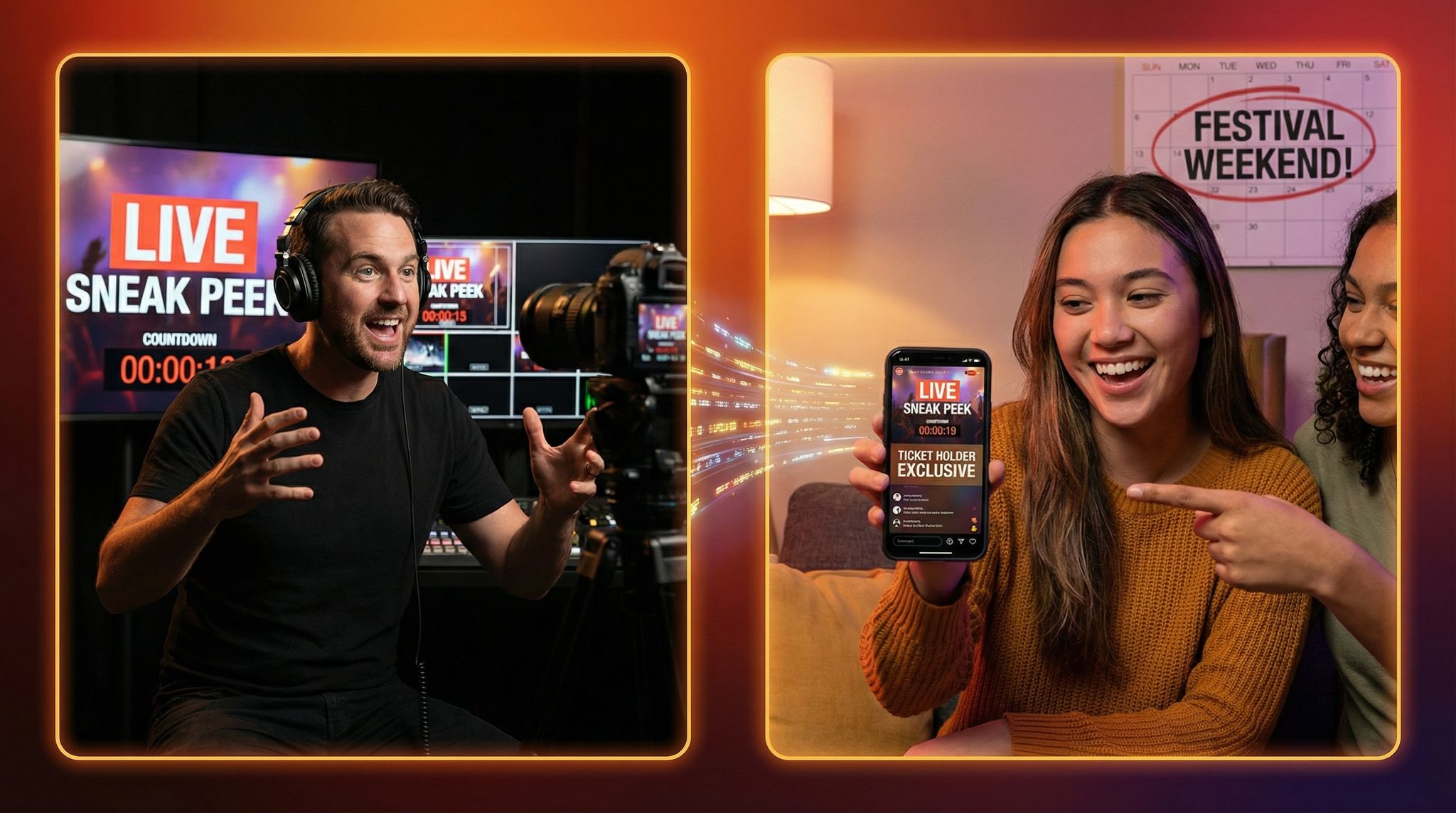
In 2026, live streaming isn’t just for the event itself – it’s a fantastic pre-event engagement tool. Consider hosting sneak-peek live streams exclusively for ticket holders. For instance, a music festival could live stream a few minutes of an artist’s rehearsal or soundcheck in the days before the festival. Imagine getting a notification: “Tune in at 6 PM for a live sneak peek from the main stage – our headliner is doing their soundcheck!” Even a 10-minute live glimpse can send excitement through the roof for fans, seeing the stage lit up and hearing a bit of the performance to come. It makes the upcoming reality tangible.
Boost Revenue With Smart Upsells
Sell merchandise, VIP upgrades, parking passes, and add-ons during checkout and via post-purchase emails. Increase average order value by up to 220%.
Platforms like Instagram Live, Facebook Live, or YouTube (perhaps set to unlisted and shared only via a link to ticket buyers) make this easy. Some festivals also do a “warm-up” live-streamed concert the night before gates open, often with local bands or a smaller stage. This serves dual purposes: it’s content for remote fans too, but importantly it gives those attending in person a sense of “it’s really starting!” and can even guide late ticket sales if you make some portions public. For a conference, you might stream a pre-event “virtual kickoff” where the host or MC interviews a couple of speakers for a few minutes, or where industry experts debate a hot topic that will be discussed more at the event. By scheduling these streams and promoting them to ticket holders, you create communal moments of anticipation – people tuning in simultaneously, chatting in comments, collectively getting hyped.
One success story is how Comic-Con handles teasers: in some years, they’ve live streamed preview nights or press-conference tidbits to badge-holders, which only further stokes the frenzy for the main days. The key is to give just enough to excite, not so much that it spoils the main content. Think of it as a trailer to a movie – you want to show the best snippets. A well-orchestrated preview live stream can also address FAQs (“see our new entrance setup in this video so you know where to go”) in an engaging way rather than a dry advisory. By making it live, you also invite interaction – maybe fans can send hearts, comments, or questions during the stream, deepening their involvement.
AMAs, Q&As, and Interactive Sessions
Another effective live format is hosting AMA (Ask Me Anything) or Q&A sessions in the run-up to the event. These can be text-based (like a Reddit AMA or Twitter Q&A) or video-based (Instagram Live with questions, Zoom webinars, etc.). The idea is to let your ticket holders interact with organisers, artists, or speakers directly before the event. For example, a week out, run a live Q&A with the festival director fielding questions about festival logistics, what new surprises to expect, etc. Or have a popular speaker do a 30-minute AMA about their background and what they plan to cover. Not only does this deliver insider info, but it makes attendees feel heard and connected.
Interactive pre-event sessions are especially valuable for conferences and community-driven events. They break down barriers between attendees and presenters ahead of time. If someone got to ask a question to the keynote speaker on LinkedIn Live and got a personal reply, you can bet they’re now extra eager to see that person’s talk in person (and they’re certainly not going to no-show). This also surfaces the topics and discussions people are buzzing about, which might inform some last-minute content tweaks you make. For instance, if tons of attendees ask about a certain sub-topic in a Q&A, perhaps the speaker can give that an extra shout-out during the event. It shows you’re listening to the audience’s voice.
To maximize participation, promote these interactive sessions through all channels: email an invite (“Join our Live Q&A this Thursday with Special Guest…”), post in your attendee Facebook/Discord group, and highlight timezone details for online audiences. If using a text platform like Reddit or Slido for questions, share the link and encourage questions in advance. During the live session, make sure to shout-out ticket holders (“This question comes from Maria, who’s flying in from Sydney to attend – great question Maria!”). Personal touches like that boost the sense of community. Keep recordings of these sessions available (perhaps accessible via an attendee portal or email follow-up) so those who missed the live moment can still benefit.
Virtual Countdown Parties and Challenges
Who says you have to wait until the event to bring attendees together? Virtual meetups or countdown parties can galvanize your community beforehand. For example, host a countdown Zoom party the night before the event for those already in town or anybody who wants to join online. This could be a casual, fun session – play a short trivia game about the event, have a couple of surprise guest drop-ins (maybe a band member says hi on video, or a famous panelist pops in to say “see you tomorrow!”). For music events, maybe a DJ does a 15-minute virtual set to get everyone dancing at home. It might sound cheesy, but these things work especially for tight-knit communities or niche events where attendees already share a bond.
Some events create virtual “challenges” or scavenger hunts leading up to show day. For instance, a week-long social media challenge where each day attendees have to post something related to the event (Day 1: share a photo of your past attendance or if first time, what you’re packing; Day 2: share your favorite song from an artist on the lineup; etc.). Those who complete all challenges might get entered to win an upgrade or merch. This kind of activity keeps people engaged every single day, creates user-generated content (spreading the word to friends in the process), and gets the algorithm gods on your side by boosting engagement signals around your event hashtag.
One real-world example: Before a major gaming convention, organizers set up an online puzzle series – each week a new puzzle released on their website, with clues referencing upcoming announcements. Ticket holders went wild solving and discussing them on forums, effectively doing marketing outreach for the event by pulling in others to the mystery. The final puzzle revealed a secret guest speaker. By the end, those who followed along felt invested in the event; they weren’t about to miss the big reveal in person.
Whatever format fits your audience, the principle is to create shared experiences before the actual shared experience of the event. These virtual touchpoints unify your attendees, build camaraderie (“we all attended that pre-event live stream together!”), and most importantly reinforce commitment. It’s much harder psychologically to skip an event when you’ve already been actively participating in its lead-up activities and “know” fellow attendees or staff by name. You feel part of a community that’s heading toward a grand meetup, rather than an isolated ticket holder with a PDF ticket in your inbox. That sense of belonging can dramatically decrease no-show rates, especially when fans engage on platforms like Facebook and Discord, as engaged fans hold each other accountable and feed each other’s excitement.
Community Challenges & Social Media Engagement
Branded Hashtags and Social Challenges
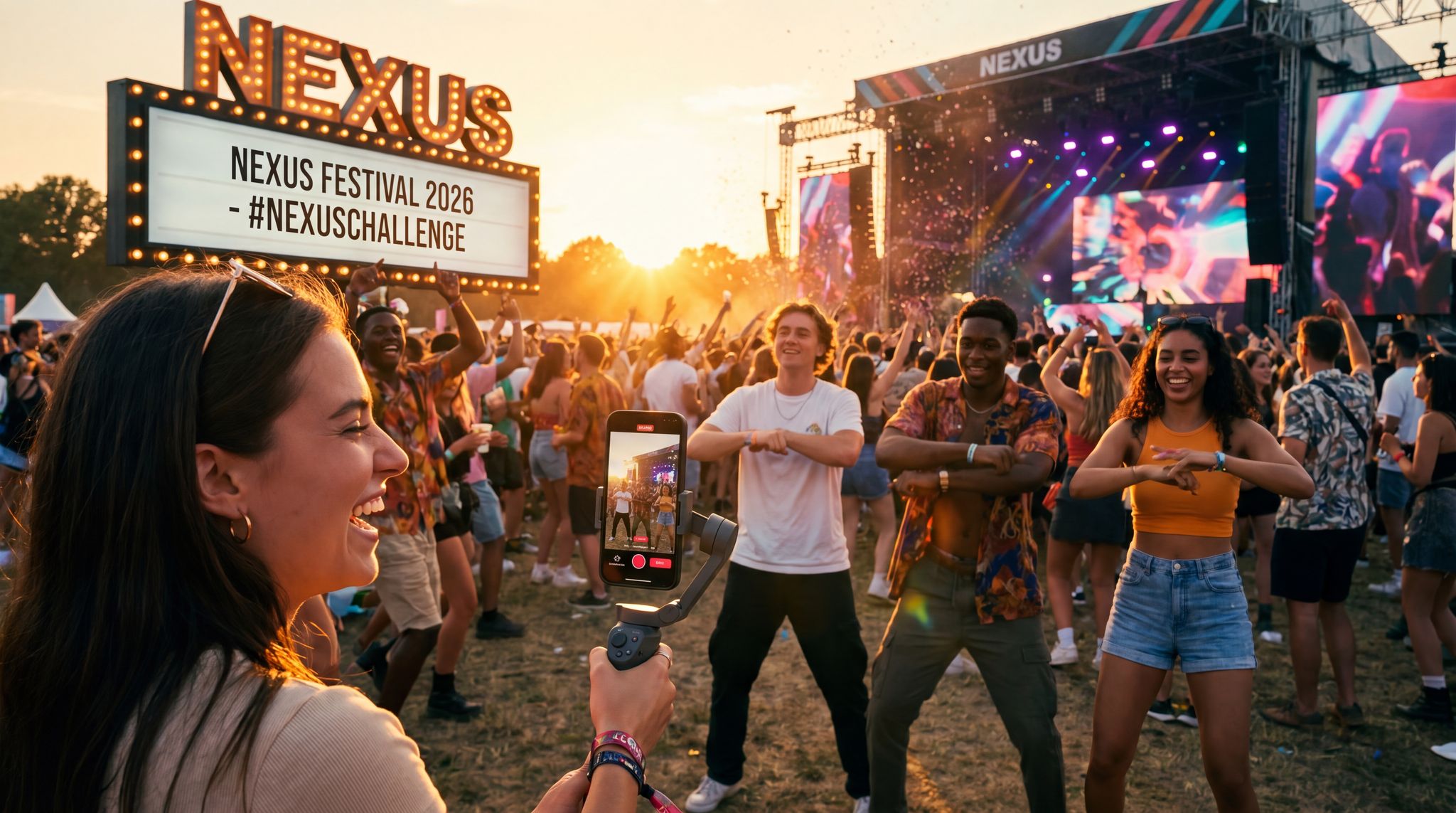
In the months and weeks before your event, social media should light up with attendee excitement – and you can fuel that fire. A classic strategy is creating a branded event hashtag and prompting ticket holders to use it in fun challenges. For example, a festival might launch the #
UGC social challenges can be tailored to the event type. A conference could have a LinkedIn challenge like “Share what you’re most excited to learn at [Conference], tag us and use #[ConfName]Ready – we’ll pick 5 posts to feature on our blog.” A cosplay convention might challenge attendees on Twitter to share their costume teasers. The key is to lower the barrier (make it easy and fun to participate) and offer a reward that appeals to your audience: merch, meet-and-greets, shoutouts on the event stage or social channels, early entry, drink tickets – get creative. Even without a prize, many will join in just for the recognition or community spirit.
By actively encouraging these posts, you’re effectively turning attendees into advocates. Each person posting “I’m so excited for this event!” is broadcasting a vote of confidence to their network. It’s authentic marketing you can’t buy. Seasoned marketers often seed the challenge with a few examples – maybe get some well-known fans or micro-influencers to post first. For instance, have a popular local DJ post their #FestivalOutfit picks to kick off the trend. Once a few people start, others typically follow; nobody wants to be left out of a fun moment. And socially, as more and more content appears with people visibly thrilled about the upcoming event, it validates everyone’s decision to attend and amps up FOMO for those not going (perhaps nudging some last-minute sales if tickets remain). More importantly, it amps up the “I can’t wait!” factor among those who are going. They see a community of fellow attendees forming online, and that community excitement will carry them through to show day.
Highlighting Fan Content and Interaction
Running social media isn’t just about pushing out official posts – it’s about interacting with your fan base. In the lead-up to the event, make a point to engage with attendees’ content and shine a spotlight on them. This can be as simple as retweeting or sharing attendees’ excited posts (“@jane89 just got her ticket – she’s coming all the way from New Zealand! ? Who else is traveling internationally for the event?”). Such shout-outs make fans feel seen and appreciated. Or, you might do weekly roundups: share a “Fan Feature Friday” on Instagram where you post the best fan photo of the week related to the event prep, or a short profile of a superfan who’s been to your festival 5 years running.
Some events take this a step further by incorporating fan content into the event itself, which doubles the incentive to engage beforehand. For example, ask ticket holders to submit song requests for the pre-show playlist, or vote on a fan-favorite film to screen at the outdoor cinema area – then highlight the winning choices at the event (“This next song was voted by fans as the must-play track of the night!”). Knowing they have a say in shaping the event experience makes attendees more invested in showing up. Music festivals have cleverly done this with “fan-voted encore songs” or letting fans pick a name for a new stage via social poll.
Two-way engagement is crucial. Respond to questions and comments promptly on your socials. If someone tweets “Can’t wait for the festival, hope to see vegetarian food options!”, reply and maybe even give a little teaser (“You bet – and you’re going to love what our food vendors are cooking up! ?”). These exchanges not only build goodwill with the person asking, but thousands of silent onlookers see that the organizers are attentive and friendly. That in turn boosts trust and excitement – attendees feel like the organizers care, and a cared-for attendee is an engaged attendee. Compare that to an organization that goes radio silent after tickets are sold; fans might start feeling anxious or neglected (“Is this event still happening? Are they organized?”), which can chip away at excitement.
You can also foster attendee-to-attendee interaction on social media. Pose questions or discussion prompts: “Throwback Thursday: What was your favorite moment from last year’s event?” or “Newcomers, what are you most nervous about? Veterans, share your top tips!” Such posts often ignite threads of conversation among attendees themselves. Your social pages become a hub for the community to gel. This is especially great on Facebook event pages or groups where fans might even make plans – “Who else is going solo? Let’s meet up!” If those bonds form virtually, you can be sure those people will be eager to meet in real life at the event (and thus will definitely attend). As highlighted in one conference engagement guide, participants who make connections before the event are far less likely to no-show, particularly when organizers weave subtopics into engagement.
Contests, Quizzes, and Gamification
People love a good game, and gamifying pre-event engagement can work wonders. Think about running contests or quizzes that both entertain your ticket holders and educate them about the event. For example, a week-long daily trivia quiz on Instagram Stories, where you drop a question each day about an artist’s fun fact or a piece of event history. Attendees can answer in a poll or quiz sticker, and you reveal the correct answer later (with a bit of color commentary or story). Those who answer correctly could be entered into a raffle for a prize each day. This keeps folks checking your socials daily – sustaining engagement. Meanwhile, they’re also learning tidbits that enhance their experience (“Now I really want to see that artist’s set since I learned they play 5 instruments!”).
Photo contests are another angle: e.g., “Show us your best memory from our past events” (if it’s not a first-year event). Fans submit photos or videos, and the community can vote on favorites. The winner could get a backstage tour at the upcoming event, or a merch bundle. We’ve seen festivals create whole mini-campaigns out of this – essentially gathering tons of UGC that also serves as nostalgia marketing. Newcomers see those entries and get a sense of the event’s culture and fun; returnees get a trip down memory lane that reaffirms why they bought tickets again.
For events with a local footprint, you can even gamify offline engagement: a citywide scavenger hunt for free tickets or upgrades. Hide several golden ticket envelopes at partner coffee shops or stores and drop clues on social media for ticket holders to solve. Only those in the community and paying attention will snag these, but it generates buzz for everyone. While only a few win, many play along for the thrill and get more revved up for the event. It’s the process of participating that builds investment.
Implementing a structured gamification method for ticket sales can also yield impressive conversion boosts. By rewarding fans with points or leaderboard status for sharing event links, completing social challenges, or referring friends, organizers tap into competitive psychology. These gamified systems not only keep current ticket holders highly engaged but also organically drive new acquisitions as fans compete for VIP upgrades or exclusive merchandise.
Advanced organizers often look to industry-leading frameworks, such as gamification summit methods, to structure these campaigns effectively. This involves creating tiered reward systems where attendees unlock escalating perks—like fast-track entry or exclusive artist Q&As—based on their level of pre-event interaction, further driving ticket sales through competitive social sharing.
To execute these advanced tactics, choosing the right websites for ticket sales is critical. The ideal site for ticket sales should natively support these gamification summit frameworks, allowing promoters to seamlessly integrate point systems, referral tracking, and automated rewards directly into the checkout flow. When your ticketing platform actively encourages fans to share links and compete for perks, it transforms standard transactions into powerful pre-event publicity, amplifying your reach without requiring additional ad spend.
Furthermore, evaluating a site for ticket sales based on its ability to deploy these gamification methods ensures that your marketing infrastructure is built for scale. Event planners who leverage platforms with native reward tiers and social sharing capabilities consistently see higher organic acquisition, as the ticketing website itself becomes an active participant in the promotional strategy.
The underlying principle is turning the wait into an extension of the event experience. Rather than passively counting days, attendees are actively engaging in fun, competitive, or creative tasks related to the event and often doing so as a community. By the time your event arrives, they haven’t been “waiting” at all – they’ve been living the event in small doses for weeks. This depth of engagement means they’re mentally (and often materially) committed. They’ve put in effort, they might have won something or been acknowledged publicly, they’ve made online friends – of course they’re going to show up and cash in on the grand payoff of all that build-up. And when they do, that energy they bring will make the event itself that much more electric.
Building an Attendee Community Online
Creating Exclusive Attendee Groups or Forums
One of the most effective ways to keep ticket holders engaged and committed is to give them a place to gather – an online home specifically for attendees. In 2026, this could be a private Facebook Group, Discord server, Slack workspace, or dedicated forum via your event app or website. The moment someone buys a ticket, invite them into this community. For example, many festivals send an email with an invite link to the “Official 2026 Festival Attendees Group (Private)” where only confirmed ticket holders are admitted (often verified by providing an order number or using the email they registered with). Conferences similarly might have an attendee portal with discussion boards or leverage LinkedIn/Facebook Groups for registrants.
The psychology here is powerful: it signals “you’re now part of the club.” It also centralizes conversation among people who are definitely going, filtering out the noise of those merely interested. Inside these groups, excitement tends to snowball organically. Members will introduce themselves – “Hi I’m Alex, coming from London for the first time, who else is new?” – and veterans will chime in with advice. You’ll see threads like “Which day are you most excited for?” or “Any meetups for solo travelers?” spontaneously appear. As an organizer, you should seed some early discussion: pose an ice-breaker question or share a welcome post encouraging everyone to say hi and maybe mention the artist or speaker they’re most excited about.
These exclusive groups create accountability and camaraderie. If someone has been active in the community, making friends or networking, they feel a social obligation to turn up or risk letting others down (“I promised the Discord folks I’d host the fan meetup on Day 1 – I have to be there!”). Also, if an attendee is wavering for any reason, the community’s hype often pulls them back in. It’s hard to sit out the event when your group chat has 200 messages of people sharing their packing lists, excitement memes, and carpool plans. There’s a sense of “we’re all in this together”, very much like a team sport. In fact, research indicates attendees who engage in a pre-event community are significantly more likely to attend and even become repeat attendees, proving that networking and engagement strategies help facilitate meaningful in-person interactions.
From a practical standpoint, official groups also allow you to disseminate information efficiently. You can drop announcements (“Reminder: Early entry for VIPs at Gate 2, see pinned post for map”) and be sure that your core audience sees them. The group members often help amplify and answer each other’s questions too, reducing inbound queries to your customer service. If someone asks “Is there camping this year?”, often another well-informed attendee replies before your team even has to. But do have moderators (staff or trustworthy volunteers) to guide conversations, enforce codes of conduct, and step in with official answers or corrections when needed.
Don’t underestimate the inclusive power of a community space. A lot of attendees, especially solo travelers or newbies, may feel anxious about attending. An online group gives them a place to voice that and get encouragement: “Don’t worry, we’re a friendly bunch – come to the meetup at the beer tent on Friday!” When ticket holders start to feel they belong to a community around the event, their commitment to showing up goes through the roof when engagement happens on social platforms like Discord, making ticket buyers feel accountable to each other.
Facilitating Introductions and Conversations
It’s not enough to just open a forum – you need to actively facilitate connections. Early on, encourage attendees to introduce themselves. A simple prompt can do wonders: “Let’s get to know each other! Reply with where you’re coming from and what you’re most excited to see at the event.” You’ll often see hundreds of replies, and people will organically find commonalities (“No way, you’re from Dubai too? See you there!”). These small interactions lay the groundwork for real friendships.
You can also create topic threads or channels for specific interests: for a festival, maybe channels for ride-sharing, camping tips, specific artist fandoms, etc. For a conference, channels for job roles (“#developers”, “#marketers”) or activities (“#morning-yoga group”, “#sightseeing plans”). By segmenting conversations, you help attendees find their tribe within the tribe. Someone who might not post in the general chat might speak up in a smaller topical channel where they feel comfortable. Over time, some community members will naturally take leadership roles – like a veteran attendee offering to be the point person for newbie questions, or someone starting a spreadsheet of people’s flight arrival times to coordinate shuttles. Embrace and lightly support these grassroots initiatives; they’re signs of a healthy community.
Another tool is to pair people up or form pods. Some conferences do a “buddy program” pre-event: sign up and they’ll match you with a fellow attendee (perhaps with similar interests) to chat one-on-one before you both arrive. It’s optional, but many appreciate it. It virtually guarantees neither will no-show, because now they have a familiar face to meet on site. Even without a formal program, you can ask in the group, “Who else is coming solo and might want a buddy to explore with on Day 1? We encourage you to DM each other and link up!” Often, just planting that idea results in mini-groups forming.
One more advanced strategy: host a pre-event virtual meetup exclusively for community members. This could be a casual Zoom wherein breakout rooms randomly shuffle attendees so they can meet a few people “face to face” in a low-pressure way. It’s like a virtual networking mixer. As noted in Beyond Icebreakers: The Conference Networking Guide, breaking the ice early significantly reduces first-day jitters and increases engagement, so organizers should seed the conversation with prompts and share fun facts to help attendees connect. An attendee walking into the venue who already chatted with 10 others online is going to feel much more at ease (and excited to find those people in person) than someone who knows no one. Your role is simply to facilitate and encourage these bonds; the attendees will do the rest.
Sustaining the Community Energy
In the lead-up, keep feeding the community interesting prompts or insider info to spark discussion. Share exclusive tidbits there first: e.g., drop the afterparty lineup in the group a few hours before you post it publicly, saying “FYI community, you heard it here first…”. Ask for opinions: “We’re designing our on-site hashtag photo frame – which slogan do you all like better?” Getting input not only makes them feel valued, but once they’ve contributed an opinion or vote, they feel a tiny bit of ownership of the event. Ownership begets commitment.
It’s also good to encourage user-generated polls and questions. Maybe an attendee runs a poll: “Which headliner are you most excited for?” Those kinds of posts generate buzz without you having to initiate. Recognize and validate good contributions: if someone shares a really useful packing checklist for the camping festival, pin it or comment thanking them and highlighting a couple of their tips. This shows that the community’s knowledge is being appreciated and utilized.
In these forums, enthusiasm can sometimes lead to constructive criticism or concerns (like “I really hope the water stations are improved this year”). Do not silence these – instead, address them openly. “Thanks for flagging, John – we do have twice as many water stations this time and a new vendor handling them. Stay tuned for our full facilities update!” Handling concerns transparently in the community builds trust. Attendees see that you listen, which makes them more likely to remain positive and excited. If issues were left to fester with no official acknowledgment, that could dampen excitement or make some waver. So keep a finger on the pulse and intervene when needed to keep the tone helpful and upbeat.
As event day nears, the community will likely explode with logistical chatter – ride shares, meetup plans, what time to arrive – and excitement. This is exactly what you want. People often post selfies like “airport bound for #EventName!” or pictures of their packed bags. Amplify this energy by chiming in (“Safe travels, see you soon!”) and maybe doing one last fun roll call (“Only 3 days to go – where’s everyone coming from and what’s the first thing you’ll do when you arrive?”). By now, the attendees feel like a cohesive tribe of fans who are part of a community they are actively involved in. They’ve formed friendships, they’ve laughed over memes, maybe they’ve even helped each other with plans. Skipping the event at this point would mean missing out on meeting their new friends and breaking a social bond – highly unlikely! Instead, they’ll arrive feeling like they’re part of something, which means they’ll show up early, engage deeply on site, and likely stick around for next year’s community too.
Driving Community Participation at Music Festivals and Large Events
When developing audience engagement strategies for music festivals and large-scale events, fostering active community participation is paramount. Unlike smaller gatherings where networking happens organically, massive festival grounds require deliberate frameworks to make attendees feel like co-creators rather than passive spectators. Promoters can achieve this by integrating fan-led initiatives into the core event programming. For example, allowing the online community to vote on specific art installations, curate a secondary stage lineup, or design the official festival map encourages deep, sustained involvement.
Successful community participation at live events also relies on bridging the digital-to-physical gap. Organizers can set up dedicated “community hubs” or meetup zones on the festival footprint specifically for members of the official Discord or Facebook groups. By providing a physical space for these digital communities to converge, you validate their pre-event interactions and solidify their loyalty. When fans actively shape the festival environment and connect with their online peers in person, their commitment to the brand deepens, transforming standard ticket buyers into lifelong advocates.
Referral & Ambassador Programs: Turn Attendees into Promoters
Incentivizing Word-of-Mouth Referrals
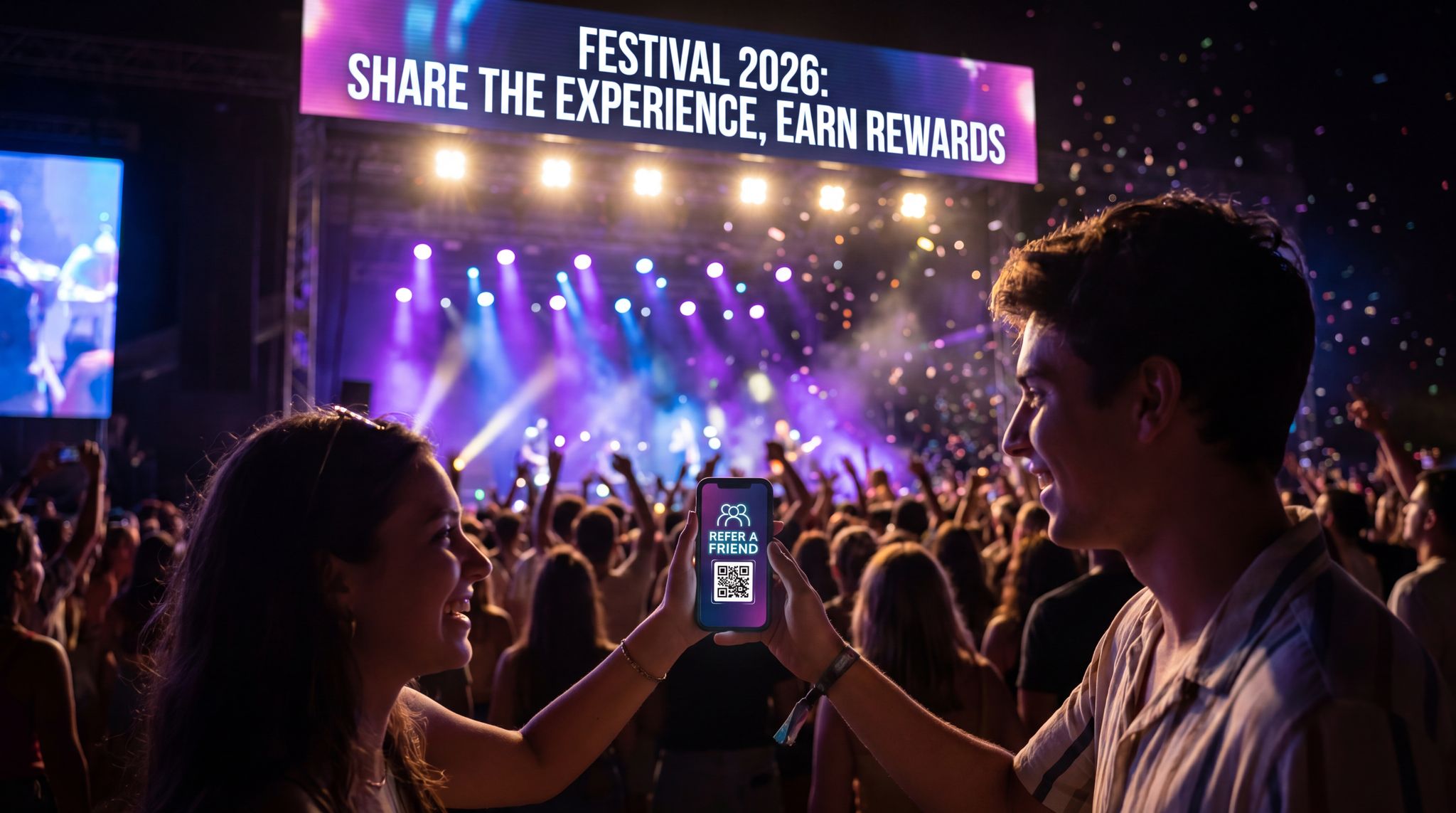
A ticket holder who’s excited about your event is your best salesperson – so why not formally tap into that? Implementing a referral program for attendees can both boost ticket sales and further lock in those attendees’ commitment. The concept is simple: reward ticket holders for bringing their friends. For example, upon purchase, provide each buyer a unique referral link or code (many modern ticketing platforms, including Ticket Fairy, can auto-generate these for each customer, allowing you to align every touchpoint for loyalty). Then announce a perk: “Invite your friends! For every friend who buys using your link, you get $10 back – and if you refer 5 friends, you’ll earn a VIP upgrade or exclusive merch.”
This kind of program creates a win-win-win. Your attendee has a mission and gets cool rewards, their friends get a trusted recommendation (and maybe a small discount as incentive), and you get more paid attendees. It’s common to see huge engagement when the reward is desirable. Many events offer escalating tiers – e.g., refer 1 friend: get a free drink token; 3 friends: free T-shirt; 5 friends: backstage tour or VIP lounge access, etc. Choose rewards that fit your budget and audience; experiential rewards (meet-and-greet, special seating) can be low-cost to you but high-value to fans. According to industry data, referrals driven by incentives like this can significantly boost sales – some events have seen ticket revenue jump 20–30% via fan referrals while giving away under 1% of that in perks, showing how referral programs drive ticket sales. More people coming also means a livelier event, which benefits everyone.
Crucially for engagement, a person who successfully refers friends is now even more invested in attending. They’ve essentially recruited their crew to join them, so they’re definitely going – they wouldn’t want to let their friends down (social commitment) or miss out on enjoying the reward they earned. Plus, coming with friends further reduces the chance of a bail. It’s one thing to skip an event when you planned to go alone; it’s quite another to bail when your friends are counting on you for the carpool or are hyped to hang out with you there. In essence, referral programs harness the social glue of group attendance. As an experienced promoter would say, the more people someone brings, the less likely any one of them will flake.
When rolling out a referral initiative, promote it through all channels to your existing ticket buyers: emails (“Invite friends, get rewards”), in-app notifications, a prominent mention on the confirmation page, etc. Make it frictionless – one-click sharing to Facebook or WhatsApp can really help. Some platforms even provide sharing widgets where attendees can blast their referral link directly to social media with a preset message. Coaching them on how to invite helps too; encourage language like “Come join me at this event!” rather than a generic ad. You can even give them assets – perhaps an “I’m Going to [Event] – Join Me!” graphic or story sticker to share. By empowering your attendees to promote authentically, you extend your marketing reach with minimal cost. And the effect compounds: friend groups end up hyping each other. One enthusiastic ticket holder might convince four buds to come along, and now that whole group chat is buzzing about the event, sharing playlists, outfit ideas, etc., none of which you had to instigate.
Ambassador Programs for Superfans
Beyond one-off referrals, consider establishing a more formal ambassador program for your super fans. These are the folks who would promote your event even without a reward – the die-hards, frequent attendees, or influential community members. Identify them (look for people who bought early, bought multiple tickets, or are highly active in your social groups). Invite them to join an ambassador team with special status and perks. In return, they have goals: maybe to distribute a certain number of referral tickets, or create content, or host meetups. It’s a more involved strategy but can pay dividends, especially for recurring events or tours.
For example, you might recruit 50 ambassadors for a festival, each tasked with directly bringing in 10 attendees. Provide them a unique discount code to offer (people love hooking up their friends with a deal). Track their sales, and reward accordingly – commission (like $5 per ticket sold) and/or non-monetary perks (free upgrade, merch, an “Ambassador” badge at the event). Ambassadors can also be mobilized to spread key announcements or even assist on site with fan engagement. One successful case: a mid-sized U.S. music festival trained a team of college student ambassadors in different cities to throw small pre-festival parties and sell tickets – they ended up driving hundreds of additional sales and those ambassadors brought an unparalleled energy on festival day (not one no-show among them!). Many events have reported that tapping fan ambassadors is far more cost-effective and authentic than heavy digital ad spend, especially as event marketers face ad fatigue and look for word-of-mouth alternatives.
The trick is to keep the ambassador group feeling exclusive and appreciated. Communicate with them regularly (perhaps a private group chat just for ambassadors), share insider news, and publicly recognize their efforts (“Shoutout to our top ambassador of the month, who brought in 20 new attendees!”). This creates friendly competition and pride. By the time of the event, these ambassadors are evangelists who will hype up the crowd and even help ensure others show up (“Hey, are you still coming? Don’t flake, I got you to buy that ticket!” they might nudge their friends). Ambassadors often carry the flag for your brand year-round, helping sustain a community that persists from one event to the next, often starting with a built-in fan base. In summary, they’re your inside army – and their passion, when recognized, can be infectious to the whole attendee base.
If a full ambassador program sounds like overkill for your one-off event, you can scale it down. Maybe just identify and nurture a few vocal fans. Give them a surprise reward (like a free upgrade) for their enthusiasm, and they’ll naturally keep spreading positive buzz. The goal is to harness fan enthusiasm systematically. It’s not only cheaper than ads, it’s more credible. People trust their friends’ excitement more than any polished marketing copy, as referral marketing becomes essential when recommendations come from someone they know. So when your confirmed attendees start convincing others to attend (and those others show up excited because they come in as part of a friend group), you’ve both raised your attendance and elevated the energy on site.
Social Proof and Community Momentum
One side benefit of referrals and ambassadors is the social proof it broadcasts. Every time someone shares “Join me at X event!” on their feed, it sends a signal: this event is popular and endorsed by someone you know. Even within your existing attendee community, mentioning referral milestones can hype people up. For instance, post in your group: “Over 300 ticket holders have already invited friends – we’re expecting many of you to come with your squads! ?” This subtly tells lone ticket holders, hey, most people are coming in groups – don’t be left out, invite someone! It reinforces that the event will be well-attended (easing any fear that it might be a dud) and that it’s a communal experience.
You can leverage phrases in your communications that emphasize the crowd, to trigger a bit of FOMO. For example, a reminder email might say: “Join 10,000+ fellow fans for an unforgettable night”, which reminds the reader they’re part of a huge, exciting movement and subtly suggests missing out if they don’t attend. That reminds the reader they’re part of a huge, exciting movement and subtly suggests “everyone else is going, of course you’ll be there too.” Similarly, showcasing user numbers – “95% of tickets sold out” or “attendees from 42 countries are coming” – can affirm their decision and commitment. People worry about missing out on what others are collectively enjoying. It’s an ethical use of peer pressure: encouraging attendance not through fear, but through belonging.
Also, when attendees recruit friends, they often coordinate plans and hype each other. Perhaps they’ll all wear matching outfits or agree to meet at a certain landmark inside. This group planning further cements attendance. It’s much less likely for a person to drop out if it would mess up the group plan or leave a friend on their own. Essentially, you are decreasing the chance of attrition through social bonds. Event organizers have long noted that group sales (like a table of 10 at a gala, or a “buy 4 tickets” bundle) have lower no-show rates than singles – it’s the psychology of commitment and accountability at work. You can simulate that social glue via referrals even if tickets are purchased individually.
Finally, consider rewarding attendance itself in group contexts: for example, if an ambassador’s entire group checks in at the event, give the ambassador a bonus reward. Or a photo contest at the event for “largest squad photo” to encourage them all to actually come and gather. These are fun ways to bridge pre-event engagement with on-site engagement, ensuring those who were active in promoting or community building follow through and then continue spreading the love during and after the show (which starts the virtuous loop for your next event). Remember, an attendee who shows up and has a blast will likely become a repeat customer and bring others along next time, proving that referrals create enthusiastic fans. So turning current ticket holders into promoters not only fills this event, it seeds the success of future ones – a strategy top promoters use to sustain growth even as ad costs rise and algorithms fluctuate.
Timely Reminders & Multi-Channel Communication
Multi-Channel Outreach Strategy
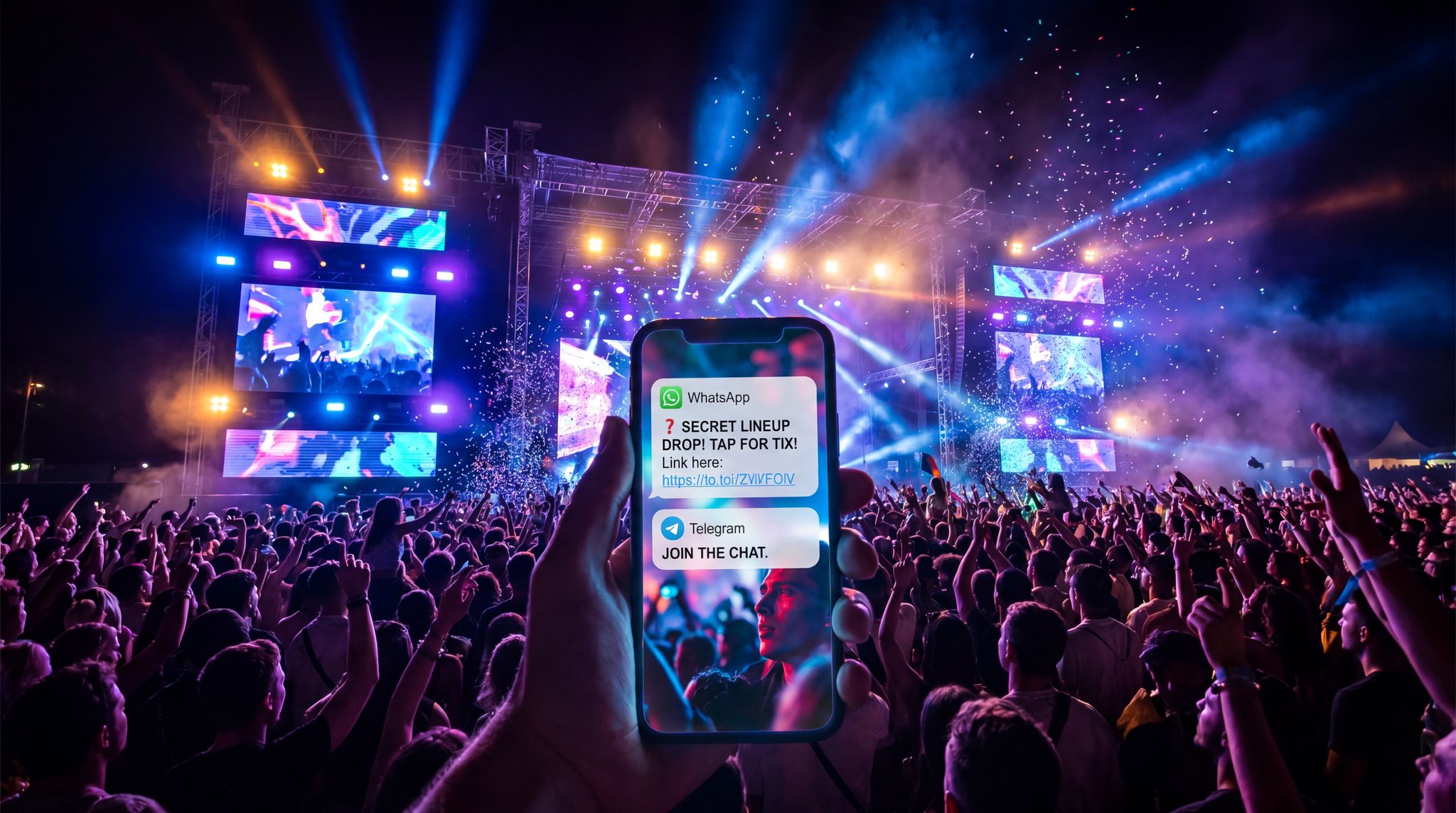
Even with all the organic excitement in the world, timely reminders are still essential. Life gets busy, and people can genuinely forget or overlook details about an event they bought tickets for months ago. That’s why savvy event marketers deploy multiple channels to deliver important nudges and info as the date nears: email, SMS texts, mobile app push notifications, automated voice reminders, even old-fashioned snail mail for VIPs or local events. Each channel has its strengths – combining them ensures you cover all your bases.
Email remains a workhorse for detailed information (as we covered in the email sequencing section). But not everyone checks email frequently, especially younger demographics. That’s where SMS shines: text messages have an open rate around 98%, with most read within minutes, according to SMS marketing statistics. A short-and-sweet text like “? Concert tomorrow! Doors 7pm – show this text for easy entry. Can’t wait to rock with you!” virtually guarantees the message will be seen. Use SMS for critical day-before or day-of info and last-minute hype (“Today’s the day!”). If your ticketing system supports it, you can segment texts to only those who haven’t scanned in by a certain hour (“We see you haven’t arrived yet – remember gates close at 9!”) – though be mindful of time zones and send times.
If you have a dedicated event mobile app, push notifications are gold. They’re free to send (unlike SMS which may cost per message) and can be rich with media or deep links (like tapping the notification opens the in-app map or schedule). A push might say “Your personalized schedule is ready – tap to see what’s happening in 1 hour!” to remind users to engage. The limitation is reach – only those who downloaded the app and enabled notifications get it. That’s why you promote the app heavily (with incentives) in those final emails and communities. Still, push notifications can complement email/text by providing on-the-go updates. Many events use them for real-time info like weather changes or on-site promotions too.
Don’t neglect social media reminders as well. While you can’t guarantee every ticket holder sees them (algorithms, etc.), posting a general “We’re excited to see you next week – here are 5 things to know before you arrive” on your public pages can catch some eyes. It also serves non-attendees who might decide to grab a last-minute ticket when they see that post (if your event isn’t sold out). If you have Facebook Event pages, those actually allow direct notifications to RSVPs for updates – utilize that to send a friendly reminder. Some organizers go the extra mile of running a targeted ad campaign (yes, ads to people who already bought!) using custom audiences, simply to ensure reminders saturate. For example, a Facebook/Instagram ads custom audience of purchasers can be shown a “The wait is almost over – see you at XYZ!” message with event prep tips. It’s a bit unorthodox but can be effective, especially for visually reinforcing key info.
Let’s compare these channels briefly for clarity:
| Channel | Typical Open/Engagement Rate | Best For | Example Use (Pre-Event) |
|---|---|---|---|
| ~20–30% open rate (higher if targeted) | Detailed information, checklists, attachments, links to resources. | Sending “Know Before You Go” guides, parking & entry instructions, COVID protocol details, ticket download links. | |
| SMS Text | ~98% open (most within minutes) (www.optimonk.com) | Urgent or very timely reminders; brief updates everyone must see. | Day-before “Don’t forget: show starts at 8pm tomorrow!”; morning-of “Gates open at 2pm today – see you soon!”. |
| App Push | Highly visible if app installed (engagement 50%+ for active users) | Timely alerts tied to app features; personalized prompts. | “Your first session starts in 1 hour in Hall B” (with link to map); last-minute schedule change alerts. |
| Social Media | Variable (5–10% organic reach typical) | Broad excitement, community-wide alerts; visual content. | Countdown posts (“3 days to go!”), teaser videos, or live Q&A addressing common questions. Useful as supplementary reminders. |
| Phone Call/Voicemail | N/A (direct outreach) | High-touch events or VIPs; ensuring important guests remember details. | Personal call from staff to VIP ticket holders reminding them of exclusive reception timing and offering to answer questions. |
| Physical Mail | N/A (depends on delivery) | VIP tickets, local events; creating a tangible touchpoint. | Mailing a welcome letter or ticket package with event badge, map, or a small gift, arriving a week before the event. |
By using a multi-channel mix, you cater to different preferences and ensure redundancy. If an attendee ignores emails, they might see your text. If they changed phone numbers, maybe they still follow your Instagram. The week of the event, you pretty much want someone to encounter some reminder of the event wherever they turn – but done in a helpful, not harassing, manner.
Crafting a Countdown Communications Calendar
To stay organized, it’s wise to create a communications calendar for the final run-up. Map out when each message on each channel will go out, and what its purpose is, so you’re not scrambling or overloading at the last second. Here’s an example timeline for a large event:
| Timing (Before Event) | Main Reminder Touchpoints | Purpose & Key Content |
|---|---|---|
| 2–4 Weeks Out | Email Newsletter (to all ticket buyers) | Reiterate event dates & schedule highlights. Share a “prep checklist” (e.g. what to pack, travel tips) and big reminders (ticket transfer deadline, if any). Include links to download the event app and join attendee community groups. Build anticipation: “Just a few weeks to go – get ready!”. |
| 1 Week Out | Email + SMS | Send a detailed “One Week Away” email: parking info, gate opening times, FAQ on what you can/can’t bring, weather outlook, etc. The same day or next, a short SMS: “1 week until [Event]! Check your email for important info. We can’t wait to see you!”. The SMS nudges them to read that crucial email. |
| 2 Days Out | Email + (Push Notification) | Email a final event guide or “Day-By-Day Schedule & Map” if applicable. Encourage them to plan their day and arrive early. If using an app, send a push: “Get ready! Build your personal schedule now in the app so you don’t miss a thing.”. This prompts last-minute engagement and practical prep. |
| Day Before | SMS Text Message | A friendly but informative reminder: “Tomorrow’s the big day! Gates open 5 PM at Main Entrance (123 Main St.). Show your QR code ticket and ID. Safe travels – see you there!”. Concise, with must-know arrival info. Optionally, include a contact if they need help (phone or helpdesk URL). |
| Event Day – Morning | SMS + Social Media Post | Early-day text: “Happy [Event] Day! ? Don’t forget your ID and water bottle. Doors at 5 PM. Live updates on our Twitter.”. And a public social post like “Today’s the day! Use #EventNameLive for your posts – we’ll be reposting our favorites. Let’s do this!”. This builds hype and provides any final tips. |
| During Event | Push Notifications / SMS (selected) | Live updates for attendees: schedule changes, surprise announcements (“Secret guest at 8:30 on Stage 2 – don’t miss it!”), or important service info (“Storm passing through – take shelter, show will resume ASAP”). These keep everyone informed in real time. |
Of course, tailor this to your event’s specifics (a multi-day festival might have daily pushes, a single-night gala might not need as many). The main point is to schedule touchpoints at logical intervals – not too sparse that they forget, but not so frequent that you annoy. Generally, communications ramp up the closer you get, which makes sense because urgency and relevance increase. Two to three messages in the final week (across different mediums) is usually welcome, not bothersome, as long as each provides value.
Keep messaging tone consistent with excitement and reassurance. Late-stage reminders should feel like encouragement from a friend, not stern instructions from a school principal. Example: say “We’re so excited to see you – it’s going to be epic!” followed by “Here are a few tips to help your day go smoothly,” rather than “ATTN: ALL ATTENDEES – READ THE FOLLOWING RULES.” Cover the rules and critical info, yes, but keep it light-touch in tone. After all, they bought a ticket to have a good time.
Also, be mindful of time zones and global audiences. If you have attendees coming from abroad, an “8 AM” SMS in your timezone might hit them at 2 AM their time – perhaps segment international numbers for a different send time, or stick to email for those far-away folks at odd hours. Many messaging tools allow scheduling by local time to recipient – use that if available.
Last-Minute Engagement and Day-Of Support
In those final 48 hours, ride the wave of excitement but also be prepared to address anxieties. Send messages that build hype and confidence. For example, a day-before social post could be a short video of your staff waving at the camera from the venue saying, “We’re ready for you – travel safe and see you tomorrow!”. This kind of humanizes the experience and shows everything is under control, easing any nervousness about logistics or what to expect.
It’s wise to have support channels clearly communicated in the last reminders. Include a line like “Questions? We’ve got you – reply to this email or DM us on Twitter for quick help”. Some events set up a special customer service hotline or chatbot for event week. If people have a last-minute issue (can’t find their ticket email, or a flight delay making them late), knowing how to get help can be the difference between them attending or giving up. One pro tip: have an “Event FAQ” page updated and share its link widely in final comms (“Read our Top 10 Event Day Tips & FAQ here”). This can mitigate a flood of repeat questions and give potentially wavering attendees the info they need to proceed with confidence.
On the morning of the event, an upbeat motivational message can set the tone. This is when nerves or laziness can strike – maybe it’s raining and someone thinks “Ugh do I really want to go later?” Your job is to counter that with positivity and FOMO. The morning SMS or push saying “Today’s the day! The crew is setting up an amazing experience right now – can’t wait to open the doors for you at 5!” reaffirms that it is happening and you should be excited. If weather or other issues are a concern, address them calmly: “Rain or shine, we’ve got plenty of covered space and hot cocoa on deck – so don’t let a few raindrops stop you from coming!”. When attendees see you’re on top of any challenges, they’ll be less deterred by them.
Finally, as people arrive on site (or log in for a virtual event), continue the engagement. Greet them with signage, maybe a welcome notification, and carry through the momentum. If someone hasn’t shown up by mid-event and you have capacity, you might even send a “We miss you here!” email with photos of what’s happening – sometimes latecomers will rush out if they see what they’re missing. That tactic is more relevant for online events or free events though (where no-shows cost nothing extra to have log on late). For paid in-person, it’s not typical to message those who didn’t scan in – but post-event you might survey them to learn why.
In essence, the multi-channel reminder strategy is about covering the three R’s: Reach, Relevance, and Repetition. Reach them through various means, ensure each message is relevant (contains new or needed info, not just noise), and repeat key points across channels so nothing slips through cracks. When done thoughtfully, attendees will feel well-informed and cared for, not pestered. They’ll also simply have a hard time “forgetting” or “losing track” of the event – which knocks out one major cause of no-shows. Instead, they’ll feel the day approaching and their excitement growing, with every buzz of their phone or bolded subject line in their inbox reminding them “Hey, you’ve got something awesome coming up – don’t miss it.”
Know-Before-You-Go: Removing Barriers & Reducing Stress
Providing Essential Info & FAQs Early
One big reason ticket holders no-show is logistics anxiety or confusion. If people aren’t sure about details – how to get there, what to bring, what to do upon arrival – they might procrastinate planning and then flake out. Eliminate those doubts well ahead of time. A comprehensive “Know Before You Go” communication (or series of them) is a must. This should cover all the practical info attendees need for a smooth experience: event schedule, venue maps, entry procedures, transportation options, parking info, nearby accommodations, what’s allowed/prohibited, safety protocols, weather prep, and any last-minute updates.
Many events send this as an email guide a week or two out, often with a PDF or dedicated web page. For instance, Fuji Rock Festival in Japan emails an extensive PDF to ticket buyers with everything from detailed travel directions from major cities to a mountain packing list (since it’s an outdoor fest) and on-site maps – ensuring fans feel ready and excited to make the trip, which serves as a helpful reminder to attend and increases the likelihood they follow through. That level of detail can be the difference between someone thinking “Eh, getting there sounds like a hassle, maybe I won’t go” and them confidently saying “No problem, the organizers explained exactly how to catch the shuttle bus – I’m set!”
Make sure this info is easy to find and reference. Post it on your website and link it in emails. Many attendees will save the email or PDF on their phone or print it. Bullet points and FAQs are helpful format-wise because people will scan for specific questions (“Are backpacks allowed?” “Will there be food options for vegans?” etc.). If you’ve been fielding customer service questions, incorporate the common ones into the FAQ – it shows you listen and it heads off those queries. For example, if multiple people asked if they can change the name on a ticket, include: “Q: I can’t attend – can I transfer my ticket to a friend? A: Yes, you can use our official resale platform until June 1. [Link]”. This not only helps the one person, it signals to all reading that you have a process (and might spur someone who was quietly not planning to show to actually transfer their ticket to someone who will – further reducing empty spots). As noted in our No-Shows guide, offering an official resale or exchange can rescue tickets from going unused, often at face value via a waitlist or exchange system.
Transparency is key. If there are any known issues or tricky bits about attending, address them with solutions in the guide. Example: “Construction around the venue has made parking limited – we strongly recommend using our Park & Ride lot or taking public transit (we’ve added late-night buses to help).” By acknowledging challenges and providing guidance, you prevent frustration and dropout. Attendees appreciate honesty; they’d rather hear “lines might be long at peak time, here’s how to beat the rush” than be unpleasantly surprised on site. And if something changes last-minute (say, an artist cancellation or a new security rule), blast that out as soon as possible across channels so people can adjust expectations. Attendees are far more forgiving and likely to still come if they’re informed early, versus finding out at the gate, as transparent communication is key to maintaining trust with ticket holders.
Streamlining Ticketing and Entry
Complex or unclear entry processes can scare off ticket holders, so make entry as seamless as possible. This starts with ticketing itself: ensure everyone knows how to access their ticket (print-at-home? mobile barcode in an app?). In pre-event comms, include a step-by-step: “Click this link to download your mobile tickets. Add them to your phone’s wallet for easy access. If you have any issues, here’s how to get help.” Encourage folks to have their tickets ready before arriving to avoid delays (maybe even doing a *“Ticket Ready?” contest on social where those who share a screenshot of their ready ticket get a chance to win merch – turning a chore into a fun social proof moment).
If you require ID checks, vaccination proof, or other verification, remind everyone multiple times. It might sound like overkill, but people will forget that their ID name must match the ticket name, or that they need a certain app for vaccine proof. Save them the heartbreak by warning them early and often. For example: “This is an 18+ event – don’t forget to bring a valid photo ID. Security will be checking at the entrance. No ID = no entry, no exceptions.” Yes, it’s stern, but far better they realize that at home (and grab their ID) than be turned away and become a no-show stat despite being physically there!
Consider implementing a pre-event check-in or registration confirmation if that helps. Some conferences ask attendees to “pre-check-in” online the week before – basically confirming they’re coming and printing their badge or getting a QR code for quick entry. Cvent (the event software platform) has noted that having attendees complete something like a pre-event online check-in can psychologically cement their intent to attend by using a pre-event check-in, which serves as confirmation of their intent. It’s akin to checking in for a flight – once you’ve done it, you’re far more likely to go to the airport. Plus, it speeds up on-site processing, which is a win for experience. If you go this route, highlight the benefits to attendees (“Save time, skip the lines by checking in online – print your badge at home or download it to your phone now!”). Those who do will sail through entry, and those who don’t will still have the usual route.
Using good technology at entry (QR scanners, RFID, etc.) and having plenty of staff to minimize wait times keeps excitement high. Long, confusing lines breed frustration and second thoughts (“ugh, maybe I should just go home”). So communicate about entry flow: “Gates open at 5, peak arrival 7–8pm. Come early to avoid lines – we’ll have live music at the gate to entertain early birds!” If you offer early entry perks like that (or even practical ones like “first 500 get a free program”), more people will arrive early, distributing the load. And if lines do get long, have a way to entertain or engage folks (music, performers, photo ops). It’s all part of keeping them happy and present – not leaving because the queue looked insane.
Lastly, always have a backup plan for entry issues and let attendees know it’s there. For example, if someone lost their ticket or wristband, tell them ahead that they can visit the box office or help tent for resolution (and what ID/proof to bring). This reassurance means if ticket problems occur day-of, they won’t just give up in panic; they’ll use the support you’ve explained. Similarly, if you foresee a risk of sell-outs leading to scammers or scalpers, advise attendees: “Only tickets from our official resale are guaranteed valid – avoid disappointment at the door.” And if you do have an official resale/waitlist, push it as the event nears (“If your plans changed and you can’t attend, list your ticket on our official exchange so another fan can go – it’s easy and secure, usually at face value via a waitlist or exchange that leverages an official waitlist of fans”). That way, even those who choose not to come aren’t counted as empty seats, since another eager person takes their place. Many top festivals use this strategy to keep attendance maxed out despite inevitable life conflicts.
Travel, Weather, and External Factors
Travel logistics can make or break attendance, especially for events drawing non-local crowds. Provide as much support as possible for getting to the event. This includes sharing transportation options (public transit schedules, shuttle bus info, driving directions), parking details (locations, costs, whether pre-booking is required), and accommodations if relevant (partner hotels, camping check-in times, etc.). If you’ve secured any deals – like “Show your ticket for a 10% Uber discount” or a hotel block rate – definitely shout that from the rooftops. It not only helps attendees but shows you care about their whole journey.
Encourage attendees to plan their travel well in advance, explicitly. For example: “If you’re driving, aim to arrive at least 1 hour before doors to find parking. Parking lots A and B tend to fill up first. Lot C always has space but is a 10-minute walk – bring comfy shoes!”. Such concrete advice, while granular, paints a realistic picture and sets expectations. Many no-shows happen because someone didn’t account for traffic or thought parking would be easier, gets frustrated and turns around. By prepping them, you reduce those surprises. You might even coordinate a ride-share forum in your community group (we mentioned segmentation – a channel for ride-share can connect people without cars to those with extra seats). Fans helping fans is a beautiful thing: e.g., an attendee posts they have 3 spare seats driving from nearby city, and boom, more people enabled to come.
Clear communication is equally vital for smaller or non-traditional venues. If you are hosting a pop-up club night or a niche community moot, proactively sharing precise location directions and parking instructions prevents arrival frustration. Providing a simple map graphic or a pinned drop-off coordinate in your pre-event emails ensures that attendees aren’t circling the block looking for a hidden entrance, starting their night off on a positive, stress-free note.
For underground or warehouse events, sending a day-of kickoff message with a pinned map link ensures attendees navigate tricky industrial zones safely. Providing these hyper-specific location directions for club moots or pop-up venues sets a positive, organized tone before fans even reach the door.
Weather is another make-or-break factor, particularly for outdoor events. Address it in communications: “We’re keeping an eye on the weather – currently sunny and 85°F expected, so pack sunscreen and stay hydrated!” or “Forecast says rain – don’t fear, we have massive tents and free ponchos at info booths. The show will go on!”. If extreme weather could cause delays or changes, outline your contingency plans in advance. This transparency ensures that if rain clouds gather, attendees aren’t sitting at home guessing – they know you have them covered (sometimes literally, with tents). For instance, festivals known for mud (Glastonbury, we’re looking at you) annually remind people to bring boots and embrace the mud as part of the fun, rather than letting it become a deterrent. Some even turn it into content: “Rain or shine, we dance! Here’s a clip from our legendary 2019 rainstorm dance party to pump you up”. This flips the narrative so inclement weather isn’t a reason to bail but a quirk to celebrate.
Communicate any other external factors: local COVID rules, security policies (bag checks, etc.), community notices (like “there’s another event in town same night, traffic could be heavy”). If an attendee feels informed about what’s happening around the event, they’ll navigate it with confidence. If you leave them in the dark, small obstacles can loom large and dissuade attendance. As an example, a city marathon on event morning could block roads – if you warn attendees to take the alternate route you’ve mapped out, they’ll still come. If you don’t mention it and they hit a roadblock, some might just give up. It circles back to the simple truth: reduce friction, reduce no-shows, by proactively helping the festival keep excitement high.
Upsells, Incentives and Final Hooks
While you have attendees’ attention in these final communications, you can also tactfully include incentives that encourage attendance and early arrival. For instance, mention on-site perks: “The first 500 people through the gates get a free commemorative lanyard” or “All attendees will receive a coupon for 20% off merch, but only at the event (check your welcome bag when you arrive).” These little rewards give an extra nudge to show up, and even to do so promptly. It creates a sense that there are gifts waiting for them – humans are naturally inclined not to forgo a gift of value that’s essentially owed to them now that they’ve bought a ticket.
You can also promote any “must-see” elements throughout the event schedule to get people to commit to the whole experience. “Don’t miss the opening ceremony at 2 PM – we have a special surprise in store!” If someone was thinking of coming late, that might prompt them to arrive earlier (thus reducing the chance they flake entirely, since earlier = more momentum to attend). Similarly, “Stay till the end for a fireworks finale and exclusive announcement about Next Year!” encourages them not to duck out. But careful: always deliver on these teases – nothing’s worse than over-hyping a “surprise” that underwhelms, as it can damage trust for future events.
It’s worth noting that flexible policies can also reduce no-shows. If attendees know they have options, they’re less likely to just ghost. For example, if someone truly can’t attend, having an easy official resale means they’ll release the ticket to someone who will. Or if you allow ticket transfer to a friend without much hassle, they’ll do that instead of letting it go unused. Some events even have a feature where if you check-in your ticket, you get a small rebate or credit (encouraging physical attendance). While not common, it’s an interesting approach: essentially rewarding the act of showing up. A more prevalent method is the deposit system used by massive festivals like Glastonbury – attendees pay a deposit upfront and only get a ticket by paying the balance later, so those who change their mind simply don’t pay and the ticket goes back to the pool. This ensures nearly 100% commitment from those who end up holding tickets months later, a strategy that works well for high-demand events. If your event spans a long sales cycle, consider creative structures like that to firm up commitment (but be sure to communicate how it works extremely clearly to avoid confusion).
At the end of the day, “Know-Before-You-Go” is about making attendees feel prepared, comfortable, and motivated. When they have all the info they need at their fingertips, any excuses or uncertainties melt away. They can picture themselves at the event – they know where to park, what they’ll do first, how to find the bathroom, and that they’ll get a cool freebie at 5 o’clock. The event becomes a sure thing in their mind, not a question mark. And once it’s a sure thing, they show up – rain or shine, traffic or not, because they’re informed and ready for whatever comes. This all translates to higher attendance rates, happier attendees, and a more successful, buzzing event atmosphere.
Tailoring Engagement to Different Audiences
Adapting Strategies for Scale and Demographics
Not all events (or attendees) are the same, so engagement tactics should be calibrated to fit your specific audience. A local punk show for 200 college kids will engage very differently than a 50,000-person EDM festival or a 5,000-attendee industry expo. Knowing your audience – their age, preferences, tech habits, and cultural norms – lets you choose the most effective ways to excite them.
For example, younger audiences (late teens to 20s) practically live on social media and messaging apps. If you’re marketing a Gen Z-heavy event (like an influencer convention or a pop-up music fest), lean heavily into TikTok challenges, Instagram stories, and text updates. They might not read lengthy emails, so you’d use snappier mediums – maybe a WhatsApp group broadcast for attendees or a series of short reminder videos from artists on Snapchat. On the flip side, an older, professional crowd for a B2B conference is more likely to respond well to detailed emails, LinkedIn group discussions, and calendar invites. They appreciate thoroughly written info and maybe even PDF agendas. They might ignore a text blast thinking it’s spam. So, pivot your channel emphasis accordingly.
Culturally, consider regional differences too. In some countries, email is secondary to messaging apps for communication. For instance, events in parts of Asia often use platforms like WeChat, LINE, or WhatsApp as primary engagement channels. In these markets, creating a WeChat group or sending app-based broadcast messages might yield better results than an email many won’t open. Meanwhile in the U.S. or U.K., email and SMS are reliable across a broad age range, and Facebook groups still have traction, especially among Millennials and Gen X. International event marketers localize not just language but engagement style – an Australian festival might use cheeky, casual tone (fitting the culture) across comms, whereas a Japanese event might emphasize polite formality and extremely clear instructions (to align with expectations there).
The size of the event also matters for tone and community-building. At a small scale (say under 500 attendees), you can afford to be very personal – perhaps 1-on-1 outreach, personalized videos, or intimate meet-and-greet Zooms. The community might feel more like a close-knit club. In contrast, for a massive event, you emphasize the epic scale and energy of the crowd in your messaging (“Join thousands of fans…”), and your engagement efforts may be more broadcast-style with pockets of community (like subgroups). You might not manage to get every attendee interacting in one place (10,000 people in one WhatsApp group = chaos), but you could partition by interest or region to keep it manageable.
Also tailor to event genre. If it’s a festival that’s more about vibe and party, push the fun aspects – hype videos, emojis in messages, contests, festival fashion tips, etc. If it’s a serious academic conference, your engagement might revolve around content teasers (papers, research highlights) and professional networking. A family-friendly event (like a themed festival or fair) might engage via parenting blogs, provide info about kids’ activities, and highlight safety/comfort features to reassure parents (comfy feeding areas, lost-and-found child protocols, etc.). Each audience segment has different motivators for attending, so lean into those in your pre-event comms. Think: what will make this person most excited and comfortable about coming?
Personalization vs. Scale
When you have a diverse attendee base, you may need to segment and personalize your engagement by audience type. We discussed email segmentation earlier, but broader strategy segmentation can apply too. For instance, at a large multi-track convention, you might essentially run multiple engagement plans in parallel – one for, say, game developers attending the con (with content about dev workshops, meetups for devs, etc.), and another for gamers attending to see previews (with content about demo schedules, cosplay contests, etc.). The more you can target communications to subgroups, the more relevant and effective they’ll be. Technology can assist: use your registration data to filter who gets what message. Platform tools today allow dynamic content insertion (so the techies see the paragraph about the Developer Happy Hour, while the general attendees see a paragraph about the Fan Trivia Night in the same newsletter template). While this takes more upfront work, it pays off in engagement – people are far more likely to show up when the pre-event narrative speaks directly to their interests and needs.
However, balance is needed – you don’t want to silo groups so much that they forget the unified event identity. So still have some all-attendee broadcast communications to reinforce “we’re all in this together” and key info everyone needs. And the public social media posts can remain broad and inclusive (since you can’t segment those easily). Essentially, use segmented channels (like email, targeted ads, segmented SMS lists) for the custom stuff, and use community forums and socials to let those groups mix and see the bigger picture. This way, say, at a festival with multi-gen appeal, the parents might get separate parking directions for families and tips on the kids area, while the teenage attendees get more about meetups and high-energy activities – but both see the main headliner announcement posts and feel part of the same excitement.
Resource allocation is a factor too. Smaller events or teams might not have bandwidth to do heavy segmentation – and that’s okay. In those cases, focus on the core couple of channels that work for the majority. A mid-size EDM show for example could put most eggs in the Instagram and SMS basket, knowing that covers 90% of their crowd, and not worry about doing an elaborate email campaign that the young crowd won’t read. Conversely, a niche industry seminar might skip Snapchat and TikTok entirely (no need to be everywhere, just where your people are). Don’t spread thin trying to do everything – prioritize tactics with the highest impact on your specific audience. The earlier audience research you do (surveys, polling where they heard about the event etc.) will guide this .
Finally, be aware of time and culture differences in engagement pacing. Some audiences need a longer runway of engagement (e.g., older audiences might prefer information spread out over time so they can absorb and plan, whereas younger groups might be cool with a blitz of info closer to the date because they’re more last-minute). Some cultures might expect a formal event guide in advance, others might be content with just a schedule and rely on asking staff on site. Tailoring means observing how your attendees behave and adjusting. For international events, perhaps provide materials in multiple languages – even if unofficially via community translations – so non-native speakers feel included rather than isolated by a language barrier (which can be an unspoken reason someone no-shows: “I wasn’t confident I’d understand what to do”). It circles back to that idea of belonging and comfort.
In summary, know your crowd, and speak their language (sometimes literally!). The more your engagement efforts resonate with the individuals who make up your ticket holders, the more effective you’ll be at maintaining their excitement and attendance. A little personalization can prevent someone from tuning out. For instance, a tech-savvy millennial might ignore a generic reminder email, but perk up at a push notification or a meme on Twitter. A busy executive might skip your social posts, but read a concise briefing email from the event CEO. Tailor the medium, message, and tone to different slices of your audience, and you’ll capture all of them in ways that one-size-fits-all could never do. That means fuller attendance and happier attendees who feel you “get” them.
Frequently Asked Questions
Why is pre-event engagement crucial for reducing event no-shows?
Pre-event engagement transforms ticket holders into invested fans, significantly reducing no-show rates which range from 10% for paid events to 60% for free ones. By maintaining excitement through personalized content and connection, organizers ensure attendees feel committed, preventing lost revenue from empty seats and preserving the event’s energy and reputation.
How can email sequences nurture ticket holders before an event?
Effective email strategies treat the pre-event period as a marketing campaign, starting with a welcome message within 24-48 hours of purchase. Organizers should send segmented content based on attendee interests, countdown updates, and exclusive perks to build anticipation. This continuous communication validates the purchase and keeps the event top-of-mind.
What role do online communities play in increasing event attendance?
Exclusive online communities on platforms like Discord or Facebook create social accountability and camaraderie among ticket holders. When attendees form friendships and coordinate plans beforehand, they feel a stronger obligation to show up. Participants engaged in pre-event communities are significantly more likely to attend and return for future events.
How do referral programs help prevent event no-shows?
Referral programs incentivize ticket holders to recruit friends using rewards like upgrades or merchandise, often boosting ticket revenue by 20–30%. This strategy reduces no-shows because attendees are far less likely to bail when they have socially committed to a group. It leverages trust-based recommendations to build a committed audience.
What details should a Know Before You Go event guide include?
A Know Before You Go guide removes logistical anxiety by providing essential details like venue maps, parking options, entry requirements, and weather contingencies. Distributing this information via email or PDF a week prior ensures attendees feel prepared and confident, eliminating common friction points that often lead to last-minute dropouts.
Which communication channels are most effective for event reminders?
A multi-channel approach combines email for detailed information with high-urgency channels like SMS, which boasts open rates around 98%. Using text messages for day-of reminders, app push notifications for schedule updates, and social media for hype ensures critical information reaches attendees, reducing the chance they forget or lose interest.
What are the top audience engagement strategies for 2026?
The most effective audience engagement strategies for 2026 require a focus on hyper-personalization, interactive digital communities, and gamified pre-event touchpoints. Organizers are shifting from one-way promotional blasts to two-way attendee engagement, utilizing tools like exclusive Discord servers, personalized video teasers, and interactive live streams to keep ticket holders actively involved and emotionally invested months before the event date.
How do organizers measure attendee engagement before an event?
Promoters track attendee engagement by monitoring digital touchpoints such as email open rates, RSVP responses to pre-event virtual sessions, mobile app downloads, and activity levels within official community groups. Analyzing these metrics helps organizers gauge overall excitement and identify ticket holders who might need an extra nudge to ensure they show up.
How do popular event platforms handle attendee engagement and communication?
Leading event platforms integrate communication tools directly into the ticketing system, allowing organizers to automate segmented emails, trigger SMS reminders, and manage push notifications based on real-time buyer data. This centralized approach ensures messaging is timely, personalized, and highly effective at reducing no-shows.
What are the best ways to build a loyal event attendee base?
Building a loyal attendee base requires consistent, year-round engagement. Organizers achieve this by offering exclusive pre-sales to past buyers, maintaining active online communities, and delivering personalized, value-driven content between events to make fans feel recognized and appreciated.
How do regional differences in the United States impact event attendee loyalty?
In the US, building a loyal attendee base requires adapting to regional preferences. Promoters in highly competitive coastal markets often leverage VIP tiers and exclusive digital content, while those in other regions might find more success with grassroots community building and localized referral incentives.
What are the most effective pre-event attendee engagement strategies for event planners?
The most effective strategies involve a mix of personalized email sequences, exclusive content drops, interactive social media challenges, and dedicated online communities. Event planners should focus on creating a multi-touchpoint journey that builds anticipation, fosters networking, and rewards early ticket buyers with insider access.
What is a pre-sale and why is it important for event marketing?
A pre-sale is an exclusive, limited-time ticketing window offered to a select group of fans or subscribers before tickets are released to the general public. It is a vital marketing tool that rewards loyalty, generates early revenue, and builds crucial momentum and social proof ahead of the main on-sale launch.
How can promoters maximize pre-event publicity without increasing ad spend?
Promoters can maximize early publicity by leveraging their existing ticket holders through referral programs, gamified social sharing, and user-generated content challenges. By utilizing ticketing websites that natively support gamification and ambassador tracking, organizers can turn their audience into an organic marketing engine.
What should a pre-event follow-up email include?
A successful pre-event follow-up email should focus on a single, clear call-to-action that deepens the attendee’s investment in the experience. Rather than repeating ticket confirmation details, event planners should use this message to encourage secondary actions—such as downloading the event app, joining an exclusive community forum, or registering for specific breakout sessions. This targeted approach is a best practice for building attendee relationships and maintaining momentum between the initial purchase and the event date.
How can organizers drive community participation at music festivals?
To drive community participation at music festivals and large events, organizers should implement audience engagement strategies that empower fans as co-creators. This includes crowdsourcing decisions like art installations or secondary stage lineups, and creating dedicated on-site meetup zones for digital community members to connect in person.
How do gamification methods integrate with websites for ticket sales?
Integrating gamification methods directly into your chosen site for ticket sales allows event planners to automatically reward fans for referrals and social sharing. Platforms that support these advanced frameworks turn the standard checkout process into an interactive experience, driving higher conversion rates and organic reach without additional advertising spend.