The Noise Challenge in 2026
Post-Pandemic Expectations and Urban Growth
After the quiet streets of pandemic lockdowns, communities in 2026 have become even more sensitive to noise. Many residents grew accustomed to calmer nights – now the return of booming concerts and late-night crowds can feel jarring. At the same time, urban revitalization has placed new housing next to long-standing clubs, often bringing noise complaints from newcomers unfamiliar with the venue’s history, a phenomenon where the ‘agent of change’ principle protects music venues. People are also spending more time working from home, so daytime soundchecks or afternoon events may disturb neighbors who never noticed venue noise before. In short, venue operators must navigate a landscape where tolerance for noise is low, even as the demand for live entertainment is high.
When Neighbors Become Advocates or Adversaries
Neighbors can make or break a venue’s future. A single determined resident can flood city hotlines with complaints or rally others on social media, turning a small issue into a major regulatory headache. Conversely, a supportive neighborhood can be a venue’s strongest asset – writing letters to city council, speaking up on the venue’s behalf, and even helping secure grants or special permissions. Some independent venues credit community goodwill as a key reason they survived tough times by building loyal fans and music scenes. It’s a simple equation: treat neighbors as partners in your venue’s success, and they’re more likely to advocate for you when it counts.
When you find a coalition of neighbors against the venue, the situation requires immediate, strategic de-escalation. Organized opposition often stems from a feeling of being ignored rather than just the noise itself. Venue operators must step out of a defensive posture and invite these vocal critics to the table. By addressing the root causes of NIMBY (Not In My Back Yard) sentiments through transparent dialogue and actionable compromises, you can often dismantle the hostility before it reaches the city council or licensing board.
What’s at Stake: Licenses, Fines, and Venue Survival
The financial and legal stakes of noise conflicts are high. Repeated noise violations can result in hefty fines – major cities issue penalties ranging from $350 up to $3,000 for a single offense, as noted in guides on hosting events without breaking the law – and can jeopardize crucial licenses. In Des Moines, a popular midsize venue nearly lost its liquor license after being labeled a “nuisance” due to noise complaints, a situation reported by Axios Des Moines. (Strong community support ultimately helped save that venue’s liquor license, but not every story ends so well.) In extreme cases, authorities can impose curfews or shut down events, directly hitting revenue. With one grassroots music venue closing every two weeks in 2024 in the UK, according to reports on hospitality sector struggles, venue operators know they can’t afford any factor that might threaten their operation. Preventing noise disputes isn’t just about keeping peace – it’s about safeguarding your venue’s very right to operate.
Turn Fans Into Your Marketing Team
Ticket Fairy's built-in referral rewards system incentivizes attendees to share your event, delivering 15-25% sales boosts and 30x ROI vs paid ads.
Navigating Noise Regulations and Laws
Decibels, Curfews, and Quiet Hours
Every venue manager should be fluent in their local noise ordinance. Most cities set maximum decibel (dB) levels for sound at certain property lines or distances, and impose quiet hours when amplified music must be reduced or silenced. Typically, quiet hours kick in around 10:00 or 11:00 PM in residential areas, similar to standard quiet hours in Berlin. For example, Denver’s famous Red Rocks Amphitheatre enforces a 105 dBA limit after midnight on weekdays to appease nearby suburbs, where data analysis addressed noise problems. Many urban areas use a sliding scale – louder levels allowed earlier in the evening, tapering down to stricter limits late at night. It’s not just outdoor venues: some cities like New York have indoor rules (e.g. music must not exceed 42 dBA in a neighbor’s apartment after 10 PM). Know the numbers that apply to your venue and treat them as hard limits, not suggestions.
| City | Allowed Sound Levels | Quiet Hours |
|---|---|---|
| New York, NY | 42 dBA inside nearby homes at night | 10:00 PM – 7:00 AM |
| Los Angeles, CA | 75 dBA at property line (daytime); 50 dBA (night) | 10:00 PM – 7:00 AM |
| London, UK | “No statutory nuisance” (subjective, usually < 35–40 dBA inside homes) | 11:00 PM – 7:00 AM |
| Berlin, DE | 60 dBA (day in residential); 45–50 dBA (night) | 10:00 PM – 6:00 AM |
| Sydney, AUS | 50 dBA (evening residential limit); 40 dBA (night) | 10:00 PM – 8:00 AM |
Examples of local noise limits (approximated; actual rules vary by zoning and measurement location). Always check current local codes for precise figures. Regulations differ widely, but nearly all communities expect substantially lower noise at night.
Ready to Sell Tickets?
Create professional event pages with built-in payment processing, marketing tools, and real-time analytics.
State-level guidelines also play a role in shaping local enforcement. For instance, operators frequently ask what time is the noise ordinance in California? While the state sets baseline environmental quality standards, actual enforcement falls to municipalities, which overwhelmingly enforce quiet hours beginning at 10:00 PM. Whether you are running a beachfront club in Santa Monica or an outdoor amphitheater in the Sierra foothills, assuming a 10:00 PM curfew for amplified outdoor sound is the safest operational baseline in the state.
Different Rules in Different Places
Noise laws aren’t one-size-fits-all – they vary dramatically between jurisdictions. Some cities designate special entertainment zones with higher noise allowances, while others have blanket citywide rules. A small town might have noise bylaws that simply say “no loud music after 10 PM,” whereas a major metropolis might specify decibel limits by zone (commercial vs. residential) and time. Internationally, there are differences too: Japan has strict night noise standards in residential districts, and many European cities enforce afternoon “quiet hours” on weekends, a common practice detailed in guides to German quiet hours. Smart venue operators learn the letter of the law for each city they operate in – or each tour stop if they manage traveling productions. Don’t assume what works in Los Angeles will fly in London. When expanding to a new location, research local noise ordinances as thoroughly as you would the building’s capacity or fire code. If possible, consult with a local attorney or experienced venue manager in that city to map out the legal noise landscape.
Permits, Variances, and Exceptions
Most noise ordinances have some flexibility if you plan ahead and work within the system. Cities often issue special event permits or variances that allow extended hours or higher volumes on a limited basis. For example, Berlin permits certain outdoor events to exceed usual noise limits if they have a city-issued event license, which often overrides standard residential noise restrictions. If your venue is hosting a once-a-year festival or an outdoor concert series, talk to local officials well in advance. By applying for a variance, you might get permission to run an event until midnight when normally 10 PM is the cutoff. The key is demonstrating you’ll take extra measures to mitigate noise and that the event benefits the community (e.g. a charity fundraiser or culturally significant concert). Always document any exceptions granted in writing and ensure you meet all the conditions (such as notifying neighbors or hiring extra security). Being proactive with permits not only keeps you compliant – it shows authorities that you respect the rules and the community’s needs.
Convention Center Noise Policies for Events
Large-scale, multi-hall facilities face a unique set of acoustic challenges. Implementing strict convention center noise policies for events is essential not only for neighborhood compliance but for internal operational harmony. When a massive facility hosts a corporate keynote in one hall and a high-energy indoor music festival in the adjacent space, sound bleed becomes a critical liability. Veteran facility managers establish binding audio guidelines in their vendor contracts, often capping internal sound levels at 70 to 85 dBA at the perimeter of a rented hall. Furthermore, these massive structures must manage the external impact of thousands of attendees and heavy freight loading. By enforcing rigorous sound limits and requiring directional audio setups for all exhibitors and promoters, large-scale venues ensure that simultaneous events can coexist without triggering internal disputes or external community backlash.
Data-Driven Event Marketing
Track ticket sales, demographics, marketing ROI, and social reach in real time. Exportable reports give you the insights to make smarter decisions.
Enforcement and Penalties
Enforcement of noise rules can range from neighborly warnings to aggressive crackdowns. In many cities, the first complaint yields a polite notice or a visit from an officer instructing the venue to lower the volume. But repeated violations change the tone quickly. Fines escalate for second and third offenses – for instance, Miami starts at $250 for a first noise violation and climbs steeply for repeats, as outlined in noise limit guides by city. In some locales, three strikes can mean a temporary suspension of your entertainment license. Worse, cumulative complaints can trigger formal nuisance citations or hearings that put your business at risk. In Des Moines, the city’s zoning board nearly yanked a venue’s liquor license after ongoing noise issues, until an outpouring of community support and a plan for new sound rules intervened to save the venue’s license. The lesson is clear: don’t let it get to that point. If you receive a noise citation, treat it as an urgent call to action. Fix the problem, engage with officials, and show neighbors you’re serious about improvement. Your wallet – and your venue’s future – depend on it.
Physical and Technical Sound Mitigation
Soundproofing the Venue Structure
Grow Your Events
Leverage referral marketing, social sharing incentives, and audience insights to sell more tickets.
Speaker Systems and Low-Frequency Control
Not all noise mitigation is about bricks and drywall – a lot comes down to your sound equipment setup. Modern speaker technology allows much finer control of where sound goes. Savvy venue operators work with their audio engineers to aim sound at the audience and away from walls or ceilings that abut neighbors. Highly directional line-array speakers can focus the music toward the center of your room or field. Subwoofers (those responsible for the thumping bass that travels farthest) deserve special attention. Cardioid subwoofer arrays are a game-changer: this configuration arranges subs so that low frequencies cancel out at the back of the stack, drastically reducing the bass that leaks beyond your venue, a technique essential for sound management at festivals. Top festival engineers use cardioid subs to keep neighbours with early bedtimes happy, and venues can do the same – especially for outdoor stages or open-air sections of a club. Additionally, isolate subs and amps from direct contact with floors or walls (use isolation pads or mounts) to prevent structure-borne vibration from rattling nearby buildings. Sometimes even just elevating speakers on stands and decoupling them from a shared wall can help. The goal is to prevent your venue from behaving like a giant subwoofer enclosure projecting into the neighborhood. By investing in the right audio design, you keep the sound where it belongs – thrilling your audience inside, not annoying the whole block.
Real-Time Noise Monitoring and Automatic Limiting
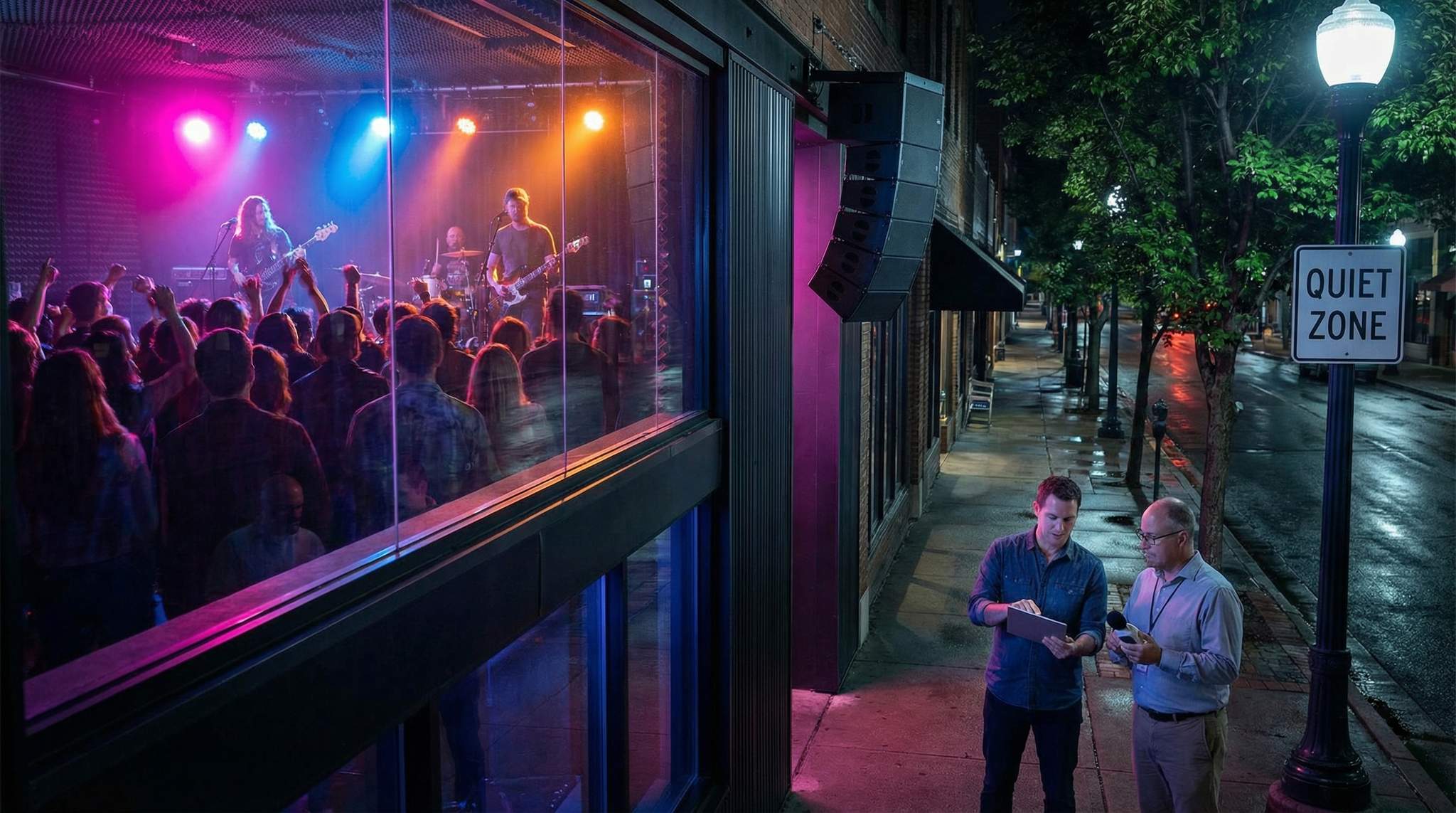
To truly stay on top of noise output, venues in 2026 are embracing real-time sound monitoring systems. These systems use calibrated microphones placed at the venue’s perimeter or in nearby sensitive locations, constantly measuring decibel levels. Managers or sound techs can watch the readings on a dashboard – some systems even send alerts to a smartphone if levels approach a preset threshold. This data-driven approach takes the guesswork out of compliance. If the city says you must stay under 60 dB at the property line, you’ll see in real time whether you’re close to that red line. Many modern mixers and sound boards can integrate with limiters that automatically reduce volume if a certain dB average is exceeded, preventing accidental spikes. Of course, technology isn’t foolproof – a live band can suddenly get louder, or a software setting might be off – so human oversight remains key. A great practice is to do a sound check from the neighbors’ perspective: before a show, go outside and around the building with a decibel meter (even a smartphone app as a rough tool) to identify any weak spots where noise leaks. By monitoring actively and taking corrective action (like lowering certain frequencies or closing a door) before a neighbor calls, you demonstrate professionalism and avoid many complaints. Some venues even share their monitoring data publicly to show transparency, proving to officials and residents that the sound is staying within agreed limits.
| Mitigation Measure | Typical Cost | Noise Reduction Impact | Bonus Benefits |
|---|---|---|---|
| Acoustic wall insulation | Moderate to High | Blocks 8–12 dB through walls | Lowers heating/cooling costs |
| Double-door entry (vestibule) | Moderate (build doors) | Prevents direct sound escape (significant drop in peaks) | Improves crowd flow, security |
| Double-glazed windows | High (retrofit) | Cuts external noise leakage by ~50% | Saves energy, improves interior comfort |
| Bass traps & acoustic panels | Moderate | Absorbs low-frequency rumble & echoes | Improves in-venue sound quality |
| Cardioid subwoofer setup | Low (reconfigure gear) | Cancels bass directed outside (reduces thump by up to 70%) as seen in festival sound management strategies | Tighter bass on the dancefloor |
| Sound limiters & monitors | Moderate (equipment) | Prevents volume from exceeding set point | Protects sound system from overdrive |
Common noise control measures for venues, and their benefits.
Maintenance and Ongoing Improvements
Sound mitigation isn’t a “set and forget” job – it requires maintenance and periodic upgrades. Make a habit of regularly inspecting doors, windows, and walls for any new gaps or wear that could let sound through. Something as simple as a worn-out door sweep or weather stripping can create a noise leak over time. Likewise, check that acoustic panels remain securely mounted (and not sagging off the wall creating gaps). Replace any that get water-damaged or deteriorate. As audio technology evolves, consider upgrading to newer speakers or processors that offer better control. For instance, if you renovated your sound system five years ago, you might now benefit from the latest software that can shape frequency output more precisely to avoid the most troublesome bass frequencies traveling outside. Continuously engage with sound engineers and even acousticians for ideas – an annual sound audit by a professional can reveal new ways to improve. Remember, building a reputation as a quiet (or at least controlled) venue can be a competitive advantage. It shows local authorities that you’re responsible, which could make them more inclined to approve your requests (like a later curfew extension for a special event). It also shows artists that you care about sound quality; many touring acts appreciate venues with excellent acoustics and controlled environments because it means a better show for fans. In short, keeping up with sound mitigation means happier neighbors, happier officials, and happier audiences.
Free Tool: Size Your Festival Site
Zoned capacity planning for arena, campsite, parking and entry lanes — against UK Purple Guide and NFPA density standards. Finds your bottleneck zone.
Smart Scheduling and Operational Tactics
Scheduling Events with Neighbors in Mind
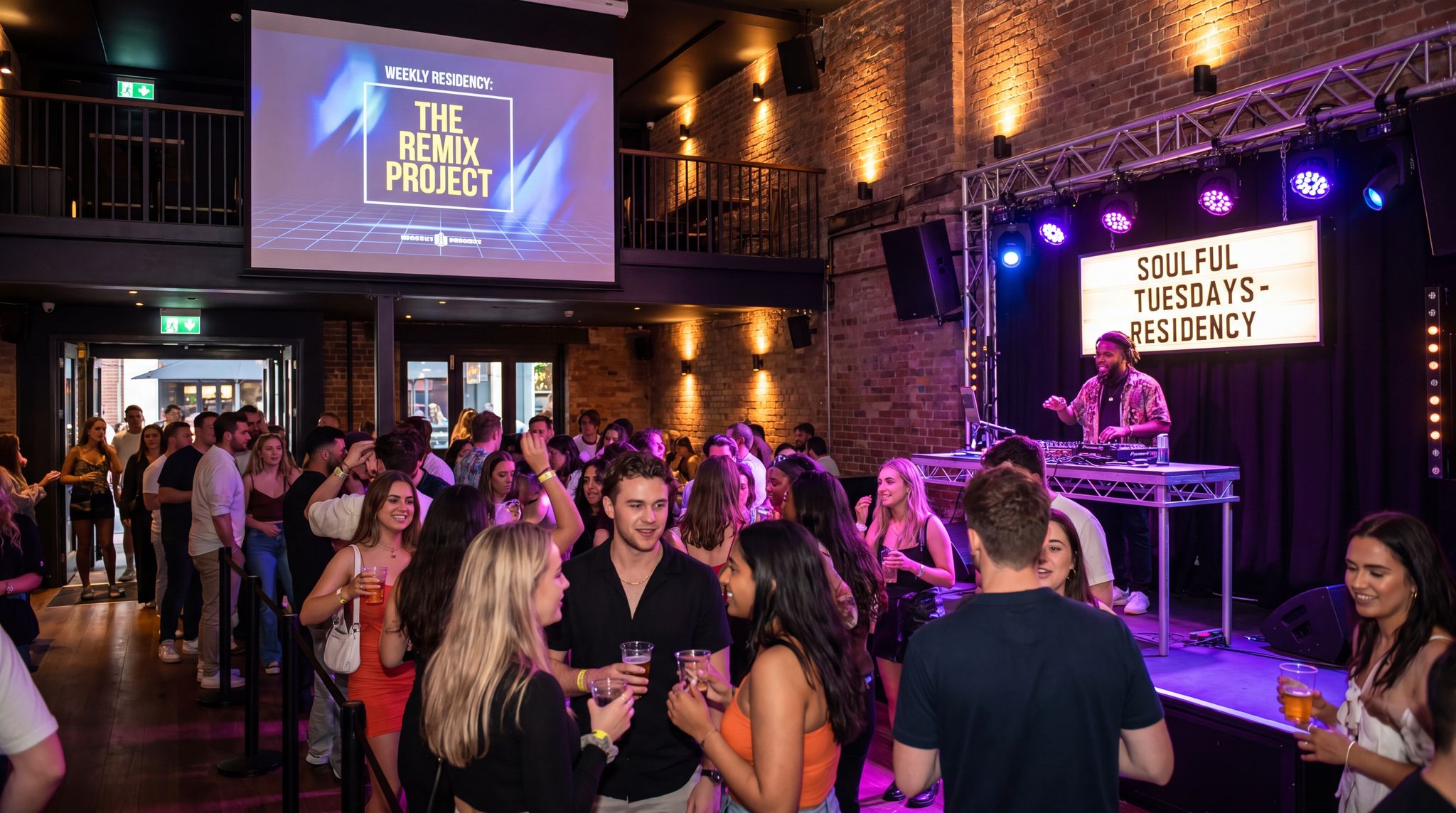
How you schedule your events can significantly reduce neighborhood friction. A key strategy is to align your loudest programming with times of least impact. For example, if you’re planning a heavy metal show or bass-heavy EDM night, aim for weekends or earlier evening slots when neighbors are less likely to be sleeping. Many successful venues end outdoor or open-air music by a set time – say 10 PM – and move the party indoors or use headphones-only “silent disco” approaches after that. If your venue has both an indoor stage and an outdoor courtyard, schedule the outdoor acts to finish first. Some venues deliberately schedule “dark nights” or community nights mid-week – leaving one night with no loud events – to give the neighborhood a breather. Consistency helps too: if residents know that every Tuesday is quiet, or that shows always end by 11 PM on weeknights, they can plan their expectations (and bedtime) accordingly. Also consider the frequency of events. Back-to-back-to-back late shows can compound annoyance. Alternating event nights or providing occasional breaks can actually extend goodwill. For instance, a Los Angeles club that ran three loud DJ nights in a row found relief by turning the Thursday in that stretch into an acoustic showcase night – dramatically lower volume – which satisfied music fans and neighbors alike. Smart scheduling is about finding a sustainable rhythm that balances a full calendar of events with a livable neighborhood.
Smart Scheduling and Operational Tactics
Scheduling Events with Neighbors in Mind
How you schedule your events can significantly reduce neighborhood friction. A key strategy is to align your loudest programming with times of least impact. For example, if you’re planning a heavy metal show or bass-heavy EDM night, aim for weekends or earlier evening slots when neighbors are less likely to be sleeping. Many successful venues end outdoor or open-air music by a set time – say 10 PM – and move the party indoors or use headphones-only “silent disco” approaches after that. If your venue has both an indoor stage and an outdoor courtyard, schedule the outdoor acts to finish first. Some venues deliberately schedule “dark nights” or community nights mid-week – leaving one night with no loud events – to give the neighborhood a breather. Consistency helps too: if residents know that every Tuesday is quiet, or that shows always end by 11 PM on weeknights, they can plan their expectations (and bedtime) accordingly. Also consider the frequency of events. Back-to-back-to-back late shows can compound annoyance. Alternating event nights or providing occasional breaks can actually extend goodwill. For instance, a Los Angeles club that ran three loud DJ nights in a row found relief by turning the Thursday in that stretch into an acoustic showcase night – dramatically lower volume – which satisfied music fans and neighbors alike. Smart scheduling is about finding a sustainable rhythm that balances a full calendar with a livable neighborhood.
Managing Crowd Noise and Egress
Often it’s not just the decibels of music that irritate neighbors – it’s the crowd noise and commotion as hundreds of people come and go. Savvy venue operators treat the end of the show as seriously as the show itself. First, coordinate crowd egress to be smooth and respectful. Bright, friendly signage at exits and in parking areas reminding patrons “Please respect our neighbors – keep voices down as you depart” can be surprisingly effective. It plants a seed in attendees’ minds that they’re in a residential area and need to behave accordingly. Having staff or security team members visible outside at closing time is also key; their presence alone will dissuade lingering and shouting. Some larger arenas even deploy a “goodnight crew” – staff who gently encourage guests to move along promptly and quietly, and assist with directing people to transport. If late-night transit or rideshares are an issue, work with the city on solutions: dedicated pickup zones away from homes, or scheduling extra late buses/trains after big events so crowds aren’t stranded milling around (a tactic many sports stadiums use). One creative approach used by a theater in Australia was to play mellow, calming music over the PA at the end of the night as people exited – a subtle cue that the wild part is over, helping to lower voices and pace. The principle is clear: don’t let all the goodwill from a great show get erased by 15 minutes of chaos on the street. Manage your exits like a pro and neighbors will notice the difference.
Quiet Load-Outs and Late-Night Operations
Behind the scenes, a venue’s operations can generate noise at the worst times. Loading out band equipment at 1:00 AM, dumping glass bottles into dumpsters, or slamming truck doors in the alley can all be louder than the concert was. Plan and train your team for quiet load-outs. If your venue is in a residential area, consider holding trash and bottles overnight (securely) and disposal the next day at a reasonable hour, rather than dragging bins out immediately after close. For touring productions, communicate with road crews about local quiet hours – most will be respectful if informed that “hey, we have neighbors next door, so let’s not test the subwoofers after midnight” or to perhaps delay the teardown of loud stage pieces. Where possible, use rubber wheels on equipment carts and cases (or lay down temporary rubber mats) to dampen the clatter on pavement. If you must load trucks late at night, do it as far from homes as you can and close the truck doors gently. Indoor cleaning can also be an issue – running an industrial vacuum or moving metal chairs at 2 AM can transmit noise through walls and floors. Schedule heavy clean-up for the morning shift if feasible. Many veteran venue managers also stagger staff departure to avoid a large, rowdy staff hangout in the parking lot after work. The bottom line: identify every operational noise source under your control and find a way to minimize it during the wee hours. This level of care goes a long way toward making peace with the light sleepers on your street.
Training Staff in Noise Awareness
Every staff member, from the sound engineer to the security guard, should consider themselves part of your noise management strategy. In staff orientations and pre-event briefings, emphasize the importance of being a “good neighbor” to everyone’s job. Simple habits make a difference: door staff should minimize how long exterior doors stay open when crowds are entering or exiting. Bartenders and bussers can be instructed not to toss glass bottles loudly into bins late at night. Train your sound and lighting techs to be mindful during soundcheck – blasting the system at full tilt at 3 PM on a weekday might test the rig, but it’s also testing your neighbors’ patience. Instead, do lengthy soundchecks closer to doors-open time, or use pink noise and line checks at lower volumes when setting up. If your team goes outside on break, remind them to keep their own voices down on the sidewalk. Some venues assign a specific manager or team member each night to be the “noise monitor” – part of their duty is stepping outside periodically to listen for noise issues and to gently remind any patrons who are being extremely loud in smoking areas, etc., to be considerate. By making noise consciousness part of the venue’s culture, it ceases to be an afterthought and becomes second nature. Experienced operators know that while fancy sound systems and insulation are important, it’s often the human element – a well-trained, attentive staff – that truly keeps the peace night after night.
Proactive Communication with Neighbors
Open Lines of Communication
One hallmark of venues that have great community relationships is easy, open communication channels with neighbors. Don’t make yourself a faceless source of noise; instead, be a friendly, responsive presence. Many venues establish a dedicated community hotline or email that neighbors can use to reach management directly and immediately. The key is that it’s well-publicized and answered promptly. For example, you might distribute a flyer or mailer to all homes within a two-block radius that says, “If you have any concerns about noise or other issues, please call our venue manager on 24-hour phone XXX-XXXX.” When a neighbor calls to complain, respond with empathy and action: thank them for alerting you, tell them you’ll look into it right away, and follow through (like asking the sound engineer to dial back the subwoofers a bit). It’s far better for that call to come to you than to the police or city regulators. Additionally, consider setting up a text message alert system – neighbors opt in to receive a text when the venue is about to host an unusually loud event or if a show might run slightly later than normal. A little heads-up (“Hi neighbors, we have a popular rock band tonight, music will end by 11pm as always – thank you for your understanding!”) can preempt a lot of frustration. By making it easy for the community to reach you and by providing information proactively, you build trust. Neighbors feel respected when they know exactly who to talk to and see that you take their input seriously.
Smooth Entry With Mobile Check-In
Scan tickets and manage entry with our mobile check-in app. Supports photo ID verification, real-time capacity tracking, and multi-gate coordination.
Notifying Neighbors About Events
No one likes to be caught off guard by a wall of sound. That’s why advance notice is a powerful tool for venue-community harmony. A best practice is to keep your immediate neighbors informed of your event schedule – especially the big or atypical events. Independent venues often do this through a monthly email newsletter or a printed calendar delivered to nearby residences. Highlight any shows that might be louder than usual (maybe an EDM artist with a massive sound system) or that have a late curfew extension. If you’re planning fireworks, pyrotechnics, or anything out of the ordinary, definitely warn everyone well ahead! By being transparent about your schedule, you give neighbors a chance to plan around potential disruptions (maybe they won’t schedule their baby’s sleepover on the night of the heavy metal gig). Some venues host an annual open house or community meeting where they present the upcoming season of events, so residents know what’s coming down the pipeline. Another creative approach is offering neighbors a community calendar feed – a private link or Google Calendar that lists your events in real time. If someone knows every Thursday is jazz night and ends by 9pm, but Friday might go till midnight, it sets expectations. Transparency also signals that you have nothing to hide and care about keeping locals in the loop. Neighbors are far more forgiving of noise when they expect it – and when they’ve heard from you first, not only after they start complaining.
Community Meetings and Feedback Loops
Two-way dialogue is crucial. Proactive venue managers don’t just talk to the community – they also listen. Consider organizing regular community meetings or forming a Neighborhood Advisory Committee for your venue. This could be a quarterly meetup where neighbors, local officials, and venue management sit down together. Give residents an open forum to voice concerns and suggestions, and be ready to update them on what you’re doing to address past issues. For example, if several neighbors complained about bass last quarter, you can come to the next meeting showing plans or results of installing new bass traps or adjusting your subwoofer setup – demonstrating follow-through. Some larger venues even invite a few neighbor representatives to do a walk-through of the facility, so they understand the business and see the sound mitigation measures in place. That demystifies the venue and turns “us vs. them” into “we’re in this together.” Also, use these meetings to solicit ideas. You might be surprised: a neighbor could suggest, say, “What if the venue offered a discount on weeknight shows for locals?” – a goodwill gesture you hadn’t thought of that could ease their annoyance at occasional noise. Or they might point out a simple fix like adjusting where your queue line forms to avoid people chatting under bedroom windows. Treat feedback not as an attack but as free consulting from those living the experience. When neighbors feel heard and see their input implemented, they become much more supportive overall.
Handling Complaints Constructively
No matter how hard you try, you will get complaints sometimes. The key is how you handle them. Train yourself and your staff to respond calmly, professionally, and sincerely. If a neighbor is angry about a noise issue, the worst responses are defensiveness or indifference. Instead, apologize for their discomfort (even if you believe you were within your rights – expressing empathy is not an admission of guilt, it’s good manners) and let them know what you will do. For example: “I’m very sorry the music was bothering you. We’re ending the show in 10 minutes, but I’m going to ask the sound engineer to turn down the subwoofers right now.” If the complaint is about something fixable in the moment, act immediately. If it’s a broader issue (“every Saturday your bass is too loud”), explain what steps you plan to take (“We have a new speaker configuration coming next week that should help, can I follow up with you after our next show to see if it’s better?”). Always keep your promises – if you say you’ll follow up, do it. It can also help to maintain a log of complaints: note the date, time, issue, and resolution. This creates accountability for the venue team and also gives you documentation to show authorities if needed – proving that you take each concern seriously and resolve it. Remember, even a previously hostile neighbor can often be won over by a human touch. Venue operators have shared stories of their toughest critics eventually becoming allies once they experienced a polite approach and real fixes. Every complaint is an opportunity to demonstrate your venue’s commitment to being a responsible, responsive member of the community.
Building Goodwill Through Community Initiatives
Sharing the Venue Space with the Community
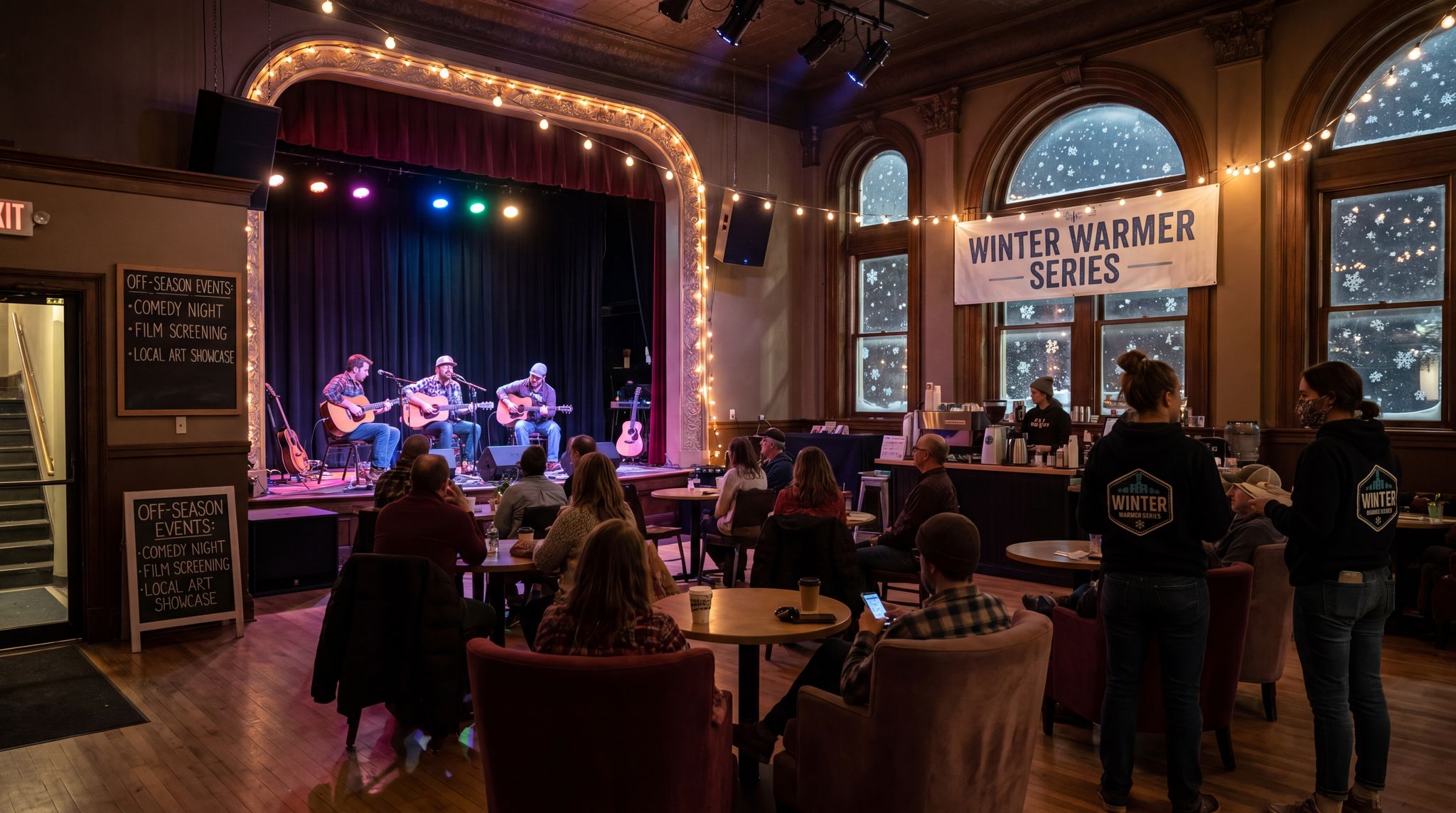
One way to convert neighbors from begrudging tolerators to outright supporters is to invite them in. If residents view your venue as part of their community and something they can enjoy, they’re far less likely to see it as an enemy. Many venues host community events on off-nights or weekends: think local school talent shows on a Sunday afternoon, farmer’s markets in the parking lot, or holiday craft fairs in the lobby. By day, that noisy nightclub can transform into a family-friendly space for the neighborhood. Some performing arts centers offer their stage for local theatre troupe rehearsals or town hall meetings. Even smaller clubs can find creative ways – maybe a monthly “neighbors jam session” where local musicians (including those living nearby) get to use the stage. When you make the venue accessible, you send a message that it’s their venue too. People will be more proud of and protective towards a place where their kid graduated or where they attend community yoga, even if that same place throws loud concerts at night. Open house days are another great idea: invite neighbors for a tour, show off your sound booth, explain your acoustic treatments. Not only is it fun (who doesn’t like a backstage tour?), it educates them on all you’ve done to manage sound. Transparency builds trust. The more the community sees the venue as a multi-use asset and not a fortress of noise, the more likely they are to support you during permit hearings or on social media debates about the venue’s value.
Diversifying your calendar with lower-decibel, high-engagement programming is another excellent strategy. For instance, operators often ask why are local comedy nights important for the comedy scene and their venue’s reputation? Beyond serving as a vital incubator for emerging talent and strengthening the grassroots arts ecosystem, these spoken-word events offer a strategic acoustic break. A comedy showcase draws a seated, attentive crowd with minimal low-frequency noise, proving to the neighborhood that your space is a versatile cultural hub rather than just a late-night party destination.
Proactive operators often take this a step further by directly collaborating with local civic groups. If you are working alongside a staff member of the neighborhood committee, what activities do you suggest organizing to promote harmony among neighbors? From an operator’s perspective, the most effective initiatives are daytime, family-focused events that utilize the venue’s infrastructure without the late-night volume. Hosting a weekend farmer’s market in your parking lot, organizing a neighborhood block party with acoustic local talent, or offering your main hall for a community town hall meeting are excellent strategies. These collaborative activities reframe the venue from a potential nuisance into a vital civic partner.
Supporting Local Causes and Businesses
Communities respond when you show you care about more than just ticket sales. Consider weaving in charitable and local partnerships as part of your venue’s mission. This could be as simple as joining neighborhood clean-up days or sponsoring a local youth sports team. Some venues donate a portion of proceeds from certain shows to local nonprofits – for example, a venue in Toronto held an annual concert where 100% of profits went to the nearest elementary school’s music program, which made nearby families view the venue as a benefactor. Align these initiatives with things neighbors care about. If traffic from your events bothers the community, one idea is to partner with a local transit service to provide free shuttles on show nights – easing congestion and showing you’re willing to invest in solutions beyond your walls. Collaborating with nearby businesses also wins points. Perhaps offer a discount tie-in: patrons who show a ticket stub at the local coffee shop the next morning get 10% off (driving business to locals as a thank-you for hosting your crowd). Or coordinate with restaurants to create pre-show dining deals, so the whole area sees an economic boost from your events. When a venue visibly lifts the local economy and actively participates in community betterment, it earns a reputation as a good neighbor business. That reputation can be a shield against noise complaints; people are more inclined to speak to you directly (and amicably) about issues, rather than escalate, because they see you as a positive force in the neighborhood.
Perks and Consideration for Neighbors
A little special treatment for those living next door can go a long way. Many venues institute a neighbors’ perk program – exclusive benefits for the immediate community. For instance, you might offer a handful of free tickets or VIP passes to residents on the block whenever a big-name artist plays. Some concert halls reserve a couple of house seats that they give to the neighborhood association for each show. If free tickets every time isn’t feasible, even occasional invitations to marquee events as guests can turn critics into fans. Another idea is providing neighbors with sound checks or meet-and-greet opportunities. Imagine inviting a few interested locals to come watch the afternoon soundcheck and meet the band (at a reasonable volume, of course!). That first-name basis and personal connection often translate into more patience when the music is thumping later that evening. Additionally, consider small gestures like holiday cookies or summer barbecues for the neighbors, hosted at the venue. It doesn’t have to be lavish – it’s the thought and effort that count. Importantly, always communicate schedule changes or potential disruptions directly to neighbors first (flyers on their door, personal calls, etc.). If you have to extend a show 30 minutes late one night due to a special encore, let them know in advance and apologize in person the next day with perhaps a small gift card to a local cafe as thanks for understanding. These thoughtful touches humanize the venue-neighbor relationship. Instead of “that noisy club,” you become “our friends at the theater down the street.” And friends tend to work things out amicably.
Being a Good Neighbor Beyond Noise
Remember that noise might be the loudest issue, but it’s not the only one neighbors have with venues. A truly harmonious relationship addresses all the touchpoints of neighborhood impact. This means keeping the sidewalks clean and safe after events – nobody wants to wake up to trash or find vomit in their driveway. Many venue operators implement a post-event perimeter check: staff walk the block to pick up litter, ensure no one is loitering or causing trouble, and quietly disperse any stragglers. It demonstrates respect for the area. Parking is another sore spot – if your events lead to cars clogging residential streets, work on solutions (like arranging overflow parking deals with a nearby lot, encouraging carpooling or rideshares, or having staff direct attendees to appropriate parking zones). Light pollution can even be an issue: make sure your marquee lights or floodlights aren’t beaming into bedroom windows at 2 AM, and dim them down after closing. Also, consider security and nuisance concerns – drunken patrons yelling or vandalizing property will anger neighbors far faster than decibel levels. Coordinate with local police or hire adequate security to keep the peace not just inside the venue but on the surrounding block. By anticipating and mitigating these collateral impacts, you remove additional ammunition from those who might oppose your venue. Instead, neighbors see that you’re not just checking the box on noise control; you’re genuinely invested in the overall quality of life on the street. That holistic goodwill is often what swings community sentiment firmly in your favor.
Partnering with Councils and Authorities
Engaging Officials Early and Often
When it comes to local government and regulatory bodies, make them allies, not adversaries. Start by establishing relationships with key officials before there’s any issue. Introduce yourself to the local councilmember, the head of the city’s nightlife office (if one exists), or the police precinct community liaison. Share your venue’s positive impact – jobs created, cultural value, charity events – so they understand your value to the city. If you’re planning a major change (like a new outdoor stage or an extension of operating hours), engage officials early. Present your noise mitigation plan as part of the proposal, showing you’ve proactively thought about the community. Officials appreciate not being blindsided by resident complaints any more than you do. Some veteran venue managers invite city inspectors or council representatives to do a walk-through of soundproofing upgrades or to attend a test event to personally verify that everything is under control. By doing so, you build credibility and trust. It’s also wise to attend community board or council meetings periodically, especially if topics of noise, nightlife, or development near your venue are on the agenda. Your presence and willingness to speak on solutions – not just your own interests – positions you as a responsible stakeholder. Overall, regular friendly contact with authorities means when you do need to handle a noise issue or request a favor (like a one-time permit for a late show), you’re talking to people who know you and know that you operate in good faith.
Demonstrating Good Faith Compliance
Council members and regulators respond well to data and evidence of responsibility. Always be ready to show your work on noise control. Keep records of any sound measurements you conduct, improvements you’ve made, and community communications you’ve sent. If a neighbor’s complaint does reach a council hearing or a city agency review, you can present logs of what time it came in, how you responded, and how the decibel levels were at that moment, etc. This level of detail demonstrates professionalism. Moreover, consistently meet (or exceed) any conditions placed on your venue’s permit or license. If your license says music off by 11 PM, make sure you’re known as the venue that goes dark at 10:59 PM without fail. If you’ve been asked to install certain acoustic measures as part of an approval, do it promptly and perhaps even do a bit extra. For instance, one UK venue under scrutiny not only met the required dB limit but voluntarily added an acoustic lobby and offered free earplugs to nearby residents – moves which were noted positively by local officials. In some cities, venues and authorities establish a memorandum of understanding (MOU) – an informal agreement on operating practices that isn’t law, but a pledge. Signing onto such an MOU, if available, shows you’re a team player. And when inspectors do drop by (either scheduled or surprise), greet them cooperatively. Walk them through all your running systems (sound limiters, etc.), and address any minor infractions immediately. Being solution-oriented in the eyes of authorities can prevent small issues from escalating into legal problems.
Seeking Win-Win Solutions with Councils
Sometimes, the best way to handle conflict is to transform it into collaboration. If noise is becoming a hot-button issue, partner with your city to find win-win solutions. A shining example comes from San Antonio, Texas, where instead of simply penalizing bars for noise, the city launched a grant program to help venues pay for soundproofing upgrades, as reported by Axios San Antonio. The result: 19 bars got funding (up to $7,500 each) to install better sound insulation, bass traps, and directional speakers, directly reducing noise spillage through subsidized bar noise soundproofing. Venues contributed their own funds too (in fact, one bar doubled the investment to truly solve the issue in response to community concerns), and residents got a quieter environment. That kind of program is a win-win: venues stay in business, neighbors sleep better, and officials get credit for a creative solution. As a venue operator, you can advocate for or initiate similar cooperative ideas. Maybe propose a “quiet zone” task force with city planners to map out how developments and venues can coexist (using concepts like sound barriers or strategic land use). Or work with local arts councils and boards on campaigns highlighting “Music Friendly Community” initiatives – framing live venues as a cultural asset that the whole city should support, with the caveat that the venues will uphold community standards in return. By positioning noise control as a shared responsibility (not just a venue problem), you invite councils to be partners. This can lead to resources like free acoustical consulting from the city, faster permit approvals for your upgrades, or at the very least, a bit more patience as you implement new measures.
Influencing Policy and Protecting Venues
Venue operators have a voice in shaping the regulations that affect them. It’s worth engaging in the bigger picture advocacy for fair noise policies. Many cities and countries are recognizing that vibrant entertainment venues need protection from unreasonable noise complaints – especially when new developments encroach on established clubs. The UK, for instance, has moved toward an “Agent of Change” principle in planning and licensing. Under this approach, developers of new residential buildings near existing venues are required to pay for and install soundproofing in the new construction, following London’s amended noise assessment policy and ensuring agent of change protects music venues, rather than forcing the venue to solve all problems. This came after high-profile cases where iconic venues like London’s Ministry of Sound nearly got shut due to new luxury flats being built next door, a conflict highlighted in discussions on venue protection. As a venue manager, supporting such policies – through industry associations or direct lobbying – is vital. It might mean writing a letter or providing testimony to a council or parliament committee about how noise rules impact your business. Showcasing data helps: “In our city, we’ve had X number of noise complaints but invested $Y in mitigation; we need laws that support our effort by placing responsibility on new developments too.” In some regions, laws now offer greater protection: for example, new UK plans will make developers responsible for soundproofing new apartments near music pubs, according to new government plans for venues, to stop the cycle of venue after venue threatened by noise complaints from new homes. By getting involved in these discussions, you’re not only helping your own venue but the entire live music ecosystem. Officials do listen when industry veterans share real experience and propose constructive solutions. Use your authority as someone who’s seen it all – 30+ years across continents – to advocate for sensible policies that balance community comfort with cultural vibrancy.
Success Stories: Venues Turning Conflict into Harmony
From Complaints to Collaboration: San Antonio’s Soundproofing Grants
Sometimes a conflict can spark a solution that benefits everyone. In San Antonio, rising complaints about loud bars in mixed residential areas had venue owners worried about crackdowns on bar noise soundproofing issues. Instead of a war between nightlife and neighbors, the city facilitated a truce: it created a fund to help venues pay for sound mitigation via city-funded soundproofing grants. Nineteen bars received grants up to $7,500 each to install measures like sound-absorbing panels, bass traps, and directional speaker systems to reduce noise spillage. One bar, Bentley’s, took it to heart – adding $13,000 of its own money to double-layer its walls and ceiling, a move detailed in reports on venue upgrades. The immediate effect was fewer complaints as decibel levels at nearby homes dropped. Equally important, the initiative built goodwill. Bar owners emerged feeling supported rather than punished, and residents saw their concerns addressed through tangible improvements. While a few skeptics in the community questioned if it was enough to determine the program’s impact, the city is monitoring results and considering expanding the program. This case shows that innovation in policy – working with venues via financial incentives – can turn a contentious situation into a cooperative effort. For other cities facing a standoff between nightlife and neighbors, San Antonio offers a model where nobody had to “lose.”
Community Rallies to Save a Beloved Venue
When a venue truly embeds itself in its community, the neighbors will fight for it, not against it. A powerful example comes from Des Moines, Iowa, where Wooly’s – a popular live music venue – ran into trouble with the city over noise ordinance violations. After decibel readings outside exceeded the strict 65 dB limit, a zoning officer moved to revoke the venue’s liquor license, as Wooly’s liquor license was saved. That could have been a death sentence for the business. But instead of piling on, many neighbors and local businesses rallied to Wooly’s defense. The Historic East Village neighborhood association wrote letters highlighting Wooly’s positive role in revitalizing the district despite noise levels exceeding city limits. Fans and residents showed up at the hearing to support the venue. This outpouring of community backing influenced city officials, who opted for a collaborative solution. Wooly’s kept its license after a solution had been reached, and in return the city convened a work group with venue managers and sound experts to review the old noise rules, involving the Village Board of Directors. They’re now exploring updates that consider both residents and music spaces. The takeaway: Wooly’s had spent years building goodwill – through charity events, open communication, and being an economic engine for the area – and it paid off when they needed it most. A neighbor who might have once been a complainant became a character witness. Every venue should ask itself: if I were on the chopping block tomorrow, would my neighbors speak for me? If the answer might be “no,” take steps now to change that story.
Heading Off Problems Before Opening: Palm Tree Club
It’s not only long-established venues that need neighbor relations – new venues should approach with caution and courtesy from day one. The “Palm Tree Club” in North Bay Village (Miami area) learned this the hard way in 2024. Set to replace a beloved old bar/restaurant, it hosted a high-profile VIP launch party during Art Week before its official opening, leading to noise complaints at Palm Tree Club. The result was nearly a dozen noise complaints in one night, prompting immediate noise reducing measures, as bass from the DJ rattled the waterfront community. Not a great first impression. But credit to the operators: they responded swiftly and substantively. After meeting with village officials, Palm Tree Club agreed to remove six subwoofer speakers entirely and to restrict live DJ events to Saturdays ending by 10 PM, before the venue was set to officially open. They publicly committed to being a “respectful neighbor” despite hosting figures such as Leonardo DiCaprio and proved it by changing their setup before their grand opening. This quick action turned down the temperature of what could have become a hostile situation. Some community members admitted that once the adjustments were made, they were satisfied and even curious to check out the venue when it opened, following the removal of subwoofers. The lesson for new venues: start with an abundance of caution and communication. Do a soft sound test and ask a few neighbors if it’s okay. Don’t assume you can launch full-throttle and deal with complaints later. First impressions stick – but as Palm Tree Club shows, even a rocky start can be redeemed with genuine, immediate fixes and humble outreach.
Planning and Policy Triumph: The Agent of Change in London
London’s crowded urban landscape has long seen clashes between nightlife and new neighbors. A famous case was Ministry of Sound, the iconic nightclub, which found itself threatened when a developer planned apartments next door; residents of the yet-to-be-built flats were anticipated to levy noise complaints that could shut the club, a scenario where agent of change protects venues. The club fought back in a drawn-out legal battle and eventually won a compromise: the developers had to include serious soundproofing in the new building, and buyers were informed of the live music venue nearby, proving that noise complaints can be difficult and ensuring flats have to be soundproofed. This saga helped catalyze a broader policy shift. By 2018, the UK’s national planning framework adopted the Agent of Change principle – meaning the newcomer (be it a building or business) is responsible for mitigating noise, not the pre-existing venue, as London amends noise assessment policy placing the onus on performers rather than the venue. Fast-forward to 2025, and the government proposed strengthening these protections under licensing law too, offering music venues statutory protection. One high-profile noise dispute at Manchester’s Night & Day Cafe (where an apartment dweller’s complaint led to a nighttime noise restriction) underscored the need for such measures, following complaints about Night & Day cafe in Manchester. With Agent of Change, if you open a music pub and five years later a residential block goes up next door, the developer should have built it with acoustic glass and thick walls – and the residents can’t just demand your pub go silent. This policy triumph is a success story for venues collectively: it shows the power of advocacy and the importance of framing venues as vital cultural institutions worth preserving. For individual operators, it’s a reminder to stay plugged into local and national conversations. When you have a fair regulatory playing field, it’s easier to work in harmony with neighbors because the expectations and responsibilities are clear from the start.
Frequently Asked Questions About Venue-Community Relations
How should operators respond to an organized group of neighbors against the venue?
When facing a coordinated group of neighbors against the venue, operators should prioritize immediate, transparent communication. Avoid defensive posturing; instead, invite the leaders of the opposition to a dedicated community meeting. Present concrete data, outline your sound mitigation investments, and establish a direct feedback loop to show that their concerns are being taken seriously before the dispute escalates to local licensing authorities.
Why are local comedy nights important for the comedy scene and venue community relations?
Local comedy nights are important for the comedy scene because they provide an essential proving ground for new talent and foster a strong, grassroots arts culture. For venue operators, hosting these events serves a dual purpose: it builds immense goodwill by supporting local arts, and it offers a low-impact, quiet programming night that gives nearby residents a break from heavy bass and loud music.
Is it appropriate to hold a concert in a residential area at night?
Yes, it can be appropriate, provided the venue operator strictly adheres to local zoning laws, enforces hard curfews (typically 10:00 PM), and utilizes advanced sound mitigation techniques like cardioid subwoofer arrays. Success in residential zones relies entirely on proactive community engagement, transparent communication, and treating neighbors as stakeholders rather than obstacles.
Do venues need a special noise permit for private events or large parties?
Depending on local ordinances, hosting a private buyout or a large-scale private gathering may require a specific temporary event permit or noise variance, especially if the event extends beyond standard operating hours or utilizes outdoor spaces. Operators should always verify if their existing entertainment license covers private rentals or if a separate noise permit is legally required to avoid fines.