Long badge pickup lines and sluggish registration processes can dampen even the most exciting fan convention. In 2026, forward-thinking organizers are leveraging cutting-edge tech and refined practices to eliminate bottlenecks at the door. From advanced online pre-registration and RFID-enabled badges to on-site QR code check-ins and better crowd flow design, these innovations dramatically speed up entry and elevate the attendee experience. This comprehensive guide explores how to modernize your registration system – with real examples of conventions that banished lines – and provides actionable steps for events of all sizes to ensure a smooth, “no more lines” check-in.
The High Stakes of a Fast Check-In
First Impressions and Fan Frustrations
The registration area is a fan’s first in-person interaction with your event, and a long wait can sour the mood from the start. Attendees who spend an hour inching through a snaking queue are likely to walk in grumpy – or worse, venting on social media about the poor organization. Experienced convention runners know that first impressions are everything: a speedy, hassle-free check-in instantly puts attendees at ease and builds excitement, a concept central to fast-tracking event check-in strategies for 2026. Conversely, facing a sluggish line at the door can tarnish your event’s reputation before it even begins. In one extreme example, a major festival’s entry system failure led to gates opening two hours late – frustrated crowds nearly stormed the venue in anger, a scenario analyzed in the event tech implementation playbook. The lesson is clear: efficient check-in isn’t just a nicety, it’s mission-critical for fan goodwill and safety.
Lost Time Is Lost Opportunity
Every minute a fan spends stuck outside is a minute they aren’t spending money or enjoying content inside. Vendors and artists in your exhibit hall lose sales when thousands of attendees are delayed at the door. Sponsors miss eyeballs on their banners and booths. Panel rooms and theaters might start out half-empty because people are tied up at registration. One study even found that attendees spend twice as much time (and money) inside events that minimize entry waits compared to events with slow check-ins, as RFID delivers gaming access benefits. When New York Comic Con introduced RFID badges and faster check-ins, fans could attend twice as many panels on average because they weren’t wasting hours in line, proving that efficient entry maximizes attendee engagement. In short, long lines cut directly into your event’s engagement and revenue. A smooth entry not only delights fans – it also means more bodies in panels, more shoppers in the dealer hall, and more buzz throughout the venue.
2026 Attendees Expect Speed
Fan expectations have evolved. Over the past few years, systems like mobile ticketing, contactless payments, and curbside pickup in retail have trained audiences to expect instant service. By 2026, people are used to scanning a QR code to board a plane or tapping a phone to pay – they want the same convenience at conventions. If Comic-Con or PAX can let tens of thousands through the gates quickly, attendees will wonder why a smaller con can’t do the same. In fact, according to industry research, 77% of event-goers now rely on digital tools like e-tickets and real-time signage to streamline their journey, highlighting the need for smart wayfinding and digital signage solutions. The message: a slow, manual check-in feels archaic to modern fans. Seasoned organizers stress that registration speed is now a core part of the attendee experience, not an afterthought. The good news is that technology has caught up to these expectations – and even mid-sized fan events can afford the tools to make long lines a thing of the past.
Case in Point: Anime NYC’s Wake-Up Call
Real-world convention case studies underscore what’s at stake. Anime NYC 2021 in New York welcomed ~53,000 fans – about 7,000 more than the previous event – but underestimated how many would arrive early on Day 1. The result was chaotic: Friday morning entry lines stretched for hours, frustrating attendees and delaying programming, as detailed in Anime NYC’s post-show analysis. The organizers owned up to the misstep and sprang into action. Overnight, they re-engineered the entry plan by adding additional entrances, expanding queue space, and deploying more staff. The next day, the difference was dramatic: what had taken multiple hours on Friday was down to under 30 minutes on Saturday and Sunday, thanks to rapid operational adjustments. This turnaround shows that even large fan events can squash lines with the right adjustments. It also illustrates a key point – continually monitor your entry flow and be ready to adapt. If Day 1 doesn’t go perfectly, use that data to improve Day 2. Attendees will notice and appreciate the fix.
Encouraging Early and Online Registration
Incentives to Pre-Register vs. On-Site
The best way to prevent on-site bottlenecks is to minimize how many people need on-site registration at all. That means getting fans to sign up and pay before they ever arrive. Savvy conventions in 2026 use incentives and messaging to drive early registration. Tiered pricing is one classic tactic: offer discounted “early bird” tickets or exclusive perks (like a bonus swag item or access to a VIP event) for those who register by a certain date. According to a 2023 survey, 83% of shows offer early-bird discounts to nudge attendees to buy sooner, a statistic from TSNN’s survey on attendee registration trends. While fans increasingly wait longer to commit (many events report attendees registering just 1–2 weeks out), you can counter this trend with creative rewards. For example, some cons now give out digital badges or loyalty points for early sign-ups that attendees can redeem on-site for merch. The key is to communicate the value of registering now rather than later.
Ready to Sell Tickets?
Create professional event pages with built-in payment processing, marketing tools, and real-time analytics.
Communicate the Perks of Advance Sign-Up
Don’t assume attendees know why pre-registering is better – spell it out for them. Effective pre-event communications should hammer home messages like “Skip the lines – register online”. Highlight convenience: if your event uses e-tickets or mailed badges, explain that advance registrants will breeze through a dedicated fast lane while on-site buyers might wait. Emphasize peace of mind: fans with tickets in hand won’t risk a sell-out or waste time filling forms on-site. Organizers also appeal to the fan’s fear of missing out: “Popular panels can fill up – lock in your badge now to secure your spot.” Multiple channels should be used for these reminders – website banners, email campaigns, social media countdowns, etc. One proven approach is sending “why pre-register” snippets in confirmation emails or newsletters. For instance, remind fans that digital tickets on their phone mean no printing and a quick scan at entry (no fumbling with papers), a strategy for boosting attendee adoption of event tech. By educating attendees on the benefits of being proactive, you’ll see more of them take that step early.
Data Collection Before the Event
Another advantage of online pre-registration is data accuracy. When attendees enter their own info online, names and emails are more likely to be correct (versus a rushed spelling at a kiosk). You can also capture additional details ahead of time that speed up on-site processing. Many 2026 registration systems let attendees upload a photo during online signup – useful if you plan to print their picture on a badge or need it for facial recognition check-in. You can have fans sign liability waivers or cosplay weapon policy forms electronically in advance, rather than signing paper on-site. If your event has age restrictions or needs to verify ID, some platforms enable age verification during purchase (e.g. scanning an ID via the attendee’s webcam or a third-party age check service). By handling these admin steps pre-event, you remove friction on-site. When an attendee who has pre-registered arrives, staff aren’t asking for lots of info – they’re just scanning a code and handing over a badge. Less form-filling on-site = faster lines. It also means fewer errors; if something is wrong, attendees can correct it in their online profile before they arrive.
Plan for Last-Minute and On-Site Signups
No matter how strongly you push pre-registration, some percentage of attendees will still register last-minute or even walk up without a ticket. In fact, some trade show organizers saw on-site registrations jump 71% in 2023 compared to the prior year, reflecting insights on last-minute registration surges as attendees grew more comfortable deciding late. The lesson is to be prepared with a fast process for on-site sales and badge pickups. Set up a dedicated “On-Site Registration” area separate from pre-registration pickup lines, so day-of purchasers don’t clog the main flow. Equip it with enough point-of-sale terminals or devices to handle peak demand – if hundreds might buy badges on the morning of Day 1, don’t just staff one lonely cashier. Also consider a hybrid approach: allow online purchase right up until the event and then just have those people scan their receipt at the door. Many cons have moved to “credit/debit card or mobile pay only” for walk-up sales to avoid the extra time of handling cash (and to remove cash security issues). Finally, if you anticipate big walk-up crowds, treat it as its own mini-event: put up clear signage for on-site registration, have staff or volunteers guiding that queue, and maybe even provide some queue entertainment or information (like program guides to read) so those folks aren’t stewing in boredom. With good planning, even last-minute attendees can be processed swiftly without dragging down your overall entry speed.
Expediting Badge Distribution Before Day One
Mailing Badges and Wristbands in Advance
One simple but game-changing tactic to eliminate on-site lines is to get badges into attendees’ hands before they arrive. Major pop culture conventions have embraced this: mailing RFID badges or wristbands to attendees a few weeks in advance has become common for events like San Diego Comic-Con, New York Comic Con, and PAX. By doing so, you remove the entire badge pick-up process on-site – attendees already have their credential and can head straight to the entrance scan. There is a cost to printing and mailing badges (often passed on as a small shipping fee), but the payoff in shorter lines is enormous. ReedPOP, which runs NYCC, began mailing badges years ago and linked each badge to a fan’s account online, effectively identifying ticket holders via RFID. This not only stopped counterfeit badge use; it meant on Day 1, tens of thousands of fans could skip the registration tent entirely and just tap their badges to enter. If mailing badges isn’t feasible for all attendees (for example, international fans or late ticket buyers), consider a hybrid: mail to domestic attendees who register before a certain date, and have will-call pickup for others. Communicate clearly on deadlines, and use secure shipping methods with tracking to reduce lost badges. Some events also let attendees choose at purchase: pay a few dollars extra to get your badge shipped, or opt to pick up on-site for free. Many fans gladly pay for the convenience. In sum, mailing out credentials moves the “line” from the venue to the attendee’s mailbox – where there’s no wait at all.
Go Cashless With RFID Technology
Enable contactless payments, faster entry, and real-time spending analytics with RFID wristbands and NFC-enabled ticketing for your events.
Early Pickup and Extended Hours
If sending badges by mail isn’t practical, the next best option is offering ample opportunities to pick them up before the main rush. Veteran con organizers recommend opening your registration desk early – often the evening before Day 1, or the afternoon prior – so locals and early-arrivers can get their badges ahead of time. Some large conventions partner with local stores or hotels for off-site pickup: for example, an anime con might set up a badge pickup station at a downtown comic shop the evening before opening day. By decentralizing distribution, you prevent a single overwhelming queue at the convention center. Extended hours help too. Instead of restricting badge pickup to a tight window right before doors open, keep registration open late into the evening and start extra early on the first morning. Yes, this means staffing extra shifts (often using volunteers eager to help), but it balances the load. The goal is to “drain” as many badge pickups as possible before the majority of attendees arrive. That way, when the big day and time comes, far fewer people still need to visit the registration booth.
Smart Badge & Wristband Design
How you design and organize the physical badges or wristbands can also speed up distribution. For instance, color-coding different badge types (e.g. a blue stripe for VIPs, red for full-weekend passes, green for single-day, etc.) makes it quicker for staff to sort and hand out the right one. If you pre-print badges with attendee names, consider printing them alphabetically by last name or grouping by order number – whatever aligns with how lines will be managed. Some cons opt not to personalize badges with names at all, to simplify pickup (the badge is generic and just encoded to that attendee’s account). If using RFID wristbands, an emerging best practice is to ship them “inactive” and require attendees to activate them online or on an app before the event. This way, if someone’s wristband is lost or stolen in transit, it can’t be used by someone else. It also shaves time at entry because activation (linking the wristband’s chip ID to the attendee) is already done – the fan can simply tap and enter. Be sure to include very clear instructions in the mailer or email on how to activate the badge/wristband, and have a contingency on-site (like a help desk) for anyone who didn’t do it. The smoother the credential itself, the faster the handout or scanning process will be.
Grow Your Events
Leverage referral marketing, social sharing incentives, and audience insights to sell more tickets.
To further reduce day-of-show friction, require attendees to link their credentials to their profiles beforehand. A prime example of this is the NYCC activate badge process, where New York Comic Con mandates that fans register their physical RFID badges online before arriving. This ensures that every tap at the gate is tied to a verified user. Similarly, professional trade shows are refining how they handle credentials; for instance, optimizing PSTM registration badges and on-site pickup involves setting up dedicated, self-serve scanning stations specifically for pre-verified professionals, ensuring that even high-security on-site pickups remain fluid and bottleneck-free.
Best Practices for Distributing Credentials
When organizers ask what are the best practices for distributing badges at events, the answer always centers on decentralization and pre-verification. Rather than forcing all attendees to a single choke point on opening morning, top-tier operators utilize satellite pickup locations, VIP-only mailers, and staggered distribution windows. Implementing these streamline conference check-in and badge printing best practices ensures that your front-of-house staff isn’t overwhelmed during peak arrival times.
Another highly effective strategy for credential distribution involves dynamic allocation and tiered pickup schedules. By analyzing historical arrival data, organizers can forecast peak rush hours and incentivize off-peak badge collection. For example, offering exclusive early-access merchandise or a dedicated preview hour for attendees who pick up their passes a day early can dramatically flatten the arrival curve. Furthermore, partnering with local businesses or host hotels to establish satellite distribution hubs allows fans to secure their credentials before ever stepping foot on the convention center property. These advanced distribution methods not only alleviate pressure on your main registration desk but also integrate seamlessly with the latest event tech trends for 2025 and 2026 in check-in and badge scanning, ensuring a frictionless start to the attendee journey.
VIP, Crew, and Special Groups
Don’t forget that different attendee categories may benefit from different registration treatments. VIP ticket holders, who pay premium for perks, absolutely expect minimal waits – so consider a dedicated VIP check-in desk or a separate fast-track line. The same goes for guests with disabilities; an accessible registration line or assistance point is important to have, which is part of elevating venue accessibility and inclusion. Many events also handle exhibitors, artists, and panelist check-ins separately, typically during setup hours a day prior or via a special desk. This prevents industry folks or guest speakers from waiting among general attendees on show day. Volunteers and staff, too, need an efficient check-in (often they get schedule packets or uniforms). Ideally, distribute crew badges at an orientation session before the event, or have a separate crew check-in area if they’re arriving the same day. By segmenting these groups, you avoid a situation where, say, a popular guest speaker is stuck waiting in the public line or your dealers miss half the opening hour because they were queuing for badges. It’s all about routing each attendee to the right entry path to maximize efficiency.
Smooth Entry With Mobile Check-In
Scan tickets and manage entry with our mobile check-in app. Supports photo ID verification, real-time capacity tracking, and multi-gate coordination.
Modern Tech for On-Site Check-In
QR Codes and Mobile Ticket Scanning
The ubiquity of smartphones has made QR code tickets a standard for conventions and expos. In 2026, virtually all ticketing systems will issue a digital ticket (often a QR or barcode) that attendees either print at home or simply display on their phone screen. Scanning these codes at the door is far faster than checking ID against a paper list or looking up names in a binder. A single trained staffer with a good handheld scanner or scanning app can process 300+ people per hour by just beep-beep-beeping codes – a vast improvement over manual check-in, as noted in reports on self-service kiosks and instant badge printing and drastically reducing staff workload. It’s crucial to optimize this process: use high-quality scanners or mobile devices with reliable QR reading (consumer smartphones or dedicated scanners) and test them in the actual lighting conditions of your venue. Bright sunlight, for example, can make it hard to scan a phone screen, so invest in scanners that work in daylight or provide shade for outdoor checkpoints, effectively ruggedizing equipment for outdoor deployment. Additionally, make sure your ticketing system’s scanner app can handle being offline (or have local backup lists) – you don’t want the line to halt if Wi-Fi drops. With robust scanning in place, attendees can present their emailed QR code (or an app-based ticket) and get through the gate in seconds. Many conventions now even accept codes straight from mobile wallets (Apple Wallet, Google Wallet), which tend to load faster and work offline. The bottom line: scanning beats typing, every time. If you’re still checking people in by manually searching names, upgrading to QR code ticketing should be your top priority.
Self-Service Kiosks for Check-In
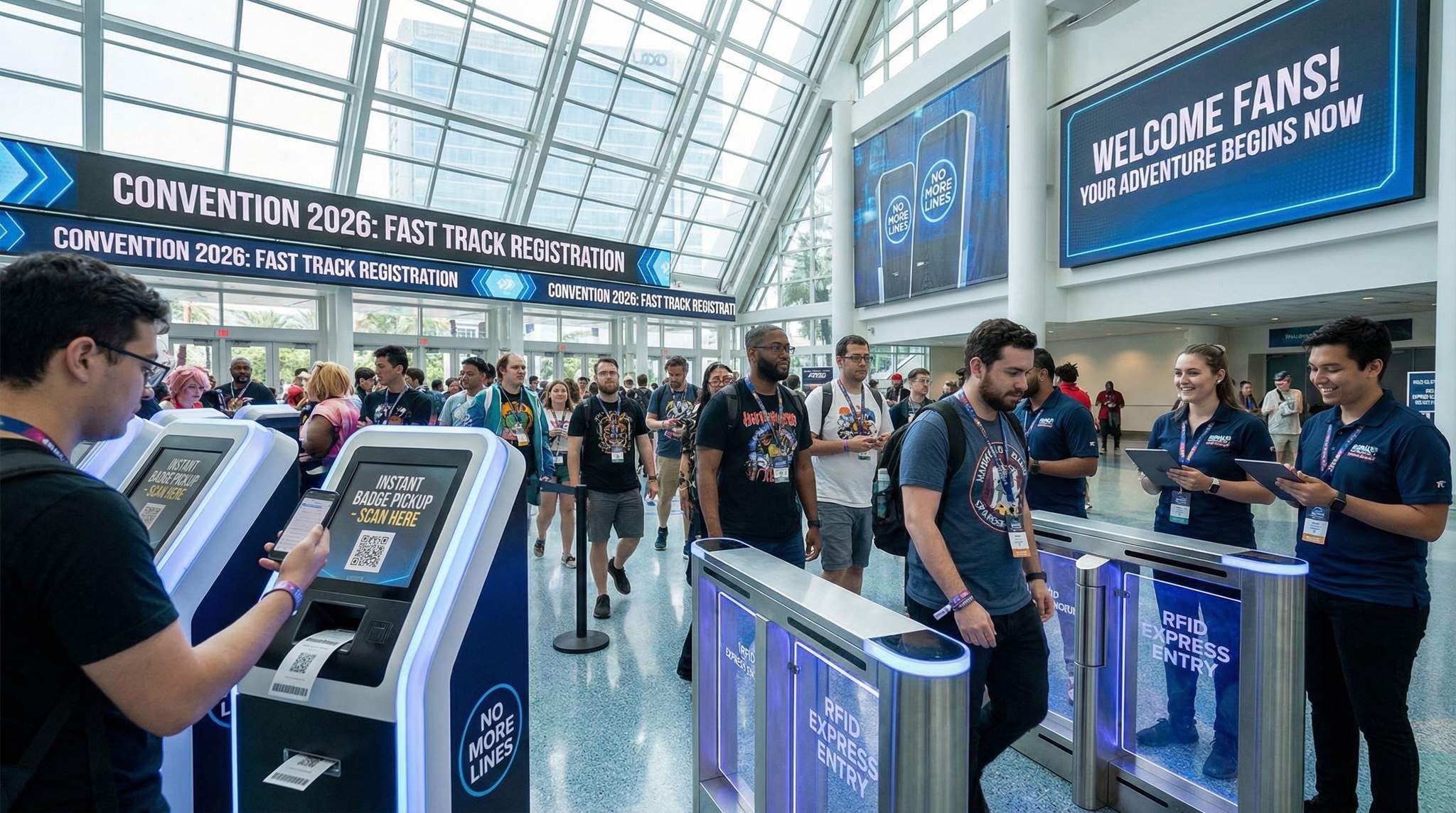
Building on QR code scanning, some events go a step further by deploying self-service check-in kiosks. Much like an airport boarding pass kiosk or a self-checkout at the grocery store, these are stations where attendees can scan their own ticket and print their badge without direct staff assistance. In 2026, this concept has gained serious traction at large-scale events. Major fan conventions and trade shows have replaced dozens of staffed check-in desks with unattended scanning pedestals and kiosks – and the results are remarkable. Under good conditions, a single self-scan kiosk can validate 20–30 attendees per minute (each person taking only a couple of seconds to scan), effectively validating attendees per minute. That throughput far outpaces a human staffer and means fewer staff are needed overall. One convention that piloted kiosks found that 10 staff could handle the work of 30, by overseeing multiple kiosks rather than manually checking every person, a strategy involving monitoring multiple kiosks simultaneously which is fast becoming the standard. Self-service also empowers tech-savvy attendees to breeze through at their own pace – many guests enjoy the quick “scan and go” process. To implement kiosks smoothly, place plenty of them at all major entry points and clearly signpost how to use them. Ideally, have a couple of “kiosk helpers” – staff or volunteers roaming near the stations to assist anyone confused or to troubleshoot a scanner. As a backup, maintain one small manned desk for special cases (attendees who lost their QR code, etc.), so no one gets stuck. With these design considerations, self-service kiosks can drastically shrink queues and even add a fun, futuristic vibe to your event’s welcome experience.
Instant Badge Printing On-Demand
One reason registration lines used to crawl was the old method of distributing pre-printed badges alphabetically – staff would shuffle through boxes or envelopes to find each person’s name badge. If anything was missorted or if names weren’t in perfect order, delays ensued. On-demand badge printing obliterates that inefficiency by printing the attendee’s badge on the spot when they check in. Many conferences and fan events have adopted this approach: the attendee scans their confirmation QR code at a kiosk or check-in tablet, and within seconds a printer spits out a freshly printed badge with their name and info. Now the attendee has their badge and is ready to go. This method means no more “rummaging through badge trays” – staff and volunteers spend their energy greeting attendees, not searching for materials, avoiding the hassle of rummaging through badge trays. When properly integrated, on-demand printing only adds a few seconds to each check-in transaction, often less time than finding a pre-stuffed badge envelope would take, a comparison highlighted in studies on check-in efficiency. The payoffs are significant: you cut down wait times, ensure every badge is accurate (since it’s printing from the latest registration data), and wow attendees with a personalized check-in. Implementing on-demand printing does require investing in the right hardware – typically fast thermal printers that can produce a badge in 2–5 seconds, utilizing fast thermal printers capable of helping to churn out tens of thousands of badges. You’ll also need to plan a layout for printer stations, whether attached to kiosks or at staff-manned desks. Some events set up a “print island” where several printers are networked to the check-in system, allowing multiple badges to churn out simultaneously. To illustrate the impact: a 2025 B2B expo with ~5,000 attendees switched to self-service kiosks + instant badge printing, and saw their opening morning lines vanish – what used to be hour-long waits turned into an average check-in time of under 5 minutes for even the peak rush, after organizers invested in a new registration system. When attendees spend seconds, not minutes, getting credentials, you’ve effectively removed the registration “jam” that historically plagues day-one conventions.
For B2B expos and professional gatherings, organizers are constantly evaluating the best ways to streamline conference check-in and badge printing in 2025 and 2026. Moving forward, the standard has shifted toward fully integrated tech stacks where a single QR scan instantly produces a durable, double-sided credential. This eliminates the need for plastic badge holders and reduces waste, aligning perfectly with the latest event tech trends for 2025 and 2026 in check-in and badge scanning.
Adopting these streamline conference check-in and badge printing best practices requires more than just buying fast hardware. It demands a holistic approach where your ticketing software, CRM, and on-site printers communicate flawlessly. By training staff on these optimized workflows, organizers can maintain high throughput even when unexpected walk-ups or credential changes occur.
Real-Time Integration and Validation
All the fancy front-end technology in the world won’t help if your backend systems aren’t in sync. A crucial aspect of modern registration is tight integration between ticketing, verification, and badge printing systems, a necessity for avoiding pitfalls in event tech implementation and keeping everyone connected on-site. What does this mean in practice? When an attendee scans their code at the door, the system should instantly check it against the database to verify that the ticket is valid, not already used, and perhaps note that the person has entered. If you’re using multiple platforms (say one for ticket sales and another for on-site scanning/badges), make sure they talk to each other via API or data import so that you’re not stuck fiddling with spreadsheets on site. Ideally, use a unified platform or an ecosystem of tools proven to integrate. For example, a well-connected system could automatically push a VIP attendee’s data to the badge printing software so that when they scan, the printer already knows to print a special VIP badge. Integration also supports monitoring: organizers can see live stats like how many people have checked in so far, which entrances are busiest, etc. One festival that integrated self-service gates with their ticket database was able to reduce entry staffing by nearly 70% while still keeping full real-time visibility of entries, a benefit of building a connected event tech ecosystem. In 2026, seamless integration is a must for any large event. If this sounds daunting for a small con – fear not. Many modern event platforms are all-in-one or come with integration support out of the box. For instance, some providers (like Ticket Fairy’s convention ticketing system) can implement a full registration and badge solution in as fast as 2–4 weeks, offering pop culture convention ticketing solutions, complete with ticketing, access control, and on-site hardware setup. The bottom line: plan your tech stack early, ensure everything connects, and do a dry run before go-time.
Turn Fans Into Your Marketing Team
Ticket Fairy's built-in referral rewards system incentivizes attendees to share your event, delivering 15-25% sales boosts and 30x ROI vs paid ads.
Future-Proofing Your Entry Operations
As organizers look to future-proof their operations, the most impactful event tech trends emerging for 2025 and 2026 revolve around hyper-personalization, sustainability, and deeper CRM synchronization during the check-in and badge scanning process. Beyond simply getting attendees through the door, modern scanning ecosystems are evolving to trigger personalized welcome messages on digital signage or instantly notify VIP hosts upon a high-tier guest’s arrival. Additionally, the shift toward eco-friendly credentials—such as biodegradable RFID wristbands and fully digital wallet passes—is becoming a standard expectation among environmentally conscious fanbases. By adopting these forward-looking access control technologies, convention producers can reduce their environmental footprint while delivering a frictionless, premium entry experience that scales effortlessly.
RFID Badges and Tap-and-Go Entry
How RFID Speeds Up Entry
RFID (Radio Frequency Identification) has become a game-changer for large events, and is now breaking into fan conventions of all sizes. An RFID badge or wristband contains a tiny chip that can be read by a scanner via radio waves – no line-of-sight scanning needed. In plain terms, an attendee wearing an RFID wristband can just tap or wave their wrist near a reader and be instantly verified. A ticket scan that might take 5–10 seconds of aligning a barcode can be cut to under 1 second with RFID, a speed demonstrated at festivals like Coachella and Lollapalooza. Multiply that across thousands of attendees and it’s transformative: major music festivals like Coachella and Lollapalooza pioneered RFID years ago and demonstrated that per-minute throughput jumped several-fold compared to old paper tickets, where inspecting a paper ticket was the norm. One festival reported that after switching from paper tickets to RFID, they achieved up to a 70% increase in entry throughput on peak crowds. The speed comes from both the quick tap-and-go and the reliability – RFID scans aren’t affected by sun glare on a screen or a crumpled paper ticket. Each chip is uniquely coded and pre-authorized in the system, so it’s a simple binary: the gate lights green if valid or red if not. There’s no typing, no double-checking IDs (if you’ve linked the wristband to the person’s name in advance), and virtually no jams. When tens of thousands of people need to get through the doors at roughly the same time (think morning of Day 1 of a Comic Con), RFID is about as fast as it gets for individual verifications.
Implementing RFID at Your Convention
Just a few years ago, RFID access control was seen as cutting-edge and mainly used at huge music festivals. By 2026, the technology has matured and become more accessible even to mid-sized conventions – but it does require planning. To roll out RFID, you need three main components: the RFID credentials (badges or wristbands), the reader hardware, and the software integration. First, source your RFID badges or wristbands well in advance. Many cons choose wristbands for multi-day events since attendees keep them on all weekend – they can be cloth wristbands with an embedded chip, or plastic cards that hang on a lanyard. Work with a reputable RFID supplier and decide between one-time use bands vs. reusable cards. Each chip has a unique ID that you’ll link to each attendee’s registration record (often your ticketing platform will have a tool for this). This linking can happen before mailing out – e.g. each wristband’s ID is pre-assigned in the database to a person – or on-site during pickup. Next, set up the scanner hardware at entrances. RFID readers come as handheld devices, fixed pedestals, or turnstile units. A handheld gives flexibility for staff to roam and scan bands in line, whereas a pedestal or turnstile allows truly hands-free entry (attendees just walk past a sensor gate). Test the read range and placement – typically the attendee will tap the badge on a marked spot, or for more advanced systems just walk between sensor panels. Make sure your software is syncing scans in real time to prevent duplicate entrances; offline capability is recommended too (readers can have the list of valid IDs loaded so they work even if Wi-Fi drops, using handheld scanners and offline capabilities). Finally, train your staff and attendees. People might be new to RFID at cons, so have clear signage like “Tap your badge here” at gate readers. Staff should encourage attendees to secure their wristband and not remove it, to prevent hand-offs. Some events attach the band so it can’t be loosened and swapped. With all pieces in place, RFID can be deployed with great success – many events that switch to RFID “never look back” because of the speed, security, and data benefits it provides, including richer data on entry times.
When evaluating the best RFID and NFC event badge systems for 2025 and 2026, organizers should prioritize platforms that offer offline scanning capabilities and seamless API integrations with their primary ticketing provider. The top solutions on the market not only process tap-and-go entries in milliseconds but also provide robust backend analytics, allowing promoters to monitor gate flow and adjust staffing dynamically.
Furthermore, the most effective access control ecosystems now combine these tap-and-go wearables with automated CRM syncing. This means that when a VIP or key stakeholder taps their NFC credential, the system instantly alerts designated staff while simultaneously logging the interaction for post-event follow-up. For convention producers, investing in top-tier radio frequency and near-field communication setups is no longer just about gate speed—it’s about building a comprehensive, data-rich attendee profile from the moment they arrive.
Multi-Zone Access and Re-Entry Benefits
One powerful feature of RFID credentials is how easily they control complex access permissions. Unlike a basic paper badge which just shows color coding for, say, VIP or General, an RFID badge’s chip can be programmed with multiple access flags. This means the same credential can grant entry to the main show floor, unlock a VIP lounge door, and be scanned to check into a panel room or after-hours event if needed – all in one. Conventions use this to their advantage: if you have a premium tier ticket that includes an exclusive meet-and-greet, your RFID badge can have that access encoded so the security at that room simply scans it and sees “Allowed” or “Denied.” It eliminates the need for separate physical passes or stickers for every little access type. And it’s fast – the system checks the permission in a split second. Similarly, RFID makes managing re-entry a breeze. Attendees can exit and re-enter without hassle; the system will log them out and back in, preventing a single badge from being reused fraudulently by someone else (unlike hand stamps or paper tickets which are easy to circumvent), enhancing security and anti-counterfeit measures. Many comic cons and expos love this because attendees often hop in and out for lunch or to drop off purchases in their car – with RFID they just tap each time and you have a reliable count of who’s on site. Overall, RFID’s flexible programming means you can say goodbye to manual wristband checks for different days or tearing off ticket stubs for special events. Everything is handled by the chip and the scanner. Less human judgment, faster moving lines.
Smart Promo Codes & Presale Access
Create percentage or flat-rate discount codes with usage limits, date ranges, and ticket type restrictions. Plus unlock codes for private presales.
Beyond Entry: Data and Security
While our focus is on speeding up entry, it’s worth noting that RFID brings bonus perks that enhance the event for both organizers and attendees. For organizers, RFID systems yield incredibly rich data – you can see entry and exit patterns, peak times at gates, how crowd flow moves if you have multiple halls, etc. This data helps refine your future layouts and staffing. You can even deploy “tap points” at key areas to gauge traffic (e.g. at the entrance of Artist Alley or the gaming zone). From a security perspective, RFID is significantly harder to counterfeit than a printed ticket or badge. Each chip’s unique ID and encryption make duplication nearly impossible, ensuring that unauthorized items can’t easily be passed. This cuts down on badge fraud (no more worrying about photocopied badges or screenshot QR codes being passed around). Do remain mindful of one security risk unique to RFID: wristband hand-offs. An attendee could tap in, then pass their wristband out to a friend. To prevent this, top events secure the perimeter – once you’re inside, it’s hard to physically pass a band out to someone. Some use tamper-proof wristbands that can’t be removed without destroying them. On balance, most organizers find RFID massively reduces unauthorized entry. And once your RFID system is up, it can unlock other modern features: cashless payments (attendees “tap to pay” for merch or food), interactive experiences (scavenger hunts via badge taps), and faster lead retrieval for exhibitors. So you’re not just investing in line reduction, you’re building a platform for enhanced fan engagement. ReedPOP discovered this at New York Comic Con – after integrating RFID for entry, they expanded its use so fans could tap to join virtual queues for popular panels or scan for giveaways, freeing them from standing in physical lines, a prime example of communication and virtual queuing and using tech to capture tag IDs for prizes. In essence, a good RFID system opens the door (literally) to a smoother, smarter convention.
Smart Credentials and Networking
While access control is the primary driver for RFID adoption, the conversation is rapidly shifting toward attendee connection. When evaluating the best electronic badges for event networking in 2025 and 2026, organizers are looking at BLE (Bluetooth Low Energy) and NFC-enabled smart badges. These advanced credentials allow attendees to seamlessly exchange contact information simply by tapping their badges together or interacting with sponsor kiosks. For B2B conferences and trade shows, this transforms a simple piece of plastic into a powerful lead retrieval and matchmaking tool. Instead of fumbling with business cards, participants use their smart credentials to digitally log connections, which are then emailed to them at the end of the day.
When evaluating the best smart badges for events, organizers must weigh battery life, read range, and integration capabilities. The best event smart badge system for 2025 and 2026 will typically combine passive NFC for close-range interactions (like lead retrieval at sponsor booths) with active BLE for passive tracking and heat-mapping across the venue floor. By deploying these advanced wearables, convention producers can offer exhibitors unprecedented ROI data while giving attendees a frictionless, hands-free networking experience.
Biometric and “Line-Free” Innovations
Facial Recognition Fast Lanes
Imagine walking into a convention center and not even needing to show a badge or phone – a camera recognizes your face and opens the gate for you. It sounds like sci-fi, but facial recognition check-in has arrived in the events world, at least in pilot programs. In 2026, a few pioneering conventions and sports events are offering facial recognition as an optional express lane for attendees who opt in. The concept is straightforward: attendees upload a photo during online registration (or via a secure app). When they arrive on-site, a specialized camera at the entry scans faces in real time. If it finds a match in the registered database, it instantly triggers the system to mark that person as checked in (and can even print their badge or activate an RFID wristband on the spot). The person is through the gate without having to pause to pull out any credential. The throughput on these systems can be astonishing – we’re talking multiple people per second walking through continuously. In one trial at a sports stadium, a single facial-recognition lane verified up to 20 fans per minute flowing through, marking them as checked in during scan entry trials where fans walk through. Major League Baseball piloted a “face-only entry” at a ballpark in 2023 where ticketed fans literally just strolled in after a face scan, no phone or ticket needed, effectively letting go of ticket scanning as seen in MLB’s facial recognition entry pilot. A few large music festivals have quietly tested facial recognition for VIP entrances as well, aiming to give their premium guests a truly line-free experience. For conventions, this tech might first appear in special areas (like a fast lane for pre-approved attendees or professionals) before it becomes widespread. It’s an area to watch, as successful pilots could point to a future where your face is your badge.
Balancing Speed with Privacy
Of course, facial recognition at events comes with serious considerations around privacy, consent, and accuracy. Not all attendees will be comfortable uploading their biometric data. In some regions like the EU, data protection laws (e.g. GDPR) mean you must obtain explicit opt-in consent and ensure data is handled with extreme care. Many events making use of facial ID do so on a voluntary basis: attendees who value the convenience can choose it, and others can stick with a regular QR or RFID line. The key is transparency – clearly explain what data is being collected (usually just the photo and a numerical representation of their face), how it’s used (entry only), and that it’s deleted after the event. In fact, some vendors design their systems to not even save the actual photo, just a short-term encrypted faceprint that gets purged post-event, a practice adopted because privacy advocates have raised concerns about streamlining entry with efficient tech. Accuracy is another factor. Facial recognition works best in controlled lighting with cooperative subjects, but in a busy con entrance with cosplay costumes, odd lighting, or thousands of diverse faces, you need a system with high accuracy and low bias. Even if it’s 99.9% accurate, that 0.1% of 50,000 attendees means 50 people might not be recognized and need manual help, so accuracy and bias considerations are paramount. Thus, any biometric lane must have a fallback process: if someone’s face isn’t recognized in a second or two, staff should instantly direct them to scan a QR code or show ID instead, rather than letting them hold up the line. The goal is to never let the new tech create a new bottleneck – it should only bypass lines, not cause delays. Event organizers need to weigh the PR implications too; some fan communities could react negatively to “being watched” by cameras at a convention. Gauge your audience and maybe start with a small pilot for those who are interested, and gather feedback.
Other Contactless Entry Tech
Facial recognition isn’t the only futuristic tool in the toolbox. 2026 has also seen growth in other contactless, low-friction entry methods. For example, palm-scanning technology (such as Amazon’s One palm scan payment system) is being adapted for ticketing – attendees enroll by scanning their palm vein pattern, then just wave a hand over a reader to enter. This has similar privacy concerns as face ID but can be very fast. Mobile NFC tickets are another route: instead of QR codes, some events issue tickets that live in your phone’s wallet app and use NFC (near-field communication) to tap at the gate, just like tapping a credit card. This can be quicker and more reliable than QR scanning since you don’t need to open an app or find an email – you just tap the phone and go. It’s essentially the phone acting as an RFID badge. Some high-tech venues are even exploring Bluetooth-based passive entry, where if you have the event’s app open, sensors at the door detect your phone as you approach and automatically check you in – truly eliminating any action on the attendee’s part. That requires everyone to use the app (which is a big ask), so it’s not mainstream yet. More common are digital queue systems: even if people still have to line up for security or popular panels, they can scan a code to join a virtual queue and then roam until it’s their turn (we saw NYCC use badge tapping for this to let fans leave physical lines, utilizing tech to capture tag IDs for engagement). While not part of badge pickup per se, it’s part of the larger “no lines” ethos. As these technologies develop, conventions might adopt a mix: e.g. RFID for general entry, and an opt-in facial recognition fast lane for VIPs, plus mobile app scanning for certain areas. The key for organizers is to stay informed about these trends and pilot those that make sense for your event size and audience. Each innovation, if done right, can shave off more wait time and make the arrival experience that much cooler.
Free Tool: Will the Room Actually Be Full?
Forecasts expected attendance from ticket type, event type and day of week. Calculates safe over-book count for free-RSVP events. Free estimator.
When evaluating these advancements, organizers frequently ask: exactly how do QR codes and NFC change the attendee journey? The most profound shift is the elimination of friction. By transforming entry from a stressful, document-heavy hurdle into a seamless, split-second tap or scan, these technologies completely reset the fan’s psychological baseline. Attendees walk onto the show floor relaxed and energized, which directly translates to higher engagement with exhibitors, better panel attendance, and increased on-site spending.
Beyond the initial gate scan, integrating near-field communication and dynamic barcodes fundamentally reshapes the entire on-site experience. For convention producers, these digital touchpoints create a continuous loop of engagement. Fans can use their smartphones or smart wristbands to instantly check into breakout sessions, redeem pre-purchased merchandise, or interact with sponsor activations without ever reaching for a wallet. This interconnected ecosystem not only elevates the perceived value of the event for the ticket buyer but also provides organizers with invaluable, real-time behavioral data to optimize future floor plans and programming schedules.
Do These High-Tech Solutions Fit All Events?
It’s exciting to imagine a fully high-tech, line-free entry, but organizers should evaluate solutions realistically for their event. Not every convention needs biometric gates or can afford a fleet of kiosks. The good news is many of the principles behind these innovations scale down or have cheaper alternatives. For instance, if facial recognition is out of reach, you can still achieve fast throughput with well-trained staff and multiple QR scan lines. If RFID wristbands are too costly for a 1,000-person con, consider using simple barcode wristbands or laminated badges which can still be scanned quickly and resist wear for multi-day use. The goal is the same: quick verification and minimal searching or waiting. Often, improving crowd flow yields huge benefits even without fancy tech (more on that next). Use the high-tech ideas as inspiration: maybe you won’t roll out facial scanners in 2026, but you might decide to try one self-serve kiosk alongside your staff lines to see how it improves speed. Convention veterans advise a pragmatic approach – adopt proven tech that fits your budget and attendee demographics, and keep an eye on emerging tech as it becomes more affordable. Every event can take steps toward “no more lines,” whether it’s by using a better ticketing app or, one day, scanning fans’ faces as they happily stroll into the con.
Optimizing Crowd Flow and Queuing
Entrance Layout and Multiple Entry Points
Even the best tech can fail if you force all 20,000 attendees through one choke point. Smart physical layout design is crucial to avoiding lines. Start by analyzing your venue: how many entrances can you utilize for check-in? Large conventions often use multiple hall entrances or doors on different sides of the venue to spread the crowd. If your registration is normally at one front door, can you open an additional entrance on another level for pre-checked attendees, or a back door for VIP and staff? Distribute your check-in stations or gates so that no single point gets overwhelmed. Use barriers and line stanchions to organize queues well before people reach the scanners – a well-designed queue with switchbacks can hold a lot of people without spilling into fire lanes or lobbies. Importantly, try to separate lines by function: for example, one line (or entrance) for those who already have badges in hand vs. another for those who need to purchase or pick up. This prevents someone who just needs a quick scan from being stuck behind someone who requires 5 minutes of sorting out an order issue. At mega-events, organizers create queuing zones that open early, such as a large holding area where fans can line up and then be released into the scanning area when doors officially open. This can prevent unsafe crowding at the gates themselves. The moment doors open, you want as many scanning lanes active as possible – think of it like opening more checkout lanes at a supermarket during rush hour. If you normally plan for 4 scanners at the main door, what would it take to have 8 or 12 scanning simultaneously in that first 30 minutes? Sometimes renting a few extra handheld scanners and borrowing some volunteer hands to operate them during peak is all it takes to double your throughput at minimal cost. The layout plan should also account for post-scan flow: once people are through the checkpoint, do they disperse easily into the venue or are they hitting another bottleneck (like a narrow escalator or bag check)? Work with your security team so that badge scanning and bag screening are coordinated – often bag check causes a backup. One fix is to scan badges while people are in the security line (staff walk the line with scanners) so that the scanning isn’t the holdup. The goal is a steady, continuous movement from outside to inside.
Signage and Communication
Clear signage and instructions can greatly accelerate throughput by preventing confusion. Attendees should know exactly where to go and what to have ready as they approach registration. Place large, bold signs (with simple icons) well in advance of the checkpoint: “Have your QR code ready on your phone,” “New ticket purchase? ? This line,” “VIP and Fast Pass Entry ?” with an arrow to a dedicated door. In 2026, many events also utilize digital signage and live updates to manage crowds. For example, a screen at the entrance might display estimated wait time from this point, or flash instructions (“Screens at 100% brightness for scanning!”). Some events even use their mobile app to send a push notification like “Doors are now open – head to the West Hall entrance for the shortest line.” According to venue research, over a third of attendees say clear signage boosts their sense of safety and comfort on-site, a finding that supports strategic signage placement, and it definitely smooths navigation. Veteran producers treat signage plans as seriously as stage design – a single well-placed directional sign can prevent a giant traffic jam and make or break the attendee experience. Consider color-coding different entrances or badge types and using those colors on all signage and maps (e.g. blue signs for Hall B badge pickup, red signs for VIP Fast Entry). Consistency between what an attendee saw in an email, on the website, and now at the venue is key. If they read “Go to the Express Queue if you have your badge” in the email, make sure there’s a big “Express Queue” banner visible. Training staff to proactively shout out guidance helps too (“Have your codes out, folks!” or “3-day passes to the left, single-day to the right!”). Attendees, especially first-timers, will follow instructions – but only if you make them loud and clear.
Staff and Volunteer Coordination
No matter what technology you deploy, you still need human touchpoints to keep things orderly and friendly. Well-trained staff and volunteers are the grease that keeps the entry machinery running smoothly. Assign specific roles for your front-of-house team: some are “line wranglers” managing the queues, others are “issue solvers” handling any problem cases (ticket didn’t scan, etc.), and some float to answer questions. This segmentation prevents the actual scanning staff from getting bogged down with side issues. Make sure everyone is on the same page with procedures – hold a brief training before doors open each day so staff know, for example, what to do if an attendee’s name isn’t on the list or how to quickly swap a printer roll if badges run out. Empower them to make quick decisions (like letting someone step aside to sort out an error without holding up the line). Another tip: bolster your entry team during peak times. Often, volunteer shifts are plentiful later in the day but sparse in the early morning when check-in is critical. Incentivize volunteers to take that early shift (perhaps with a free breakfast or first dibs on exclusive merch) so you have plenty of hands on deck to greet, direct, and assist attendees right when the flood arrives. During slower periods, those extra people can be reassigned elsewhere, but it’s better to have too much help at 9am than too little. Don’t forget about staff comfort and morale – if they’re going to be outside dealing with lines for hours, provide water, sun protection or coats as needed, and rotation breaks. A happy, informed staffer will project calm to attendees, even if there is a wait. Many cons literally script out the front gate process and do a walk-through with the team (some even simulate a mini line of test attendees) to iron out kinks. When your team moves like a practiced orchestra, attendees will feel the efficiency.
Data-Driven Event Marketing
Track ticket sales, demographics, marketing ROI, and social reach in real time. Exportable reports give you the insights to make smarter decisions.
Safety, Accessibility, and Comfort in Queues
Even with all these improvements, some amount of lining up is inevitable, especially just before doors open. Pay attention to queue management from the attendee’s perspective. Is the waiting area safe and comfortable? For outdoor lines, consider weather: provide shade with canopies or indoor waiting areas if possible in extreme heat, or tents and heaters if it’s cold or rainy. Hydration stations or the ability for attendees to pop out to use a restroom and come back can prevent medical issues. Always keep emergency egress in mind – never block exits or create crush points. Accessibility is paramount: have a plan for attendees who can’t stand for long periods or who use wheelchairs. This might mean a separate ADA seating area where they can wait until their turn, and then be brought to the front when scanning starts (along with one companion). Clearly communicate this option in your materials so those who need it aren’t shy to ask. Additionally, consider “queue entertainment” or engagement to make any unavoidable wait more pleasant: maybe roaming cosplayers, a hype person giving trivia over a speaker, or simply playing music or highlight reels on a screen. Disney-style, if people are entertained, the wait feels shorter. Some cons hand out progress markers like color-coded wristbands in very long lines (such as the famous Hall H line at San Diego Comic-Con) – attendees in line get a wristband that guarantees them entry later, so they can relax a bit instead of jostling for position. While that’s for panel seating, the concept can apply to registration if a problem arises: for instance, if systems go down and lines back up, quickly distribute numbered tickets or wristbands so attendees know their spot is saved and they can take a break. Over-communicate any delays or issues; attendees are much more patient when they’re informed (“Ladies and gentlemen, our system is temporarily offline. We expect to be back in 5 minutes. Thank you for bearing with us!”). By designing your queues with empathy and safety in mind, you turn a potentially negative experience into a managed, maybe even communal, part of the event. The first and last person in line should both feel taken care of.
Adapting to Events of Any Size
Evaluating Convention Registration Systems
When upgrading your tech stack, selecting the right convention registration systems is arguably your most critical operational decision. Today’s top-tier platforms do much more than process payments; they serve as the central nervous system for your entire access control strategy. A robust system will seamlessly sync pre-sale data with on-site hardware, ensuring that attendee records update instantly across all gates. For organizers, this means real-time visibility into crowd flow and the ability to instantly print credentials or encode RFID chips without manual data entry, ultimately scaling effortlessly whether you are hosting 5,000 or 150,000 fans.
Scalable Solutions for Small Conventions
What if you’re running an intimate 500-person fan gathering or a local 2,000-attendee anime con? The same principles of streamlining registration still apply, even if you don’t need a huge tech deployment. For smaller events, budget and simplicity are key, but you can still eliminate lines by borrowing tactics from the big guys. Online pre-sales are your friend – even if you expect a lot of walk-ups, try to get most attendees registered ahead. Use a lightweight ticketing platform that lets you scan QR codes (even a free event can use RSVP barcodes). A small con might not invest in RFID, but you could still do on-demand badge printing with one or two printers to avoid rummaging through envelopes. Often for a small event, one well-trained registration team of 3–4 people with two laptops and scanners can check in everyone smoothly if they’ve practiced the system. If cost is a concern, affordable event tech solutions exist – there are apps for iPads that handle check-in, or low-cost barcode scanner rentals, as detailed in guides on RFID technology for event ticketing. Also, smaller cons can get creative: if you can’t afford mailing badges, maybe offer an early pickup party at a local comic shop with some freebies to encourage fans to grab badges early. Because the numbers are manageable, small events can also deliberately schedule registration in waves (e.g. “If your last name starts A–M, please arrive between 9-10am; N–Z from 10-11am”). Not everyone will follow it, but it can help stagger arrivals. And don’t underestimate volunteer enthusiasm – local cons can often rally plenty of volunteer staff to man extra check-in points or guide attendees, which larger events might have to pay staff to do. The takeaway: small events benefit from the same mindset of reducing any unnecessary step. Even on a tight budget, use digital lists instead of paper, open doors a bit early if crowds build, and keep communication friendly and frequent. A community-run con can achieve near-zero waits simply by being organized and proactive.
Ramping Up for Mid-Sized Events
Mid-sized conventions (say 5,000–20,000 attendees) are where the line-busting strategies really start to pay dividends, because the scale is enough that old methods would cause serious delays. At this level, investing in a more robust registration system with integrations and automation becomes worthwhile. Many mid-sized cons by 2026 are implementing things like a modest number of self-serve kiosks or a hybrid model (some staffed lanes, some self-scan lanes). For example, a 10,000-attendee comic con might deploy half a dozen check-in kiosks for people with barcodes and keep a couple of manned stations for will-call issues. Training and coordination become a bit more complex – you likely have a larger crew, so appoint area leads: a registration manager, a front-line supervisor, etc., to keep everyone coordinated via radio. Batch printing and mailing of badges for early buyers is very achievable at this scale and can eliminate thousands of on-site check-ins. Many mid-size events now use professional registration companies or advanced software, but it’s important not to just buy tech without planning process. As one integration expert put it, technology must fit your event’s specific needs at this scale, ensuring integration needs reflect their scope and that registration, apps, and emails working together are effective. Focus on the peak throughput: if you have 5,000 people arriving in the first hour Saturday, you’ll need enough scanning points to handle ~83 people per minute. That could mean 10 scanning devices at 8 people/min each – very doable with a combination of devices and staff, but only if you planned for it. Mid-size cons should also consider segmentation by attendee type more seriously. For instance, create a separate registration help desk (away from main lines) for those with ticket issues, so one complicated case doesn’t stall 50 people behind them. Also, invest in signage, crowd barriers, and possibly hired security or temp staff to assist if volunteers are not enough. Another tip: use your data each day. At mid-size events, things can change day by day (Saturday usually busiest). After Friday, analyze what went right/wrong. If the badge printing was a choke point, maybe pre-print some generic badges overnight for known Saturday large groups to speed things up, etc. Being data-driven and agile is a mid-size organizer’s secret weapon.
Mastering Mega-Convention Logistics
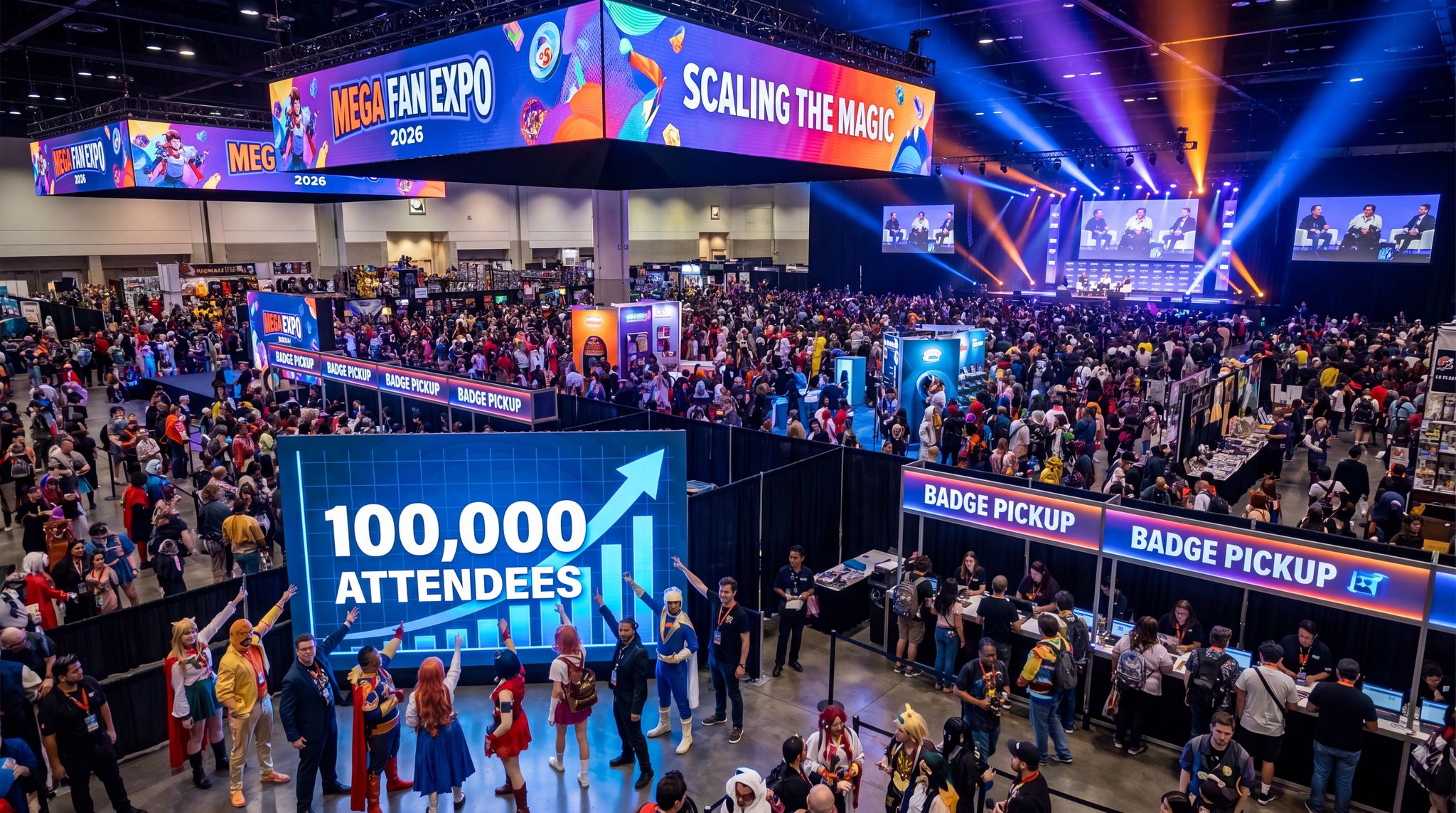
For large-scale conventions – those in the 50,000 to 150,000+ attendee range – the stakes for registration efficiency are highest. These events must deploy advanced systems simply to handle volume, but they also often have more resources and experience. If you’re organizing a mega-con, you’re likely using all of the above: online pre-reg, mailed RFID badges, dozens of entry lanes with scanning, an army of volunteers, and multiple days of continuous improvement. The challenge here is integration and redundancy at scale. These events often work with ticketing partners (like Ticket Fairy or others) who specialize in high-volume on-sales and check-ins to ensure the tech backend can withstand heavy load. It’s not uncommon to see large conventions set up 20 or more scanning stations across multiple entrance locations – for example, San Diego Comic-Con has numerous entry points around the convention center, each with attendees tapping RFID badges to gates. Planning for crowd psychology is key: with tens of thousands arriving at once, clear signage and crowd marshalling become an art form (megacons sometimes hire professional crowd management firms to assist). Things like wristband color coding by day or by attendee category are very useful when you have to visually verify thousands of people quickly. Also, large events should have serious contingency plans. For instance, have backup generators for registration tents, spare devices ready to swap in if a scanner fails, and a way to quickly communicate to the crowd if there’s an unexpected delay (large LED boards or public address systems). Real-time monitoring is important at scale – set up an ops center where staff watch CCTV or crowd density sensors to detect any brewing bottlenecks and dispatch help. Big cons also often give staff very specific assignments (one person per two scanning lanes, etc.) to maintain order. And let’s talk big data: at this scale, you can use analytical tools to predict and optimize entry. For example, if data shows 80% of multi-day badge holders show up within the first two hours on Friday, you could stagger some content start times or open extra gates just for that window. Some mega-events are experimenting with appointment-based pickup (attendees select a time slot to get their badge) or virtual queue tickets to spread demand. One thing large cons handle well is communication with their fans – they’ll send out detailed “Know Before You Go” guides that include maps of entry points, allowable items, etc., so attendees come prepared and informed. Essentially, a mega-con registration operation runs like a military campaign: every detail mapped out, rehearsals done, fallback plans at the ready. The result, when done right, is remarkable: hundreds of people per minute flowing into the event with smiles on their faces.
To illustrate the impact of doing it right at scale, let’s consider a success story: At a recent large fan expo (~75,000 attendees), organizers integrated an NFC wristband system across all entry points and even for panel room access. The outcome – they sailed through opening day with record-fast check-ins and minimal lines, as opposed to the near-disaster another event faced when their entry tech failed, a contrast highlighted in avoiding pitfalls and ensuring success and reported in coverage of the event. The difference came down to preparation, robust tech, and responsive management. Big events can indeed have no more lines – but it requires excelling on every front discussed in this article.
Case Studies: Conventions That Conquered Lines
Comic Con Revolution – RFID Edition
One of the best examples of using tech to crush lines is New York Comic Con (NYCC). By 2016, NYCC attendance had exploded, and ReedPOP (the organizer) turned to RFID badges to manage both security and crowd flow, aiming for saving time and money at booths. Each attendee’s badge was mailed and linked to their registration account ahead of time, effectively identifying ticket holders. Upon arriving, fans “tapped in” at entry portals – no more manual checks. Immediately, this wiped out the massive ticket pickup queues of years prior. Beyond entry, NYCC leveraged the RFID system for popular signings and panels: attendees could tap their badge at a kiosk to join a virtual queue or lottery for high-demand events, a strategy combining communication and virtual queuing and using tech to capture tag IDs. This meant they didn’t have to physically line up hours in advance, reducing those notorious hallway camp-outs. The results were tangible – ReedPOP noted that fans with the new system could attend twice as many events on average during the con than before, as the system expanded to include more access, simply because they weren’t stuck in lines. Attendee satisfaction scores around queueing improved markedly, and NYCC became a model for line management. The takeaway from NYCC is how a large-scale event combined multiple line-busting tactics: mailing badges early (so arrival was smooth), RFID tap-and-go entry (fast throughput), and tech-enabled panel queues (removing other line pain points). For any con eyeing the 100k attendance mark, NYCC’s approach is a blueprint on blending tech and operations to kill lines and keep fans happy.
Anime Expo – From Chaos to Control
On the other coast, Anime Expo (AX) in Los Angeles learned some hard lessons after a chaotic 2017 event where registration lines famously stretched for up to 6 hours in the hot sun. Following attendee outcry (and plenty of negative press), AX’s organizers made major changes. They invested in a new registration platform with more robust servers to handle pre-reg (preventing system crashes that had contributed to the 2017 delays). They also started mailing badges to domestic attendees, vastly reducing on-site pickups. For on-site needs, AX deployed an expanded fleet of scanning stations and trained dozens of staff to troubleshoot issues on the spot. By 2019, Anime Expo was hosting over 100,000 attendees and yet entry wait times reportedly dropped to under 30 minutes even at peak, a turnaround referenced in post-show analysis regarding queue management. What changed? Essentially, everything. AX shifted a huge chunk of processing to pre-event (through mailed badges and better online reg); they doubled the number of entry lanes with scanners at the convention center; and they improved crowd marshalling with more clearly designated waiting areas and constant communication, including on social media to update attendees when lines were moving. They even provided water and cooling stations outside for any residual queues, turning a PR nightmare into a recovery story. Anime Expo’s experience shows that even if your event stumbles with long lines one year, you can absolutely fix it the next – but it requires throwing out old assumptions, embracing new systems, and sometimes spending money to save the attendee experience. The payoff is not just happier attendees but also regained trust in the organizer’s professionalism.
Small Con, Big Improvement: Local Comic Fest
Streamlining isn’t just for juggernauts. Consider a regional Comic Fest in Australia (approximately 3,000 attendees) that managed to go from moderate lines to virtually none by adopting a few key practices. This event historically had on-site sales and used paper tickets, resulting in 20+ minute waits at opening. In 2024, the organizers moved to an online ticketing platform (Ticket Fairy, in fact) and heavily promoted pre-sales, getting about 85% of attendees to buy in advance. They set up just two QR code scanning stations at the door – but that’s all it took. Attendees arrived with their mobile tickets ready, and staff scanned them at a rate of a few seconds each. For those who still walked up to buy tickets, a single staffer with a tablet handled sales at a side table, then those people immediately joined the entry line with a QR code receipt. The con also opened doors 30 minutes earlier than the previous year for an “early access” period (with only the vendors hall open) which incentivized people to come in gradually rather than all at once at the official start time. The difference was huge: instead of a visible queue, it was a steady stream. Vendors even reported better morning sales because attendees were inside quicker and staggered, rather than a huge rush all at once. This case highlights that right-sizing your solution to your con matters – they didn’t need expensive kiosks or RFID, just a solid ticketing app and some planning. The result was an attendee experience rivals big cons – one fan was overheard saying “I’ve never walked into a con so easily before!” – and for the organizers, it meant far fewer headaches on show day.
Frequently Asked Questions About Convention Registration
What are the best ways to streamline conference check-in and badge printing for 2025 and 2026?
The most effective strategies involve shifting from manual processes to integrated, self-service ecosystems. Top methods include deploying on-demand thermal badge printers linked to QR code scanners, utilizing RFID or NFC tap-and-go credentials, and encouraging advance online registration. By decentralizing entry points with self-serve kiosks, event producers can drastically reduce wait times and lower staffing overhead.
How do QR codes and NFC change the attendee journey?
Transitioning to digital and contactless entry completely removes the friction of traditional paper ticketing. Instead of waiting in long queues to verify names on a printed list, attendees experience a seamless, split-second scan or tap. This immediate access reduces arrival anxiety, sets a positive tone for the event, and allows B2B professionals and fans to spend more time networking, attending panels, and engaging with exhibitors.
What are the latest event tech trends for check-in and badge scanning?
Emerging trends focus on interoperability and biometric verification. We are seeing a rise in facial recognition fast lanes for VIPs, BLE (Bluetooth Low Energy) smart badges that facilitate passive check-ins and lead retrieval, and fully integrated tech stacks where ticketing, access control, and CRM platforms sync in real time. These innovations not only speed up the door but also provide organizers with rich data on crowd flow and peak arrival times.
What are the best smart badges for events in 2025 and 2026?
The best smart badges for events combine NFC and BLE (Bluetooth Low Energy) technologies to enable both active networking and passive crowd tracking. For 2025 and 2026, top-tier event smart badge systems integrate directly with your registration and lead retrieval software, allowing attendees to exchange contact information with a simple tap while providing organizers with real-time heat maps of venue traffic.
What are the best practices for distributing badges at events?
The most effective distribution strategies rely on decentralization. Best practices include mailing credentials in advance, offering early pickup windows at satellite locations (like partner hotels), and utilizing self-serve kiosks for on-demand printing. Segmenting lines by ticket type and pre-verifying attendee data online also drastically reduces on-site bottlenecks.
What should organizers look for in the best RFID and NFC event badge systems for 2025 and 2026?
When selecting top-tier radio frequency or near-field communication access solutions, event producers must prioritize offline scanning reliability, rapid API synchronization with ticketing platforms, and durable credential design. The most effective systems go beyond simple entry validation by offering real-time gate analytics, VIP arrival alerts, and seamless integration with cashless payment or lead retrieval modules.
How do satellite distribution hubs improve event badge pickup?
Setting up satellite distribution hubs at partner hotels, transit centers, or local retail shops allows attendees to collect their credentials before arriving at the main venue. This practice decentralizes the check-in process, significantly reducing opening-day queues and alleviating pressure on front-of-house staff. It is considered one of the most effective methods for managing crowd flow at large-scale conventions and expos.