Why Hyper-Personalization is the Future of Venues
Evolving Fan Expectations in 2026
Modern fans are no longer satisfied with a one-size-fits-all night out. They arrive at venues expecting seamless navigation, personalized recommendations, mobile convenience, and real-time updates at every turn, as highlighted in metrics that stadiums and large venues should be tracking. After the pandemic lockdowns and the streaming boom, fans now seek unique, tailored in-person experiences that justify leaving the comfort of home. Venue operators worldwide see that treating every guest like a VIP isn’t just a perk for high-rollers – it’s fast becoming the baseline. In 2026, a concertgoer or sports fan wants to feel recognized and valued from the moment they buy a ticket. They crave personal touches – from communications that speak to their interests to on-site services that anticipate their needs – that make them think, “Wow, they really thought of me!”
Standing Out in a Competitive Landscape
The live events industry has rebounded with a vengeance, and competition for audiences is fierce. Fans can choose from countless concerts, festivals, and sports games on any given night. In this crowded market, venues that differentiate with personalized fan experiences earn a clear edge. Arenas and clubs alike are discovering that personalization drives word-of-mouth buzz and repeat attendance. When a guest feels like an insider – greeted by name, offered their favorite drink, alerted when their beloved band is coming to town – they’re far more likely to return. Conversely, a generic experience risks blending into the noise. Experienced venue operators know that loyal relationships are built through a thousand small gestures that make an attendee feel special. Personalization has thus become the new frontier of hospitality. It’s not only about selling a ticket; it’s about selling an experience uniquely tailored to each fan, so they keep coming back.
From an operational standpoint, designing personalized experiences for fans requires a shift in how we view our floor plans and service models. It means moving away from static, transactional crowd management toward dynamic hospitality. Whether you are running a massive stadium or an underground club, the goal remains the same: leveraging attendee data to curate moments that resonate on an individual level, ultimately transforming casual ticket buyers into lifelong venue advocates.
Technology Unlocking New Possibilities
What makes this level of personalization possible now? In a word: data. Today’s venues have access to an unprecedented wealth of information about their attendees – from ticket purchase history and demographics to mobile app usage and even real-time location in the venue. Advanced tools are turning these data points into actionable insights. Modern ticketing and CRM systems (like Ticket Fairy’s platform) aggregate fan data in one place, while AI-driven analytics can reveal patterns and preferences invisible to the naked eye. On top of that, new tech like facial recognition, RFID/NFC wristbands, IoT beacons, and personalized mobile apps allow venues to interact with fans individually at scale. A decade ago, a stadium couldn’t possibly greet 50,000 people personally or tailor a different offer to each guest – today it’s increasingly achievable through smart automation. The rise of hyper-personalization in venues is the result of these innovations: data and technology working together to let venues treat every fan as if they’re the only fan.
Data-Driven Event Marketing
Track ticket sales, demographics, marketing ROI, and social reach in real time. Exportable reports give you the insights to make smarter decisions.
(Consider how a Michelin-star restaurant remembers a regular diner’s preferences – venues are now aiming to do the same with tens of thousands of patrons. As one industry CEO put it, “Personalization is where the ultimate magic lies.”) By harnessing the right tools, even large venues can create those intimate, wow-worthy moments at scale.
Building a 360° View of Your Fans: Data Collection & Insights
Capturing First-Party Data at Every Touchpoint
The foundation of any personalized experience is rich, first-party fan data. Every interaction your audience has with your venue – buying tickets, RSVPing on social media, scanning in at the gate, purchasing a drink – is a data point that can inform personalization. Smart venues cast a wide net to capture these details (with consent). This starts with your ticketing platform and online registrations: names, emails, phone numbers, ZIP codes, and event preferences are gold. Rather than letting third-party sites hoard the info, focus on building a robust in-house database of your attendees. Use tools like integrated CRMs or ticketing systems to log each customer’s purchase history and demographics to create a thrilling guest experience. For example, after switching to a modern platform and actively collecting data, London’s XYZ Club discovered that 40% of its ticket buyers were coming from out-of-town – prompting them to personalize their marketing with hotel partner deals for those travelers.
Ready to Sell Tickets?
Create professional event pages with built-in payment processing, marketing tools, and real-time analytics.
Beyond the box office, integrating specialized marketing tools—such as pixel tracking on your venue’s website or engagement scoring in your email platform—adds crucial behavioral depth to your database. When you understand not just what a fan purchased, but which specific promotional campaigns they interacted with, you can design highly specific marketing journeys that gently guide them from casual browser to guaranteed attendee.
Don’t overlook social and on-site interactions as data sources too. Encourage fans to connect their social accounts or participate in polls and contests (with appropriate permissions) so you can understand their interests. A first-party data strategy is a must in 2026 – not only for marketing, but to tailor experiences. In fact, event marketers are aggressively building their owned audiences by mastering first-party data collection and CRM integration to reduce reliance on ads. The more granular data you have (favorite genres, frequent companions, birthday, etc.), the more you can surprise and delight fans in ways that matter to them.
Unifying Data into a Single Fan Profile
Data is only powerful if it’s connected. Many venues face the challenge of data silos – the ticketing system doesn’t talk to the food & beverage POS, which doesn’t talk to the email newsletter list. One of the first steps toward personalization is integrating these data streams into a unified fan profile. That might mean adopting a CRM that aggregates every touchpoint or using a loyalty program as a catch-all for fan interactions. For instance, the NHL’s St. Louis Blues launched a “Bluenatics” fan passport that merged their ticket purchases, merchandise buys, and engagement into one blockchain-backed ID to provide a true picture of a fan. With a quick scan of a single QR code at the arena, a Blues fan can redeem their discounts or offers and simultaneously feed the team’s database with info on what they bought. This kind of 360° view lets you see each guest’s behavior holistically – and more importantly, act on it.
Even if you’re not using cutting-edge tech like blockchain, strive to link up data sources. Connect your online ticketing reports with your newsletter subscriber list and your point-of-sale records. If Jane Doe buys tickets to every indie-rock show, joins your venue’s Wi-Fi network on show nights, and consistently purchases IPA beers at the bar, having those dots connected in one profile allows you to personalize outreach and on-site perks for Jane in the future. Consider investing in a data platform or customer data platform (CDP) that’s purpose-built for live events, or work with your ticketing provider to see a consolidated dashboard of fan activity. The payoff is huge: it enables real “know your customer” service. In practice, this might mean your marketing team can filter for the 200 biggest spending fans and send them a surprise invite, or your operations team can note how many vegan meal requests you got last year and stock up accordingly.
Boost Revenue With Smart Upsells
Sell merchandise, VIP upgrades, parking passes, and add-ons during checkout and via post-purchase emails. Increase average order value by up to 220%.
Pro tip: Audit what data you’re already collecting across departments. You might find, for example, your box office has emails that your marketing team isn’t using, or your lost-and-found records reveal frequent VIP guests. Breaking down these silos is an early win on the road to personalization.
Segmentation vs. One-to-One Personalization
For years, venues have used segmentation – grouping customers by demographics or behavior – to target messaging (e.g., one email for students, another for VIP box holders). But in 2026, the trend is shifting further: from broad segments to the pursuit of true one-to-one personalization. Thanks to better data and AI, it’s increasingly feasible to tailor offerings to the individual level. In fact, some forward-thinking venue marketing teams have moved beyond general segments and are now aiming to treat each fan as a “segment of one.” Priya Narasimhan, CEO of YinzCam (a popular venue app platform), noted that only about 10–20% of pro sports teams had embraced that one-to-one approach by 2024 – but that number is growing as venues use apps to create big, lasting memories. The aspiration is to craft communications and experiences so relevant that they feel uniquely designed for each attendee.
Grow Your Events
Leverage referral marketing, social sharing incentives, and audience insights to sell more tickets.
That said, segmentation still plays a valuable role, especially for venues just beginning to personalize. Start by grouping fans into meaningful clusters using your data – for example, new attendees, loyal regulars, VIP members, families, students, etc. Then you can create tailored experiences for each: maybe a “welcome” discount for first-timers, or a special lounge area for members. Many venues see quick results by simply distinguishing casual fans from superfans and engaging them differently. Over time, as your data and capabilities mature, you can layer in more granularity. The endgame is being able to send, say, John an offer for discounted parking because you know he always drives in from out of town, while Jane gets a text about a meet-and-greet upgrade because she’s a die-hard who’s attended 5 shows this year. Achieving one-to-one at scale is challenging, but even moving from one-size-fits-all to a dozen well-defined segments is a huge leap in personalization that fans will notice.
To get started, many veteran venue managers recommend developing effective strategies for managing fan data and segmentation well in advance. Analyze your past audience data to identify trends: Are there clusters by music genre preference? Do certain age groups attend on weeknights vs. weekends? Those insights can inform not just marketing, but even booking decisions – for instance, booking more of the events that your core audience loves and scheduling them on optimal dates. Using data this way ensures your programming itself feels tailored to your audience, complementing the personal touches in marketing and on-site hospitality.
Ensuring Data Privacy and Trust
Personalization is powerful, but it walks a fine line – if fans feel their privacy is invaded or their data is mishandled, the “VIP treatment” can quickly backfire. Transparency and consent are essential. Always adhere to regulations like GDPR and CCPA when collecting and using personal data. Make it clear what data you’re collecting and how it benefits the fan’s experience. For example, when asking fans to opt in to location services on your venue app, explain that it will be used to send them shorter queue alerts or exclusive in-venue deals (and then deliver on that promise!). Give attendees easy control over their communication preferences. A trustworthy reputation in handling data will actually encourage more guests to share information with you, whereas one spammy or creepy misuse can erode goodwill.
Many venues set a policy that fan data is safeguarded and not sold or shared externally. Brandon Covert, CIO of the Cleveland Browns, noted that even when partners ask for fan data, they refuse: “We don’t share that… we’re here to protect your data,” he explained, noting that venues must prioritize data protection innovation. This kind of stance goes a long way. Use robust security for your databases, and consider anonymizing data when analyzing trends. Also, be mindful of the “personalization vs. privacy” balance – just because you can personalize something doesn’t always mean you should. It might delight one fan to have staff bring them a birthday cupcake because you noted their birthdate – but another fan might feel uncomfortable if it’s too personal or unexpected. Know your audience and adjust the level of personal touch appropriately.
Smart Promo Codes & Presale Access
Create percentage or flat-rate discount codes with usage limits, date ranges, and ticket type restrictions. Plus unlock codes for private presales.
Finally, communicate the value. When rolling out new personalized features, frame them in terms of fan benefit: “Opt in to our new VIP Alerts to get updates when lines are shortest and special offers just for you.” When fans understand the trade-off and see real perks, they’re more than happy to share data and embrace personalization. Trust is the currency that makes all these data-driven initiatives possible – earn it and your fans will reward you with loyalty.
Table: Common Fan Data Sources & Personalization Opportunities
| Data Source | What It Reveals | Personalization Opportunity |
|---|---|---|
| Ticket purchase history | Events attended, genres/artists preferred, frequency of attendance, spend level | Recommend upcoming shows similar to past favorites; offer loyalty rewards (e.g. discount after 5th show); identify candidates for VIP upsells |
| Online behavior (website/app) | Pages viewed, time spent, clicks (e.g. looking at VIP packages or certain artist pages) | Targeted marketing – if someone views VIP packages often, promote VIP offers to them; retarget interested fans with reminders about shows they viewed |
| Demographics (age, location, etc.) | Age group, home city, possibly interests (if surveys) | Tailor communications tone and channel (e.g. SMS for younger audiences); promote local upcoming events or tours near their city; offer age-appropriate promotions (student discounts, family packages) |
| Venue interactions (Wi-Fi, check-ins) | Where they go in venue, dwell times, entry/exit patterns | Operational improvements – send real-time directions to less crowded gates; promote nearby concessions when they’re in that area; gauge popular zones to place staff accordingly |
| Purchases on-site (F&B, merch) | Favorite drinks or food; merchandise buys; spending level | Personalized offers – e.g., send a mobile coupon for their favorite drink; alert when new merch of an artist they bought before is in stock; invite big spenders to premium tasting events |
| Social media engagement | Likes, shares, and posts about your events/venue; fan following of artists | Identify superfans and their interests – engage them with shout-outs or early access; tailor content (e.g. if they love a certain artist, notify them first about that artist’s events) |
This table illustrates just a few examples. The key is to turn raw data into tailored action: information about your fans isn’t useful until it’s helping you give them a better experience.
Leveraging In-Venue Audience Insights
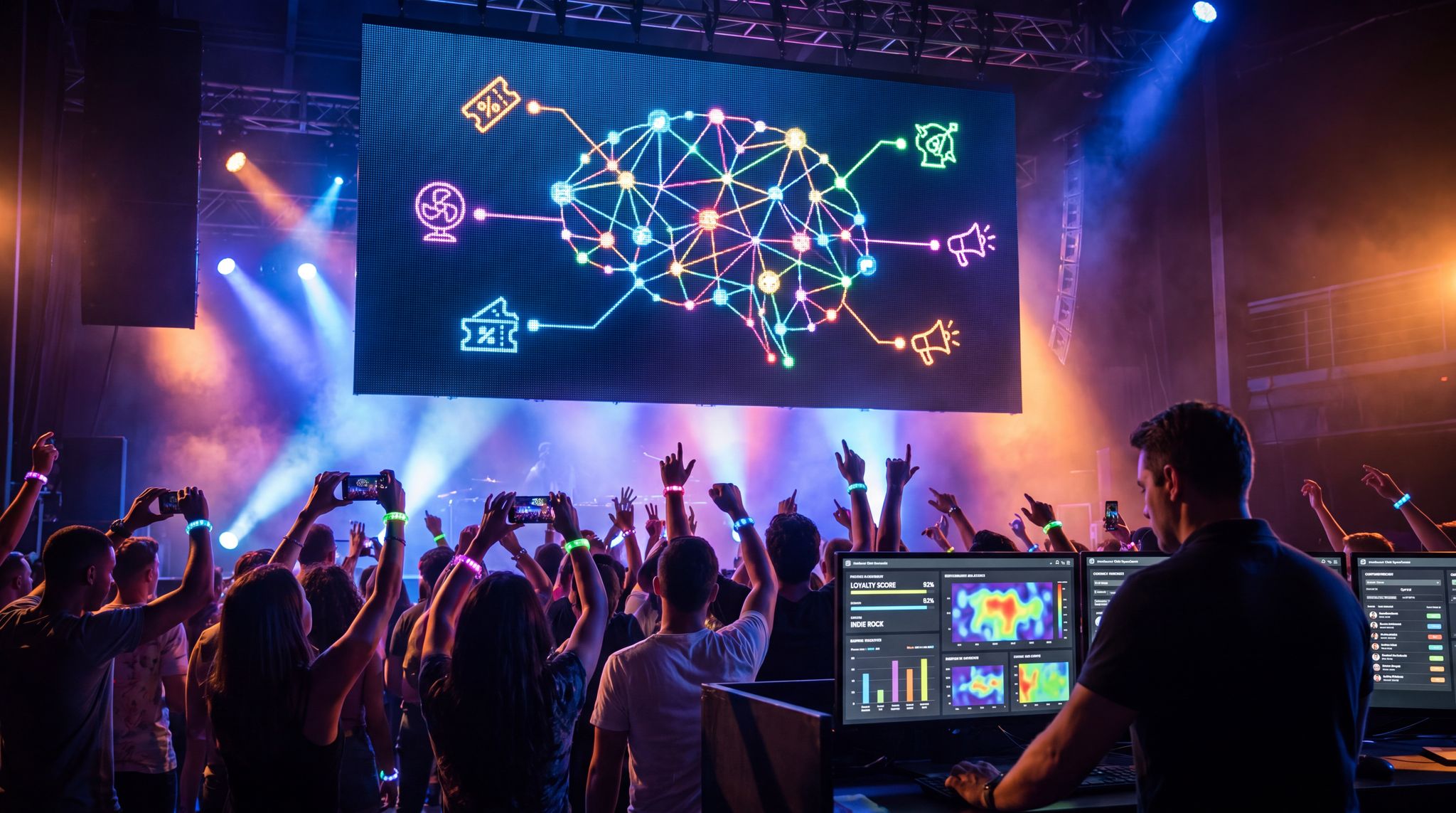
To truly master how you personalize fan experiences in sports and entertainment, you must look beyond pre-sale data and tap into real-time behavioral metrics. When operators track how crowds move, where they congregate, and which activations draw the most engagement during an event, they unlock a new tier of operational intelligence. These in-venue audience insights allow you to adjust staffing on the fly, deploy targeted marketing tools to fans’ mobile devices based on their physical location, and ultimately create personalized fan journeys using data that reflects their actual behavior inside your four walls.
Tailored Communications: Making Every Message Personal
Segmented and Personalized Email Marketing
Email remains one of the most powerful tools for reaching event-goers – especially when you personalize it. Blasting the same newsletter to your entire mailing list is a missed opportunity. Instead, use the data you’ve collected to segment and customize your email campaigns. Many successful promoters in 2026 are crafting personalized email sequences for different fan segments. For example, your “dance music lovers” list might get an early announcement of an upcoming DJ show with an exclusive discount, while your “theater aficionados” list receives content about the new play coming next month. Even within a single event promotion, you can tweak messaging: highlight the punk band’s set to fans who attended punk shows before, versus highlighting the indie-pop headliner to a different audience.
Modern email marketing platforms and CRMs make this easier with automation and dynamic content. You can set up rules like: if a recipient has attended Event X, insert a sentence in the email referencing “Since you enjoyed Event X, you’ll love our next show…”. Personalized subject lines (e.g. including the city or the fan’s first name) can boost open rates significantly. Consider the timing as well: send “last chance” reminders only to those who haven’t bought yet, or a “we can’t wait to see you” info email to those who have tickets, with details tailored to their purchase (e.g. parking info for those who bought parking passes, VIP lounge hours for VIP ticket holders, etc.). The days of generic e-blasts are over – audiences tune out anything that isn’t relevant to them. By treating your emails more like conversations, where you acknowledge the recipient’s history and preferences, you’ll see higher engagement and conversion.
Go Cashless With RFID Technology
Enable contactless payments, faster entry, and real-time spending analytics with RFID wristbands and NFC-enabled ticketing for your events.
One pro tip is to incorporate storytelling and personalization together. For instance, if you’re promoting a festival and you know certain attendees love a particular artist on the lineup, mention that artist’s stage time in the email to those fans: “We know you can’t wait to see Artist X – they’re on the Main Stage at 9 PM. We’ve got a cold drink waiting with your name on it!” This kind of personal touch can only be done when you have the data aligned with your email content, but the payoff in fan excitement is worth it.
For operators wondering how to create personalized fan journeys using data and marketing tools without overwhelming their team, the answer lies in automated workflows. By integrating your CRM with your email platform, you can set up trigger-based campaigns that respond to specific fan actions—like sending a targeted VIP upgrade offer the moment a general admission ticket is purchased. These automated touchpoints ensure that every attendee receives a curated sequence of messages, building anticipation and loyalty long before they arrive at the gates.
In my experience, the real magic happens when you map out these touchpoints using visual journey builders within your marketing stack. These platforms let you plot the entire lifecycle of a ticket buyer—from the moment they click an ad to the day they fill out a post-event survey. By visualizing this flow, your team can spot exactly where a fan might drop off and deploy targeted interventions, like a timely SMS reminder or a retargeted social ad. It’s about ensuring the attendee remains engaged across every channel, turning a simple ticket purchase into a cohesive, multi-step narrative.
Real-Time Personalized Texts and Notifications
In 2026, email is just one part of the communication toolbox. SMS and push notifications allow venues to reach fans with timely, ultra-relevant messages – often when it matters most. The open rate of text messages is extremely high, but fans will quickly opt-out if messages aren’t valuable. The key is to use these channels for contextual, real-time personalization. For example, imagine a guest arrives at your venue for a concert. As they walk in, they receive a push notification on the venue app: “Welcome, Sarah! Your favorite beer is 2-for-1 until 8 PM at the Red Bar – enjoy the show!” If Sarah’s past purchases or profile indicate her favorite drink or that she’s part of your loyalty program, this message feels like VIP treatment. It’s targeted, timed, and helpful.
Geo-fencing and beacon technology can trigger messages based on location, and your CRM data can add the personal spin. Sports venues have tested systems where as soon as a VIP enters a certain gate, they get a text offering a free upgrade or a sponsor gift, and regular attendees might get a personalized welcome message about the event timeline. In fact, at some festivals this past year, when attendees entered the VIP area, they were texted within 30 seconds with a special offer for future events – yielding an astounding 80% opt-in rate for those offers, proving the magic of personalization in facilities. That’s the power of hitting the right person with the right message at the right time. It feels less like marketing and more like concierge treatment.
Of course, you can also use SMS before and after events in a personalized way. A day before the show, send ticket holders a “Know Before You Go” text with useful info: “Hi Tom, we see you have Floor tickets for tomorrow’s show. Doors open at 7 – your fastest entry is through Gate C. Parking Lot 2 has pre-booking available. Enjoy!” This kind of micro-targeted detail turns necessary information into a personalized service. Post-event, a quick thank-you text or a prompt to share feedback (“Thanks for coming! How was your experience? [Link to short survey]”) can reinforce that you care about each attendee. Just be sure to keep texts concise, opt-in only, and not too frequent. When done right, real-time personalized messaging can significantly enhance the fan experience and drive engagement.
Turn Fans Into Your Marketing Team
Ticket Fairy's built-in referral rewards system incentivizes attendees to share your event, delivering 15-25% sales boosts and 30x ROI vs paid ads.
Social Media Targeting and Personalized Ads
While social media isn’t a one-to-one channel, it can still be used in a more personalized and data-driven way in 2026. Rather than broadcasting identical posts to everyone, venues are leveraging custom audiences and retargeting to make social content feel personal. For example, you can use Facebook or Instagram custom audience tools to show ads for an upcoming event specifically to people who attended similar events at your venue in the past (by matching email addresses or using tracking pixels). The ad copy can even reference that history: “You had a blast at our Jazz Night – don’t miss the Blues Extravaganza next month!” This resonates much more than a generic “Big concert coming, buy tickets!”.
Similarly, segment your organic social content where possible. If your venue’s brand spans multiple genres or event types, consider creating separate event pages or groups for different communities (e.g., a Facebook group for the EDM community who comes to your shows, or a Discord channel for frequent festival-goers). In those forums, you can communicate in a more targeted way. A community-oriented approach makes fans feel like the venue really “gets” their niche. It’s not uncommon now for venues to have multiple social media profiles or sub-brands tailored to different audiences (for instance, a large performing arts center might run distinct Twitter accounts: one for classical music patrons and another for rock/pop concert fans, each with a different tone and content strategy).
On the advertising side, dynamic creative is a big trend. This is where ad platforms automatically assemble and deliver different ad variations to different users based on their data. You provide a template and assets, and the platform might show one version of a video ad to 18–24 year-old festival fans (fast cuts, highlighted DJ lineup) and a slightly different version to 35–44 year-old attendees (showing camping amenities and family-friendly features, for example). The result is that people scrolling their feed see something that speaks to their interests. The technology for this is similar to what e-commerce uses (“Recommended for you” ads), but venues are catching on to use it for event marketing. In a nutshell: your social followers are not a monolith, so don’t treat them like one. By leveraging the targeting tools available, you can create many small “personalized broadcasts” that make each fan feel addressed as an individual.
“Know Before You Go” – Customized Info for Each Guest
First impressions set the tone, and for events, the experience actually begins long before the fan steps through your doors. The pre-event informational email (or page) is a perfect opportunity to deliver personalized value. In 2026, leading venues send out tailored “Know Before You Go” communications to each ticket holder, featuring details that matter specifically to them. Here’s what that might include:
- Entry & Timing: Provide recommended arrival time and gate information customized to their ticket. For instance, “Your seats are in Section 102 – we recommend entering at the West Gate for quickest access (estimated wait < 5 min at 7 PM).” If they purchased parking, include directions to the exact lot. This level of detail shows foresight and makes the guest’s journey smoother.
- Personalized Event Highlights: Highlight parts of the event based on their profile. If you know a certain attendee is a huge fan of one of the opening acts (perhaps they indicated it on a pre-show survey or via past events), point out when and where that act is performing. Sports teams might spotlight a favorite player’s appearance (“Come early to see John Smith’s warm-up at 6:30 – we know he’s your favorite!” because the fan’s merchandise purchase history showed they bought John Smith’s jersey).
- Targeted Offers: If your data shows the guest hasn’t been to your venue before, include a welcome offer like a free drink coupon and a note like “First time at OurVenue? Enjoy a drink on us – show this QR code at any bar.” For regulars, maybe highlight their membership perks (“Don’t forget, as a Gold Member you have access to the Fast Lane entrance and the Members Lounge upstairs.”). If you have known food preferences (say the fan is vegetarian and you know this from a past pre-order), mention the tasty vegetarian options available on-site.
- Interactive Elements: Some venues even personalize the content by name – e.g. a short note from the venue manager: “Hey Alex, we’re excited to host you tomorrow!”. This can be done at scale with mail-merging tools. Including a photo of the seating chart with their section highlighted, or a map that shows the parking lot they’ve booked, gives a bespoke feel to the info.
The goal is to make each attendee feel like the venue has rolled out the red carpet for them before they arrive. It reduces anxiety (they know exactly where to go and what to expect) and it builds anticipation. Patrons have reported that detailed, personalized pre-event communications significantly enhance their overall satisfaction – they feel taken care of. Plus, from the venue’s perspective, this can streamline operations (guests are more likely to show up at the right gate, at the right time, with the right expectations). In essence, “Know Before You Go” has evolved from a generic FAQ into a concierge-like service delivered via email or app.
On-Site Personalization: VIP Treatment from Entry to Exit
Smooth, Personalized Entry and Welcome
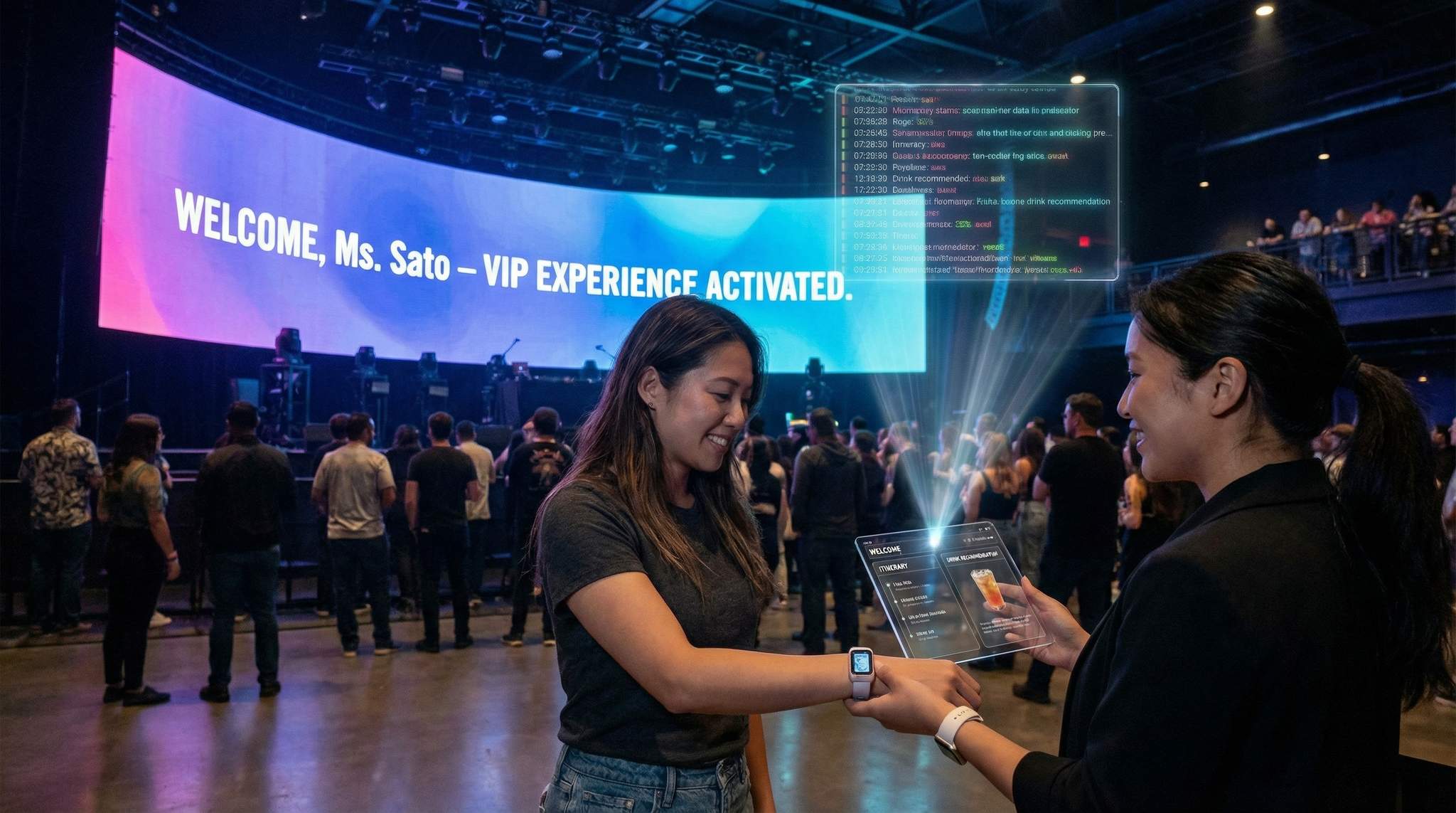
Nothing sets a VIP tone like a hassle-free, friendly welcome at the door. For venues aiming to treat every fan as a VIP, entry experience is crucial. In 2026, many arenas and halls have implemented technologies to speed up and personalize ingress. Mobile ticketing is now ubiquitous – but the cutting-edge venues go further, using biometric ID or facial recognition for opt-in fast lanes. At Atlanta’s Mercedes-Benz Stadium, for example, fans can enroll in a facial-scan entry system; upon arrival, a camera identifies them in seconds, opens the gate, and even pulls up a screen that greets them by name to create a premium feel. The effect is like having a doorman who knows every guest personally – at a scale of tens of thousands. Early results are impressive: one report found stadiums using AI-driven entry saw entry wait times cut by as much as 65% as AI transforms the in-stadium fan experience, eliminating those long queues that frustrate fans.
Built-In Email Marketing for Events
Send targeted campaigns, automated purchase confirmations, and post-event follow-ups directly from your ticketing dashboard.
You don’t need futuristic tech to personalize the welcome, either. Some independent venues train their door staff to recognize repeat attendees and greet them warmly: “Hey, good to see you back!” A simple tactic is to keep a list (or use your CRM app on a tablet) of top loyalty members or frequent ticket buyers expected that night, and have staff acknowledge them. When a guest scanning their ticket hears “Welcome back, we’re glad to see you again, enjoy the show!”, it can make their night – and it costs nothing. Experienced venue managers often stress to their team that the front door should feel like a greeting, not a checkpoint.
Another approach: dedicate a “special services” lane for anyone who might need extra help – that could be an ADA-accessible entrance or just a staffed lane for families, elderly, or others. Personalization includes accessibility; as venues strive to elevate accessibility and inclusion beyond basic compliance, they ensure every fan’s entry is smooth. For example, a world-class theater might have staff pre-informed of guests who requested assistance, ready with a wheelchair or just a personal escort to their seat. That level of attentiveness, aided by noting needs in the ticket purchase process, makes those attendees feel truly VIP.
The bottom line: Treat the entry like rolling out the welcome mat for each person. Use technology – from scan-and-go apps, RFID wristbands, to facial recognition for those who opt in – to speed up the process. Meanwhile, preserve a human touch where possible. Even if you employ an army of iPad-wielding ushers to check tickets, instruct them to smile, make eye contact, and personalize their greeting (“Enjoy the show, David!” if the name pops up on their scanner). This fusion of efficiency and warmth at the door immediately signals to fans that they’re not just a barcode to be processed, but a valued guest.
Customized Concessions and Merchandise Offers
A big part of many fans’ experience (and a big chunk of venue revenue) is what they eat, drink, and buy on-site. Personalizing food, beverage, and merchandise offerings can dramatically elevate the fan experience – and boost spending by making offers hard to resist. How are venues doing this in 2026? A few ways:
- Favorite Food Alerts: When a fan who always buys, say, vegetarian food connects to the venue app or Wi-Fi, the venue can push a notification: “Morty’s Vegan Tacos now open near Section 205 – no line right now!” This uses purchase history + real-time data. It feels like the venue is looking out for their appetite. Some systems even allow fans to pre-set their favorite order; the app might then pop up, “Your usual order of 2 vegan tacos and a cola can be ready at Stand 12 in 5 minutes – tap to confirm and pay.” It’s the kind of personal service previously reserved for VIP lounge waiters, now scaled to anyone with a smartphone.
- Dynamic Menu Personalization: Digital menu boards and kiosk screens can tailor content based on who is ordering (if the fan is logged into their account or scanned a wristband). For example, if a known fan approaches a self-service kiosk, it might highlight the beer they rated 5 stars last time, or run an upsell promo like “Welcome back! Add your favorite pretzel to your order for 10% off.” This makes suggestion selling feel helpful rather than random. At a pilot program in an Australian arena, personalized menu suggestions resulted in a 18% higher average spend per customer, because people were reminded of items they genuinely like.
- Merchandise Personalization: Venues are also using data to recommend merch. If a guest bought a particular artist’s T-shirt at a past show, your system could flag that and your merch staff (or app) can let them know when that artist has a new design available, or even set aside their size as a courtesy. Some venues send post-event emails with a personalized merch suggestion (“Since you enjoyed the concert, here’s 20% off the live album recording”). But even during the event – especially at festivals or multi-day events – you can personalize merch offers. For instance, “Hey Sam, still time to grab that limited edition poster of the band – show this code for $5 off at the merch tent.” Using first names and specific items makes the pitch feel tailor-made.
- Cashless and Connected: With more venues going cashless, it’s easier to track who buys what via their payment method or wristband. This opens the door to loyalty points for purchases, or surprise freebies for high spenders (“You’ve bought 4 beers tonight – your 5th is on us!” flashed on the app). It’s essentially the Starbucks model transplanted into arenas and clubs. Fans love feeling like they earned a reward, and it encourages return visits.
The overarching strategy is to anticipate and respond to individual tastes. It transforms concessions from a generic stands-in-line affair to something more akin to hospitality at a private club. And when fans feel their cravings are understood, they reciprocate with satisfaction – and often higher spending. Importantly, this is one area where tech must be balanced carefully with operations: ensure your staff is prepared to handle these personalized orders and offers. There’s no point sending “skip the line” drink coupons if only one bartender is manning the stand. When done right, though, a fan might later tell friends, “It’s like they knew exactly what I wanted – I didn’t have to hunt around for it. Best venue ever!”
In-Event Experiences and Surprise Delights
Personalization doesn’t stop once the show or game starts. The period during the event itself is ripe for creating “surprise and delight” moments that make a guest feel like a VIP. Savvy venues are finding creative ways to individualize the live experience:
- Shout-Outs and Fan Recognition: Traditionally, only a select few (like a birthday VIP or contest winner) might get a shout-out from the stage or scoreboard. But new digital tools allow more fans to be recognized. Some venues invite attendees to submit messages or photos via an app and then display personalized content on screens throughout the night. Imagine seeing your name on the giant screen with a “Welcome back, Maria! Thanks for attending your 10th show with us this year!” message. It’s a small touch that can make a fan’s night (and surely they’ll Instagram it). Of course, you might automate this for loyalty members or randomly select people who’ve opted in. The key is showing individual fans some love in front of the crowd.
- Interactive and Gamified Moments: Many arenas use in-seat devices or apps for trivia quizzes, votes, or AR games during breaks. Personalization can be layered on by acknowledging individual contributions – e.g., a trivia game that addresses players by username or offers a prize to that specific fan who answered fastest. This blends engagement with personal reward. Some festivals have experimented with AR scavenger hunts where each attendee’s app gives them a unique clue tailored to their location – a fun personalized adventure amid a large event.
- Upgrades and Unexpected Perks: A hallmark of VIP treatment is getting something extra without asking. Venues can recreate that feeling randomly or by data triggers. For example, identify a few loyal fans in attendance and surprise them with a seat upgrade during intermission (“We noticed you in the balcony – we have two open seats closer to the stage, enjoy the rest of the show from up front on us!”). This costs the venue nothing if the seats were empty, but for the fan it’s an unforgettable gesture. Other ideas: send an offer to a fan to access a VIP lounge for the last hour of the night, or a backstage tour for a couple of lucky fans who frequently attend. Industry veterans recommend setting aside a small budget or allotment for these surprises – the goodwill and social media kudos you earn are marketing gold.
- Responsive Adjustments: Personalization can also mean adapting the experience based on real-time feedback. If you have a system for fans to report issues or preferences (like text a number for help), respond individually. For instance, if someone messages that the sound is muffled in Section B, perhaps an engineer can adjust it or an usher can re-seat them, then follow up with a personal apology and maybe a drink voucher. Solving a problem personally and quickly turns a frustrated guest into a loyal one.
These in-event personalizations create moments of magic. They’re the things people remember long after – “I can’t believe they put my name on the screen!” or “The staff actually remembered me from last time and gave me a poster signed by the band!” To facilitate this, make sure your event staff are empowered and informed. Use your data (like flag high-tier members on the ticket scan system) and also trust staff instincts (a front-line usher might notice someone having a rough time and choose them for an upgrade). The goal is a room full of fans who each, in their own way, felt like the night was especially for them.
When venue managers ask how they can personalize fan experiences in sports and entertainment settings with massive crowds, the secret is empowering front-line staff with real-time data. Equipping ushers and guest services teams with mobile CRM dashboards allows them to identify milestone attendees—such as a season ticket holder celebrating their 100th game or a concertgoer on their birthday—and deliver spontaneous, on-the-spot upgrades or exclusive merchandise discounts.
Inclusive Personalization for All Attendees
Treating every fan like a VIP means every fan – including those with disabilities, sensory sensitivities, or other special needs. In 2026, accessibility is rightly a major focus, and personalization plays a role here too. Leading venues are moving past a one-size-fits-all ADA approach and embracing a flexible, person-centered style of accommodation. For instance, a guest on the autism spectrum might benefit from a tailored experience: perhaps they’ve opted into a program where the venue provides a custom sensory guide – detailing in advance which moments have loud bangs or flashing lights, and offering a quiet zone if they need a break. Some venues now let attendees fill out a short form when buying tickets to note any accommodations or preferences (e.g., requiring wheelchair access, needing an assistive listening device, or “I’m sensitive to strobe lights”). Then, upon arrival, staff have those notes and can proactively address them, like handing the person earplugs and showing them to a pre-reserved viewing area with clear sightlines. This level of anticipatory hospitality makes a huge difference.
There are also innovations like personal captioning devices or multi-language audio commentary an attendee can get, based on their profile. A theater might, for example, know that a patron prefers Spanish supertitles and provide them a device accordingly at their seat – without the patron having to ask every time. It’s about remembering and valuing each guest’s needs. In the realm of physical accessibility, personalization can mean assigning the same staff to regularly visiting patrons so they build a rapport and understand that individual’s routines. For community venues working closely with fan groups (say a local deaf community that attends interpreted performances), this personal touch builds loyalty and trust.
To implement inclusive personalization, consult resources like the latest venue accessibility best practices and engage directly with attendees who have disabilities – ask what would improve their experience and see if you can provide it on a personal level. Something as simple as offering a tour of the venue at a quiet time for an anxious guest so they know the layout before attending an event can turn someone into a lifelong fan. When people see that your venue cares enough to address their unique needs (not just check the compliance boxes), they truly feel like VIPs. And importantly, it’s the right thing to do. Personalization isn’t just about spending habits and marketing; it’s about humanizing the experience for everyone, including those often overlooked. A culture of inclusive hospitality will ensure no fan is left behind in your quest to wow your audience.
AI-Driven Enhancements: Taking Personalization to the Next Level
AI Recommendations for Events and Upgrades
Recommender algorithms are not just for streaming services – they’re now making their way into the live events domain. Venues and promoters are harnessing AI-driven recommendation engines to suggest events and offers to fans with uncanny accuracy. Think of it as “Fans who liked that also might like this,” but supercharged with real-time data and machine learning. For example, a large concert venue might implement an AI that analyzes a patron’s past ticket purchases, music streaming habits (if linked), and even social media follows. The AI might discover that a fan who attends a lot of classic rock shows also has a minor interest in stand-up comedy – so it suggests an upcoming comedy night, and lo and behold, that fan buys a ticket they otherwise might not have considered. These kinds of cross-event recommendations can increase ticket sales and delight fans with new discoveries.
If you are wondering exactly how does AI help personalize ticket offers for fans, the answer lies in dynamic, real-time packaging. Machine learning algorithms can instantly analyze a buyer’s historical spend, seating preferences, and group size to generate a custom ticket bundle right at checkout. Instead of a static VIP upsell, the system might offer a tailored package—like a premium parking add-on for a suburban family, or a backstage pass for a solo superfan—maximizing conversion rates without requiring manual intervention from your box office team.
AI can also personalize upsell offers much better than manual methods. Instead of blasting every ticket buyer with “Upgrade to VIP!”, an AI system can predict who is most likely to want a VIP upgrade or a meet-and-greet based on their profile (maybe they splurge on high-end seats or have a history of VIP). Those fans can be targeted with upgrade offers, while others might get different prompts (or none, to avoid annoyance). This precision means fans feel like, “Hey, this VIP offer actually appeals to me,” rather than the generic sales pitch. Some ticketing platforms are experimenting with AI that suggests the best ticket bundle for a customer – for instance, “You bought tickets to 3 indie shows last year; get a 20% bundle discount if you book these 3 upcoming indie concerts now.” It’s like a personalized package curated for their taste.
The result of these AI suggestions is often higher fan satisfaction and revenue. People appreciate relevant recommendations – it shows attentiveness. Metrics from trials in 2025 indicated that click-through rates on AI-curated event suggestions were significantly higher (sometimes double) those of standard newsletters. And venues reported that fans who received AI-tailored recommendations often attended a wider variety of events over time, deepening their engagement with the venue’s brand. In essence, a well-tuned AI can act as a personal event concierge for each fan, guiding them to experiences they’ll love (and reminding them to snag those tickets). We’re getting closer to the day where your phone buzzes and an app says, “We noticed you haven’t been to a show in a while – one of your favorite DJs is playing next week, shall we reserve your usual spot?” – and it feels perfectly natural.
Virtual Assistants and Chatbots as Personal Concierges
AI isn’t just working behind the scenes. Increasingly, venues are putting AI chatbots and voice assistants in front of fans as on-demand “personal concierges.” These virtual helpers are available 24/7 to answer questions and provide information in a personalized way. For instance, an attendee could pull up the venue’s mobile app or Facebook Messenger bot and ask, “What time does the headliner go on stage?” The AI, knowing the context of the event and that user’s ticket, can respond, “Hi! Your show tomorrow starts at 7 PM, and the headliner will be on at around 9 PM. Doors open at 6 – since you have a General Admission ticket, you might want to arrive early for a good spot. Need info on parking?” Notice how the answer is context-rich and anticipatory; it’s not a generic FAQ response but tuned to the user’s situation.
These AI assistants can personalize service at scale, handling thousands of individual conversations simultaneously – something even the best human staff couldn’t. They’re being used to provide tailored recommendations too: a fan might type “What should I do during intermission?” and the bot could consult that fan’s profile (sees they’re a beer aficionado) and suggest, “The Hop Haven bar on Level 2 has a new craft IPA you might enjoy, and there’s usually no line around halftime.” This feels like a friendly insider tip, but it’s delivered automatically based on data.
Venues like large stadiums have also begun integrating with voice assistants (imagine an Alexa skill or Google Assistant action for your venue). A fan at home could say, “Ask Arena X what’s the best entrance for my seat,” and get a personalized response. Or in premium seating areas, some have voice-activated assistants to request service (“Bring me a menu” or “Order another drink to Seat 12” – though that’s more IoT, it can be voice-driven). The benefit of chatbots and voice assistants is that they can be proactive and reactive: they answer questions, but they can also push out personalized alerts (“Intermission is ending in 5 minutes, Alice. Head back to your seat for the second act!”) if the user opts in.
The technology behind these assistants uses natural language processing and ties into your venue databases. The payoff is a highly scalable way to make fans feel heard and catered to. Especially for large events, where staff can’t personally attend to everyone, a well-designed chatbot ensures no fan’s question goes unanswered. Importantly, these bots should have a friendly, venue-appropriate personality and hand off to a human smoothly if needed. Many common inquiries can be handled instantly by AI, freeing staff for high-touch personal interactions elsewhere. In short, AI concierges help venues deliver personal attention without requiring personal intervention every time – a win-win for scaling VIP treatment.
AR, VR and Immersive Personalization
The rise of augmented reality (AR) and virtual reality (VR) in live events is adding a new dimension to personalization. These technologies allow fans to experience content that is layered onto or alongside the real event, often tailored to their own interests. AR through mobile devices is the more accessible form in venues right now. For example, at some basketball games, pointing your phone at the court with the arena app can display player stats hovering above each athlete in real time – a personalized feed of info for the die-hard stat nerds. Or at concerts, venues have experimented with AR filters that let fans see special effects through their phone camera that aren’t visible to others, like lyrics appearing in the air or virtual characters dancing on stage. Fans can choose the AR experience they want (or none at all), effectively customizing how they view the show.
Virtual Reality and 360° streaming have also entered the scene, particularly as hybrid events became common. While VR often serves remote attendees, venues are using VR on-site as well – like setting up VR stations or booths where fans can step in to get a different perspective of the live event (ever wanted to see what the drummer sees from the stage? Put on these VR goggles!). For those at home or in overflow areas, VR can allow a highly personalized control – the viewer can pick camera angles, focus on what they want. It’s not one-size-fits-all broadcasting; each fan could effectively direct their own experience. As VR tech improves, we might see venues selling “virtual courtside” experiences where remote fans still feel personally immersed, with maybe their names appearing on the Jumbotron virtually, etc.
Even if your venue isn’t diving into VR headsets yet, consider small-scale AR for engagement. A fun example: a music festival created an AR scavenger hunt in their app – each fan would get AR clues unique to them (randomized from a set) leading to secret locations around the grounds, where they could collect digital badges and eventually earn a prize. Fans raved that it made their festival feel personalized, like they were on their own adventure. Another venue might use AR for sponsorship in a fan-friendly way: when scanning a poster through the app, a personalized message pops up like “Hey Mike, enjoy a Coke on us at Concession 5 – thanks for being a loyal fan!” (This ties together data, AR, and a freebie – lots of tech, but the result is a simple human appreciation.)
These immersive techs are still cherries on top – not every venue will implement AR/VR in depth. But those that do are finding it can really impress the tech-savvy fans and create buzz. Importantly, if you roll out AR features, ensure they work well and add genuine value. Personalization here might mean letting fans opt in to how much extra info or visual effect they want, rather than forcing it. When done right, AR and VR open up limitless possibilities to give each fan a slightly different, and very memorable, way to experience the event.
Predictive Analytics for Real-Time Personalization
We’ve talked about using data from the past to personalize the future, but what about reacting on the fly? This is where predictive analytics and real-time data come into play. Modern venues are tapping into live data feeds (from ticket scans, POS systems, crowd density sensors, etc.) to anticipate needs and personalize in real time. For example, if data shows an unexpectedly high number of people at one merch booth, the system might trigger a notification to fans in a different area: “Merch lines are short by the East Gate store right now – swing by for faster service.” It’s a broad but targeted assist that takes current behavior into account. On an individual level, if a fan has been standing in one place (per their smartphone location) for a long time – maybe stuck in a queue – an alert could pop up offering a discount at a nearby less-crowded stall to redistribute traffic and reward patience.
AI-powered forecasting can also predict when fans might want certain things. One arena developed a model that predicts at what point in a game a particular suite guest is likely to order another drink based on past data, and a runner would proactively check on them at that time – often to a delighted, “How did you know I was just thinking of another beer?” It feels like mind-reading, but it’s really data-reading. Similarly, predictive models might flag attendees who are at risk of leaving early (maybe based on historical trends for those in upper tiers during blowout games) and send them a perk to entice them to stay (“Stick around for an exclusive post-show DJ set in the lobby!”). Tailoring incentives like this can improve the overall atmosphere and spending.
Another angle is using prediction for safety and comfort personalization. If environmental sensors show it’s getting very hot in one section, fans there might get a message about the nearest cooling station or a coupon for a cold drink. If rain is incoming at an outdoor festival, your system could identify fans without a tent upgrade and ping them about where to pick up ponchos or find cover. These are ways of personalizing operations to individuals’ circumstances in the moment.
All of this requires a robust data infrastructure and ideally an AI to crunch numbers in real time. It’s more on the advanced end of personalization, but it’s where the industry is heading. The concept is to stay one step ahead of the fan’s needs – to predict and provide before they even ask. When a venue achieves this, attendees really feel the VIP magic (“I didn’t even realize I wanted a rest until the app told me there’s a quiet seating area nearby!”). It’s proactive hospitality driven by data. And from the venue’s perspective, it optimizes the event flow too, distributing crowds, maximizing spend, and keeping people happy. As we gather more live data and AI gets smarter, expect predictive personalization to be a game-changer in fan experience.
Table: New Tech Tools & Their Personalized Uses
| Technology | Personalization Application | Example in Action |
|---|---|---|
| AI Recommendation Engine | Suggests events or content tailored to individual’s tastes and behavior | A music hall’s app recommends a jazz fan to attend an upcoming blues show (they hadn’t viewed) because others with similar profiles enjoyed it – the fan books a ticket trusting the suggestion. |
| Chatbot Virtual Assistant | Answers fan questions in real time with context-aware info; provides concierge-style help | A guest texts the venue’s chatbot “Where’s my seat?” and the bot replies with step-by-step directions from their current location to their specific seat, plus nearest restroom info. |
| Facial Recognition Entry | Fast-track entry by recognizing enrolled fans; personal greeting or automated check-in | At a stadium, enrolled fans walk through a facial recognition gate that says “Welcome, Jamie!” and sends an app notification that they’re checked in and can head to their section. |
| IoT Beacons & Geo-fencing | Triggers location-based personal messages or actions on fans’ smartphones | As a festival-goer enters the silent disco area, they receive a personalized invite on their phone: “Love to dance, Alex? Try our Silent Disco happening now 50m to your left!” |
| Augmented Reality (AR) | Provides an overlay of personalized content or interactive experiences through a smartphone or AR glasses | During a concert, a fan points their phone at the stage; AR overlays display the name of the current song and a live emotive graphic. Another fan uses an AR selfie filter that puts them on the event poster with their name, sharable on social media. |
| Predictive Analytics | Anticipates fan needs or behavior and triggers personalized service or offers accordingly | System predicts which attendees might leave a game early; those fans get a push notification: “Don’t miss the fireworks show on the field after the game – stick around for a surprise!” changing their mind about leaving. |
Loyalty Programs and Memberships: Turning Attendees into VIPs
Designing Programs that Make Everyone Feel Exclusive
Loyalty programs in the live event space have evolved far beyond the old “earn points for a free soda” models. Modern venue membership and loyalty programs are designed to cultivate a sense of exclusivity and belonging – essentially making all members feel like VIPs in some way. A well-crafted program can take an average fan and gradually turn them into a superfan by rewarding engagement big and small. The trick is to align rewards with personal value. For example, some venues implement tiered memberships (e.g., Silver, Gold, Platinum) where even the entry tier gets meaningful perks like dedicated entrance lines or early access to ticket sales. This ensures that a casual fan who signs up immediately feels a bit special (“Cool, as a member I get to skip the general line!”) rather than dangling rewards far off in the future.
The best loyalty programs in 2026 focus on experiences as much as transactions. Sure, you’ll still see classic perks like discounts on tickets or merchandise credits, but the differentiators are things like members-only events, meet-and-greets, or surprise upgrades. Perhaps your venue hosts a quarterly “Member Appreciation Night” where members can bring a friend for free, or a private soundcheck viewing for top-tier members. When fans perceive that by joining your program they’re entering an inner circle, they’ll proudly participate (and often promote it to friends). The key is to avoid making it feel like a cynical data grab or pay-for-status scheme; instead, frame it as a community of insiders. Give it a fun name that resonates with your brand (e.g., “Backstage Club”, “Fan VIP Society”). Highlight fan stories in your communications (“Member Spotlight: Meet John, who’s attended 50 shows!”) to humanize it.
Importantly, ensure your loyalty program is accessible to all demographics. If benefits skew only toward big spenders (like exclusively rewarding those who buy VIP tickets), you might alienate the everyday fan. It’s wiser to have a path for engagement-based rewards too – such as points for checking in at events, writing reviews, or bringing new people. This inclusive approach means even someone who attends just one or two shows a year can feel it’s worth being a member, because maybe they get a birthday freebie or a personalized newsletter that others don’t. As one veteran marketer put it, the goal is “to bring fans into the ecosystem… get them from casual to loyal to evangelist” to build a rewarding experience. A loyalty program is your structured way to do that, by recognizing each step of their journey with you.
Rewards Tailored to Fan Preferences
Gone are the days of generic rewards (“collect 10 stamps and get a T-shirt” regardless of who you are). Now, venues are leveraging data to tailor loyalty rewards to individual preferences. This personal approach makes rewards far more enticing. For instance, if data shows a particular member always buys craft beer at your venue, sending them a reward of “Free Craft Beer on your next visit” is likely to thrill them more than a free popcorn that they never buy. Similarly, a fan who consistently sits in the cheap seats might value a surprise seat upgrade reward, whereas a fan who always gets front-row tickets might respond better to a backstage tour opportunity. By analyzing purchase patterns and engagement, you can segment your loyalty base and design different reward options that appeal to each segment.
Many programs now let fans choose their rewards from a menu, often stratified by tier or point cost. This choose-your-own-adventure style is inherently personalized – fans pick what they value. One fan might redeem points for merch, another for a meet-and-greet, another for discount on future tickets. The venue can guide this by offering rewards that align with data-derived insights (for example, offering a vinyl record signed by an artist to those who’ve bought that artist’s merch in the past). The more a reward aligns with a fan’s passion, the more emotional impact it has. Surprise rewards can be tailored too: if you’re going to comp something, make it something they’ll appreciate. Some platforms use AI to even predict the optimal reward for a given customer to increase their loyalty – essentially saying “this person is a huge foodie, give them a free dinner at our venue restaurant” versus “this person values memorabilia, give them exclusive swag.”
One successful example: a theater found that some subscribers never used the free drink coupons in their loyalty pack but always asked about backstage tours. So the next season, they offered an optional backstage tour reward in lieu of drinks for those who showed interest – it had a high uptake and those members felt heard and catered to. The takeaway is to listen to your members’ behaviors and feedback. Even among VIPs, not everyone likes the same champagne – so to speak. By customizing rewards (or offering flexible choices), you ensure the “loyalty love” you’re giving actually resonates. In turn, fans engage more deeply and remain loyal longer. After all, if every interaction with the program feels like it was designed “just for me,” why would I ever drift away?
Data-Driven Membership Insights
Your loyalty program isn’t just rewarding fans – it’s feeding you a constant stream of data about your most engaged customers. In the spirit of personalization, this data should be used to continuously refine the experience you offer to members. Track what rewards are redeemed by which segments, monitor attendance patterns of members vs. non-members, see which communications get responses. These metrics can reveal, for example, that members who attend at least 3 times a year have 2x the merchandise spend, or that offering free parking to Gold members increased their attendance on weeknights. By diving into these insights, you can adjust your program to better serve both fans and your venue’s goals.
Data can also highlight who your truly hardcore fans are – the kind that might be ripe for super-VIP treatment. Perhaps 5% of your members attend nearly every event; you might create an invite-only “platinum” tier for them with extra privileges (and in doing so, encourage others to aspire towards it). Conversely, data might show some members never engaging; maybe the onboarding needs tweaking or a win-back offer is needed. Basically, treat your membership like a living, data-informed ecosystem. Regularly review the performance of your loyalty initiatives – if certain perks aren’t being used, replace them with something else.
Another aspect is using membership data for personalized marketing. When you know someone’s a member, your communications to them can acknowledge that status: “As one of our valued members, we wanted you to be the first to know about…” etc. It seems simple, but segmenting emails to members vs. general public (and then further based on their personal interests) can dramatically increase engagement. People like to be recognized as insiders. Also use membership info on-site: have your scanners flash or note when a member is entering, so staff can say “Welcome back, Member!” or guide them to member-exclusive areas. Some venues even give members physical cues of their status (lanyards, wristbands, pins) so staff and other fans see it, further reinforcing the VIP vibe.
Ultimately, venues report that robust loyalty programs boost repeat attendance and revenue steadily – one industry analysis found such programs can increase revenue by 5–15% according to analysis on rewarding experiences. The combination of tailored perks and data-driven engagement keeps fans coming through your doors rather than checking out the competition. It’s a virtuous cycle: data fuels personalization, which increases loyalty, which generates more data on loyal behaviors, which you then use to fine-tune experiences… and so on. Treat your membership program as both a loyalty driver and a personalization engine, and it will pay dividends in fan lifetime value.
Building Community and Fan Status
One often underappreciated aspect of personalization is the sense of community and recognition it can foster among your audience. People don’t just want perks in isolation; many also love the status and social belonging that comes from being a part of something. Venues are tapping into this by making their loyalty programs and fan clubs more community-oriented. This might mean hosting members-only forums or social media groups, where fans can interact not just with the venue but with each other. When fans with similar passion connect, it deepens their attachment to the venue that facilitated it. For example, a venue could host an annual “Members Gala” or pre-show mixer, which makes members feel like they’re at an exclusive party with fellow insiders, swapping stories of past shows.
Recognizing fans publicly is another powerful tool. Some venues publish leaderboards or thank-you boards (digital or physical) showing top attendees, longest-tenured members, or “fan of the month.” Imagine walking into the lobby and seeing your name under “This Month’s Super Fans” – that’s a dopamine hit for the fan and reinforces that personal connection. Others do things like special membership badges on the venue’s app (so when you contribute a comment or review, you appear with a “Gold Member” badge – a bit of friendly clout). Sports teams have long done variants of this (like special jerseys or pins for season ticket holders), but now music and arts venues are adopting it too. It’s human nature: people like to feel important and to have others see it.
One particularly heartwarming example: an independent venue in California started a “Wall of Fame” in their hallway, hanging a photo of any patron who attends 100 shows. It became a local badge of honor to get your picture up there. Fans started competing (good-naturedly) to reach that milestone, and in doing so, the venue saw a jump in repeat attendance. By celebrating these super-loyal fans, the venue personalized the relationship – these weren’t just customers, they were part of the venue’s story. Larger venues might do digital equivalents, but the principle holds: highlight your fans’ contributions and they’ll feel a sense of ownership and pride.
In sum, think of your audience not just as recipients of personalization, but as a community where each person’s unique connection to the venue can be recognized. Facilitate fan-to-fan interactions, be it online or at events, and acknowledge individual fans in ways that others can see (with permission, of course). This turns personalization into a network effect – it’s not only you engaging one fan at a time, it’s fans rallying around your venue and each other, amplifying the loyalty. When fans start saying “our venue” instead of “the venue,” you’ve succeeded in treating them like VIPs who truly belong.
Post-Event Engagement: Extending the VIP Experience
Personalized Thank-Yous and Follow-Ups
The show might be over, but the experience shouldn’t end when the lights come up. In fact, the moments and days right after an event are prime time to cement a fan’s positive feelings – and set the stage for their return. One effective tactic is the personalized thank-you message. Rather than a bland “Thanks for coming”, venues now send post-event emails (or even texts) that reference the specific event and sometimes even personal elements of the night. For example: “Thank you for joining us for The Killers on Friday! We noticed this was your 3rd show with us this year – we truly appreciate your support. As a thank you, here’s a link to an exclusive live recording of Mr. Brightside from the concert, just for attendees. Hope to see you again soon, [Fan’s Name]!” This kind of follow-up does several things: it shows gratitude, it acknowledges the fan’s individual relationship (how many shows they attended, etc.), and it offers a small gift or memory to relive the experience.
Some venues include personalized details like, “We hope you and your son enjoyed his first concert!” if they know a family came, or “Safe travels back to Houston!” for an out-of-town attendee. These details come from the data you have (customer profiles, notes added by staff, etc.). Even if you can’t get that granular for everyone, segmenting thank-yous by group (e.g., first-time attendees get one version, regulars get another message) is far better than a generic blast. The tone should be conversational and appreciative. If there were any snags during the event (long lines, technical issues), acknowledge them frankly in the follow-up – fans appreciate honesty and it shows you care about their experience. Combine that with reassurance (and perhaps a small make-good like a discount code) and you can turn a neutral or negative memory into a positive impression of how you handle things.
Don’t overlook personalized surveys or feedback requests too. Instead of a one-size form, ask questions relevant to what the guest did. If data shows they bought merchandise, include a question about merch selection. If they were in a VIP tier, ask how that experience was. Many post-event engagement strategies emphasize immediacy – reach out within 24-48 hours while the emotion is fresh. A timely, thoughtful thank-you can leave a warm afterglow that makes people want to come back.
Tailored Suggestions for Future Events
Every event attended provides clues to what that fan might enjoy next. A crucial part of post-event personalization is leveraging the excitement of the just-finished experience to pitch the next one – in a way that feels helpful, not pushy. Based on what we know about a fan’s tastes, we can follow up with tailored event recommendations. For instance, if someone attended a country music concert, your thank-you email might include: “Since you loved tonight’s country show, we wanted to let you know about two upcoming country acts on our calendar that you might enjoy:” and then list them with dates (and ideally, an exclusive presale link or small discount for being at the previous show). Because this suggestion is relevant to what they like, it comes across as a friendly tip from the venue rather than spam.
This approach works even better if the fan’s data profile indicates multiple interests. Say they went to a rock show this time but also attended a comedy show last year – you could personalize upcoming suggestions to include both a rock and a comedy event (“By the way, your favorite comedian XYZ is here next month!”). It’s like having a personal booking agent curating options for them. Venues using AI tools in marketing might have automated systems to generate these recommendations at scale. Even without AI, a bit of segmentation logic does the trick (e.g., everyone who attended an EDM DJ night gets an email highlighting the next EDM event, etc.).
A subtle but powerful tactic is to reference elements of the event they attended when pitching the next. “You sang along to every song last night – keep that energy going:” and then mention another singalong-friendly band coming soon. If the artist themselves has upcoming dates at your venue or a sister venue, definitely promote that (“Can’t get enough of The Killers? They’ll be back this fall at our partner venue…”). The idea is to show you remember what the fan just experienced and you’re here to enrich their live entertainment journey further. It feels less like selling and more like you’re looking out for their entertainment needs.
One more thing: if your venue has a season schedule or multi-show packages, personalization can boost uptake. After a single event, you might tell a guest about a series pass in their favorite genre: “Enjoyed the jazz night? Our Jazz Pass gets you into all three upcoming jazz evenings this summer with a 15% savings – and we noticed you’ve already been to one, so you’re halfway to jazz heaven!” This creates a sense that the offer was made for them. By pointing fans to relevant future events right after a great night out, you keep the momentum and anticipation rolling, driving repeat business and deepening their connection with your venue.
Sharing Memories and Exclusive Content
In the age of Instagram and TikTok, fans love to share and relive memories of the events they attend. Venues can ride this wave by providing personalized content and mementos post-event. One approach is to use any media captured during the show to send something special to attendees. For instance, some venues email out a link to a personalized photo gallery – if you had roaming photographers or an on-site photo booth, you can tag photos by ticket or account and let each fan retrieve shots they were in. It’s like receiving a mini digital scrapbook of your night. Fans are often delighted to find a professional photo of them dancing in the crowd or a short clip of their ecstatic face when the headliner hit the stage. If you have the tech resources, even better is when you can algorithmically identify and deliver these to each person (some sports events do this with fan cams: “See yourself on the Jumbotron at 12:43 of Q2!”). But even a general gallery link, segmented by section or something, is nice.
Exclusive content extends to recordings or merchandise too. Many fans would love to have a recording of the concert or a highlight reel of the match. While full recordings might be premium, venues can provide a taste – like one or two live tracks available only to event attendees via a private link, or a behind-the-scenes video of that night’s show production. It says “thanks for being there – here’s something only you and others who attended can enjoy.” Some festivals send attendees a custom aftermovie that lists all cities people came from or flashes attendees’ first names in a creative way (pulled from registration data) for that personal touch.
Also, encourage fans to share their own memories – and then amplify those. For example, you might create a unique hashtag for each event and then, post-event, feature a “Fan Highlights” reel on your social media or website curated from user-generated content. Tag or credit the fans when you share their ecstatic selfie or mini-review (if they consented). This accomplishes two things: those featured feel like VIPs (the venue noticed me!), and it motivates others to share next time for a chance to be featured. It fosters a community feeling as well, seeing everyone’s perspectives.
Memory-sharing is a two-way street: venues provide content to fans, and fans provide content to venues, and everyone wins by reliving the excitement. It’s highly personalized because it’s literally the fan’s own experience being celebrated. A thoughtful post-event email might even say, “We saw you posted some great photos from the show – thanks for spreading the love! We’ve featured one of them on our page here [link].” That level of attentiveness absolutely wows people. When fans feel that their individual contribution (cheering, dancing, posting, etc.) was seen and appreciated, they form an emotional bond with the venue. They’re not just a ticket sold; they’re part of the venue’s story.
Loyalty Rewards and Next-Event Incentives
Post-event time is great for nudging fans along the loyalty path. If someone isn’t yet a member of your loyalty program or fan club, a follow-up right after the event can highlight what they’re missing in a context that feels logical. For example: “Want more nights like this? Join our free Fan VIP Club and get early access to tickets for shows like the one you attended!” – it’s an easier sell when the excitement is fresh. You might even extend a limited-time offer: “You came out to support us, so we’d like to offer you 500 bonus loyalty points if you sign up in the next 3 days.” This encourages immediate action and ties the positive experience to joining your community.
For existing members, post-event is a chance to award points or status credits. “We’ve added 100 points to your account for attending last night’s event – you’re now just 50 points away from a free ticket!” It reinforces the value of both the event and the program. If the event was a milestone (say their 10th show or they brought a group of friends), acknowledge that with a surprise reward: “Congrats on hitting your 10th show with us! Your next popcorn is on the house – just show your app.” These little celebrations turn one-off attendees into repeat customers by showing you notice and value their patronage.
A particularly successful tactic is offering a bounce-back incentive. Include in the thank-you or follow-up a special discount code valid for any one of the next few events, just for those who attended. For example, “Use code THANKS10 to get 10% off your next show with us in the upcoming month.” It’s a personal thank-you and a motivator to come back soon. The timeline is important – make it not too far out, so they have a reason to plan their next visit instead of letting it slip away. Some venues reported great results where 20-30% of attendees used a bounce-back offer to book another event within 60 days, dramatically increasing repeat attendance.
Finally, tie up any loose ends personally. Did some fans have issues (maybe they commented on social media about a long line or something)? Reach out to them directly if possible with an apology and perhaps a small freebie for next time. It shows attentiveness and can salvage that relationship. Also, encourage feedback from all in a personalized way: “How was the sound in Section B for you, Emily?” instead of a generic survey – even if the response goes to the same form, the framing makes it feel personal. Close the loop by acting on feedback and letting fans know. If a fan suggested adding more gluten-free food and you do it, mention it next time: “We heard you – gluten-free options will be available at the next event!” This demonstrates that every fan’s voice matters, continuing the VIP sentiment after the event and before the next. The post-event phase, when handled personally, turns a single night’s enjoyment into a long-term relationship.
Putting Personalization into Practice at Any Scale
Over my 30 years managing venues—from sweaty 200-capacity basement clubs in London and Brooklyn to 20,000-seat arenas across four continents—I’ve learned that the core philosophy of hospitality never changes. Whether you are dealing with a handful of regulars or a stadium full of screaming fans, the goal is to make the individual feel seen. The tactics and tools scale up, but the operational mindset remains the same: use whatever resources you have to remove friction and add moments of unexpected delight.
Personal Touches for Small Venues on a Budget
If you’re running an intimate 200-capacity club or community theater, you might be thinking, “All these high-tech solutions sound great, but what about us with tiny budgets and no IT department?” The good news is personalization doesn’t have to be expensive or high-tech. In small venues, the human element is your secret weapon. You likely already recognize some regular faces – leverage that familiarity. Train your staff to greet known patrons by name; even a humble “Hey, you were here last week – welcome back!” makes a guest beam. Keep a simple notebook or spreadsheet of frequent attendees and any preferences they mention (“John – always orders stout; Sarah – loves The Beatles cover nights”). It might seem old-school, but referencing these in conversation (“We just tapped a new stout you might like, John”) shows VIP-level care.
This approach is especially vital when programming for niche demographics. Operators often ask how to cater to patrons who might say, “I prefer intimate venues over spectacle,” or wonder what shows have the most sophisticated audiences. The reality is that smaller, independent rooms naturally attract discerning fans seeking authentic, close-up connections with artists. By leaning into that intimacy—perhaps by offering curated wine pairings, hosting post-show Q&As, or simply remembering a regular’s favorite table—you deliver the bespoke, high-touch experiences that these sophisticated audiences crave, turning your room’s small footprint into its greatest competitive advantage.
Small venues can also create personalization through handcrafted experiences. For example, an indie music club could create a custom drink special named after an artist playing that night, and if they know certain fans follow that artist, tip them off about it personally (“Jake, you’re a big FanX supporter – we made a cocktail in their honor tonight, hope you try it!”). At a community theater, perhaps the house manager writes a short personalized thank-you on the ticket stub or program of season subscribers. These little touches scale because your audience size is manageable – you can know many of them personally. It fosters a tight-knit community vibe that big arenas envy.
Another low-cost strategy is leveraging free or cheap digital tools. Use your ticketing platform’s built-in email function to send segmented emails (most have some basic CRM features). Start a private Facebook group for your venue’s regulars or mailing list subscribers – invite people to join for insider news. That group itself can become a personalized channel: you as the owner/manager can interact directly, ask for input (“What beer should we have on tap for next week’s show?” leading to fans feeling heard when their suggestion is there). It doesn’t cost money to show genuine attention.
Ultimately, for small venues, personalization is often synonymous with hospitality. It’s the bands hanging out by the merch table chatting with fans, the venue owner thanking people at the door as they leave, the flyer in the bathroom that humorously says “Text us your song request!” (and then the DJ actually plays a couple). These grassroots tactics create a familial atmosphere. As one small venue operator put it, “We might not have arena tech, but we know our crowd, and we treat ’em like family.” In a world increasingly driven by impersonal interactions, a cozy venue that remembers your name and your drink and checks in on how you enjoyed the night – that’s personalization at its purest. And it builds fierce loyalty on a shoestring budget.
Scalable Tech Solutions for Large Venues and Festivals
Larger venues, from 5,000-seat theaters up to 50,000-seat stadiums, face the challenge of scaling personalization for huge crowds. The personal handwritten note isn’t feasible when you have 20,000 guests – but technology is your friend here. A big focus should be on integrated systems: your ticketing, CRM, mobile app, point-of-sale, and marketing platforms all need to talk to each other. Investing in a robust venue management or customer data platform is worth its weight in gold for scale. It lets you automate the kind of personalization that a small club does manually. For instance, a stadium can use an app to greet every fan by name on their phone as they arrive (e.g., push notification: “Welcome back, Tom! We hope you enjoy the game.”). That might not have the warmth of a face-to-face greeting, but at scale, it’s still appreciated.
For festivals or multi-stage events, personalization can be modular. Use RFID wristbands or the event app to let attendees build a personal schedule of the acts they want to see, then send them notifications 15 minutes before each chosen act starts – almost like a personal concierge keeping them on track in the sprawling festival environment. Coachella and other big festivals do this and fans love it because it reduces FOMO and decision fatigue. Similarly, at a large conference center that hosts sports one night and a conference the next, the venue could optimize its operations for each different audience. This might mean having different settings in a venue app or profile – e.g. when it’s a basketball game, fans see sports-related personalization (player stats, etc.), but when it’s a concert, the same app skin changes to music mode. Large venues can essentially shape-shift their digital interfaces to match the event and audience, which is personalization at the macro level.
Another scalable tactic is zoned personalization. Break the venue into zones (by seating level, by fan type). Then tailor the experience per zone: the corporate box level gets a certain set of messages (maybe business networking-related), the student section gets hype messages and cheap beer deals, the family section gets kid-friendly info (“Mascot will visit your section at halftime”). To the fan, it feels pretty individual, because it’s relevant to their context at the event. This can be managed by segmenting audiences in your communication systems by ticket type or section. Even something as simple as color-coding the wristbands or tickets and having staff give tailored tips (“Blue wristband? Bathrooms down the left, short queue usually; Red wristband? Your VIP lounge is upstairs”) is an offline way to do zone personalization.
Of course, large-scale venues should leverage all the earlier mentioned tech like AI chatbots, facial recognition lanes, etc., as budget allows. But it’s crucial to ensure these enhancements work smoothly – fans at a stadium won’t be forgiving if the “personalized fast lane” ends up slower due to glitches. Pilot new features in smaller events or subsets before wide rollout. And even at scale, maintain as much human element as possible. Big venues are now training staff with CRM data: arming guest relations folks with tablets that show if a high-spending member is nearby so they can proactively greet them. That’s manual personalization aided by data. It goes to show, even at scale, success often lies in tech + human working in tandem.
Step-by-Step Implementation for Personalization
If you’re inspired to level-up your venue’s personalization, it can be daunting to know where to start. It helps to break the journey into manageable stages. Step 1: Assess and Organize Your Data. Do an audit of what fan data you currently have and where it lives. Maybe you have emails from ticket sales in one system, social media followers in another, purchase data in the POS. Work on consolidating this (even if it’s an export to Excel) to get a clearer picture. Ensure you have necessary consents for marketing use. If you lack data (like you sell through third parties who don’t share buyer info), step 1b might be negotiating access or incenting fans to give you their info via sign-ups or contests.
Step 2: Segmentation and Quick Wins. Don’t wait for perfect data to start personalizing. Use what you have to create a few key segments and immediately tweak your communications to those groups. For example, you could identify your top 100 customers (by spend or frequency) – that’s one segment to treat extra special. Identify first-timers from recent shows – that’s another segment to send a special welcome offer to. Implement a basic email personalization (name, recent event attended) in your next newsletter. These are relatively easy moves that yield more engagement right away. Also, pick one or two on-site ideas that are simple: maybe start scanning IDs to greet by name at a small show, or have the DJ shout out a regular. Early small wins build internal support and momentum.
Step 3: Choose the Right Tools. Based on your needs, research tech solutions that fit your budget and scale. If you’re mid-sized, maybe a lightweight CRM or an add-on to your ticketing system can manage loyalty and communications. Larger venues might look into full-scale CDP or AI analytics platforms. Avoid shiny object syndrome – pick tools that integrate with your existing workflows and that your team will actually use. Sometimes an all-in-one event management platform (ticketing + marketing + CRM) can be more effective than stitching together many separate apps. Consider requesting demos or trials; involve both your marketing and operations folks to see what would be most beneficial. For instance, an AI chatbot service might be a game-changer if you get tons of fan inquiries, whereas a smaller venue might prioritize a good email automation tool first.
Step 4: Staff Training and Culture. Even the best system will fail if your team isn’t on board. Train staff on any new tools (like how to use the CRM to view fan profiles) and more importantly, train them in the philosophy of personalized service. Empower them to make small gestures (comping a drink for a loyal fan, etc.) without always needing manager approval, within guidelines. The goal is a culture where staff naturally treat fans like valued individuals. You might institute a quick 5-minute team huddle before doors open to highlight a few notable attendees (“Guys, we have a couple here tonight who are celebrating an anniversary – let’s all wish them a happy anniversary when we see them!”). That costs nothing and primes your team to look for those opportunities.
Step 5: Iterate and Expand. Personalization is not a one-and-done project, it’s ongoing. Gather feedback from fans – what do they appreciate? What’s creepy or not working? Perhaps you launched an app feature that hardly anyone uses – either improve it or scrap it and try something else. Maybe your tailored emails are getting great responses in one genre but not another – adjust the tone or timing accordingly. Use metrics: track Open rates, redemption rates for personalized offers, repeat attendance rates, NPS scores, etc., to see if personalization efforts move the needle (they usually do!). As you grow more confident, you can expand efforts: add a loyalty program if you started without one, implement more automation, or personalize more touchpoints like your website (showing different homepage banners to different users, for example).
By following a phased approach, you avoid being overwhelmed. Each venue’s path will differ – a festival might focus first on a better app, a theater might focus on VIP packages and loyalty. But all can start with the ethos of “know your audience” and build from there. Remember, you don’t have to do everything at once. Even one well-executed personalized element can make a strong positive impression on a fan. Then you keep layering on, building a more and more customized experience over time.
Measuring Impact and Continuous Improvement
As with any strategy, you’ll want to know if personalization is paying off. It’s critical to measure the impact using both qualitative and quantitative metrics. On the numbers side, track things like repeat attendance rate (did it increase after launching our loyalty program or personalized campaigns?), average spend per attendee (do those who receive personalized offers spend more on concessions or merch?), and overall ticket sales (especially via direct channels, indicating strong engagement). You might notice, for example, that implementing personalized emails and texts boosted your next-event conversion rate by a noticeable percentage. Or that members of your venue club attend 2x more frequently than non-members – proving the ROI of that program. These metrics help justify the investment and fine-tune your approach (maybe personalized concession offers work great at concerts but not as much at sports – so you adjust accordingly).
Don’t forget the qualitative feedback: what are fans saying? Look at post-event surveys and social media. Are people mentioning the cool personalized touches? (“OMG the venue app told me exactly which gate to use, so helpful!” or “They actually remembered my birthday, how cool is that.”) If you can, attribute comments to actions – it gives a fuller picture than numbers alone. For instance, you might gather that while 500 people used your personalized schedule feature, the ones who did absolutely loved it and talked about it online – that might encourage you to promote it more widely, whereas a feature that isn’t getting love might be scrapped.
Continuous improvement is key. Make personalization a regular topic in your team meetings. Discuss what went well and what didn’t at the last event. Perhaps your segmented SMS offers saw great redemption, but some fans found them too frequent – how can you tweak frequency or targeting? Maybe your front-of-house staff identify a trend, like “we had a lot of folks from out of town confused about parking” – that’s an opportunity for more personalized directions or a heads-up in communications to those traveling from afar. The venue business can be unpredictable, so agility helps: be ready to adapt your personalization strategies to different crowd sizes, event types, even to trends (e.g., if privacy concerns rise among your audience, maybe dial back on certain tactics and emphasize transparency).
One handy approach is A/B testing for your communications – try two versions of a personalized message (say, one that emphasizes a discount vs. one that emphasizes VIP feeling) and see which resonates more with your fan segments . Over time, you’ll build a playbook of what styles of personalization work best for your unique audience. Remember to celebrate your wins internally – share positive feedback and success stats with the whole staff. It boosts morale to know that, for example, “our new approach increased membership sign-ups by 30%” or “we got a shoutout in the local press for our inclusive personalized service.” That reinforces everyone’s commitment to the cause.
In the end, personalization is an ongoing journey, not a destination. The competitive landscape will keep raising the bar – what’s novel today might be expected tomorrow. But by embedding a culture of listening to your fans and striving to treat them individually, you’ll naturally keep evolving and stay ahead of the curve. And the best measurement of success? When fans start describing your venue as their favorite place because “it just feels different – they really take care of you there.” That kind of loyalty is priceless.
Table: Personalization Tactics for Different Venue Scales
| Aspect | Small Venue (Club/Theater) | Large Venue (Arena/Stadium/Festival) |
|---|---|---|
| Pre-Event Outreach | Owner or manager sends personal emails or social media invites to regulars; localised grassroots promotions with tailored messages (e.g. “Indie Night for our rock regulars”). | Segmented email campaigns to tens of thousands, powered by CRM data (genre preferences, location); personalized “know before you go” packets with gate info, parking, etc., generated automatically for each ticket holder. |
| Entrance & Greeting | Familiar door staff greet frequent patrons by name; small “guest list” for loyal fans with fast entry; handwritten welcome sign (“Welcome back, Alex!”) at the entrance on occasion. | Dozens of entry gates with Express Lanes for members/VIPs; biometric or RFID ticketing for instant check-in; digital screens or app welcomes for each guest (“Welcome, Section 105!”); roaming ambassadors to personally greet top-tier members arriving. |
| Concessions & Amenities | Bartenders know regulars’ favorite drinks and might start pouring when they walk up; simple loyalty punch-cards for free drinks after X visits; one or two special menu items named after community insiders or local favorites. | Venue app supports mobile ordering with saved preferences and AI-based recommendations (“Your usual order?”); dynamic pricing or combo offers targeted by purchase history; multiple cuisine options with suggestions (vegetarian fans get veggie item highlights). VIP areas for members with exclusive menu. |
| In-Event Experience | Bands/hosts give shout-outs to known fans (e.g., birthday call-outs); staff can facilitate meet-and-greets with performers for supportive regulars; intimate Q&A or song request opportunities for the known community. | Interactive second-screen apps for all attendees (trivia, live polls personalized to seat sections); AR experiences on the big screen that involve fans’ names or faces; surprise upgrades (seat or suite) issued via app to lucky individuals; mascot or celebrity visits specifically to fan groups (kids club, fan club sections). |
| Post-Event Follow-Up | Venue manager personally thanks attendees on social media or email, often mentioning something specific (“Loved seeing you sing along to every word last night!”); small venues might invite feedback in a conversational way (“Text me what you thought of the new sound system”). | Automated thank-you emails with personalized content (stats like “You were part of a 15,000 strong crowd!”); links to personalized photo/video highlights via RFID-enabled photo stations; bounce-back offers segmented by attendee type (first-timer vs. member, etc.); loyalty point credit and achievement badges delivered through the app. |
| Loyalty & Community | Informal loyalty – staff simply know who’s loyal; possibly a simple membership list with perks like free coat check or a mention from stage. Building community via regulars’ nights and direct interaction (everyone knows everyone vibe). | Formal venue membership programs with tiers, points, and perks; community-building via official forums, fan zones in-app, and member-only events; status recognition through badges, merch, or shout-outs on jumbotron for milestone attendees. Data-driven targeting to nurture casual attendees into loyal members with tailored offers. |
Whether you’re entertaining 100 people or 50,000, the core idea is the same: make each person feel seen and appreciated. Smaller venues achieve this through personal memory and a human touch, while larger venues leverage data and tech (plus a well-trained team) to simulate that intimacy at scale.
Frequently Asked Questions About Venue Personalization
Why is building personalized experiences for fans critical for venue ROI?
Creating tailored attendee journeys directly impacts your bottom line by driving higher per-head spending and increasing repeat attendance. When guests feel recognized—whether through targeted concession offers, bespoke VIP upgrades, or customized post-event communications—they are significantly more likely to return and advocate for your venue. In a crowded entertainment market, this bespoke approach shifts your venue from a mere facility to a preferred destination.
What is the first step to delivering a tailored fan journey?
The foundational step is unifying your first-party data. Before you can customize an attendee’s night out, you must break down data silos between your ticketing platform, CRM, and point-of-sale systems. Once you have a single, comprehensive view of an individual’s purchasing habits and preferences, you can begin segmenting your audience and deploying targeted marketing and on-site operational adjustments.
How does AI help personalize ticket offers for fans?
Artificial intelligence transforms standard ticketing into dynamic, real-time packaging. By instantly analyzing a buyer’s historical spend, seating preferences, and past event attendance, machine learning algorithms can generate custom ticket bundles right at checkout. Instead of presenting a static VIP upsell to every customer, AI systems might automatically offer a premium parking add-on to a family or a backstage pass to a known superfan. This automated curation maximizes conversion rates and increases average order value without requiring manual intervention from your box office staff.
How can I personalize fan experiences in sports and entertainment?
Customizing the attendee journey in large-scale sports and entertainment venues requires a mix of integrated technology and empowered staff. Start by connecting your ticketing, CRM, and point-of-sale data to build unified guest profiles. You can then use these insights to send targeted pre-event communications, offer dynamic VIP upgrades, and equip front-line ushers with mobile dashboards. This allows your team to leverage in-venue audience insights to deliver spontaneous, on-site perks—like a surprise seat upgrade or a birthday merchandise discount—based on real-time behavioral data.
How can I create personalized fan journeys using data and marketing tools?
Building a customized attendee journey starts with setting up automated workflows within your event CRM and email platforms. By tracking fan actions—such as ticket purchases, app downloads, or past attendance—you can trigger targeted marketing sequences. For example, a general admission buyer might automatically receive a VIP upgrade offer, while a returning VIP gets an exclusive backstage pass invite. These data-driven touchpoints build anticipation and loyalty long before the event begins, ensuring your marketing tools work seamlessly to enhance the overall guest experience.