Introduction
Family-friendly festivals are magical experiences for all ages, but they also come with special responsibilities. One of the most delicate is handling photography of minors. In an era of smartphones and social sharing, festival organisers must protect children’s privacy while still capturing the joy and memories that make these events special. Achieving this balance isn’t just about avoiding legal trouble – it’s about building trust with families so they feel safe and welcome at your events.
Modern parents are understandably cautious. Incidents where strangers snapped photos of kids without permission have led to public outcry and even witch-hunts on social media against photographers. To prevent misunderstandings and keep the focus on fun, savvy festival producers around the world are adopting clear, “consent without confusion” policies. From banning intrusive close-ups to setting up no-photo zones, these measures ensure everyone can enjoy the festival with peace of mind.
No Close-Ups Without Parental Consent
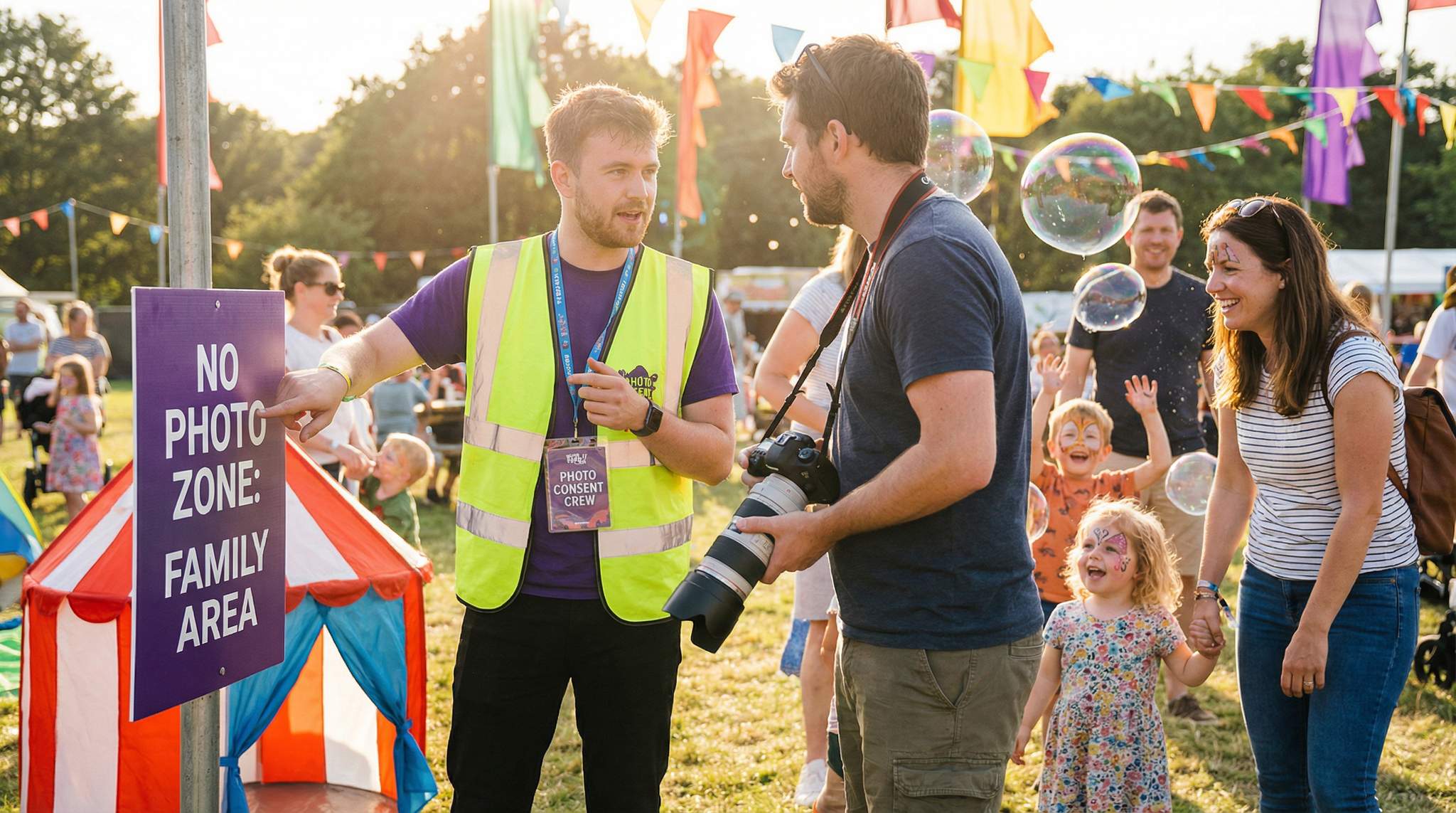
The first rule of photographing minors at festivals is simple: no intrusive close-ups unless a parent or guardian says it’s okay. Children’s expressions are adorable and candid moments are tempting to capture, but always put consent first. This applies whether you have a professional event photographer roaming the grounds or just enthusiastic attendees with cameras. Festival organisers should explicitly ban close-up photos of any child unless a guardian has given permission on the spot.
How does this work in practice? Many events have found straightforward ways to enforce it:
Grow Your Social Following With Every Sale
Require social media follows, shares, or playlist adds to unlock presale access or special pricing. Turn every ticket purchase into audience growth.
- Official photographers ask first – If an official festival photographer spots a cute moment with a child, they approach the parent before snapping away. A simple “Is it okay if we take a photo of your child enjoying the festival?” goes a long way. Most parents will appreciate the courtesy, and often they’ll be happy to have the moment captured once you’ve asked.
- Credentialed photo staff – Issue identifiable badges or vests to your festival’s photographers. This way, parents know the person with the camera is an authorised professional, not a random stranger. Festivals like Kidzapalooza (the kids’ area at Lollapalooza in the US) and Austin Kiddie Limits (the family zone of Austin City Limits Festival) make their photo teams highly visible, which reassures parents and deters anyone with ill intentions.
- Attendee awareness – In announcements, signage, or festival programmes, state that attendees should avoid photographing other people’s children without permission. This sets the tone that your festival values privacy. For example, at some community fairs in Australia and Canada, organisers include gentle reminders like “Please respect each other – ask permission before photographing kids that aren’t yours.” This kind of peer expectation can discourage would-be shutterbugs from targeting kids in the first place.
By banning unapproved close-ups, you not only protect children but also protect your event’s reputation. Consider the Ventura County Fair incident in California: a well-meaning street photographer took candid shots of families and kids, only to be vilified online by parents who felt their children were put at risk. This incident highlights how street photography can spark controversy and impact a photographer’s professional life when subjects feel exposed. It’s a cautionary tale that what’s legally allowed (photographing in public) may still upset your audience. Clear festival rules and signage can prevent such confusion and ensure everyone is on the same page.
Create “No-Photo” Zones in Sensitive Areas
Even with consent rules in place, there are certain areas where cameras simply shouldn’t be allowed. Identify the sensitive spots at your festival and declare them “no-photo” zones. This is all about common sense and courtesy. Think about locations where children or anyone might reasonably expect privacy or feel vulnerable:
Planning a Festival?
Ticket Fairy's festival ticketing platform handles multi-day passes, RFID wristbands, and complex festival operations.
- Restrooms and Changing Areas – It should go without saying, but make it crystal clear: absolutely no photography near bathrooms, portable toilets, changing tables, or nursing mother stations. Posting signs that say “No Photography in this Area” helps remove any ambiguity. Family-centric festivals like Camp Bestival (UK) and Splore Festival (New Zealand) not only provide dedicated family facilities, but also station staff nearby to ensure privacy. A sign at the entrance to the kids’ bathroom area or baby-changing tent is a simple step that shows you mean business about respecting boundaries.
- Child Play Zones & Splash Pools – If your festival has a kids’ playground, water play zone, or similar, consider making parts of it no-photo zones (aside from parents photographing their own kids). Children might be running around in swimsuits or playing with abandon – the kind of moments that should stay fun and private, not on a stranger’s camera roll. For instance, some water parks and family festivals in Singapore and the UAE explicitly ban photography in kiddie pool areas to prevent any unwanted attention. Your festival can adopt a similar policy: let parents know they’re welcome to snap pics of their little ones, but others should refrain in these spots.
- First Aid and Lost Child Booths – Emotions run high if a child is injured or temporarily lost. The last thing families need is someone pointing a camera during these sensitive moments. Designate the vicinity of first aid tents and any lost child reunification point as camera-free zones. It’s both for privacy and out of respect for families dealing with stress.
Marking no-photo zones is not about being heavy-handed; it’s about creating safe spaces within your event. Use friendly but firm signage and mention these zones in your festival map or app. Train volunteers and security to gently remind anyone seen with a camera in those areas. Most attendees will understand and comply when they realize it’s about children’s safety. In fact, organisers of a major children’s festival in Singapore noted that after implementing no-photo zones around diaper-changing areas and playgrounds, many parents expressed relief – it allowed them to relax and enjoy the event without worrying about prying lenses.
Rapid Takedown Channels for Unwanted Photos
No matter how many precautions you take, photos of children will still end up being taken – sometimes by accident, sometimes by excited relatives, and sometimes by festival marketing teams eager to share the joy. Most of these are innocent, but if a parent or guardian is uncomfortable with an image that’s been posted, you need to fix it fast. That’s where a takedown request channel comes in.
Smart festival organisers set up a clear, easy way for attendees to request the removal of a photo or video from official channels. Here’s how:
- Dedicated Contact Method – Provide an email address, hotline, or form specifically for photo/video takedown requests. Make it something simple and obvious like
privacy@[YourFestival].comor a button in your festival app that says “Report Photo.” Publicise this channel on your website and in the post-event email to attendees. In fact, when one family festival introduced a dedicated photo-concern email, they found that just knowing it existed gave parents peace of mind – even if very few ever needed to use it. - Fast Response Team – Speed matters. Assign a staff member (or team, for a large festival) to monitor incoming requests and act immediately. If a parent contacts you to remove a Facebook post or delete a gallery photo of their child, respond within hours – not days. On social media, that might mean taking the content down first and asking questions later. A reputation for responsiveness can turn a potential complaint into praise. Consider the difference: “We asked the festival to remove our daughter’s photo, and they took it down within 30 minutes – very impressed!” versus radio silence that forces a parent to keep chasing you.
- Empower Frontline Staff – Not all unwanted photos will be on your official pages; sometimes a parent might spot an attendee or even a staff member taking pictures where they shouldn’t. Ensure your security and frontline festival staff know how to handle such complaints on the spot. They should feel empowered to approach photographers who are violating the rules (politely but firmly) or to escalate the issue to management if needed.
Having a rapid takedown process isn’t an admission of guilt or wrongdoing – it’s a customer service promise. It shows families that even if something slips through the cracks, you are ready to make it right. Over time, this builds immense trust. Festivals from the UK to India have reported that being proactive on privacy leads to positive word-of-mouth in parenting circles. It signals that you respect your audience beyond just selling tickets.
Free Tool: Size Your Festival Site
Zoned capacity planning for arena, campsite, parking and entry lanes — against UK Purple Guide and NFPA density standards. Finds your bottleneck zone.
Ethical Briefings for Photographers and Staff
Anyone photographing at your festival, from hired professionals to volunteers with a GoPro, should be on the same page about ethics and etiquette – especially regarding minors. A thorough briefing and clear guidelines are essential. In the rush of an event, photographers might be focused on getting that perfect shot; it’s your job to ingrain in them what is and isn’t okay.
Key points to cover in your photographer briefing:
Need Festival Funding?
Get the capital you need to book headliners, secure venues, and scale your festival production.
- Consent & Approach – Reinforce the golden rule: ask before photographing a child in any close-up or identifiable way. Even if the child is just one element of a larger crowd shot, if they’re clearly the focus, get permission. Teach photographers how to approach families courteously. For example, “Hi, I’m an official photographer for the festival. Your kids look like they’re having a blast with those bubbles – would you mind if I take a photo? We’d love to share how much fun everyone’s having.” This kind of friendly ask not only gains consent, it often leads to a better photo because the family feels respected and might even pose or smile.
- Respect Boundaries – Make it clear that if a parent or child says no, respect it and move on immediately – no grumbling or sneaking shots from afar. Also, instruct photographers that they must not take photos where it’s prohibited (e.g. those no-photo zones). It sounds obvious, but it must be said. If a great moment is happening in a sensitive area, tough luck – privacy comes first. For example, the producers of Roskilde Festival in Denmark (known for its progressive policies) brief their media teams that family camping areas and kid-focused zones are off-limits for B-roll footage unless explicitly cleared. This ensures accidental invasions don’t happen.
- Focus on the Fun, Not Individuals – Encourage photographers to capture the energy and spirit of the festival rather than zooming in on single children. Wide shots of kids and parents dancing together, or groups of families enjoying activities, can be just as vibrant and useful for marketing while being less intrusive. Many seasoned festival photographers say that candid wide shots or photos from behind (showing kids facing a stage, for instance) are safer choices that still tell a story. Brief your team to consider angles that don’t clearly show faces when possible, or to focus on performers and adults when doing close-ups, unless a child’s guardian has okayed a portrait.
- Social Media & Sharing – If you have hired photographers or influencers, set guidelines about what they can share on their personal channels. You might require that any photo of a minor taken at the festival not be posted on a photographer’s own Instagram or portfolio without explicit consent and a nod from festival management. This prevents well-meaning crew from accidentally violating a family’s privacy. In the age of instant uploads, a quick reminder here can save headaches later.
It’s wise to put these rules in writing – perhaps a one-page code of ethics that photographers and media team members sign. Cover any legal requirements too (for instance, some countries have laws about photographing minors), but equally crucial is setting the moral expectations. You want photographers who understand that being at a family-friendly festival is a privilege requiring sensitivity. Brief them, answer their questions, and encourage a mindset of “Would I be okay with this if it were my child’s photo?”. When your team is aligned on values, families attending will notice.
Adapting to Festival Size and Type
Every festival is unique. A small town’s weekend fair will handle photography differently than a massive international music festival with a family section. Yet, the principles remain consistent – it’s the execution that scales.
- Boutique Local Festivals – If you’re running a community or school event attended mostly by local families, you might know many attendees by name. Policy communication can be more informal: a pre-event email outlining photo guidelines, an announcement over the PA system by the host, and volunteers who can gently remind folks on the ground. Smaller events often rely on the community’s cooperative spirit. Still, don’t shy away from having rules just because everyone seems friendly – even one misunderstanding can cause upset. A local cultural fair in Mexico City found success by having the MC remind the crowd: “We have official photographers today; remember to smile if you see them and feel free to wave if you don’t want to be in a shot – they’ll understand!” This lighthearted approach kept things clear without feeling heavy-handed.
- Large-Scale Festivals – Big festivals with tens of thousands of attendees require more structure. Include your photography and privacy rules in the terms and conditions that ticket-buyers agree to. Put signage at entry gates like “Smile! You might be filmed or photographed today. Let our staff know if you have concerns.” Also, ensure you have enough staff to cover those sensitive zones and to field any reports. Large events might also use technology – for example, colour-coded wristbands that parents can pick up for kids who absolutely aren’t to be photographed. (A bright red wristband on a child could discreetly signal to photographers “do not photograph,” while a green one means “photographs are fine.”) At some major family festivals, systems like these have been warmly welcomed, as they give guardians an easy way to opt out visually and immediately.
- Different Cultures & Contexts – If your festival draws an international crowd or takes place in a country with strict privacy laws, adapt accordingly. In the European Union, for instance, GDPR has made organisers extra careful about how they collect and use images of individuals, especially kids. In parts of Europe, it’s common courtesy (and sometimes legal requirement) to blur or avoid showing children’s faces in published photos without consent. On the other hand, at many events in Asia and Latin America, parents might expect to pose for photos when asked, but still appreciate you going the extra mile on privacy. For example, when the International Kite Festival in Gujarat, India, began offering a simple photo consent form for children participating in kite competitions, it showed respect for both local and foreign families in attendance. Being sensitive to varied norms – and choosing the highest standard of respect as your default – ensures no one is put off.
Whether your event is a cosy one-day fête or a blockbuster weekend extravaganza, taking care of children’s privacy isn’t a “nice to have” – it’s non-negotiable. Tailor the level of enforcement to your scale, but always make the underlying philosophy clear: we value our young festival-goers, and we will guard their wellbeing and privacy.
Privacy Builds Trust (and Loyalty)
At the heart of all these efforts is a simple truth: when parents and guardians trust you, they will support your festival enthusiastically. Building a family-friendly reputation pays off in many ways. You’ll see:
Free Tool: Project Your Bar Revenue
Per-head spend benchmarks by event type turned into projected bar and food revenue, with a stock-mix estimate and gross-margin line. Free calculator.
- Higher attendance and return visits – Families talk. If they know your festival puts kids’ safety and privacy first, they’ll choose you over others. A mother in New Zealand might skip an event that had a privacy mishap and instead fly to one she heard handles kids’ issues well. Word-of-mouth among parents is powerful; being known as a trustworthy festival is a huge competitive advantage.
- Better content with cooperation – When you do want to take that perfect festival photo or video, having a trust-based relationship means more people say “yes.” You’ll get genuine smiles and willing participants for your marketing materials. Some organisers report that after implementing a consent-first photo policy, parents actually became more receptive to being photographed, because they appreciated the respect shown. Many families will happily pose or participate when asked politely. A nice side effect is that you can capture even better moments with everyone’s blessing – and many events share those photos back with the families as a thank-you, creating a win-win for memories and marketing.
- Fewer crises and complaints – Privacy-related issues can escalate quickly if mishandled. A single social media post from an upset parent can dent your festival’s reputation. In worst cases, legal action could even be pursued if someone feels a child’s rights were violated. By proactively banning intrusive photos and responding swiftly to concerns, you drastically reduce the risk of negative incidents. It’s much cheaper and easier to prevent fires than to put them out.
Above all, prioritising privacy is simply the right thing to do. It shows that your festival culture is one of respect, care, and community. In an age where personal data and images can so easily be misused, taking a stand for children’s privacy is a breath of fresh air. It tells every parent, “We’ve got your back. Enjoy the festival – we’ll handle the rest.”
Frequently Asked Questions
Do festival photographers need parental consent for photos of minors?
Festival photographers must obtain explicit parental consent before taking close-up or identifiable photos of minors. While general crowd shots are often permissible, ethical guidelines and festival policies typically require professionals to ask a parent or guardian for permission prior to capturing individual portraits to ensure privacy and safety.
What are common no-photo zones at family-friendly festivals?
No-photo zones include sensitive locations where attendees expect privacy, such as restrooms, changing tables, nursing stations, and first aid tents. Many organizers also restrict photography in children’s play zones and splash pools to prevent unwanted attention and ensure families feel safe while children are playing.
How should festivals handle requests to remove photos of children?
Organizers should establish a rapid takedown channel, such as a dedicated email address or hotline, to process removal requests immediately. Response teams must act within hours to delete unwanted images from official social media or galleries, prioritizing parental comfort over marketing content to maintain trust.
What guidelines should be included in a festival photographer briefing?
Photographer briefings must emphasize asking for verbal consent before photographing children, respecting refusal immediately, and avoiding designated no-photo zones. Staff should be instructed to focus on wide shots capturing the event’s atmosphere rather than individual minors, unless a guardian has explicitly approved a portrait.
How can festivals identify official photographers to attendees?
Events should issue highly visible, branded badges or vests to credentialed photographers. This identification helps parents distinguish authorized professionals from strangers, providing reassurance that the person with the camera is accountable to the festival organizers and adhering to specific safety and privacy codes of conduct.
How can large festivals manage photo consent for minors?
Large events often utilize color-coded wristband systems where specific colors indicate a child cannot be photographed, allowing photographers to identify opt-outs visually. Additionally, organizers should include privacy policies in ticket terms and conditions and place clear signage at entry points to set expectations for all attendees.
Why is a strict child photography policy important for festivals?
Implementing strict child photography policies builds immense trust with parents, leading to higher attendance and stronger loyalty. Proactively protecting privacy reduces the risk of social media backlash or legal complications and creates a welcoming environment where families feel safe enough to relax and enjoy the experience.
What signage is needed for festival photography policies?
Effective signage includes clear warnings in no-photo zones like restrooms and gentle reminders in public areas to ask permission before photographing others’ children. Entry gate signs should also inform attendees if official filming is occurring and provide contact details for anyone with privacy concerns.