Introduction
Press coverage is the lifeblood of film festivals, amplifying their reach far beyond the screening rooms. Managing press accreditation and media centres effectively can elevate a festival’s profile and ensure that filmmakers, sponsors, and audiences all get the attention they deserve. From small indie film festivals in local communities to global events like Cannes or Busan, a fair and organised approach to media management is essential. Festival organisers around the world have learned that treating journalists as valued partners – by vetting credentials carefully, providing excellent working facilities, and facilitating coverage opportunities – pays off in widespread positive publicity. This guide dives into best practices for handling press accreditation and media centres, drawing on real examples and decades of festival production experience.
Fair Press Accreditation: Criteria and Caps
The first step to successful media relations is a fair press accreditation process. Demand for press passes often exceeds supply, especially at renowned festivals. The goal is to vet applications with clear criteria so that those reporting have legitimate credentials and a genuine interest in covering the event. By setting transparent standards and capacity limits, a festival can maintain credibility and avoid chaos.
Define Eligibility and Criteria: Establish upfront what qualifies someone for a press pass. Most film festivals restrict accreditation to working journalists, critics, photographers, and established media outlets covering film and culture. For example, the Toronto International Film Festival (TIFF) requires that each applicant be authorized by a media outlet to cover the festival and even asks returning journalists to submit proof of their previous festival coverage. This ensures that accredited press are actively producing content. Common criteria include:
– Relevant Focus: The outlet or journalist should cover film, arts, or entertainment regularly. (A food blogger might not qualify for a film festival press pass unless there’s a specific angle.)
– Professional Proof: Require recent published articles or broadcast clips. Many festivals ask applicants to provide links or clippings of past work, especially coverage of similar events.
– Audience Reach: Consider the outlet’s circulation or follower count. Major festivals often prioritise media with a broad audience (e.g. national newspapers, popular online film magazines) to maximise coverage. However, don’t discount niche outlets — a well-respected indie film blog or a local community newspaper can offer passionate, in-depth coverage that larger media might overlook.
– Assignment Letters: Some festivals request a letter or email from an editor confirming the journalist is on assignment to cover the event. This helps verify freelancers or new media creators.
By clearly stating such criteria on the accreditation application and website, you set expectations. Transparency is key. If your festival will only accredit, say, two people per media outlet, or has an overall cap on total press badges, communicate that upfront. For instance, the Festival de Cannes openly notes that the number of accreditations per media outlet is allocated based on the outlet’s size, specialization in cinema, and coverage plans. This kind of policy ensures a big broadcaster doesn’t gobble up ten passes while smaller outlets get squeezed out. It also pushes outlets to send their best-qualified reporters rather than a large entourage.
Free Tool: Size Your Festival Site
Zoned capacity planning for arena, campsite, parking and entry lanes — against UK Purple Guide and NFPA density standards. Finds your bottleneck zone.
To manage this influx of applications efficiently, modern organizers rely on dedicated festival accreditation software. Moving away from cumbersome spreadsheets, these digital platforms allow production teams to build custom application portals where journalists can easily understand how to get media accreditation. A robust system automates the collection of assignment letters, past coverage links, and headshots, routing them into a centralized dashboard for the PR team to review, approve, and seamlessly sync with on-site badge printing hardware.
Effective accreditation management for festivals goes beyond just approving major broadcast networks; it also involves establishing clear, standardized protocols for independent creators. For instance, when production teams outline the requirements for those researching how to get a press pass as a freelance photographer, they must look beyond traditional editorial assignment letters. Best practices dictate requesting a portfolio of published event galleries, verifying their agency syndication history, and requiring a signed media agreement that dictates image usage rights and stage access limits before granting credentials.
Planning a Festival?
Ticket Fairy's festival ticketing platform handles multi-day passes, RFID wristbands, and complex festival operations.
Fair but Firm Limits: Especially at large events, setting a cap on total press badges prevents overcrowding. The cap might be dictated by venue capacity (how many seats in press screenings or press conferences) or logistical limits. Apply caps uniformly so every outlet is treated equally under the rules. For example, major film festivals often allow one journalist and one photographer per print outlet, and perhaps a small crew for TV broadcasters (one reporter plus one camera operator). By capping numbers per outlet, festivals like Berlinale or Cannes maintain balance – international wire services attend alongside local city press, each within set limits.
Looking at top-tier global events provides excellent blueprints for access control. For instance, the Venice Film Festival press accreditation model utilizes a highly structured, color-coded tier system that dictates priority access to screenings and press conferences based on the outlet’s global reach and daily deadlines. Similarly, high-security music industry events like the BRIT Awards press accreditation process require rigorous pre-clearance, often integrating background checks and strict embargo agreements directly into their credentialing platforms before a pass is ever issued. Adopting these tiered methodologies helps mid-size and large festivals maintain order when demand vastly outstrips physical capacity.
For smaller or emerging festivals, you might initially cast a wider net. It can be beneficial to welcome bloggers, student journalists, and regional media to build buzz. Just be sure to still vet their credentials (e.g. look for consistent blogging or school media experience) to ensure they will produce quality coverage. As your festival grows, you can gradually tighten criteria. Above all, maintain a neutral, merit-based selection: avoid favouritism or only choosing media that give “glowing” reviews. Credibility comes from accrediting a diverse press corps – domestic and international, mainstream and niche – based on transparent qualifications.
Once decisions are made, inform applicants promptly. If someone is declined, politely explain if possible (“due to high demand, we could not accommodate all requests”) and encourage them to apply early next time or cover the festival via public access if appropriate. A fair, well-communicated accreditation process builds goodwill with media professionals and sets the stage for productive coverage.
Free Tool: Project Your Bar Revenue
Per-head spend benchmarks by event type turned into projected bar and food revenue, with a stock-mix estimate and gross-margin line. Free calculator.
Media Centre Facilities and Resources
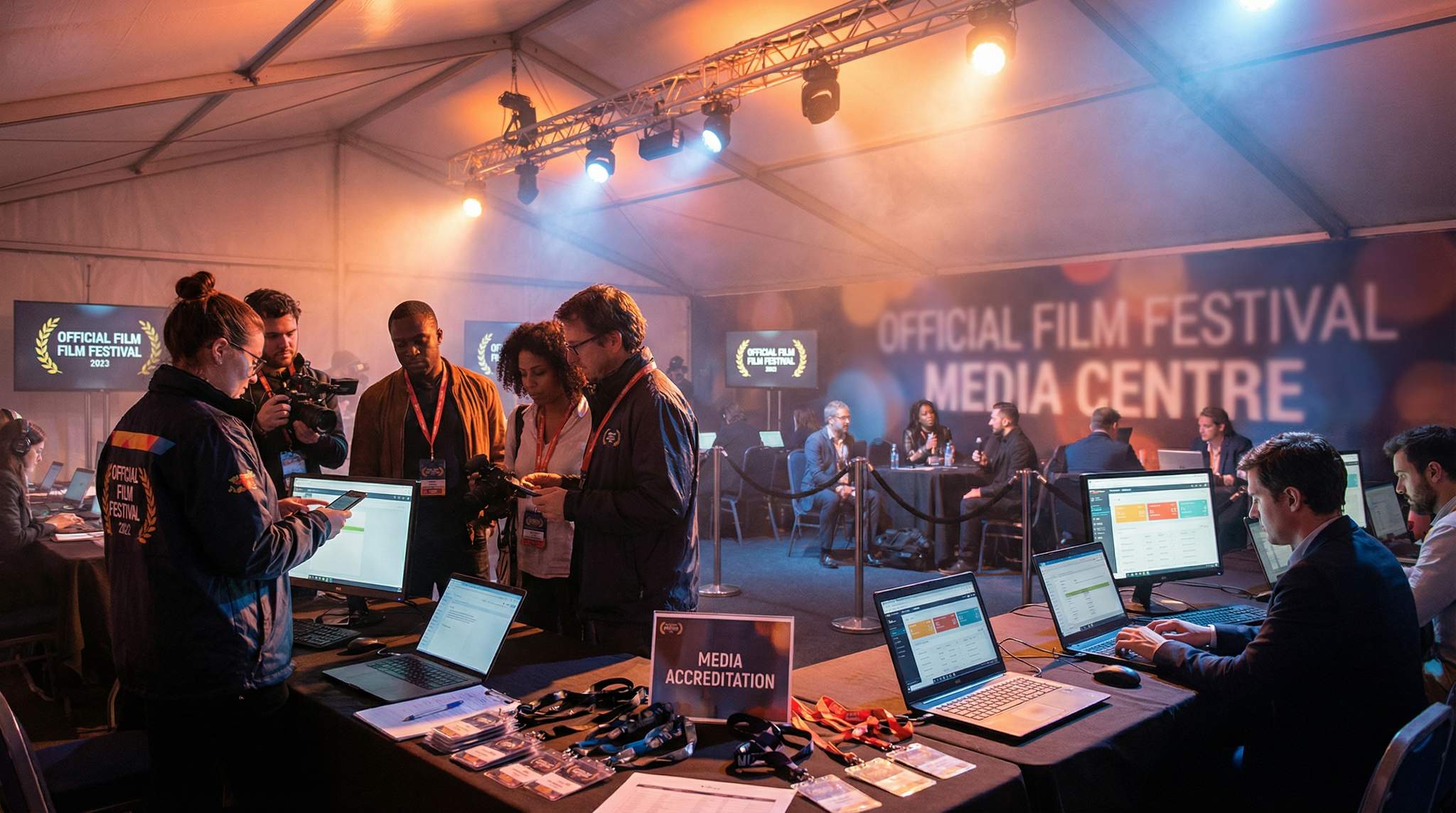
Accrediting the press is only step one. Next, festival organisers must set up a media centre that helps journalists do their jobs effectively. A well-equipped, well-run press room or media centre can significantly improve the quality and quantity of coverage your festival receives. Key elements include providing quiet workspaces, screeners, and daily briefing notes to support the press throughout the event.
Quiet Workspaces: Unlike the festival’s bustling public areas, the press area should be a calm zone where reporters can write, edit photos, and file stories on deadline. Choose a venue for the media centre that is close to the action (for convenience), but insulated from concert noise, crowds, or loud sponsor activations. Many festivals repurpose a conference room, library, or tent as a press lounge. Ensure there are plenty of tables, chairs, and reliable power outlets. High-speed internet (Wi-Fi and ideally some ethernet connections) is a must-have utility – journalists will be uploading high-resolution photos and videos or streaming live hits. Consider a backup internet source (like a secondary provider or portable hotspot) in case of outages.
Need Festival Funding?
Get the capital you need to book headliners, secure venues, and scale your festival production.
Festival organisers often get creative with workspace amenities. The Cannes Film Festival, for example, introduced an upgraded press room with extended hours (open 9 AM until midnight) and computer stations provided by a sponsor. In New Zealand or Australia, smaller festivals often partner with local tech companies to set up free Wi-Fi “café” corners for media. No matter the scale, having a quiet, comfortable area with coffee, water, and even light snacks can keep the press corps energised and happy. Some events also provide lockers or a secure area for equipment storage, which photographers especially appreciate if they need to stow gear.
Access to Screeners and Press Screenings: Film critics and reporters often struggle to catch every screening in a packed festival schedule. To help them cover more films, offer access to screeners or dedicated press screenings. Many top festivals run early morning press screenings or parallel “Press & Industry” screenings separate from public showings – this way, accredited media can watch the key films even if public screenings are sold out. For instance, at Sundance, press and industry screenings run throughout the day in separate cinemas, ensuring journalists have a chance to view the buzziest titles on their own schedule.
If physical screenings aren’t feasible for all films, consider providing digital screeners. This could mean giving journalists temporary access to an online screening library or sending password-protected streaming links for certain films. (Be mindful of piracy concerns – use a secure platform and watermarked videos.) During the COVID-19 pandemic, many festivals like Toronto and Karlovy Vary innovated with online screening rooms for press. Even as in-person festivals return, a digital library can be a huge perk for media who want to re-watch a film for their review or cover titles they missed due to scheduling conflicts. The easier you make it for press to see the content, the more coverage you’ll get.
Daily Briefing Notes: To keep the media informed and on track, prepare a daily press briefing or bulletin. This could be an email each morning to all accredited press and/or a print handout available in the press centre. The briefing should include:
– Schedule Highlights: Outline the day’s press conferences, photo calls, premiere red carpets, and any special events. Include times, locations, and who will be available (e.g. “10:00 AM – Press Conference with Director and Cast of Award-Winning Film at Press Centre Hall A”).
– Noteworthy Updates: Announce any schedule changes, added screenings, or venue updates. If a film’s screening time shifted or an extra Q&A was added, journalists need to know ASAP.
– Daily Festival News: Provide key facts or figures from the previous day – e.g. “Over 5,000 attendees enjoyed opening night” or “Spotlight on Japanese Cinema section begins today”. This helps journalists add context to their stories. Some festivals even share interesting anecdotes or viral moments from the day before, which smaller outlets might not have caught.
– Useful Resources: Remind press where to find materials like the online press kit portal, high-resolution photos, and video footage. For example, the BFI London Film Festival might include a link to its media library for film stills each day, or TIFF might list the contact info of publicists for each film premiering that day.
– Quotes and Soundbites: If your PR team has quotable remarks from directors or festival executives (perhaps from the previous night’s gala or an interview), you can provide a couple of pre-approved quotes in the briefing notes. Journalists may appreciate ready-to-use quotes, especially if they couldn’t attend that event.
Data-Driven Event Marketing
Track ticket sales, demographics, marketing ROI, and social reach in real time. Exportable reports give you the insights to make smarter decisions.
Regular briefings keep everyone on the same page and demonstrate that your festival is organised and media-friendly. In Mexico’s Morelia International Film Festival, for instance, morning press briefings (sometimes over coffee and local pastries) help Spanish- and English-language media stay informed in a bilingual environment. The tone of your communications should be professional but friendly – you’re essentially equipping the press to tell the festival’s story effectively.
Coordinating Interviews and Photo Opportunities
One of the most valuable services a festival can offer the media is help in arranging interviews and photo opportunities with filmmakers, actors, and other notable guests. Rather than leaving journalists to chase down talent on their own, a proactive press office will offer interview booking services and photo pool arrangements to streamline access.
Interview Booking Systems: High-demand festivals receive many requests from press to interview the star director or the breakout actor of a film. To handle this diplomatically, implement a system where journalists submit interview requests through a clear channel. For example, the Pula Film Festival in Croatia uses a straightforward approach: reporters fill out a short interview request form (available at the press centre or via email) specifying whom they want to interview. The festival’s public relations team then coordinates schedules with the talent and responds within about 24 hours with confirmed interview slots. By centralising this process, Pula’s team ensures that interviews are scheduled fairly (often prioritising outlets with the biggest reach or those on tight deadlines) and that guests aren’t over-booked.
For larger festivals, consider an online booking portal where accredited media can see available “press junket” slots or roundtable sessions. Festivals like Sundance and SXSW sometimes set up media days where talent is made available in a hotel suite or media centre, and press sign up for ten-minute one-on-one slots or attend group interviews. Make sure to have a press office staff member or volunteer present at each interview location to keep things on schedule and to assist with introductions. It’s also wise to prepare a brief for the talent so they know what outlet they’ll be speaking to and the general angle (particularly if there’s international press who might ask different types of questions).
Photo Pools and Red Carpets: Photographers have their own logistical challenges. At big premieres or red carpet events, you can’t fit an unlimited number of cameras at the front row. That’s where photo pools come in. A photo pool is essentially a system where a limited number of photographers are given access to prime positions, and they share their photos with other media. To implement this, you might:
– Issue special photo passes for major events to a select group of photographers (for example, wire agencies like AP/Reuters, major film magazines, and local press). These passes grant entry to a designated photo area. The press office of the Berlin International Film Festival (Berlinale), for instance, coordinates special photographer passes for events with restricted space and assigns spots along the red carpet and in press conferences.
– Set up an official festival photography team (staff or contracted photographers) to capture all key moments – red carpet arrivals, Q&As, candid shots, award ceremonies. Then promptly upload these images to a media server or cloud folder where all accredited press can download them. The Zurich Film Festival (ZFF), for example, uploads high-quality media images daily for press use, ensuring that even outlets without a photographer on site can access professional photos to accompany their stories.
– Organise photo calls for films and guests. These are usually daytime events in a controlled setting (like a backdrop with the festival logo or a scenic spot at the venue) where accredited photographers are invited to take photos of the cast and crew. Manage photo calls with a sign-in or limited slots if needed, and have staff on hand to position photographers. Some festivals even do tiered access: a first row for a select few and a second row for others, rotating who gets front position.
For newer production staff or PR volunteers who might ask, exactly what is a photocall for movies? In festival operations, it is a highly orchestrated, brief media event—usually lasting no more than 10 to 15 minutes—where the cast and director pose for accredited photographers against a branded step-and-repeat or scenic backdrop, entirely separate from the formal red carpet premiere. Structuring these dedicated sessions prevents red carpet bottlenecks and ensures all approved agencies get clean, well-lit promotional shots.
Free Tool: When Should You Announce?
Pick your event date and genre — the free planner outputs a recommended announce, presale, on-sale and reminder schedule anchored to how your audience actually buys.
By carefully managing photography, you prevent the chaotic scrum of too many photographers jostling for shots. It also gives fair access – perhaps a rotation system where, if only a dozen photographers can enter a small venue for an awards ceremony, you ensure a mix of international and local outlets are represented in that pool. Always communicate the rules clearly: if there’s a time limit or a “no-flash policy” in a photo call, let everyone know in advance.
In addition to photos, consider the video needs of TV and digital outlets. If space permits, designate an area for video crews on red carpets (with a clear line-of-sight to interview talent). If not, arrange for a video pool feed – for example, one camera crew films the press conference or Q&A and shares footage with others. Festivals like Venice and Cannes often live-stream their press conferences and make that footage available to media for reuse.
Overall, facilitating interviews and photos in an orderly way boosts your festival’s coverage. Journalists appreciate when things are well-run – a quiet room to chat with a director, a chance to get that perfect shot – and they’ll remember the professional hospitality. This goodwill can translate into more enthusiastic articles and long-term relationships with media outlets.
Tracking Coverage Volume, Tone, and Reach
After the excitement of screenings and red carpets winds down, the work shifts to analyzing the media coverage your festival earned. It’s crucial to track coverage volume, tone, and reach to understand the impact of your press efforts and to inform future strategy.
Monitor Press Coverage: Throughout the festival (and immediately after), have your team compile all press clippings, online articles, TV segments, radio mentions, and social media buzz related to the event. Set up Google Alerts or use media monitoring services (like Cision, Meltwater, or national press clipping bureaus) to catch as many mentions as possible. You could designate a staff member or hire a PR agency to do daily monitoring. Volume is the first metric – how many distinct pieces of coverage did the festival generate? Break it down by type: e.g. 120 online articles, 15 print newspaper pieces, 10 TV news segments, 30 blog posts, etc. This raw count alone is useful to gauge the festival’s media footprint compared to previous years or similar events.
Assess Tone and Content: Just getting coverage isn’t enough; you want to know if that coverage was positive, neutral, or negative in tone. Have the team read or watch the key coverage and do a basic sentiment analysis. For instance:
– Did most reviewers praise the festival’s film selection and organization, or were there criticisms (long queues, technical issues, etc.)?
– Are articles focusing on the festival’s highlights and successes? Are any controversies or problems being widely reported?
Create a simple report tallying positive vs. critical coverage. If you find pockets of negative feedback (say, multiple outlets complained about a particular logistical issue), this is valuable insight. You can address it in future planning or even respond with a post-festival statement if needed. On the flip side, knowing that, for example, “20 international outlets hailed the festival’s diversity of films” is a strong indicator you’re meeting your mission, and you might quote those in marketing materials.
Accept Payments Across 13 Countries
Local currency processing via Stripe, Razorpay, Xendit, Paystack, and OXXO across 13 countries with region-specific payment methods.
Measure Reach: While volume counts the pieces, reach estimates how many people likely saw those pieces. This can be tricky, but use available data: many media outlets provide circulation numbers or unique visitor counts. For online articles, you might use an SEO tool or information from the outlet to estimate viewership. Social media shares of articles can also amplify reach. Some festivals use PR agencies that produce an advertising value equivalence (AVE), translating coverage into a monetary value if it were paid ads. Even if you don’t use AVE, compile a summary like, “Total potential audience of all coverage: 50 million worldwide”. Sponsors and stakeholders love to hear that number, as it shows the festival’s influence.
Consider Geography and Language: It’s not just how much coverage you get, but where it appears. For festivals in culturally diverse regions, tracking coverage by geography or language is insightful. A festival in India, for instance, might compare local Hindi or regional-language press coverage to English-language international coverage to gauge its global impact. The Busan International Film Festival in South Korea reportedly tracks domestic press hits separately from foreign press to understand its resonance at home versus abroad. Likewise, the Singapore International Film Festival could evaluate how much Southeast Asian media coverage it receives versus coverage in Western film trade publications. Breaking down your media report by market and language helps identify whether you’re reaching the audiences you intend – be it locally, regionally, or worldwide – and can inform next year’s media outreach focus.
Internal Debrief and Reporting: Once you have the data, prepare an internal report for the festival team and key partners. Highlight major media hits – “The New York Times published a feature on our festival’s winner” or “BBC World News aired a 3-minute segment from opening night”. Also note accomplishments like successful execution of the press programme (e.g. 100% of scheduled press interviews took place without a hitch). If you track which accredited outlets actually produced coverage, that’s golden information: you might find, for example, that out of 200 accredited media, 180 published something. If a few did not, perhaps next year you give their spot to someone else – a gentle way to continually refine your press list to those who deliver value.
Sharing the coverage report with your team boosts morale (it’s gratifying to see the fruits of all that hard work). Moreover, use the findings for marketing and sponsorship purposes. Publicly thanking the press on social media or in a wrap-up announcement (“We are humbled by the amazing media coverage from over 15 countries highlighting our festival”) can strengthen media relations. And when pitching to sponsors or funders, demonstrating that the festival achieved broad, positive media exposure is a compelling argument for support.
Finally, don’t forget to solicit feedback from the press themselves. Some festivals send a short survey to accredited journalists after the event, asking about their experience with the accreditation process, the media centre, and overall impressions. This direct feedback can uncover what worked well and what needs improvement from the journalists’ perspective. It also shows you value the press not just as coverage generators but as partners in the festival’s mission to celebrate cinema.
Frequently Asked Questions About Media Accreditation
What features should organizers look for in festival accreditation software?
Event producers should look for credentialing platforms that offer customizable application forms, automated approval workflows, secure document uploads (for assignment letters and ID), and seamless integration with on-site badge printing and RFID access control systems.
How do major events structure their press passes?
Top-tier events utilize tiered access models. For example, Venice Film Festival press accreditation uses color-coded badges to prioritize entry for daily news outlets over weekly magazines, while BRIT Awards press accreditation incorporates strict security pre-clearance and specific zone access (e.g., photo pit vs. press room) directly into the badge data.
How should organizers evaluate freelance photographers applying for media access?
Comprehensive accreditation management for festivals requires specific criteria for independent media. Organizers should ask freelancers to provide proof of previous event coverage, a clear plan for where their images will be pitched or published, and require them to sign a media agreement outlining usage rights and access zones.