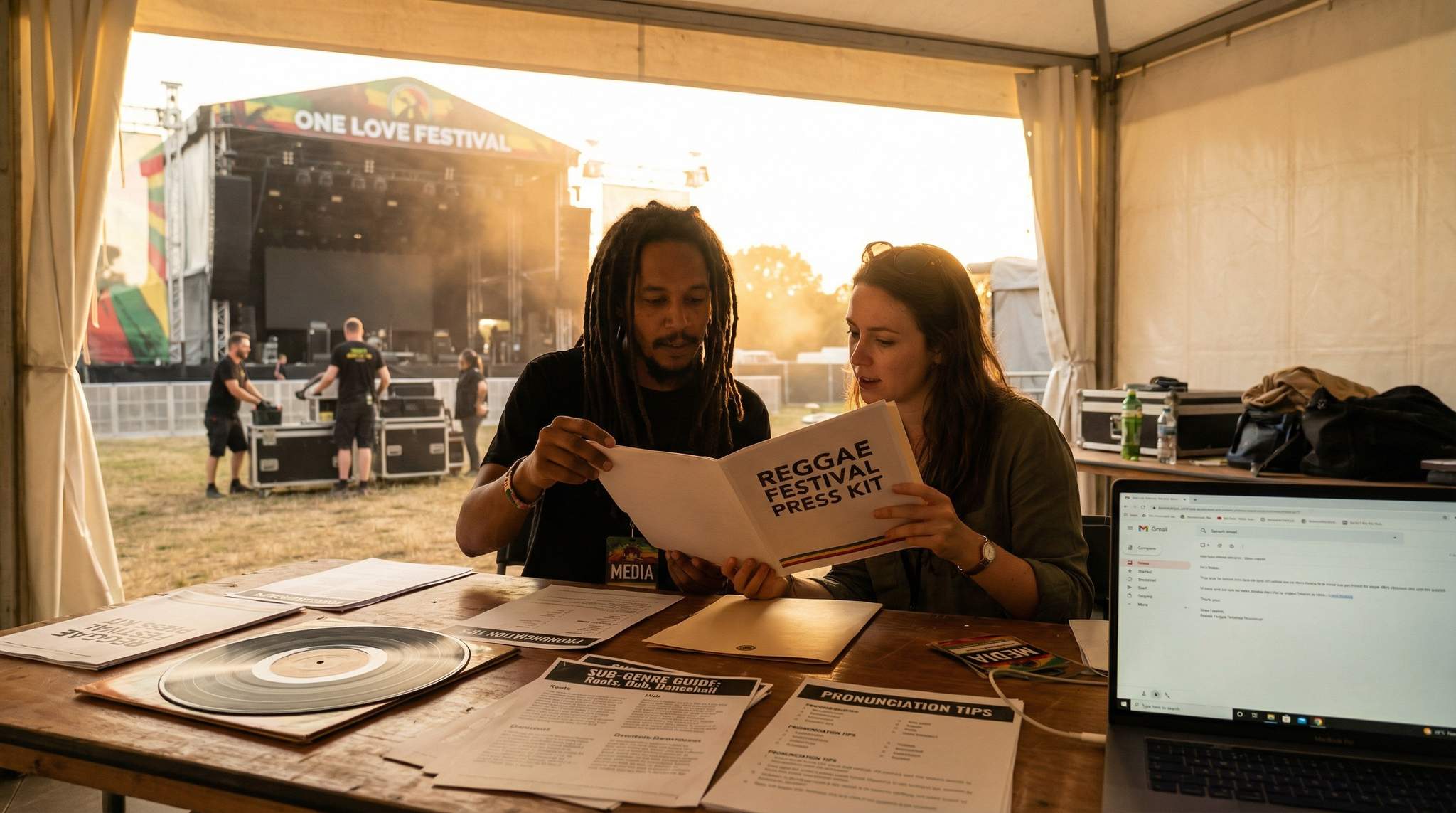
Organising a reggae festival involves more than booking great artists – it means presenting a rich cultural movement to the world. One powerful way to do this is through a well-crafted press kit that educates editors about reggae’s depth, rather than letting stereotypes fill the gaps. Seasoned festival producers understand that if you teach the media about reggae’s history, terminology, and human stories, you empower them to write more insightful coverage. The result? Articles that go beyond clichés of “dreadlocks and sunshine” and instead celebrate the true spirit of your event.
In this guide, an experienced festival organiser shares practical tips on building press kits that highlight reggae’s lineage, diversity, and community. From providing sub-genre context and pronunciation guides to offering vibrant photos, videos, and expert contacts, these steps will help any reggae festival – whether a local community gathering or a world-renowned extravaganza – earn deeper, more respectful media coverage.
Why Educating Editors Matters in Reggae PR
Media stereotypes about reggae can be persistent. Many editors and journalists, especially those unfamiliar with the genre, might default to the same tired tropes – references to Bob Marley, Rastafarian colours, or vague “island vibes.” While there’s nothing wrong with celebrating Marley’s legacy or good vibes, reggae encompasses far more. It spans multiple sub-genres, generations, and global scenes. If coverage ignores this rich tapestry, festivals and artists are often painted with a one-dimensional brush.
By proactively educating editors, festival press kits can break these patterns. When journalists receive background context and cultural insights, they’re less likely to rely on clichés or mislabel artists. Instead of describing every act as simply “reggae,” they might note the difference between a roots reggae band and a dancehall MC, or mention the Jamaican sound system tradition behind your DJ stage. In short, an educational press kit leads to articles that treat reggae with respect and accuracy – which benefits the festival, the artists, and the readers.
Free Tool: Project Your Bar Revenue
Per-head spend benchmarks by event type turned into projected bar and food revenue, with a stock-mix estimate and gross-margin line. Free calculator.
Example: The team behind City Splash Festival in London explicitly framed their event in cultural context. Their press materials explained how reggae’s influence “birthed everything from Ska, Rocksteady, Dub, Roots, Dancehall, Lovers Rock to … Jungle, Garage, Grime and Drum and Bass”, underscoring reggae’s 50-year impact on British music as highlighted in City Splash Festival’s mission statement. An editor armed with these facts can immediately see story angles beyond the stereotype of “just another reggae show.” The result is coverage that situates the festival as a cultural celebration, not a caricature.
Include Lineage Notes and Genre Context
One of the best ways to educate through a press kit is to provide lineage notes – brief explanations of reggae’s history and how your festival or artists fit into it. Reggae has a proud lineage stretching from the late 1960s to today, with roots in earlier genres like ska and rocksteady. Don’t assume every editor knows this. A few well-placed sentences in your press release or media kit can illuminate the evolution:
Planning a Festival?
Ticket Fairy's festival ticketing platform handles multi-day passes, RFID wristbands, and complex festival operations.
- Highlight historical milestones: Mention if your festival coincides with an anniversary (e.g. “2024 marks 55 years since the term ‘reggae’ was coined on a Toots & The Maytals record”). If you have legacy acts, note their place in history (e.g. “The Mighty Diamonds, formed in 1969, bring authentic rocksteady harmonies to the stage”). This helps editors appreciate the significance of those performers.
- Connect the dots: If your lineup spans sub-genres or generations, explain the connections. For example, “Our Sunday headliner is a second-generation star – the son of a foundation reggae artist – bridging foundation reggae and the new school.” Or, “The festival showcases reggae’s journey from ska to dub to dancehall, all in one weekend.” By framing the event as a journey through reggae’s lineage, you invite journalists to write a narrative, not just a list of acts.
- Global context: Reggae’s lineage isn’t only Jamaican. If relevant, mention the genre’s spread and local variations – e.g. British reggae in the 1970s, reggae en Español in Latin America, or the Pacific reggae scene. An international editor will find it intriguing that reggae has thriving offshoots on every continent.
These lineage notes turn your press kit into a mini-history lesson. They signal to editors that your festival has depth. Publications love when they can inform readers of something new; by providing the historical context, you make the journalist’s job easier and the resulting story richer.
Case Study: Rototom Sunsplash in Spain (one of the world’s largest reggae festivals) goes beyond simply listing artists. In press communications, they often mention cultural programmes like their on-site Reggae University, where historians, veteran artists, and academics discuss Jamaican music history, a concept detailed in Rototom Sunsplash’s Reggae University program. By highlighting such elements, Rototom’s team provides lineage and context that journalists can use to describe why reggae matters. It’s not just a music festival – it’s portrayed as a living seminar on reggae culture. This approach has helped Rototom gain international press coverage that delves into reggae’s social and historical significance, rather than just the headliners.
Use Accurate Sub-Genre Labels (No More Mislabeling)
Reggae music isn’t monolithic – it branches into roots reggae, dub, dancehall, rocksteady, ska, lovers rock, ragga, and more. A common pitfall in media coverage is careless labeling: calling a fast electronic dancehall track “reggae,” or not distinguishing between a dub producer and a roots harmony group. Your press kit should clearly identify sub-genres for each artist or program element, using the correct terminology. This not only educates editors but also prevents embarrassing mistakes in their articles.
- Identify each act’s style: In artist bios or the lineup section of your press release, include phrases like “– a UK dub ensemble,” “– Queens, NY based ska revivalists,” or “– Jamaican dancehall icon.” These descriptors ensure that journalists refer to them appropriately. It helps a lot if an editor unfamiliar with, say, lovers rock (the soulful romantic reggae popular in the UK) immediately knows what it is from your notes.
- Explain the terms: Don’t assume everyone knows the difference between dub and dubstep, or reggae and reggaetón (which are entirely different genres!). Include a short glossary if needed: e.g. “Dub – a reggae sub-genre featuring remix-style instrumentals pioneered by producers like King Tubby; Rocksteady – the late-’60s Jamaican style bridging ska and reggae, with soulful vocals,” etc. A sentence or parenthesis in the artist description can do the job (e.g. “The Skatalites – pioneers of ska (an upbeat precursor to reggae)”). Such explanations preempt confusion and prevent editors from mischaracterising the music.
- Be specific and truthful: Apply the right sub-genre labels rather than generic taglines. If your festival has a stage of modern Jamaican dancehall, say so; if it features reggae fusion or Afro-reggae artists, use those terms. It’s better for a media outlet to write “the festival’s lineup spans roots reggae, dub, and dancehall” than to inaccurately lump everything under one umbrella.
Providing accurate sub-genre info not only educates – it adds credibility. It shows that your festival respects the culture enough to get the details right, encouraging journalists to do the same. It can also spark storyline ideas. For instance, an editor might realize “Oh, there’s a strong dub presence this year – maybe I’ll angle my piece around the resurgence of dub.” You planted that seed by labeling things correctly.
Free Tool: Size Your Festival Site
Zoned capacity planning for arena, campsite, parking and entry lanes — against UK Purple Guide and NFPA density standards. Finds your bottleneck zone.
Real-World Example: At a panel during Rototom Sunsplash, Donisha Prendergast (Bob Marley’s granddaughter) noted that dancehall music should be distinguished from reggae—a sentiment captured in Reggaeville’s report on the 2013 festival panel—highlighting how outsiders often blur the lines. This is exactly why press kits must clarify genres. Similarly, France’s Sun Ska Festival (formerly Reggae Sun Ska) explicitly markets that it showcases “reggae in all its forms, from roots to ska, with dancehall, new roots and dub thrown in”, as noted in coverage of Sun Ska’s diverse musical approach. By naming each style, Sun Ska’s communications ensure that media recognize the festival’s diversity. When an outlet covers Sun Ska, they’re more likely to mention its mix of genres instead of treating reggae as a single sound.
Provide Pronunciation Guides and Language Tips
Reggae culture comes with its own colourful lexicon – Jamaican place names, artist nicknames, and patois (Creole) terms that might trip up an uninitiated reader or presenter. A thoughtful press kit anticipates this by including pronunciation guides or notes on language. This extra mile prevents mistakes and shows respect for Jamaican and reggae terminology.
Need Festival Funding?
Get the capital you need to book headliners, secure venues, and scale your festival production.
- Artist and crew names: If any performer has a name that’s commonly mispronounced, spell it phonetically in the press notes. For example: “Jah9 (pronounced ‘Jah Nine’)” or “Katchafire (catch-uh-fire)”. This is especially helpful if you have artists from non-English-speaking backgrounds or with stylized spellings. It ensures that when radio hosts or podcasters talk about the lineup, they say the names correctly, and print journalists might include the phonetics for their editors.
- Key terms in reggae and Rastafari: Consider providing a mini “Jamaican patois 101” for any slang or cultural terms you include. If your press release says “the vibe will be “irie”” or mentions a “sound clash,” add a brief explanation – e.g., “(‘irie’ [EYE-ree] meaning contented and happy, in Jamaican patois)” or “(a sound clash is a competitive DJ battle between sound systems)”. Not only will this educate the journalists, but some might even incorporate the definitions in their story, effectively teaching readers too.
- Place and festival names: If your reggae festival is in a location with a non-obvious pronunciation (say, a city or town name in the Caribbean or Africa), include that. For instance: “Held in Ocho Rios (pronounced O-cho Ree-os), Jamaica…” or a venue like “Dub Club @ Jacò, Costa Rica (Jacò = ha-KOH)”. Small details like these can save a foreign editor from guesswork.
- Avoiding language pitfalls: Gently guide press on respectful language. For example, if your material references Rastafarian beliefs, you might note that “Rastafari” is the proper term (not “Rastafarianism”), or that “Jah” refers to God. If you mention reggae’s global spread, clarify that “reggaetón” is Latin urban music distinct from reggae, so it’s not conflated in articles. These pointers help ensure coverage doesn’t inadvertently reinforce misconceptions.
By acting as a language coach in your press kit, you empower editors to write confidently about reggae topics. They won’t have to skip over intriguing aspects for fear of “getting it wrong.” Instead, they can dive in and even share the new terms with their audience. This lends authenticity to their coverage and positions your festival as truly culturally rich.
Include Captioned Photos (with Context) and Cleared Video
They say a picture is worth a thousand words – in reggae’s case, a great photo can instantly convey the energy and culture of your festival. A press kit should include high-quality images that editors can use freely, each accompanied by informative captions. Visuals not only grab attention in media articles but also educate by showing reggae culture in action. Here’s how to do it right:
- Choose images that tell a story: Go beyond the standard stage shot. Include photos of a massive sound system towering over a crowd, or a drummer playing Nyabinghi drums during a Rastafari ceremonial performance, or festival-goers dancing with Jamaican and African flags. Such images highlight reggae’s unique elements. A caption might read: “Crowds gather around the King Shiloh sound system at dusk – a scene reminiscent of Jamaican street dances, transplanted to our festival.” An editor who sees that learns what a “sound system” looks like and why it’s special. Sun Ska Festival in France, for instance, often publishes photos showcasing the diversity of reggae styles on their stages (ska dance crews, dub selectors, etc.), reinforcing that they present reggae in all its forms, a strategy often reflected in Sun Ska Festival’s visual media campaigns.
- Caption with context: Every photo caption is an opportunity to slip in mini-lessons. If the image shows something culturally significant, explain it. Example: “Members of the Rastafari Indigenous Village share traditional drumming and chanting on the Culture Stage – connecting festival attendees to reggae’s spiritual roots.” Or “Sister Nancy performs her iconic dancehall hit ‘Bam Bam’ – one of the first female dancehall anthems.” A good caption can provide name, role, and why that moment matters. Editors often copy captions verbatim or use them to fact-check, so you’re literally feeding them accurate info to use.
- Rights-cleared and credited: Make it clear that media have permission to use these photos (with proper credit). Provide photographer name and your festival’s name for credit lines. Journalists are wary of using images if rights are unclear – remove that worry by stating “Images are free to use for editorial coverage of [Festival Name]; please credit [Photographer] and [Festival].” This encourages outlets to include a photo in their story, which usually means a more prominent piece. Having striking images might even get you a feature spread in print or a thumbnail on a news homepage.
- Short video clips: If possible, supply a short, rights-cleared video – perhaps a 30-60 second festival highlight reel or an interview snippet with an artist or organiser. Many news sites love embedded videos. For example, a clip of your festival’s dancehall dance crew doing popular moves, or a quick tour of the festival’s Caribbean food court, can be gold. Be sure you have the rights (e.g. you produced it or have artist permission) and explicitly note that media can embed or use the footage with credit. A well-placed video can give editors the chance to show reggae culture to their online readers, not just describe it.
Incorporating rich media like photos and videos in your press kit paints a vivid picture of the festival. It reduces the chances of media using stock images of random reggae-related visuals (like that one of Bob Marley smoking – we’ve all seen it overused!). Instead, they’ll use authentic imagery from your event. This visual authenticity, coupled with educational captions, further steers the narrative away from stereotypes. Readers will see a modern, diverse reggae scene – perhaps sound system operators, diverse attendees, and cultural activities – rather than a cartoonish stereotype.
Pitch Human Stories Behind the Music
Editors are always hunting for a compelling human-interest story. Rather than pitching “just another music festival,” angle your reggae festival press kit around the people and cultural traditions that make it special. Reggae isn’t just music; it’s a community, a movement with roots in everyday life. By highlighting these human stories – from sound system engineers to dancers to the chefs serving Jamaican jerk chicken – you give journalists rich material for feature articles or sidebars. Here are key story angles to consider:
Data-Driven Event Marketing
Track ticket sales, demographics, marketing ROI, and social reach in real time. Exportable reports give you the insights to make smarter decisions.
Sound Systems and Selectors
The sound system culture is one of reggae’s greatest contributions to the music world. Yet, outsiders might not know what a “sound system” means in this context. Tell the story of your sound systems. For example:
- Do you have a renowned sound system crew at your festival (e.g. Stone Love, Channel One, or a local up-and-coming crew)? Provide their background. “Boston’s Rebel Sound crew will bring a custom-built wall of speakers, continuing the Jamaican tradition dating back to the 1950s, when DJs would set up sound systems on Kingston’s streets to start dance parties.” An editor can build a fascinating piece around this, especially if you offer quotes from the sound system operator about preserving that tradition.
- Highlight any sound clash or unique performance style they’ll do. Sound systems often MC and juggle records in a distinct way – explain that. “Our dedicated Sound System Arena will recreate an authentic yard-style sound clash each night, with selectors trading reggae and dancehall dubplates (exclusive tracks) to hype the crowd.” This could prompt a journalist to cover that aspect specifically, introducing readers to a less-known part of reggae.
- Humanize the players: Is there a notable personality involved (perhaps a veteran who toured with legends, or a young selector who built speakers from scratch)? Pitch their story. E.g., “Meet Sister Carol, one of the few female sound system owners in the region, who will be spinning roots reggae vinyl – carrying on a family legacy started by her father in Kingston.” These human elements make for great editorials and show reggae’s inclusive, grassroots nature.
Studios, Producers and Legacy
Reggae’s history is filled with iconic recording studios and producers – from Jamaica’s Studio One and Tuff Gong to UK’s Trojan Records scene. If your festival has connections to this production heritage, draw attention to it:
- Artist connections: Mention if any performing artist worked at a legendary studio or with a famed producer. “Headliner Lee ‘Scratch’ Perry (producer of Bob Marley) built many of reggae’s classic sounds in his Black Ark studio – he’ll be live-dubbing on stage, bringing that studio magic to the crowd.” Even if the average editor doesn’t know Perry, your note tells them why he’s significant, so they can convey that in their piece.
- Tribute or theme: If this year’s festival edition honours a particular era or label (say, ‘60s rocksteady or 40 years of VP Records), explain the significance. Provide a short anecdote: “Our second stage is nicknamed ‘Studio One’ this year, paying homage to the Jamaican studio where reggae icons like The Skatalites and Marcia Griffiths recorded – a nod that reggae aficionados will appreciate.” A savvy journalist might run with that and mention it in coverage, effectively educating casual readers about Studio One.
- Backstage stories: Sometimes the best human stories are behind the scenes. Did your festival’s sound engineer or one of your stage managers work with famous reggae acts or come from a lineage of reggae producers? It might be worth noting in a media tip sheet: “Our technical director, Jane Doe, learned her craft under the great King Tubby’s apprentice – ask her how dub mixing techniques will be used between sets to keep the audience grooving.” These are the sort of details that can lead to a full feature if a publication’s editor finds it intriguing enough for an interview.
Dancers and Performers
Reggae and its cousin dancehall come with vibrant dance traditions. From ska’s energetic steps to dancehall’s latest moves, this performative aspect is a story in itself:
- If your festival features a dance crew, dance workshops, or traditional cultural performances, shine a spotlight on them. For example: “Jamaica’s famed Dancehall Queen Junko Kudo will judge a dance competition at the festival, showcasing the athletic and expressive dance styles that evolved alongside reggae music.” This gives journalists a colourful angle – they might not normally cover dancing at a music fest, but now they have a reason to mention it.
- Community engagement: Perhaps your festival runs a program with local schools or youth groups to teach reggae dance or drumming. Pitch that human story: “Each year, our festival’s opening act is a performance by local youth from the Reggae Dance Academy, where kids learn ska and dancehall moves – building confidence and cross-cultural understanding through music.” Editors love stories about music education and youth, so this could earn you a feature in community or education sections of news.
- Individual artist stories: Focus on artists who themselves have compelling personal narratives. Reggae is full of them – the singer who overcame hardship in Kingston’s Trenchtown, or the band from Indonesia that fell in love with Jamaican beats against the odds. Include a tidbit in their bio: “Lead singer Fia was a traditional Samoan dancer before she became a reggae artist, bringing Polynesian dance influences into her stage show.” Such details break stereotypes by showing reggae’s global reach and the human experiences behind it.
Foodways and Culture
They often say you can’t separate reggae from Jamaican and Caribbean culture, and that includes food, art, and lifestyle. Many reggae festivals celebrate this through food stalls, craft vendors, and cultural exhibits. Don’t overlook these in your press kit – they can be as newsworthy as the music!
- Culinary angle: If your festival boasts an enticing food court of Caribbean cuisine, play it up. “From jerk chicken on the grill to Ital (vegetarian Rastafarian) stews, our festival’s food village is a tour of the Caribbean palate.” List a few standout vendors: “Miss Lily’s from Kingston will be serving their famous patties, and London’s Dubplate Kitchen brings its award-winning vegan jerk.” Food writers or lifestyle sections might latch onto this, and even if not, it enriches the narrative of your festival as a cultural experience.
- Special diets and values: An interesting example is Jamaica’s Rebel Salute festival, which famously has a no-meat, no-alcohol policy, aligning with Rastafarian livity principles, which is central to Rebel Salute’s strict food and beverage policy. As a result, the festival is known just as much for its healthy ital food offerings as for its music. When press cover Rebel Salute, they inevitably mention this unique aspect – it stands out. So, if your festival has any similar twist (maybe a sustainability focus, farm-to-table food, or a cultural food competition), make sure to pitch it. “Our festival forbids single-use plastics and partners with local farms to serve organic ital cuisine – integrating reggae’s message of harmony with how we eat and party.” This can transform a music event into a lifestyle story that attracts a broader media audience.
- Beyond food: Don’t forget other cultural elements: craft markets with African and Caribbean artisans, live painting or art walls, soccer matches or domino tournaments on site – these show reggae as a living culture. Provide a human face: “Longtime vendor Uncle Jerome, a master craftsman from St. Lucia, will be selling hand-carved drums – he’s been part of our festival family for 10 years, teaching attendees about the instruments’ traditions.” A local newspaper might love profiling him as part of their festival write-up.
By pitching these human stories, you feed editors real content to sink their teeth into. It moves coverage from “who’s headlining” to “why this festival is a cultural happening.” Especially for reggae, which is rooted in stories of struggle, celebration, and community, this approach fights stereotypes. Instead of the usual imagery of just laid-back rastas, the media pieces can highlight entrepreneurs, artists, activists, and enthusiasts who give reggae festivals their soul.
Offer Expert Contacts for Context and Quotes
Journalists often appreciate having expert voices to quote for context – it adds weight and credibility to their articles. In your reggae festival press kit, consider including a short list of expert contacts who are willing to speak about reggae music, history, or the significance of your event. This might seem above-and-beyond, but it can dramatically increase the quality and depth of coverage you receive.
- Who to consider as experts: Think of reggae scholars, veteran industry figures, or cultural leaders connected to your festival. For example, a music professor who studies Caribbean music, a well-known reggae radio DJ, or the festival’s founder if they have decades of experience. Even an artist on your lineup who is especially articulate about reggae’s culture could serve in this role. Make sure to ask their permission first, of course.
- Provide their details and angle: In the press kit, list the expert’s name, title/role, and what insight they offer. “Dr. Jane Smith, Musicologist at University of the West Indies – available to discuss reggae’s global impact and history (she can comment on why reggae has thrived in places like Africa and Europe). Contact: jane.smith@uwi.edu.” Or “Roger Steffens – reggae historian and author – available for interviews about the legacy of Bob Marley and roots reggae’s message.” By doing this, you save journalists the trouble of hunting for credible voices. They might lift a quote from a pre-recorded interview you did with the expert, or request to speak with them directly for a more extensive feature.
- Pre-prepared quotes: You can also include a few ready-made quotes from these experts in your press release or media kit. For instance: “‘Reggae festivals today carry the torch of a music that has always been about more than entertainment – it’s about identity and resistance,’ says Mykaell Riley, Director of the Black Music Research Unit in the UK, noting that events like [Your Festival] help keep that spirit alive.” An editor can plug this quote into their story for context, which immediately elevates the piece above a standard event listing. It reads as if they did deeper research (thanks to you doing the legwork).
- Why this earns coverage: When you provide expert contacts or quotes, you’re basically giving journalists the ingredients for a broader narrative. A local news writer might initially only plan to mention your festival in a weekend events roundup. But if they see a compelling quote about reggae’s social impact, they might decide to write a dedicated article exploring that angle, using the quote and maybe interviewing the expert or festival director. You’ve now graduated from event listing to a feature story.
Including expert perspectives shows that your festival welcomes analysis and discussion – positioning it as a serious cultural event. It also builds goodwill with media: you’re helping them craft a better story, which they certainly appreciate. Over time, if you consistently supply good contacts and information, certain journalists may even come to rely on your festival as a go-to source for reggae-related content. That means more and better coverage whenever reggae is in the news.
Education Earns Deeper Coverage
At the heart of all these tips is a simple truth: the more you educate and inform, the deeper the coverage you’ll receive. When reggae festivals provide rich context, they tend to get written about in a richer way. Instead of a few lines about “sunny tunes and laid-back vibes,” your event might be covered as a multifaceted celebration – of music, culture, history, and community.
By teaching editors (and through them, the public) about reggae’s lineage, language, and lives, you encourage them to move past surface-level reporting. You also differentiate your festival in a crowded market. An informed journalist will see your reggae festival not as a clone of every other, but as something unique – perhaps the one that champions sound system culture, or bridges generations, or uplifts local Caribbean communities. That becomes the story they tell.
Finally, educating the media helps preserve reggae’s legacy. Every time an article correctly explains a sub-genre or shares a real reggae story instead of a stereotype, readers learn and perceptions shift, bit by bit. Your press kit can play a part in that positive change. And from a business perspective, when coverage is compelling and authentic, it attracts more attendees who feel there’s substance behind the event.
In summary: Empower the storytellers (the media) to tell your story well. The effort you invest in an educational press kit is returned in the quality of press you get. Over years, this builds your festival’s reputation as not just an event, but an institution in the reggae world.
Frequently Asked Questions
Why is educating the media important for reggae festival PR?
Proactive education in reggae PR prevents journalists from relying on clichés like “dreadlocks and sunshine” or vague “island vibes.” By providing cultural context, history, and terminology, festivals empower editors to write insightful, accurate coverage that respects the genre’s lineage rather than reinforcing one-dimensional stereotypes.
How can press kits prevent stereotypes in reggae festival coverage?
Press kits combat stereotypes by explicitly detailing reggae’s rich history, lineage, and diverse sub-genres within the materials. Providing context about the evolution from ska to dancehall, along with accurate terminology and cultural background, guides journalists toward writing narratives that celebrate the music’s depth rather than defaulting to tired tropes.
Why should press kits distinguish between reggae sub-genres like dancehall and dub?
Clearly distinguishing sub-genres prevents media from inaccurately labeling all Caribbean music as generic “reggae.” Identifying specific styles like roots, dub, lovers rock, or dancehall in artist bios adds credibility, ensures factual accuracy in reporting, and helps journalists identify unique story angles regarding specific musical trends or traditions.
What type of images should be included in a reggae festival media kit?
Media kits should feature high-quality, rights-cleared images that depict specific cultural elements, such as sound systems, Nyabinghi drumming, or dancehall crews. Each photo requires a detailed caption explaining the cultural context, which educates editors on the visual aspects of reggae culture and encourages the use of authentic imagery over stock photos.
How should reggae terminology and pronunciation be handled in press releases?
Press releases should include phonetic pronunciation guides for artist names and locations to ensure accurate reporting. Additionally, providing a glossary for Jamaican Patois terms or specific concepts like “sound clash” or “ital” prevents misuse of language and empowers journalists to confidently incorporate authentic cultural terminology into their stories.
What are effective human interest angles for reggae festival publicity?
Effective publicity angles focus on the people and traditions behind the music, such as the history of sound system operators, the discipline of dancehall dancers, or the culinary heritage of jerk and ital food vendors. Highlighting these cultural and community elements provides journalists with rich material for feature articles beyond standard lineup listings.
Why include expert contacts in a music festival press kit?
Including contacts for historians, academics, or veteran industry figures adds significant weight and credibility to festival coverage. These experts provide journalists with authoritative context and quotes regarding reggae’s global impact or history, elevating the resulting articles from simple event announcements to in-depth cultural features.
How can lineage notes improve reggae festival media coverage?
Lineage notes improve coverage by connecting current lineups to reggae’s historical evolution, from ska and rocksteady to modern styles. Highlighting anniversaries, family connections, or the progression of genres turns a press kit into an educational resource, allowing journalists to frame the festival as a significant chapter in a broader musical narrative.