A film festival’s rush line – the last-minute standby queue for sold-out screenings – can be a place of high drama and excitement. Done right, it offers hopeful fans a fair shot at that must-see film; done poorly, it breeds frustration and tarnishes the festival’s reputation. Festival organizers around the world have learned that managing rush lines with fairness, transparency, and care is crucial. From the Sundance Film Festival’s electronic waitlist system to old-fashioned first-come-first-served queues at local community fests, the goal is the same: make every attendee feel the process is fair. This article shares seasoned advice and real examples on how to create rush lines that not only feel fair, but also turn waiting in line into a positive part of the festival experience.
Why Fair Rush Lines Matter
Reputation and Trust: Festivals thrive on community buzz and goodwill. Attendees talk; an unfair or chaotic queue that leaves people feeling cheated will quickly spread negative word-of-mouth. Conversely, a well-managed, fair rush line wins fans’ trust and generates positive stories. For instance, at Toronto International Film Festival (TIFF) – which is renowned for its passionate public audiences – organizers maintain orderly rush lines with volunteer staff, ensuring first-come-first-served entry based strictly on who showed up earliest. This consistency reinforces TIFF’s image as a fan-friendly festival.
Safety and Comfort: Long, disorganized lines aren’t just a fairness issue – they pose safety and logistic challenges. Crowds that wrap around city blocks or theater lobbies can impede traffic, annoy neighbours, and even create hazards (especially if people stampede for seats). By creating fair, transparent procedures, festival producers can keep crowds calmer and more cooperative. Clear rules and communication prevent arguments in line, and thoughtful amenities (like water or shade) prevent potential health issues. These measures aren’t just courteous – they can avert real problems like heatstroke on a hot afternoon or frayed tempers in a packed queue. In short, fairness goes hand-in-hand with risk management.
Audience Engagement: Importantly, the rush line is filled with some of the festival’s most enthusiastic attendees – people willing to drop everything and line up in hopes of a film. Treating them fairly isn’t just the right thing to do; it’s a chance to engage your core audience. Many festivals treat the rush queue as an extension of the event’s community, sometimes even as a “rite of passage” for die-hard cinephiles. By making the wait feel organized and acknowledged, you turn a potentially negative experience into one that fans embrace as part of festival culture.
Free Tool: Size Your Festival Site
Zoned capacity planning for arena, campsite, parking and entry lanes — against UK Purple Guide and NFPA density standards. Finds your bottleneck zone.
Number Rush Tickets for Transparency
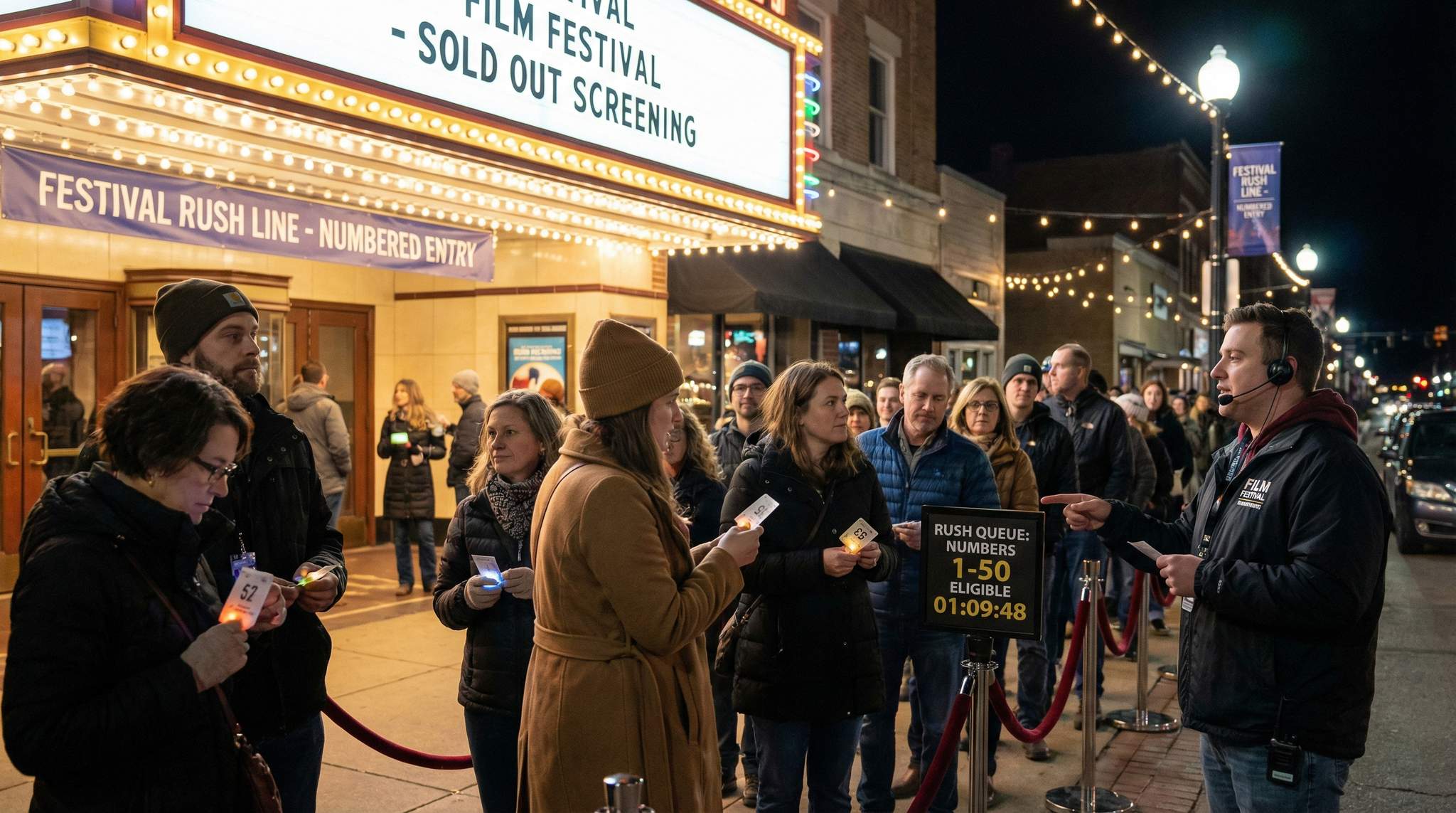
A key step in making rush queues feel fair is introducing a numbering system for those waiting. Rather than a jostling mass of people unsure of their standing, attendees can receive a numbered rush ticket or token when they join the line. This simple measure has huge benefits: it clearly preserves each person’s place in queue (deterring line-cutting), and it gives everyone a tangible sense of progress toward the door.
Many major film festivals have moved in this direction. The Sundance Film Festival in the U.S. pioneered an eWaitlist system where, two hours before a screening, hopeful attendees use a mobile app to secure a waitlist number. They’re then instructed to arrive at the venue early and line up in numerical order. This tech-driven numbering has largely replaced the old overnight camp-outs on Main Street, making the process more equal-opportunity and less physically punishing. While a number doesn’t guarantee entry, the consensus is that the digital waitlist system works – festivalgoers feel they have a fair shot without needing insider connections or brute endurance. Smaller festivals may lack a custom app, but can emulate the fairness: for example, Melbourne International Film Festival (Australia) issues paper numbered tickets to rush-liners for popular screenings. This way, attendees can even take a short break after getting their number (for a bathroom or snack) without losing their place – a humane approach that still upholds first-come order.
Planning a Festival?
Ticket Fairy's festival ticketing platform handles multi-day passes, RFID wristbands, and complex festival operations.
When developing your own digital queue policies, studying established frameworks like the Sundance waitlist rules can provide a solid operational blueprint. For instance, their system enforces strict check-in windows and requires attendees to be physically present at the venue to claim their spot. Adopting similar guidelines ensures that those who stand in the line are genuinely committed, preventing digital queue-hoarding and keeping the process equitable for all on-site fans.
Numbering rush line spots is particularly helpful at multi-venue festivals or events spread across a city (like Doc NYC or Berlin International Film Festival). Attendees often hustle between venues; knowing they have rush ticket #15 for a 6 PM screening lets them decide if it’s worth rushing over or trying another show. It also enables staff to easily announce how far they’ve admitted once seating begins (“Now seating numbers 1 through 50”). The result is a more transparent, stress-reduced wait for everyone.
Tips for Implementing Numbering: Consider handing out numbered wristbands or cards as people join the line. Train volunteers or staff to do this systematically – one ticket per person present (no holding places for large absent groups). Make sure the numbering method is communicated in your festival program, website, and on signage, so attendees know what to expect. If using a digital waitlist (like Sundance’s app or Ticket Fairy’s ticketing platform features), ensure your audience is onboarded on how to use it ahead of time through emails or an FAQ page. The technology should enhance fairness, not confuse people, so simplicity and clarity are key.
Communicate Odds to Manage Expectations
Honesty is the best policy when it comes to rush lines. People standing in a standby queue know there’s uncertainty, but they desperately want hope and honesty about their chances. Communicating the odds of getting in – even if it’s just an estimate – goes a long way in making the process feel fair. It shows respect for the audience’s time and lets them make informed decisions (like whether to wait or try for a different screening).
Automated Waiting Lists for Sold-Out Events
Capture demand when tickets sell out and automatically notify waitlisted buyers when tickets become available through cancellations or resale.
How can a festival communicate odds? Start by having staff or volunteers periodically update the line on the situation. For example, once the venue staff counts available seats (often about 10–15 minutes before showtime), a volunteer can walk down the line and announce something like, “It looks like we’ll have around 20 rush seats available.” If you’ve distributed numbers, you might say, “We estimate we can admit up to about number 25. If you have a higher number, the chances are low.” This level of transparency is appreciated by attendees – even those far back at least know the reality instead of waiting blind. At the Whistler Film Festival in Canada, for instance, rush lines are first-come and venue managers only start admitting standbys 5–10 minutes before the show. In practice, Whistler volunteers often inform the queue how many seats might free up, so people aren’t left guessing till the last second.
Another strategy is to use signage or info screens to display updates. Some festivals put up a whiteboard or digital screen by the rush line stating the current count of tickets likely available, updating it as tickets are released or as pass-holders take their seats. SXSW (South by Southwest Film Festival in Austin, USA) uses a mobile app that shows how many people are in line for a screening and how many seats are left, effectively giving real-time odds to those waiting. Even a low-tech approach works: at Locarno Film Festival in Switzerland, staff have been known to simply walk the line informing the crowd of their approximate chances in multiple languages, reflecting the festival’s international audience. Multilingual communication is crucial at global festivals – be sure your rush line volunteers can convey information in the key languages of your attendees or have translated signage.
Need Festival Funding?
Get the capital you need to book headliners, secure venues, and scale your festival production.
Crucially, do not overpromise. If the odds are slim, say so politely. Attendees might be disappointed, but they will respect the festival for being upfront. It’s far worse to have 100 people waiting optimistically for 5 seats and then turn most away at the door with no warning. In fact, repeated disappointment can turn people off festivals entirely. One Sundance attendee lamented after too many misses, “If I can’t get a legitimate ticket, I just won’t see any movies” – a sentiment regarding waitlist frustration that no festival wants to foster. By communicating realistic expectations, you allow attendees to make the best use of their time (maybe they can rush to another film with better odds, or at least they know to temper their hopes). This transparency builds long-term trust.
Cap Line Size to Avoid False Hope
One of the kindest things a festival can do for its audience is to cap the rush line size when needed. If you already know or strongly suspect that only a certain number of people could possibly be admitted, it’s far more fair to politely cut off the line at that point rather than let it snake endlessly. Capping the line spares people from waiting unnecessarily and concentrates your resources on those who do have a realistic chance.
Establishing a firm ticket line cap is a critical operational decision for venue managers. A well-calculated cap prevents the queue from swelling beyond the mathematical reality of available seats. To determine this limit, organizers should analyze historical drop-count data—the average number of no-shows or unused sponsor holds per screening—and set the maximum standby allowance accordingly. Once that threshold is reached, staff must decisively cut off the line to maintain order and respect attendees’ time.
Many large festivals practice this implicitly: their staff monitor the queue and, once it exceeds a reasonable number, they inform latecomers that the line is “closed” for that screening. Empower your staff and volunteers to make this call confidently. It can be as simple as a volunteer standing at the end of the viable queue with a sign that reads “Rush Line Cut-Off Point” or verbally telling new arrivals that unfortunately, the line can’t accept more people. For example, at the New York Film Festival, ushers at the popular Alice Tully Hall have been known to stop letting people join the standby line once it’s grown beyond what the theater’s typical no-show rate would allow. Similarly, at smaller festivals like the Sydney Film Festival, the house managers may issue “line full” notices when a venue’s rush queue hits capacity. They don’t relish turning people away, but attendees ultimately appreciate not wasting an hour in a hopeless queue.
Free Tool: Project Your Bar Revenue
Per-head spend benchmarks by event type turned into projected bar and food revenue, with a stock-mix estimate and gross-margin line. Free calculator.
To determine where to cap, use data and experience: if historically only 10–15 seats open up for a sold-out screening, consider capping the line at, say, 20–30 people (to account for couples or last-minute extra drops). It’s better to err on the side of slightly more waiting than seats just in case, but not by a huge margin. Train your team on these judgment calls ahead of time. Look at past years’ metrics: what percentage of sold-out screenings had 5, 10, 20 no-shows? Festivals like Fantasia International Film Festival (Montreal) and BFI London Film Festival often have very high occupancy, meaning their rush lines rarely move beyond a handful of lucky entrants – they adjust by warning that only the first dozen or so in line have much chance. Those further back are gently encouraged to try another event instead of lingering in vain.
When you do close a line, do it with empathy and clarity. Have a staff member or volunteer explain, “We’ve reached the maximum number of people we can likely accommodate for rush tickets. We won’t be able to admit anyone beyond this point. We’re very sorry, but we want to be honest so you can make other plans.” You might provide suggestions: “The 9 PM screening still has tickets available” or “You can head to our lounge for standby availability updates.” If possible, offer an alternative experience – perhaps a consolation like a voucher for a free popcorn for those who waited (if budget permits), or simply heartfelt thanks for their enthusiasm and an invitation to return another day. The tone should be appreciative, not dismissive. Remember, being turned away stings less when done early and kindly, rather than after an exhausting wait.
Comfort is Key: Shade, Water and Clear Signage
Waiting in line can be uncomfortable at the best of times – and film festival lines often form in the early morning cold, midday sun, or late-night chill depending on the locale. A fair rush line is also one that shows basic human consideration for the comfort and well-being of those waiting. Providing simple amenities can dramatically improve how people feel about the wait (and by extension, how they feel about your festival).
Provide Shade or Shelter: If your venue queue is outdoors, plan for weather. In hot climates (think a film fest in Singapore or Mumbai), a canopy or umbrellas for shade can prevent heat exhaustion. In colder or rainy environments (e.g. London in October or New York in spring), consider a tented waiting area or at least an indoor lobby for part of the line. At Berlin International Film Festival (Berlinale), for instance, some cinemas allow rush lines to form inside the lobby when space permits, so people aren’t shivering on the street. If indoor space isn’t available, even renting a couple of portable canopies or setting up queuing areas along building overhangs shows you care. Remember, those waiting might be there for an hour or more – exposure can become a real health risk, not just a comfort issue.
Offer Water (and maybe Snacks): A small investment in bottled water or water coolers goes a long way. Dehydration sneaks up on people standing in line, especially if they’ve been running around festival venues all day. Some festivals partner with sponsors to provide free water – for example, Busan International Film Festival in South Korea had a local water brand set up a station near popular venues for anyone in line to grab a drink. If budget allows, offering coffee or tea for chilly morning wait-lines or popsicles for an afternoon queue is an over-and-above gesture that fans will never forget. Even if you can’t provide food or drink to everyone, giving your volunteers leeway to hand out water in extreme conditions is important. Always keep first-aid considerations in mind: have medics on standby on hot days, and brief your team to watch for anyone feeling faint. Comfort and safety are closely tied.
Clear Signage and Information: A fair rush line experience actually begins before people get in line. Use signage to eliminate confusion about where to queue, when the rush line opens, and what the rules are. Ideally, at each venue you should have visible signs like “Rush Line Starts Here” and arrows guiding people where to form the line without blocking other foot traffic. Include info such as “Rush line opens 1 hour before showtime” (or whatever your policy is) on the signage. Also post guidelines: for example, Tribeca Festival in New York lists on its website and venue posters that rush tickets (if available) will be sold 15 minutes prior to showtime, one per person, cash only – so everyone in line knows the deal. Clarity prevents disputes (“I didn’t know I needed cash!” or “Nobody told us where to stand”).
Free Tool: Will the Room Actually Be Full?
Forecasts expected attendance from ticket type, event type and day of week. Calculates safe over-book count for free-RSVP events. Free estimator.
Signage should also display any numbering or ticket process for the line (“Please see volunteer for a numbered rush ticket upon arrival”). This pairs with staff verbally guiding the crowd. In multilingual settings or large crowd situations, consider having volunteers hold up “Line Ends Here” signs or numbered paddles. For instance, at the Tokyo International Film Festival, staff at busy screenings use bilingual placards that indicate the current status of rush tickets – these visual cues help non-Japanese-speaking visitors understand what’s happening. Don’t forget digital communication: update your festival mobile app or social media with rush line policies and live updates (“Heads up: Venue A rush line for the 6pm show is at capacity”). Many festivals tweet or use Instagram stories to let followers know when a particular film’s rush line has started or closed – this not only manages expectations in real time but shows transparency.
All these efforts in providing comfort and information fundamentally say to your audience: “We see you and value you, even if you don’t have a ticket in hand yet.” That sentiment can turn a dreary wait into an experience of feeling included and taken care of. Attendees will remember that the festival respected their dedication and treated them as VIPs-in-waiting, not as an afterthought.
Empower Staff to Manage and Close Lines
Front-line staff and volunteers are the unsung heroes of rush line management. They are the ones on the ground implementing the policies, interacting with eager (and sometimes anxious) fans, and making on-the-spot calls about the line. It’s vital to train and empower your festival staff to handle rush queues confidently and kindly. A fair system can collapse if the people running it are inconsistent or hesitant to enforce the rules.
Start with training before the festival. All venue managers, line coordinators, and volunteers should be briefed on rush line procedures: how to hand out numbers or tickets, when to start admitting people, how to count available seats, and how to politely turn people away when needed. Role-playing scenarios during training can help – for example, practice what a volunteer should say if someone tries to cut in line (“I’m sorry, this is a numbered line and we have to stick to the order to be fair to everyone”) or if a crowd grows beyond capacity (“Folks, we’ve just been told there are no more seats likely, so we have to close the line now. We’re very sorry”). Emphasize the tone: firm but friendly, never curt or dismissive. Rush lines can get emotional, and a calming yet authoritative presence from staff keeps things civil.
Empowerment means giving staff the authority to make decisions in real time. Festival leadership should trust their on-site teams to, for instance, close a line that’s gotten too long without having to call a director for permission. Make it clear that you have their back when they enforce policies – no volunteer should fear getting in trouble for telling latecomers the truth about their chances. It helps to station at least one fairly senior staffer or an experienced volunteer at each busy rush line to provide backup and judgement. At Sundance, volunteers managing waitlist lines are known to be “no-nonsense” and will even scold or remove rule-breakers, because they know festival management supports maintaining order. Backing up your team in this way ensures fairness rules aren’t bent by pushy attendees or special-treatment seekers.
Another aspect of staff empowerment is equipping them with tools and information. Give your line managers clickers or headcounts of how many people are in line and how many have gotten in, radios or WhatsApp groups to communicate with the box office about ticket availability in real time, and the ability to summon extra help (like venue security) if a crowd needs managing. If a line needs to be cut off, ensure they have the signage or physical barriers ready to do so decisively. For example, the Rotterdam International Film Festival provides each venue’s front-of-house team with a “Rush Line Kit” – including numbered sticky tags, a “Line Closed” rope, and a fact sheet of that venue’s capacity and typical no-show counts. This way, the team on site can act quickly and consistently.
Go Cashless With RFID Technology
Enable contactless payments, faster entry, and real-time spending analytics with RFID wristbands and NFC-enabled ticketing for your events.
Crucially, empower staff to show empathy too. Sometimes fairness isn’t just about the rules, but about understanding individual situations. If someone in line has a disability or urgent need (say, they can’t physically stand for an hour), empower your team with a protocol: perhaps give that person a numbered ticket and allow them to wait seated nearby, or have a system for accessible seating that doesn’t penalize their inability to stand in line. Many festivals quietly accommodate such cases – which is both the fair and the ethical thing to do. Train volunteers on how to identify and assist in these scenarios without compromising the fairness to others in line (usually others are quite understanding when explained).
In summary, a well-informed, empowered staff can dynamically enforce fairness and make adjustments on the fly, which no written policy alone can achieve. They are your eyes, ears, and voice on the ground. Invest time in rallying them around the importance of fair rush lines – make it a point of pride that “our festival runs the most organized, respectful standby lines anywhere.” When staff take ownership of that goal, attendees will feel the difference.
Celebrate the Rush Line as a Brand Moment
Rather than seeing rush lines as a nuisance or purely a logistics problem, savvy festival producers recognise them as a branding opportunity. The sight of fans queuing around the block for your festival’s screenings can be a powerful image – it signals excitement, popularity, and community. By leaning into that and celebrating the rush, you can turn a stressful scenario into a memorable aspect of your festival’s identity. In other words, make those people in line feel like they are part of something special (because they are!).
One way to celebrate the rush is through special experiences or giveaways for the folks in line. For example, at the Telluride Film Festival in Colorado (a smaller but prestigious festival), organizers have been known to send festival interns or even filmmakers to chat with the rush line, thanking them for their enthusiasm. A short engagement – a director greeting the fans or a festival representative hyping up the film they’re waiting for – creates a buzz. Some festivals have sponsors hand out freebies: Sydney Film Festival once partnered with an ice cream brand to give free mini cones to attendees waiting for a popular summer afternoon screening, turning grumbles into smiles. These gestures show that the festival values even those attendees who might not get in. It humanizes the festival and turns waiting into an event of its own.
Leverage social media and PR as well. A well-managed, enthusiastic rush line can be featured in festival marketing: photos of excited crowds (taken with permission if faces are clear) make great social content. Many festivals already tweet about “the rush line is around the block!” as a humble-brag during marquee premieres. Go further – perhaps run a tiny contest for those in line: “Tweet a selfie from the #RushLine and tag us for a chance to win a festival t-shirt.” This not only entertains the queue but amplifies word-of-mouth online. It transforms the waiting crowd into ambassadors broadcasting their passion for your event. The key is authenticity: frame it as celebrating the fans’ dedication. For instance, Fantastic Fest in Austin praised its rush liners in a blog post, calling them the “hardcore faithful who make the fest’s atmosphere electric.” Such recognition makes people feel proud to be in that line, ticket or not.
Don’t forget the stories that come out of rush lines – they can add to festival lore. The TIFF 2010 anecdote where director Jason Reitman surprised the rush line by handing out a few tickets to his film Juno is a legendary rush line survival story. Festivals can encourage guests and filmmakers to do small acts like this (without obligating them, of course). When it happens, amplify it: share it on your news blog or mention it during your closing night speech (“Huge shout-out to director X, who made some fans’ day by giving his guest tickets to the standby crowd!”). It shows that the festival community cares about its most ardent supporters. Even if such moments can’t be planned, by cultivating a positive vibe around rush lines, you increase the likelihood of goodwill gestures.
Turn Fans Into Your Marketing Team
Ticket Fairy's built-in referral rewards system incentivizes attendees to share your event, delivering 15-25% sales boosts and 30x ROI vs paid ads.
Finally, consider commemorating the rush experience in fun ways. Some festivals hand out “I Survived the Rush Line” stickers or pins to those who waited – whether they got in or not. It’s a playful nod that acknowledges the effort. Others have created an almost club-like mentality: at Comic-Con (while not a film fest, it’s famous for lines), the overnight Hall H line has become part of the event’s legend, and organizers have leaned into it by providing wristbands that essentially serve as badges of honour for those who camped out. In a film festival context, you could offer something like priority in a future rush line to those who waited and didn’t get in (“bring back your numbered ticket stub from last night and you’ll be first in line today”). Be creative – the goal is to turn disappointment into determination, and customers into fans for life.
In celebrating the rush line, you demonstrate confidence in your festival’s draw and a heartfelt appreciation of your audience’s passion. It’s a chance to create emotional connections: the person who didn’t get into the sold-out closing film but was treated kindly, given a free poster and a heartfelt thank-you from staff, will likely be back next year – and they’ll tell friends that the experience, oddly enough, was still a positive one. That’s the magic of embracing the rush as not just a queue, but a community gathering of your festival’s biggest devotees.
Conclusion
Rush lines will always be a bit of a gamble for attendees and a juggling act for festival producers. But with thoughtful planning and a fair-minded approach, they can evolve from being chaos incarnate to a well-oiled mechanism that fans respect. The world’s most successful film festivals have shown that transparency, consistency, and empathy in managing rush tickets pay off. Whether it’s a global event like Sundance using high-tech waitlist solutions or a local indie festival in New Zealand using numbered paper slips and a volunteer with a megaphone, the principles remain the same: respect the audience’s time, communicate clearly, and treat everyone with care.
By numbering rush tickets and clearly communicating each step of the process, you remove uncertainty and suspicion. By capping lines and empowering staff to enforce those limits, you avoid stringing people along unfairly. By providing basic comforts and good information, you keep the waiting experience civil and safe. And by celebrating the very existence of a rush line, you turn a challenge into an opportunity – showcasing the excitement around your event and the devotion of your community.
In the end, a “rush line that feels fair” reflects a festival that is fair and audience-centric. It shows that even when demand exceeds supply, you value every person who loves cinema enough to wait in line. That ethos builds loyalty, one queued-up film lover at a time. As you implement these practices, you’ll likely find not only fewer complaints, but also new festival evangelists singing your praises for how well you run things. And that positive buzz is worth its weight in gold (or popcorn!) for the future of your event.
Frequently Asked Questions
What is a rush line at a film festival?
A rush line is a last-minute standby queue for sold-out screenings where attendees wait for unclaimed seats. It offers fans a chance to see popular films after ticket holders are seated. Fairness and transparency are crucial to prevent frustration, often involving first-come-first-served rules or digital waitlists to manage the crowd.
How can film festivals manage rush lines fairly?
Festivals manage rush lines fairly by implementing numbering systems, communicating entry odds clearly, and capping line sizes to avoid false hope. Best practices include issuing physical or digital numbered tickets to preserve order, providing amenities like shade or water, and empowering staff to make decisive, empathetic calls regarding venue capacity.
How does a numbered ticket system improve festival queues?
Numbered tickets or wristbands preserve an attendee’s specific place in the queue, deterring line-cutting and reducing stress. This system allows people to take short breaks for restrooms without losing their spot. Whether using paper slips or digital apps, numbering creates a transparent process that respects the time of those waiting.
Why is communicating odds important for standby lines?
Communicating the likelihood of entry manages attendee expectations and builds trust. Staff should provide honest estimates of available seats based on historical data or real-time counts. This transparency allows fans to make informed decisions about whether to keep waiting or try for a different screening, preventing anger over wasted time.
When should festival staff cap a rush line?
Staff should cap a rush line once the number of people waiting exceeds the realistic number of available seats based on historical no-show rates. Closing the line early prevents attendees from waiting unnecessarily for tickets that do not exist. Clear communication and polite refusal at a designated cut-off point maintain fairness.
How does the Sundance eWaitlist system work?
The Sundance eWaitlist allows attendees to secure a waitlist number via a mobile app two hours before a screening. This technology replaces physical overnight camping with a digital queue, requiring users to arrive early and line up in numerical order. It democratizes access by removing the need for physical endurance.
How should festival volunteers handle rush line crowds?
Volunteers should be trained to enforce rules confidently while remaining empathetic and friendly. Key responsibilities include distributing numbered tickets, communicating seat availability updates, and managing crowd safety. Empowering staff to make real-time decisions, such as closing lines or removing line-cutters, ensures the process remains orderly and respectful for all attendees.
What amenities improve the film festival rush line experience?
Essential amenities for rush lines include shade structures, access to water, and clear signage regarding queue rules. Providing shelter from weather extremes prevents health issues like heatstroke, while small gestures like free snacks or sponsor giveaways turn waiting into a positive brand moment. These measures demonstrate respect for the audience’s dedication.
What is a standby line in event management?
A standby line is a designated queue for attendees hoping to secure last-minute entry to a sold-out event, screening, or panel. Also known as a rush line, it operates on the premise that a certain percentage of advance ticket holders will not show up, allowing organizers to release those unused seats to the waiting crowd on a first-come, first-served basis.