Safety as a Marketing Imperative in 2026
Evolving Attendee Expectations Since 2020
Modern event attendees are entering 2026 with higher expectations for safety and transparency than ever before. The global pandemic and high-profile concert tragedies have made safety top-of-mind. Tragic incidents like the Astroworld 2021 crowd surge tragedy—which underscored the critical need for understanding crowd psychology for safer festivals—where lives were lost, are seared into public memory. Conversely, success stories such as Tomorrowland’s 2017 fire evacuation with no injuries—an example of designing safer and happier event environments—demonstrate that when organizers handle emergencies professionally, it reinforces attendee confidence. Fans now scrutinize events for clear evidence that their well-being is a priority – and they’ll gravitate toward those that prove it.
Staying ahead of the curve means keeping a close eye on event safety news in 2026. As industry standards evolve, integrating these updates into your promotional strategy has become one of the core marketing essentials for modern promoters. When you actively monitor and adapt to the latest security trends, you not only protect your attendees but also create a compelling narrative that your brand is proactive, responsible, and trustworthy.
Experienced event promoters observe that “fun” isn’t the only selling point in 2026 – safety is part of the product. Attendees want to know they’ll enjoy themselves and stay safe. This shift means marketing campaigns must address safety up front, not as a footnote. An event that ignores audience safety concerns risks slower sales and higher no-show rates, because cautious fans simply won’t commit if they feel uneasy.
Safety Concerns as a Ticket Purchase Barrier
Years of overhyped events and a few infamous failures have made audiences more skeptical and selective. Even in a crowded entertainment market, the infamous Fyre Festival fiasco made ticket-buyers cautious—a challenge discussed in our guide to building buzz and trust from scratch—about buying into unknown events. Attendees have been burned by disorganized festivals or inadequate security in the past, so they’re quick to detect red flags. A lack of visible safety planning can be one of those red flags that holds them back from clicking “Buy Ticket.” In fact, consumer trust surveys underscore how deeply safety and trust are intertwined with purchase decisions; for example, 90% of people say they won’t buy from a company that fails to protect their data, emphasizing the need for navigating global data laws and privacy. The same principle applies to physical safety at events – if fans sense an organizer is lax about their well-being, many will opt to stay home.
Go Cashless With RFID Technology
Enable contactless payments, faster entry, and real-time spending analytics with RFID wristbands and NFC-enabled ticketing for your events.
On the flip side, addressing safety concerns head-on can remove a major purchase hesitation. Veteran event marketers know that achieving a sell-out isn’t just about hype – it’s also about eliminating any doubt that might give buyers pause. As one sold-out campaign analysis noted, the most successful strategies balance buzz, trust, and urgency, as seen in lessons from successful sell-out campaigns. Exciting your audience gets them wanting to attend; earning their trust gets them to actually buy. By proactively answering “Will I be safe and comfortable at this event?” in your marketing, you eliminate a huge doubt from the consumer’s mind. And when doubts disappear, ticket sales accelerate.
Trust, Attendance, and ROI
Trust is more than a warm fuzzy feeling – it’s a tangible driver of attendance and revenue. Events that invest in safety communications often see higher conversion rates, because attendees feel confident they’ll get the experience they paid for without risk. Even after purchase, safety perception affects whether people show up. Industry data shows that in the wake of pandemic disruptions, some concerts and festivals saw 15–20% of ticket buyers never attend—a trend requiring strategies for reducing event no-shows—largely due to lingering safety fears. No-shows directly hurt profitability and event atmosphere. By over-communicating your safety measures, you not only boost initial sales but also ensure more ticket holders walk through the door. The ROI on safety marketing comes through fuller venues, happier crowds, and a stronger brand reputation – all of which lead to repeat attendance.
Ready to Sell Tickets?
Create professional event pages with built-in payment processing, marketing tools, and real-time analytics.
To put numbers on it, consider a simple scenario: If clear safety messaging leads 5% more of your interested audience to actually purchase (instead of abandoning their cart out of uncertainty), and also reduces your no-show rate by a few percentage points, the revenue uplift is significant. For a 5,000-attendee event, that could mean hundreds of additional attendees present, each buying concessions and merchandise. Moreover, those satisfied attendees become ambassadors, telling others how well-run and safe the experience was. In essence, marketing safety isn’t just about avoiding negatives – it creates positives: higher trust, stronger word-of-mouth, and ultimately a more robust bottom line.
Highlighting On-Site Security Measures in Your Messaging
Visible Security as Reassurance
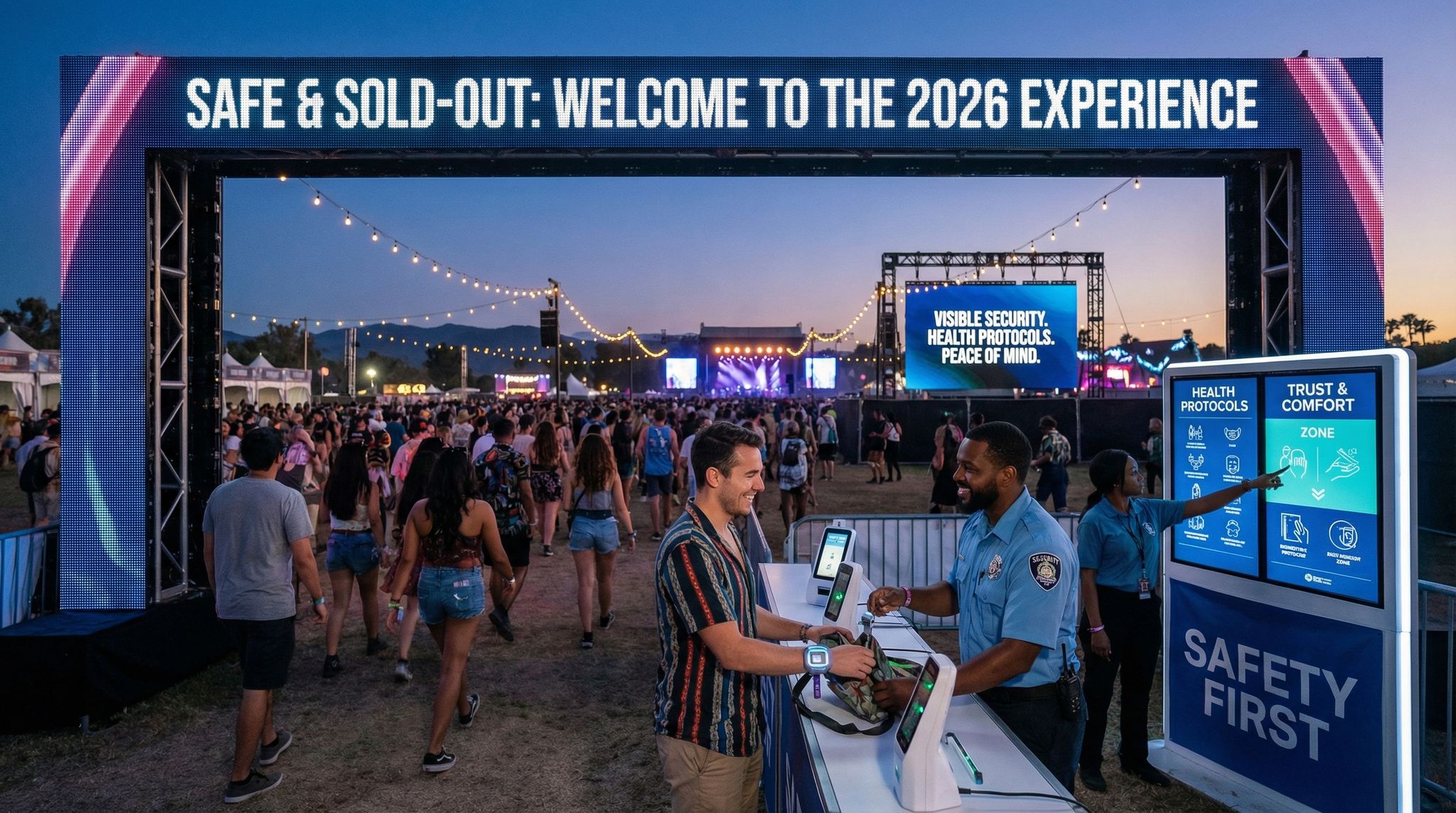
One of the most powerful trust-builders you can include in your marketing is an emphasis on visible on-site security. Attendees feel at ease when they know that professional security teams will be present, vigilant, and approachable. Don’t shy away from mentioning the specifics. For example, let your audience know if you’ll have licensed security guards at all entrances, bag checks, surveillance cameras, and even K9 units for larger events. Major festivals do this routinely – Coachella’s public safety information promises measures like K9 dog sweeps, bag checks, and walk-through metal detectors for all attendees, as detailed in Coachella’s comprehensive public safety information. Communicating these measures in advance normalizes them and signals that your event follows the best practices of world-class venues.
In practical terms, include a line or two about security in your event descriptions and social posts. Phrases like “supported by a trained security staff of 50+” or “secured perimeters with bag checks at all gates” immediately tell potential ticket-buyers that you take their safety seriously. You can even highlight any new security investments – e.g. “new metal detection systems at entry” or “AI-powered CCTV throughout the venue” – framing them as features that enhance the attendee experience. Seasoned promoters find that when fans feel safe, they’re more likely to relax, have fun, and recommend the event to friends. So, marketing your security plan isn’t about scaring people; it’s about giving them peace of mind that allows them to fully enjoy the show.
Collaborating with Law Enforcement & First Responders
Another reassurance signal is letting attendees know you coordinate with local authorities. If your concert or festival is large enough to involve city police, fire services, or private EMT units, work that fact into your messaging (when appropriate). The goal is to convey that a broader community of professionals is invested in the event’s safety. For instance, a line in a press release or on your FAQ page might read: “In partnership with the City Police and Fire Department, we have an emergency response team on-site throughout the event.” This not only builds trust with attendees but also adds credibility to your event brand. It shows you’re not going it alone – you have the backing and guidance of experts.
Grow Your Social Following With Every Sale
Require social media follows, shares, or playlist adds to unlock presale access or special pricing. Turn every ticket purchase into audience growth.
You can also highlight any specific safety training or drills conducted with these partners. Did your team run a safety walkthrough with the local police prior to event day? Let your audience know on social media: “Today our team conducted a full venue safety drill with local police and medics, so we’re 100% ready to keep you safe and secure!” Such behind-the-scenes content can actually double as engagement posts – people love seeing what goes into making an event run smoothly. It humanizes your organizers while reinforcing that professionals are actively working to ensure a secure environment.
Remember to be sincere and accurate – don’t claim an official partnership you don’t have. But even mentioning coordination or consultation with authorities where true can go a long way. Attendees in 2026 are reassured by hearing that events “work hand in hand with law enforcement and public safety agencies to help ensure the safety of our events,” as one major festival puts it. By echoing this in your own voice, you align your event with established safety-conscious events, boosting public confidence that yours will be just as safe.
Grow Your Events
Leverage referral marketing, social sharing incentives, and audience insights to sell more tickets.
Training, Staffing Levels, and Professionalism
If there’s one thing experienced event-goers notice, it’s the professionalism of the staff on the ground. A well-trained team not only handles issues effectively, but their mere presence can prevent incidents and comfort attendees. In your marketing, emphasize the caliber of your staff and volunteers. For example, mention that your security personnel are certified or that your staff have completed crowd management training. If your event is smaller and you’re using volunteer staff, highlight that they’ve undergone a thorough briefing and training session before the event. Turning what could be a concern (“Are these staff up to the task?”) into a point of pride (“Our team is fully trained and ready to assist you”) builds trust.
Furthermore, updating your team on the latest crowd management safety protocols for 2026 is a major selling point. Highlighting that your staff is trained in modern de-escalation techniques, dynamic crowd flow monitoring, and emergency response coordination shows that your operation goes beyond basic security. It reassures ticket buyers that your personnel are equipped to handle high-density environments smoothly and professionally.
Numbers can help here too. Saying “a dedicated team of 10 security guards and 20 event staff will be on hand for our 2,000-person venue” provides a concrete sense of security coverage. When people see that ratio, they intuitively feel safer. For massive festivals, promoters often tout numbers like “300 security staff across the grounds” or “on-site team including 50 licensed paramedics.” Tailor the scale to your event, but don’t be afraid to spell it out. These figures can be included in press releases, event brochures, or infographics on social media.
Beyond numbers, communicate the culture of safety in your team. Let audiences know that every staff member is instructed to prioritize guest safety and customer service. Phrases like “friendly safety ambassadors” or “here to help you enjoy the event safely” set the expectation that your staff are approachable if anyone has concerns. You might even profile a security manager or safety officer in a blog post or video – introducing the person responsible for safety gives a face to your efforts and shows that a competent human (not just policies) is behind the plan. All these details convey a simple message: we’ve got the right people, in the right numbers, with the right training to keep you safe.
Free Tool: Size Your Festival Site
Zoned capacity planning for arena, campsite, parking and entry lanes — against UK Purple Guide and NFPA density standards. Finds your bottleneck zone.
Modernizing Crowd Management Safety Protocols
Beyond basic staffing, audiences are increasingly reassured when organizers highlight their adoption of advanced crowd management safety protocols for 2026. The modern festival or large-scale concert environment requires dynamic density tracking, zoned ingress and egress strategies, and automated barrier systems that prevent dangerous surges before they start. When you communicate these updated crowd control measures in your marketing—perhaps through a dedicated “Safety Innovations” email blast or a detailed website section—you signal to ticket buyers that your operational standards are world-class. Promoters who actively publicize their adherence to the latest crowd flow guidelines not only mitigate risk but also create a strong competitive advantage, proving to cautious fans that their physical well-being is engineered into the very layout of the event.
Promoting Health & Hygiene Protocols in Marketing
Emphasizing Cleanliness and Sanitation
Health and hygiene protocols, once a niche concern, are now mainstream expectations for event-goers. Promoting your cleaning and sanitation measures can significantly boost audience comfort, especially for indoor events or multi-day festivals. Post-2020, attendees notice things like hand sanitizer stations and frequent cleaning of high-touch surfaces – and they appreciate them. Be sure to highlight measures such as: “hourly disinfection of common areas,” “hand sanitizer dispensers available throughout the venue,” or “nightly deep-clean of the venue between event days.” These might seem like operational details, but they’re absolutely marketing points now. According to consumer surveys, visible sanitation and ventilation upgrades boost attendee comfort, as noted in surveys on safety policies and comfort, so calling attention to these efforts can directly influence ticket buyers who might be on the fence.
So how can you convey this? Include a dedicated “Health & Safety” section on your event website or ticketing page. List out your sanitation steps in plain language. For example:
- Enhanced Cleaning: Our venue team will be disinfecting door handles, countertops, and high-traffic areas every hour.
- Hand Hygiene: 100+ hand sanitizer stations will be placed around the festival grounds – you’ll never be far from a quick hand clean!
- Staff Protocols: All staff and vendors will follow strict hygiene guidelines, including frequent hand-washing and wearing gloves when appropriate.
These points can also be turned into visuals for social media – a short video clip of a cleaning crew in action with a caption about your commitment, or a carousel post highlighting “5 Ways We’re Keeping the Venue Clean.” The key is to make the invisible visible. Attendees often assume cleanliness to some degree, but when you articulate it, it reassures those who might be worried and shows you’re on top of the details. In 2026, many people will choose one event over another if they perceive it will be cleaner and healthier, especially attendees who may have health vulnerabilities or just a lower risk tolerance.
Medical Preparedness & Wellness Measures
After a few years where public health took center stage, audiences are highly tuned into medical preparedness at events. You should actively market what you’re doing on this front. If you have on-site medical personnel or first aid tents, promote that information widely. A sentence as simple as “Red Cross-certified medics will be on-site for any health needs” or “We have a first aid station located near the main entrance, staffed throughout the event” can alleviate fears. It tells attendees that if someone feels unwell or an accident happens, help is immediately available. Families, in particular, take comfort in knowing this (e.g., a parent bringing kids to a festival loves hearing that an ambulance crew is stationed on-site, just in case).
Another angle is to highlight any wellness amenities you’re offering. Modern events are adopting more holistic approaches to attendee well-being. This can include free water refill stations (hydration is a safety issue in hot venues!), shaded rest areas at outdoor festivals, or even quiet zones to decompress. These features can be marketed in your event announcements and reminder emails: “We’ve got you covered – free water and chill-out zones so you can rest and stay safe while having fun.” Such messaging frames safety in a positive light: it’s not just about avoiding harm, it’s about actively caring for the audience’s comfort.
Turn Fans Into Your Marketing Team
Ticket Fairy's built-in referral rewards system incentivizes attendees to share your event, delivering 15-25% sales boosts and 30x ROI vs paid ads.
Don’t forget any health policies that might still be relevant. By 2026, COVID-19 may be less of a headline issue, but if your event has any specific policies (like “stay home if you’re sick, we’ll refund you” or providing masks on request), include those in your communications as a selling point of your conscientiousness. While you wouldn’t market an event as “COVID-safe” per se (that term is overused and absolute safety can’t be guaranteed), you can emphasize a “respectful, health-conscious event culture.” For example: “We encourage our community to look out for each other’s health – sanitizing, respecting personal space, and masking if appropriate. We’ll provide the supplies on-site.” This kind of peer-oriented message shows that you’re fostering a considerate environment, which can be very attractive to anyone worried about being stuck in a careless crowd.
Air Quality and Ventilation as Selling Points
One of the lasting impacts of the pandemic is a heightened awareness of indoor air quality. Ventilation used to be an afterthought in marketing, but in 2026 it has become a core pillar of event safety. Many venues have made significant HVAC upgrades – and if yours has, you should absolutely promote that fact. Whether it’s hospital-grade HEPA air filters, increased fresh air exchange rates, or outdoor air circulation in tents, these improvements are worth bragging about. Venue operators have realized that air is part of the experience: fresh, clean air keeps people more comfortable and alert, while stuffy air can lead to discomfort or even health risks. As one venue management guide noted, venue operators now rank air quality alongside visible safeguards in importance, driving the trend of upgrading venue ventilation for healthier events.
From a marketing standpoint, you might include a bullet on your website like “Improved Ventilation: Our concert hall’s ventilation system has been upgraded to exceed 2026 air quality standards – bringing in fresh air continuously throughout the show.” If your event is outdoors, you can highlight things like open-air layouts or large tents with ample airflow. Some events even mention “air-conditioned rest areas with HEPA filtration” if they have them. These details might seem technical, but attendees increasingly recognize terms like HEPA, HVAC upgrades, and air exchange rates – and those buzzwords can trigger a sense of relief for those concerned about airborne risks (whether viruses, smoke from wildfires, or just general stuffiness).
For example, if you’re in a region prone to wildfire smoke, marketing your event’s advanced filtration or real-time air quality monitoring can set you apart. It signals that you’re prepared for environmental challenges. You can also incorporate ventilation info into PR outreach: local media might mention “XYZ Arena has installed a new air filtration system ahead of the big New Year’s show, part of their efforts to make concertgoers feel at ease.” That’s the kind of press quote that both informs the public and builds trust. The bottom line: don’t let your air quality investments stay invisible. By bringing them front and center in your messaging, you tell everyone that even the air at your event is cared for – which paints a picture of an event that leaves nothing to chance when it comes to attendee well-being.
Communicating Emergency Preparedness & Protocols
Structuring Your Event Safety Hierarchy
When developing your emergency plans, industry experts often recommend following a structured risk management approach. Reading up on event safety hierarchy tips in industry blogs can provide promoters with a solid framework for mitigating hazards before they ever reach the attendee. The hierarchy of controls typically starts with elimination (removing a risk entirely, such as banning pyrotechnics in a dry outdoor venue) and moves down to engineering controls (like installing heavy-duty crowd barriers) and administrative controls (such as strict capacity limits and staff training). By communicating that your team utilizes a formal safety hierarchy to evaluate and neutralize risks, you demonstrate a sophisticated, proactive approach to event management that deeply reassures stakeholders and ticket buyers alike.
Sharing Your Emergency Plans (Calmly and Confidently)
It may seem counterintuitive to talk about worst-case scenarios when trying to sell tickets, but addressing emergency preparedness can increase attendee confidence rather than scare people off – if done in the right tone. The key is to communicate that you have a plan without sounding alarmist. Many savvy event organizers now include a section in their FAQs or pre-event emails about emergency procedures. For example, you might write: “Your safety is our priority. In the unlikely event of an emergency, our team has a detailed response plan – including clear evacuation routes, on-site medical responders, and coordination with local emergency services. You will be guided to safety.” A statement like this is reassuring because it tells people you’ve thought about it.
Built-In Email Marketing for Events
Send targeted campaigns, automated purchase confirmations, and post-event follow-ups directly from your ticketing dashboard.
Transparency is critical here. If attendees have to wonder, “Have they even planned for an emergency?”, that uncertainty can fester and deter them from attending, especially for large-scale events. By contrast, openly explaining your safety protocols conveys professionalism and care. You don’t need to publish the entire 50-page emergency operations plan; a high-level overview will suffice for marketing purposes. Focus on the attendee’s perspective: what will happen if something goes wrong and what should they do. Some events even create a short “Safety at Our Event” video or infographic to share on social media, illustrating things like emergency exits, the location of info booths, and how staff are trained to handle incidents. This kind of content, delivered with a calm and positive tone, turns a heavy topic into just another aspect of the event’s excellent service.
Weather Contingencies and Special Situations
Outdoor events in particular should highlight their weather contingency plans, given the increasingly unpredictable climate. If your festival or event could be affected by storms, heatwaves, or other weather events, proactively explain how you’d handle those scenarios. For instance: “Rain or shine, the show will go on! We have heavy-duty tents and indoor backup stages in case of rain, and free water and cooling stations if it’s hot.” This tells ticket buyers that they won’t be left high and dry (or drenched and miserable). Similarly, for potentially extreme situations like lightning or high winds, you might say: “We constantly monitor weather alerts. If any hazardous weather approaches, we have shelter areas and an efficient evacuation procedure ready to keep everyone safe.” When people read that, they understand that they won’t be in chaos if the skies turn – you have a method to the madness.
It’s also smart to mention any refund or rain-check policies related to safety. One hesitation some fans have is, “What if it gets canceled for safety reasons – will I lose my money?” Address that directly: “Your safety comes first. If we ever have to postpone or cancel for safety reasons (like extreme weather), all tickets will be honored for the new date or refunded – no hassle.” This removes the financial fear and underscores that you won’t try to push ahead unsafely just to avoid refunds. It builds trust in your integrity.
Real-world case studies show that being ready for the unexpected pays off. Attendees have seen contrasting outcomes: some events handle a sudden thunderstorm or power outage smoothly with clear announcements and everyone sheltered safely, while others descend into confusion. By stating in advance that you have contingency plans and backup systems, you position your event in the former category. In fact, venues that plan for technical meltdowns often manage to keep the show running without attendees even noticing issues. They’re prepared with generators, spare equipment, and backup communication channels. As a promoter, you can brag a little about this: “Our venue is fully backup-powered – even if the grid goes down, the lights stay on!” or “We’ve invested in redundant Wi-Fi and ticket scanning systems, so entry will remain smooth no matter what.” These points can reassure the tech-savvy attendees and prevent panic if something does blip – because you’ve already said you’re ready.
Practicing (and Publicizing) Safety Drills
Behind the scenes, any large event should be running drills – but have you considered sharing that fact with your audience? Telling fans that your team has rehearsed for emergencies can be a surprisingly effective trust signal. It shows an extraordinary level of diligence. For example, after a few crowd-related incidents in the industry, some festival organizers began doing full crowd management simulations with staff ahead of festival day. If you do anything similar – even a simple evacuation drill during setup days – mention it in passing on your communications: “On Wednesday our crew did a full safety drill to make sure our emergency plans are rock solid.” That one sentence in an email newsletter or a Facebook update can stick in someone’s mind and make them think, “Wow, they really care.”
Moreover, involve your attendees in safety in a way that empowers them. Modern audience communication sometimes includes encouraging the “if you see something, say something” ethos. In your marketing, you can gently remind attendees that safety is a two-way street. For instance: “We’ll have plenty of staff around – if at any point you feel unsafe or see an issue, please let one of us know immediately. We’re all looking out for each other.” This kind of messaging builds a community vibe and assures individuals that their concerns will be heard. It’s the opposite of the aloof, ‘hope nothing goes wrong’ image that plagued some events in the past.
Smooth Entry With Mobile Check-In
Scan tickets and manage entry with our mobile check-in app. Supports photo ID verification, real-time capacity tracking, and multi-gate coordination.
One pro tip: Use your event app or SMS updates for safety communication. Savvy promoters set up text alert systems for emergencies; letting attendees know about this ahead of time is crucial. You can market it as a feature: “Sign up for our free event SMS alerts for any urgent updates while you’re on-site – so you’ll know immediately if there’s a schedule change or important announcement.” Fans often appreciate this because it gives them a direct line of information. Should anything occur, you’ve already prepared them to receive and trust those alerts, avoiding confusion. Essentially, by practicing safety within your team and looping attendees into the plan, you weave a safety net that everyone is aware of – greatly reducing fear of the unknown.
Showcasing Fail-Safe Systems
Beyond human plans, emphasize the technical backup systems that will keep the event safe and comfortable. Do you have backup generators, redundant lighting, or multiple internet connections for ticket scanning? Many venues do, but attendees might not realize it. Highlighting these in marketing can differentiate your event as ultra-reliable. Imagine a social post like: “Fun fact: The Arena has three backup generators on standby – nothing’s going to stop this show ?.” It’s light-hearted, but it plants the seed that even a power outage won’t derail the event or jeopardize safety.
Consider creating a small section in your event FAQ titled “In Case of the Unexpected” and list: Power backup – yes. Medical team – yes. Trained safety staff – yes. Communication plan – yes. Quick, to the point, and confidence-inspiring. Event veterans know that fans love to see behind the curtain a bit. Sharing that you’ve thought through scenarios and invested in backups shows a level of professionalism that sets top-tier events apart.
Also, if your event has any unique safety tech (we’ll discuss tech more soon), mention it. For instance, some events now have mass notification systems (loudspeakers or phone alerts) to instantly communicate with the crowd if needed. If you have it, say it: “State-of-the-art alert system: we can reach the entire crowd in seconds with clear instructions if needed.” Fans likely won’t expect this, so when they read it, it really drives home how much you’ve prepared to keep them safe. Reinforcing this message of “no matter what happens, we’re ready” is the ultimate way to build trust that results in not just sold tickets, but a venue full of confident, happy attendees.
(On that note, remember that if an incident does occur, your follow-up communication is vital. How you respond in real-time and afterward can make or break your reputation. For an in-depth guide on crisis responses when safety issues arise, see our resource on preparation, transparency, and a swift, empathetic response in our guide to crisis communication strategies for event marketers for event crises.)
Leveraging Your Safety Track Record & Social Proof
Promoting Your Incident-Free Track Record
If your event—or the venue you use—has a strong safety record, make sure the public knows it. This is not something to be modest about. New customers might not be aware that you’ve run 10 concerts with zero major incidents or that your festival has a decade-long history of safe fun. Integrate that track record into your storytelling. For example, a festival marketing video might include a voiceover or text that says: “10 years of unforgettable, safe experiences for over 100,000 fans.” Or a press release might note: “In its five-year history, XYZ Conference has maintained a spotless safety record, with no serious medical or security incidents – a testament to the organizer’s meticulous planning.” These statements provide powerful reassurance, especially when a potential attendee is comparing events. It’s like seeing a 5-star safety rating.
Even if your event is newer or smaller, you can highlight specific successes: “We’ve hosted 8 sold-out shows at this venue with zero crowd control issues.” Or refer to the venue’s own reputation: “Hosted at the award-winning ABC Arena, known for its excellent safety and security management.” Attendees often trust known venues with good reputations, so borrowing that credibility helps. Many experienced event marketers will name-drop things like venue safety certifications or affiliations (for instance, if the venue is certified under a national safety scheme or has passed rigorous inspections, mention that). It all adds up to an impression that “nothing bad ever seems to happen at their events”, which is exactly what you want ticket buyers to feel!
Another idea: safety awards or accolades. Have you or your venue ever been recognized for safety? Perhaps your team took a local Event Excellence award for operations, or the venue got an industry nod for its security program. Weave that into your about page or ticket page: “Awarded ‘Safest Venue 2025’ by XYZ Magazine” or “Our producer was invited to speak at the Event Safety Summit on our best practices.” These are bragging rights that distinguish you from competitors who might be less proactive. In an age where attendees do their research, these trust signals can tip the scales in your favor.
Testimonials Emphasizing Safety
When it comes to convincing skeptical attendees, nothing beats the voice of fellow fans. Testimonials and reviews that specifically mention safety or comfort can be marketing gold. Think about it: you can say “our event is safe” all day long, but when a real attendee says “I was initially nervous, but once I arrived I was blown away by the security and how comfortable I felt”, that carries enormous weight. In fact, 92% of consumers trust peer recommendations over brand messages, highlighting the value of leveraging user-generated content for promotion. So, actively solicit feedback on safety and use it in your promotions.
After your events, comb through attendee surveys, social media comments, and post-event emails for any positive notes about safety, organization, or well-being. You might find quotes like “Crowd control was on point”, “I always felt safe even in the big crowd”, or “the staff handled that sudden rainstorm so well – we all felt taken care of.” With permission, turn these into testimonial snippets on your website or graphics for social media. For example, a tweet from an attendee saying “Huge shoutout to @YourEvent – security and medical teams were visible and professional all night. Felt totally safe to let loose!” is retweet-worthy and can even be included in marketing decks.
If you don’t have such testimonials yet, encourage them. During or after the event, ask attendees for feedback on how safe and welcome they felt. Something as simple as a post-event survey question, “On a scale of 1-10, how safe did you feel at the event?” can yield a great statistic like “95% of attendees reported feeling ‘very safe’ at our 2026 event.” You can bet that will make its way into next year’s advertising! It’s similar to how restaurants use health scores – if you have quantifiable high marks on safety from your audience, share that in pitch decks and even social posts: “9 out of 10 attendees last year said they felt ‘completely safe’ throughout the festival.” It’s hard to argue with numbers and crowd consensus.
Also consider leveraging influencer voices or expert endorsements focusing on safety. If you had, say, a well-known artist or speaker comment positively about the event’s safety, that can be powerful to mention: “Even our headline DJ noted how well our crowd was managed and how great the vibes were.” Or if a safety expert (like a security consultant or local official) has praised your event in the past, that can be turned into a quote in marketing materials. The more third-party validation you gather, the more an onlooker feels, “Alright, people like me (and people I respect) trust this event – I can too.”
Building Trust Through Community & Transparency
Trust is also reinforced by how you communicate about safety, not just what you communicate. Savvy event marketers create a tone of transparency and approachability around the topic. This means being open to questions and even criticism – and responding publicly in a calm, factual way. For example, if you post about your safety measures on Facebook and someone comments, “But what about last year when security lines were slow?”, you have a golden opportunity. Respond with something like: “Great point – we learned from that. This year we’ve doubled the entry lanes and added more staff to speed things up. Thanks for bringing it up!” This kind of engagement turns a potential negative into a demonstration of accountability, which hardcore builds trust for anyone else reading.
Similarly, consider hosting a Q&A session focused on safety. Perhaps a week before the event, do an Instagram Live or a Reddit-style AMA where your event director or safety officer answers attendee questions about the event. Promote it as “Ask Us Anything: Safety Edition – Let’s chat about how we’re making [Event] the safest, smoothest experience possible.” When you field those questions in real time and address concerns (from parking lot lighting to crowd overflow plans), you show that you treat safety with the same enthusiasm as you treat lineup announcements. It becomes part of your brand’s identity – the event that cares and listens. Attendees who have lingering worries might get them answered, and those who didn’t even think about safety walk away subconsciously more confident because they see how much thought you’ve put into it.
Remember to highlight any community initiatives or policies that relate to safety. For instance, if you have a “buddy system” campaign (encouraging friends to watch out for each other) or partnerships with rideshare companies for safe transport, those are trust-builders. A line in a press release or on your FAQ page might read: “We’re teaming up with XYZ Rides to ensure everyone gets home from the venue safely – use our event code for a discount” not only provides value but signals you care about beyond the gates. It extends the safety narrative to the whole attendee journey. In the end, trust accumulates from dozens of these little signals. Each mention of safety, each authentic answer to a concern, each peer testimonial – they all stack up to a reputation. When people talk about your event, they might say, “Yeah their lineup is great, and also I hear it’s really well-organized and safe.” That second part might be what ultimately convinces a hesitant buyer to pull out their credit card.
Integrating Safety Messaging Across All Marketing Channels
Event Websites & Ticketing Pages: Inform to Reassure
Your event website or ticketing page is often the first detailed encounter a potential attendee has with your event, so it’s an ideal place to prominently feature safety information. Dedicate a visible section to Safety & Security details. This could be an overview on the main event page or a separate FAQ/Info page linked from the top. For example, right below the flashy festival teaser, have a heading like “Your Safety at Our Event” with a concise blurb: “We want you to have the time of your life – and peace of mind. Here’s how we’re keeping you safe: [key points].” By seeing this early on, visitors immediately know that this event is run by responsible organizers.
Use clear icons or bullet points to make this info digestible. A small shield icon next to “On-Site Security 24/7” or a red cross icon next to “First Aid & Medical Tent available” can visually reinforce the message. Many events list prohibited items and entry procedures prominently – those also double as safety info. In 2026, attendees often expect to find a section on health & safety on the website, much like they expect to see the venue map or lineup. If it’s missing, it could raise eyebrows. In contrast, having it front-and-center, or at least easy to find, sends the message that you take safety as seriously as logistics or lineup. It’s part of the value proposition.
Don’t underestimate the role of your ticketing platform here too. If you’re selling through a platform like Ticket Fairy, leverage its features to convey safety info. Ticket Fairy event pages, for instance, allow rich text descriptions where you can add a “Safety Information” subsection. You could also use custom questions or pop-ups during checkout (e.g., “Please note: Bag checks at entry for your safety”). These small touches at the point of purchase remind buyers that by choosing your event, they’re signing up for a well-run experience. Moreover, consider integrating waivers or acknowledgement statements (if applicable) at ticket purchase in a user-friendly way. Something like: “By attending, you agree to follow our safety policies (which you can read [here]).” This not only covers you legally but also gives buyers one more chance to see how organized and serious you are about safety. It’s almost like saying, “We have some rules because we care – and by buying, you’re on board with that, right?” That psychological agreement can make them feel part of a responsible community from the get-go.
Launching a Dedicated Event Safety Blog
One highly effective way to build long-term trust is by publishing an event safety blog directly on your festival or venue website. When prospective attendees search for safety information, having a dedicated content hub positions your brand as an industry leader. You can use this space to share deep dives into your security protocols, interviews with your medical team, or updates on the latest crowd management tech. Promoters who maintain an active safety blog find that it not only improves their search engine visibility but also provides a wealth of shareable content for social media and email newsletters, proving to fans that their well-being is a year-round priority.
Email Marketing: Setting Expectations Early
Email is one of your most powerful direct channels to communicate safety measures, especially to confirmed attendees. In your pre-event email campaigns, include dedicated sections about what attendees can expect on-site regarding safety and security. For example, in the “Know Before You Go” email (always send one of these!), have a headline like “Arrival & Safety Guide”. Outline things such as: entry gate procedures, items to leave at home, where to find help if needed, and any last-minute advisories (e.g., weather-related suggestions like “bring a poncho, no umbrellas allowed for safety”). This serves a dual purpose: it educates attendees for smoother operations and reinforces trust because you’re being thorough and proactive.
Effective email content might say: “When you arrive, you’ll notice our security team performing quick bag checks and using metal detectors – these are for everyone’s safety, and our staff will make it as speedy as possible. Thank you for your cooperation in advance!” By framing it positively and appreciatively, you prepare attendees to comply and make them feel they’re contributing to a safe event. It also subtly reminds them that safety is a shared goal. Be sure to mention any comforts too: “Remember, free water stations and a cooling lounge will be available if you need a break – your well-being is important to us.” This balance of safety rules and comfort features in email paints a full picture of the event experience you’re crafting.
Segmentation can help here as well. If you have different attendee types (e.g., VIP ticket holders, or families who bought a family package), consider tailoring part of the message to their specific concerns. VIPs might get info about a private entrance with security, which reassures them of a smooth and safe arrival. Families might get a note about the location of the family services area or any child safety measures (like wristbands to help reunite lost kids). Such targeted messaging shows you understand their safety needs specifically, which goes a long way in trust-building. And don’t hesitate to resend critical safety info closer to the event date, even via a day-of SMS or push notification: e.g., a text in the morning, “Reminder: Weather is hot, stay hydrated. Water stations at points A, B, C. Our medical tent is near Gate 2 if you need assistance. Enjoy the show!” This real-time push not only is useful, but it reinforces that you’re actively looking out for them throughout the event journey.
Social Media & PR: Broadcasting Your Safety Commitment
Social platforms and PR channels are ideal for showcasing the work you put into safety – in a way that can even be engaging or entertaining. Before the event, you could post a short behind-the-scenes video titled “Safety First!” where you show snippets of your team setting up security barricades, testing the PA system, or meeting with safety personnel. Overlay it with upbeat music and captions like “Preparing an epic but safe experience for everyone ??”. This kind of content can actually generate excitement; fans comment things like “Love to see this!” or share it to show others that the event is legit. It also serves as a gentle education on what to expect (e.g., they see bag checks in the video, so they know that’s part of entry).
Leverage live features or stories on Instagram, Facebook, or TikTok to do quick updates on safety prep. Perhaps an IG Story series the week of the event: Day 1 – spotlight on the medical team (“say hi to our first-aid crew, ready to help if you need them!”), Day 2 – spotlight on security dogs doing a training, Day 3 – showing the weather monitoring station. Keep the tone positive and community-oriented, not heavy. The message is “we’re excited and we’re ready for anything!” Each of these pieces not only boosts confidence in followers but can also reach new audiences if shared or if picked up by local news.
Speaking of news, crafting a press release or media pitch focusing on safety measures can yield some great coverage. Local news outlets after 2020 often run segments on big events’ safety plans – it’s genuinely of interest. A headline like “XYZ Festival Implements New High-Tech Safety Measures for 2026 Edition” will catch eyes. In that release, tout things like your new crowd monitoring tech, partnerships with health officials, or whatever is novel. If a TV news crew comes, give them a tour of your command center or introduce them to your head of security to talk about how you’re ensuring a safe environment. The resulting news story becomes essentially free advertising for your event’s safety (and overall quality). Imagine a news quote, “Organizers of XYZ Concert have worked for months on detailed safety protocols, including crowd flow design and emergency training for staff. ‘Our goal is for everyone to have an amazing time and feel completely safe from start to finish,’ said Jane Doe, Event Director.” That’s gold to put in front of the public just before your event.
Also, don’t overlook influencers and community leaders in spreading the safety message. If you have any artists, speakers, or partners with clout, encourage them to chime in. For example, an artist performing at your festival posting “Can’t wait to play – and props to the organizers for making safety a priority. It’s gonna be a great (and well-run) show” can reinforce your messaging from a trusted voice fans follow. Likewise, local community figures (maybe a well-known blogger or a city council member if it’s a civic event) could be invited to see your safety preparations firsthand and share about it. It might seem like overkill, but when a potential attendee encounters consistent messages of “this event is both fun and safe” from multiple sources, it annihilates most objections they might have had.
On-Site Signage and Live Updates
Marketing safety doesn’t stop once tickets are sold – it continues into the live event experience, which in turn affects your next event’s sales. On-site communication is key. Ensure you have clear signage related to safety (and consider mentioning this in pre-event comms: “Look for our Safety Info signs around the venue if you need help or information.”). Signs that point out first aid locations, emergency exits, and even reminders like “Stay hydrated” or “Respect your fellow fans” all contribute to a culture of safety and care. Attendees will notice these and subconsciously appreciate them, even if they don’t consciously think “oh how nice of them.” It’s part of delivering on the promise you made in marketing.
During the event, social media can be used for real-time assurances. If you have a weather delay or some minor incident, hop on your official channels to calmly and transparently update: “Update: We’re pausing the show for 15 min due to lightning in the area. All attendees please proceed to the marked shelter areas. Our team is on it – we’ll keep you posted. Safety first!” Immediately after resolution: “All clear! The weather has passed and we’re resuming at 8:30pm. Huge thanks to everyone for cooperating and staying safe with us ?.” Your adept handling, publicly visible, will be remembered and likely praised. People live-tweeting or making stories from the event might add, “Actually really impressed, they handled that so well.” Those are essentially real-time testimonials being broadcast to potential future attendees.
Finally, once the event is over, carry the safety narrative through to your post-event recaps. In your thank-you email or social posts recapping the event, mention how the event went off safely. For example: “Thank you to the 5,000 fans who danced with us this weekend – and a shoutout to all for looking out for each other and keeping the event safe and friendly!” This not only reinforces to those who attended that their positive perception is shared, but also signals to those who missed out (and might come next time) that, indeed, nothing bad happened and it was a well-run show. You might even share stats or behind-the-scenes wins: “Zero major medical incidents and quick entry for everyone – that’s how we like it. Until next year!” When next year’s tickets go on sale, those warm fuzzy memories, backed by a sense of security, will translate into faster sales and more word-of-mouth referrals.
Embracing Transparency and Two-Way Communication
Tackling Tough Questions Head-On
In 2026, information (and misinformation) spreads in a flash. It’s far better that attendees get their safety answers from you than from the rumor mill. That’s why embracing transparency is crucial. Don’t be afraid to proactively address the tough questions in your communications. For instance, if your event had an incident in the past, acknowledge it and explain what’s changed. A statement on your site or social like: “You might recall last year’s overcrowding at Stage 2. We heard your feedback and have revamped the layout – Stage 2 now has 2x more space and additional exits to keep things comfortable and safe.” This candor shows maturity and builds trust. It says you’re not sweeping things under the rug. On the contrary, you learn and improve.
Even if you haven’t had any past issues, think of common attendee worries and address them in a FAQ style. For example: “Q: Will there be security pat-downs? A: Bags will be checked and walk-through detectors used, but no unwarranted personal searches. Our security staff is there to ensure everyone’s safety with minimal inconvenience.” Or “Q: What if I feel unsafe or see someone acting suspicious? A: Flag down any staff member or visit the Info Booth – we have direct lines to security and medical teams and will respond immediately.” Putting these in writing where attendees can see them shows that you welcome questions and have nothing to hide. It’s far more reassuring than a vague “trust us, it’ll be fine” stance.
Moreover, invite dialogue. Perhaps send out a pre-event email specifically asking, “Do you have any questions or concerns about attending? Reply to this email and our team will personally get back to you.” Even if few people take it up, the gesture speaks volumes. Those who do ask a question will be grateful for the personal attention (and likely tell others “yeah I emailed them about parking lot lighting and they actually answered me with details – pretty cool.”). This level of customer service around safety issues turns anxious would-be attendees into vocal supporters.
Honesty and Specificity in Messaging
When communicating about safety, be as specific and factual as possible. Empty reassurances like “we’ll do whatever it takes to keep you safe” might sound good, but they don’t actually instill confidence because they lack substance. Instead, provide concrete details. Did you hire a new security firm with a stellar reputation? Say so. Do you have a detailed evacuation diagram? Mention that all staff have it and are trained on it. Are you capping the event at a certain capacity specifically for comfort? Definitely highlight that: “Tickets are limited to 5,000 to ensure a comfortable, safe experience – we won’t overcrowd, guaranteed.” That kind of promise can be a deciding factor for someone worried about packed crowds.
Honesty also means admitting limitations or rules clearly. If some safety measure might inconvenience attendees (like a clear bag policy or no outside water bottles), don’t hide it in fine print – tell people upfront and explain the rationale briefly. “For everyone’s safety, only small clear bags are allowed, so security can screen efficiently. This helps us all get in faster and keeps the venue secure.” This way, even if it’s a hassle, attendees understand it’s part of the safety plan and not arbitrary. It sets the right expectation and prevents frustration on event day that could sour their experience (and your surveys). Transparency here demonstrates respect: you respect attendees enough to be straightforward, which in turn makes them more likely to respect your rules.
In all messaging, keep the tone empathetic and empowering. You want to avoid sounding like a stern principal doling out rules. Instead of “No this, Don’t do that,” frame things positively: “To ensure everyone has a great time, here’s what we’re asking of you…” or “We appreciate your cooperation with XYZ policy – it really helps the event run smoothly!”. When attendees feel like partners in the endeavor (rather than liabilities), they’re more likely to embrace the safety culture. Many experienced promoters find that respectful communication leads to attendees self-policing more and actually helping safety staff by reporting issues or gently reminding fellow fans of the rules.
Crisis Communication: Rapid, Transparent Updates
No matter how well you prepare, sometimes things don’t go according to plan – that’s the nature of live events. But how you communicate during those moments can salvage trust and even turn a crisis into a brand win for your integrity. Have a crisis comms plan ready (which you hopefully never need), and let attendees know the basics of it. For example, if your event is outdoors and weather is the main risk, tell people in advance how you’d communicate a weather delay or evacuation: “Should any emergency weather situation arise, we will immediately notify attendees via the stage PA, video screens, and a text alert. Please follow the guidance of staff and these messages. We’ll keep everyone updated in real time.” Reading this in advance, attendees think, “Okay, if something happens, they’ll tell us exactly what to do.” That alone is comforting.
When something does happen – say a power outage or a sudden health scare – commit to full transparency as quickly as possible. It might be as simple as an announcement: “Ladies and gentlemen, we have a brief technical issue. The lights will be back on shortly. Please stay where you are; you are safe. Thank you for your patience!” The key is a) speed, b) clarity, c) reassurance. After the fact (even days later), follow up publicly about it. If you had to evacuate, for example, a post on your channels explaining what happened and praising the crowd for their calm cooperation turns the narrative positive. People remember that: “Oh yeah, they owned it and even thanked us – classy move.” Meanwhile, silence or evasion erodes trust fast. Rumors fill voids, and perception can become worse than reality. So even if an issue was minor, addressing it openly (perhaps in a post-event wrap-up: “We experienced a brief outage due to an external grid issue – kudos to our venue’s backups for kicking in!”) shows professionalism.
One pro tip many veteran promoters swear by: designate an official communication hub (like a specific Twitter account or the event app’s notification system) as the source for real-time updates, and tell attendees to check it. In marketing materials and pre-show emails, for instance: “Follow @[YourEventSafety] on Twitter for any urgent updates during the event.” That way, if something goes awry, you don’t have to scramble to reach people – you’ve already told them where to look. This kind of preparedness, once again, becomes a selling point. It demonstrates that even in chaos, you will be organized and connected with your audience. And that assurance can turn a would-be panicked situation into an oddly unifying, even affirming experience. Attendees walk away saying, “They really handled that well and kept us in the loop the whole time.” The trust built in that moment is priceless and carries forward to all your future events.
(For a deeper dive into handling those unexpected moments and turning a crisis into a trust-building exercise, check out our guide on managing crisis communication effectively. Seasoned promoters emphasize that how you respond in the first hours of a safety scare can make the difference between a one-time issue and lasting stigma, so having that playbook ready is essential.)
Showcasing Tech Innovations for Safety (and Marketing Them)
Staying Ahead with Event Safety Technology News
To effectively market these innovations, promoters must stay informed. Following the latest event safety technology news allows you to discover emerging tools—from AI-driven crowd analytics to next-generation biometric scanners—before they become industry standard. When you integrate these cutting-edge solutions into your operations, you create a compelling narrative for your marketing campaigns. Attendees are increasingly tech-savvy; showing them that your festival or venue is adopting the newest safety advancements proves you are proactive rather than reactive, keeping your brand at the forefront of 2026’s live event landscape.
Fast, Contactless Entry & Payments
In 2026, technology is a frontline ally in event safety – and fans know it. A smooth entry process, for example, isn’t just about convenience; it’s a safety feature too, as it prevents dangerous overcrowding at gates and reduces frustration. So if you’re using advanced ticketing tech, shout it from the rooftops. Attendees now demand fast, secure, queue-free entry—making it crucial when choosing the best access control tech—and they’ll be pleased to hear when events deliver on it. Whether your event uses QR code e-tickets, RFID wristbands, or biometric scans, frame it as an upgrade for them: “All tickets are digital this year for lightning-fast entry – just scan and go through our touch-free gates!” Not only does this imply shorter wait times, it also conveys a modern, well-organized image. People equate tech efficiency with overall competence.
Implementing a safer event check-in process is one of the most visible ways to prove your commitment to attendee well-being right at the gate. By utilizing advanced scanning hardware and decentralized entry points, you minimize the risk of bottleneck crushes and aggressive gate-crashing. When evaluating your tech stack, promoters often ask questions like “is EventCreate legit for handling massive, high-security crowds?” or “does our current provider offer enterprise-grade access control?” Choosing a robust, proven ticketing partner ensures your check-in infrastructure can withstand peak arrival times without compromising security protocols.
Highlighting contactless payments and amenities similarly boosts attendee confidence. “We’ve gone cashless – all vendors accept tap-to-pay and mobile payments to keep lines moving (and reduce germ contact).” This kind of note in your marketing materials tells guests you’re keeping up with the times and looking out for health and safety in the small details. During the pandemic, contactless became a health-driven must; now it’s simply expected for both safety and speed. Emphasize that benefit: shorter lines mean less crowding and more time enjoying the event, a clear win-win. If you’re using a platform like Ticket Fairy on-site, you might mention features like their integrated payment and access system which helps prevent bottlenecks and fraud at the door. The average attendee may not know the brand, but hearing that there’s a robust system provides a sense of security that “everyone getting in is supposed to be there and it’s all under control.”
If you want to be extra convincing, cite numbers or case studies: “We tested our new RFID entry at a smaller show – 5,000 people entered in under 30 minutes, a 40% improvement in speed!” or “Average time at the bar is now 1/3 of what it was when we took cash, thanks to contactless payments – more dancing, less lining up.” These concrete outcomes can show skeptics that tech isn’t just gimmicky, it tangibly improves their experience and safety. It also signals that your event won’t be “that chaotic fest with hour-long entry lines” – instead, it’s “the one where everything ran like clockwork.” And as all marketers know, a hassle-free experience leads to returning customers and great word of mouth.
Cutting-Edge Access Control and ID Verification
Let your audience know if you’re employing the latest and greatest in access control, because it directly relates to their personal safety and the event’s security. For example, if you’ve adopted QR code tickets, RFID wristbands, or biometric ID checks, each has marketing angles:
– “Secure RFID wristbands mean a frictionless entry – plus they’re really hard to counterfeit, so only fellow legit fans will be in attendance.”
– “Our new facial recognition check-in (optional for those who opt in) lets you walk right through the gate in seconds, and adds an extra layer of security by ensuring tickets can’t be stolen.”
– “We’re using Ticket Fairy’s NFT ticketing system this year – your ticket is encrypted on the blockchain, which stops scalpers and fraud cold. Only legitimate fans get in – a major trust builder for cautious audiences, achieved by mastering NFT ticketing for security.”
If that last one sounds high-tech, it is – and some events are doing it. Whether or not you incorporate blockchain or NFT tickets, it’s worth noting if your ticketing approach prevents fraud or scalping. Fans hate nothing more than buying a ticket and finding out it’s fake or vastly overpriced on resale. By marketing your secure ticketing platform, you reassure buyers that their purchase is safe and that the event won’t be overrun by gate-crashers or fraudulent attendees. In other words, capacity will be what it’s supposed to be, which is a safety matter. (Nobody wants an oversold, overcrowded venue – that’s both uncomfortable and dangerous.) Make it explicit: “We guarantee a legitimate ticket and entry for every purchase – our advanced system eliminates fakes and overbooking.” That promise has real power.
Some events also implement rigorous ID verification for age restrictions or VIP areas. If that’s part of your event, spin it positively: “21+? Our scanning tech verifies IDs instantly at the door, so underage folks can’t slip in. Enjoy an adults-only night out with confidence.” Or for VIP: “Biometric check-in for VIPs ensures your exclusive lounge stays exclusive (and secure).” These might seem like niche points, but for the segments they target, they could tip the scale. A parent deciding whether to let their college-age kid attend might be relieved to read about strict ID checks keeping things orderly. Or a VIP ticket buyer might justify the high price knowing the VIP zone will be well-managed and safe.
Importantly, communicate the benefits, not just the tech. Instead of saying “We have XYZ scanners,” say “XYZ scanners = faster entry and enhanced security.” Always tie it to how it improves the attendee experience or safety. And if you’ve got the goods, back it up with an example or two. For instance: “At our last event, these scanners helped us get everyone inside before the opening act – zero delays.” Or “Our ID tech flagged 50 invalid IDs last year, preventing underage drinking incidents.” Such facts show that the fancy terms actually produce results, which only bolsters credibility.
Surveillance, Monitoring & Real-Time Response Tech
Large events especially are leaning on sophisticated monitoring systems to keep an eye on crowd safety in real time. If you have a “mission control” or command center, talk about it! Fans might not realize that behind the scenes you have a whole team watching CCTV feeds, tracking crowd density, and ready to dispatch help in seconds. Pull back the curtain in your marketing: “Ever wonder how we manage a crowd of 50,000? Meet our Event Command Center – a dedicated team monitoring every corner of the venue in real time.” You could accompany this with a photo or short video of the surveillance screens (obviously without showing anything sensitive). The effect? Attendees think, “Wow, they’re running this like a NASA mission – I’m in good hands.”
New tech like AI-based crowd analytics or drone surveillance might sound like sci-fi, but if you use them, they’re unique selling points. For example: “We’re using AI crowd-monitoring to detect any congestion before it becomes a problem. This means if one area starts getting too crowded, our team is alerted immediately to take action – often before attendees even notice.” Or “Drone overview: We’ll have safety drones giving our team a bird’s-eye view of the festival, so nothing goes unnoticed in keeping you safe.” These tidbits can be slid into a longer post about “5 Cool Innovations at [Your Event] 2026” which could cover fun stuff like new stage designs and safety tech, balancing the flashy and the responsible.
Attendees, especially younger ones, appreciate when events use tech creatively and transparently. It suggests a forward-thinking organization. Just be sure to address privacy concerns proactively if applicable – for instance, if you use facial recognition for entry, clarify it’s optional and secure. The aim is to make attendees feel protected, not spied on. When done right, showcasing surveillance and monitoring tech in marketing tells a story of prevention and preparedness. And prevention is ultimately what safety is all about. You might even reference how these tools enable you to handle situations without disrupting the event. E.g., “Our crowd tracking allowed us to subtly relieve pressure at the front of the stage last year, without stopping the music.” Potential attendees read that and realize, often for the first time, all the unseen effort that goes into a safe event experience. That realization builds respect and trust – they’re not buying a ticket to some fly-by-night gig, but to a professionally orchestrated production that has their back.
Communication Tech: Keeping Attendees Informed
In the age of smartphones, how you communicate with attendees on-site is a safety feature unto itself. We touched on SMS alerts and app notifications earlier – those are big selling points if you have them set up. Don’t hesitate to market your event app’s safety features or your text notification system as part of the ticket’s value. For instance: “By downloading our free event app, you’ll get instant updates on any schedule changes or safety notices. Think of it as your personal guide and guardian for the event.” Or if you go simpler: “Opt in to our text alerts and be the first to know if there’s a weather alert or important announcement during the show.” Many attendees have been at events where they had no idea what was happening during an emergency – by offering a solution, you differentiate strongly.
Another piece of tech to highlight is any attendee support tools. Some events now provide a number to text for on-site help (like reporting an incident anonymously or getting info). If you have something like Text-a-Tip or a Help Chat in the app, promote it: “Have a question or see something concerning at the event? Just text us at 12345 – we’ll be monitoring all night to assist you immediately.” This tells everyone that you’re not only receptive, but you’ve invested in making communication easy. That’s a huge trust signal. It’s essentially saying, we’re confident nothing will go wrong, but if it does or if you need anything, we’re only one text away.
Finally, mention if you’re using loudspeaker or emergency broadcast systems, even though those are standard, framing it as part of the safety net. “Clear communication: our PA can reach every corner of the venue. If there’s a critical announcement, you won’t miss it.” Again, this is about setting expectations. People who know that you have all these channels ready will think, “Alright, if something’s up, they’ll tell us. I don’t have to worry, I just have to listen.” That comfort is exactly what you want them to feel.
When marketing these communication tech features, couple them with action. For example, a week before the event, send a test SMS or app push that doubles as a hype message: “This is a test of the XYZ Festival alert system (and a reminder to stay hydrated this weekend!). See you soon!” Not only does this ensure your system works and people have subscribed, it actively demonstrates your preparedness. It might even delight some fans as a quirky little interaction. Plus, it shows off that you have this capability, possibly prompting more folks to sign up for it when they see others mention it. Every bit of communication tech you showcase is really showcasing care – you care enough to keep everyone informed and safe, and that is a cornerstone of trust in the live event world.
(As a side note for tech-savvy promoters: choosing the right event tech vendors can greatly impact your safety and success. If you ever consider upgrading systems, do your due diligence – our guide on choosing the best access control tech and insights on negotiating event tech contracts might be helpful for ensuring you get reliable, secure solutions that serve your marketing promises.)
Frequently Asked Questions
Why is marketing event safety critical for ticket sales in 2026?
Marketing safety directly drives revenue by reducing purchase hesitation and lowering no-show rates, which can reach 15–20% due to lingering fears. proactively addressing concerns about security and health builds attendee trust, resulting in higher conversion rates, fuller venues, and a stronger brand reputation that encourages repeat attendance.
How can event organizers highlight on-site security to reassure attendees?
Organizers should explicitly detail specific security measures in marketing materials, such as the presence of licensed guards, bag checks, K9 units, and metal detectors. Highlighting partnerships with local law enforcement and mentioning safety drills demonstrates a professional commitment to well-being, helping potential ticket buyers feel secure enough to commit.
What health and hygiene protocols should be promoted for indoor events?
Promoting specific sanitation efforts like hourly disinfection of high-touch surfaces, widespread hand sanitizer stations, and nightly deep-cleaning significantly boosts audience comfort. Additionally, marketing air quality upgrades such as hospital-grade HEPA filters or increased fresh air exchange rates signals a modern, health-conscious environment that appeals to safety-minded attendees.
How does technology improve event safety and entry speed?
Advanced technology like RFID wristbands and biometric scanning enables fast, contactless entry, which prevents dangerous overcrowding at gates and reduces wait times. Real-time crowd monitoring tools, including AI analytics and drones, allow security teams to detect and resolve congestion issues instantly, ensuring a smoother and safer experience for everyone.
How should organizers communicate emergency preparedness without scaring fans?
Organizers can build confidence by sharing high-level emergency plans in FAQs or pre-event emails, covering evacuation routes, medical responder locations, and weather contingencies. Transparency about safety protocols and backup systems, such as generators or redundant Wi-Fi, conveys professionalism and assures attendees that the team is prepared for any scenario.
How can social proof be leveraged to validate event safety?
Sharing testimonials from past attendees that specifically mention feeling safe and comfortable provides powerful third-party validation for potential buyers. Highlighting a spotless safety track record, incident-free history, or industry safety awards builds credibility, while statistics showing high percentages of attendees reporting they felt safe effectively counter skepticism.
How does a safer event check-in process impact overall crowd management?
A safer event check-in process directly reduces gate bottlenecks, minimizing the risk of crowd crushes and frustration during peak arrival times. By integrating modern access control tech and up-to-date crowd management safety protocols for 2026, organizers can maintain a steady, secure flow of attendees, setting a positive and orderly tone for the entire event.
How does following event safety technology news benefit promoters?
Keeping up with event safety technology news allows organizers to discover and implement cutting-edge solutions—like AI crowd monitoring or advanced biometric access—before they become mainstream. Marketing these early tech adoptions demonstrates a proactive commitment to attendee well-being, which builds trust and drives ticket sales.
What are the top crowd management safety protocols for 2026?
Leading crowd management safety protocols for 2026 focus on proactive, data-driven strategies rather than reactive measures. Key practices include dynamic density monitoring using AI cameras, zoned ingress and egress to prevent bottlenecking, real-time digital signage for crowd redirection, and specialized de-escalation training for all frontline staff. Marketing these advanced crowd control measures helps promoters build immense trust with prospective attendees.
What’s a lifestyle party, and how do safety expectations differ for them?
A lifestyle party is a highly curated, niche event focused on specific subcultures, wellness trends, or exclusive community experiences. Because these gatherings prioritize intimate, immersive environments, attendees expect discreet but highly effective security. Promoters must balance robust safety protocols with a seamless, non-intrusive guest experience to maintain the event’s premium vibe.
What is the event safety hierarchy and how does it help promoters?
The event safety hierarchy is a risk management framework that prioritizes hazard mitigation strategies from most to least effective: elimination, substitution, engineering controls, administrative controls, and personal protective equipment. Promoters who study event safety hierarchy tips from industry blogs use this model to systematically design safer environments, which in turn serves as a powerful marketing asset to build attendee trust.
Why should promoters create an event safety blog?
Publishing an event safety blog allows organizers to transparently share their security protocols, health measures, and emergency preparedness plans in detail. This dedicated content hub builds long-term trust with attendees, improves search engine visibility for safety-related queries, and provides valuable, shareable resources for email and social media marketing campaigns.