Introduction
Sustainability in wine is no longer a niche concern – it’s a growing movement reshaping the industry from vineyard to glass. Modern wine lovers, especially younger generations, increasingly seek out wines that are organic, biodynamic, or produced with regenerative farming practices. For wine festival producers, this presents a golden opportunity: showcasing sustainable wineries can elevate your event’s appeal, demonstrate your values, and educate attendees. But doing so effectively means going beyond token gestures. It requires building a credible section backed by third-party certifications and delivering genuine education without the taint of greenwashing.
In an era where environmental claims are often met with skepticism, a festival must earn trust. That means carefully curating which producers you feature and how you present them. Simply slapping a “green” label on a couple of booths won’t cut it – savvy attendees will see through superficial efforts. Instead, successful festivals around the world are integrating sustainability in thoughtful ways. They partner with certification bodies, highlight verifiable achievements, and create engaging educational experiences. The goal is to celebrate organic, biodynamic, and regenerative winemakers while ensuring that every sustainability claim stands up to scrutiny, particularly as the regenerative buzz grips the vineyard and scientific methods are used to measure impacts. This approach not only enhances your festival’s credibility but also contributes to a broader culture of transparency and responsibility in the wine community.
Why Showcase Sustainable Wine Producers?
Growing consumer demand: Wine drinkers globally are more eco-conscious than ever. Many actively seek out wines made with environmentally friendly practices – whether to avoid chemicals, support biodiversity, or align with personal values. This is reflected in the rapid growth of the organic and natural wine market. In fact, the global organic wine market is expected to double from about $12.4 billion in 2022 to over $24.5 billion by 2028, according to market projections by Biodyna. Health and sustainability trends (like the “drink less but drink better” mindset) mean that featuring organic or biodynamic wines can attract an enthusiastic audience. Younger consumers in particular tend to gravitate toward brands that demonstrate social and environmental responsibility in authentic ways.
Differentiating your festival: With wine festivals in every region and city, having a sustainability focus can set your event apart. Imagine two similar wine events – but one has a dedicated “Green Wines Pavilion” featuring wineries that farm organically, employ biodynamic principles, or regenerate their soils. That festival is likely to generate extra buzz and media interest. It positions the event as forward-thinking and values-driven. Attendees get to discover unique wines and stories they might not find at a standard tasting event. And sponsors or partners with eco-friendly brands are often more eager to get involved. In short, showcasing sustainable producers can become a signature element that puts your festival on the map.
Free Tool: Project Your Bar Revenue
Per-head spend benchmarks by event type turned into projected bar and food revenue, with a stock-mix estimate and gross-margin line. Free calculator.
Environmental and community impact: Beyond marketing, there’s a real impact in supporting sustainable vintners. Organic and regenerative farming practices help reduce chemical runoff, improve soil health, and combat climate change through carbon sequestration in vineyards. Biodynamic farming goes even further by treating the vineyard as a holistic ecosystem. By giving these producers a platform, a festival contributes to positive change – encouraging more farmers to adopt such methods and educating the public on why it matters. Some festivals even tie this into local community engagement; for example, they might collaborate with environmental nonprofits or local organic farming groups. This was seen in South Africa, where an eco-focused event worked with WWF’s Conservation Champions programme to showcase wineries committed to biodiversity-friendly farming, as seen in Greenpop’s Wines in the Wild initiative. The result is not just a fun tasting, but a chance for the community to rally around sustainable agriculture.
Aligning with global trends: Sustainability in wine isn’t just a Western or niche trend – it’s worldwide. From Italy’s organic wine fairs to Australia’s natural wine gatherings, and from California to New Zealand, winemakers are embracing eco-conscious methods. Governments and industry bodies are also setting goals (for instance, the European Union’s push to expand organic farming, or New Zealand Wine’s goal of carbon neutrality). By incorporating sustainable producers, your festival rides the wave of these global trends. It shows that your event is in tune with where the wine world is heading, not stuck in the past. This future-friendly image can attract international attendees or exhibitors as well. Hong Kong’s Biodyna wine fair (launching in 2025) is a great example – it’s dedicating an entire event to organic, biodynamic, and natural wines to tap into Asia’s growing thirst for “green” wines. Even if your festival isn’t solely about sustainable wines, having a well-crafted section for them signals that you’re part of this global conversation.
Planning a Festival?
Ticket Fairy's festival ticketing platform handles multi-day passes, RFID wristbands, and complex festival operations.
Partner with Certifications and Authenticity Guardians
One key to building a credible sustainability showcase is leveraging third-party certifications and expert partners. Certifications are the antidote to greenwashing: they provide independent verification that a producer truly meets certain standards. As a festival organizer, you might not have the resources to vet every vineyard’s farming practices in depth – but recognized certification labels can do a lot of that work for you. Moreover, partnering with the organizations behind these labels or other advocacy groups can lend extra legitimacy and support.
Consider reaching out to certification bodies and sustainability-focused wine associations well in advance of your event. For example:
- Organic certification agencies: In the USA, this could be USDA Organic or CCOF; in Europe, look for EU Organic (the green leaf logo) or regional bodies (like Soil Association in the UK, Ecocert in France, etc.). These agencies often have lists of certified wineries and may help connect you with producers who would be a good fit. Some might even co-sponsor a segment of your festival, providing signage or educational materials about organic wine standards.
- Biodynamic associations: The leading biodynamic certifier is Demeter International, which has branches in many countries (Demeter USA, Demeter Italy, etc.). There are also biodynamic wine associations (e.g., Biodyvin in France). These groups can point you to Demeter-certified wineries or even participate by sending an expert to speak about biodynamics. Having the official Demeter logo on your festival’s sustainable wine section immediately signals credibility to those in the know.
- Regenerative agriculture experts: Regenerative viticulture is relatively new, and certifications like Regenerative Organic Certified (ROC) or RegenAgri have emerged to ensure rigorous standards, as the regenerative buzz grips the vineyard worldwide. If any wineries in your region have the ROC seal (for example, California’s Tablas Creek Vineyard was an early adopter), invite them and highlight this achievement. You might also involve local regenerative farming groups or soil health nonprofits to enrich the content. They can explain concepts like cover cropping, composting, and carbon sequestration in vineyards, reinforcing that “regenerative” is more than a buzzword.
- Sustainability programs: Many wine regions have their own sustainability certifications that cover environmental and often social criteria (for instance, Sustainable Winegrowing New Zealand, Napa Green and LIVE Certified in the Pacific Northwest, Integrated Production of Wine (IPW) in South Africa, Certified Sustainable Wine of Chile, or Sustainable Winegrowing Australia). If your festival is in one of these regions, linking up with these programs is a no-brainer. They can usually provide official logos for certified participants to display and informational pamphlets for attendees. As a plus, these programs often encompass broader sustainability aspects beyond organics, such as water conservation or energy use.
- Fair Trade and ethical certifications: Don’t overlook the social side of sustainability. Certifications like Fairtrade or local ethical trade labels (e.g., WIETA in South Africa) indicate fair labour practices in wine production. If you have producers with these credentials, it’s worth featuring them as well, since festival-goers may be interested in the human story behind the wines. Partnering with organizations that champion farmworker rights or diversity in wine (such as associations of BIPOC winemakers or women in wine) can add an inclusive vibe to your sustainability section.
By collaborating with these certifying bodies or advocacy groups, you effectively get “credibility by association.” For example, the Slow Wine Fair in Italy works closely with Slow Food’s wine coalition, even having a tasting committee that screens wineries for alignment with the “good, clean, and fair” philosophy, ensuring the Slow Wine Fair showcases sustainable and climate-friendly wine. This ensures that every exhibitor in their lineup genuinely walks the talk. Similarly, at a local level, your festival might partner with a respected sustainability organization – say, a regional organic farming association or an environmental NGO – to curate the participants. A shining example is the Reforest Fest in Cape Town, where the NGO Greenpop and WWF South Africa teamed up to create a “Conservation Wine Tent.” They hand-picked six wineries that excel in eco-friendly and ethical production, from using solar energy to empowering farm communities. That partnership brought instant trust and depth to the festival’s wine offerings, because attendees knew these selections were backed by WWF’s rigorous standards.
When approaching certifications and partners, be clear about your intentions. Explain that you want to educate and celebrate, not just use their name for marketing. Many organizations will be delighted to support sincere outreach. They might provide materials like banners, official certification seals to display at booths, or representatives to give talks or guided tastings. This outside involvement helps guard against any perceptions of bias or “self-certification.” It’s not just the festival claiming these wines are sustainable – authoritative third parties are vouching for them.
Free Tool: Size Your Festival Site
Zoned capacity planning for arena, campsite, parking and entry lanes — against UK Purple Guide and NFPA density standards. Finds your bottleneck zone.
Curating a Credible “Green” Section
Once you have the right partners in place, focus on curation – the selection of producers and how you present them. Curation is where you must be ruthlessly honest. It might mean turning away some wineries that don’t meet the standards, even if they’re big names, sponsors, or local favorites. Remember, the strength of your sustainable wine section lies in its integrity. Here’s how to get it right:
Set clear criteria: Define what qualifies a producer for the sustainable showcase. Is it only certified organic wineries? Or will you include those “in conversion” to organic, or practicing organic without certification? What about “natural wine” producers who avoid additives but haven’t pursued formal organic status? Decide where to draw the line, and do so in consultation with your expert partners. A good practice is to require at least one verifiable credential per participant – whether that’s a certification (organic, biodynamic, ROC, etc.) or an award/recognition from a reputable body (for example, a winery that’s part of a national sustainability program or has won a sustainability award). By having a concrete entry bar, you prevent the section from being diluted by vague claims.
Need Festival Funding?
Get the capital you need to book headliners, secure venues, and scale your festival production.
Verify and document: Don’t just take a winery’s word for it that they are “green.” Ask for documentation of their certifications or sustainable actions. It could be copies of their certificates, or links to the certification body’s website listing them, or audit summaries. If they claim regenerative or natural practices without formal certs, have a conversation – what specifically do they do? Some festivals have applicants fill out a brief questionnaire about their viticulture and winemaking (e.g., do you use synthetic pesticides or herbicides? Do you use renewable energy? How do you support biodiversity on your property?). This not only helps vet participants, it also gathers great content you can later use for educational signage or marketing spotlights.
Aim for diversity of producers: Try to represent a mix of regions, wine styles, and company sizes in your sustainable section. Sustainability isn’t just the realm of tiny boutique wineries; larger established brands are also embracing it. Including a famous estate that’s biodynamic alongside a small indie natural winemaker can attract different audience segments. Likewise, show diversity in geography – perhaps feature organic vintners from different countries or wine regions to emphasise that this is a global movement. This international mix can be a selling point (“Taste organic Barolo from Italy next to biodynamic Pinot Noir from New Zealand!”). Just ensure each one meets your criteria.
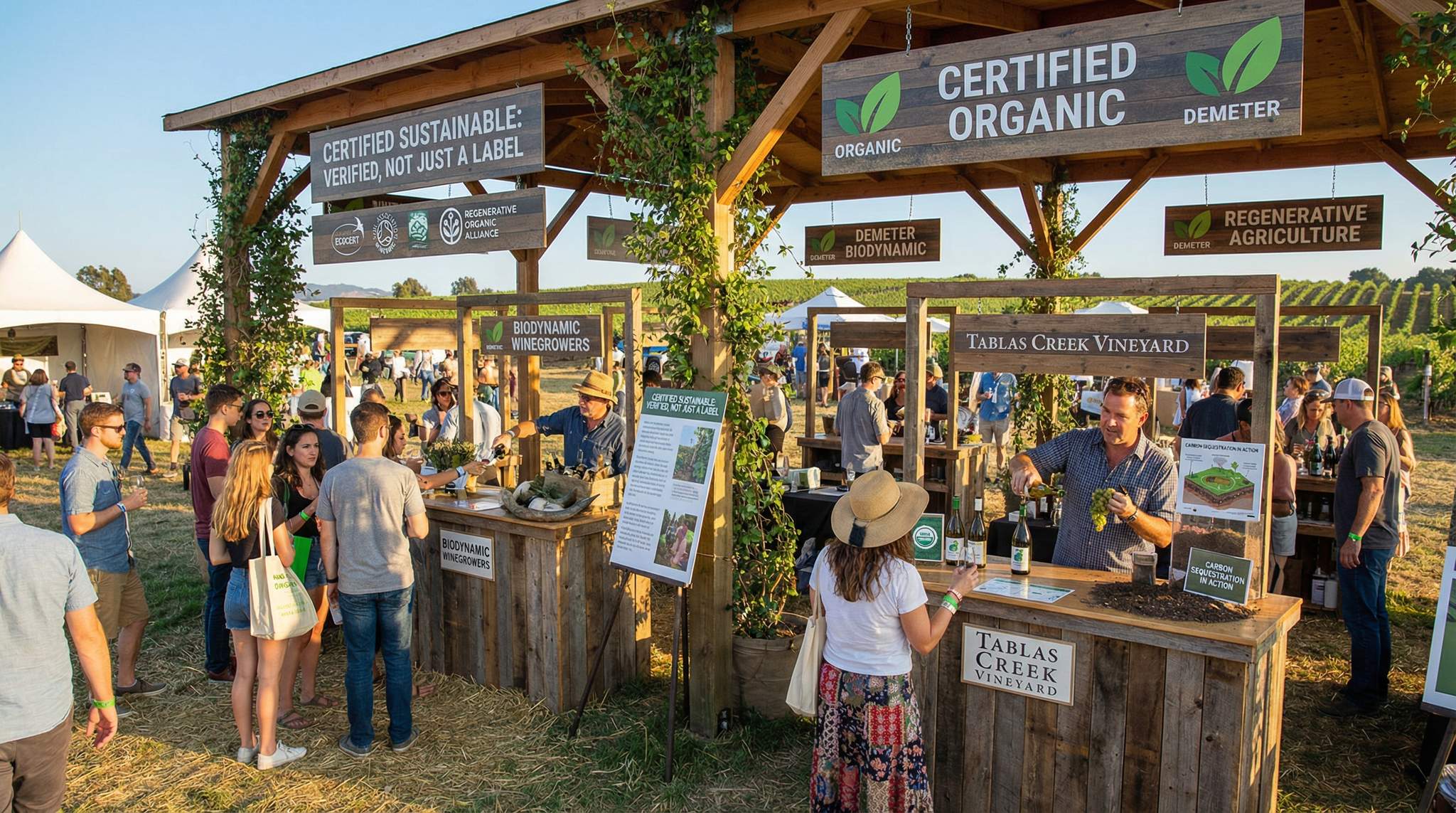
Prevent tokenism: Dedicate sufficient space and prominence to the sustainable wine area. If you relegate the “green” wineries to a hidden corner at your venue, or only give them one small table among 100 conventional exhibitors, it will feel like an afterthought – the very tokenism you want to avoid. Instead, consider clustering them in a distinct Sustainability Pavilion or clearly marked “Organic & Biodynamic Zone” that’s well-signed and central. Alternately, integrate them throughout the festival but use consistent signage (a coloured banner or badge at each booth) so that the sustainable producers are easy to identify wherever they are. The choice might depend on your festival’s layout. A cluster can create a nice concentration of like-minded wine lovers; integration can emphasize that sustainability is a normal part of the whole event. Either way, make it significant. Ideally, have a minimum number of participants that makes the effort feel substantial – for instance, not just two organic wineries at a festival of 50, but perhaps a dozen or more. Quality matters more than quantity, but a larger presence shows commitment.
Highlight third-party labels visibly: Encourage (or even require) that participating wineries prominently display their certification logos and any relevant info at their booths. Attendees should be able to immediately see, for example, a banner that says “Certified Organic (EU)” or “Demeter Biodynamic Certified” or “Napa Green Certified Winery.” These logos are not only credibility markers, they also spark curiosity. Many wine drinkers might recognize terms like organic or Fairtrade, but fewer know the logos for Demeter or ROC – seeing them can prompt questions, giving winery staff a natural opening to explain what those mean. Furthermore, consider creating a festival guide or leaflet specifically for this section, listing each sustainable producer, their certifications, and a couple of noteworthy sustainable practices from each (e.g., “Winery X – Organic since 2010, Solar-powered winery, uses sheep for weed control”). Such details make the sustainability efforts tangible and varied, rather than just a label.
Turn Fans Into Your Marketing Team
Ticket Fairy's built-in referral rewards system incentivizes attendees to share your event, delivering 15-25% sales boosts and 30x ROI vs paid ads.
Curation in action – examples: We can learn from festivals that have done this well. The Slow Wine Fair (Bologna, Italy) has an admission process for wineries which involves a committee reviewing whether the winery truly embodies the “good, clean, fair” ethos. This ensures exhibitors aren’t just paying a fee to join; they must earn their spot by merit of their practices. RAW WINE, an international natural wine fair founded by Master of Wine Isabelle Legeron, similarly requires all participating wineries to use organically grown grapes at minimum, and they must disclose detailed info on additives and sulfur levels. This transparency builds trust among attendees – they know RAW isn’t just a trendy name, but a rigorously curated experience. Even mainstream wine expos have carved out credible green sections: Vinitaly (Italy’s giant wine trade show) introduced “VinitalyBio” for certified organic producers, and ProWein (Germany) features an organic wines pavilion that only admits certified wineries. By setting clear entry rules (often “certified organic only”), these events made sure their sustainability segments mean something concrete.
As you curate, maintain open communication with your sustainable exhibitors. Let them know you value what they do, and that’s why you’re featuring them. Some may worry about being perceived as gimmicks or being lost among bigger brands. Reassure them of the festival’s commitment to spotlighting their stories (through marketing, special events, etc., as we’ll cover below). When producers feel genuinely supported, they’ll be your best allies in delivering an authentic experience.
Educate Attendees Without Greenwashing
A major benefit of showcasing sustainable producers is the chance to educate your audience – but it’s crucial to do this in a way that’s engaging, accurate, and not preachy. “Educating without greenwashing” means you should share the real environmental and social benefits of these wines while staying honest about what they are and aren’t. In other words, avoid exaggerated claims or implying that these wines are “perfect” or that drinking them will singlehandedly save the planet. Instead, focus on meaningful information and interactive learning. Here are strategies to achieve that:
Tell the stories behind the wines: Every sustainable producer has a story – perhaps it’s a family vineyard that converted to organic farming to improve soil health, or a young winemaker practicing biodynamics because they believe it captures terroir better. Use those human stories to draw in the crowd. You can do this through signage (e.g., a short paragraph at each booth describing the winery’s sustainable journey), through your festival app or booklet, or via scheduled talks. Storytelling is powerful and memorable. For example, if a winemaker released a wine to support reforestation or uses rescued water for irrigation, highlight that narrative. These stories provide inspiration and help attendees connect emotionally with the idea of sustainability, rather than feeling they are in a science class.
Provide context on certifications: Many people don’t actually know the difference between organic and biodynamic, or what “regenerative farming” really means in practice. Consider creating a simple educational display or pamphlet that explains key terms and certifications. This could be a large poster or infographic in the sustainability section that defines “Organic Wine” (no synthetic pesticides or fertilizers, certified by XYZ), “Biodynamic Wine” (organic plus holistic farming per Demeter standards, using compost preparations and lunar calendar, etc.), “Regenerative Agriculture” (farming that restores soil and ecosystem health, with certifications like ROC), and even “Sustainable Wine” (often a broader term, possibly covering water/energy efficiency and social aspects). Keep the definitions concise and easy to digest. Visual elements like icons or images (e.g., a vine with wildlife around it for biodynamics, or a soil cross-section for regenerative) can catch eyes. By educating in this way, you empower attendees to appreciate what each winery is doing, and you avoid the trap of meaningless jargon. It’s the opposite of greenwashing: you’re being transparent about the specifics behind the buzzwords.
Interactive learning experiences: One successful approach is to incorporate workshops, tastings, or seminars during the festival that dive deeper into sustainability topics. Many forward-thinking festivals have done this to great effect. For instance, the Vancouver International Wine Festival in Canada held a seminar titled “Three Rings of Sustainability,” where experts and winery principals discussed environmental, social, and economic dimensions of sustainability in wine during the Three Rings of Sustainability seminar. They explored how eco-conscious vineyard practices, community well-being, and financial resilience all intertwine in a sustainable wine business. Attendees of the seminar not only tasted wines, but also learned about initiatives like vineyard biodiversity, fair labor for workers, and inclusion of diverse communities in wine. You could emulate this by hosting a panel discussion with some of your sustainable winery participants. Topics could include “Organic vs. Conventional – Tasting the Difference” or “Farming for the Future: How Regenerative Viticulture Works” or “Beyond the Buzzwords: What Do Certifications Mean?”. Feature winemakers, vineyard managers, or third-party experts (like someone from an organic certifier or a viticulture professor) to share insights.
Grow Your Social Following With Every Sale
Require social media follows, shares, or playlist adds to unlock presale access or special pricing. Turn every ticket purchase into audience growth.
Keep these sessions relaxed and conversational – perhaps on a side stage or a lounge area of the festival where people can drop in. Promote them in the program so interested attendees know when and where to go. An interactive tasting could also be fun: imagine an Organic Wine Masterclass that people sign up for, where they taste a flight of organic wines while the host points out how the producers’ farming choices might influence flavor or aroma (e.g., cover crops contributing to herbal notes, or the absence of oak additives letting terroir shine). The aim isn’t to say “This organic wine is better than non-organic wine” universally, but to give a platform for the sustainable folks to show their quality and discuss their methods. That education is subtle and sensory.
Use clear, honest language: When conveying sustainability messages, either in spoken presentations or in written materials, choose words carefully. Avoid marketing fluff like “earth-friendly wine that will detoxify you” or unsubstantiated claims such as “biodynamic wines taste more pure” (taste is subjective). Instead, communicate straightforward facts: e.g., “This wine is made from grapes grown without synthetic pesticides”; “The winery uses sheep instead of herbicide to manage weeds, reducing soil compaction and chemical use”; “This vineyard restored a wetland on its property, increasing bird and insect life in the vines.” These kinds of details are educational and true. They don’t promise the moon; they simply highlight positive actions and outcomes. Attendees will respect that candor. In contrast, greenwashing would be using vague terms like “all-natural” without explanation or claiming environmental heroism without evidence. Steer well clear of that. If a question comes up that you or the winery rep can’t answer honestly, it’s better to admit, “That’s something we’re still working on,” rather than fudge an answer. Authenticity builds trust.
Avoid negativity or guilt trips: While sustainability has an urgent side (climate change, etc.), frame your festival’s approach in a positive, inclusive light. The goal is to welcome people into the sustainable wine world, not to shame those who aren’t already knowledgeable. So, encourage questions and curiosity. If someone wanders into the green section saying “What’s all this about biodynamic?”, train staff or brief winery teams to gladly explain from the basics, without condescension. Also, be mindful of not positioning sustainable wines as an “elite” or morally superior choice that casts a shadow on other participants’ wines. Your festival might still feature conventional wineries too, and you want overall harmony. The sustainable section is an added value and learning experience, not a judgment zone. Some traditional producers have felt alienated by the “natural wine” movement’s tone in the past, perceiving it as snobbish or implying others are unnatural. You can avoid that pitfall by celebrating what’s interesting about sustainable wines without disparaging anyone else. Keep it factual and invitational.
Hands-on or visual exhibits: If space and budget allow, a small exhibit can vividly drive home sustainability concepts. For example, you could display two soil samples in clear containers – one from a conventional vineyard (maybe sourced for demo by an agriculture institute) and one from a regenerative organic vineyard – to show differences in soil structure or life (often, healthy soil has more visible organic matter, maybe even earthworms). Another idea: have a cover crop garden display, a planter box showing the types of cover crop plants (like clover, mustard, wildflowers) that organic vineyards grow between the vines to nourish the soil and attract pollinators. Wine fans who typically only see the bottled product will find it fascinating to connect it back to farming practices. If you have any tech partnerships, you could even set up a virtual reality station where attendees “tour” a sustainable vineyard through VR goggles, or use touchscreen kiosks with before-and-after photos of vineyards that transitioned to organic. These interactive touches can make the educational aspect fun and memorable, ensuring people walk away not just having tasted great wines but also having learned something tangible about sustainability.
Walk the Talk: Make Your Festival Sustainable Too
When highlighting sustainable producers, it’s only natural that attendees (and the producers themselves) will expect the festival operations to align with those values. You don’t want to showcase organic wineries in a pavilion overflowing with single-use plastic trash, for instance. While greening the entire event is a big topic on its own, here are a few key areas to address so that your festival “walks the talk” and avoids any hypocrisy:
- Waste reduction and recycling: Implement a robust waste management plan. Provide clearly labeled recycling and compost bins and minimize landfill trash bins. If your wine festival uses disposable cups or plates (for food vendors), opt for compostable or recyclable materials. Even better, many wine events give out a reusable branded glass at entry for tasting – that’s both a nice souvenir and cuts down on waste. Work with vendors to eliminate unnecessary packaging. For example, require food stalls to use compostable serving ware.
- Sustainable venue and energy: Choose a venue or location that supports your sustainability efforts. Outdoor festivals on winery grounds or farms can emphasize connection to the land (just ensure you have plans to manage environmental impact on the site). If indoors, does the convention center have a green policy or solar panels? In any case, try to use energy-efficient lighting and equipment. If it’s an evening event, LED lights are a must. You can also explore powering stages or sound equipment with renewable energy or carbon offsets, and tell attendees about these steps. It creates a cohesive narrative that you care about sustainability beyond just the wine.
- Local and ethical food options: Since wine and food go hand in hand, extend the sustainability theme to your culinary offerings. Invite food vendors that source locally or organically, or that are plant-based or vegetarian to lower the event’s carbon footprint. If you’re serving meats or cheeses, consider partners who use free-range, humane, or regenerative livestock practices. This doesn’t mean everything must be 100% organic (practicality and budgets apply), but try to mirror the ethos of the wine section in the food choices. Festivals like the Reforest Fest in South Africa applied strict sustainability criteria to all their F&B, which introduced attendees to new flavors while aligning with the fest’s conservation values, similar to how Wines in the Wild effectively showcased these principles. Consistency matters – an attendee who just learned about biodynamic vineyards will appreciate that the festival coffee is served in a compostable cup and the caterer sources from local farms.
- Transportation and carbon footprint: Think about how attendees and exhibitors get to your festival. Encourage carpooling, provide a shuttle from common pickup points or public transit hubs, or partner with an electric vehicle company or rideshare for discounts. If it’s a destination wine festival with people flying in, you might optionally offer a carbon offset through the ticketing process (e.g., an extra $1 that goes to tree planting – some ticketing platforms integrate this, or you can do it via a third party). Highlight any such initiatives in your program: “We aim to make our festival carbon-neutral, and you can help by…”. When the event is over, calculate your approximate carbon footprint and inform the audience how you mitigated it (like “we planted 100 trees to offset the event emissions”). These actions demonstrate integrity, showing that the sustainable wine section isn’t just green window-dressing but part of a larger commitment.
- Accessibility and inclusivity: Sustainability isn’t purely an environmental concept; it also includes social sustainability. Make sure your festival is welcoming to a diverse audience. That includes having options for people who don’t drink alcohol (some wine festivals now include alcohol-removed wines or low-ABV cocktails, for example) and ensuring the environment is safe and inclusive. Little things like providing water refill stations (so people stay hydrated and aren’t forced to buy plastic water bottles) and offering a comfortable seating area can make a difference. If you can, highlight minority-owned sustainable wineries or women winemakers in your lineup to underline that the future of wine is inclusive. This marries well with the ethos of caring for community and people, which is often part of what sustainable and regenerative producers are about.
By aligning your operations with the message, you reinforce credibility. Wineries will notice your effort too – and those who put in effort to farm responsibly will be glad to see the festival echoing that in its own domain. It creates a virtuous circle: sustainable producers, educated attendees, and an event environment that reflects the same values.
Keep Tickets in Fans' Hands
Our secure resale marketplace lets attendees exchange tickets at face value, eliminating scalping while keeping you in control of the secondary market.
Marketing Your Festival’s Sustainable Side
You’ve put in the work to assemble an amazing group of organic, biodynamic, and regenerative wine producers and to create educational content – now you need to promote it so that the right audience shows up and everyone (including the producers) gets the full benefit. Marketing a sustainability-focused festival or festival segment requires balancing enthusiasm with authenticity. Here are some tips:
Incorporate sustainability into your branding: If this is a key part of your festival, your title, tagline, and visuals should reflect it. Without over-doing the stereotypical “green” imagery, you can signal the theme with design elements (e.g., a grapevine motif with leaves, earthy color schemes) and phrases. For instance, if your event is called “City Wine Fest,” you might add a tagline like “featuring an Organic & Biodynamic Wine Showcase” on posters. Ensure the word “sustainable” or similar appears in your social media bios and press releases about the festival. This will attract eco-minded attendees when they’re scanning event listings. However, be careful not to mislead – if only a section is sustainable, don’t imply the whole festival is. It’s about truth in advertising. Use wording like “10% of all wines at the festival are certified sustainable!” or “Meet 15 producers who are farming responsibly” so people know what to expect.
Tell the world about the participants: Leverage the stories and credibility of your sustainable producers in your pre-event content. You could do a “meet the maker” series on your blog or social media, each post highlighting one winery in the green section: who they are, what certification they have, a cool sustainability fact, and which wines they’re bringing. This not only markets the festival but also gives those wineries extra exposure (which they will appreciate). Tag the wineries and any certification programs in these posts – they might repost to their followers, expanding your reach. For example, share how one biodynamic winemaker follows lunar cycles for harvesting, or how a regenerative vineyard planted wildflowers to help bees. Photos or short videos from the vineyards are gold here; many of these producers have beautiful, rustic visuals (think grazing sheep, vineyard sunsets, compost piles steaming on a winter morning) that can captivate an audience and build anticipation for meeting the winemaker in person at the event.
Engage press and influencers: Sustainable wine is a hot topic in food and beverage media. Pitch a story to local news or wine magazines about how your festival is championing organic and biodynamic wines. Emphasize what makes it noteworthy – e.g., “First wine festival in our country to have an all-organic section,” or “Collaboration with [Well-known NGO/Certifier] ensures no greenwashing at WineFest 202X.” Journalists, especially those covering lifestyle or environmental beats, may latch onto the educational angle or human-interest stories of the winemakers turning to greener methods. Additionally, invite wine influencers or bloggers who are passionate about sustainable living or “natural wine.” Offer them media passes or set up a special tour of the sustainable section. If they share their experience (via live social media updates or a blog recap), it’s authentic word-of-mouth advertising. Make sure to arm them with interesting tidbits (perhaps a fact sheet with some festival sustainability stats or quotes from a participating winemaker) so their coverage is accurate and compelling.
Transparency in marketing: Just as you avoid greenwashing inside the festival, avoid it in how you market it. Be clear and specific about what sustainability features your event offers. For instance, rather than saying “Festival X goes green,” say “Festival X will showcase 20 organically certified wineries and has partnered with the Renewable Energy Institute to offset 100% of event electricity use.” Specifics build trust. If you have any certifications or sustainability milestones for the event itself (like a zero-waste certification or community initiative), talk about them. And importantly, acknowledge that this is a journey – it’s okay to admit not everything at the festival is sustainable yet, but you’re making progress. Audiences find honesty refreshing, and it sets the stage for you to do even better next year.
Tickets and technology: If your ticketing platform allows (for example, Ticket Fairy’s event pages support rich custom content), include info about the sustainable wine section on the event listing itself. People deciding whether to buy a ticket will see that this isn’t just another wine fest but one with a special focus. You can even create ticket tiers or add-ons related to the theme: maybe a “Green Wine Enthusiast” pass that includes that organic wine masterclass or an extra guided tasting. Or a combo ticket that donates a portion to an environmental cause (e.g., “$5 of this ticket supports vineyard replanting efforts”). These kinds of options both market the theme and actually contribute to the cause. Make sure to highlight any such features during checkout, as they might sway someone on the fence.
Boost Revenue With Smart Upsells
Sell merchandise, VIP upgrades, parking passes, and add-ons during checkout and via post-purchase emails. Increase average order value by up to 220%.
International appeal: Since sustainability is a global concern, use that in marketing if you’re looking to draw an international crowd (or at least diverse local expats/tourists). Mention the countries represented by your sustainable wineries. For example, “Taste eco-friendly wines from France, New Zealand, Chile, and beyond, all at one festival.” Highlight if any notable figures or internationally acclaimed wineries are involved (maybe a famous biodynamic Champagne house or a renowned natural wine guru). This can turn your regional festival into a destination event for aficionados who will travel for these experiences. And if your area has a strong sustainability culture in general, definitely promote the festival through those channels (like eco-tourism boards, organic farming networks, etc.).
Finally, after the festival, continue the marketing momentum by sharing the outcomes. Post some photos of the busy organic wine pavilion or a short video of an engaging seminar snippet, with a caption thanking everyone who made the sustainability initiative a success. Not only does this reinforce your festival’s image, but it also provides a great base to build on for next year – both in terms of public interest and attracting even more sustainable producers through demonstrated success.
Learn from Successes (and Mistakes)
Pioneering festivals and events have already ventured into the sustainable wine arena – and there’s a lot to learn from what they did right (and wrong). By examining a few case studies, we can glean insights that will help your own festival avoid pitfalls and shine:
-
RAW WINE (Global): What began as a small natural wine fair in London grew into a worldwide phenomenon with events in cities like Berlin, New York, and Los Angeles. RAW WINE’s success lies in its uncompromising standards and transparency. All participating wineries must be at minimum organic (many are biodynamic or natural with no added sulfites), and RAW publishes a listing for each wine detailing its sulfite levels and any additives – radical transparency not seen at typical festivals. Attendees and buyers trust that RAW is fully authentic, not just marketing hype. The lesson here is that setting high standards can earn deep respect and a loyal following, even if it means a smaller pool of eligible exhibitors. On the flip side, RAW WINE also faced challenges: by being so strict, they exclude some eco-friendly wineries that don’t quite fit the definition, and “natural wine” itself has faced scrutiny and debate within the wine community. Nonetheless, by educating their audience about what each winery is doing, they minimize misconceptions. Takeaway: Don’t be afraid to hold a high bar and clearly communicate why – your core audience will appreciate the integrity.
-
Rootstock Sydney (Australia): Rootstock was a groundbreaking sustainable wine and food festival that ran for five years, championing artisan producers, organic and biodynamic wines, and sustainable event practices. It incorporated not just tastings but also food markets, art, and music, all under a sustainability ethos. Notably, Rootstock was zero waste – they famously had almost no landfill bins on site, using only compost and recycling, and they emphasized farm-to-table food to pair with the natural wines. Community and indigenous culture were also at the forefront (one year the festival included Aboriginal food workshops, linking sustainability with cultural respect). Rootstock’s sudden closure in 2018 (despite sold-out crowds) was a cautionary tale: even beloved events can struggle financially or logistically. The organizers cited the heavy workload and funding difficulties as reasons. For aspiring festival producers, Rootstock’s story is a reminder to build a strong business model under the idealism. Scaling gradually, securing reliable sponsors (perhaps eco-conscious corporations or tourism boards), and not overextending are important. Takeaway: Pushing boundaries in sustainability can attract passionate attendees and media, but ensure your budgeting, staffing, and partnerships are resilient enough to sustain the mission long-term.
-
Slow Wine Fair (Italy): As part of the Slow Food movement’s wine offshoot, this fair brought together hundreds of organic and sustainable wineries from around the world (26 countries in 2023). What’s impressive is how it blends a consumer-facing tasting event with a trade fair and conference elements focused on sustainability and climate issues. They host debates on topics like the impact of climate change on vineyards and how organic farming can mitigate some challenges. Because it’s under the Slow Food banner, the fair benefits from a built-in philosophy (“good, clean, and fair wine”) that attendees understand. They also introduced innovations like a “Tasting Committee” that vetted wineries, as mentioned earlier, to keep the quality and mission alignment high. A potential challenge for others copying this model is scale – not everyone can gather hundreds of eco-wineries readily, especially in smaller markets. However, even a modest gathering can emulate the concept by mixing tastings with educational forums. Takeaway: If you can attach your festival to a broader movement or ideology (like Slow Food, organic week, etc.), it can lend strength and clarity to your purpose. Also, curating for quality and values concurrently leads to a richer experience than just open enrollment.
-
Green Wine Future (Virtual Conference 2022) & Others: During the pandemic, some wine sustainability events moved online, such as Green Wine Future, which had global discussions on topics from water usage to renewable energy in wineries. While not a festival with tasting, it showed that educational content can stand on its own and attract thousands of viewers when sustainability is the focus. Post-pandemic, consider hybrid elements: maybe live-stream a panel from your festival or record interviews with sustainable winemakers to share online. This extends your reach beyond the physical attendees and positions your festival as a thought leader in the space. Takeaway: Leverage technology and content creation to amplify the impact of your sustainability message – your festival can influence more people than just those in the room.
Finally, be prepared to handle criticism or challenges. Whenever an event touts sustainability, there might be skeptics. Perhaps a blogger might accuse you of “virtue signaling,” or a conventional winery might feel slighted for not being included. The best way to address this is through continued transparency and engagement. Invite dialogue: for instance, if some exhibitors can’t be in the sustainable section, encourage them to attend the seminars or see if they want to start a journey towards certification (your festival could even spark that inspiration!). If any claim about your event’s own greenness is questioned, respond with facts – show your recycling stats or how many organic producers came, etc. Use feedback to improve next time. A festival producer mentor once said: treat sustainability as a continuous improvement process, not a one-time checkbox. Each year, aim to deepen your commitment – whether that’s increasing the number of sustainable producers, reducing waste further, or expanding educational content as the movement evolves. Stay open to feedback from attendees and participants to keep the momentum.
By studying what others have done and openly learning from them, you not only avoid missteps but also join a supportive community. Many organizers in this arena are very open to sharing advice, because ultimately all these efforts add up to a better wine industry and happier wine consumers.
Frequently Asked Questions
Why should festivals showcase sustainable wine producers?
Showcasing sustainable producers meets growing consumer demand for eco-conscious products and differentiates events in a crowded market. The global organic wine market is projected to double by 2028, driven by younger generations seeking values-aligned brands. This approach enhances festival credibility, attracts sponsors, and supports environmental health through organic and regenerative farming practices.
How can festival organizers create a credible sustainable wine section?
Organizers must set clear criteria, requiring verifiable credentials like organic or biodynamic certifications rather than relying on vague claims. Partnering with expert bodies for vetting and ensuring a diverse mix of regions and styles helps build a legitimate showcase. Dedicating prominent space prevents tokenism and signals a genuine commitment to sustainability.
Which third-party certifications verify sustainable wine practices?
Key certifications include USDA Organic or EU Organic for chemical-free farming, and Demeter for biodynamic practices. Regenerative Organic Certified (ROC) and RegenAgri verify soil health efforts, while regional programs like Napa Green or Sustainable Winegrowing New Zealand cover broader environmental criteria. These third-party labels provide independent verification to validate producer claims.
How can wine festivals avoid greenwashing when promoting sustainability?
Festivals avoid greenwashing by requiring third-party certifications and partnering with recognized advocacy groups to vet participants. Organizers should demand documentation of sustainable practices and avoid exaggerated marketing claims. Transparency is crucial; clearly labeling certified producers and admitting where the event is still improving builds trust with skeptical attendees.
What are effective ways to educate attendees about sustainable wine?
Effective education involves telling the human stories behind the wines and using clear, jargon-free language to explain farming methods. Interactive experiences like masterclasses, soil sample displays, or meet-the-maker sessions help attendees connect with concepts like regenerative agriculture. Visual aids explaining certifications clarify the differences between organic and biodynamic practices without being preachy.
How can wine festivals reduce their environmental impact beyond the wine list?
Festivals can align operations with their wine selection by implementing robust waste management, such as composting and using recyclable serving ware. Sourcing local, ethical food options and utilizing renewable energy for power reinforces the sustainability message. Encouraging low-carbon transportation and offering carbon offsets further demonstrates a holistic commitment to environmental responsibility.
How should organizers market a sustainable wine festival authentically?
Authentic marketing relies on transparency, using specific facts about certifications and partnerships rather than vague buzzwords. Highlighting individual producer stories and leveraging the credibility of partner organizations helps build interest. Organizers should clearly communicate which sections are sustainable and avoid implying the entire event is green if only a portion qualifies.
What is regenerative viticulture in the context of wine production?
Regenerative viticulture focuses on farming practices that restore soil health, improve biodiversity, and sequester carbon within the vineyard. Unlike methods that simply minimize harm, regenerative farming actively improves the ecosystem through techniques like cover cropping and composting. Certifications like Regenerative Organic Certified (ROC) are emerging to verify these rigorous, impact-driven standards.