Intimate Spaces with Grand Potential
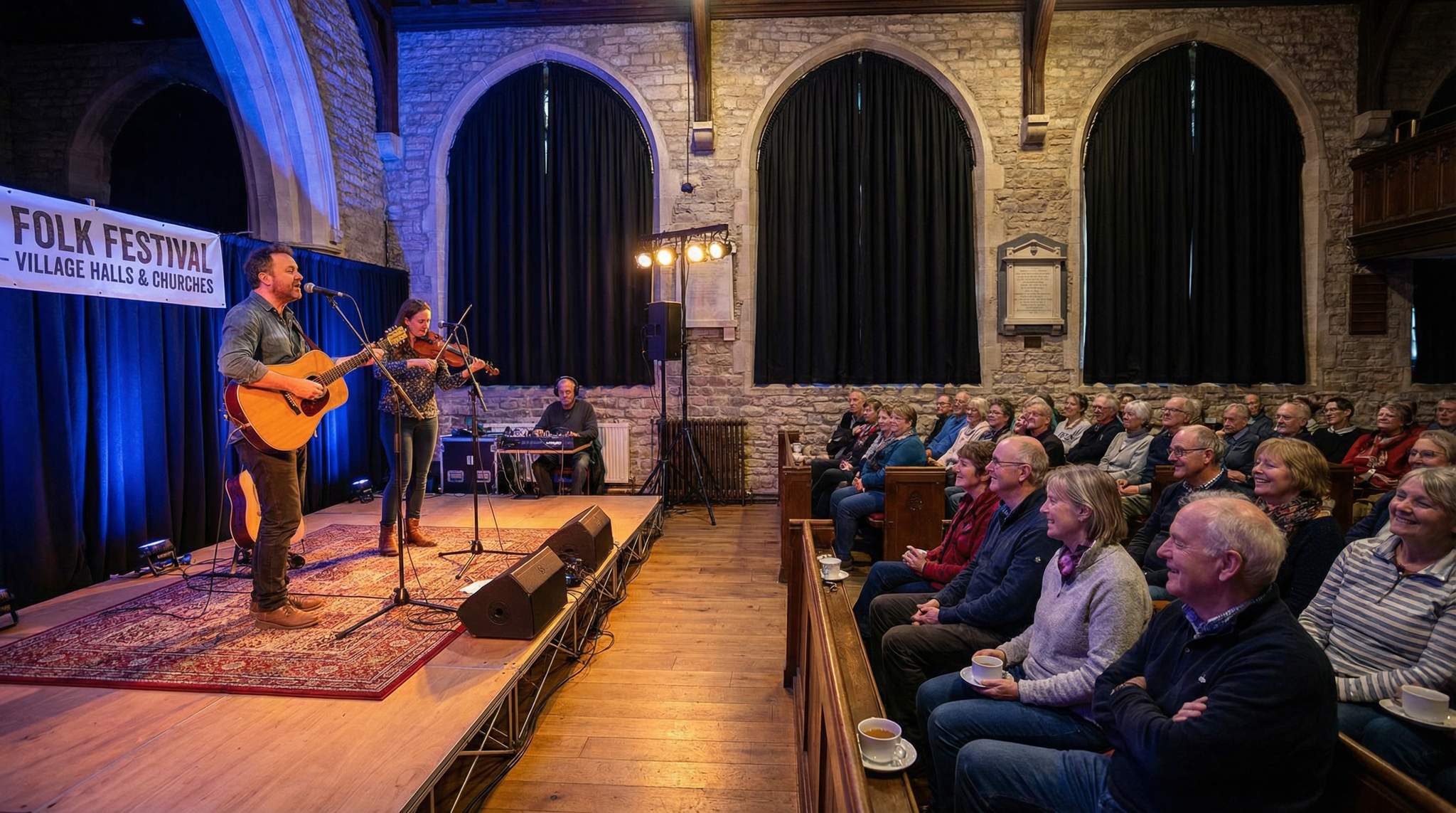
From rural villages to bustling cities, folk festivals often transform humble village halls and churches into magical performance spaces. These unassuming venues are multipurpose acoustic gems that can deliver warmth and clarity for acoustic music when prepared thoughtfully. Around the world, organisers have embraced this practice – for instance, Canada’s Festival of Small Halls is “all about big music in small places,” staging concerts in cosy churches and town halls across the Ottawa Valley, an approach celebrated in Ottawa Life’s coverage of the Festival of Small Halls. In Australia, the touring Festival of Small Halls similarly brings folk artists to tiny towns, where even hamlets of 200 people rally around their local hall with tea, cake, and a friendly welcome, as detailed by The National Tribune regarding the Festival of Small Halls. These intimate sites offer a unique atmosphere and often superb natural acoustics, but they also come with quirks and responsibilities.
Seasoned festival producers know that making the most of a church or village hall requires balancing the venue’s character with practical production needs. Historic chapels, for example, might have soaring ceilings and wooden pews that produce a beautiful reverberation, as seen when singers at the Shetland Folk Festival had their voices “reverberate and rattle through the pews of the kirk,” creating a spine-tingling effect, a moment captured in The Shetland Times review of the festival opening. At the same time, one must tackle challenges like controlling light, managing ambient noise, and respecting the space’s primary purpose (often as a community or sacred place). What follows is a collection of hard-earned tips on how to prepare and use village halls and churches effectively – covering everything from acoustics and lighting to etiquette and logistics – so that both the performance and the venue shine.
Controlling Light and Noise
Blacking out windows: Many village halls and churches have ample windows – great for daytime gatherings, but tricky for concerts requiring controlled lighting. If you’re hosting an evening show or using stage lighting/projections, plan to black out the windows. Heavy curtains, temporary blinds, or black fabric can do the job without damaging fixtures. For example, teams at the Cambridge Folk Festival’s club stages use velcro-mounted blackout drapes on hall windows to instantly create a dusk-like atmosphere for afternoon sets. Blocking external light enhances stage lighting effects and prevents distractions (like sun glare on performers or stained glass patterns drifting onto the stage). Just be sure your method is reversible and doesn’t disturb any delicate window frames or paint – always get permission from venue managers on how to safely cover windows.
Silencing HVAC systems: The gentle hum of an air conditioner or the clank of old radiators can quickly shatter the silence during an acoustic ballad. HVAC noise control is essential in these intimate spaces. Before the show, work with the venue to adjust heating, ventilation, and air conditioning scheduling. One common trick is to cool or heat the room in advance, then shut off or lower the system during the performance to eliminate blower noise. In modern halls with loud fans, ask if they have a “quiet mode” or consider renting a quieter portable unit if climate control is needed continuously. Also, inspect for any rattling vents or buzzing lights – even a small electric hum becomes noticeable when a solo fiddler draws a soft note. Seasoned organisers come armed with gaffer tape and foam to dampen any rattling panels or to pad doors that might slam. The goal is to achieve pin-drop silence when the music calls for it. Audiences and artists will thank you when every nuance of sound carries without competition from a noisy heater in the corner.
Free Tool: Size Your Festival Site
Zoned capacity planning for arena, campsite, parking and entry lanes — against UK Purple Guide and NFPA density standards. Finds your bottleneck zone.
Embracing Natural Acoustics (Treat Echoes Lightly)
One of the biggest advantages of churches and community halls is their natural acoustics. Churches are literally built for sound – high ceilings, arches, and wooden interiors that project voices and instruments richly. The famous Union Chapel in London, a working church turned concert venue, is a prime example: its architects designed it for congregational singing, and today “the acoustics are incredible, making it the perfect space for gigs,” even hosting legendary artists from Amy Winehouse to Elton John, cementing its status as one of London’s premier live music venues. Similarly, many village halls with wooden rafters or stone walls offer a pleasant reverb that can make a lone singer’s voice soar. As a producer, you want to embrace this warmth while keeping excessive echo in check.
Treat echoes lightly – that is, do minimal, respectful acoustic treatment. Avoid aggressively dampening the room, which could strip away its character. Instead, focus on gentle fixes: for instance, if a church’s stone floor causes too much echo or foot noise, roll out an area rug on the stage and aisles. This preserves most of the lively acoustics while cutting down harsh reflections and squeaks. Hangings like banners or thick backdrops behind the stage can help absorb some sound; many historic chapels have tapestries or curtains that you can make use of (or simulate with temporary drapes). In larger cavernous churches, you might quietly place a few acoustic panels or freestanding absorbers in the back corners to reduce slap-back echo – but do this sparingly and ensure they blend in or are removed afterward.
Planning a Festival?
Ticket Fairy's festival ticketing platform handles multi-day passes, RFID wristbands, and complex festival operations.
While churches often feature complex architecture that diffuses sound, village hall acoustics present a different set of challenges. These community spaces frequently feature parallel walls, flat ceilings, and hard wooden or linoleum floors, which can create harsh flutter echoes or standing waves. To tame these specific sonic reflections without a massive budget, producers can strategically deploy heavy pipe-and-drape systems along the side walls or position soft-furnished seating to break up the sound waves. Understanding the distinct acoustic profile of a standard community hall allows your sound engineer to proactively ring out the room and deliver a pristine audio experience for acoustic acts.
Crucially, work with a skilled sound engineer who understands the venue’s acoustical quirks. They might use the PA system only lightly, or adjust EQ to avoid frequencies that boom in that space. Often, less is more: a duo with fiddle and guitar might need just a touch of amplification, letting the hall’s natural resonance support them. In soundcheck, walk the room and listen for trouble spots (certain frequencies ringing or words getting muddy) and address them with positioning or minor dampening rather than brute force. Remember that a slight reverberation can actually enhance folk and acoustic music, enveloping the audience in the sound. Artists and audiences often cherish that “immersive” quality – like the Pakenham church show in Canada where the dome-shaped ceiling created a “surreal sound experience” for a folk concert, described in reviews of the Ontario Festival of Small Halls. Your job is to optimize the clarity without destroying the magic.
Stage Décor and Seating with Respect
When it comes to staging in sacred or community venues, respectful presentation is key. Churches and old halls have their own ambiance – often adorned with cultural or religious symbols, wooden pews, memorial plaques, etc. Embrace the beauty of the venue in your stage décor instead of fighting it. For example, rather than covering up a church’s ornate altar or a village hall’s emblematic crest, design your stage layout to work alongside these features. A simple backdrop of soft cloth or lighting can highlight the existing architecture. Some festivals add subtle touches like potted plants or candles (LED for safety) to give the stage a warm, inviting feel that blends with the venue’s character.
Seating arrangements might already be fixed (pews in a church) or flexible (stacking chairs in a hall). If pews are present, you often have a built-in seating plan – but ensure you’re not asking audience members to do anything contrary to the venue’s norms (for instance, sometimes church pews are roped off in certain areas – coordinate with the caretakers on whether they can be used). For halls with moveable seating, arrange chairs to maximise both sightlines and comfort. If possible, use padded chairs or provide cushions especially if the event is long – wooden chairs or benches can get uncomfortable, detracting from the experience. Keep aisles clear as required for safety and as a sign of respect (many churches require aisles to remain open for emergency or simply to not block ceremonial areas). In any case, avoid overfilling beyond capacity; these venues weren’t built for crowd surges, so keep the audience size comfortable and in line with what the space and fire codes allow.
Free Tool: Project Your Bar Revenue
Per-head spend benchmarks by event type turned into projected bar and food revenue, with a stock-mix estimate and gross-margin line. Free calculator.
Stage décor should remain modest and respectful. In sacred spaces, this means nothing overtly irreverent or intrusive. Check with the venue if there are areas you should not trespass on – for instance, many churches consider the altar and chancel a holy area; you may need to keep musicians or equipment slightly forward of those steps. However, plenty of churches double as community art venues now, so they might be quite open – it’s still polite to ask. A good approach is to designate a liaison with the church or hall who understands both the venue’s traditions and your show needs. They can advise if, say, moving a lectern or pulpit is acceptable, or if you should leave it in place and work around it. Always err on the side of decorum: use pipe-and-drape setups or screens if you need to hide something that can’t be moved, rather than physically taking apart venue furnishings without permission. And if you do move anything (chairs, tables, religious items), mark where they were and plan to put them back exactly as found.
Photography and Venue Etiquette
Village halls and especially churches often come with unwritten rules about behavior – and as the event organiser, you must communicate and uphold these to show respect. Photography rules in sacred spaces are a prime example. Some churches do not permit flash photography or any photography at all during concerts or services, either to maintain a reverent atmosphere or to prevent damage (flash can potentially harm old artwork or simply be distracting). Before your event, clarify with the venue if there are any restrictions on photos or video. It’s wise to announce the policy to your audience at the start (“We kindly ask that you refrain from flash photography”) and on signage. Many folk festival audiences will understand – in fact, a no-flash rule often improves everyone’s concentration on the music. If photography is allowed, consider designating one official photographer who can discreetly capture the event without wandering all over or using bright lights.
Need Festival Funding?
Get the capital you need to book headliners, secure venues, and scale your festival production.
Beyond photography, outline other venue etiquette that might not exist in a bar or typical concert hall. For example, Central Presbyterian Church in Austin – a popular concert venue during the SXSW festival – famously asks artists and attendees to follow just two simple rules: “Don’t drink; and don’t shatter the stained glass.” In other words, no alcohol inside and be mindful of the fragile historic windows, a rule emphasized on Central Presbyterian Church’s SXSW venue page. While a bit tongue-in-cheek, this highlights how no food or drink policies and care for the building should be taken seriously. If your event normally has a bar, check if the hall or church allows it (many prohibit alcohol on premises). Even if allowed, you might decide to keep drinks limited to a separate foyer or not at all, to respect the space. Also, remind performers that certain language or attire that might be fine in a pub could be inappropriate in a church. This doesn’t mean censoring artists’ artistry, but a heads-up is courteous if the venue is an active place of worship.
If your festival is using a religious venue, it can be nice to involve the venue’s leadership in setting guidelines. Perhaps the local pastor or caretaker will welcome the crowd with a note about the building’s history and any dos/don’ts (in a warm way). By clarifying rules in advance, you’ll prevent issues – like someone climbing onto a fragile pulpit for a better view, or a videographer inadvertently blocking an exit. Maintaining respect for the venue isn’t just about avoiding complaints; it actively contributes to the atmosphere. Audiences often find it special to listen to music in a place normally dedicated to worship or community gathering, so they tend to appreciate a reminder to honour that uniqueness.
Clear Paths for Instruments and Gear
Unlike custom-built concert halls, village venues can have quirky layouts and tight spaces. It’s crucial to plan the logistics of loading in and out large instruments and equipment. Ensure you keep exits and aisles clear, not only for emergency safety, but also for the practical movement of performers and bulky instruments. Folk ensembles might bring anything from upright basses and harps to keyboards or even a full drum kit. Check in advance which door is best for load-in – the front might be grand but have narrow steps, while a side door might allow easier ramp access. Communicate with artists beforehand about the venue’s constraints: for example, if the only way on stage is via a small stairway or through a side vestry door, let the band know so they can plan minimal gear or bring an extra hand to lift heavy cases.
During the show, large instrument cases and extra gear should be stored in a designated area that doesn’t block corridors. In a small hall, that might be a corner of the stage or an adjacent room (sometimes the “green room” ends up being a kitchen or back office in these venues!). Tape down any cables crossing paths, and use cable ramps if audiences must walk over them. If the performance involves artists swapping on and off stage, coordinate an efficient flow: perhaps have an usher open a side door when a band finishes so they can carry off their cello or drum directly outside rather than through the audience. Such planning not only avoids awkward bottlenecks but also prevents accidents (the last thing you want is a priceless vintage fiddle banging into a doorway or a guest tripping over a guitar amp in the aisle).
Interactive Seating for Every Venue
Let fans pick their perfect seat with interactive venue maps. Supports reserved seating, section-based pricing, and real-time availability.
For particularly large instruments, make special arrangements. If a grand piano is required, you might need to hire a professional piano mover to get it in place well before doors open (and ensure the stage can bear its weight!). If you’re hosting a big folk orchestra with a contrabass or even a cello section, confirm that the stage or altar area has enough space for them to perform comfortably without bumping into walls or each other. In one festival show at a small chapel, producers even temporarily removed a couple of front-row pews (with church approval) to create extra stage area for a dance troupe – then reinstalled them after the show. Not every venue will allow that, but it shows the level of foresight needed. Ultimately, clear, accessible paths benefit everyone: performers can get on and off easily, and if an emergency evacuation were needed, there’s nothing blocking the way.
Leave the Venue Better Than You Found It
The final act of using any community or sacred venue is the cleanup and exit, and the golden rule is to leave no trace – or better yet, leave it improved. Festival producers who foster long-term community relationships always go the extra mile here. This starts with basic cleanliness: assemble a cleanup crew to pick up every piece of trash, remove all equipment, and put furniture back exactly in place. Bring tools to handle any unexpected mess (a vacuum for glitter or confetti if your show had any, mops for muddy foyer floors if it rained, etc.). If you taped down cables or blacked out windows, remove all tape and materials carefully so as not to peel paint or leave residue. Check corners for lost property or stray cables. It’s wise to have a venue representative do a walkthrough with you afterwards, to confirm everything is in order.
Beyond cleaning, think of ways to show appreciation. For example, if the church’s staff or volunteers helped out, consider giving them a shout-out from the stage at the end, and maybe a small thank-you gift or donation. Some festivals will donate a portion of ticket sales to the venue or the community – a gesture that goes a long way and feeds goodwill. At minimum, send a follow-up thank-you note to the venue management. In many close-knit towns, word spreads quickly about how an event organiser treated the local hall; a reputation for care and respect will open doors for you to use more unique venues in the future.
Also, consider leaving the venue a bit better than before. This could be as simple as tightening a few screws on a wobbly chair you noticed, or as generous as donating acoustic panels or new blackout curtains if the venue has need and you have resources. One experienced festival producer always travels with a bag of cable ties, light bulbs, and basic tools – often ending up fixing a broken light fixture or securing a loose curtain rail in the hall as a thank-you gesture. Such improvements, even small, demonstrate that you value the venue. In any case, never leave damage. If something accidental occurred (a scuff on the floor, a blown fuse, etc.), inform the venue and offer to make it right immediately. Honesty and proactive fixes will be appreciated more than quietly slipping out and hoping they don’t notice.
When you depart a village hall or church having exceeded expectations in cleanup and courtesy, you lay the groundwork for a lasting partnership. The community will remember your festival fondly, not just for the music but for the respect given to their beloved space. This can lead to invitations back year after year, and even enthusiasm from the locals to support or volunteer for your events. In essence, treating the venue like a cherished co-star of the festival is a win-win: it preserves the heritage of the place while providing your audience and artists a wonderful, unique experience.
Frequently Asked Questions
Why are churches considered good venues for acoustic folk music?
Churches offer superior natural acoustics due to architectural features like soaring ceilings, arches, and wooden interiors that naturally project sound with warmth and clarity. These “multipurpose acoustic gems” provide a rich reverberation that supports acoustic instruments and vocals, often requiring less artificial amplification than standard concert halls.
How do you manage lighting in village halls with many windows?
Black out windows using reversible methods like heavy curtains, temporary blinds, or velcro-mounted black fabric to create a controlled stage atmosphere. This technique blocks external light sources that cause glare on performers and enhances stage lighting effects. Always ensure materials do not damage window frames or paintwork.
How can concert organizers reduce HVAC noise in intimate venues?
Minimize HVAC noise by pre-conditioning the room temperature and shutting off the system during performances to eliminate blower hum. In modern halls, utilize “quiet mode” settings or rent silent portable units if continuous climate control is necessary. Additionally, use gaffer tape or foam to dampen rattling vents or panels.
What is the best way to treat acoustics in a church venue?
Treat church acoustics lightly by using minimal dampening, such as placing area rugs on stone floors or using thick backdrops, to reduce harsh echoes without stripping the room’s character. Avoid aggressive soundproofing; instead, aim to balance the natural reverb with clarity by positioning freestanding absorbers in corners if necessary.
What etiquette rules should be followed when hosting events in sacred spaces?
Hosting events in sacred spaces requires strict adherence to venue etiquette, including prohibitions on flash photography and restrictions on alcohol consumption. Organizers must respect the physical space by not moving religious items like altars without permission and ensuring performers maintain appropriate language and attire to honor the venue’s primary purpose.
What are the common challenges with village hall acoustics and how can organizers fix them?
Village hall acoustics often suffer from flutter echoes and standing waves due to parallel walls, hard floors, and flat ceilings. Organizers can improve the sound quality by introducing temporary soft materials, such as pipe-and-drape systems along the walls, laying down thick rugs on the stage, and utilizing soft-furnished seating to absorb excess reflections without deadening the room’s natural character.